


18th Century Slant Front Desk
An 18th century slant front desk brings fitted interiors and drop-down writing surfaces into a room, offering practical storage alongside period presence.
18th Century Slant Front Desk
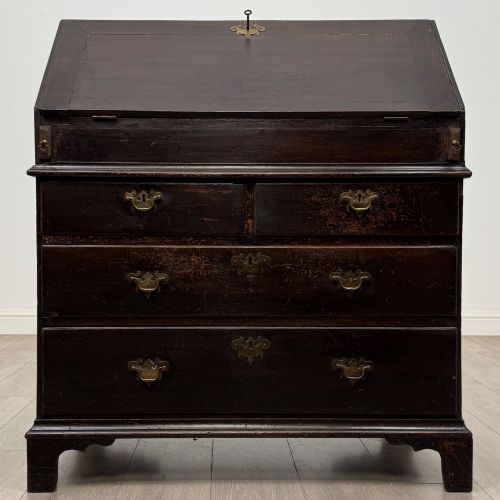
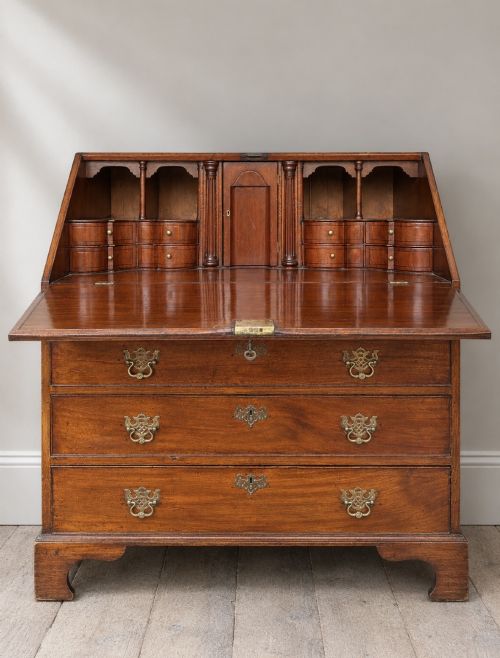
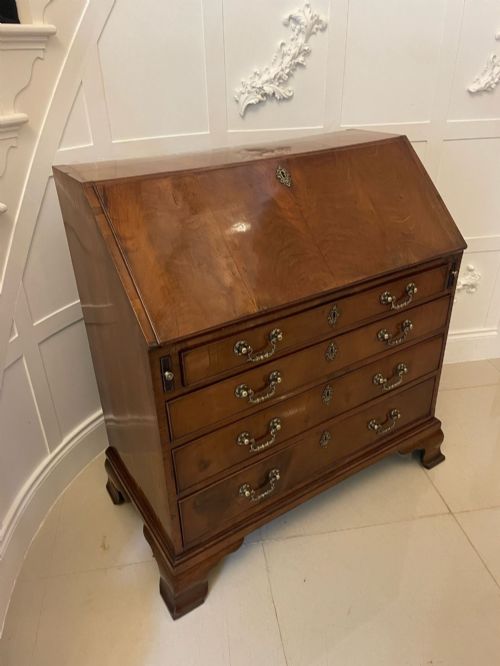
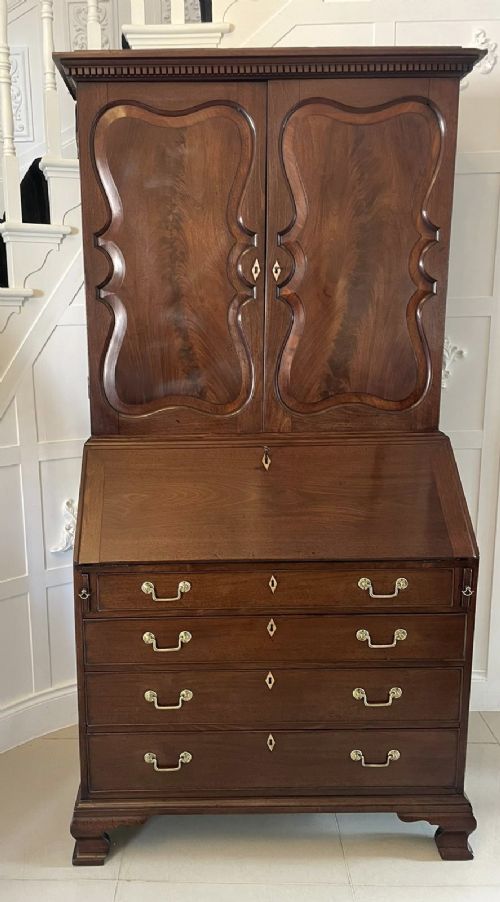
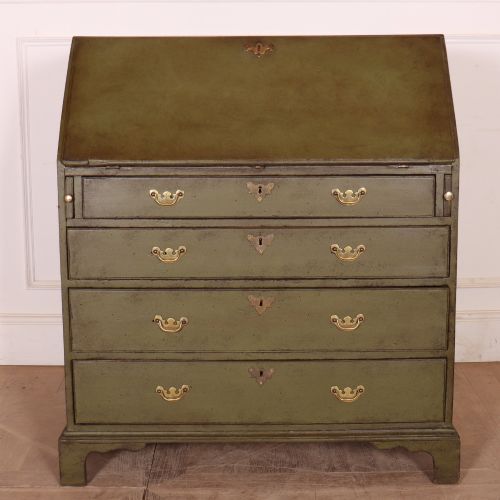
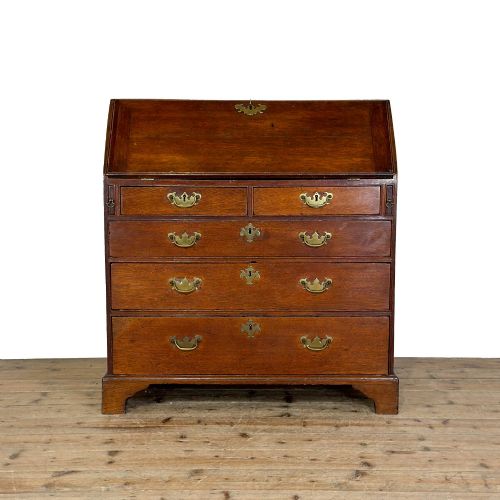
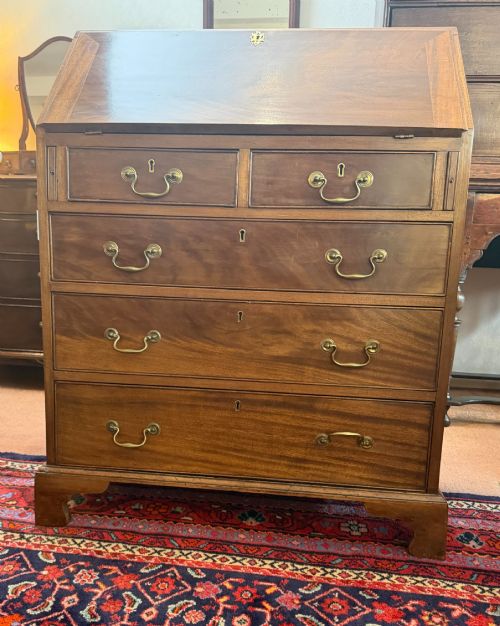
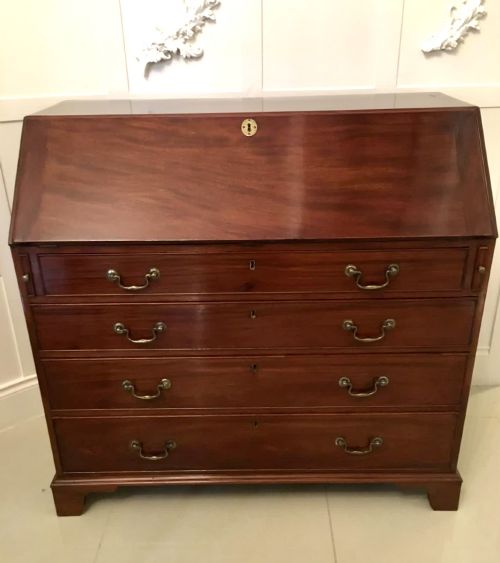
An 18th century slant front desk serves as a primary writing cabinet, featuring a hinged flap that opens to reveal a fitted interior of drawers and pigeonholes. These pieces frequently appear under various historical designations, including bureau desks and writing desks.
The pieces on this page span the 18th century, incorporating Georgian reigns from George I through George III, alongside Queen Anne models. Oak, mahogany, and walnut dominate the selection, appearing in both simple country forms and elaborate urban styles.
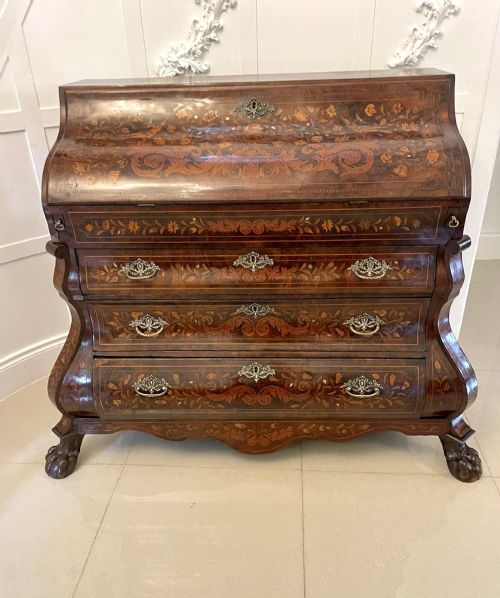
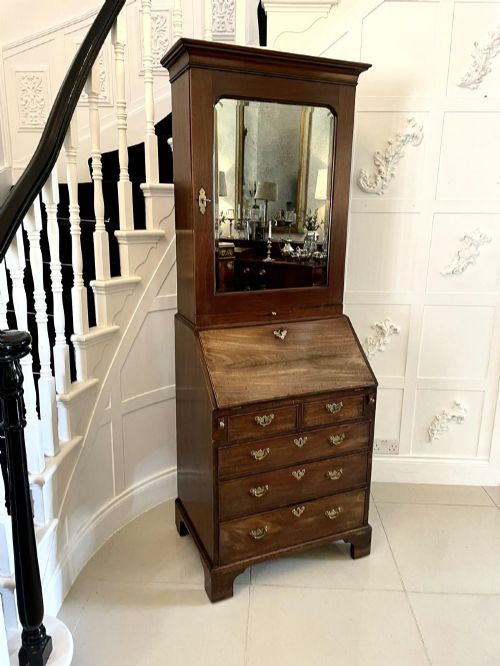
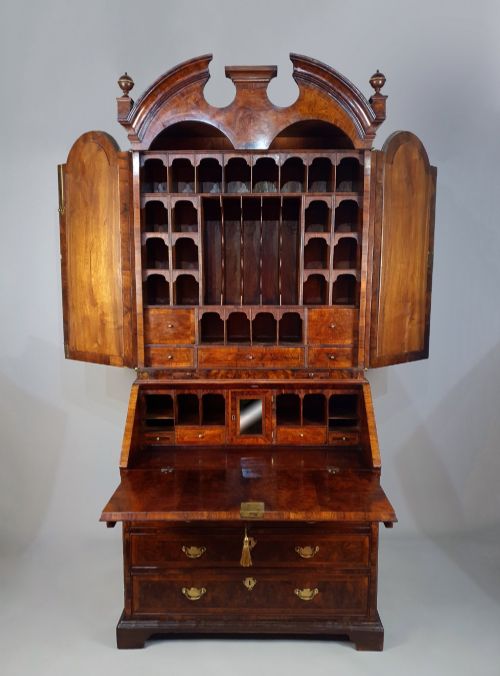
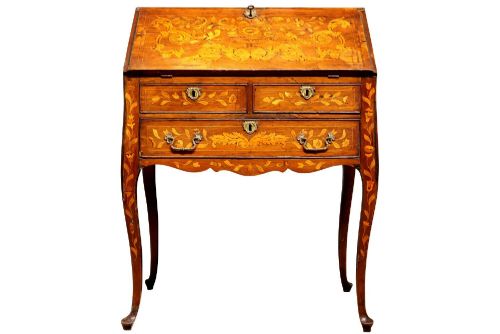
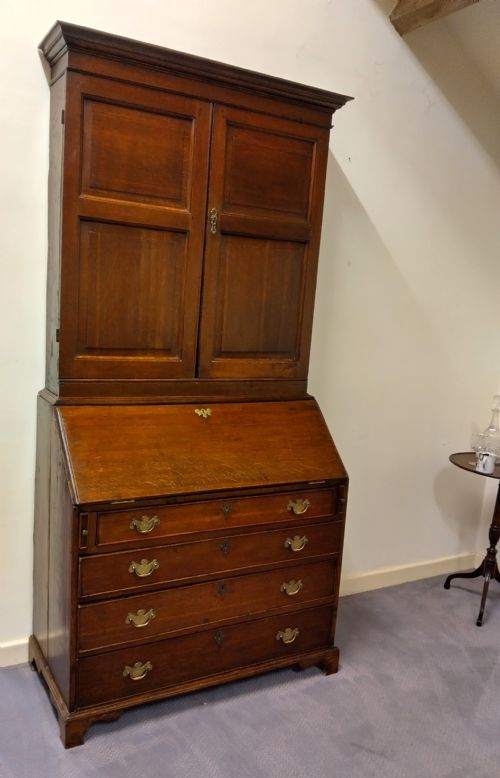
Bureau bookcases add a glazed upper cabinet for display, while smaller formats like bureaus on stands or legs offer lighter proportions. Buyers encounter variations ranging from plain oak panels to highly decorative floral marquetry and bombe shapes.
Materials and construction
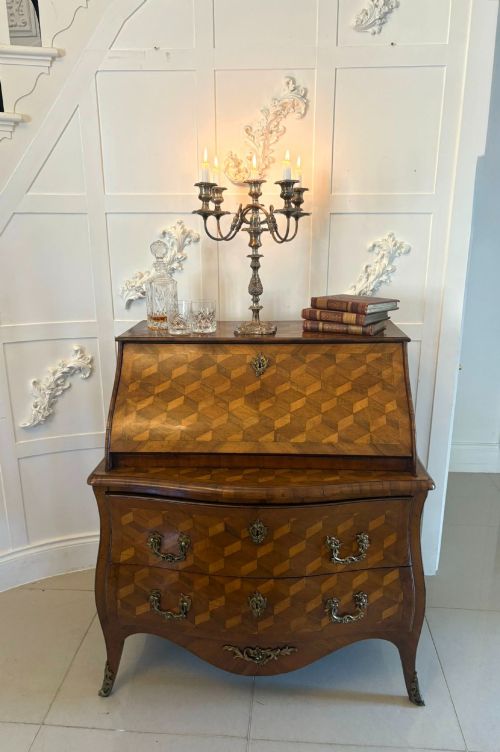
Cabinetmakers constructed these desks primarily from solid and veneered timbers, selecting dense woods like mahogany, walnut, and oak. Burr walnut and fruitwoods frequently provide figured surfaces, while floral marquetry and parquetry introduce intricate decorative inlay using contrasting woods.
Internal components rely on fine joinery, creating stepped interiors with small drawers, secret compartments, and pigeonholes behind the fall front. Brass hardware, including drop handles and escutcheons, secures the drawers and operational flaps.
An early oak bureau on this site comes adapted for a television, bridging seventeenth-century joinery with modern screen time.
What separates examples
The sophistication of the internal fitting dictates much of the distinction between standard and superior pieces, particularly when secret compartments and stepped drawer arrangements are involved. Burr walnut veneers with matching grain patterns show greater care in timber selection than plain secondary woods.
Proportion and surface preservation remain vital, as original bracket feet and untouched patination elevate an example above later alterations or heavy restoration. Marquetry work executed with sharp detail and varied timber tones separates master craftsmanship from simpler provincial execution.
The 18th Century Slant Front Desk Glossary
- Fall front
- The hinged writing flap that pulls down to form a horizontal desk surface. It conceals the fitted interior when closed.
- Fitted interior
- The arrangement of small drawers, pigeonholes, and central compartments revealed when the desk flap opens. More complex examples include secret compartments.
- Marquetry
- Decorative veneer work formed by fitting pieces of various coloured woods together to create floral or geometric patterns. It appears frequently on walnut and exotic timber surfaces.
- Bureau bookcase
- A dual-purpose piece combining a slant front desk base with an upper glazed shelving cabinet. The upper section often includes candle slides.
- Bombe shaped
- A swelling, convex curved profile to the front and sides of the cabinet base. This silhouette appears on continental and Dutch examples.
18th Century Slant Front Desk: Frequently Asked Questions
How do I use an 18th century slant front desk today?
The fold-down writing flap provides a functional surface for writing letters or placing a laptop. Internal compartments organise stationery, while the lower drawers store household items.
Leaving the desk flap open displays the fitted interior drawers and pigeonholes as a decorative feature. Closed, the compact cabinet footprint suits studies, living rooms, and hallways alike.
What is the difference between a bureau and a bureau bookcase?
A standard bureau consists of a base cabinet with a sloping writing flap and lower storage drawers. These units stand independently against a wall.
A bureau bookcase adds a second upper section featuring glass doors and internal shelving for book storage. Some early variations divide into distinct structural tiers for transport.
How do I tell George I from George III desks?
George I and Queen Anne pieces frequently utilise figured walnut timbers, often displaying herringbone banding and cushion-moulded drawer fronts. Proportions tend to be smaller, sometimes featuring cabriole legs or bracket feet.
George III examples lean heavily toward mahogany construction, reflecting the shift in fashionable timber mid-century. Cabinet lines become straighter and more rectilinear, incorporating bracket feet and refined brass drop handles.
What are candle slides on these desks?
Candle slides are pull-out wooden laths positioned directly beneath the upper glazed doors of bureau bookcases. They provided a stable ledge to hold Tallow or wax candles for illumination.
Lighting candles placed on these pull-out arms allowed writers to see into the desk interior before the advent of electricity. They slide flush into the cabinet frame when not in use.
Are these desks strictly English in origin?
While many pieces originate from English workshops in oak, walnut, and mahogany, continental examples appear frequently. Dutch and Italian makers produced distinct pieces utilising elaborate floral marquetry and bombe curved profiles.
Regional English furniture also displays local character, such as Yew wood or fruitwood constructions from country workshops. These regional pieces contrast with polished London urban cabinetmaking.