
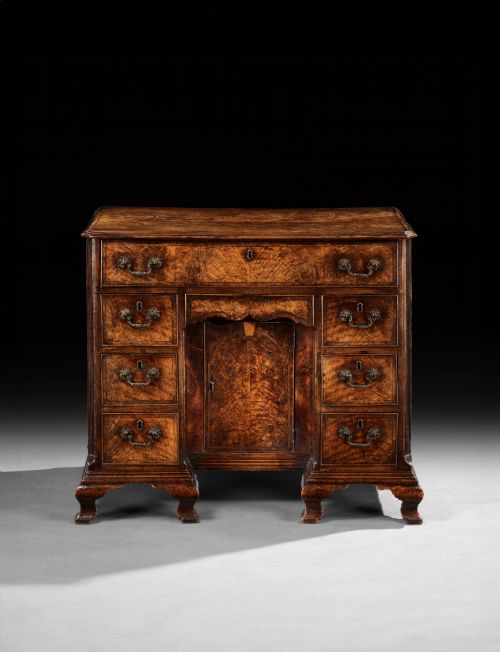
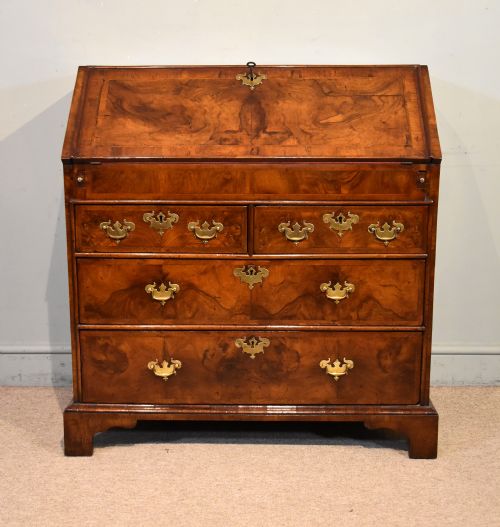


George II Writing Bureau
A george ii writing bureau brings together cabinetmaking and fitted compartments, offering a desk with secure drawers for correspondence.
George II Writing Bureau
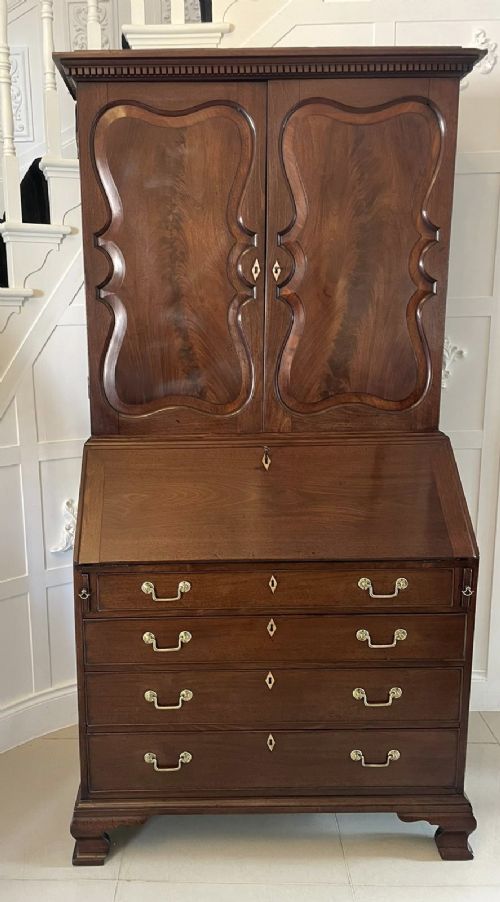
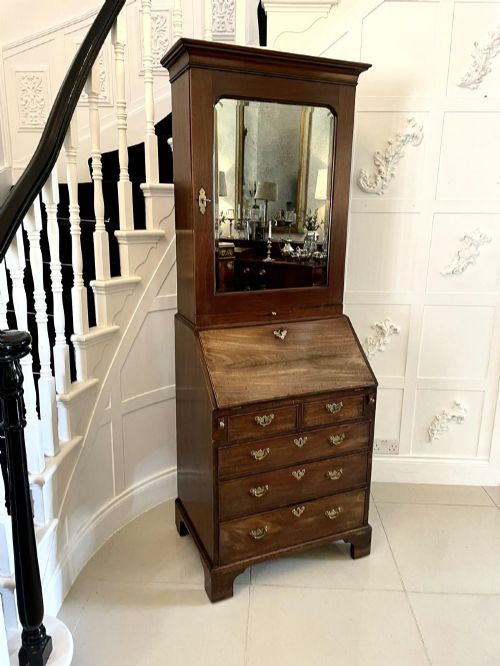
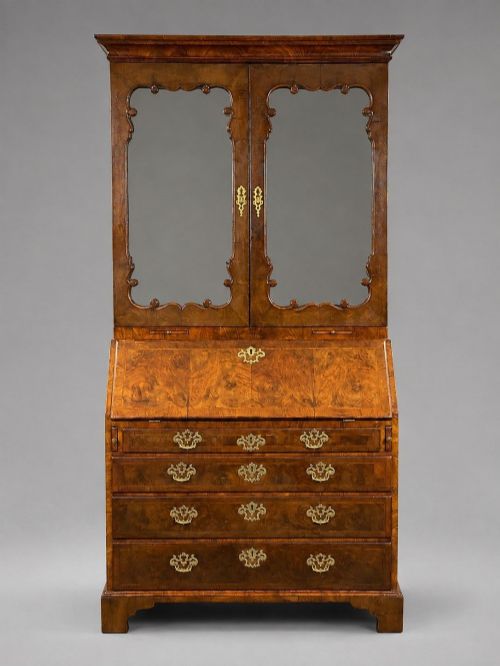
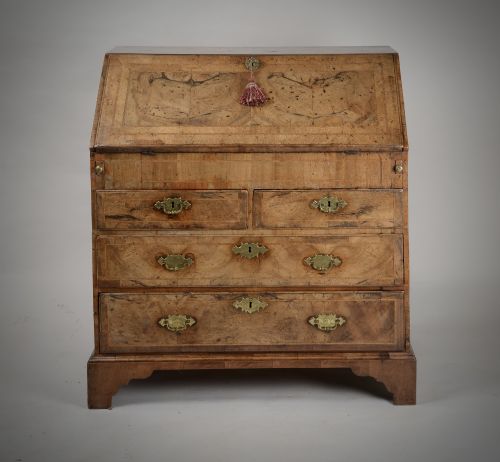
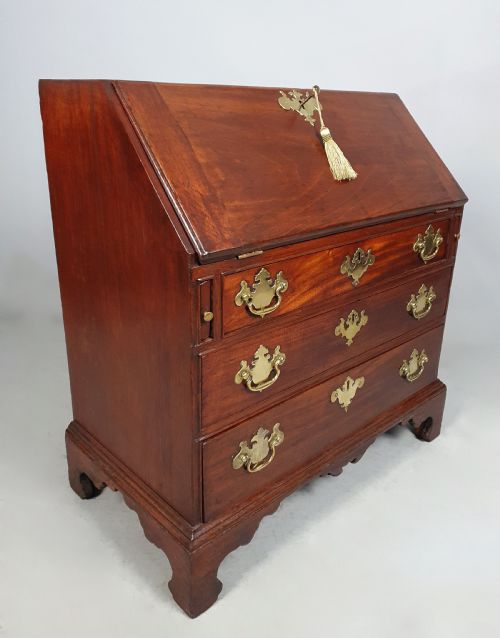
A george ii writing bureau stands as a principal form of domestic furniture from the eighteenth century, combining a sloping fall-front writing surface with a chest of drawers beneath. When buyers search for this phrase, they encounter varying formats, from compact single-piece desks to towering bureau bookcases topped with glazed or panelled doors.
The pieces on this page span several variations in timber and scale, including diminutive examples in elm, fruitwood, and yew alongside larger constructions in figured mahogany and walnut. Alongside authentic eighteenth-century examples, the selection includes pieces made in later periods under the influence of George II style.
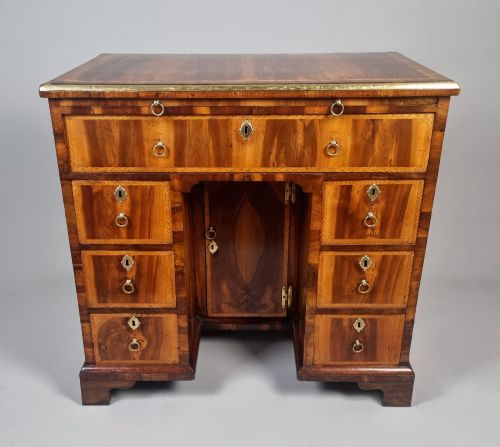
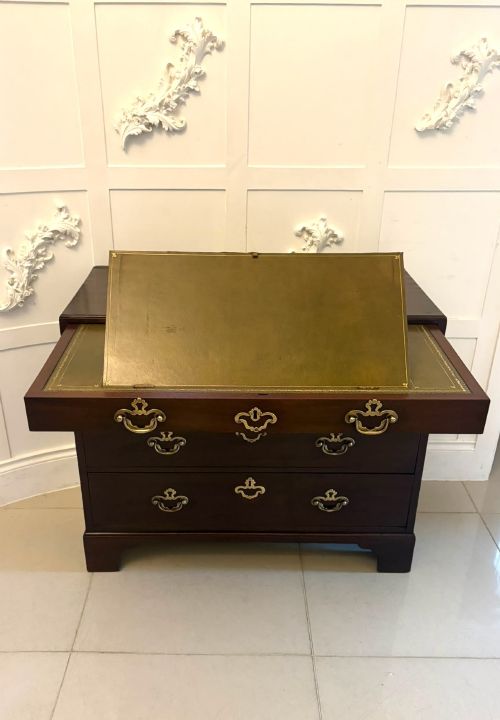
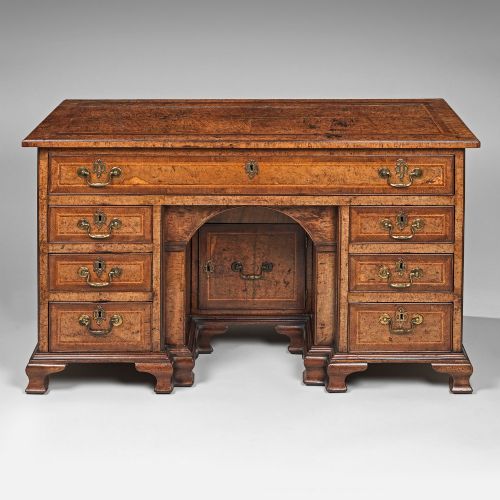
Kneehole desks and dressing chests with fitted writing sections also appear within this group, offering recessed central cupboards and smaller drawer arrangements. These alternatives provide similar writing facilities while maintaining the characteristic proportions of the era.
How they were made
Cabinetmakers constructed these pieces using native and imported timbers, applying veneers of burr walnut, fiddleback walnut, and figured mahogany over secondary woods such as oak and pine. Craftsmen employed featherbanding and crossbanding to frame drawer fronts and fall flaps, enhancing the visual depth of the wood grain.
Internal components relied on solid timber for drawer linings in cedarwood, fruitwood, and oak, assembled with hand-cut dovetail joints. Brass hardware, including original escutcheons and drop handles, secured the drawers and fall fronts while providing functional decoration.
Listings feature eighteenth-century pieces alongside late nineteenth-century revival examples constructed in mahogany, walnut, and oak.
What varies in quality
The choice of timber grain and veneer selection dictates much of the visual distinction across the range, with highly figured burr walnut and rich red mahogany commanding attention. The intricacy of the internal fittings, such as secret compartments, pigeonholes, and small drawers behind the fall-front, reveals the skill invested by the cabinetmaker.
Proportion and scale also separate standard examples from finer pieces, particularly in diminutive or bureau bookcase forms where balance is harder to achieve. The retention of original brasses and untouched surface patination adds further distinction to the construction.
Giles Grendey·Robert Gillows II
The George II Writing Bureau Glossary
- Bureau
- A desk featuring a sloping lid that opens to reveal a fitted interior of small drawers and pigeonholes. It typically sits above a set of graduating drawers.
- Bureau bookcase
- A two-part piece comprising a bureau base surmounted by an upper bookcase section enclosed by doors. The upper section often contains adjustable shelving.
- Kneehole desk
- A compact desk or dressing table featuring a central recessed kneehole space flanked by pedestals of small drawers. It often includes a small cupboard set behind the kneehole.
- Featherbanding
- A decorative inlay technique using small strips of veneer cut diagonally across the grain and arranged in a herringbone pattern. It frames the borders of drawer fronts and tabletops.
- Escutcheon
- A protective brass plate surrounding a keyhole. It prevents the wood surrounding the lock from sustaining damage over repeated use.
George II Writing Bureau: Frequently Asked Questions
What is inside a bureau?
Lifting the sloping fall-front reveals a writing surface covered in leather or plain wood, backed by an arrangement of pigeonholes, small drawers, and occasionally hidden compartments.
These internal sections held stationery, ledgers, and correspondence, keeping personal documents organised and secure behind the locked flap.
How do I spot a later copy?
Later pieces built in the George II style often display machine-cut elements, uniform timber colour, and secondary woods inconsistent with eighteenth-century workshops.
Examining the drawer linings, backboards, and block construction helps distinguish nineteenth-century or later revival pieces from period originals.
Where were they used?
These desks served as private writing stations in the parlours, libraries, and bedrooms of large houses and urban residences alike.
The lockable fall-front allowed owners to keep sensitive financial records and personal letters out of sight when not in use.
What timbers were used?
Walnut dominated the earlier part of the period, frequently used as burr veneer or solid cuts with featherbanded borders. Mahogany gained preference later in the century, supplemented by timbers such as oak, yew, elm, and cedarwood.
Cabinetmakers matched these primary woods with durable secondary timbers for internal partitions and drawer bases.