
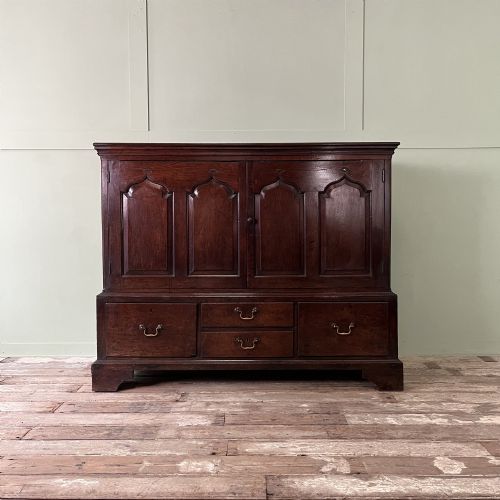
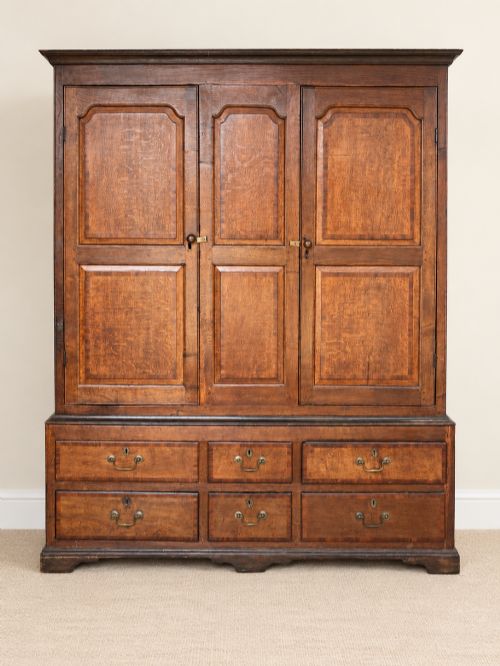
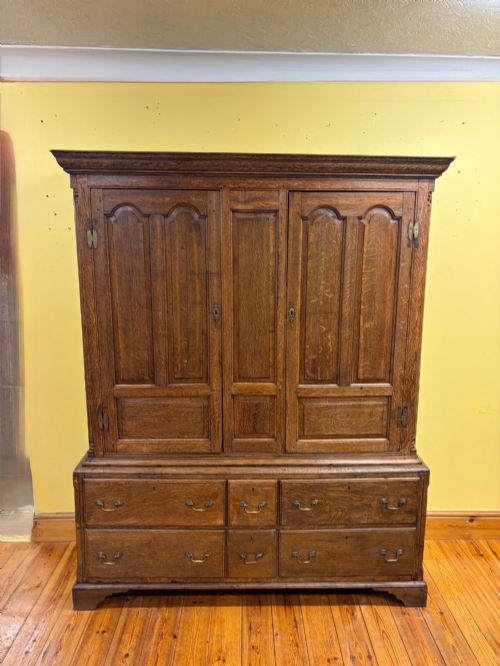
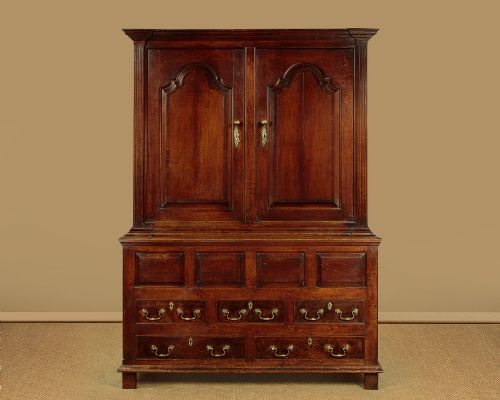


18th Century Oak Press
An 18th century oak press provides generous storage with rich timber grain, serving as a foundational piece for traditional domestic interiors.

What an 18th century oak press is
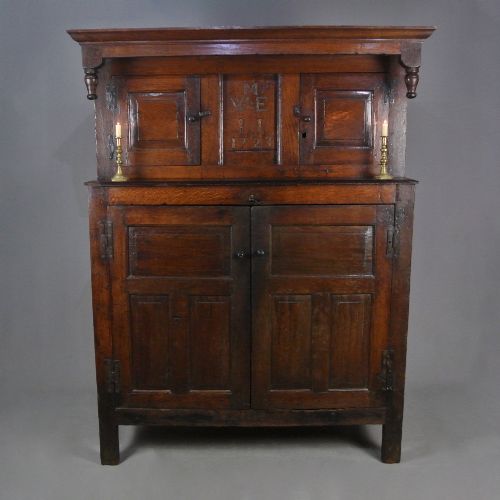
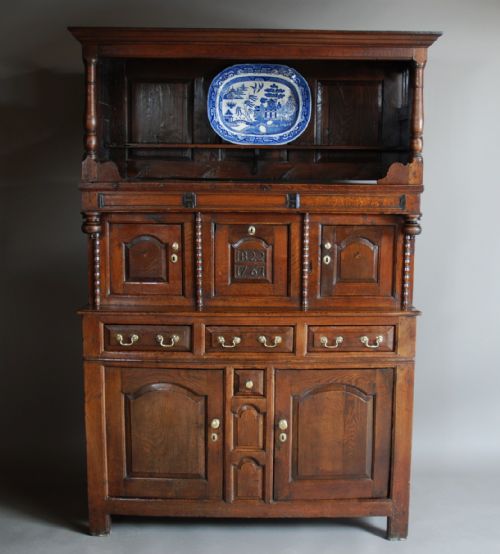
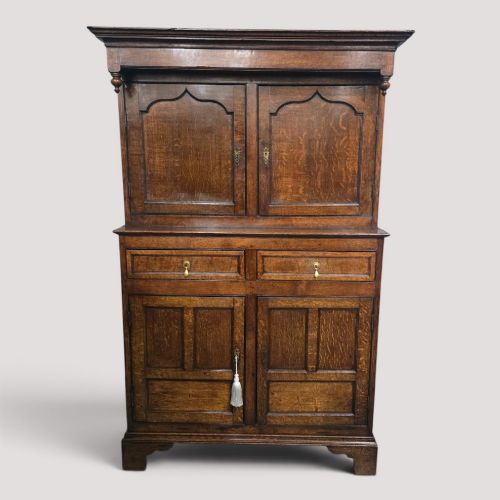
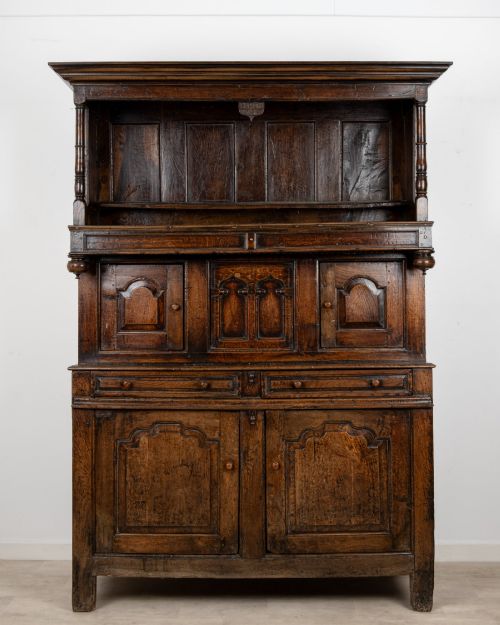
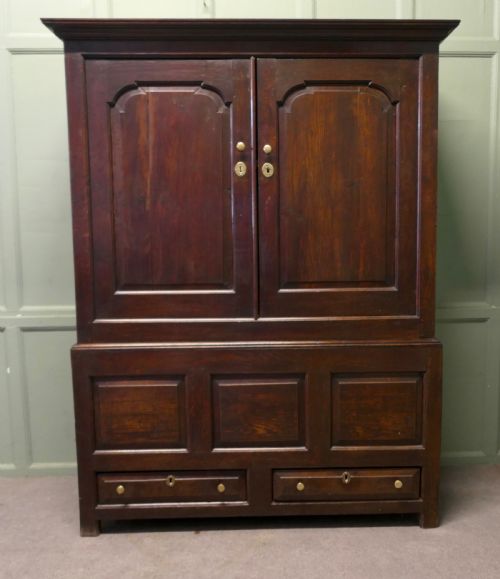
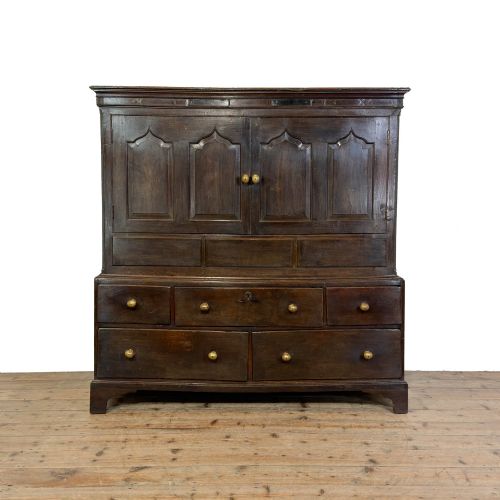
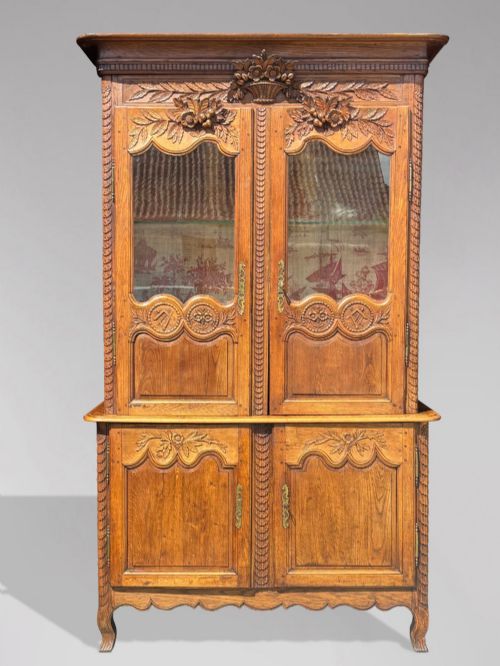
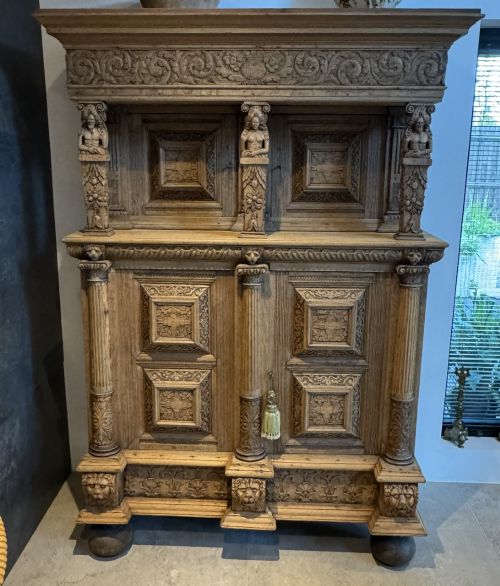
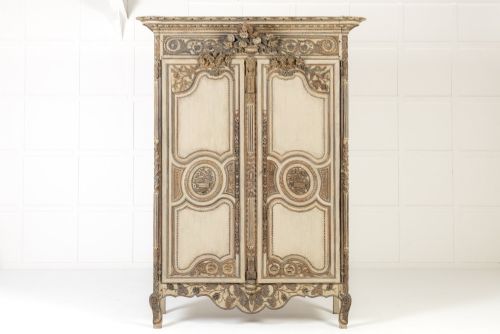
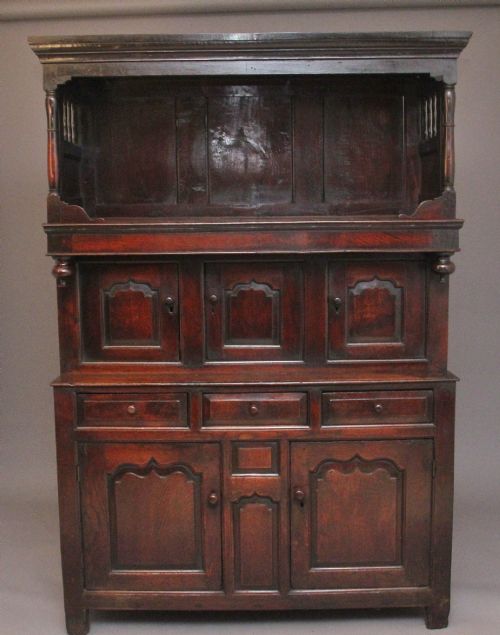
An 18th century oak press combines enclosed storage for garments and household textiles with sturdy domestic utility. Buyers encounter these forms primarily as large cupboards, linen presses, and livery cupboards originating from English, Welsh, and French workshops.
The evidence shows these pieces span the Georgian period alongside the broader 18th century and 19th century eras. Regional country houses and rural workshops produced the majority of surviving examples.
Forms range from two-stage cross-banded cupboards to small hanging presses and housekeeper cupboards. The selection reflects practical domestic needs of the period, offering deep shelving and hanging space.
How they were made
Maker workshops utilised solid oak timber for the primary structure, yielding robust cabinets built to withstand daily household demands. Joiners constructed these presses using traditional framing techniques and pegged joints.
Fittings and hardware incorporated brass elements, such as hinges and handles, complementing the warm tones of the wood. Certain examples feature secondary decorative details like cross-banding or mahogany accents.
Retail Price Guide 2026
Typical UK retail prices for 18th century oak press, calculated from the Sellingantiques database of over a million retail prices indexed since 2003. This retail price guide relies exclusively on Sellingantiques data; no external sources or auction records are used, so the figures do not describe the wider market.
The record shows materials spanning solid oak and brass, with styles ranging from Georgian country to Neoclassical French designs.
What varies in quality
Quality differences stem from the depth of the timber's grain, regional craftsmanship, and the retention of original brass hardware. Pieces originating from specific regional traditions, such as Welsh country workshops, demonstrate distinct proportions and panel detailing.
The integration of functional elements like sliding shelves, hanging rails, and lower drawers distinguishes the utility of individual presses. The condition of the original oak surfaces and the subtlety of period alterations govern the overall character of the piece.
The 18th Century Oak Press Glossary
- Linen Press
- A tall storage cabinet designed specifically for storing folded garments and household linens. These typically feature sliding interior trays or shelves behind upper doors.
- Livery Cupboard
- A traditional term for a storage cabinet used in domestic settings for food, clothing, or household goods. They frequently appear in regional English and Welsh country styles.
- Cross-banded
- A decorative technique where thin strips of veneer are applied to the borders of panels so the grain runs perpendicular to the core timber. This adds subtle visual contrast to Georgian furniture.
- Mule Chest
- A form combining a blanket box or chest base with one or more drawers beneath. These represent a transitional storage design related to the press cupboard.
- Two Stage
- Describes furniture constructed in distinct upper and lower sections assembled together. This structural approach facilitated transport in regional domestic interiors.
Frequently Asked Questions
What is an 18th century oak press used for?
These pieces served historical households for storing folded garments, household linens, and hanging clothes. Their deep internal proportions accommodate substantial textile storage.
Today, buyers utilise them as freestanding wardrobes, hallway storage, or linen cupboards in traditional and contemporary interiors alike.
How do I identify a Welsh oak press?
Welsh examples often exhibit distinct regional proportions, panel arrangements, and country craftsmanship associated with local workshops. They frequently incorporate lower drawer sections and substantial cornice details.
Examining the construction methods and regional timber characteristics helps separate Welsh country pieces from English equivalents.
Are these presses made of solid oak?
Surviving examples in the record consist primarily of solid oak construction, utilised by period joiners for structural durability. Regional makers relied on native timber for both the external framing and internal shelving.
Some variations incorporate secondary woods or mahogany accents, particularly in transitional late period designs.
How do I care for antique oak furniture?
Maintain oak surfaces by avoiding direct sunlight and maintaining stable room humidity to prevent timber movement. Gentle cleaning with appropriate wax preserves the natural finish and colour.
Regular inspection of brass hardware and internal joints ensures the structural integrity remains undisturbed.