
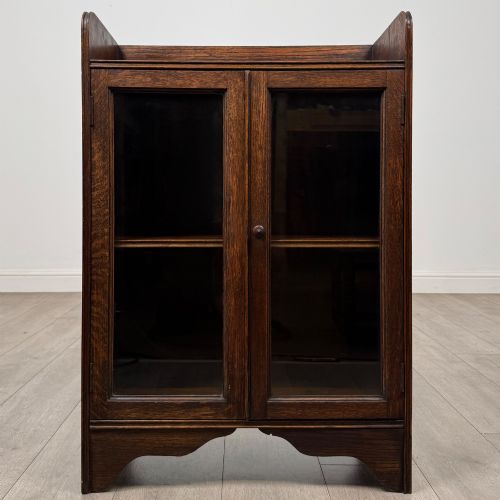
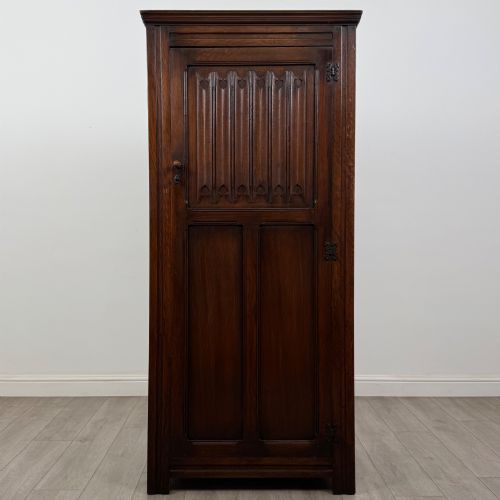
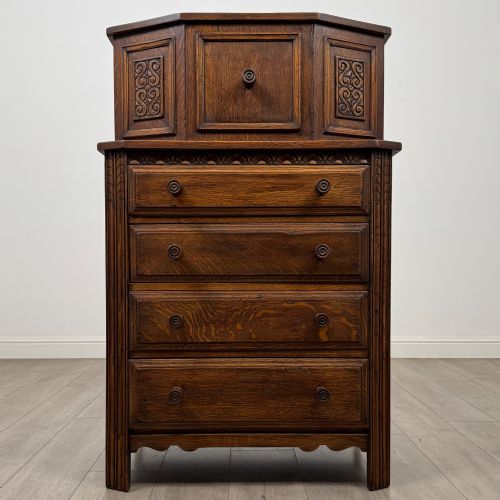
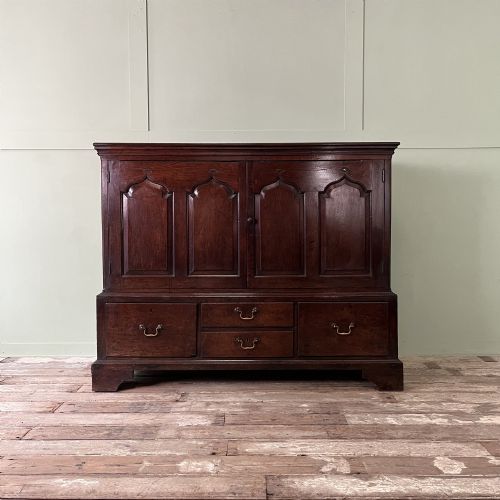
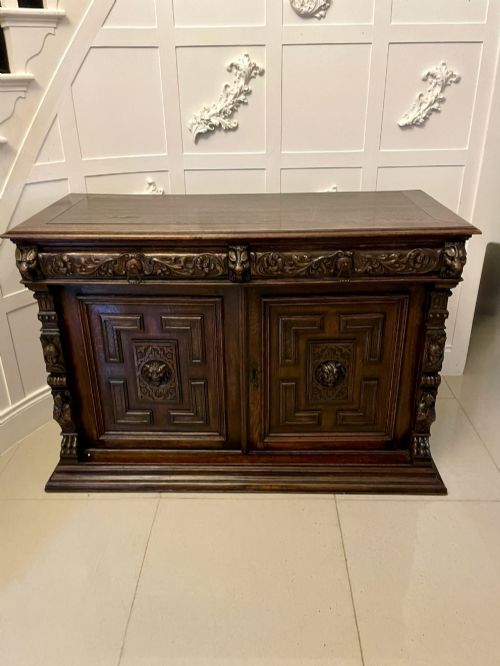
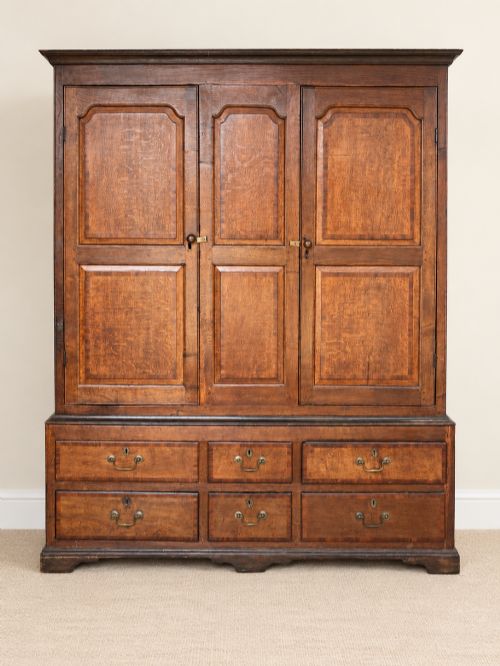
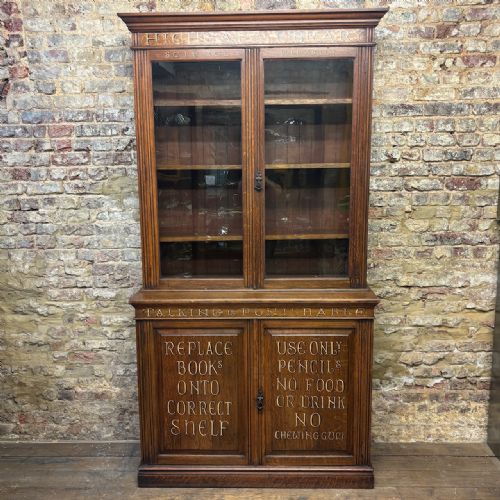
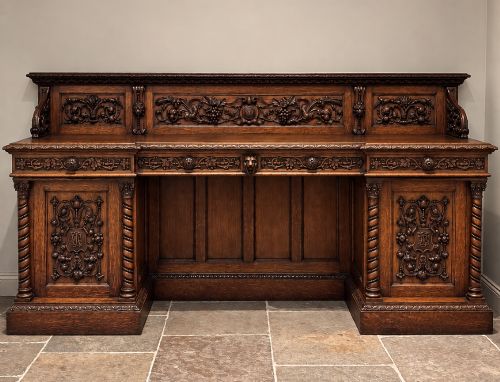


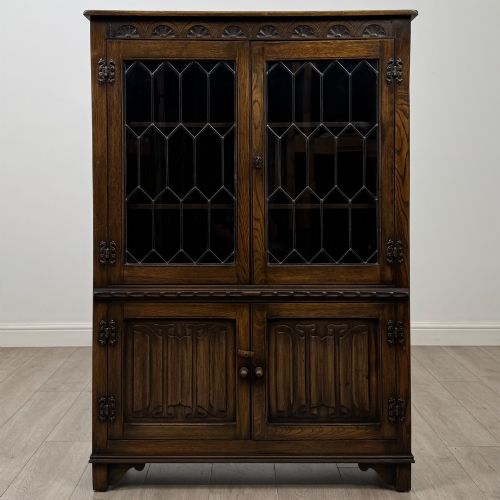
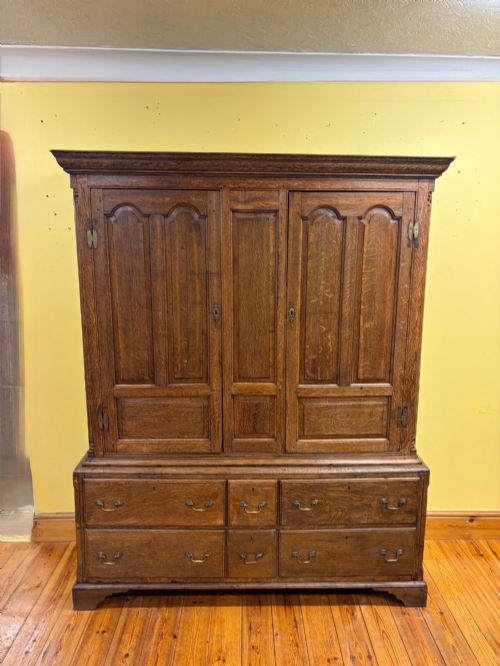
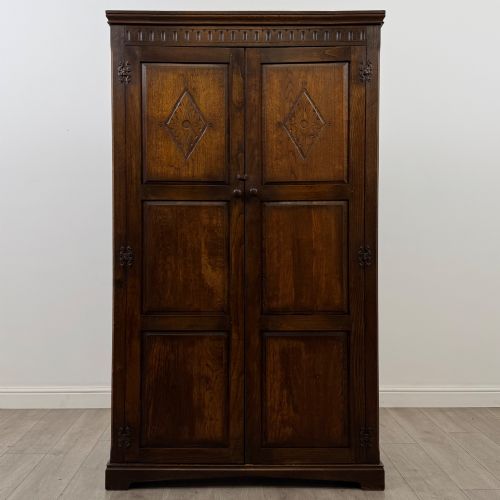
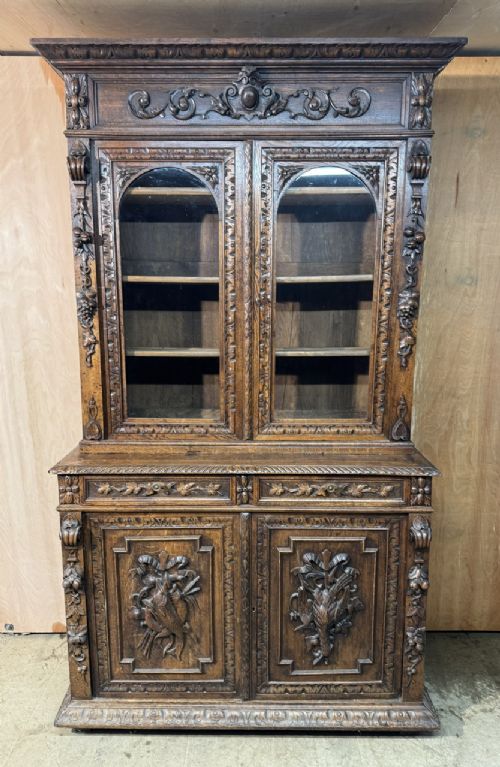
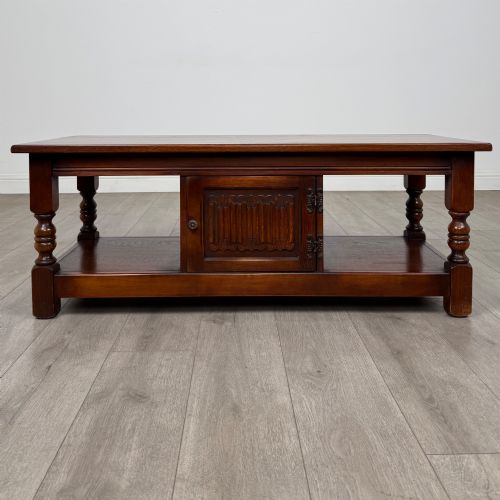
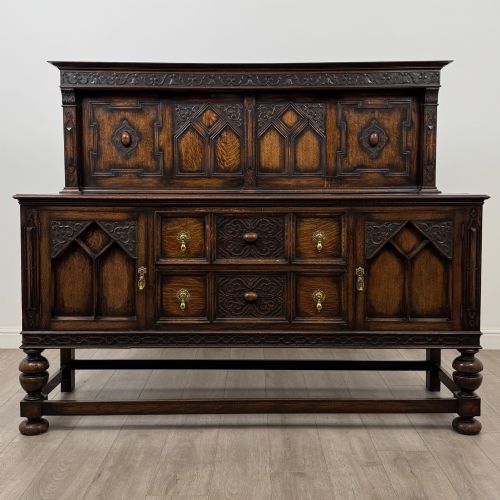
Dark Brown Oak Cupboard
These dark brown oak cupboard pieces offer honest utility and rich timber tones, making them foundational storage for any traditional interior.
What these pieces are
A dark brown oak cupboard brings centuries of domestic history into a room, serving as a robust and practical storage solution. When you search for a dark brown oak cupboard, you encounter forms ranging from compact seventeenth century court cupboards to nineteenth century Welsh dressers and housekeeper's cabinets. The examples recorded here span the seventeenth, eighteenth, and nineteenth centuries, alongside pieces from around nineteen hundred, reflecting long traditions of English country craftsmanship.
The assortment includes specialised forms such as food court cupboards, short cupboards, and livery cupboards alongside larger dressers and cabinets. These items primarily originate from English country workshops, utilising heavy timber framing and utilitarian proportions designed to endure. Each piece demonstrates the functional evolution of household storage across distinct historical periods.
How they were made
Construction relies heavily upon solid oak, selected for its durability and prominent grain pattern. Artisans shaped these structures using traditional joinery methods appropriate to periods spanning the seventeenth to the nineteenth centuries.
Metal fittings complement the timber work, with brass hardware frequently appearing on doors and drawers. The natural dark brown colour develops through age, finishing treatments, and the accumulation of historic wax polish.
Retail Price Guide 2026
Typical UK retail prices for dark brown oak cupboard, calculated from the Sellingantiques database of over a million retail prices indexed since 2003. This retail price guide relies exclusively on Sellingantiques data; no external sources or auction records are used, so the figures do not describe the wider market.
Listings span four distinct periods: seventeenth, eighteenth, nineteenth centuries, and the year nineteen hundred, using oak and brass.
What varies in quality
The distinction between standard examples and superior pieces rests upon the integrity of the timber and the depth of the original patination. Early seventeenth century specimens often display more intricate carved detail and heavier proportions than later nineteenth century iterations.
Proportion and structural survival dictate the standing of a piece within this category. Items retaining their original brass hardware and untouched surfaces command greater appreciation than those altered by later interventions.
The Dark Brown Oak Cupboard Glossary
- Court cupboard
- A traditional standing cupboard used for displaying plate and storing food, typical of the seventeenth century. These are heavily framed and often feature tiered construction.
- Livery cupboard
- A domestic storage piece historically used for provisions and candles, associated with English country interiors. They often incorporate ventilation openings or turned spindles.
- Food court cupboard
- A specialised seventeenth century storage form designed specifically for keeping provisions secure from pests. They feature pierced panels or grilles to allow air circulation.
- Housekeeper's cupboard
- A large storage cabinet dating around nineteen hundred, built to hold household linen and dry goods. These typically combine upper shelving with lower banks of drawers.
- Welsh dresser
- A combination of base cupboards and upper plate racks originating from rural workshops. They provide dual utility for both storage and display.
Frequently Asked Questions
What is a court cupboard?
A court cupboard is a traditional seventeenth century storage item designed for displaying plate and provisions in country homes. These pieces are built with heavy timber framing and distinctive tiered structures.
They serve as focal points in traditional dining rooms and hallways, offering substantial enclosed space combined with historic character.
How do I date an oak cupboard?
Dating relies upon examining construction methods, timber characteristics, and stylistic traits typical of periods like the seventeenth or eighteenth centuries. Earlier pieces show hand-riven timbers and pegged joinery.
Hardware styles and the depth of the dark brown patination also provide reliable indicators of age and period origin.
Where were these cupboards made?
The majority of these pieces originate from English country workshops utilising local oak timber. Makers applied regional vernacular styles ranging from Jacobean carving to plain Georgian utility.
This domestic production ensured each item was tailored for practical rural storage requirements.
How do I maintain oak furniture?
Maintenance requires regular application of bees-wax to nourish the timber and preserve the dark brown surface finish. Avoid placing these pieces near direct heat sources or strong sunlight.
Gentle dusting with a dry cloth keeps the historic patination intact without stripping the accumulated wax layers.