


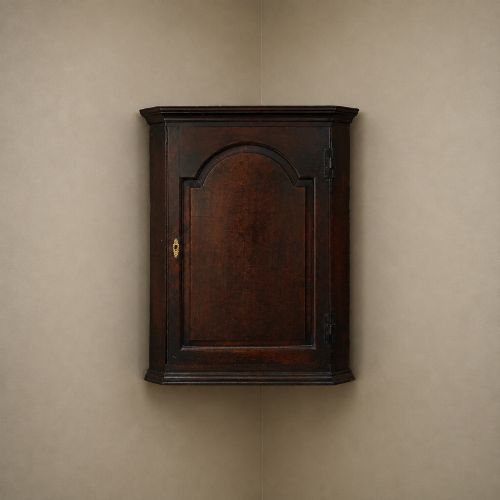


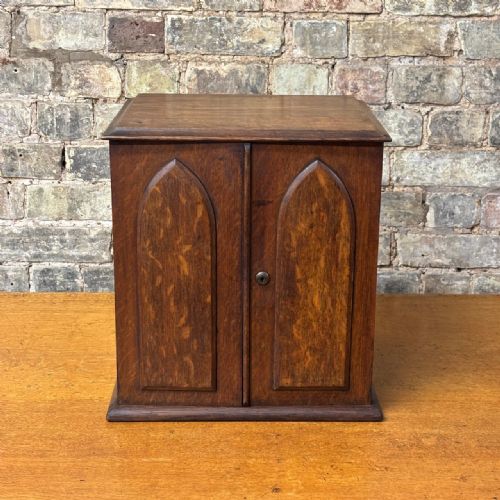


Arched Panel Oak Cupboard
These arched panel oak cupboard examples bring honest vernacular character and sturdy construction into any room.
Arched Panel Oak Cupboard
An arched panel oak cupboard is a storage piece built from sturdy timber, appearing in low press forms, wall spice cabinets, and tack cupboards. These pieces reflect country workshops and domestic utility from the eighteenth and nineteenth centuries.
The versions most commonly met on this page are Welsh and English country pieces from the eighteenth century, including Georgian vernacular examples. They range from small wall-hanging cabinets to low press cupboards designed for linen and household storage.
Makers constructed these forms using robust native timber with panelled doors featuring distinct arched details. Such furniture served practical storage needs in rural homes while displaying traditional regional woodworking skills.

Materials and construction
Carpenters built these cupboards using solid oak, chosen for its durability and abundant local supply. They combined this timber with brass fittings such as hinges and handles to secure the doors and drawers.
Construction relied on traditional frame and panel techniques, allowing the timber to move naturally with changes in humidity. Craftsmen shaped the signature arches directly into the wooden panels or framework to create decorative depth.
Arched Panel Oak Cupboard Retail Price Guide 2026
Typical asking prices for arched panel oak cupboard among the pieces listed under this phrase on Sellingantiques today, from the lower quarter to the upper quarter. They describe what is for sale here now, not the wider market.
Listings on this site feature oak materials across eighteenth and nineteenth-century periods, spanning Georgian vernacular and Welsh country styles.
Judging the quality
Quality in these cupboards rests on the crispness of the arched panel carving and the selection of well-figured oak timber. Superior pieces exhibit careful proportions and balanced layouts, particularly in smaller formats like wall spice cabinets.
The integration of original brass hardware and the integrity of the structural joinery elevate certain examples above standard utilitarian items. Master cabinetmakers achieved tighter joints and more refined surface patination through decades of use.
The Arched Panel Oak Cupboard Glossary
- Vernacular furniture
- Domestic pieces made by local craftsmen for everyday regional use rather than high urban workshops. These items often display traditional methods specific to areas like Wales or rural England.
- Linen press
- A large storage piece with upper cupboard space and lower drawers originally intended for textiles. Country variants in oak provide deep storage while occupying a modest footprint.
- Tack cupboard
- A specialised storage cabinet used traditionally for holding riding gear or household equipment. These sturdy oak pieces feature simple ventilation or panel construction.
- Panel
- A flat piece of wood fitted within a surrounding groove or frame to prevent splitting. The arched variant forms the distinct visual centre of these cupboards.
Arched Panel Oak Cupboard: Frequently Asked Questions
What is an arched panel oak cupboard?
An arched panel oak cupboard is a traditional wooden storage piece featuring distinctive curved panel details on the doors. These domestic items include low press cupboards and wall cabinets built during the eighteenth and nineteenth centuries.
Craftsmen built them primarily from solid oak using frame and panel construction. They served practical storage functions in rural English and Welsh homes.
How were these cupboards used?
These cupboards provided essential storage for household textiles, garments, spices, or tack in rural domestic settings. Lower press variants held linens and clothing, while smaller wall cabinets kept provisions secure.
Their sturdy construction suited daily use in busy country houses and farmhouses. Over time, their utility evolved into decorative display storage for modern interiors.
How do I date an oak cupboard?
Dating relies on examining construction techniques, timber characteristics, and hardware styles. Eighteenth-century examples often display hand-cut joinery and pegged joints.
Regional styles from Wales and England also offer clues through specific proportions and mouldings. Comparing panel configurations helps distinguish earlier Georgian vernacular pieces from later nineteenth-century work.
Where do these cupboards originate?
The listings show origins spanning English and Welsh country workshops. Regional vernacular traditions strongly influenced the design of these rural pieces.
Local cabinetmakers adapted standard storage forms to meet the specific needs of domestic life in these areas. This regional diversity creates distinct variations in proportion and panel detailing.