
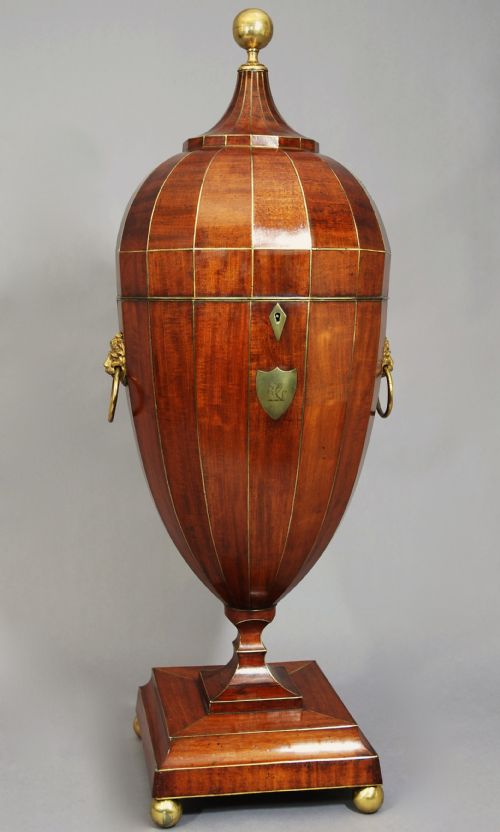

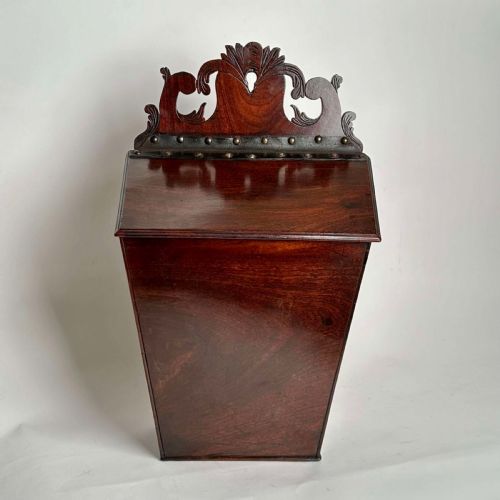


18th Century Mahogany Knife Box
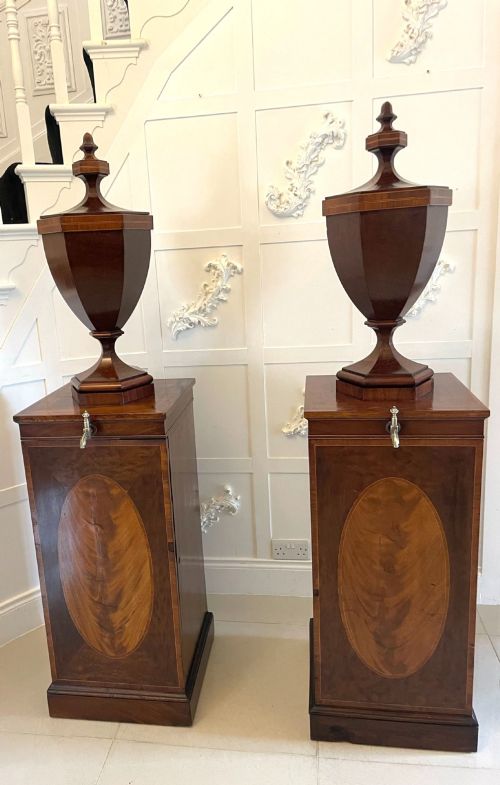
These 18th century mahogany knife box examples are practical serving pieces crafted to hold cutlery on the dining table.
18th Century Mahogany Knife Box
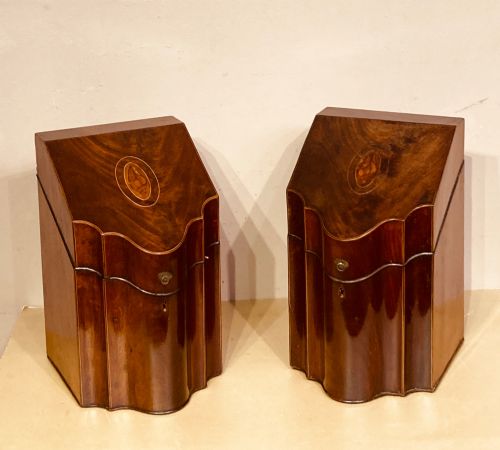
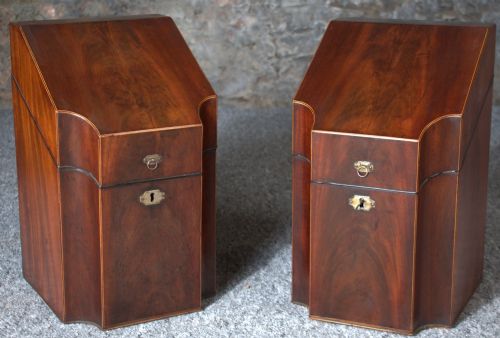
Forms vary from serpentine fronts and bow fronts to upright slope-lidded boxes and pedestals. Makers produced these pieces in pairs or as single items intended to stand on sideboards.
How They Were Made
Craftsmen built these pieces using solid and figured mahogany timber, often applying boxwood and satinwood inlay for decorative contrast. Brass fittings such as handles, escutcheons and mounts complete the construction.
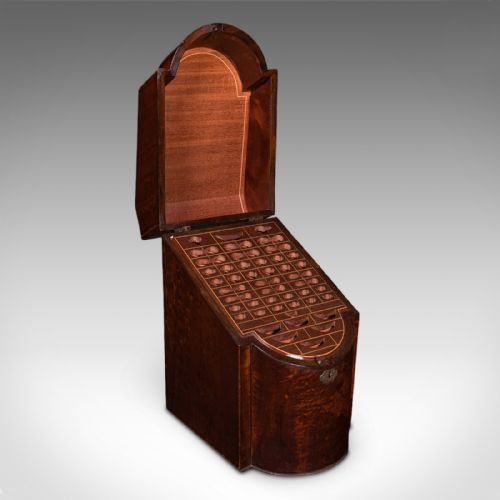
Interior compartments were fitted to organise individual cutlery items securely within the sloping or urn-shaped bodies.
Listings span the Georgian and George III periods, incorporating mahogany, brass, satinwood, boxwood inlay and bone.
What Varies in Quality
The degree of figuration in the mahogany timber and the crispness of the inlay define the visual merit of each piece. Superior examples display refined proportions, well-defined serpentine or bow front contours and patination developed over centuries.
Original brass hardware and intact internal fittings elevate a piece above those altered or lacking original components.
The 18th Century Mahogany Knife Box Glossary
- Serpentine front
- A furniture front curving inward centrally and convexly outward at the sides. This contour appears on finer Georgian knife boxes.
- Bow front
- A convexly curved front shape found on late eighteenth century examples. It softens the strict angles of earlier storage boxes.
- Inlay
- Contrasting woods such as boxwood and satinwood inserted into the mahogany surface. This technique creates geometric or floral border patterns.
- Escutcheon
- A protective brass plate surrounding the keyhole. It serves both a functional and a decorative purpose on the lid.
- Patina
- The surface sheen and deep colour developed by aged timber over generations of handling and polishing.
18th Century Mahogany Knife Box: Frequently Asked Questions
What held the cutlery inside?
Interiors contain fitted wooden blocks or partitions drilled and shaped to hold individual knife blades and handles securely in place.
These compartments kept silver flatware organised and protected between meals in the dining room.
Were they used in pairs?
Dining rooms during the Georgian period frequently utilised matched pairs of knife boxes placed at opposite ends of a sideboard or serving table.
Single boxes also served smaller households or were adapted over time as stationery cabinets.
How do I date an antique box?
Dating relies on stylistic shifts such as the transition from straight-fronted boxes to serpentine and bow front shapes during the George III period.
Timber choice, construction methods and the style of brass mounts provide further clues for attribution.
Can I use them for stationery?
Many examples find a modern second life holding letters, paper and desk accessories rather than dining cutlery.
The fitted interior compartments lend themselves well to organising household paperwork on a desk.