
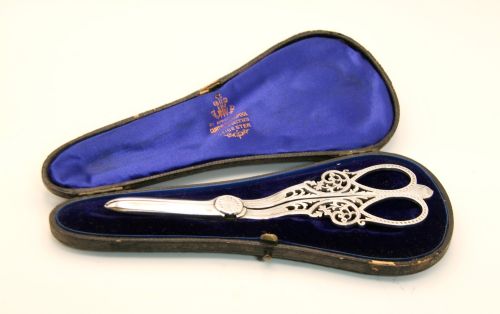
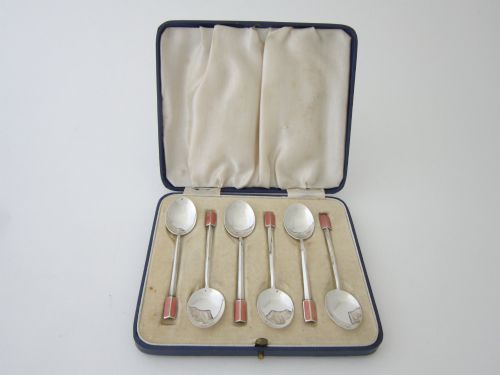
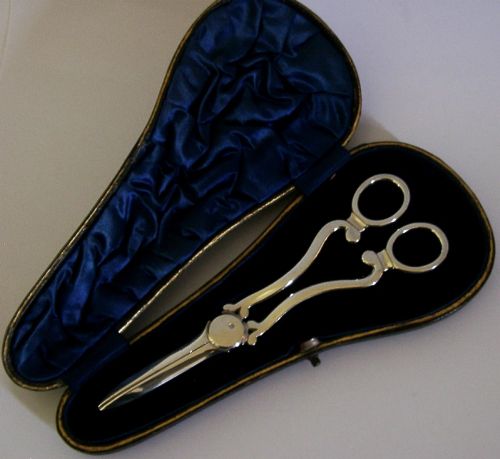
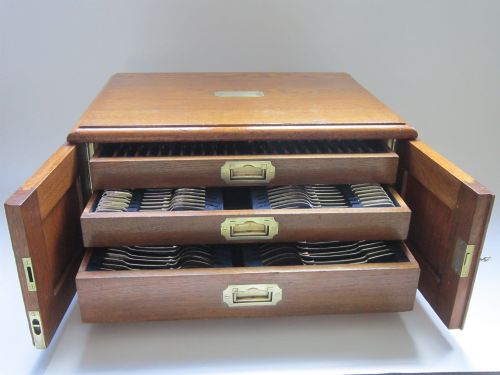
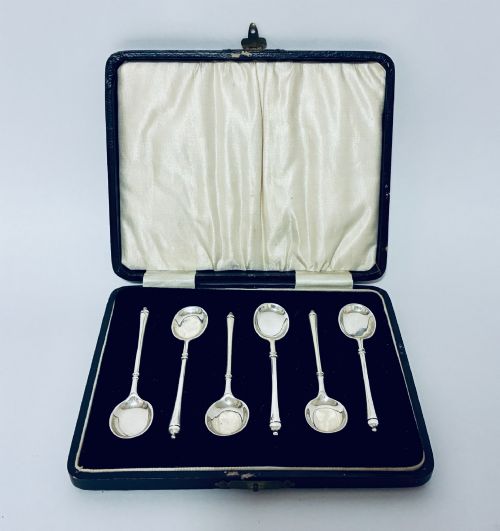
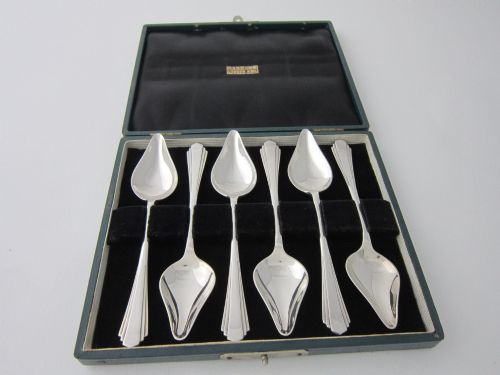
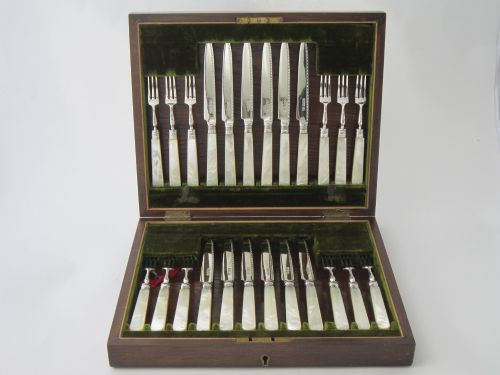
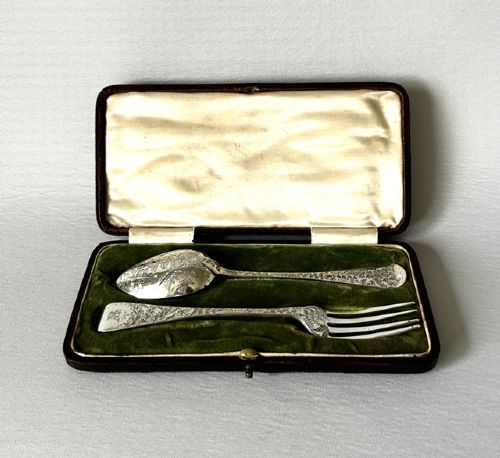
Antique Cutlery Boxes
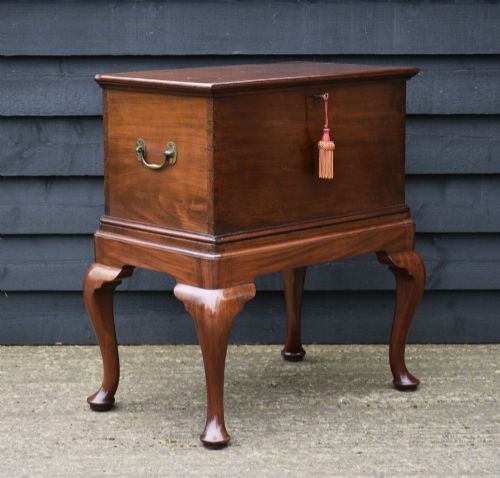
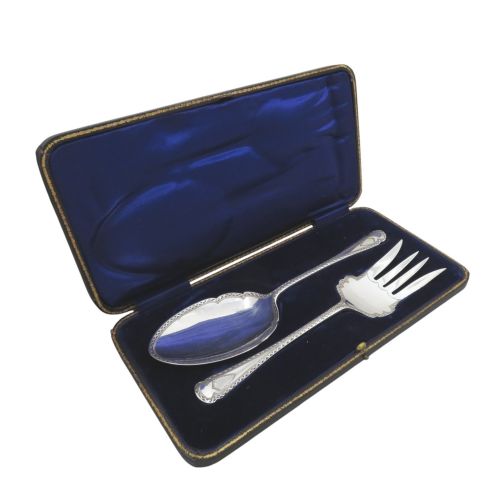
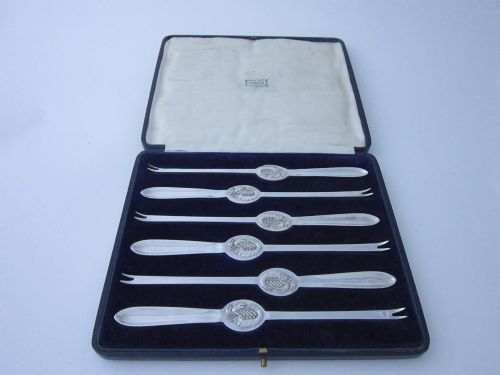
Antique cutlery boxes house silver and steel, offering fitted timber storage for dining rooms.
Antique Cutlery Boxes
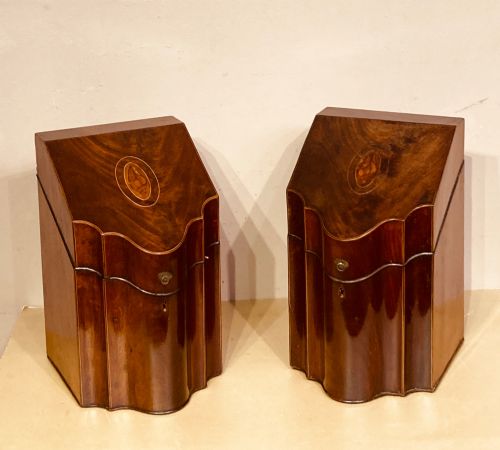
Antique cutlery boxes encompass mahogany and walnut containers designed to hold flatware, knives, and dining implements safely. Buyers searching this phrase meet Georgian slope-front knife boxes, serpentine forms, and nineteenth-century canteens.
The selection includes eighteenth-century mahogany examples with brass fittings alongside Victorian and Edwardian fitted cases. Pieces range from kitchen storage boxes to satinwood boxes mounted in silver.
How they were made
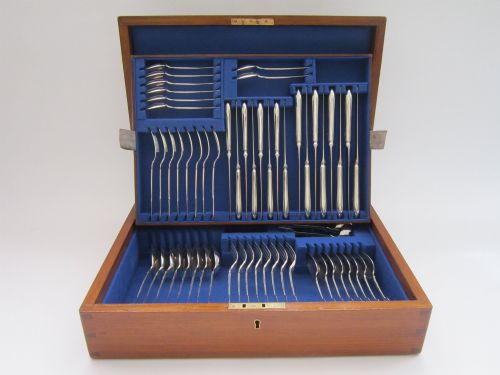
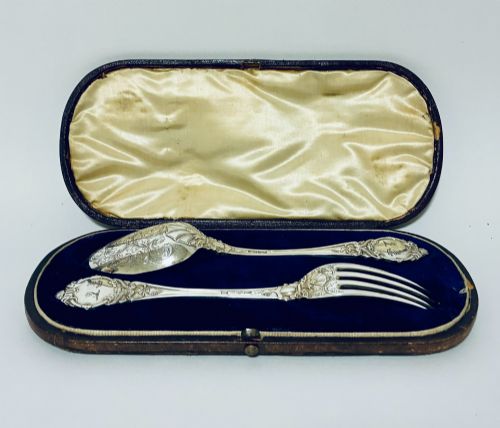
Cabinetmakers constructed these pieces primarily in mahogany, walnut, and satinwood, frequently employing curved serpentine or bow fronts. Interiors feature velvet, silk, or leatherette linings tailored to separate individual spoons, forks, and knives.
Mounts and handles utilise brass, while select examples incorporate solid silver hinges, escutcheons, and carrying fixtures.
Listings feature mahogany, walnut, and satinwood alongside brass and sterling silver fittings across Georgian and Victorian periods.
What varies in quality
The standard of timber grain, the crispness of brass hardware, and the preservation of original interior linings dictate the standing of a piece. Finer examples display figured mahogany veneers and well-preserved internal divisions.
Structural integrity of the joints and the presence of matching original mounts separate standard utility boxes from exceptional furnishing items.
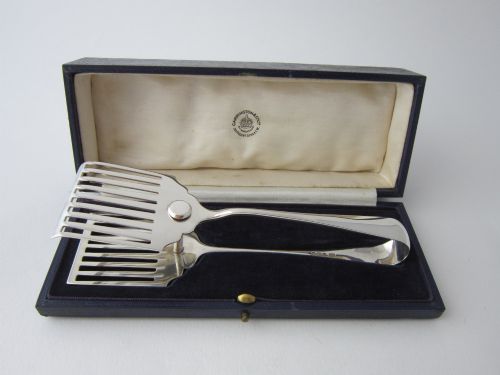
Asprey and Co·Carrington
The Antique Cutlery Boxes Glossary
- Serpentine
- A curved shape curving outward in the centre and inward at the sides, often seen on Georgian box fronts.
- Escutcheon
- A protective brass plate surrounding a keyhole on a box lid or front.
- Canteen
- A fitted box or chest designed to hold a complete set of cutlery securely in slots or trays.
- Satinwood
- A durable, lustrous timber with a golden sheen utilised for fine decorative boxes during the eighteenth century.
- Bow front
- A convex curved cabinet front popular in eighteenth-century and nineteenth-century design.
Antique Cutlery Boxes: Frequently Asked Questions
What fits inside an antique cutlery box?
These boxes accommodate flatware sets, serving utensils, and specialised dining tools depending on their internal layout.
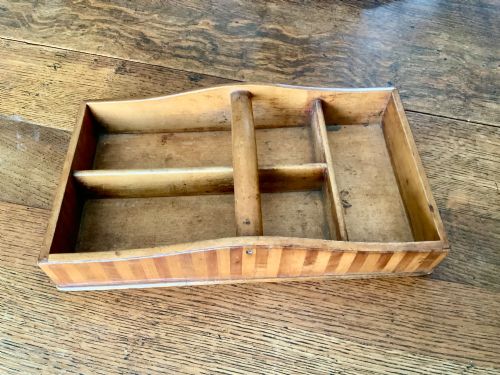
Interiors often feature slotted wooden trays or lined compartments designed for spoons, forks, and knives.
How do I identify a Georgian cutlery box?
Georgian examples typically feature sloping lids, mahogany construction, and brass bracket feet or carrying handles.
Many display serpentine or bow front profiles characteristic of late eighteenth-century cabinet making.
Were these boxes used in the dining room?
Households kept these containers in dining areas to store and protect silver flatware between meals.
Servants transported the implements to the table when required and locked the boxes afterward.
How do I care for the interior lining?
Original velvet, silk, or leatherette linings require gentle dry dusting with a soft brush to remove debris.
Keep these boxes away from direct sunlight and damp environments to preserve the delicate fabrics.