


18th Century Cutlery Urns
These 18th century cutlery urns are grand Georgian vessels designed to house dining silver on the sideboard.
18th Century Cutlery Urns
When you search for 18th century cutlery urns, you encounter tall, architectural vessels designed to stand on dining room sideboards during formal meals. They belong to the broader category of knife boxes and storage pieces that populated wealthy Georgian homes.
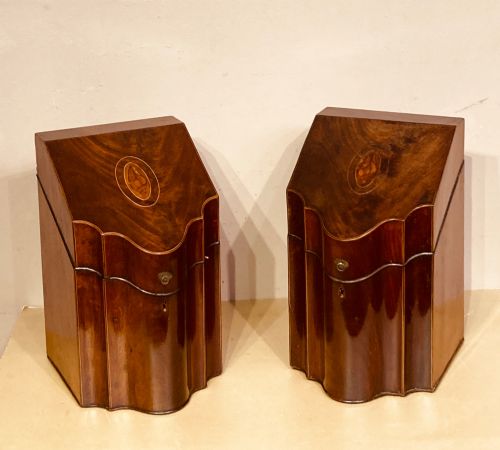
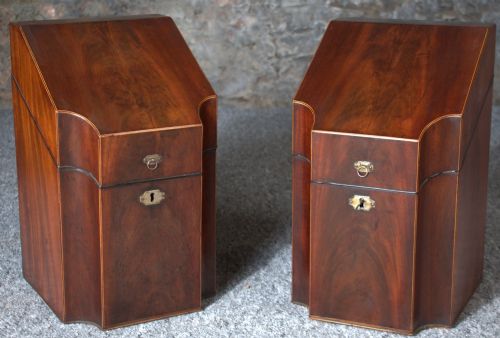
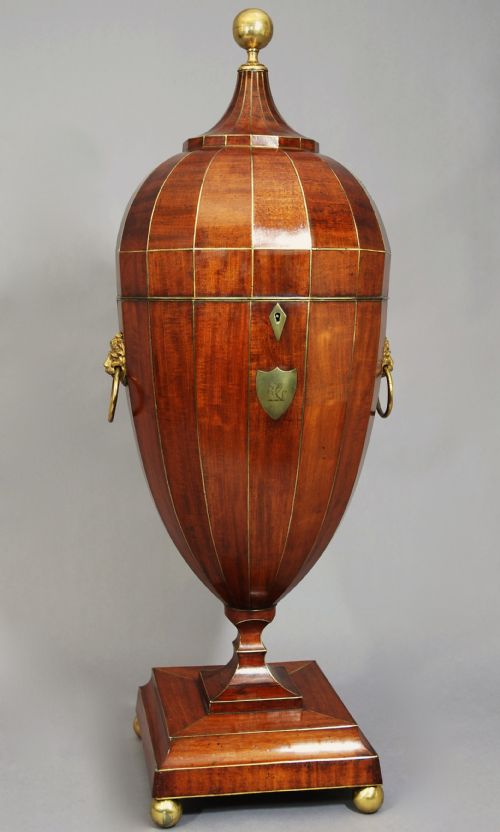
The versions most commonly met on this page take the form of tapering wooden urns alongside related knife boxes with serpentine or bow fronts. Mahogany predominates as the primary timber, often enhanced by decorative boxwood and wood inlay.
Makers of the period produced these items to match the neoclassical taste of the late Georgian era, particularly during the George III and Sheraton periods. Many examples show subsequent adaptations, having served variously for cutlery storage or later as stationery boxes.
How they were made
Metalwork played a crucial structural and decorative role, with brass fittings, handles, and escutcheons secured to the timber bodies. Select pieces incorporate solid silver mounts to elevate the status of the container.
Listings combine Georgian mahogany urns and knife boxes with related satinwood stationery containers.
What varies in quality
The visual appeal depends heavily on the figure of the mahogany and the crispness of any inlaid wood detailing, such as boxwood lines. Superior examples display a deep, natural patina developed over centuries of handling and care.
Proportion and form dictate the standing of a piece, with narrow bow fronts or well-balanced serpentine shapes commanding attention. The presence of original brass or solid silver mounts further distinguishes finer items from standard storage boxes.
The 18th Century Cutlery Urns Glossary
- Urn
- A vase-shaped vessel, often with a pedestal foot and removable cover, used in this context for storing dining knives.
- Serpentine
- A furniture front curving outward in the centre and inward at the sides, typical of refined Georgian design.
- Escutcheon
- A protective plate surrounding a keyhole, usually fashioned from brass on these wooden boxes.
- Patina
- The surface sheen and mellowing of colour acquired by timber over long periods of time and use.
- Inlay
- A technique where pieces of contrasting wood like boxwood or satinwood are inserted into the primary mahogany surface to create patterns.
18th Century Cutlery Urns: Frequently Asked Questions
What were 18th century cutlery urns used for?
These vessels held large sets of dining knives and forks on the sideboard during formal Georgian meals. Servants would retrieve the cutlery from the urn when laying courses for guests.
Over time, changing dining fashions led to many being repurposed. Some now serve as decorative display items or have been adapted for stationery storage.
How do I identify a George III piece?
George III items typically date from the second half of the 18th century into the early 1800s. Look for neoclassical design elements such as urn profiles, serpentine fronts, and refined mahogany timbers.
Matching pairs and pieces featuring detailed wood inlay or original brass fittings often point toward this specific period.
Where should I place an urn at home?
These tall vessels suit placement on sideboards, console tables, or sturdy side tables where their vertical silhouette stands clear. They add architectural presence to dining rooms or studies.
Keep them away from direct heat sources and strong sunlight to protect the aged mahogany and delicate wood inlay.
Are knife boxes and urns the same?
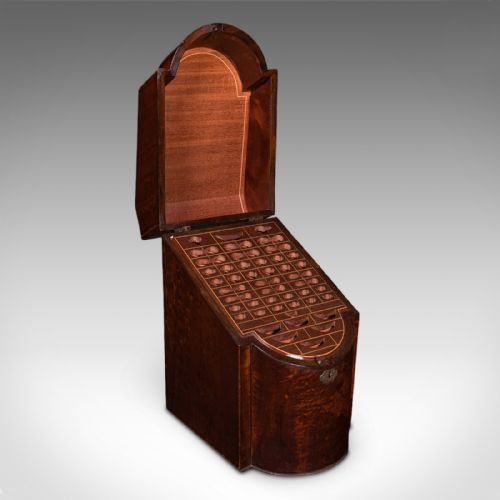
They share the same domestic function of storing dining cutlery but differ primarily in shape. Urns feature a rounded, vase-like profile, whereas knife boxes typically present a sloped lid on a rectangular or serpentine base.
Both forms belong to the same late 18th century dining room tradition.