




Georgian Cutlery Boxes
Georgian cutlery boxes are slope-fronted wooden receptacles designed to hold dining knives on the sideboard, offering elegance and practical storage for the period dining room.
Georgian Cutlery Boxes
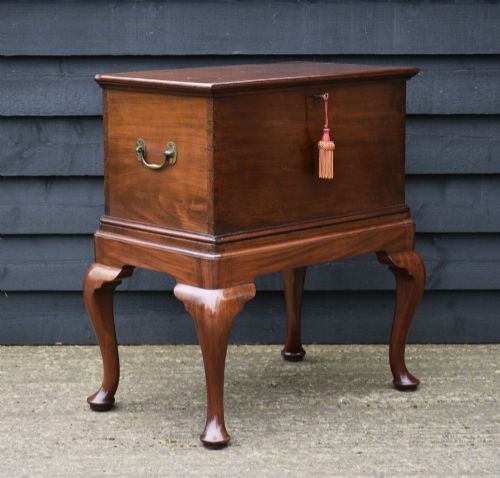
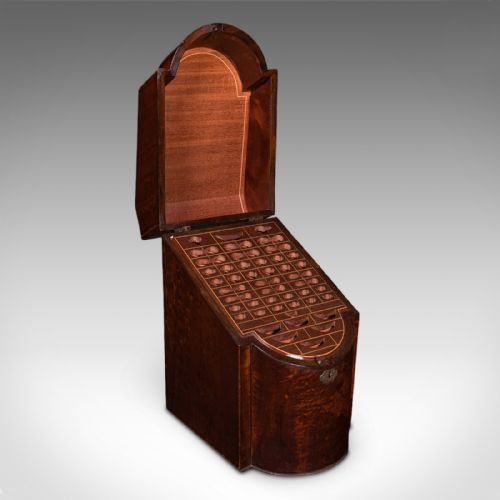
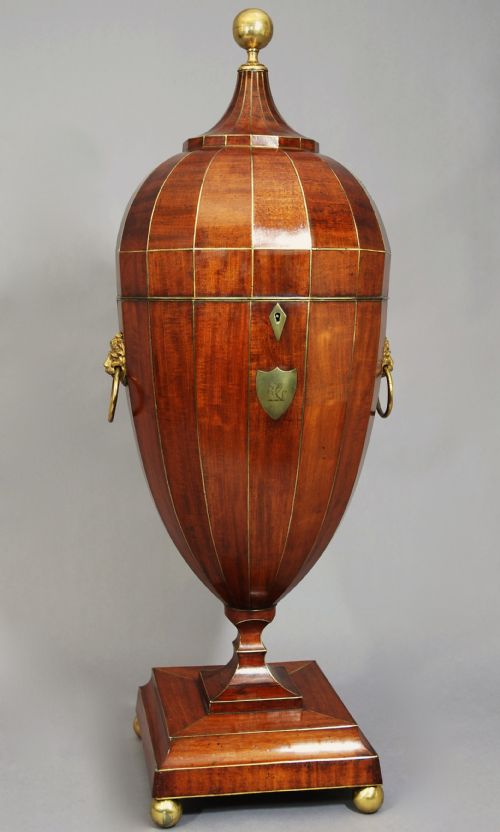
When you examine georgian cutlery boxes, you encounter dedicated receptacles designed to hold knives, forks, and spoons upright or flat within disciplined dining rooms. The pieces appearing most frequently on this page take the form of slope-fronted knife boxes and monumental cutlery urns originating from the eighteenth century.
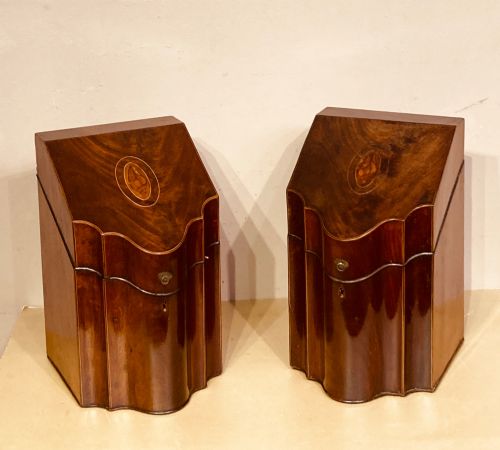
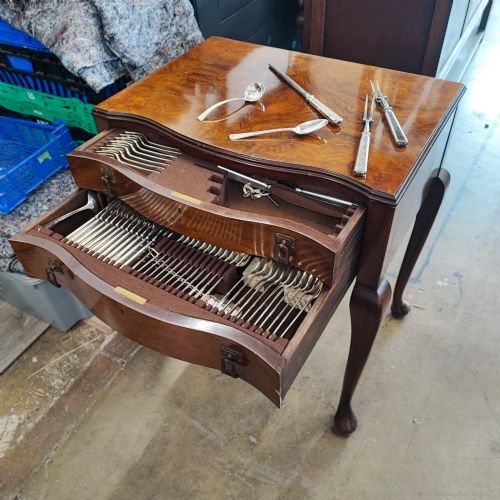
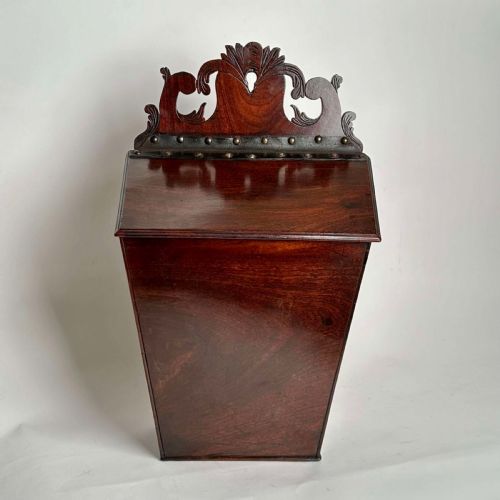
Makers shaped these timber containers with serpentine or bow fronts to catch the light, often retaining velvet linings and fitted interiors intended for individual cutlery sets. Alongside traditional knife boxes, you will discover related forms including butler's trays, stationery boxes, and occasional letter holders adapted from earlier dining furniture.
Materials and Construction
Craftsmen built these containers using dense hardwoods, predominantly selecting figured mahogany and occasional walnut or satinwood for the primary carcase. They accented the rich timber grains with contrasting boxwood stringing, shell marquetry, and delicate inlay work.
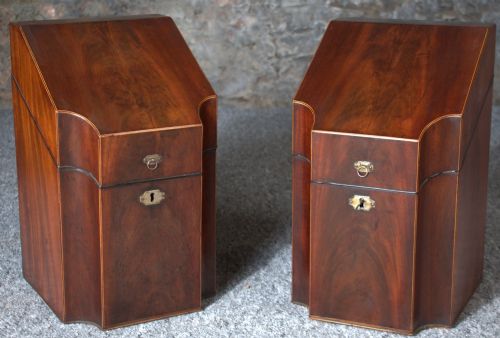
Function dictated the hardware, with makers mounting brass carrying handles, escutcheons, and locking plates onto the exterior. Interior partitions frequently relied on thin softwood dividers lined with velvet to cushion silver and steel eating utensils.
Several clever boxes have shed their cutlery roots entirely, living second lives as stationary cabinets and letter holders.
Distinctions in Quality
The finest examples distinguish themselves through the choice of timber and the precision of the serpentine curve. Superior pieces utilise highly figured, book-matched mahogany veneers that wrap seamlessly around complex bow or serpentine contours.
Construction details separate ordinary utility pieces from high-status objects, notably the integration of solid silver mounts rather than plated brass, and original internal fittings rather than later conversions.
P A W Bateman
The Georgian Cutlery Boxes Glossary
- Serpentine front
- A convex central section flanked by two concave curves, creating an undulating profile that demands advanced cabinet-making skill. This contour appears on the most ambitious eighteenth-century dining room containers.
- Cutlery urn
- A vase-shaped wooden vessel raised on a pedestal base, designed to store dining knives upon the sideboard. These grand objects frequently occur in matched pairs.
- Stringing
- Thin lines of contrasting timber inlaid into the primary wood surface to create geometric borders. This decorative technique highlights the sharp angles of nineteenth and eighteenth-century box lids.
- Escutcheon
- A protective plate surrounding a keyhole, usually fashioned from cast brass. It prevents the timber from splitting around the lock mechanism during frequent use.
Georgian Cutlery Boxes: Frequently Asked Questions
What were georgian cutlery boxes used for?
These boxes stored dining knives, forks, and spoons on the sideboard before they were brought to the dining table. They kept fine steel and silver utensils protected from damp air and household dust.
Servants would arrange the cutlery inside the fitted compartments before meals and lock the box to secure valuable silver services.
How do I tell a genuine eighteenth century box apart from later copies?
Examine the interior construction and timber shrinkage, looking for hand-cut dovetails and old secondary woods like oak or pine. Eighteenth-century pieces exhibit natural patination and wear patterns that modern reproductions struggle to replicate.
Check the hinges and lock plates for hand-filed screws and traditional forging marks rather than modern machine-made fittings.
Can I use these boxes for modern cutlery?
Most original compartments were tailored to fit smaller, narrower eighteenth-century knife blades and three-tined forks rather than bulky modern cutlery. Standard contemporary stainless steel sets rarely fit the rigid internal slots without modification.
Many owners repurpose these containers today as stationery cabinets, letter holders, or decorative desk storage.
What is the difference between a knife box and a cutlery urn?
Knife boxes feature a sloping hinged lid and a vertical wall designed to sit flat against a wall or sideboard back. They are typically constructed with serpentine or straight mahogany panels.
Cutlery urns stand upright as three-dimensional classical vases with removable top sections, offering a more monumental and expensive neoclassical display option.