





Warm Brown Mahogany Box
These pieces of warm brown mahogany box construction combine rich timber figures with practical storage, offering a tangible link to Georgian and Victorian utility.
Warm Brown Mahogany Box
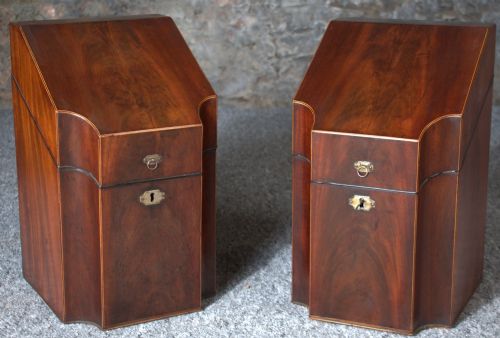
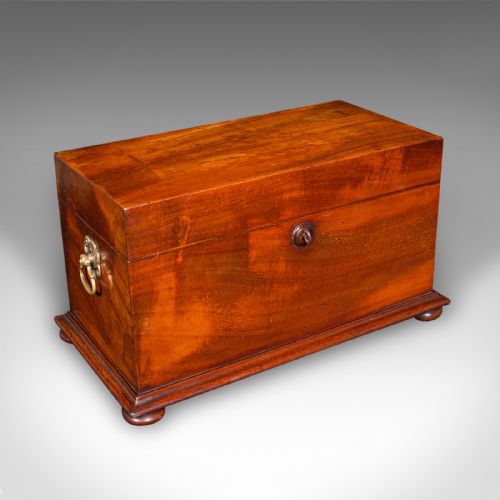
A warm brown mahogany box serves various household and personal storage needs, appearing in forms such as tea caddies, miniature chests of drawers, cutlery boxes, and apothecary displays. Buyers searching for a warm brown mahogany box will encounter pieces spanning the eighteenth, nineteenth, and Victorian periods, alongside Regency and Georgian styles.
The selection on this page ranges from miniature chests and jewellery cabinets to loose tea caddies with dual compartments and lidded cutlery urns. These objects reflect the craftsmanship of past centuries, utilising dense timbers and fitted interiors designed for specific domestic routines.
How They Were Made
Maker's workshops built these items primarily from solid mahogany and polished wood, frequently incorporating contrasting boxwood inlay to accent the surfaces. Internal compartments often utilise supplementary materials such as metal, iron, and fabric linings to protect the contents.
Structural hardware relies heavily on brass for handles, escutcheons, and hinges, fastening the wooden panels together with period joining techniques. Surfaces received careful polishing to highlight the natural grain and deep brown colour of the mahogany.
Apprentice pieces let woodworkers practice giant furniture skills on a tiny scale, resulting in perfectly proportioned little chests that held secrets instead of socks.
What Varies in Quality
Quality rests upon the selection of the timber grain, the precision of any boxwood inlay work, and the original condition of the brass hardware. Superior examples display thoughtful proportions and harmonious wood figures across every visible surface.
The internal fittings, including dual compartments in tea caddies and original fabric linings, dictate the integrity of the piece. Craftsmanship in the joinery separates standard utility items from finer collector pieces.
The Warm Brown Mahogany Box Glossary
- Mahogany
- A durable tropical hardwood valued for its deep reddish-brown colour and stable grain. It forms the primary structural material for these boxes and tables.
- Boxwood
- A pale, dense wood utilised for contrasting stringing and geometric inlay work on box lids and drawer fronts. It creates sharp visual borders against darker timbers.
- Caddy
- A small container designed specifically for storing loose tea leaves, frequently featuring internal lidded compartments to keep blends separate. Regency and Victorian examples often include glass or wooden mixing bowls.
- Apprentice piece
- A miniature version of a larger furniture item, such as a chest of drawers, created by a trainee to demonstrate skill to a guild. These items display the same joinery standards as full-scale furniture.
- Escutcheon
- A protective brass plate surrounding a keyhole that prevents the surrounding wood from splintering during use. They serve both a decorative and functional purpose on box lids and cabinet doors.
Warm Brown Mahogany Box: Frequently Asked Questions
What were tea caddies used for?
Tea caddies served to store expensive loose tea leaves safely under lock and key in the home. The dual compartments allowed servants or hosts to keep different leaf varieties separated.
Keys were kept by the master or mistress of the house to control consumption. These beverage cases sat prominently in reception rooms during the Georgian and Regency eras.
How do I date an antique mahogany box?
Dating relies on examining the construction methods, the style of the brass hardware, and the timber preparation. Eighteenth-century examples often feature hand-cut dovetails and simpler internal arrangements.
Victorian and later nineteenth-century pieces may incorporate machine-sawn elements or more elaborate boxwood stringing. Comparing the secondary woods inside the box also helps confirm the period of manufacture.
What is an apprentice piece?
An apprentice piece is a miniature item of furniture, such as a small chest of drawers, made by a craftsman in training. These pieces proved the maker had mastered the necessary joinery techniques before gaining full guild status.
Collectors prize them for their accurate proportions and high standard of miniature construction. They often double as jewellery or trinket chests.
How should I care for polished mahogany?
Maintenance requires keeping wooden boxes away from direct sunlight and sudden temperature shifts to prevent the timber from splitting. Regular dusting with a soft, dry cloth preserves the polished surface.
Avoid applying modern silicone polishes, which can build up and soften the historic finish over time. Natural wax applied sparingly helps nourish the grain.