

18th Century Burr Desk
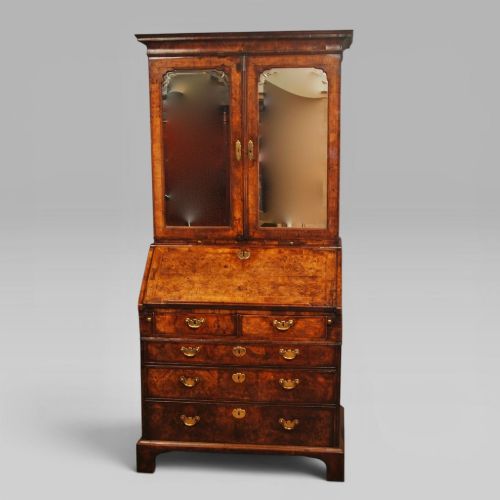
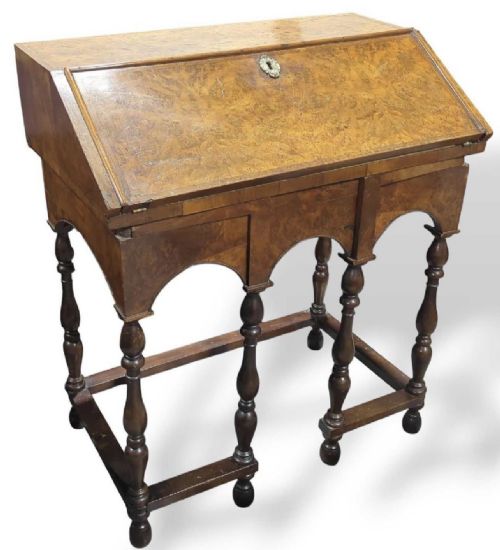
An 18th century burr desk brings figured timber and fitted pigeonholes into a room, offering a tactile writing surface.
18th Century Burr Desk
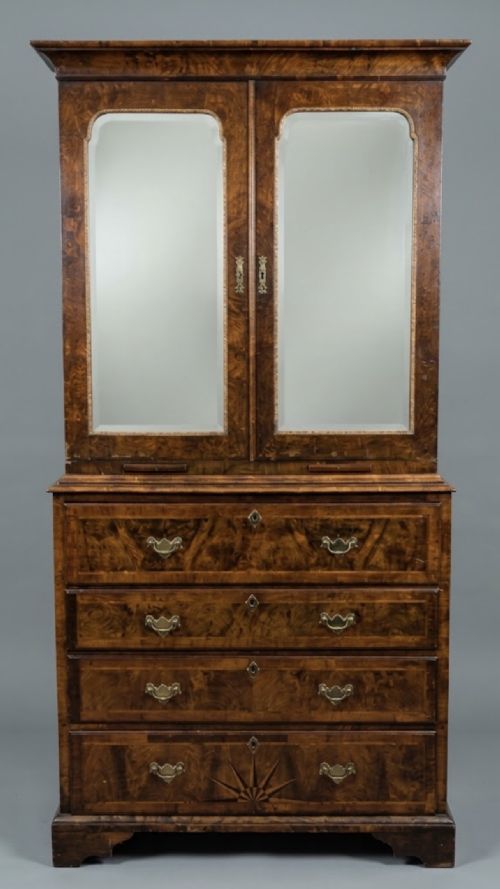
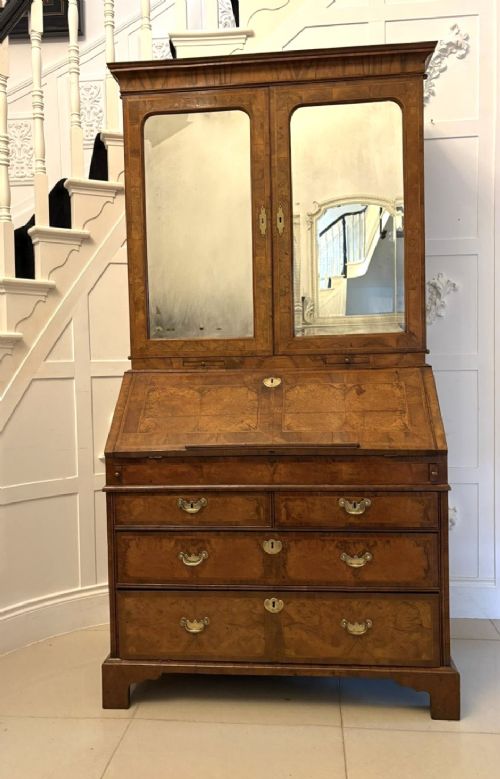
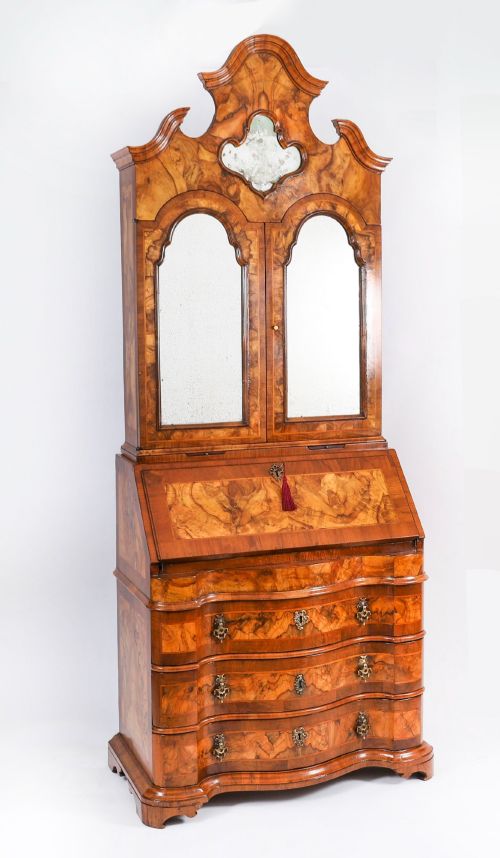
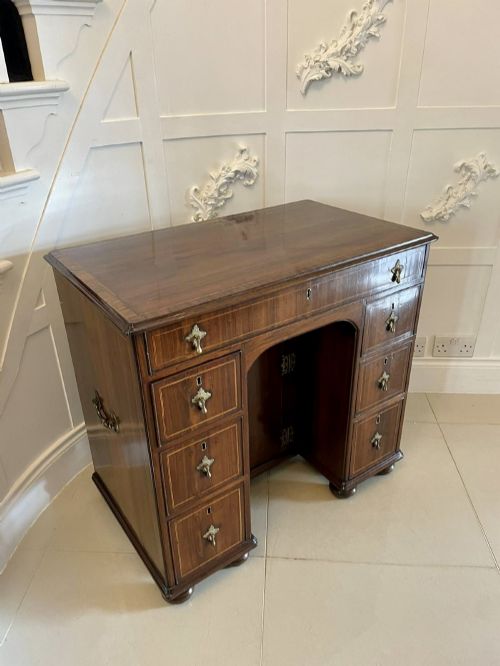
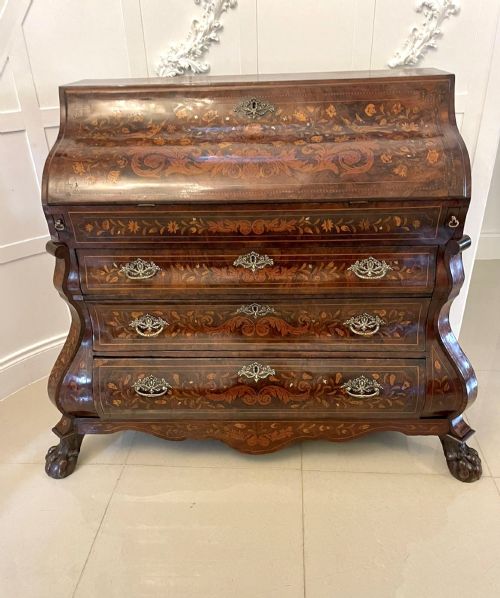
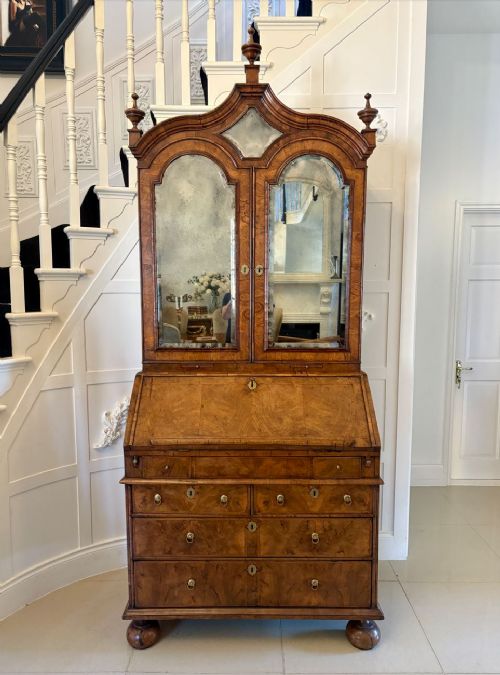
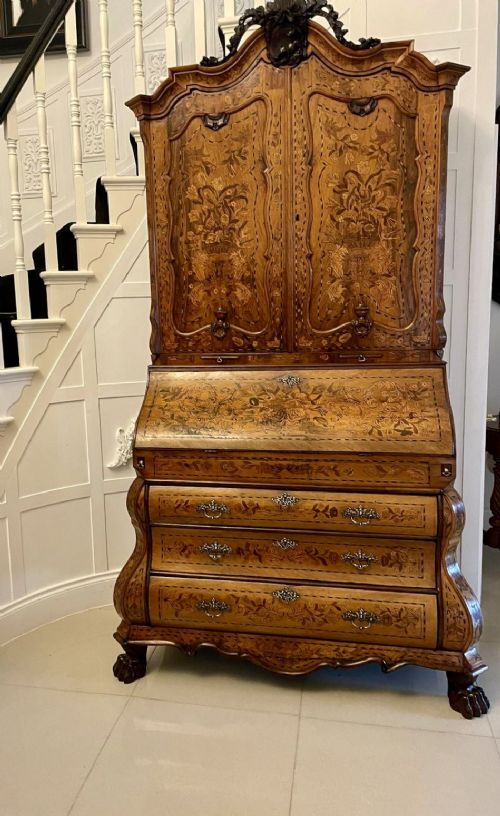
The selection on this page centres on pieces fashioned from walnut, burr walnut, and burr elm, often arranged in bureau bookcase and lowboy formats. Regional variations span English workshops alongside Dutch and South German iterations displaying marquetry inlay and bombe shaping.
How they were made
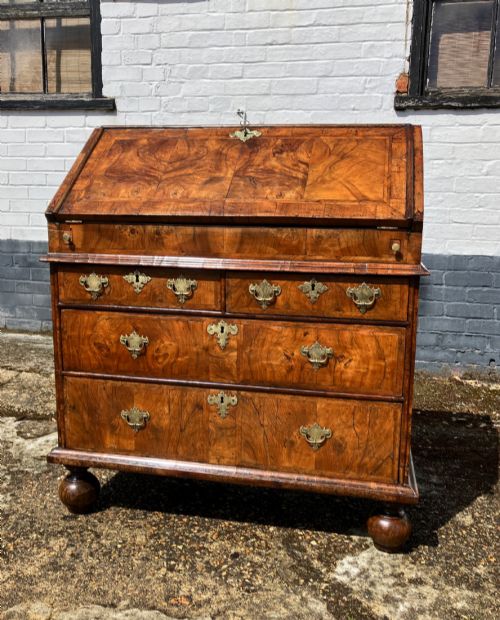
Cabinet makers applied thin veneers of burr walnut, burr elm, and figured walnut onto secondary carcases of oak or pine, securing the timber with featherbanding and crossbanding. Brass handles, escutcheons, and hinges completed the hardware.
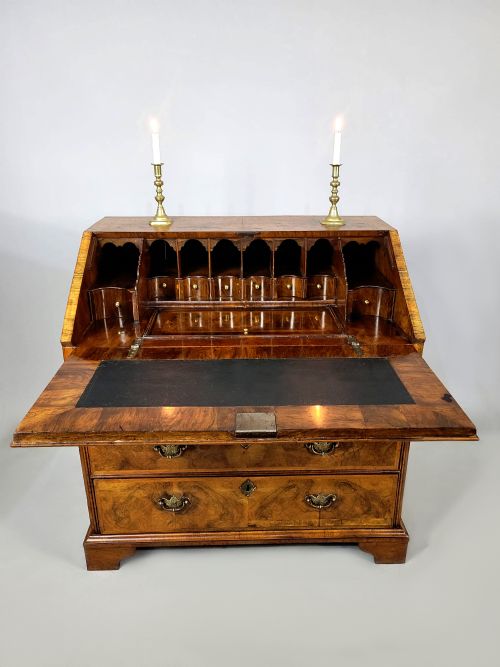
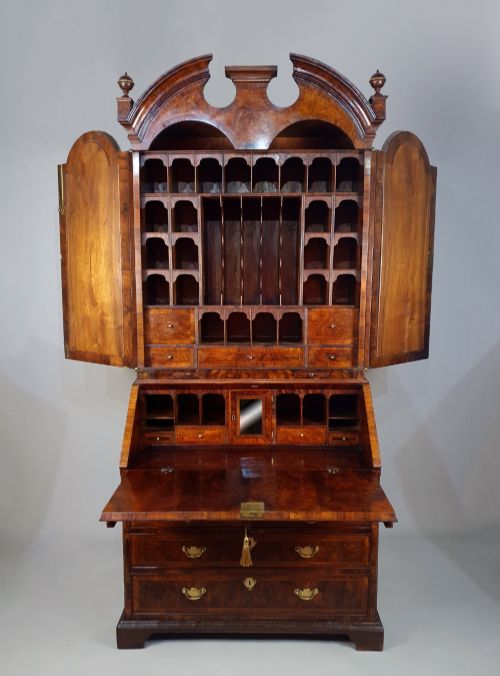
Joinery techniques relied on dovetail joints for drawer construction and pegged mortise and tenon joints for the main frames. Fall-front writing surfaces required sturdy internal lopers to support the flap when open.
18th Century Burr Desk Retail Price Guide 2026
Typical asking prices for 18th century burr desk among the pieces listed under this phrase on Sellingantiques today, from the lower quarter to the upper quarter. They describe what is for sale here now, not the wider market.
Listings feature walnut, burr walnut, burr elm, oak, and mahogany across English, Dutch, and German origins.
What varies in quality
Quality rests in the intensity and matching of the burr timber figuring across the fall front and drawer fronts, alongside the preservation of original patination and brass furniture. Desks featuring finely fitted interior drawers, secret compartments, and well-executed featherbanding command closer attention.
Proportion and structural integrity distinguish finer examples, particularly where secondary timbers like oak remain undisturbed and the base supports, whether bracket feet or baluster legs, retain their original form.
The 18th Century Burr Desk Glossary
- Burr
- A growth on a tree resulting in swirling, highly figured wood grain patterns used for decorative veneer. Cabinet makers prized these sections for their complex visual texture.
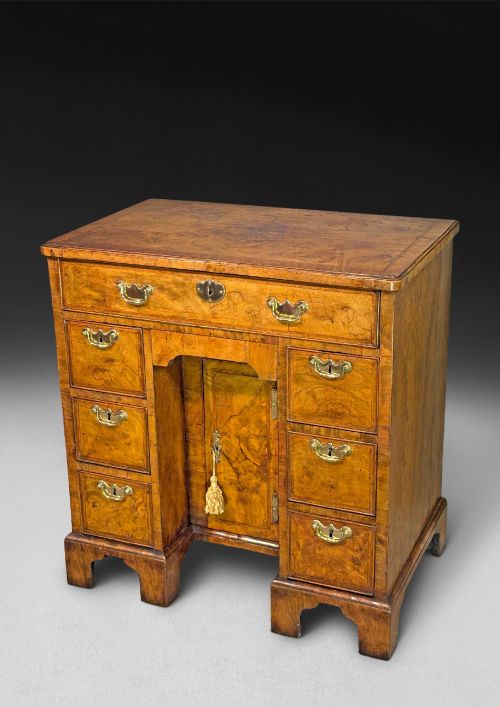
- Kneehole desk
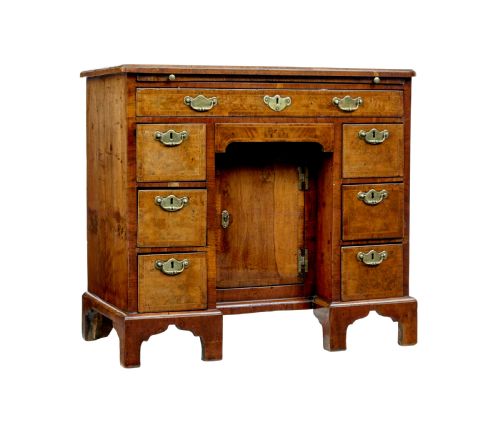
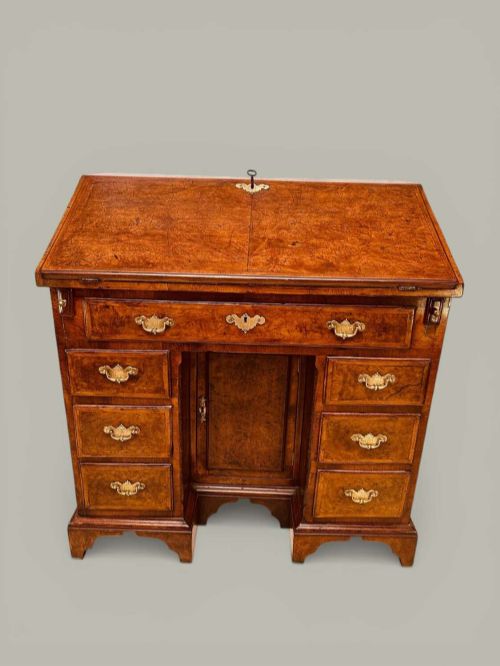
- A compact writing table featuring a central recess for the user's legs flanked by banks of small drawers. These typically stand on short legs or bracket feet.
- Featherbanding
- A decorative inlay technique using small strips of veneer arranged in a herringbone pattern around drawer perimeters. It frames the burr walnut panels.
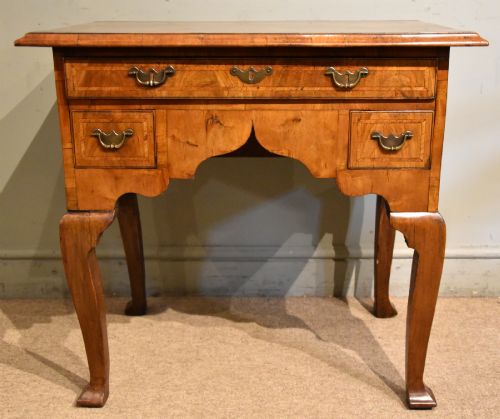
- Lowboy
- A small side table with one or more rows of drawers, commonly used as a dressing table or writing surface in the period. They rest on cabriole or baluster supports.
18th Century Burr Desk: Frequently Asked Questions
How do I care for burr walnut veneer?
Burr walnut requires stable humidity levels and protection from direct sunlight to prevent the thin veneer from lifting or drying out. Gentle dusting and occasional waxing preserve the timber's natural lustre.
Avoid placing these desks near heat sources or damp walls to protect the historic secondary timbers underneath.
How do I identify a George I period desk?
George I desks often display rich figured walnut veneers, herringbone banding, and compact proportions supported by bracket feet or early cabriole legs. The internal drawers and pigeonholes frequently show fine craftsmanship with secret compartments.
Examining the secondary woods, such as oak drawer linings, helps confirm the period of construction alongside the exterior style.
Where were these pieces originally used?
These desks served as private writing and administration cabinets in the parlours, libraries, and bedrooms of large country houses and town residences. They provided secure storage for correspondence and private papers behind locked doors.
Today, they function as working writing desks or decorative focal points in domestic interiors.