
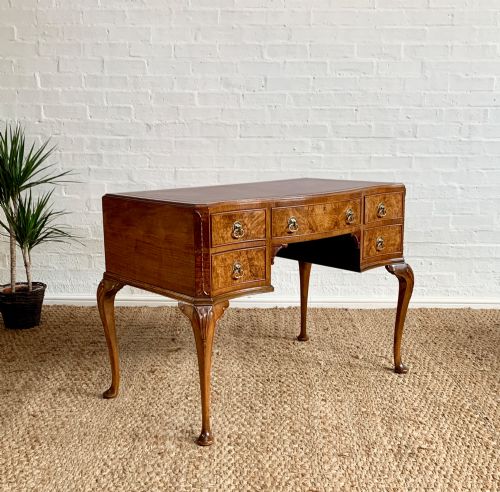
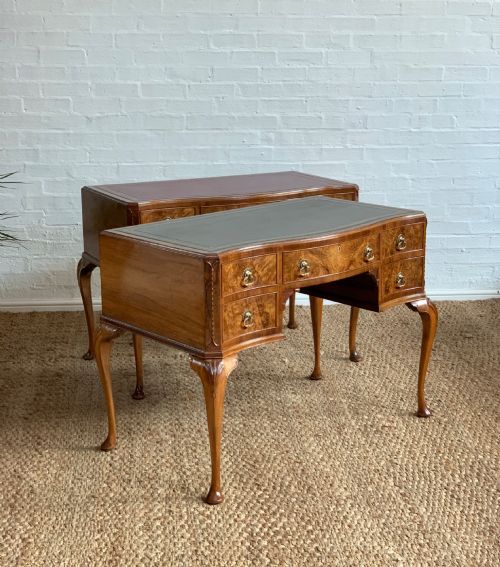
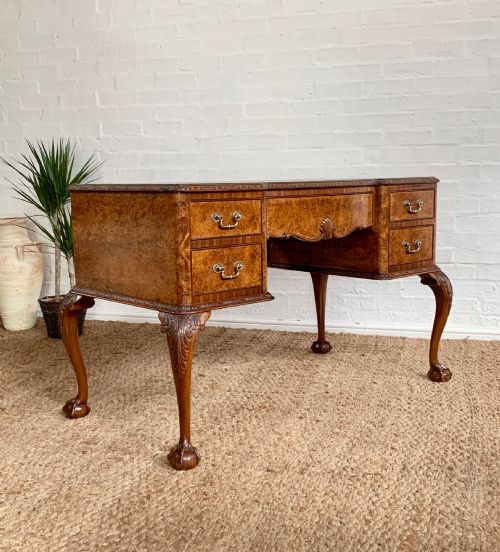
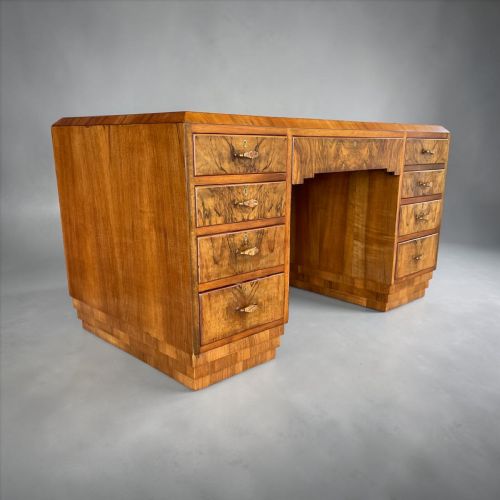
Walnut Kneehole Table
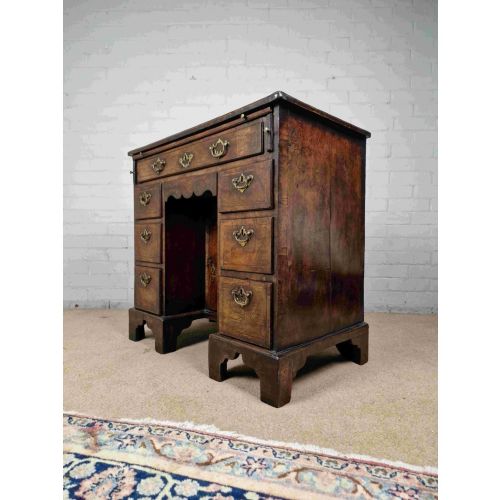
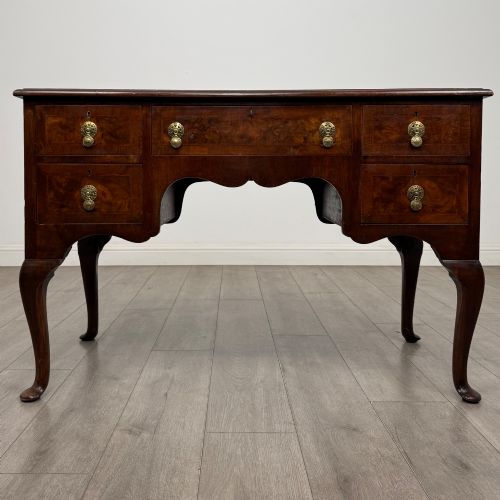
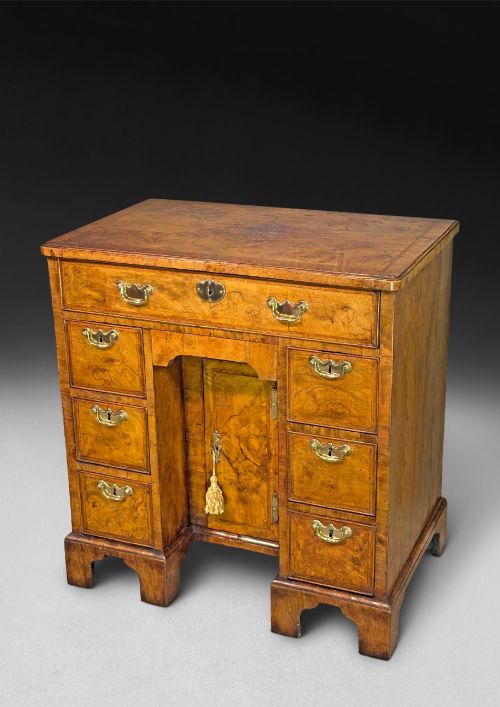
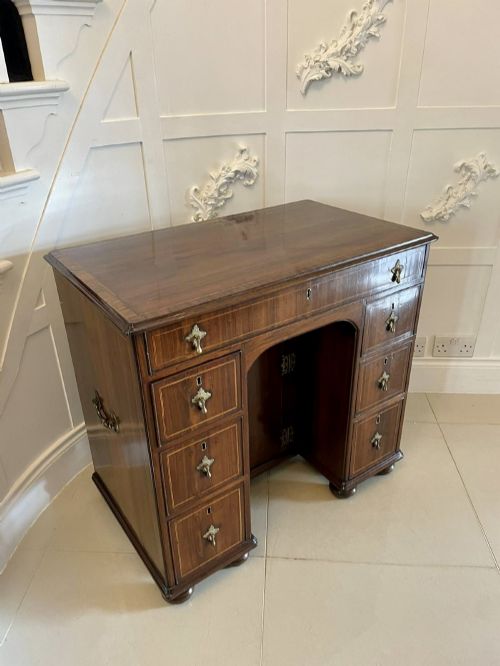
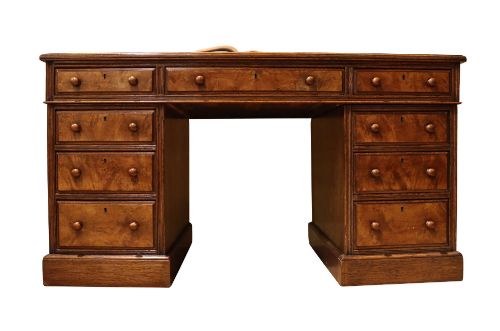
A walnut kneehole table is a compact writing or dressing desk with a central recess, prized for its figured timbers and concealed storage.
Walnut Kneehole Table
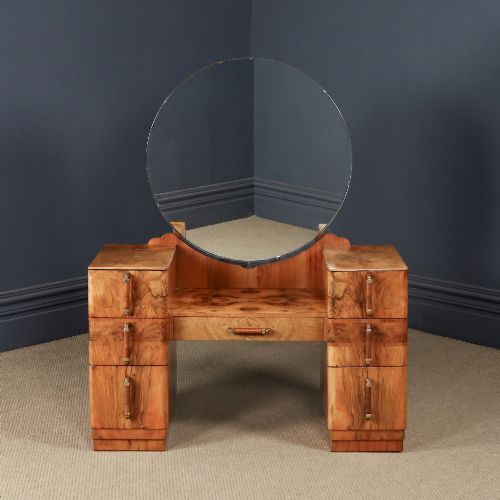
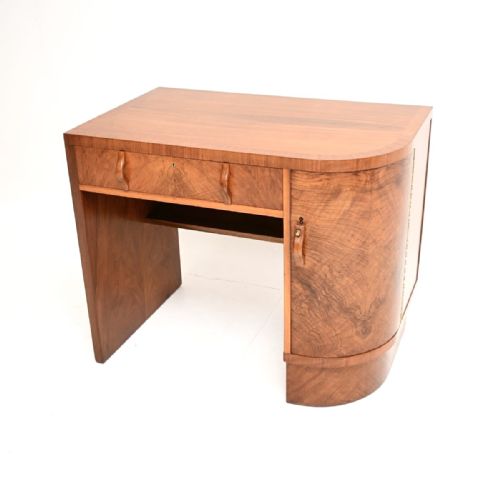
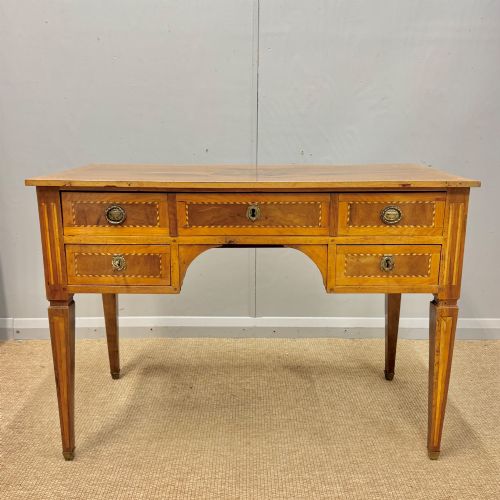
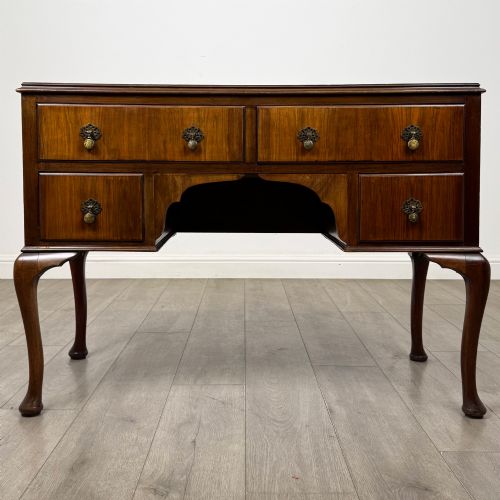
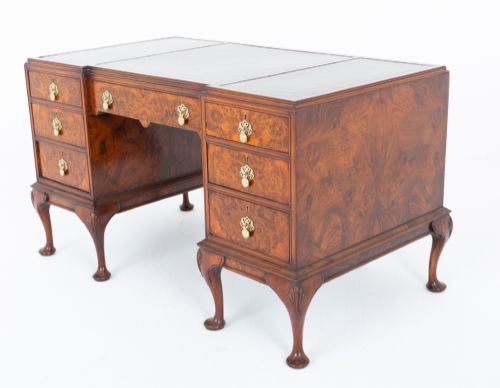
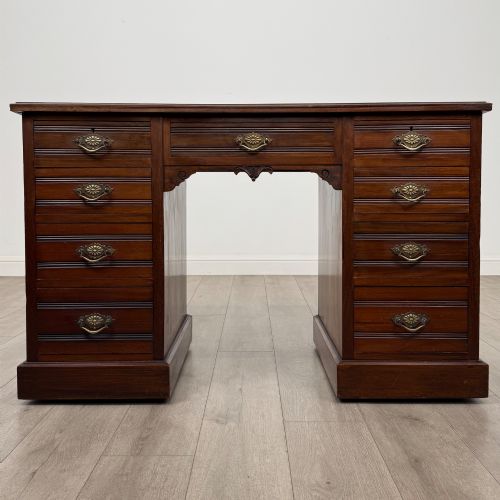
A walnut kneehole table combines a recessed central cupboard or drawer space with pedestals of smaller drawers on either side. These pieces appear in forms ranging from eighteenth-century Georgian and Queen Anne examples to nineteenth-century Victorian designs and twentieth-century Art Deco interpretations.
The buyer meets variations spanning standard writing desks, pedestal desks, and dressing tables fitted with mirrors. Origins stretch across English periods, French Art Deco workshops, and regional American pieces in Virginia walnut.
Early eighteenth-century versions display precise proportions and figured veneers, while later revivals in the Edwardian and Art Deco eras reinterpret the classic compact kneehole footprint with clean lines or period flourishes.
Materials and Construction
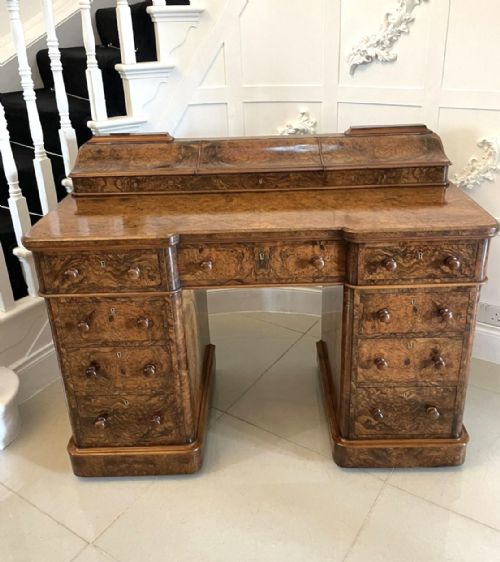
Construction relies heavily on walnut and burr walnut timbers, often applied as fine veneers over secondary woods like oak to showcase swirling grain patterns. Solid walnut and fiddleback walnut appear alongside decorative accents of brass hardware, leather writing surfaces, and occasional glass tops.
Cabinetmakers utilised cross-banding and marquetry inlay to frame drawer fronts and top surfaces, framing the rich brown tones of the wood. Structural integrity is maintained through traditional dovetail joints on drawers and solid timber framing within the pedestals.
Writing surfaces on these tables frequently incorporate green tooled leather inserts alongside traditional timber tops.
Assessing Quality
Quality rests upon the selection of timber figures, where symmetrical burr walnut or figured walnut veneers elevate an ordinary carcass into a striking decorative object. The crispness of carved details, such as bracket feet or cock-beaded drawer edges, marks the hand of a superior workshop.
Internal construction, including solid oak drawer linings and original brass handles, separates high-end cabinetmaking from utilitarian pieces. The depth of colour and patination built up across centuries of polishing distinguishes untouched period surfaces from later restorations.
Maple and Co·Wylie and Lochhead Glasgow·Betty Joel·Gill and Reigate·Étienne Kohlmann
The Walnut Kneehole Table Glossary
- Kneehole desk
- A compact desk or dressing table featuring a central recess or kneehole flanked by pedestals of small drawers.
- Burr walnut
- Timber taken from a tree growth or burl, yielding a highly swirled, speckled grain pattern prized for decorative veneering.
- Cock-beading
- A narrow semi-circular moulding projecting around the edges of drawer fronts to protect the veneer and frame the drawer.
- Fiddleback walnut
- Timber exhibiting a wavy grain pattern that creates a rippled effect resembling the back of a violin.
- Cross-banding
- A decorative border of veneer laid with the grain running perpendicular to the main surface of the panel.
Walnut Kneehole Table: Frequently Asked Questions
What is a kneehole table used for?
These tables serve as compact writing desks, studies, or dressing tables depending on whether they include a mirror or a tooled leather writing surface.
The central recess allows a chair to tuck neatly underneath, providing a comfortable workstation without occupying the floor space of a large partners desk.
How do I date a walnut kneehole desk?
Dating relies on examining construction methods, hardware, and stylistic traits such as cabriole legs, bracket feet, or Art Deco geometric veneering.
Eighteenth-century examples display hand-cut dovetails and pegged frames, whereas Victorian and twentieth-century pieces incorporate machine assistance and different secondary woods.
Are these desks suitable for modern laptops?
Most antique kneehole tables offer sufficient surface area and comfortable working heights for modern laptops and writing materials.
Their compact pedestal design provides practical drawer storage for stationery while fitting easily into smaller home studies or bedrooms.
How should I care for a walnut veneer surface?
Protect the polished wood by avoiding direct sunlight and placing felt pads under desk accessories to prevent scratching the delicate burr walnut veneer.
Regular dusting with a soft, dry cloth and occasional application of appropriate furniture wax maintains the natural lustre of the timber.