


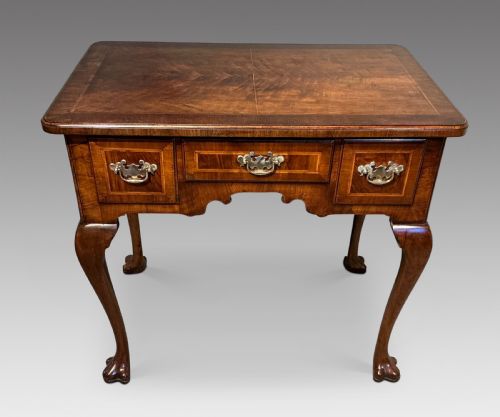


Georgian Walnut Vanity Desk
A georgian walnut vanity desk brings warmth and fine grain to a room, offering compact drawers and a dedicated surface for daily writing or dressing.
Georgian Walnut Vanity Desk
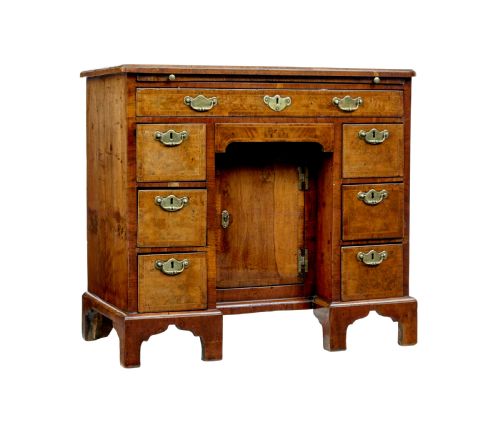
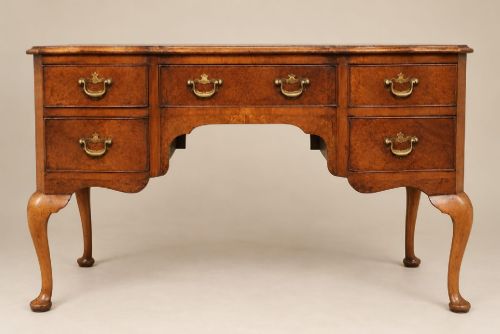
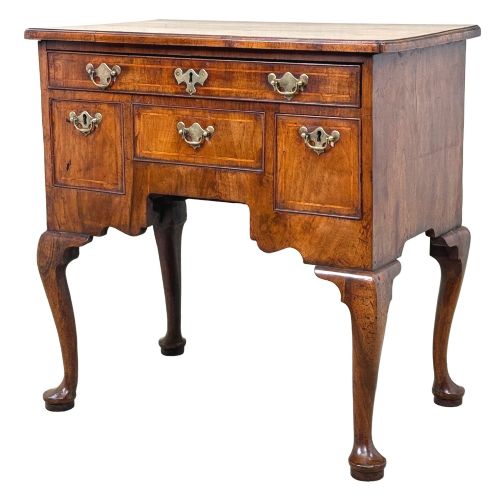
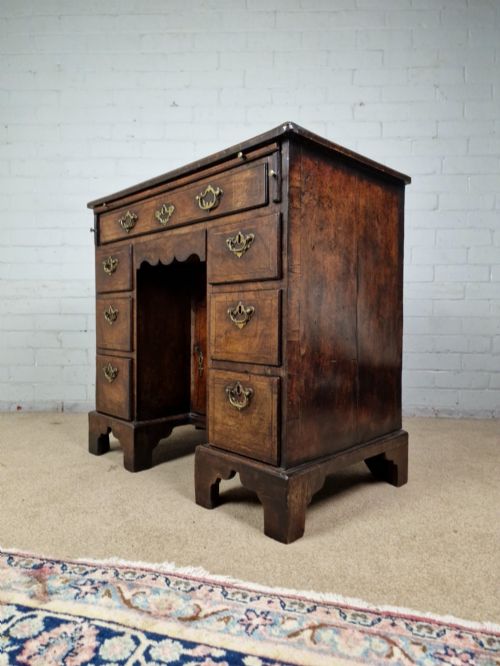
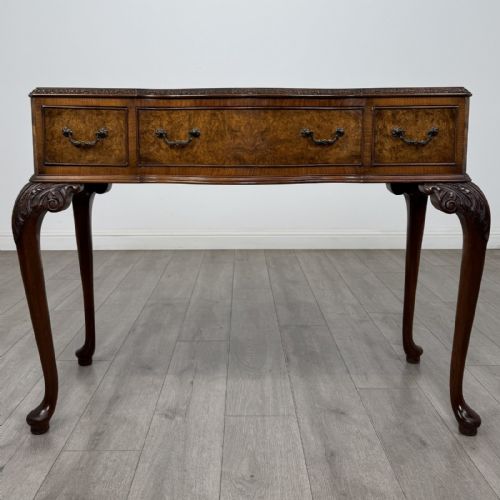
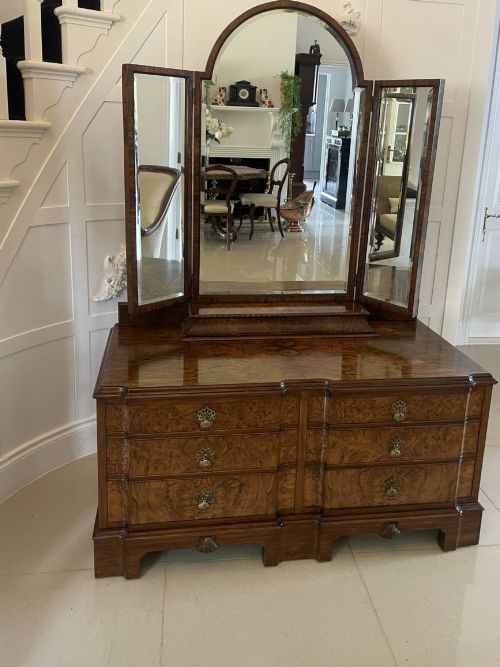
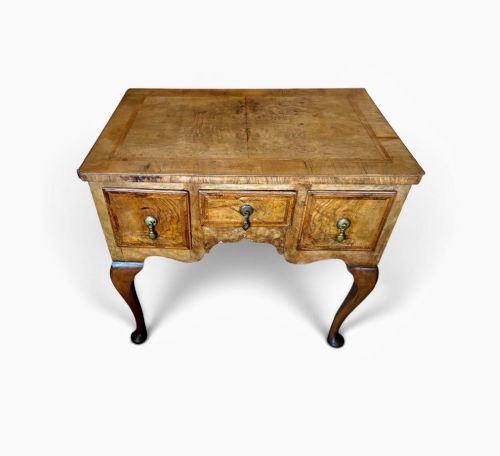
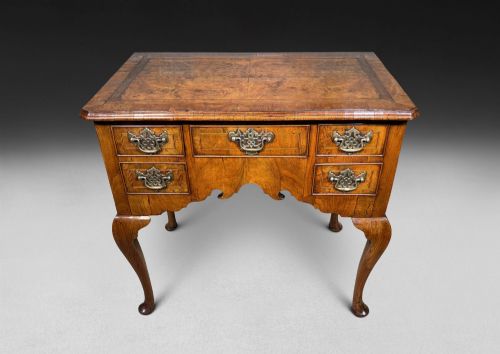
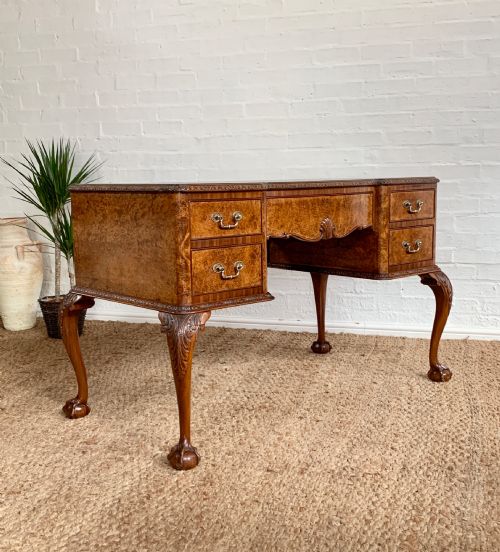
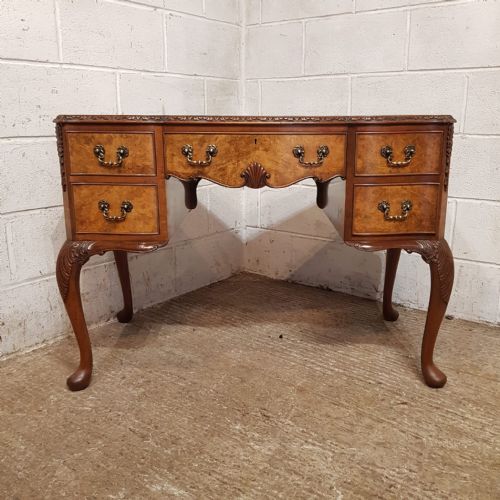
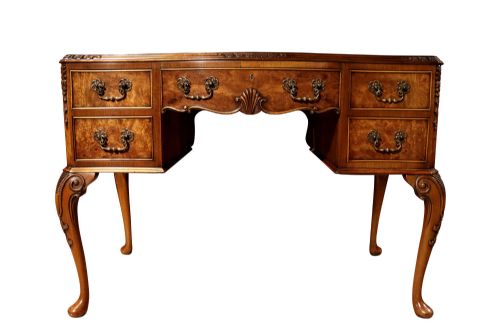
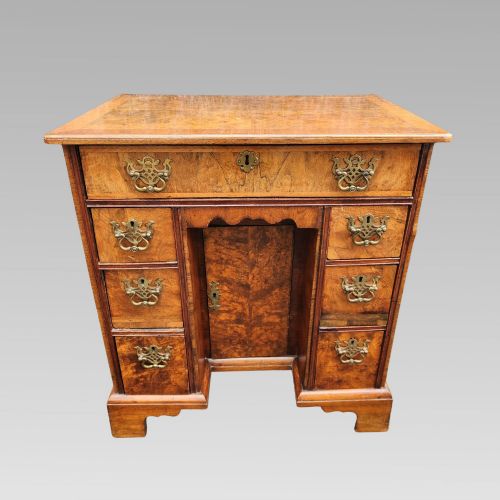
A georgian walnut vanity desk typically appears as a kneehole desk, lowboy, or dressing table with multiple small drawers arranged around a central recess. These forms emerge from the 18th century, particularly through the George I, George II, and Queen Anne periods, alongside later revival pieces.
The lowboy serves as a compact table with drawers, often functioning as a dressing table or writing surface. Kneehole desks provide deeper storage configurations with a central cupboard hidden behind the pedestal drawers.
Revival interpretations from the late 19th and early 20th centuries replicate these compact proportions and drawer arrangements using period woods.
Materials and construction
Cabinetmakers select solid walnut and burr walnut veneer, applying figured sections across drawer fronts and tops to create decorative grain patterns. Secondary timbers such as oak and pine form the interior drawer linings and carcase structures.
Brass handles and escutcheons accent the timber, while select writing surfaces incorporate green tooled leather inserts. Featherbanding and cross-banding frequently outline the drawer edges and table tops.
Georgian Walnut Vanity Desk Retail Price Guide 2026
Typical asking prices for georgian walnut vanity desk among the pieces listed under this phrase on Sellingantiques today, from the lower quarter to the upper quarter. They describe what is for sale here now, not the wider market.
Several pieces double as scholar's tables or correspondence desks, proving that ancestors also struggled with endless paperwork.
Quality and execution
The visual strength of a georgian walnut vanity desk depends heavily on the choice of veneer and how symmetrically the grain is matched across the top and drawer fronts. Quarter-veneered surfaces and figured burr walnut represent finer levels of craftsmanship compared to plain timber boards.
Construction details such as dovetailed drawer joints, original brass hardware, and delicate inlay work distinguish exemplary pieces from later commercial reproductions. The crispness of carved details on legs and the integrity of the secondary timbers dictate the overall execution.
The Georgian Walnut Vanity Desk Glossary
- Lowboy
- A small table with one or more rows of drawers, commonly used as a dressing table or side table in the 18th century. These pieces stand on four tall legs, often ending in pad or bracket feet.
- Kneehole desk
- A compact desk featuring a central recessed space flanked by pedestals of small drawers. They frequently double as dressing tables.
- Burr walnut
- Timber taken from a tree growth or burl, yielding a highly swirled and mottled grain pattern. Cabinetmakers slice this wood into thin veneers for decorative surfaces.
- Featherbanding
- A type of inlay formed by cutting thin strips of veneer across the grain and laying them in a V-shape border. This technique frames drawer fronts and table tops on better pieces.
- Dressing mirror
- A small tabletop mirror mounted on a swinging frame supported by small drawer bases. They often accompany dressing tables and lowboys.
Georgian Walnut Vanity Desk: Frequently Asked Questions
What is the difference between a lowboy and a kneehole desk?
A lowboy is an open-leg table with one or more tiers of drawers beneath the surface, offering knee clearance without pedestals. A kneehole desk encloses the lower section with side banks of drawers and a central cupboard door.
Both forms utilise similar walnut timbers and served parallel functions for writing and grooming in 18th-century homes.
Were these desks used for writing or grooming?
These versatile pieces served multiple daily functions depending on the owner's needs and the specific internal layout. Many contained compartments for correspondence, while others held mirrors and cosmetics.
Today, buyers frequently utilise them as compact home office desks or bedroom dressing tables.
How do I identify a George II period piece?
George II walnut pieces often display figured veneers, quarter-veneered tops, and featherbanded borders. They frequently incorporate bracket feet and traditional brass drop handles.
Later revival versions mimic these stylistic markers, requiring an inspection of the interior oak or pine secondary timbers to confirm age.
How do I care for a walnut veneer surface?
Walnut benefits from stable room temperatures away from direct sunlight to prevent the timber and veneer from drying out. Routine dusting with a soft, dry cloth preserves the polished finish.
Avoid placing damp items or heavy liquids directly on the leather or wood surfaces without protective barriers.