



18th Century Apothecary Jar
An 18th century apothecary jar brings centuries of pharmacy history into a room with tin-glazed earthenware and painted blue labels.
18th Century Apothecary Jar
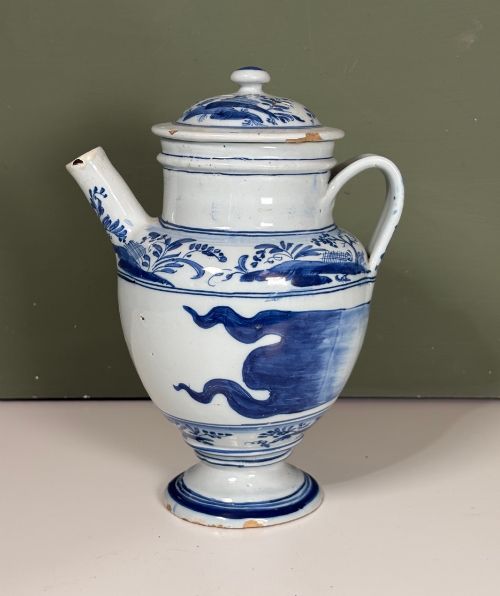
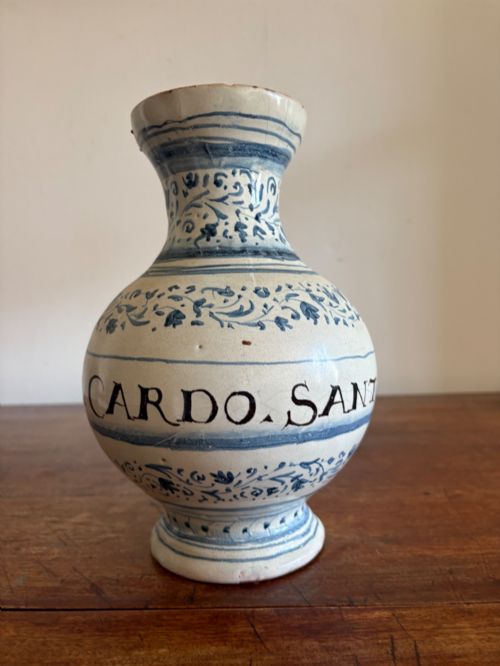
An 18th century apothecary jar is typically formed as a cylindrical albarello or a handled wet drug jar designed to hold medicinal herbs, syrups, and dry preparations. These containers emerge primarily from English, Dutch, and Italian potteries, reflecting the distinct pharmaceutical traditions of those regions.
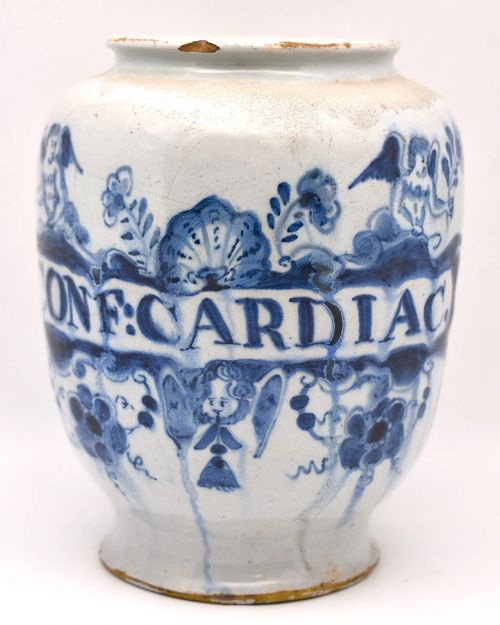
The most common examples on this page date to the seventeen-hundreds, utilising tin-glazed earthenware decorated with cobalt pigment or polychrome pigments. Buyers encounter both single jars and matched pairs bearing painted Latin pharmaceutical abbreviations or figurative motifs.
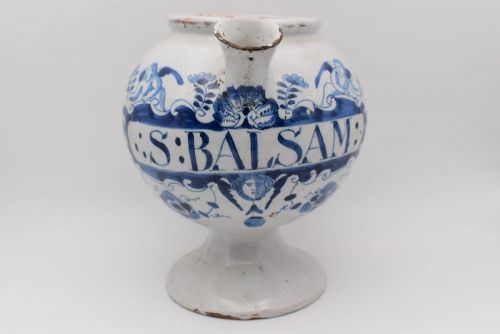
Continental pieces from Italy and the Netherlands often feature baroque curves and heraldic cartouches, while English delftware examples tend toward restrained lettering and cherub or shell ornaments. Each vessel served a working function in a dispensary before becoming a cabinet piece.
Judging quality and character
Quality in an 18th century apothecary jar rests upon the clarity of the painted inscription, the richness of the cobalt pigment, and the crispness of the tin glaze. Superior examples display confident brushwork within detailed cartouches, whereas lesser pieces show rushed lettering or blurred pigment bleed.
The survival of the original glaze surface without extensive modern restoration distinguishes exceptional vessels from heavily repaired counterparts. Proportion and balance in the potting, particularly on waisted albarelli and handled jugs, separate standard workshop output from finer studio production.
Historic pharmacists stored questionable remedies under labels like cardiac and balsam, hoping cheerful cherubs might soften the bitter dose.
South Italian Naples·Italian Majolica Nove·Savona Majolica
The 18th Century Apothecary Jar Glossary
- Albarello
- A cylindrical earthenware jar designed for storing dry drugs and ointments in a pharmacy. This shape originated in the Middle East and was adopted widely by Italian and Spanish majolica makers.
- Tin-Glazed Earthenware
- Pottery covered with a lead glaze made opaque by the addition of tin oxide. This technique provides a white background for painted decoration.
- Majolica
- Italian tin-glazed earthenware decorated with colours on an opaque white glaze. The technique reached a high artistic standard during the Renaissance and continued through the baroque period.
- Delftware
- Tin-glazed earthenware made in the Netherlands and England, often painted in blue with Chinese porcelain designs or European pharmacy inscriptions.
- Wet Drug Jar
- A pharmaceutical container with a spout or handle designed to hold liquid syrups and oils rather than dry powders.
18th Century Apothecary Jar: Frequently Asked Questions
What did they store inside?
Apothecary jars held dry herbs, resinous balsams, electuaries, and liquid medicinal syrups used by historic chemists and physicians.
Labels painted on the front identified the contents using abbreviated Latin terms so the apothecary could locate specific ingredients quickly.
How do I tell English and Dutch delft apart?
English delftware jars often feature simpler blue lettered scrolls alongside cherubs or shell motifs. Dutch pieces frequently display bolder baroque cartouches and distinct botanical borders.
Clay bodies and glaze tones also differ subtly between the workshops of London and Delft.
Why do some jars have spouts?
Jars equipped with spouts and handles were classified as wet drug containers for pouring liquid syrups and oils. Albarelli without spouts held dry powders, pills, and ointments.
The presence of a handle helped the apothecary tilt the heavy ceramic vessel safely.
How should I display them at home?
These jars sit well on wooden shelves, within glazed cabinets, or on mantelpieces where natural light highlights the tin glaze. Grouping pairs together creates a visual balance that echoes historic dispensary interiors.
Keep them away from direct heat sources and damp environments to protect the historic ceramic body.
Are all these jars from the eighteenth century?
The majority of the vessels date to the seventeen-hundreds, spanning both early and late periods of the century. Some items bridge into the adjacent century due to overlapping production styles in regional European potteries.
Glaze composition and painted details help distinguish the exact manufacturing window.