


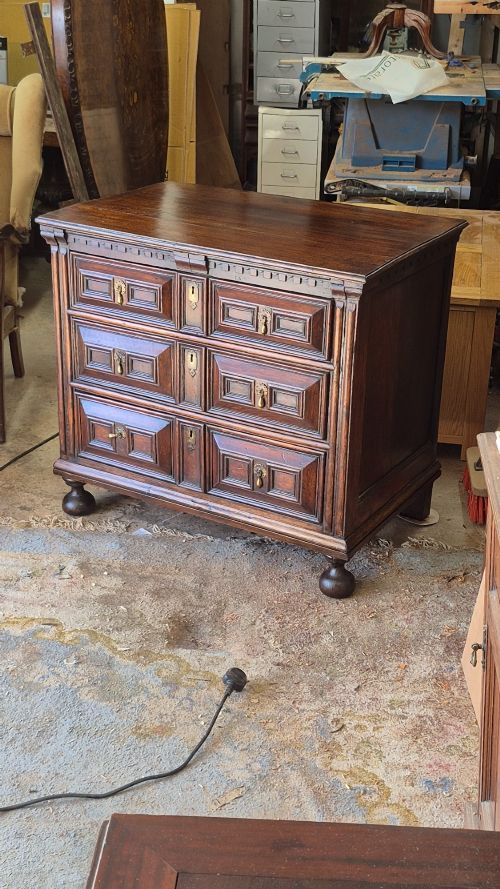
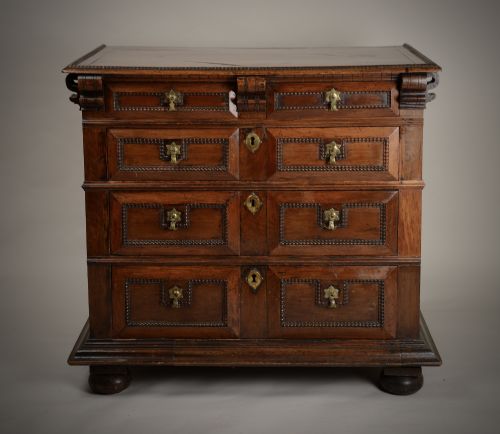
17th Century Geometric Dresser
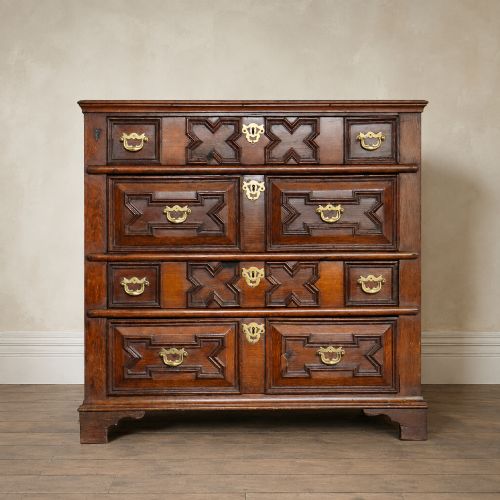
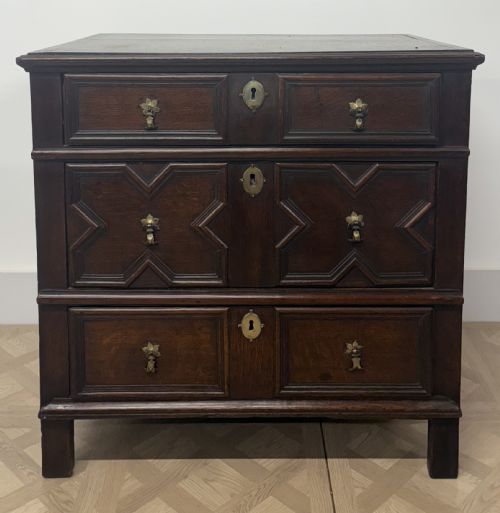
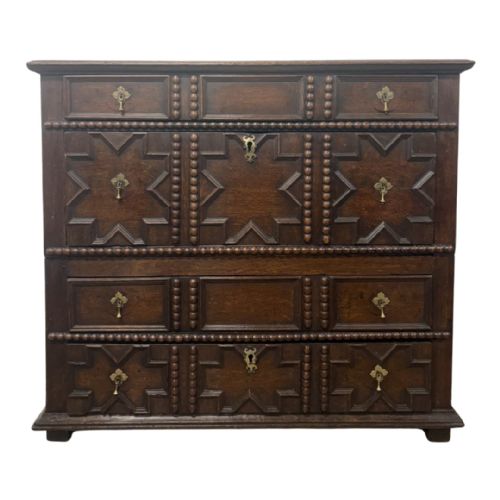
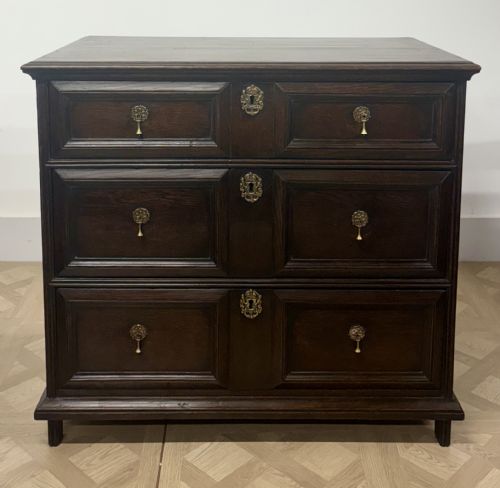
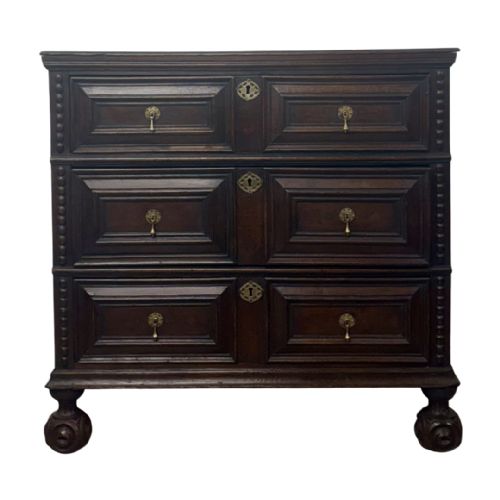
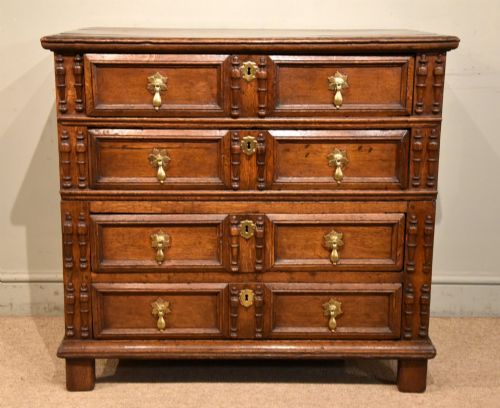
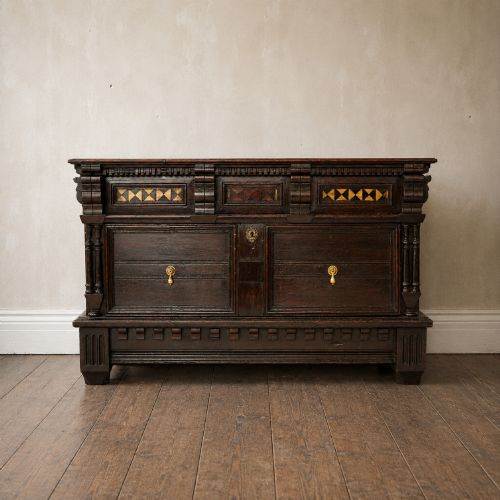
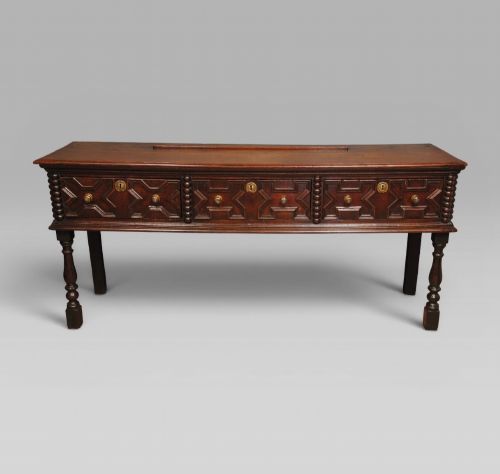
A 17th century geometric dresser brings heavy oak timbers and layered moulding into a room.
17th Century Geometric Dresser
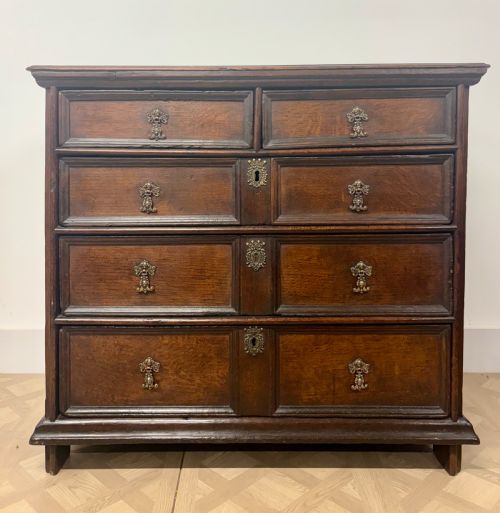
A 17th century geometric dresser or related storage piece combines architectural drawer fronts with sturdy wooden frames. Buyers searching this phrase look for period timber construction built to hold domestic items in hallways and living spaces.
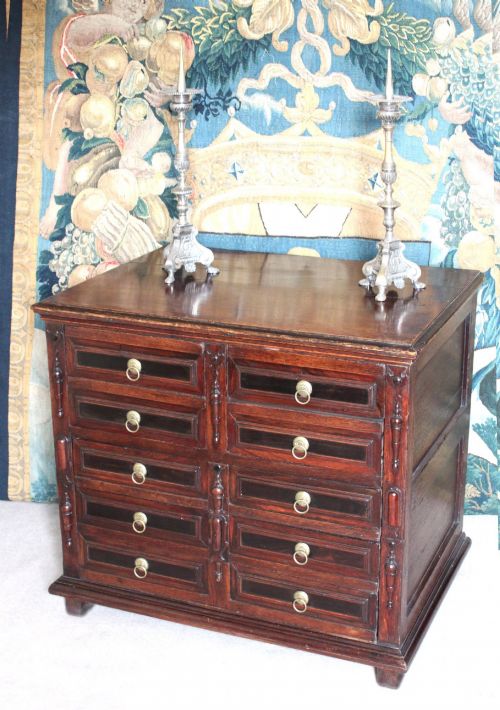
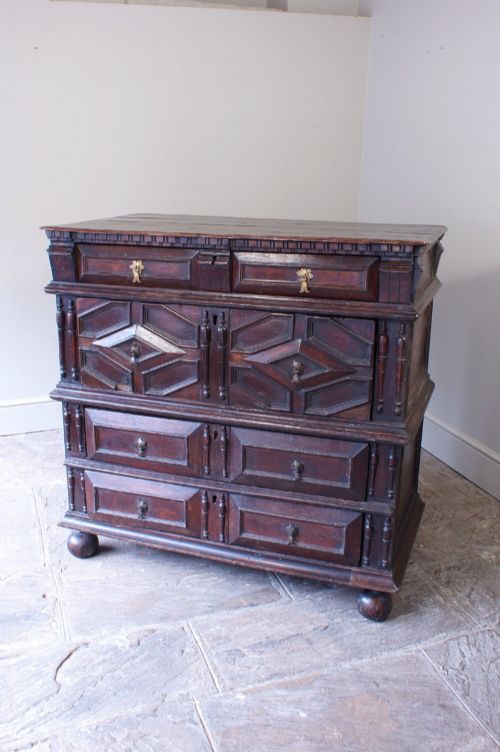
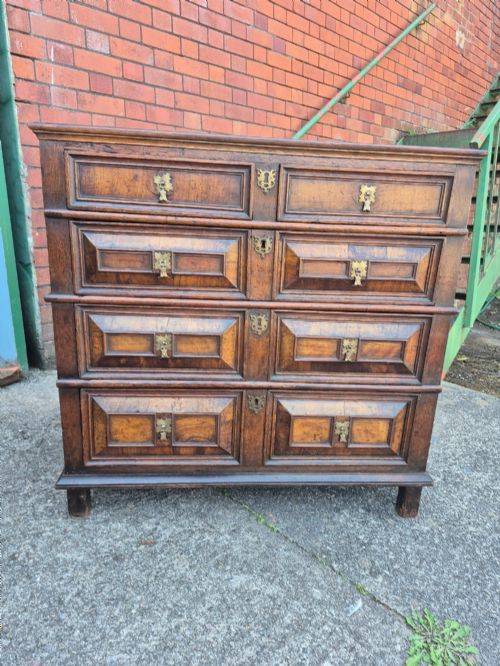
Most examples appearing here take the form of chests of drawers and dresser bases dating to the Charles II or late 17th century periods. These pieces frequently show panelled sides and multi-part carcass construction designed for heavy domestic service.
How they were made
Joiners built these items primarily from solid oak, walnut and fruitwood, often incorporating applied mouldings to create distinct patterns on the drawer faces. Timber was hand-cut and joined using traditional peg and tenon methods.
Surface decoration relies on wood inlay, painted oak, and oyster veneer arranged in concentric or geometric shapes. Metal fittings like brass handles and iron hardware secure the doors and drawers.
Listings feature oak, walnut, fruitwood, and iron materials applied across 17th and 18th century forms.
What varies in quality
The precision of the geometric moulding and the complexity of the wood inlay separate standard examples from finer works. Crisp lines on applied mouldings indicate skilled joinery.
The choice of secondary timbers and the retention of original brasses and hardware heavily influence the integrity of a piece. Intact oyster veneer surfaces require delicate craftsmanship that elevates the build.
The 17th Century Geometric Dresser Glossary
- Geometric moulding
- Raised wooden strips applied to drawer fronts in rectilinear or panelled patterns. This technique defined late 17th-century case furniture.
- Oyster veneer
- Small circular or oval slices of branch wood arranged closely together to create a patterned surface resembling oyster shells. Walnut was frequently utilised for this decorative layer.
- Dresser base
- A lower sideboard or server fitted with drawers and sometimes cupboards below a flat wooden top. These served utilitarian purposes in domestic interiors before evolving into display furniture.
- Chest on stand
- A two-part storage furniture item where a smaller drawer chest rests upon a dedicated framework or legs. This form lifted storage off the floor and lightened the silhouette.
17th Century Geometric Dresser: Frequently Asked Questions
What is a geometric dresser base?
A geometric dresser base is a low wooden storage unit featuring drawers decorated with applied panelled mouldings. These items functioned as servers and storage surfaces in early homes.
They rely on solid oak frameworks and traditional joinery. The decoration sits entirely on the drawer fronts through raised wooden geometric shapes.
How do I identify a Charles II chest?
Charles II chests typically date from the late 17th century and feature heavy oak construction with panelled or moulded drawer faces. They often utilise two-part carcass designs.
Look for geometric wooden mouldings and original brass drop handles. The timber grain and hand-cut joints confirm the period of manufacture.
Where were these pieces used?
These items stood in primary rooms and hallways of 17th-century houses to store textiles, documents and household goods. Their flat tops also served as display surfaces.
Today, they function as sideboards or storage chests in living areas and bedrooms. Their sturdy construction suits modern domestic placement.
What is oyster veneering?
Oyster veneering is a decorative technique involving cross-cut slices of branch wood laid across a carcass to form repeating patterns. It creates a distinctive rippled visual effect.
This method appeared frequently on high-status walnut and fruitwood furniture from the late 17th century. The small wooden discs fit tightly together across the surface.