


A 2026 Guide by Sellingantiques

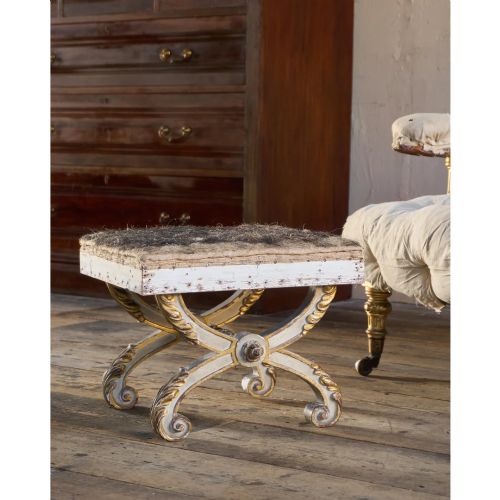
19th Century Empire Style Gilt X Frame Stool, 19th Century
Priced at £750 from Elmgarden
Gilt furniture originated in royal palaces to reflect candlelight during evening assemblies.
Look for eighteenth-century examples built specifically for window recesses. They're designed to provide seating without hiding the expensive silk curtains behind them.
The demand for antique gilt stools grew as drawing rooms became more crowded during the Georgian period.
Often commissioned in pairs or sets of four. Few survive together today.
Robert Adam designed formal seating for country houses. His sketches show detailed gilding patterns for specific rooms.
Thomas Chippendale supplied suites of giltwood furniture to clients like the Earl of Harewood during the 1770s.
London carvers handled the complex frame details before passing the pieces to specialist gilders.
The 2026 retail price guide for Antique Gilt Stools is drawn from a proprietary archive of over 1.1 million retail prices indexed by Sellingantiques since 2003. This guide relies exclusively on their own internal data; no external sources or auction records are used.
Analysing nearly 25 years of UK antique market history alongside current retail values, the data indicates that typical UK retail prices for Antique Gilt Stools range between £500 and £2,500. Entry-level prices generally fall under £500 and premium examples upwards of £2,500.
X-frame bases appear frequently. This shape mimics ancient Roman campaign seats.
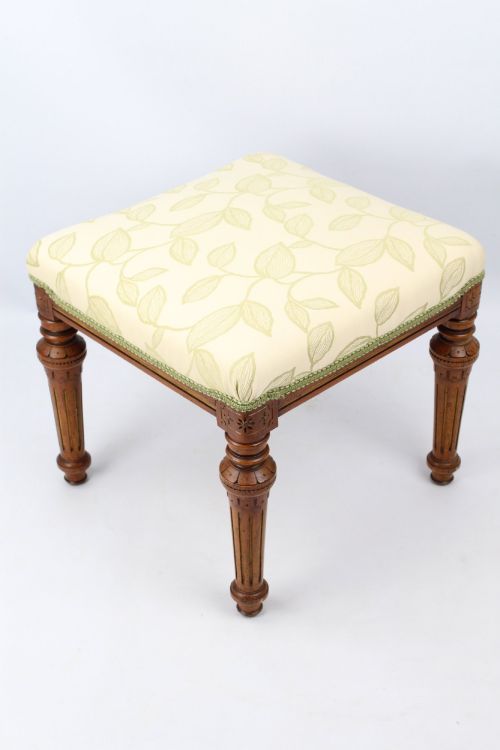
Cabriole legs ending in scroll feet dominate the mid-eighteenth century. Later antique gilt stools feature straight, fluted legs.
Check the seat rails. Carved friezes often feature central rosettes or shell motifs.
Early frames rely on heavy mortise and tenon joints cut thick enough to withstand deep carving.
Carvers cut the decorative motifs directly into the solid wood before any gesso touched the surface.
Look at the corners. Later makers added diagonal wooden blocks inside the seat rails to reinforce the frame.
"The hollow spaces behind deep carvings reflect sound. Some music rooms featured specific seating designed to enhance acoustics."
"Gilding creates a surface that resists dust build-up far better than polished mahogany or walnut."
"The red clay base acts as a cushion. This allows the gold layer to be burnished with an agate stone."
Based on almost 25 years of Sellingantiques UK antique market data, Antique Gilt Stools appeared 311 times (out of 1,100,000 antiques) which gives it a rarity score of 94/100.
This score measures scarcity within the Sellingantiques archive only and is not a survey of the entire antiques market, so these statistics may not be indicative of the general availability of Antique Gilt Stools elsewhere.
Reupholstering a stool is standard practice. The original silk or damask rarely survives two centuries of use. A good upholsterer strips the seat back to the wooden frame before building it back up.
Traditional methods use horsehair and webbing. Modern foam alters the profile and sits too high. Keep the top fabric historically appropriate if the frame is of high quality.
Sunlight affects gold leaf far less than it damages polished wood or veneers. The metal surface reflects the light rather than absorbing it. The frame itself remains stable.
The upholstery is the weak point. Silk and cotton fade quickly in direct sun. You might need to rotate the piece regularly or fit a blind to protect the fabric during the brightest hours of the day.
Dust it lightly with a soft brush. Never use water. Moisture breaks down the surface.
Leave ingrained dirt alone. Over-cleaning strips away the patina.
Loose joints need attention before the frame breaks. A restorer tackles this from the inside. They access the seat rails by removing the upholstery and drop-in seat.
Injecting animal hide glue into the traditional mortise and tenon joints secures the frame. The show wood remains untouched during this process. The gilding stays safe as long as the work happens from the interior carcase.
Please note: This Antique Gilt Stools guide and its associated pricing data are provided for general informational purposes only. It does not constitute formal financial, investment, or appraisal advice and should not be relied upon as the sole basis for any commercial activity, purchasing, or sales decisions. Sellingantiques.co.uk accepts no liability for any actions taken in reliance on this information. Always consult with a qualified professional or independent appraiser.
