


A 2026 Guide by Sellingantiques

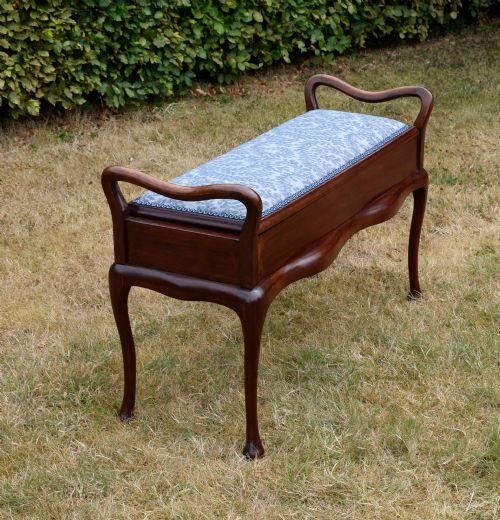
Mahogany Duet Stool, 1890
Priced at £395 from Brookside Antiques
Antique duet stools emerged in the early nineteenth century alongside the rising popularity of four-hand piano compositions.
Look at the wider domestic trade. They became standard drawing room fixtures once the upright piano replaced the harpsichord.
Wealthy households often commissioned these pieces to match the existing suite of drawing room seating, which means you frequently find them styled differently from the instruments they sat in front of.
Later Victorian examples shifted towards volume production to meet middle-class demand.
Documented cabinet makers rarely signed these pieces. Most antique duet stools came straight out of regional workshops, built anonymously to supply local merchants with standard stock.
John Broadwood & Sons occasionally provided matching stools alongside their grand pianos during the nineteenth century.
Check the inside lid. Retailers attached paper trade labels here more often than the actual makers did.
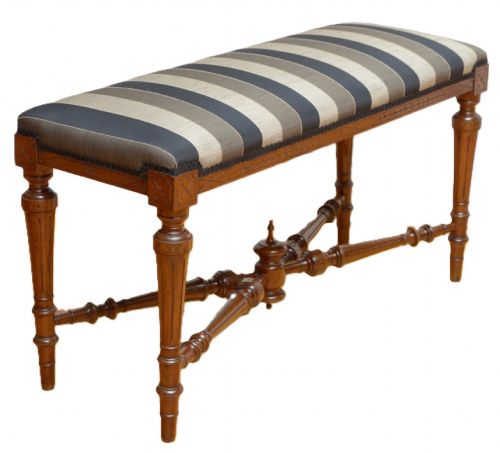
Early 20th Century Duet Stool, 1900
Priced at £225 from Brookside Antiques
The 2026 retail price guide for Antique Duet Stools is drawn from a proprietary archive of over 1.1 million retail prices indexed by Sellingantiques since 2003. This guide relies exclusively on their own internal data; no external sources or auction records are used.
Analysing nearly 25 years of UK antique market history alongside current retail values, the data indicates that typical UK retail prices for Antique Duet Stools range between £300 and £1,200. Entry-level prices generally fall under £300 and premium examples upwards of £1,200.
A hinged seat is the defining feature. Lift it up to find a shallow box section originally meant for sheet music.
Side handles feature on some models. These help slide the stool back from the pedals.
Notice the width. They always span at least three feet across the top, ensuring both players have enough elbow room to navigate the keys without knocking into each other.
Early versions rely on heavy mortise and tenon joints to secure the legs directly to the deep music box.
Look at the leg turning. Craftsmen shifted from slender Regency reeding to heavy Victorian fluting as domestic tastes bulked up.
Machine-cut dovetails begin appearing in the compartment corners by the late nineteenth century.
"The music compartment often serves as a hidden time capsule. You might find century-old concert programmes or tuner receipts slipped beneath the lining paper."
"These long proportions work well in hallways. Many people buy them today to use as comfortable benches for putting on shoes."
"Some regional workshops fitted them with adjustable height mechanisms at both ends. This allowed an adult and a child to play comfortably together."
Based on almost 25 years of Sellingantiques UK antique market data, Antique Duet Stools appeared 498 times (out of 1,100,000 antiques) which gives it a rarity score of 91/100.
This score measures scarcity within the Sellingantiques archive only and is not a survey of the entire antiques market, so these statistics may not be indicative of the general availability of Antique Duet Stools elsewhere.
Most duet stools have a standard drop-in or stuff-over seat. A local upholsterer can strip the old fabric and webbing in an afternoon.
You just need to pick a tough modern fabric that can handle two people sliding across it.
A drop of light machine oil on the hinge pins is usually fine. Just protect the surrounding timber and upholstery with a rag first.
Stiffness often means the hinge screws have worked loose and the brass plates are binding. Tighten the screws before you add any lubricant to see if that solves the catch.
The constant side-to-side movement of players leaning along the keyboard stresses the leg joints over time. The glue dries out and the dowels or tenons shrink.
It takes a proper cabinet maker to knock the joints apart, scrape away the old hide glue, and clamp them back together.
That base panel only had to support the weight of paper sheet music. Makers used thin pine or plywood here to keep the overall weight of the stool down.
You'll often find these thin panels have warped or split over the decades. As long as the main carcase remains rigid, a split base board rarely affects how the stool functions.
Please note: This Antique Duet Stools guide and its associated pricing data are provided for general informational purposes only. It does not constitute formal financial, investment, or appraisal advice and should not be relied upon as the sole basis for any commercial activity, purchasing, or sales decisions. Sellingantiques.co.uk accepts no liability for any actions taken in reliance on this information. Always consult with a qualified professional or independent appraiser.
