


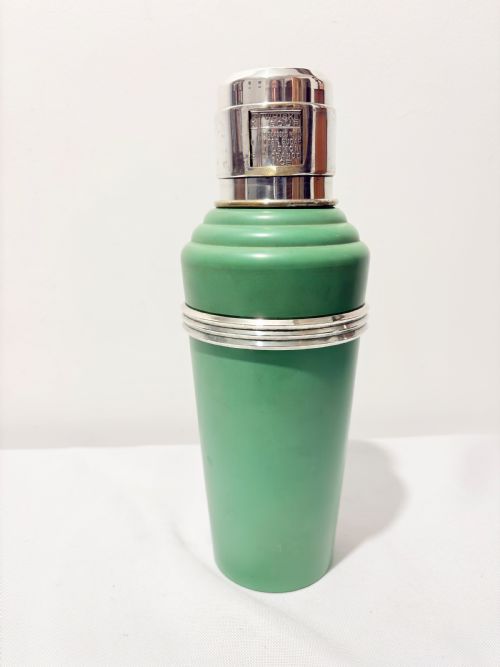


Antique Silver Cocktail Shakers
A lidded metal vessel for mixing drinks at home, usually silver-plated, usually made in the 1930s when cocktails moved out of the bar and into the sitting room.
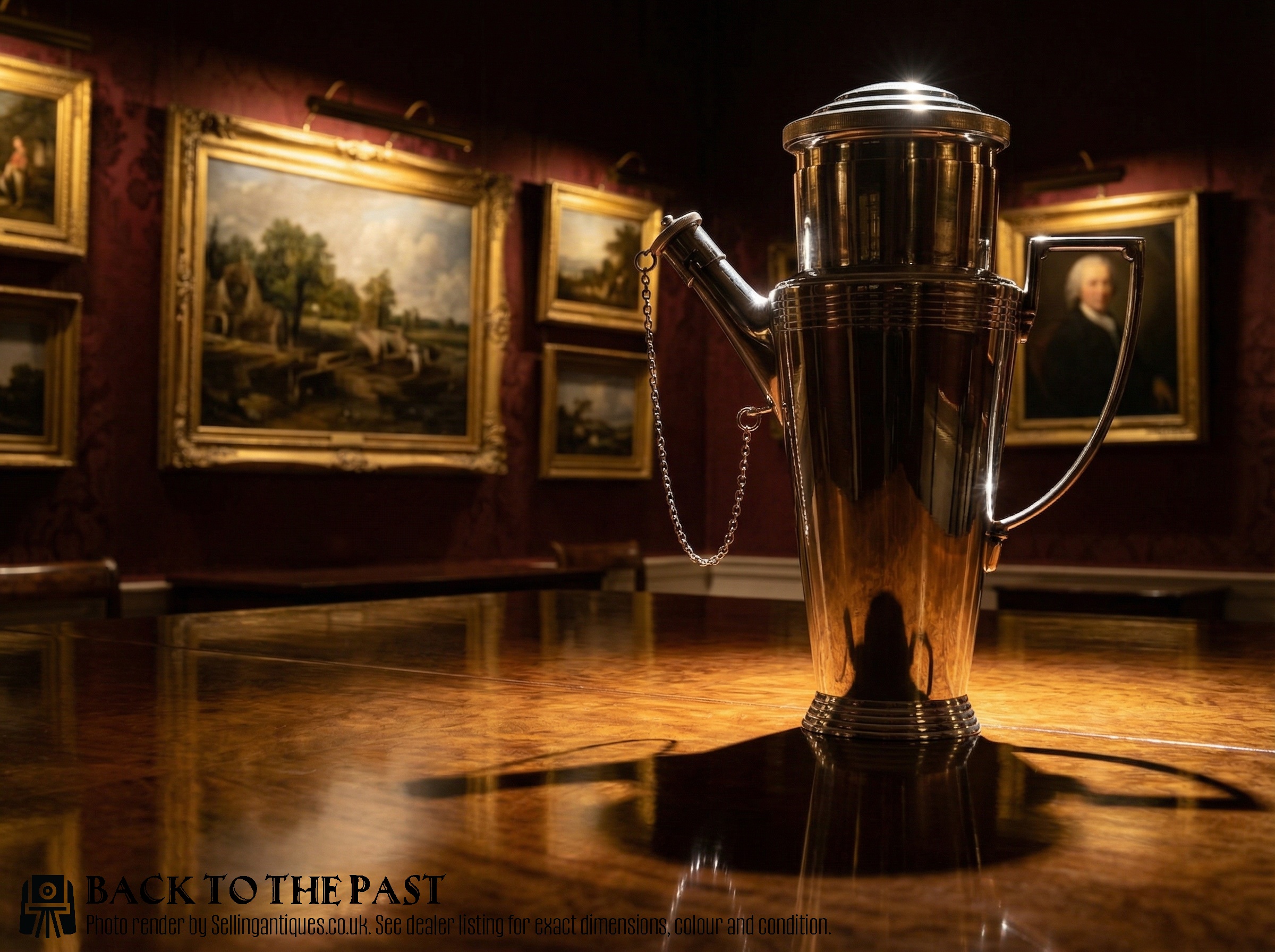
Antique Silver Cocktail Shakers
Despite the heading, plate dominates. Of 639 listings on Sellingantiques, all but a handful say "plated" or "plate" in the title, against a small number of sterling or hallmarked pieces. What you're looking at is normally a base-metal body with a silver surface.
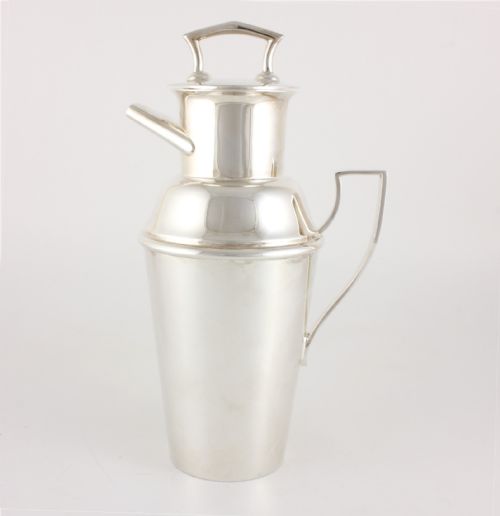
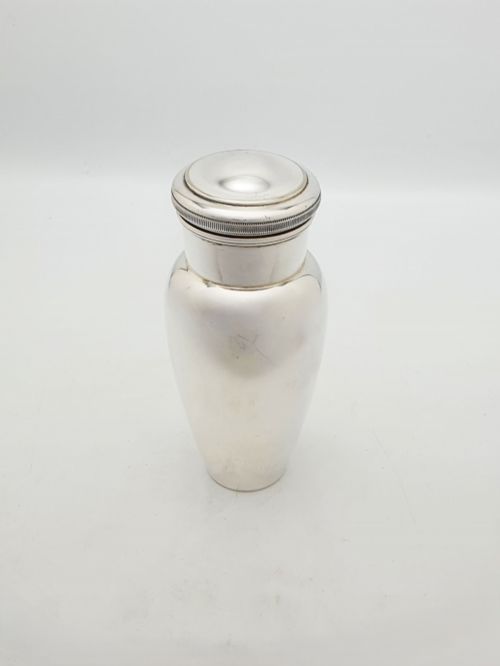
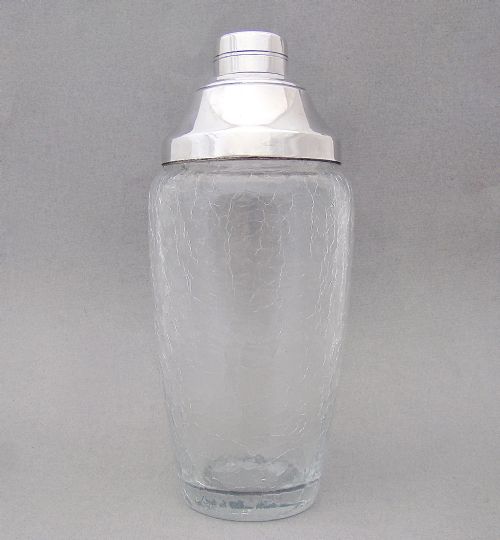
The standard shape is two or three parts: a body, an integral strainer or lemon squeezer, and a cap. Capacity is quoted in pints, from a half-pint single-drink size up to three pints. Decoration tends to be plain, stepped, engine-turned or hammered, and some bodies are glass or cut crystal held in a plated mount.
The period is narrow. The dated field runs 1900 to 1960 across 633 listings, and 484 of those sit in the 1930s. "Art deco" appears in 442 titles. Many of those years are dealer approximations, with "c.1930" and "circa 1930" recurring constantly, so a 1930 entry often means interwar rather than a documented date.
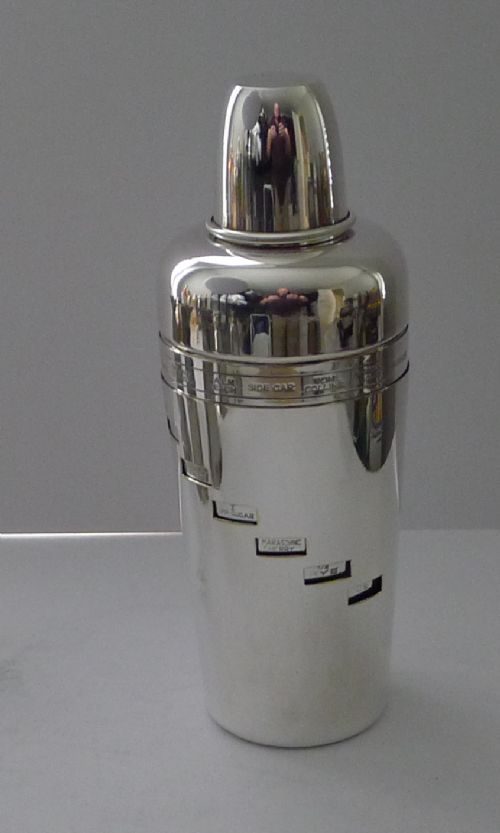
English and French makes account for the two biggest blocks, with 67 English titles and 99 French. Beyond the plain shaker sit smaller groups: shakers with a built-in lemon squeezer, recipe and menu types with rotating dials, glass bodies with a cockerel motif, and scattered novelty forms including a milk churn, a penguin, a zeppelin and a skyscraper.
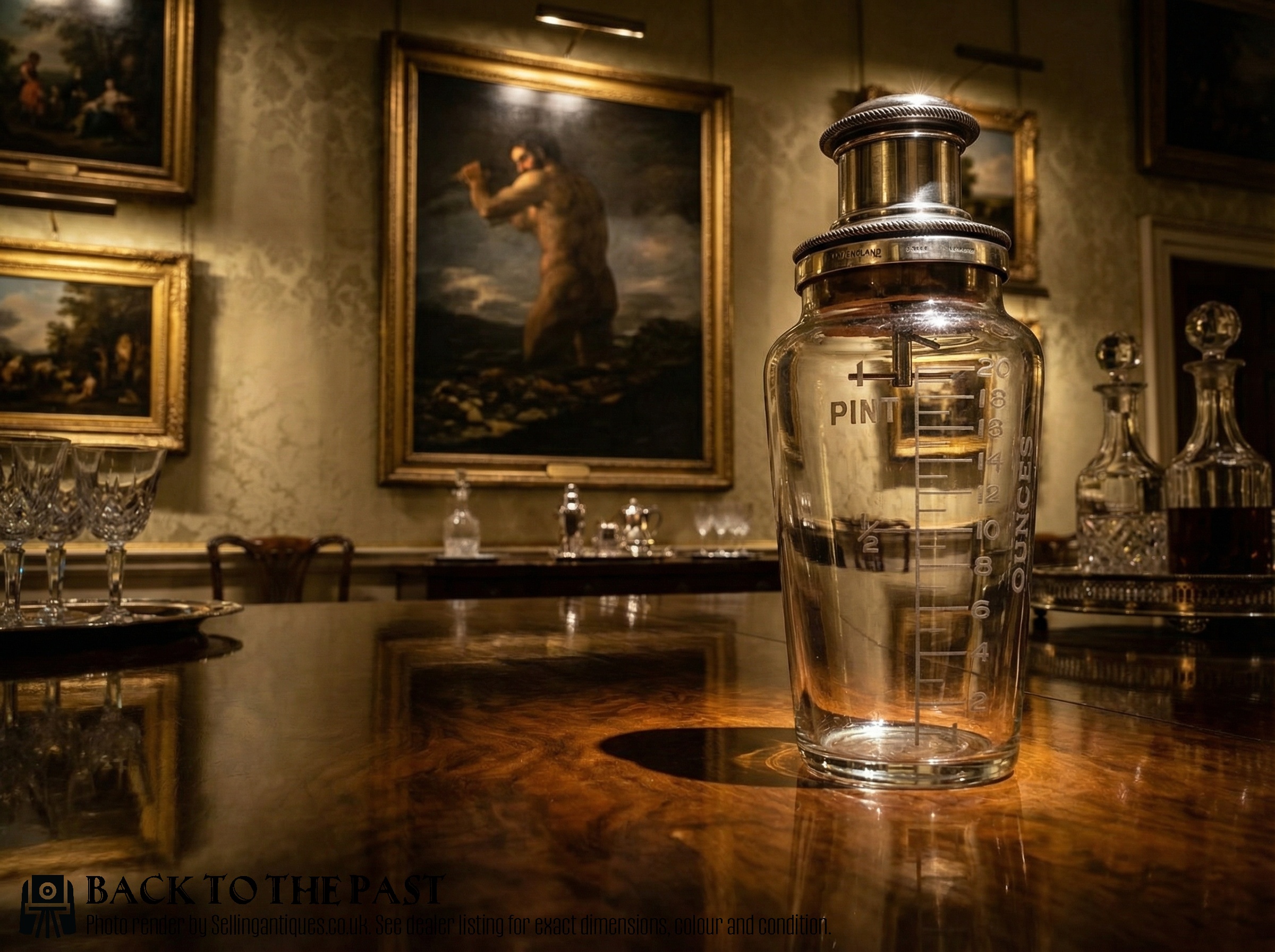
What Sets Them Apart
The plain plated shaker is the baseline, and almost everything that climbs above it does so by adding something. Recipe and menu shakers are the clearest case: 40 titles carry "recipe" and 23 carry "menu", and the group reaches the top of the range, with Italian gold-plated menu types and American dial mechanisms clustering there.
Metal matters next. The small number of sterling, 800-grade and Chinese silver examples all sit high against the plated cluster. So does a named model or a named designer, which lifts a shaker well clear of the unqualified plain ones, and so do the novelty and figural shapes that turn up as one-offs rather than as a type.
Size and completeness push upward more modestly. "Large" is in 91 titles, and one-and-a-half, two and two-and-a-quarter pint shakers sit above the unqualified sizes. Shakers listed with beakers, cups, goblets, a jigger, a spoon or a tray sit above bare ones.
Antique Silver Cocktail Shakers Retail Price Guide 2026
Typical UK retail prices for silver cocktail shakers, calculated from the Sellingantiques database of over a million retail prices indexed since 2003. This retail price guide relies exclusively on Sellingantiques data; no external sources or auction records are used, so the figures do not describe the wider market.
Cocktail shakers have been listed on Sellingantiques since 2010, and more than five hundred have passed through since then.
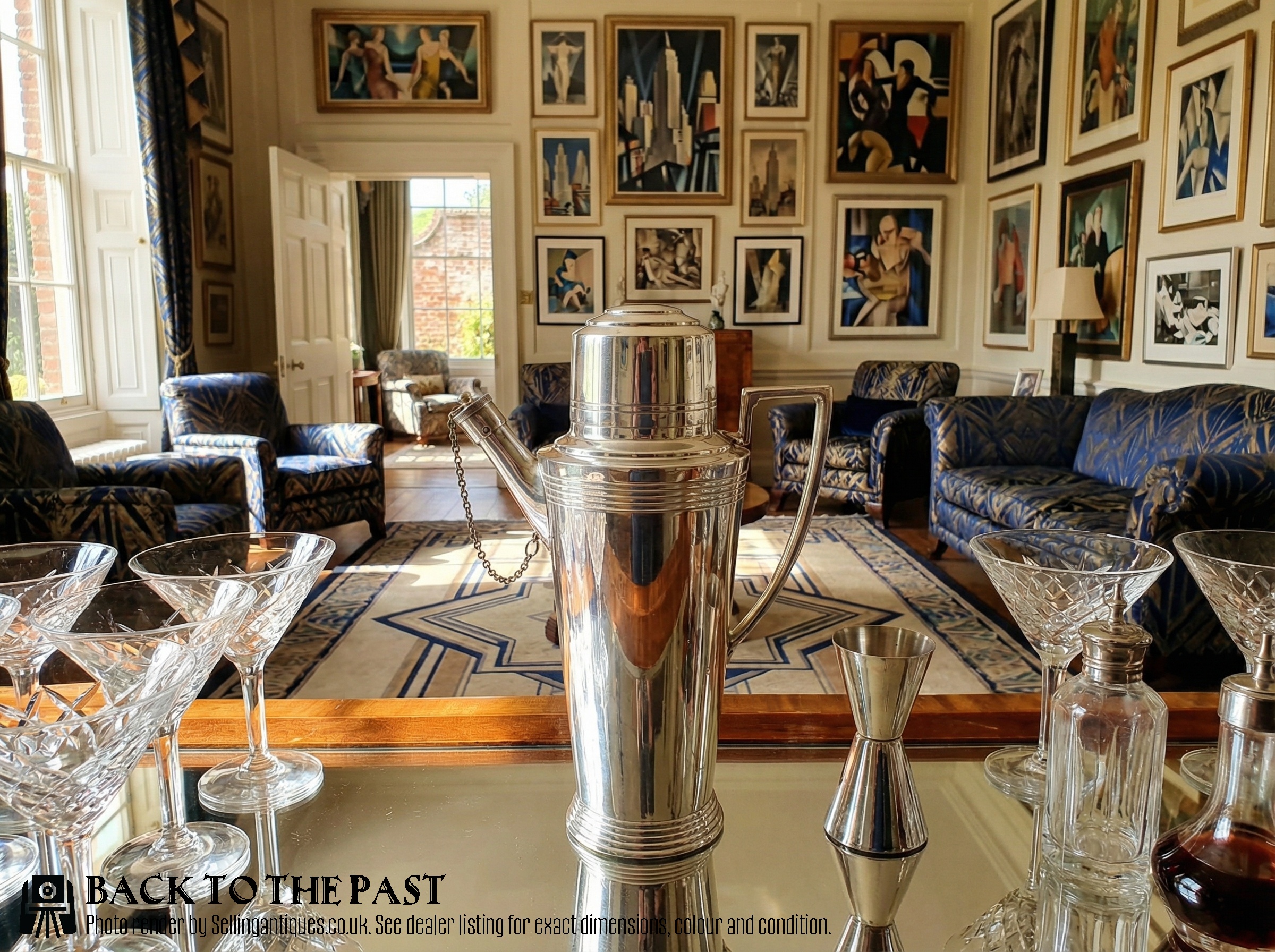
William Suckling·Mappin & Webb·James Dixon & Sons·Napier·Gaskell & Chambers
The Antique Silver Cocktail Shakers Glossary
- Silver plated / EPNS
- Electroplated nickel silver, a base-metal body with a silver surface. It's what most of this category is made of.
- Cobbler
- A three-part shaker with body, built-in strainer top and cap. The familiar domestic form.
- Boston shaker
- A two-part shaker, a metal cone over a second vessel. It appears in a handful of titles.
- Integral lemon squeezer
- A reamer or juicer built into the lid or a middle section, listed variously as squeezer, juicer or reamer. Around 35 titles carry it.
- Engine turned
- Lathe-cut repeating ornament on the body, named in 23 titles. Stepped bodies and lids, rising in tiers, are the other recurring Deco profile.
- Ondulations
- A named French wave-form model, in 13 titles. The cockerel motif, an etched or applied rooster usually on a glass body, also runs to 13.
Antique Silver Cocktail Shakers: Frequently Asked Questions
Are these actually solid silver?
Mostly not. Titles saying "plated" or "plate" account for the great bulk of the 639 listings on Sellingantiques, so a solid-silver shaker is the exception.
Sterling, 800-grade and Chinese silver examples do turn up, and they sit near the top of the range when they do.
What date are most of them?
The 1930s, heavily. Of 633 listings with a clean year, 484 fall in that decade, with 88 in the 1940s, 35 in the 1920s and small numbers either side.
One listing cites an 1887 registration date and another is flagged simply as later than 1960. Those are the outliers.
How big are they?
Capacity is quoted in pints, and 37 titles state one. The range runs from a half-pint single-drink shaker up to a three-pint American sterling piece, the largest stated anywhere in the archive.
One pint and one and a half pints are the sizes that recur most in the plain plated group.
Which ones are French?
"French" appears in 99 titles, with 71 of those reading "french art" and 24 mentioning Paris. That's roughly one in seven of the category.
Named French models surface within it, Ondulations being the one that recurs, in 13 titles. "Large french" alone accounts for 19.
What is a recipe or menu shaker?
A shaker with drink recipes engraved or printed on the body, sometimes arranged on a rotating dial, which listings describe as dial-a-drink.
Forty titles say recipe and 23 say menu. As a group they reach the top of the range, with Italian gold-plated menu types and American dial mechanisms clustering there.
Do novelty shapes turn up often?
They surface as one-offs rather than as a type. A milk churn, a penguin, a snowman, a bomb, a zeppelin airship, a champagne bottle, a skyscraper, a golf shaker and a shrapnel-shell bar set each appear only once or twice.
All of them sit in the dearer half of the samples.