


A 2026 Guide by Sellingantiques

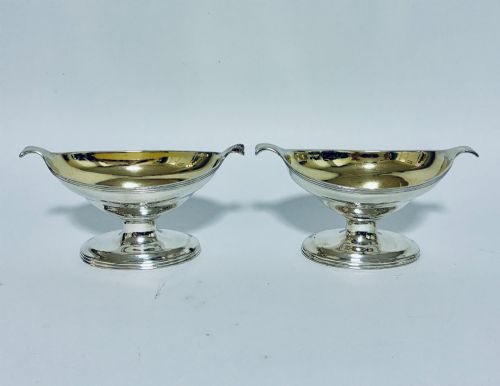
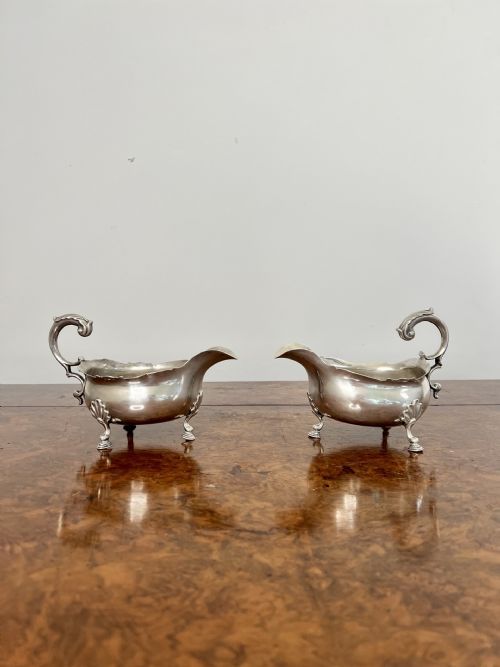
Pair of 18th Century Style Silver Plate Sauce Boat, 1900
Priced at £165 from Philip Hunt Antiques
Sauce became central to dining during the early eighteenth century. Cooks needed a way to serve hot liquids efficiently.
The first antique silver boats had a lip at both ends. Two handles sat on the sides.
Single pouring lips took over around the middle of the eighteenth century. Diners found them easier to pass around the table.
Look at the feet. Most early forms rested on an oval foot before three individual cast legs became the norm.
Paul de Lamerie worked in London during the early eighteenth century. He produced heavy, elaborate double-lipped examples.
Hester Bateman made lighter, elegant single-lipped forms. Her workshop operated in London late in the eighteenth century.
Provincial makers also produced these. Silversmiths in places like Exeter and Newcastle supplied local gentry.
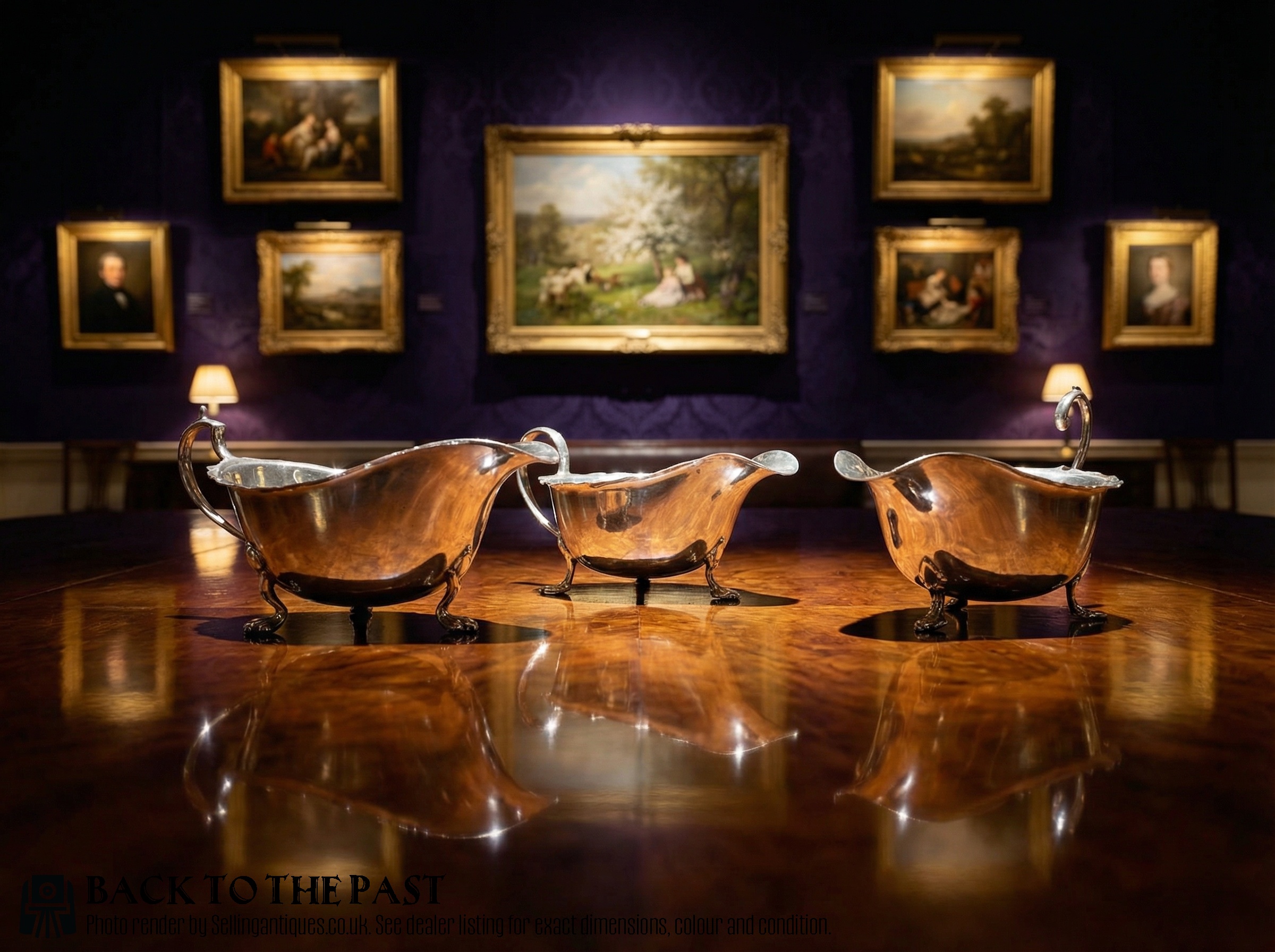
Trio of Antique Sauce Dishes, English, Silver Plated, Condiment Pots, Edwardian, Edwardian
Priced at £795 from London Fine Antiques
The 2026 retail price guide for Antique Silver Boats is drawn from a proprietary archive of over 1.1 million retail prices indexed by Sellingantiques since 2003. This guide relies exclusively on their own internal data; no external sources or auction records are used.
Analysing nearly 25 years of UK antique market history alongside current retail values, the data indicates that typical UK retail prices for Antique Silver Boats range between £200 and £1,300. Entry-level prices generally fall under £200 and premium examples upwards of £1,300.
A sweeping handle sits opposite the pouring lip. Early handles attach directly to the rim.
Check the rim shape. Many have scalloped or punched edges to catch drips before they reach the table cloth.
Cast feet keep the hot bowl off the table surface. Pad feet and hoof feet turn up frequently on Georgian examples.
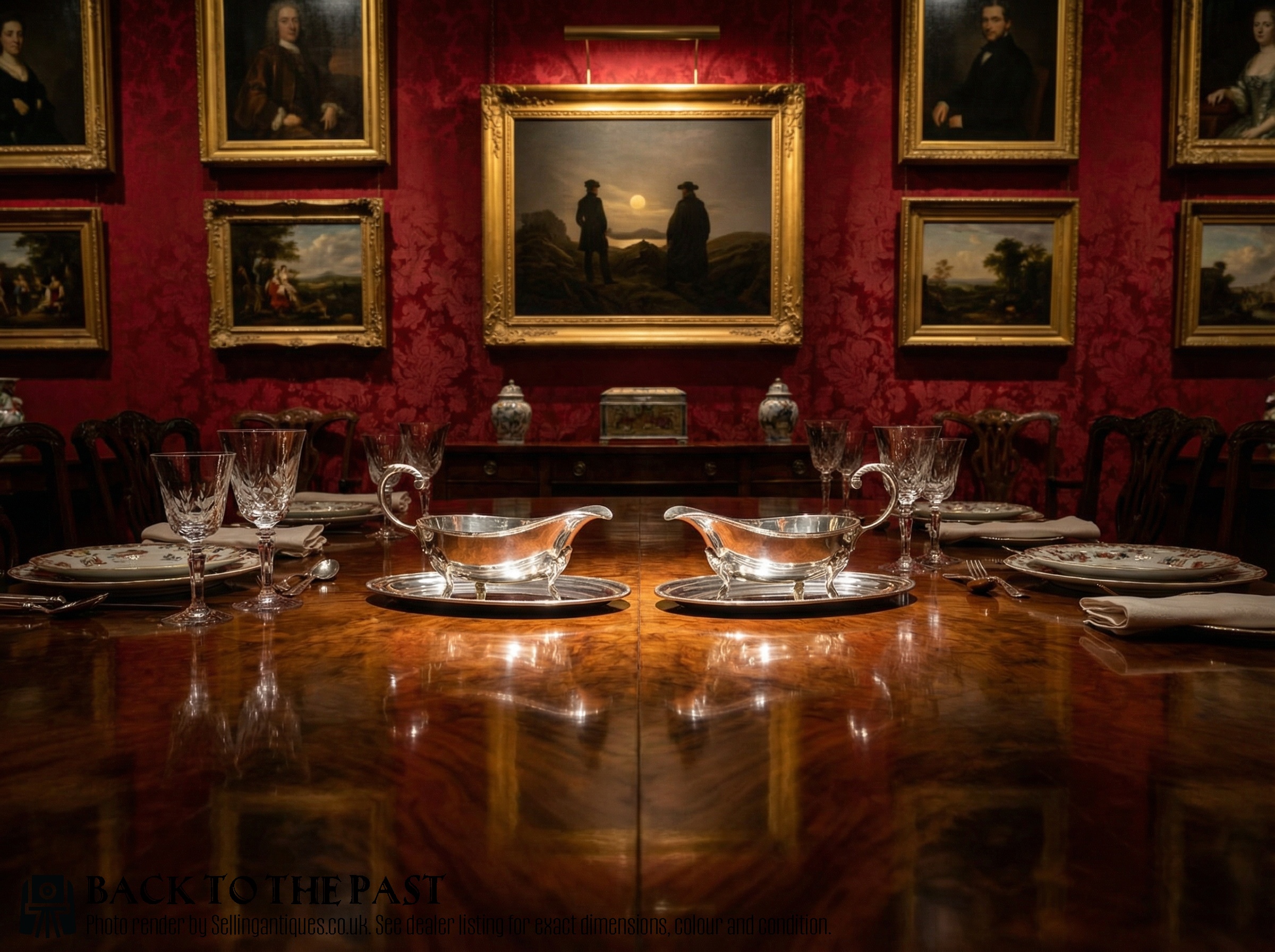
Antique Pair English Silver Plated Sauce Boats on Stands Circa 1910, 1910
Priced at £350 from Regent Antiques
Early antique silver boats were raised by hand from flat sheets. Silversmiths hammered the metal over anvils to form the deep bowl.
Handles and feet were cast separately. Makers soldered them onto the main body using a blowpipe.
Stamping machinery changed production in the nineteenth century. Workshops could press the bowl shapes quickly from thinner silver sheets.
"They're often found as matched pairs. Hosts placed one at each end of long dining tables for easier access."
"The handle design balances the weight. Even a full bowl pours smoothly without straining the wrist."
"Silversmiths occasionally made tiny versions for serving mint sauce or melted butter."
Based on almost 25 years of Sellingantiques UK antique market data, Antique Silver Boats appeared 1120 times (out of 1,100,000 antiques) which gives it a rarity score of 80/100.
This score measures scarcity within the Sellingantiques archive only and is not a survey of the entire antiques market, so these statistics may not be indicative of the general availability of Antique Silver Boats elsewhere.
Wash the bowl with warm water and washing-up liquid after every use. Hot gravies leave greasy residues that harden if left too long. Dry the silver immediately with a soft cloth to prevent water spots.
Don't use abrasive dips or harsh scrubbing pads for tarnished interiors. A gentle silver polish cream works best. Harsh chemicals will scratch the surface and ruin any remaining gilt wash.
Three legs provide a stable base on an uneven surface. Dining tables and thick linen cloths were rarely perfectly flat. A tripod stance ensures the hot sauce won't wobble or spill.
The cast legs also lift the hot bowl away from the table. This stops the heat from damaging the polished wood underneath.
Silver was an expensive material to commission. While buyers had wealth, a crest isn't always a sign of titled nobility. Many successful merchants and professionals registered arms during the eighteenth and nineteenth centuries.
The engraving helped identify ownership if the piece was stolen. It also served to display the family's social standing at dinner parties.
Silver conducts heat very efficiently. If the vessel held boiling gravy, a solid metal handle would quickly become too hot to hold comfortably.
Makers inserted small sections of wood or bone to act as heat insulators. These spacers break the thermal bridge between the bowl and the grip.
You'll often see this same technique used on silver teapots and coffee pots.
Please note: This Antique Silver Boats guide and its associated pricing data are provided for general informational purposes only. It does not constitute formal financial, investment, or appraisal advice and should not be relied upon as the sole basis for any commercial activity, purchasing, or sales decisions. Sellingantiques.co.uk accepts no liability for any actions taken in reliance on this information. Always consult with a qualified professional or independent appraiser.
