


A 2026 Guide by Sellingantiques
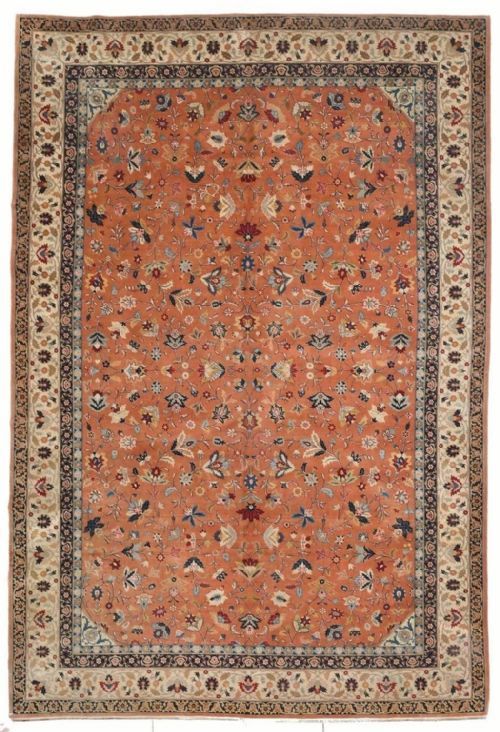
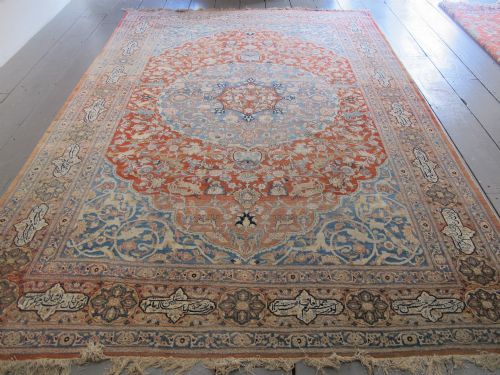
Antique Large 100% Wool Tabriz Persian Rug Carpet 390x310cm 13ftx10ft, 19th Century
Priced at £1,850 from Regent Antiques
Woven in one of Iran's oldest carpet centres. The city sits on historic trade routes near the Turkish border.
Production of antique Tabriz rugs expanded during the late nineteenth century to meet growing European demand.
Merchants set up large commercial workshops to organise the local weavers.
Look for designs influenced by classical Safavid court carpets. This revival period changed regional production.
Haji Jalili is the famous workshop name from the late nineteenth century. Pieces attributed to this source feature lighter, muted tones.
Petag was a German firm operating local looms. Look for a chintamani symbol woven into the corner.
Edward Benlian set up production in the early twentieth century. Those pieces sometimes carry an eight-pointed star signature woven right into the border.

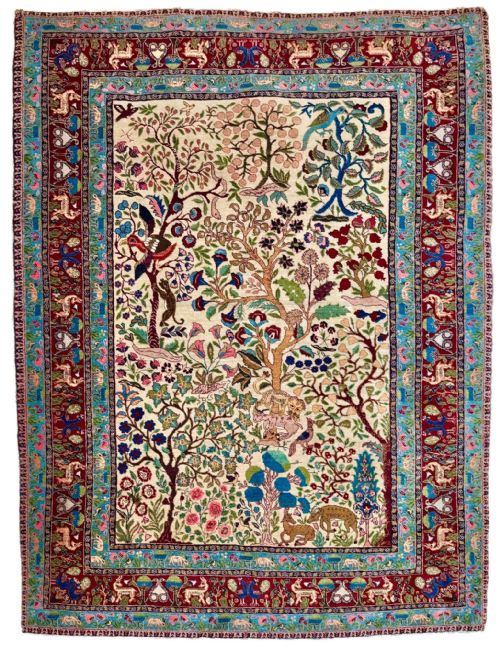
Rare Antique Tabriz Rug, 1870
Priced at £16,000 from Farnham Antique Carpets
The 2026 retail price guide for Antique Tabriz Rugs is drawn from a proprietary archive of over 1.1 million retail prices indexed by Sellingantiques since 2003. This guide relies exclusively on their own internal data; no external sources or auction records are used.
Analysing nearly 25 years of UK antique market history alongside current retail values, the data indicates that typical UK retail prices for Antique Tabriz Rugs range between £1,300 and £10,400. Entry-level prices generally fall under £1,300 and premium examples upwards of £10,400.
Central medallions dominate many layouts. These sit against complex backgrounds of scrolling vines and palmettes.
A tight knotting style allows for precise curved lines rather than blocky geometric shapes.
Pastel colour palettes set certain antique Tabriz rugs apart. You often see rust red, soft ivory and pale blue.
Vertical looms allowed weavers to maintain high tension. This fixed equipment prevented large room-sized formats from warping.
Master weavers worked from gridded paper talims, with a caller shouting out the knots row by row to guide the workshop through complex patterns.
The double-wefted construction creates a dense fabric. You'll notice each row of knots is locked down tight by two separate cross threads.
"The palette shifted towards softer copper and terracotta tones specifically to match Western furnishing tastes of the era."
"Some of the most intricate examples feature woven poetry cartouches replacing the traditional floral border elements."
"Weavers often scaled up classical sixteenth-century miniature painting designs to fill massive room-sized carpets."
Based on almost 25 years of Sellingantiques UK antique market data, Antique Tabriz Rugs appeared 326 times (out of 1,100,000 antiques) which gives it a rarity score of 94/100.
This score measures scarcity within the Sellingantiques archive only and is not a survey of the entire antiques market, so these statistics may not be indicative of the general availability of Antique Tabriz Rugs elsewhere.
Vacuum the surface using a suction-only setting. Beater bars tear at old wool and snap brittle cotton warp threads.
Spills need cold water and blotting with a clean towel. Chemical spot cleaners can strip natural dyes out, so they aren't recommended for antique Tabriz rugs.
An underlay protects old textiles. Hardwood floors offer zero give, which means foot traffic crushes the wool pile directly against a rigid surface.
A felt pad absorbs that friction. It also stops the piece slipping around, preventing structural tears when furniture gets dragged across a room.
Silk is far less forgiving than wool.
These delicate pieces belong in low-traffic areas or mounted on a wall.
Constant friction will snap the fibres and wear away the patterns quickly.
Those fringes are the exposed ends of the cotton warps holding the structure together. Once they wear down to the first row of knots, the pile will start falling out.
A restorer can secure the ends with overcast stitching. Leaving it usually leads to losing sections of the guard border, which is much harder to rebuild.
Please note: This Antique Tabriz Rugs guide and its associated pricing data are provided for general informational purposes only. It does not constitute formal financial, investment, or appraisal advice and should not be relied upon as the sole basis for any commercial activity, purchasing, or sales decisions. Sellingantiques.co.uk accepts no liability for any actions taken in reliance on this information. Always consult with a qualified professional or independent appraiser.
