
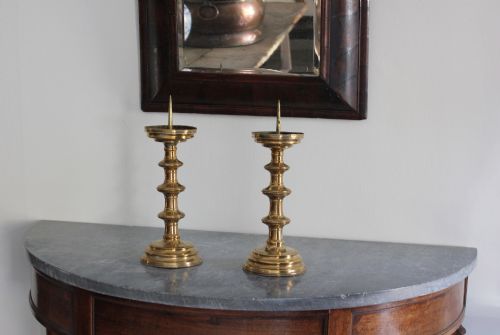

A 2026 Guide by Sellingantiques
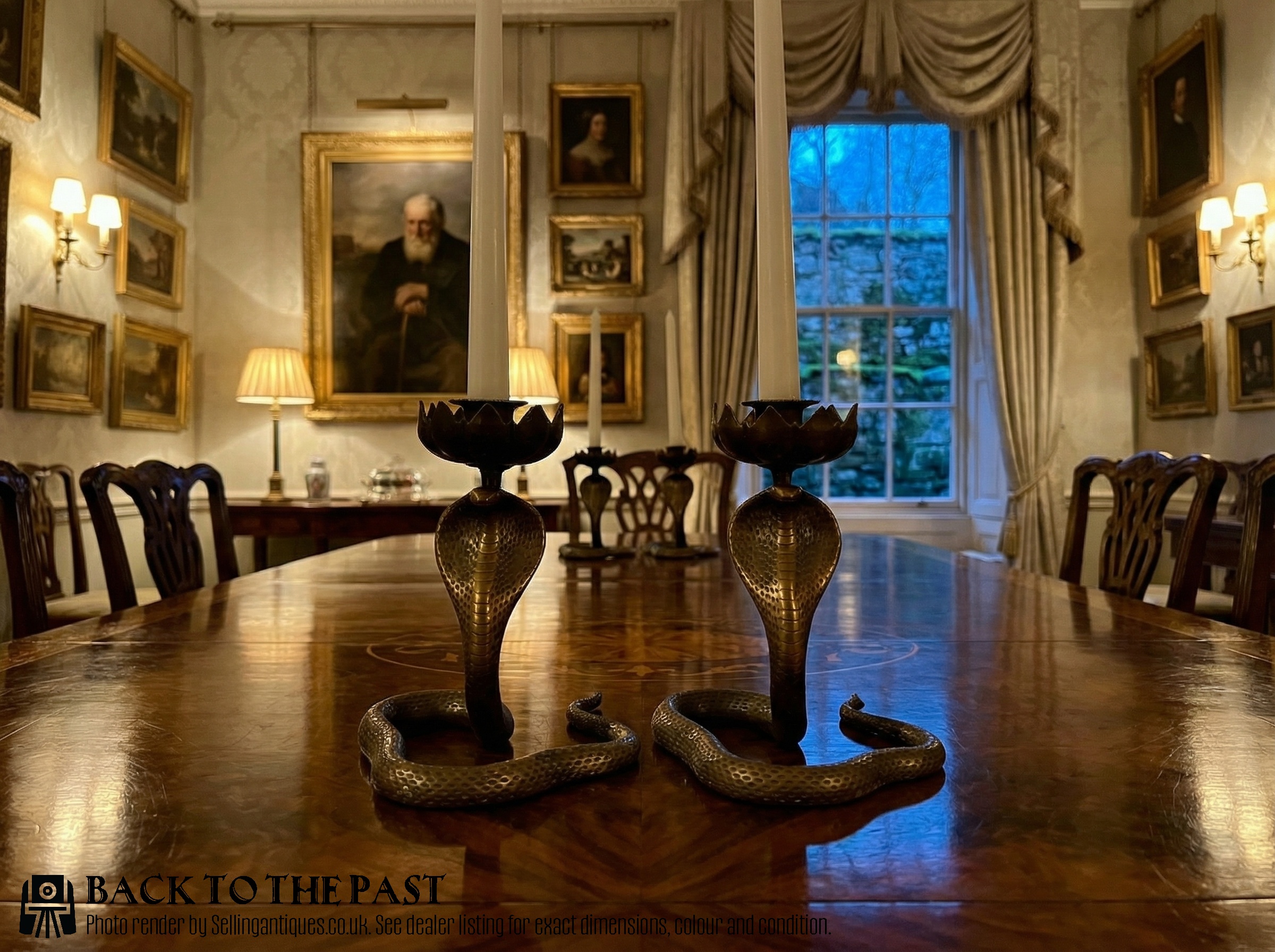
Stylish Pair Solid Bronze Cobra Candlesticks, 1900
Priced at £225 from Rams Head Antiques
Before gas lighting, nearly every room relied on portable light sources.
Look at the evolution of domestic lighting across the seventeenth and eighteenth centuries to understand how antique candlesticks developed.
Early examples often featured a wide drip pan midway down the stem to catch messy tallow.
Tallow was cheap but burned fast and smoked heavily, while beeswax remained a luxury reserved for formal spaces.
Changing dining habits in the Georgian period brought pairs and sets of four into fashion for table settings.
Matthew Boulton produced high-quality Sheffield plate and solid silver lighting in Birmingham during the late eighteenth century.
London silversmith Paul de Lamerie made elaborate rococo cast silver forms in the 1730s and 1740s.
Finding a stamped maker's mark on standard brass wares from the provincial trade is rare before the Victorian era.
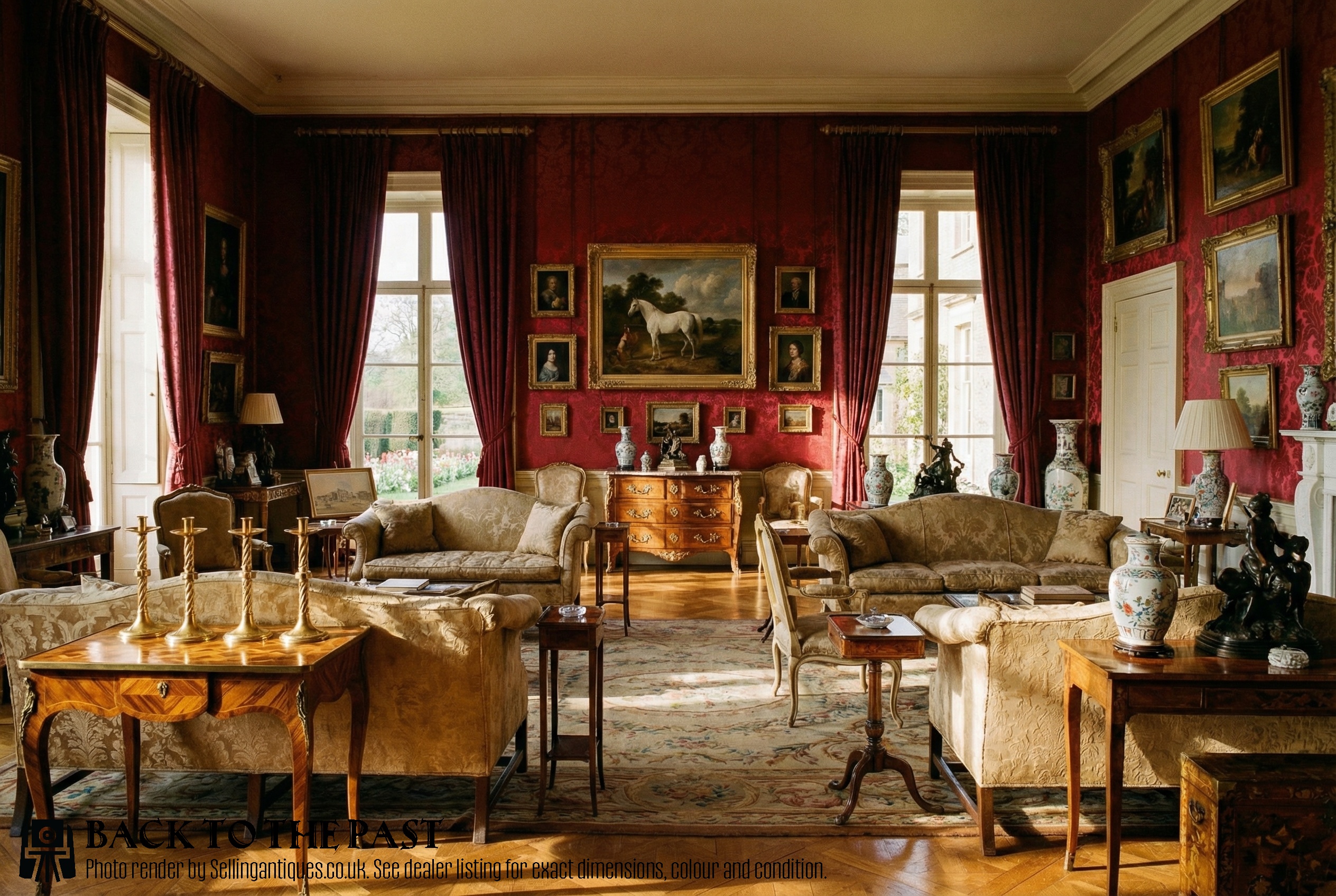
Quality Set of Four Antique Victorian Brass Ecclesiastical Candlesticks, 1860
Priced at £785 from Rebecca Sarah Antiques
The 2026 retail price guide for Antique Candlesticks is drawn from a proprietary archive of over 1.1 million retail prices indexed by Sellingantiques since 2003. This guide relies exclusively on their own internal data; no external sources or auction records are used.
Analysing nearly 25 years of UK antique market history alongside current retail values, the data indicates that typical UK retail prices for Antique Candlesticks range between £200 and £1,700. Entry-level prices generally fall under £200 and premium examples upwards of £1,700.
Sockets need a hole or slot at the side so you can pry out the unburnt candle stump.
Bases get wider as the eighteenth century progresses, shifting from narrow octagons to broad circular or square profiles.
A removable bobeche or nozzle resting inside the top rim makes cleaning away wax much easier.
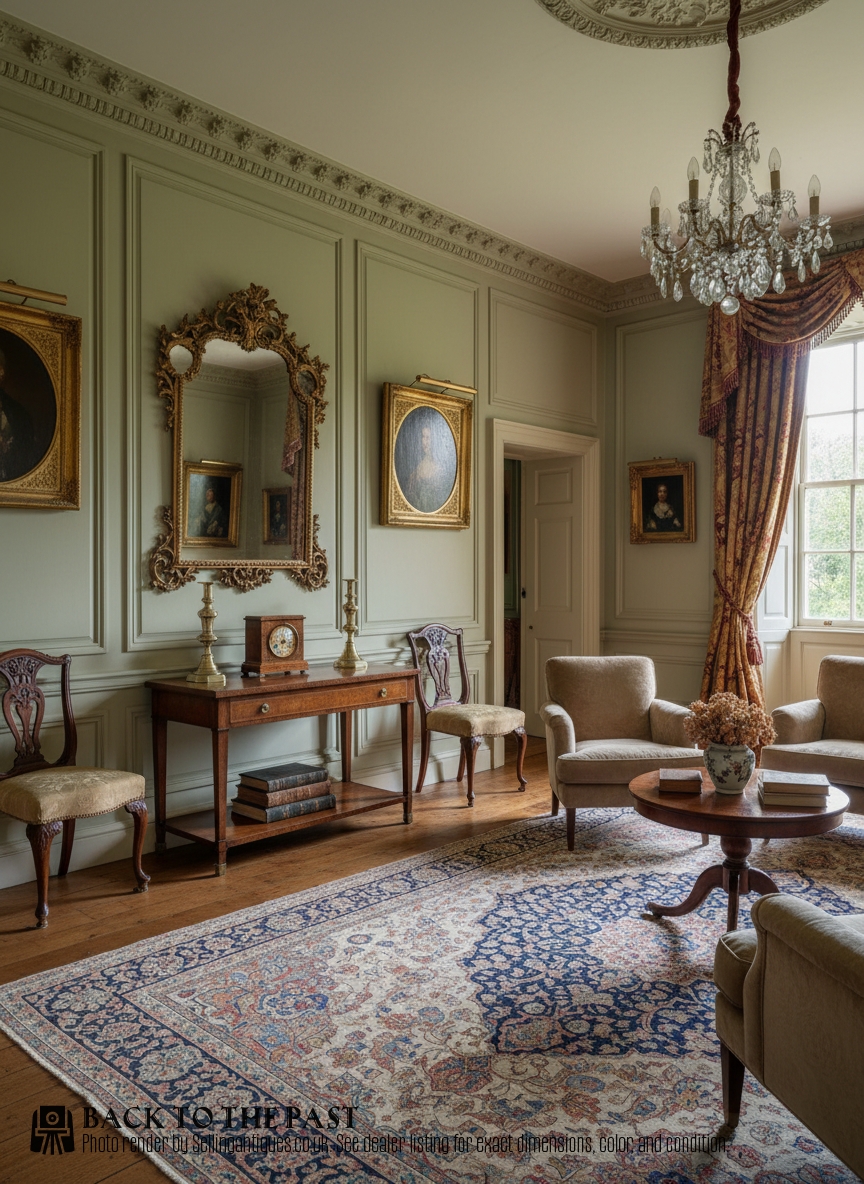
Pair of Antique Victorian Brass Candlesticks, 1860
Priced at £185 from London City Antiques
Early brass examples were usually cast in solid sections and then finished on a lathe.
The introduction of core casting allowed makers to produce hollow stems, saving metal and reducing the final weight.
Silversmiths raised sheet metal over wooden formers or cast decorative elements separately before soldering them together.
"Many tall stems unscrew into three or four separate threaded sections for easier cleaning and flat storage."
"You can still find original Georgian baize glued to the underside of silver bases to protect polished mahogany tables."
"Weighted bases often contain a mixture of local river sand and pitch added by the silversmith before sealing."
Based on almost 25 years of Sellingantiques UK antique market data, Antique Candlesticks appeared 7748 times (out of 1,100,000 antiques) which gives it a rarity score of 21/100.
This score measures scarcity within the Sellingantiques archive only and is not a survey of the entire antiques market, so these statistics may not be indicative of the general availability of Antique Candlesticks elsewhere.
A gentle clean is fine for removing heavy black tarnish. Use a quality silver polish and a soft cloth rather than harsh abrasive dips.
Don't aim for a bright mirror finish. Leaving some darker oxidation in the recessed crevices helps highlight the relief decoration.
Georgian and Victorian dining tables usually featured candlesticks in pairs or sets of four. They're spaced evenly down the centre to provide overlapping pools of light for the guests.
Larger banquets sometimes combined a heavy multi-branch candelabrum in the centre with single matching sticks positioned towards the ends of the table. The host decided the layout based on the number of diners.
Today, you can mix similar styles if you lack a uniform set. Grouping pieces of the same material and similar height works well on a long dining surface.
That slot is a practical feature for removing old candle ends. Before modern mechanisms, wax or tallow would melt and glue the stump firmly into the cup.
You push a metal pin or the end of a wick trimmer through the hole to pry the leftover stub upwards. It saves you from digging around inside the socket with a knife and scratching the metal.
Leave the original baize in place if it is still attached. That material was glued there specifically to stop heavy metal edges from scratching polished wooden furniture.
Even if it looks tired, the fabric forms part of the history of the object. Removing it often exposes the messy pitch weighting inside the base, which was never meant to be seen.
Please note: This Antique Candlesticks guide and its associated pricing data are provided for general informational purposes only. It does not constitute formal financial, investment, or appraisal advice and should not be relied upon as the sole basis for any commercial activity, purchasing, or sales decisions. Sellingantiques.co.uk accepts no liability for any actions taken in reliance on this information. Always consult with a qualified professional or independent appraiser.
