
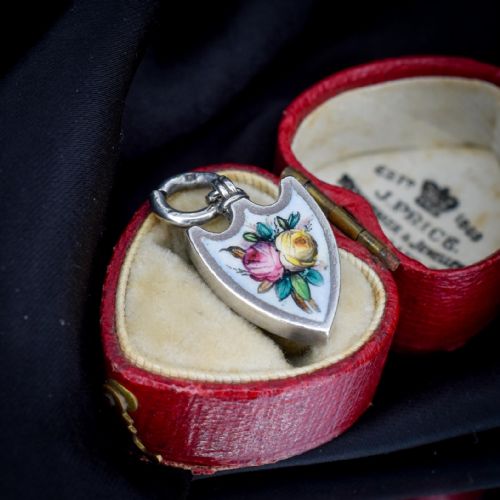
Antique Charms
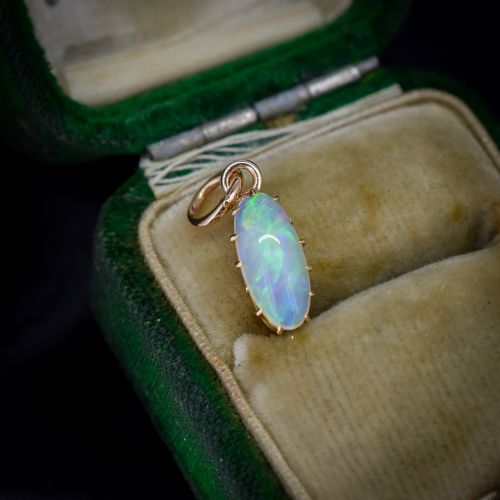
A charm is a small gold or silver ornament made to hang from a chain, bracelet or watch chain, worn as decoration and as a token of luck, faith, remembrance or affection.
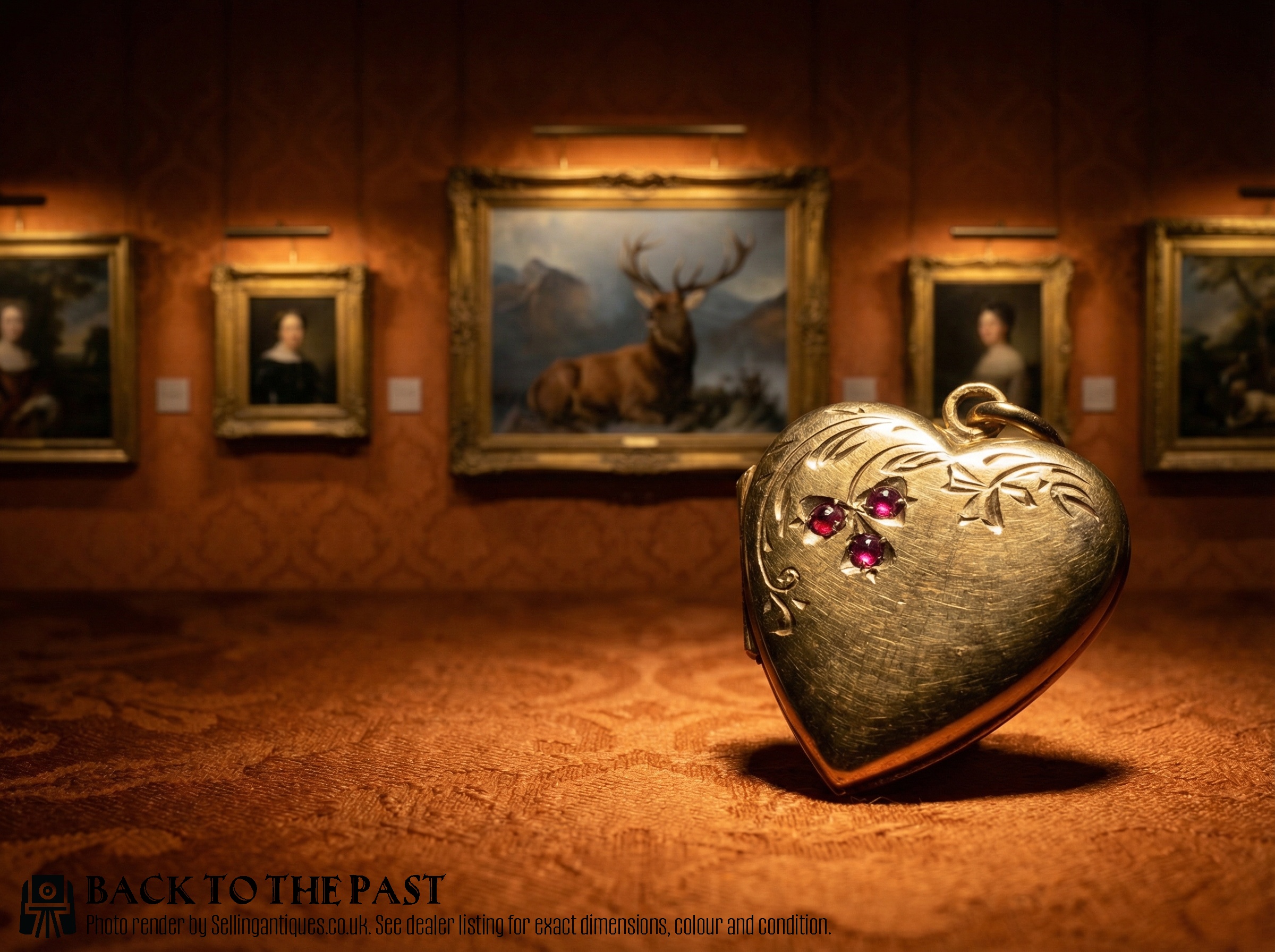
Antique Charms
The heading covers a broad group of small wearable objects, and the great majority were worn as pendants rather than hung on a bracelet: 408 of 524 titles on Sellingantiques say pendant. Gold dominates too, in 424 titles, with silver a clear minority.
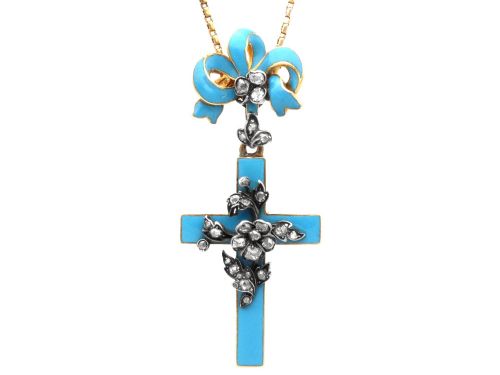
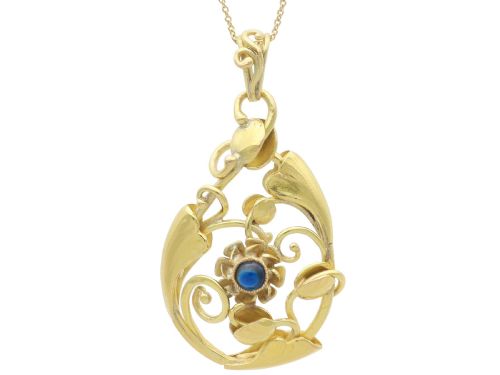
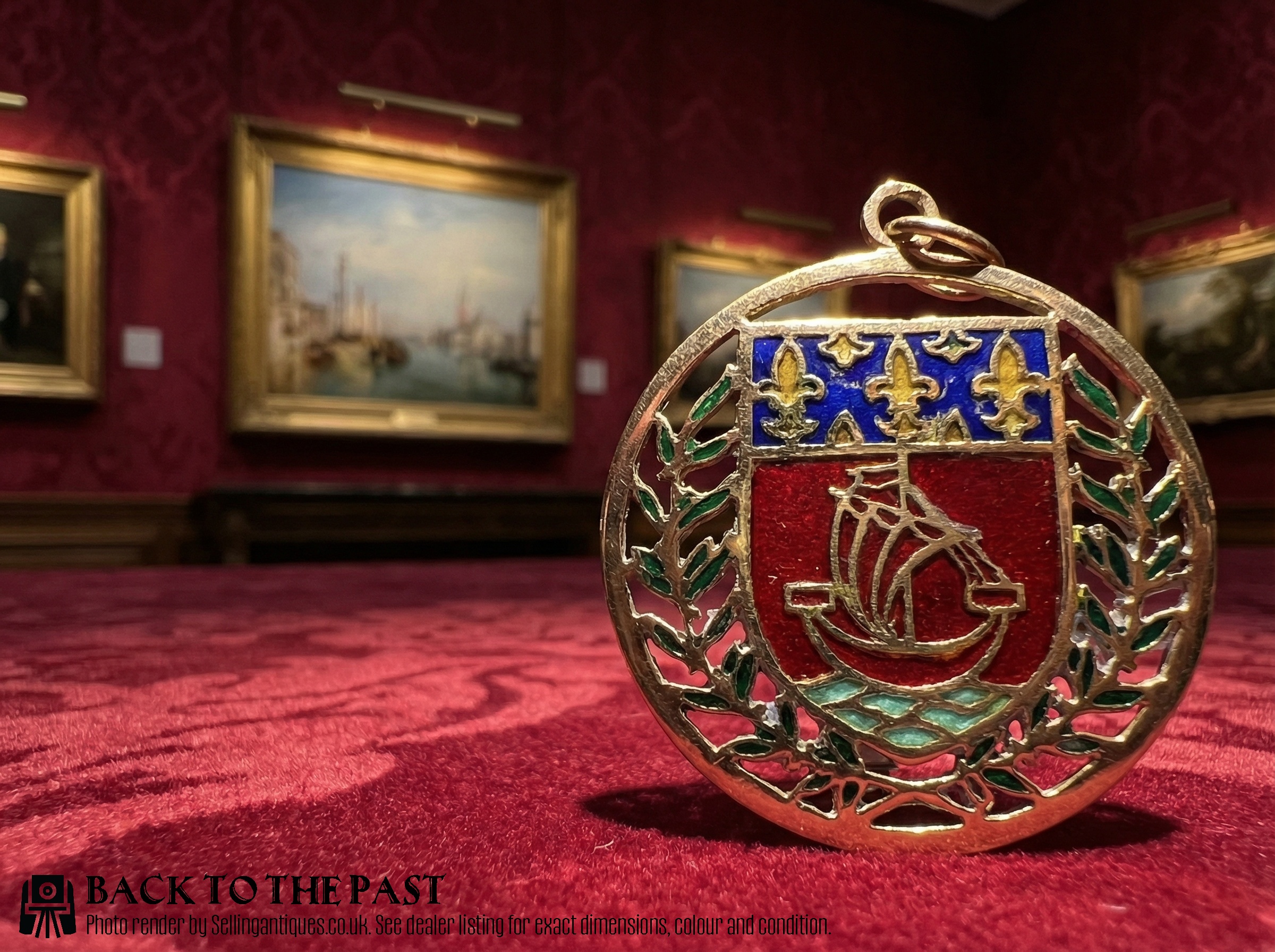
Two visibly different populations sit under the one word. One is British 9ct and 15ct novelty and sentimental work: animals, hearts, padlocks, lockets, fob seals, compasses, propelling pencils, many with a London, Birmingham or Chester assay mark and a year quoted. The other is French 18K yellow gold medal pendants, mostly religious subjects and zodiac signs.
The French side is the single largest recognisable group, close to a third of the category. The Virgin Mary is the most frequently named subject anywhere in it, in 51 titles, with Madonna and Child in a further sixteen. Zodiac and star-sign charms form a smaller persistent run, sometimes near-complete sets of individual signs.
Dates run from 1800 to 1960, and the profile is back-to-front from what the word antique suggests. The 1960s is the biggest single bucket, ahead of the 1910s, then the Victorian label, then the 1950s. Georgian and 18th-century pieces appear only as a trickle.
Where The Range Splits
Metal does the first sorting. Sterling silver novelties sit at the bottom of the sampled range, 9ct in the lower half, and 18K yellow gold clusters at the upper end. Isolated 10ct, 14ct, 22ct and 24ct pieces turn up, but 9ct and 18K do the bulk of the work.
Among the French medals, a named engraver or medal house in the title lifts a piece well above a plain 9ct novelty. Gemstones tell the same story: diamond appears in 57 titles, pearl in 64, and the highest sampled entries pair carat weights with the metal.
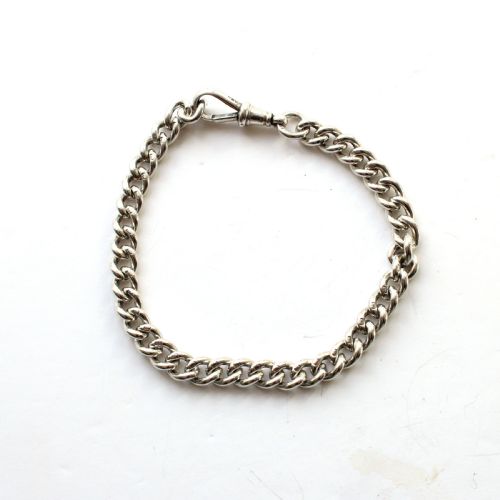
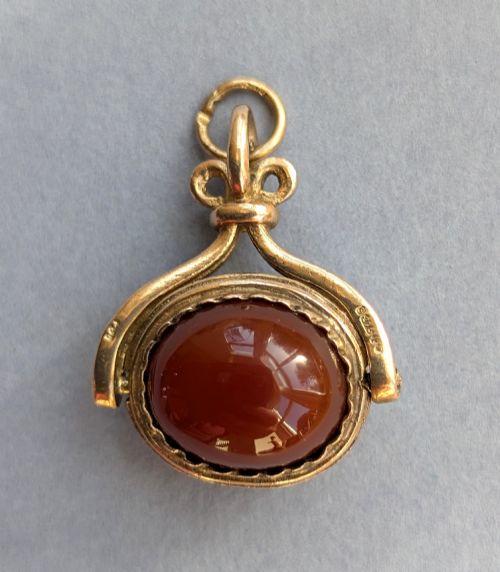
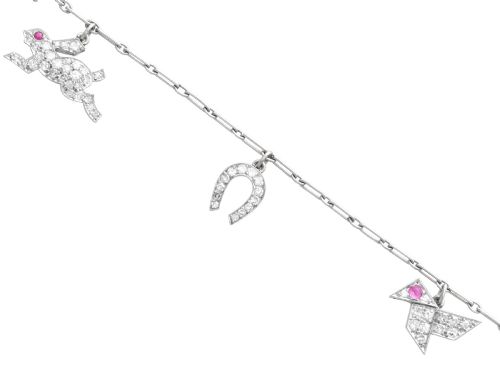
Within the British novelties, anything that moves or opens sits above a plain solid charm of the same gold. Articulated fish, spinning and swivel fobs, sliding and cage forms, propelling pencils. Assembled groups also run high, a loaded curb bracelet ahead of any single charm, the heaviest sampled being a Victorian bracelet hung with fifteen carnelian and bloodstone fob seals.
Antique Charms Retail Price Guide 2026
Typical UK retail prices for charms, calculated from the Sellingantiques database of over a million retail prices indexed since 2003. This retail price guide relies exclusively on Sellingantiques data; no external sources or auction records are used, so the figures do not describe the wider market.
9ct and 18k do most of the work in charm titles on Sellingantiques, with 15ct some way behind and odd 10ct, 14ct, 22ct and 24ct pieces turning up.
The Antique Charms Glossary
- Charm
- A small ornament made to hang from a chain, bracelet or ring, often novelty or sentimental in subject.
- 9ct, 15ct and 18K
- Statements of gold fineness. The first two are British standards; 18K is the usual mark on the French pieces in this category.
- Medal pendant
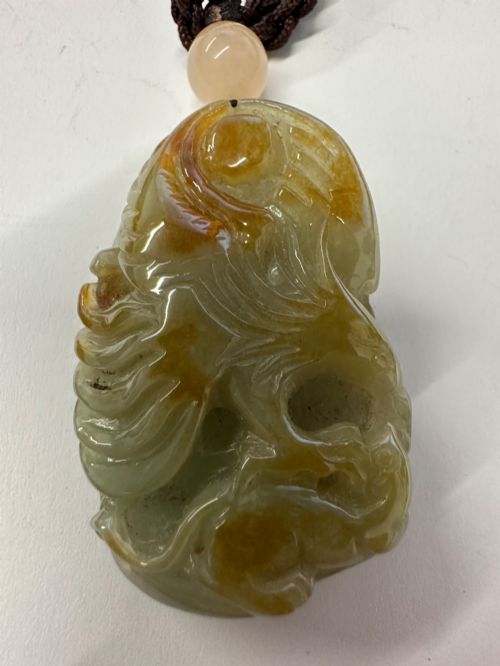
- A struck or cast disc, usually religious or commemorative, worn on a chain. The commonest French form on Sellingantiques.
- Fob seal
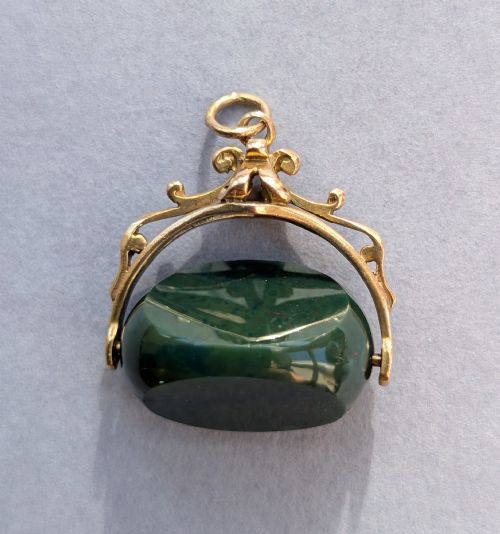
- A watch-chain ornament set with an engraved hardstone for sealing wax, often carnelian or bloodstone.
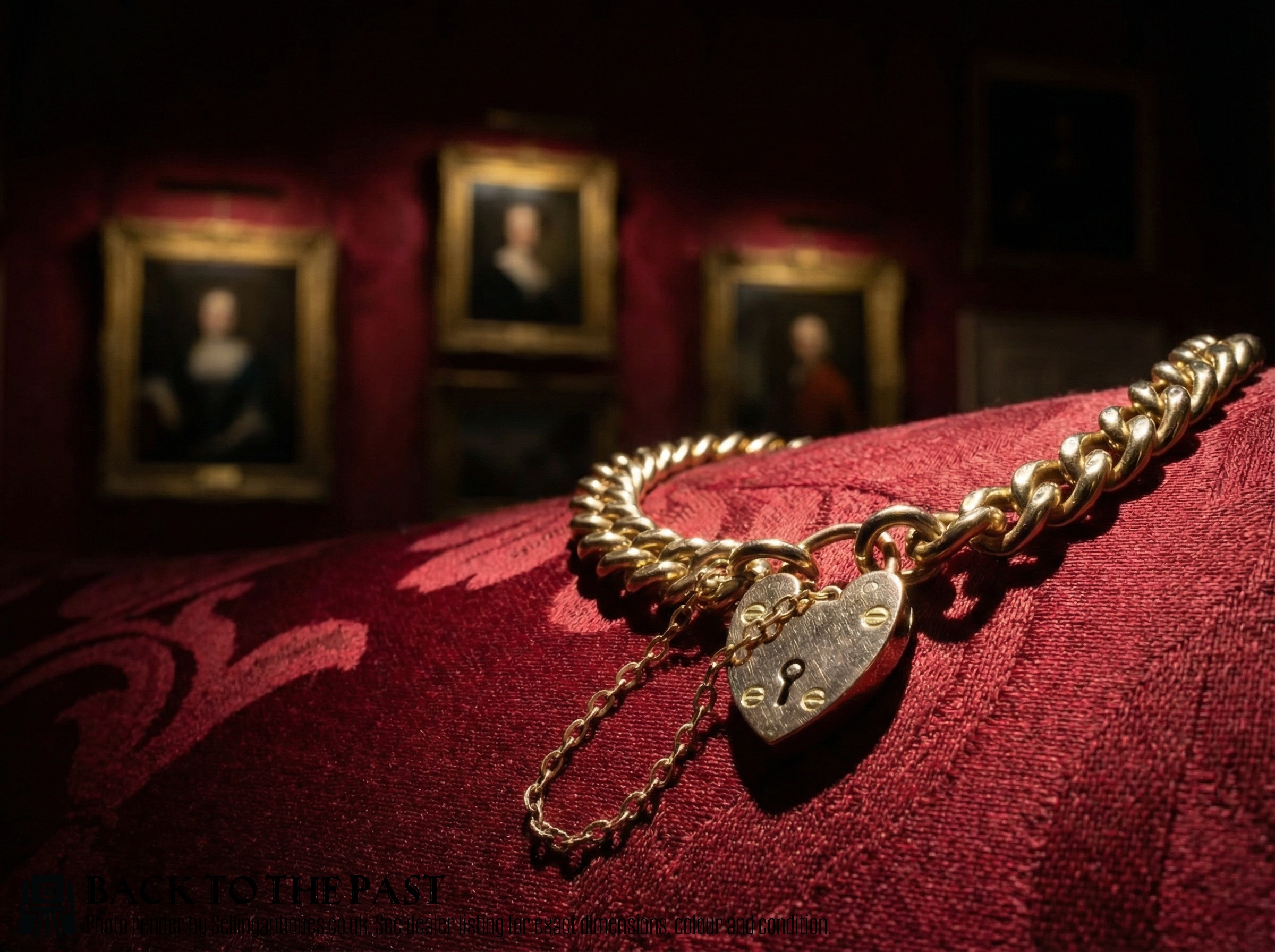
- Heart padlock
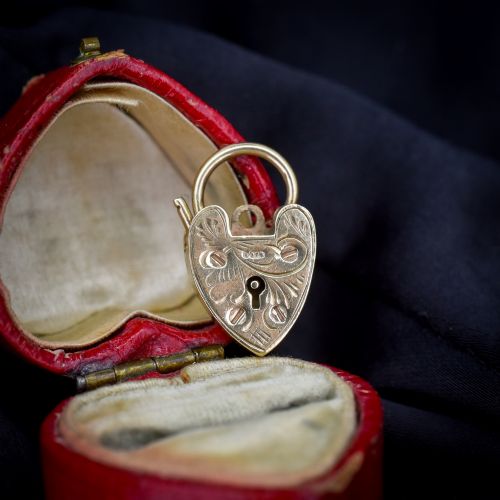
- A heart-shaped padlock clasp that closes a curb bracelet, and frequently sold on its own.
- Witch's heart
- A heart form with a twisted or curving point, a traditional protective shape.
Antique Charms: Frequently Asked Questions
Are most of these worn on a bracelet?
No. Of 524 listings, 408 titles describe a pendant, so the pendant charm on a chain is the form you will meet most often.
Bracelets and the fittings for them are a smaller group: bracelet appears in 37 titles, with curb bracelets, dog clips and loaded split rings among them.
Why do so many charms come from France?
France is the dominant single origin in the titles, appearing in 162 of them. Almost all the French pieces are 18K yellow gold rather than a British carat standard.
The subjects are mostly religious and sentimental medal pendants, with zodiac signs a steady secondary theme. The Virgin Mary leads the whole category at 51 titles.
What subjects do the British novelty charms cover?
The 9ct novelties run through animals and everyday objects: elephants, dog breeds, an articulated fish, a rocking horse, a ships lantern, a coffee pot, dice, wedding bells, bagpipes, a Beefeater, a guitar.
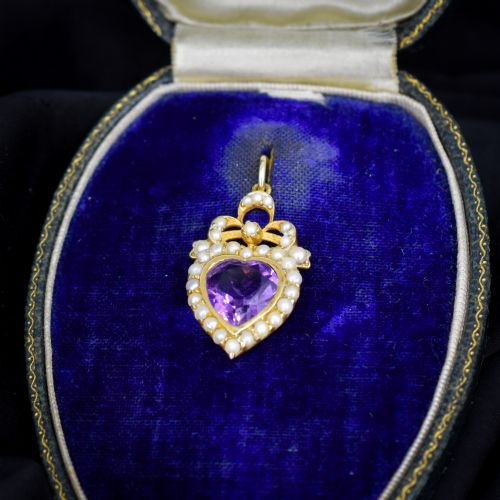
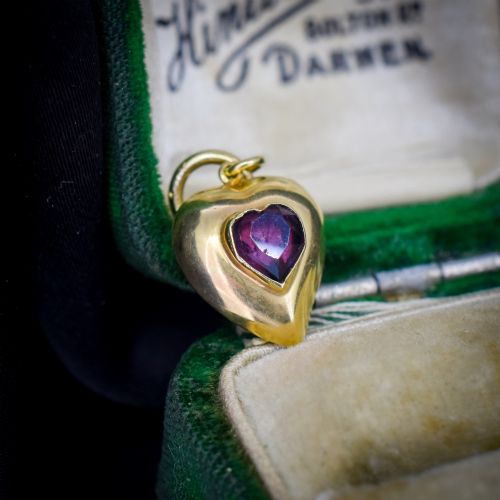
Hearts, padlocks and lockets form their own sentimental group, with heart in 71 titles and padlock in 27. Many of these carry an assay office and year.
How old are antique charms usually?
Dealer-entered dates span 1800 to 1960, and 365 of the listings carry a clean year, which is unusually well dated for jewellery this small.
The 1960s is the largest single period bucket, followed by the 1910s, the Victorian label and the 1950s. Pre-1800 material appears only occasionally.
Which hallmarks appear on the British pieces?
The assay offices named in the samples are London, Birmingham and Chester, with Chester the least common of the three. Years quoted include Chester 1956, London 1959 and Birmingham 1962.
Where a title gives both office and year, that piece tends to sit above the same charm described only by its metal.
Do unusual one-off charms turn up?
They do. Single oddities in the archive include an Egyptian sarcophagus propelling pencil, a gold and enamel vinaigrette box pendant and a bezoar or Goa stone cage amulet.
Others are stranger still: a French love thermometer, a French love magnet, and a blood-group medical medal.
Forty-nine dealers have listed charms on Sellingantiques, with roughly sixty-eight coming to market in a year.