
Antique Bracelets
Wrist jewellery from roughly 1800 to 1960: gold chain bracelets, silver link and panel bracelets, hinged bangles, gem-set bands and charm bracelets, worn as everyday and dress jewellery.
What Are Antique Bracelets?
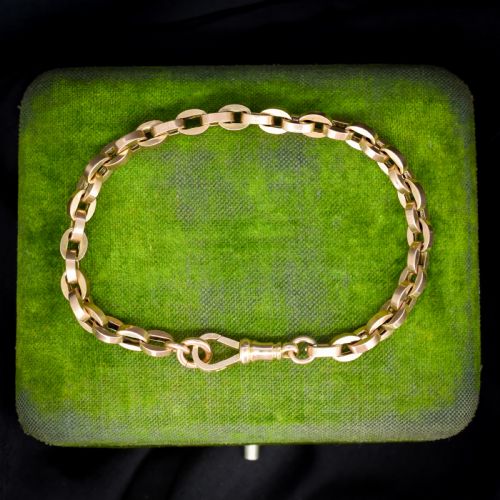
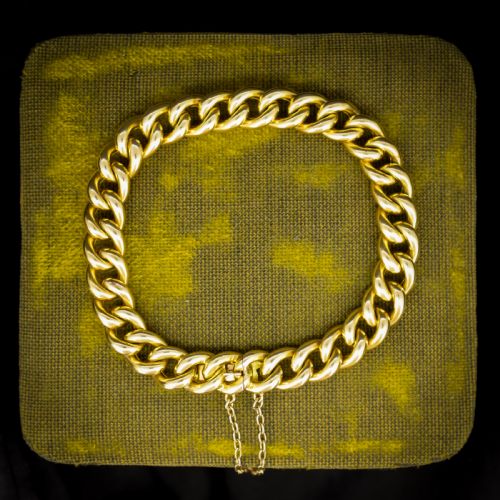
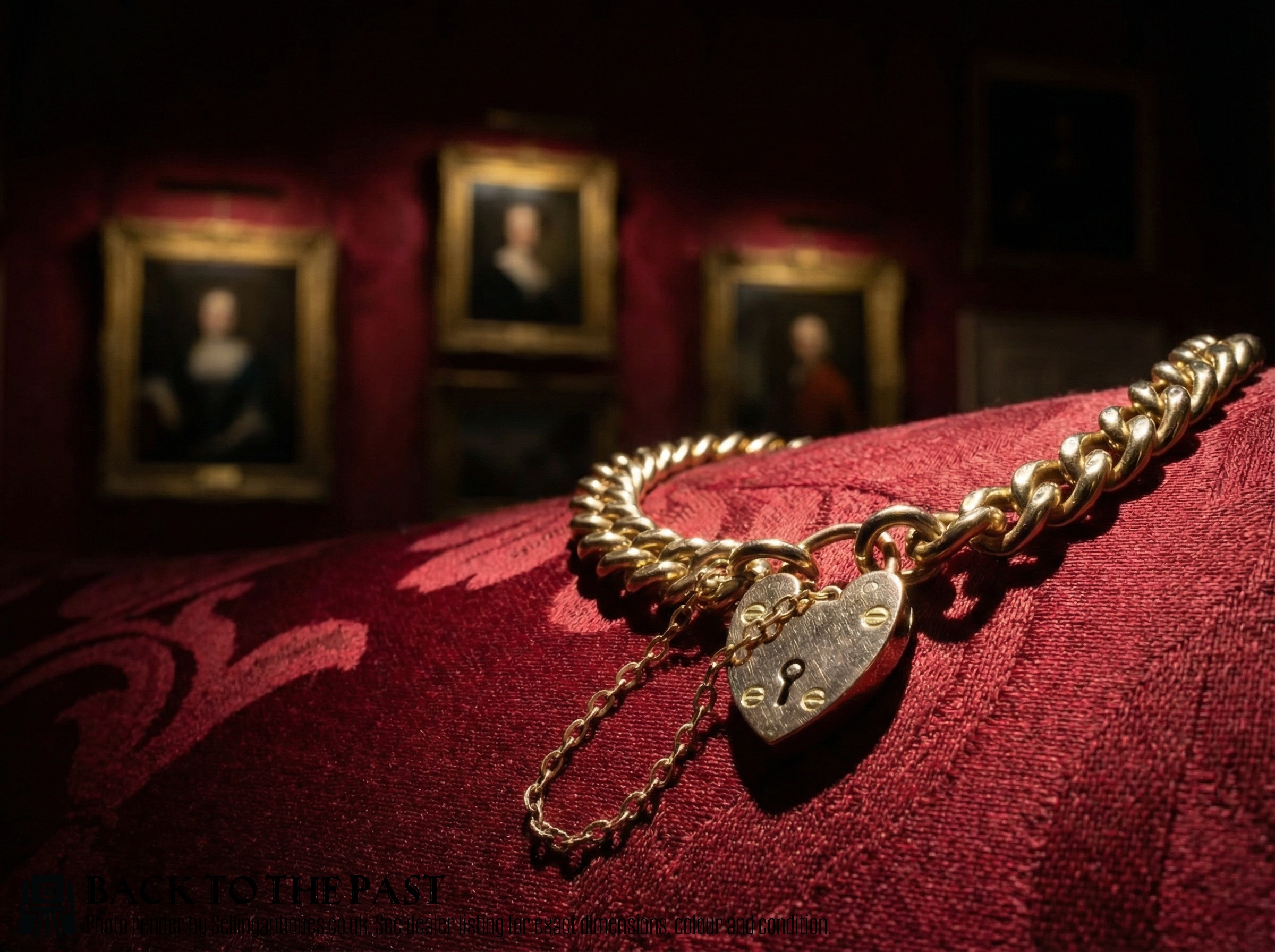
Gold runs through just over half the titles on Sellingantiques, and 9ct alone through a large share of them. The bracelet you are most likely to meet is a 9ct curb or fancy-link chain, often rose gold, closed with a heart padlock or a dog clip carried over from watch chains. Victorian and Edwardian dating dominates that group.
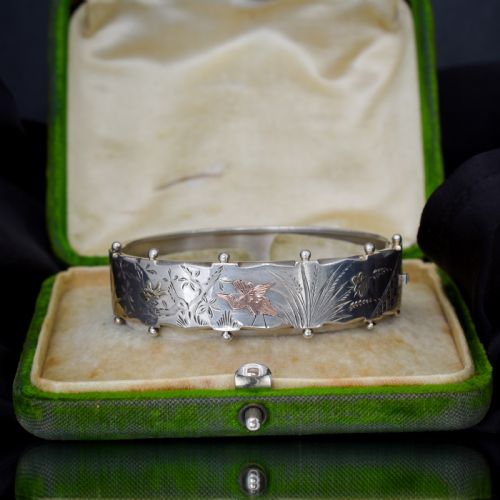
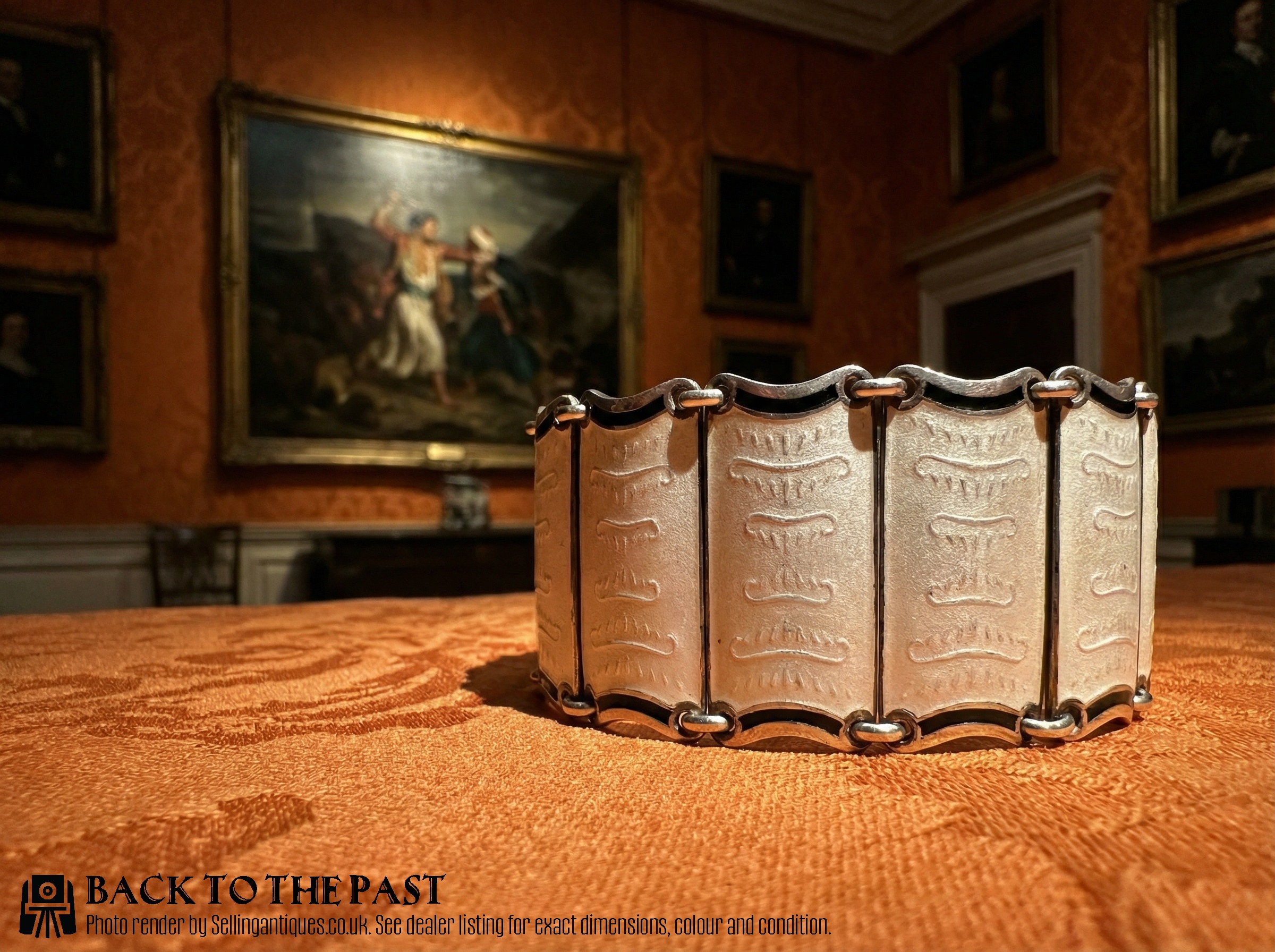
Silver is close behind gold, and a large part of it is Scandinavian. 'Danish' appears in 61 titles and 'Danish silver' in 60, mostly panel and link bracelets dated to the 1940s through 1960s, with Norwegian, Swedish, Finnish and Portuguese work alongside. Guilloche enamel over engine-turned silver recurs in the Norwegian and Danish pieces.
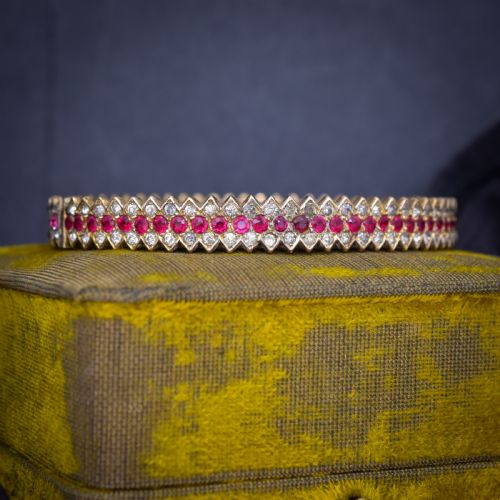
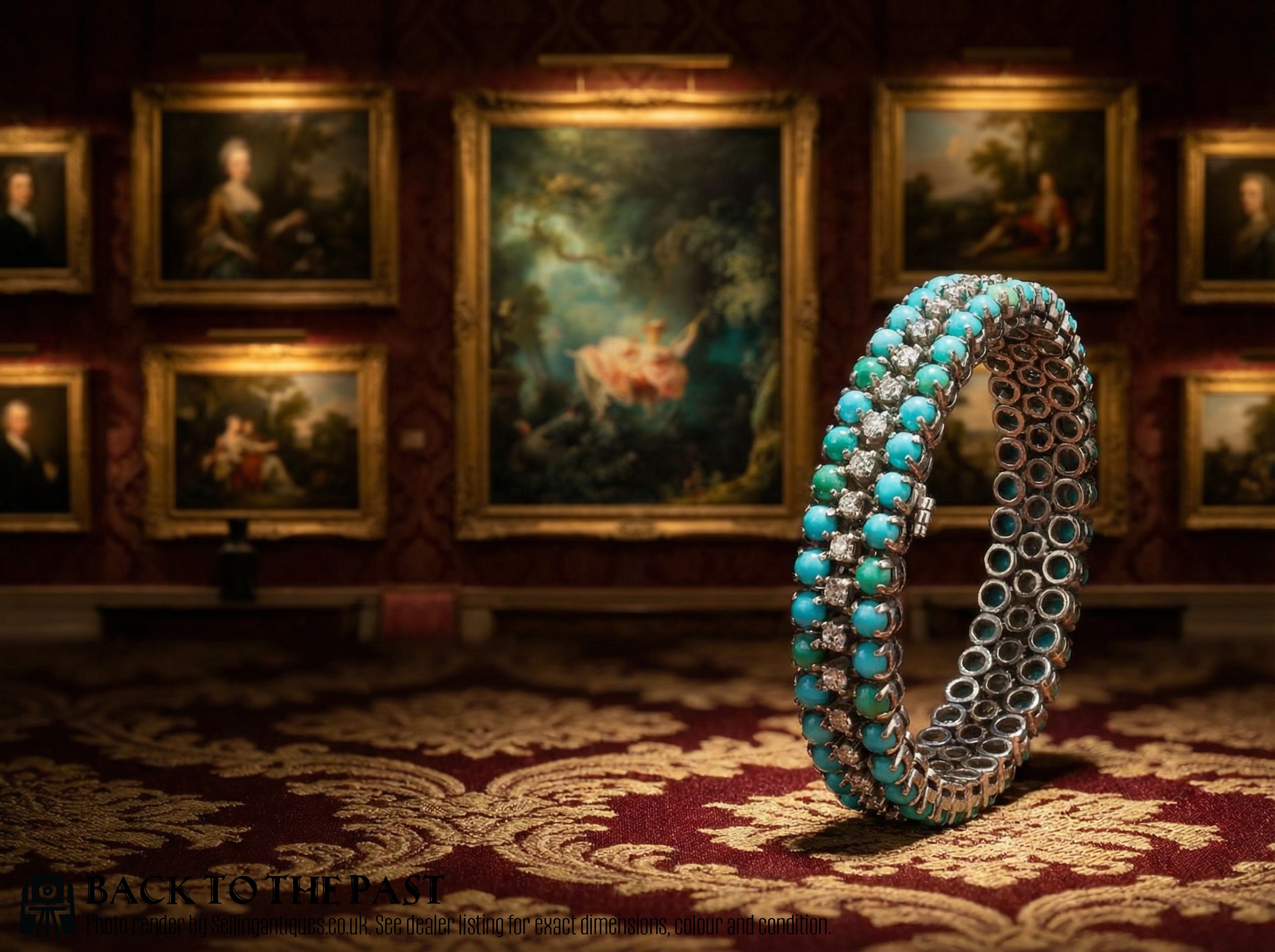
Above the chains sit the gem-set bracelets. Diamond is the most-cited stone in the category, in line and tennis bracelets and in platinum settings, with sapphire the next most frequent. A smaller persistent stream is Scottish agate and hardstone, usually silver-mounted, and 35 titles each name 'Scottish' and 'agate'.
Dating is mixed in kind. Of 868 listings, 514 carry a clean year, while others give only an era label, and 21 get no closer than '19th Century'. Victorian is the most-used label with 171 listings, though the 1960s runs a close second at 129, so the archive is bookended rather than massed in one period. Hallmark towns quoted in titles include Chester, Birmingham, London and Glasgow.
Where The Range Widens
Metal does most of the work. The top of the sampled range is consistently 18ct, 15ct or platinum; 9ct sits through the middle, and rolled gold and gold-filled pieces at the bottom. Weight matters alongside fineness, and titles routinely quote it, from a few grams up to a 49.1g curb bracelet.
Stones lift a bracelet further, and stated weight lifts it more again. Diamond appears in 154 titles, and the upper end names carat weights outright, reaching 33.25 carats among the sampled diamond bracelets. A weighed, named stone reads differently in a listing from a decorative accent of split or seed pearls.
In silver, attribution is the divider. A Scandinavian or Art Deco bracelet with a designer or workshop named runs above the plain 'Danish Silver Bracelet' entries of the same date. Original boxes count too: titles that cite an antique or fitted case sit higher than those that don't.
Retail Price Guide 2026
Typical UK retail prices for bracelets, calculated from the Sellingantiques database of over a million retail prices indexed since 2003. This retail price guide relies exclusively on Sellingantiques data; no external sources or auction records are used, so the figures do not describe the wider market.
Bracelet comes from the old French bracel, a little arm-band, and behind that the Latin brachium, meaning arm.
The Antique Bracelets Glossary
- Curb link
- Flattened, twisted oval links that lie flush against the wrist. The commonest chain form in the category, named in 90 titles.
- Heart padlock
- A heart-shaped sprung clasp that fastens the chain and decorates it at the same time, appearing in 42 titles.
- Gate bracelet
- Hinged bars forming an expanding gate-like structure, usually 9ct gold. Named in 37 titles.
- 9ct, 15ct, 18ct
- Gold fineness in carats. 9ct dominates the category, while 15ct marks British work made before 1932.
- Albertina
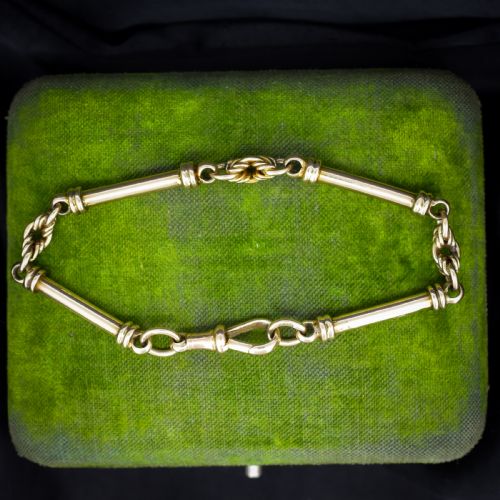
- A bracelet derived from a watch chain, with a T-bar and a tassel fob. It turns up repeatedly through the gold listings.
- Panel bracelet
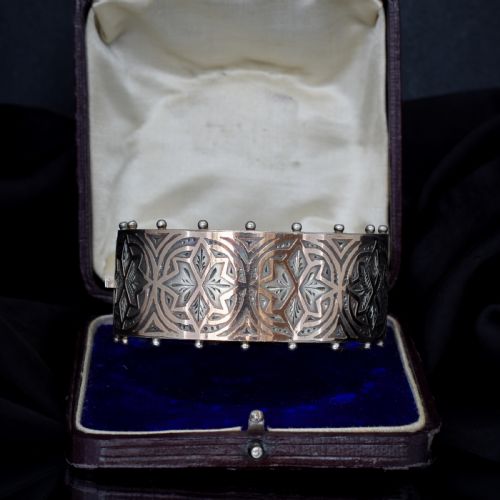
- Linked flat plaques rather than a chain, often enamelled. The standard form in the Scandinavian and Art Deco silver.
Frequently Asked Questions
What is the most common type of antique bracelet?
A 9ct gold curb or fancy-link chain, frequently rose gold. Gold appears in just over half of all titles, and 9ct is by far the commonest standard.
Most of that group carries Victorian or Edwardian dating, and the fastening is usually a heart padlock or a dog clip.
Why is so much of the silver Danish?
Mid-century Scandinavian silver is a large seam in this category. 'Danish' shows up in 61 titles and 'Danish silver' in 60, concentrated in the 1940s to 1960s.
The forms are mainly panel and link bracelets, some with guilloche enamel over engine-turned silver. Norwegian, Swedish, Finnish and Portuguese pieces appear alongside them.
How old are the bracelets on Sellingantiques?
The dealers' own dating runs from 1800 to 1960. Victorian is the most-used label at 171 listings, with the 1960s second at 129, then Edwardian and the 1950s.
A few outliers sit well outside that span: Viking and Hallstatt bronze bracelets dated before 1700, and ancient work described as 1200-500 BC, turn up a handful of times.
What does a dog clip fastening mean?
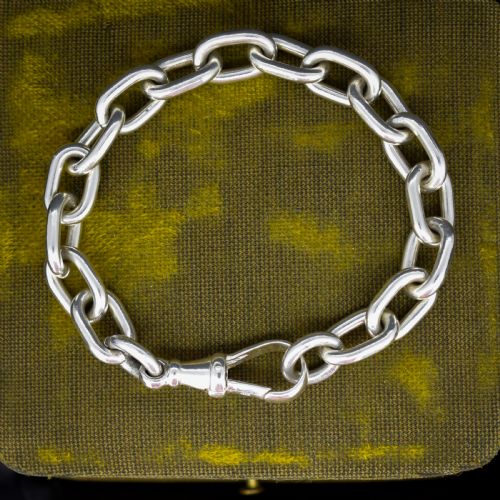
It's a spring-loaded swivel clip, the kind used on pocket watch chains, fitted to a bracelet instead. Twenty-five titles name it.
The heart padlock is the more frequent alternative, in 42 titles.
Are diamond bracelets a big part of the category?
Diamond is the most-cited stone, in 154 titles, and it forms the upper part of the range. Line and tennis bracelets, single continuous rows of set stones, run through those listings.
Platinum appears in 31 titles, largely with the diamonds. Sapphire is the next most common stone at 37.
Do listings mention Scottish agate bracelets?
Yes, as a small but steady stream. 'Scottish' and 'agate' each appear in 35 titles, commonly as silver and Scottish agate bracelets.
They span the range, from the modest end up to gold-mounted examples near the top.