

Antique Davenports
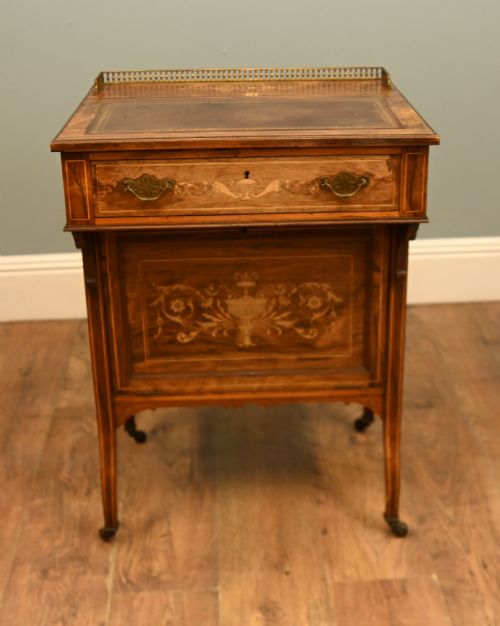
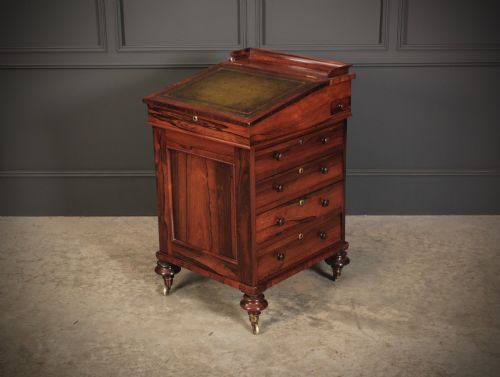
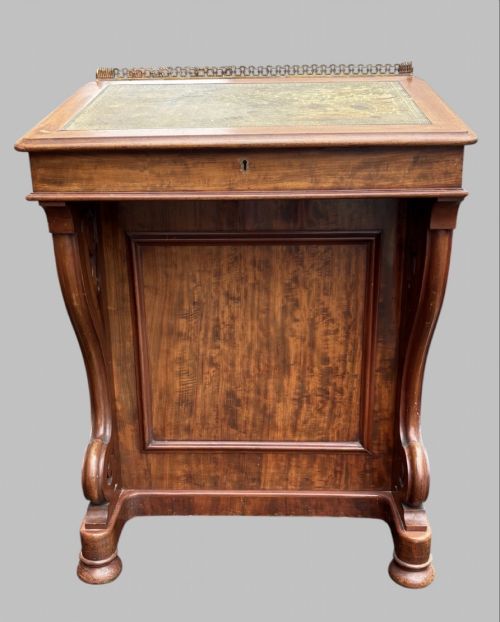
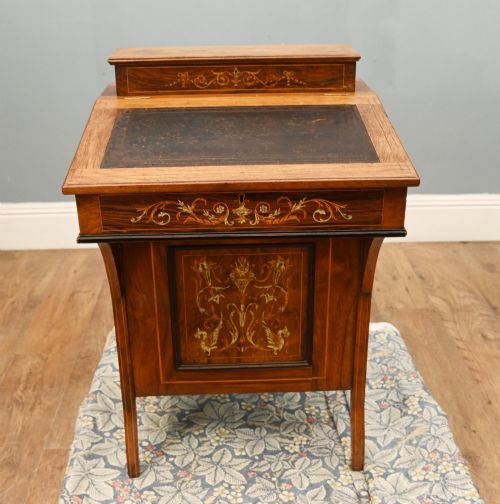
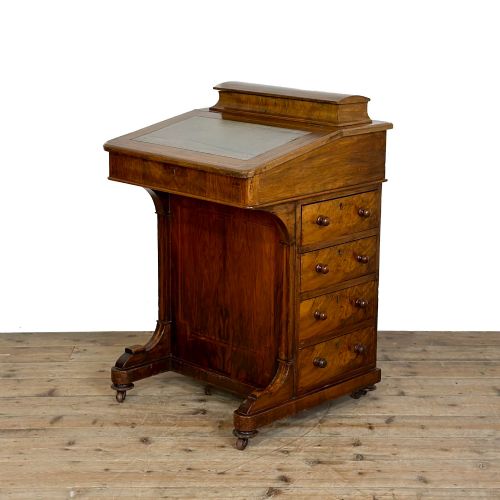
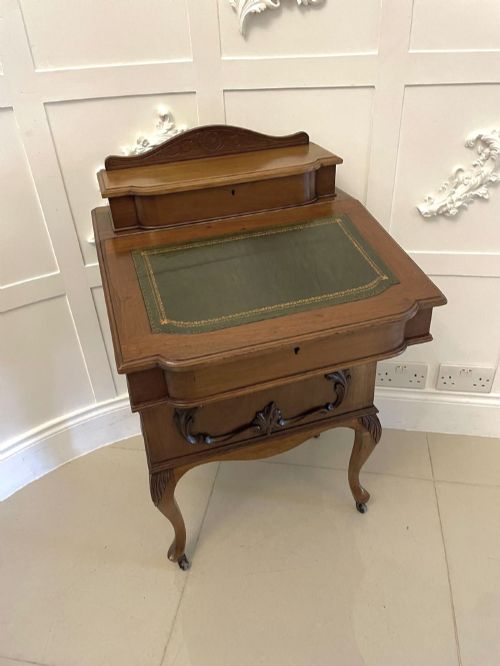
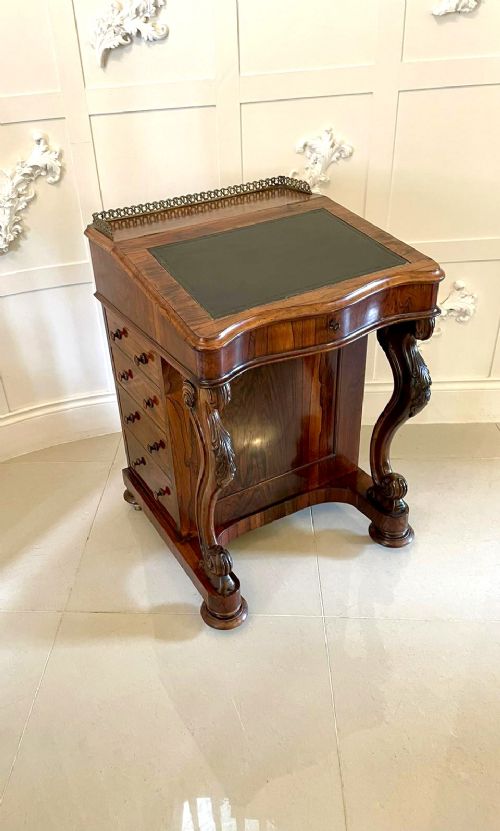
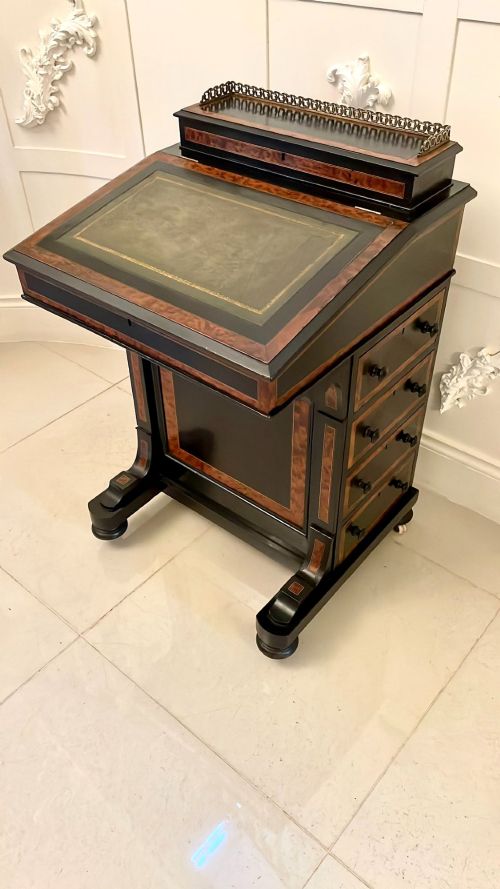
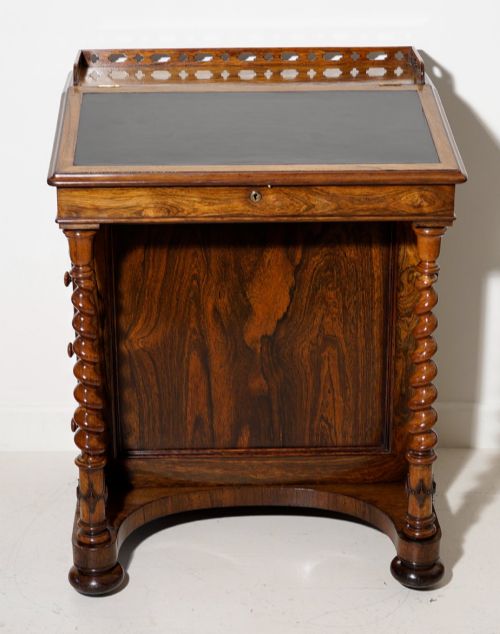
A davenport is a small, tall writing desk with a sloping top over a bank of drawers that open to one side, built for letter-writing in the corner of a room rather than the middle of it.

Antique Davenports
The form starts in the late Georgian period as a compact desk for a small space, and it became a standard drawing-room and lady's writing desk through the 19th century. What you'll meet on Sellingantiques is overwhelmingly 19th-century English work in figured timber, listed with a timber, a period and a drawer count and not much more.
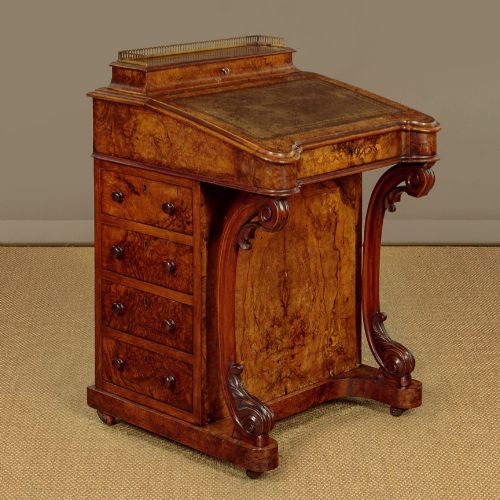
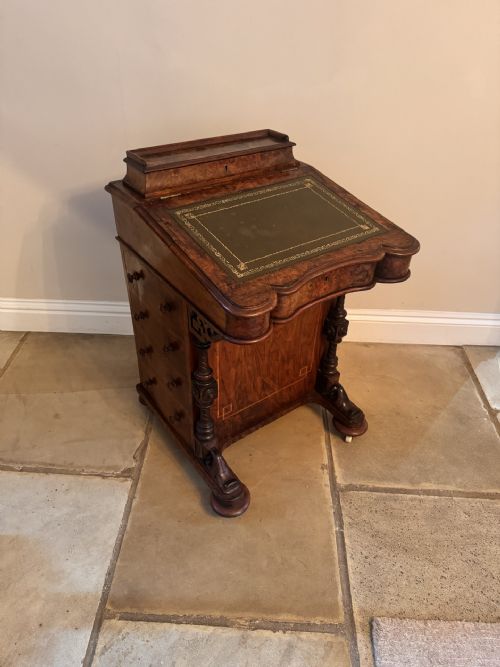
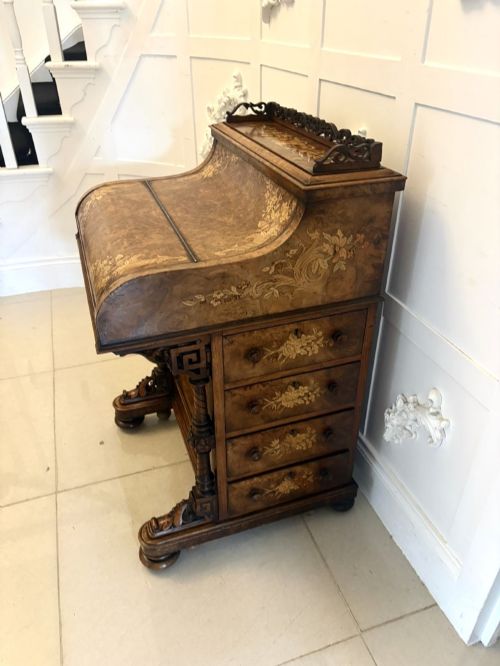
Victorian appears in 405 of 689 titles and walnut in 376, so the piece you are most likely to be looking at is a Victorian burr walnut davenport with four side drawers and a plain hinged or sliding slope. Burr walnut is close to a defining feature of the category: 211 titles name it outright. Rosewood and mahogany follow behind.
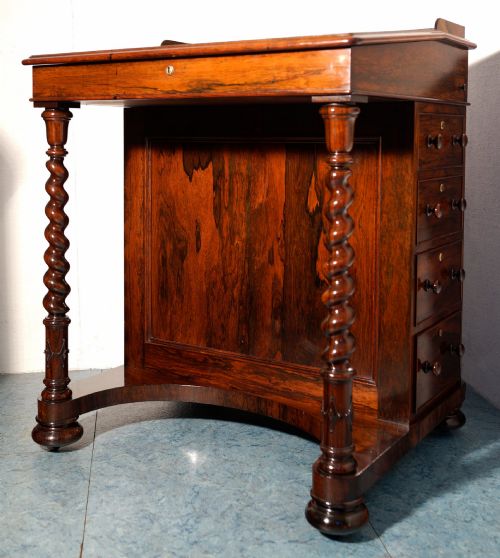
The second population is earlier and plainer: Regency and William IV rosewood and mahogany, with a slope that pulls forward on runners to give knee room. About thirty titles name a sliding or slide top. Then come the mechanised ones, where a stationery section rises from the top, described as pop-up, piano top, rise and fall, jack-in-a-box or harlequin.
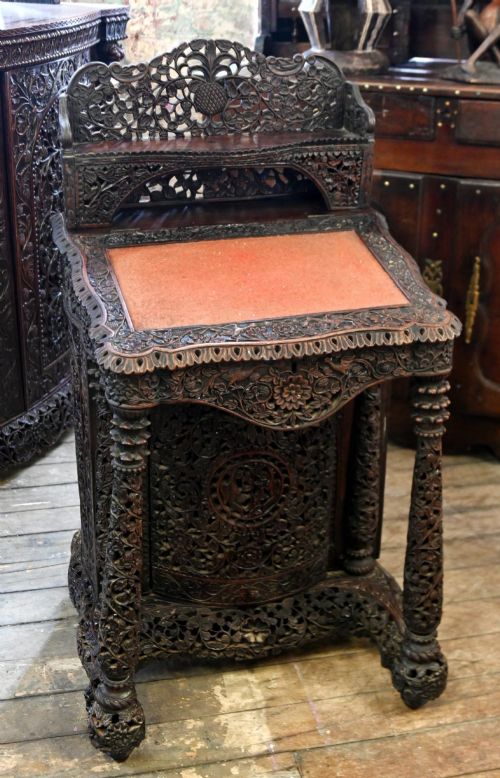
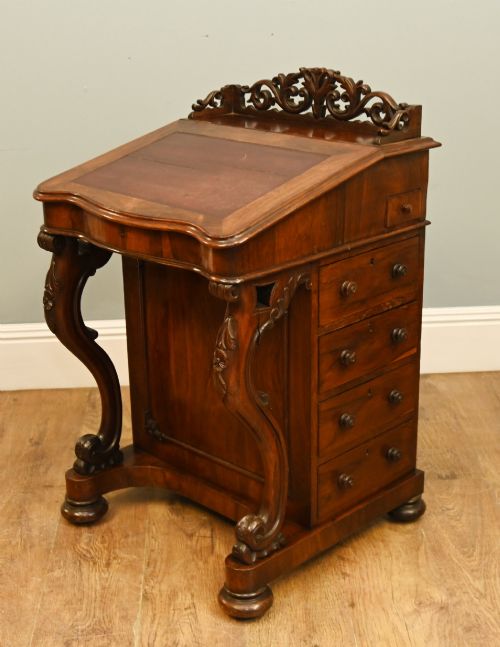
Around the edges sit oak, Gothic, Aesthetic Movement and Arts and Crafts examples, later Edwardian mahogany and inlaid rosewood, and a handful of Anglo-Indian pieces in carved padouk and satinwood. Dealers' own dating runs 1800 to 1930, but where a decade is given it clusters on 1850 to 1880, so a listing marked simply 19th century usually means mid-Victorian.

Where The Range Splits
The top does most of the work. A plain hinged slope fills the bottom of the range, and the mechanised tops sit almost entirely in the upper half: 62 titles say pop-up, 29 say piano top, and the collectors' names jack-in-a-box and harlequin turn up only a few times each, always near the top. The more the cabinetmaker made the thing move, the higher it sits.
Timber and figure come next. Burr walnut is the middle of the market by weight of numbers, but pollard oak, satinwood, amboyna, burr elm, padouk and coromandel appear at the upper end, and single appearances of yew, maple, tulipwood, olivewood and palisander show how far the trade went for figure. Plain walnut, mahogany and oak hold the lower end.
After that it is decoration and finish. Inlay is named in 78 titles, marquetry in 13, crossbanding in nine, and marquetry and Tunbridge-ware examples run well above the middle. Thirty titles specify freestanding, finished on all sides so the desk can stand clear of a wall, and those cluster in the upper-middle. A named maker lifts a piece further again.
Antique Davenports Retail Price Guide 2026
Typical UK retail prices for davenports, calculated from the Sellingantiques database of over a million retail prices indexed since 2003. This retail price guide relies exclusively on Sellingantiques data; no external sources or auction records are used, so the figures do not describe the wider market.
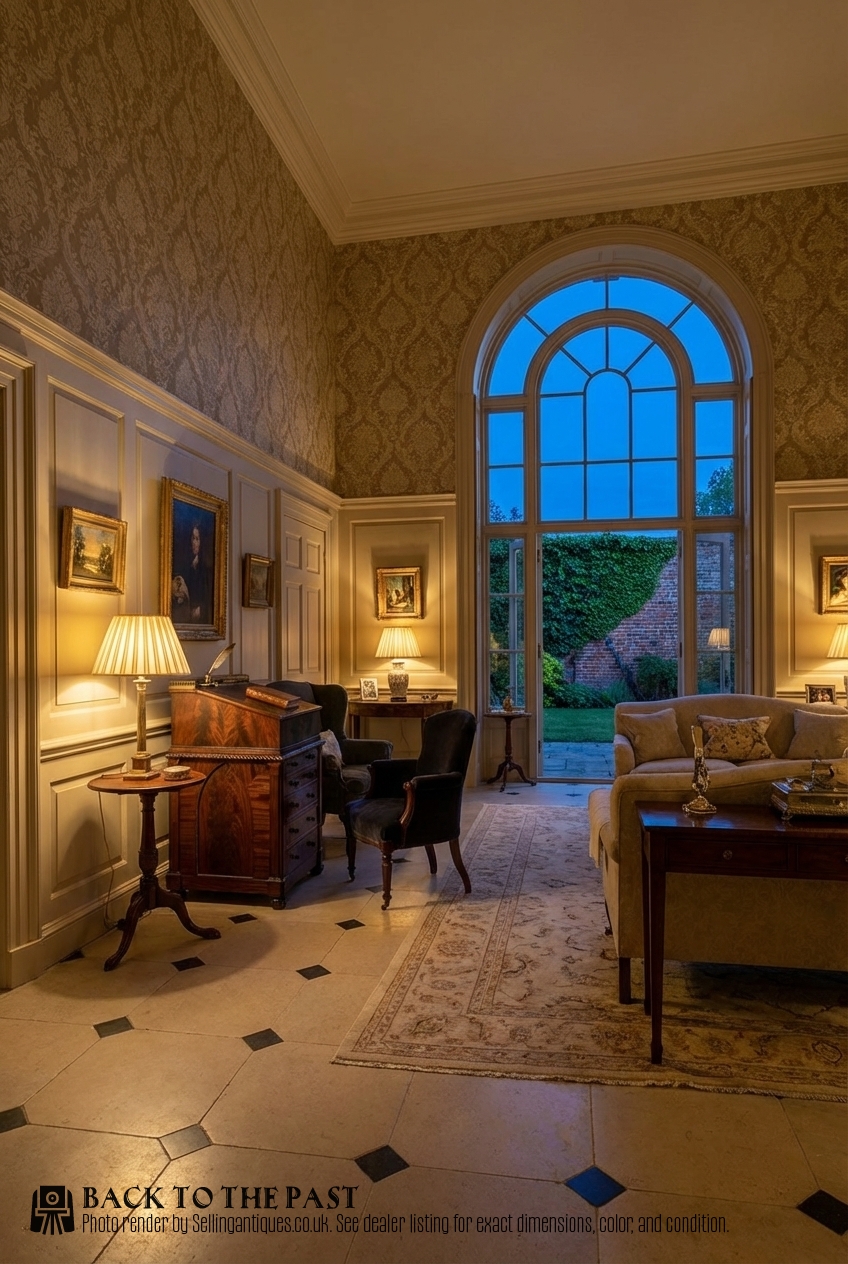
Gillows of Lancaster is the davenport name that turns up from the most dealers on Sellingantiques - six of them, across eleven listings.
Gillows of Lancaster
The Antique Davenports Glossary
- Davenport
- A small tall writing desk with a sloping top over drawers that open from the side rather than the front.
- Burr walnut
- Veneer cut from a burr growth on the tree, giving dense swirling figure. The commonest timber in the category by a wide margin.
- Sliding top
- A writing slope that pulls forward on runners to give knee room, typical of the earlier rosewood and mahogany examples.
- Pop-up
- A stationery compartment or superstructure that rises from the top, usually spring-assisted. Rise and fall means the same thing.
- Piano top
- A curved top over the writing surface, shaped like a piano lid, and often paired with a pop-up section.
- Harlequin
- A rising fitted interior of pigeonholes and small drawers. Jack-in-a-box is used when the whole upper section springs up.
Antique Davenports: Frequently Asked Questions
What timber are davenports usually made from?
Walnut dominates, and burr walnut in particular: 211 of 689 titles on Sellingantiques name it. Rosewood comes second with 104 titles, mahogany third with 83.
Oak accounts for about thirty, often on Gothic, Aesthetic or Arts and Crafts pieces. Beyond that the archive throws up single examples in yew, maple, tulipwood, olivewood, goncalo alves, palisander, coromandel, padouk and pearwood.
How old are most davenports?
The dealers' own dating runs 1800 to 1930. Victorian is the label on 241 listings, with a further 110 tagged only as 19th century.
Where a decade is given it clusters hard on 1850 to 1880, the 1860s alone accounting for 82. Regency accounts for 52 and Edwardian for 16.
What is a pop-up davenport?
One where a stationery section rises from the top of the desk, usually spring-assisted. Sixty-two titles use the term, and rise and fall describes the same arrangement.
Related names include piano top for a curved lid, harlequin for a rising fitted interior of pigeonholes and small drawers, and jack-in-a-box where the whole upper section springs up. Those last two appear only a handful of times, and always among the higher-priced listings.
Why do the drawers open at the side?
The form was made for letter-writing in a corner, so the depth goes into the drawers and the width stays small. Opening sideways lets the bank of drawers run the full depth of the case.
Drawer count is one of the things dealers put in the title, and four side drawers is the commonest arrangement in the sample.
Does freestanding mean something specific?
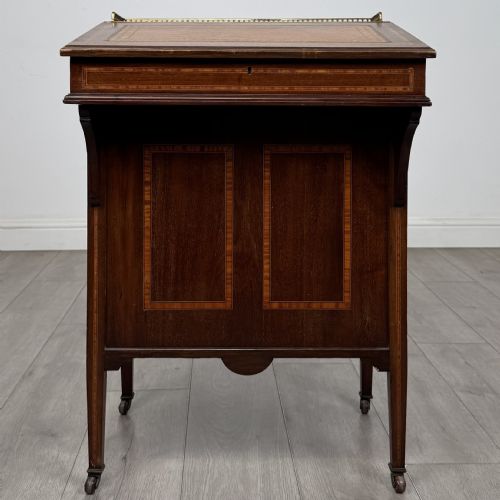
Yes. It means the desk is finished on all sides, with drawers or panelling to the back, so it can be placed away from a wall rather than pushed against one.
Thirty titles specify it, and they sit in the upper-middle of the range.
Are davenports easy to find on the market?
Reasonably. About 69 are listed on Sellingantiques in a year, and 160 different dealers have handled one, which makes it a form almost any general furniture dealer meets sooner or later.
Scottish and Irish work is a visible thread, with Edinburgh-stamped examples and Irish William IV rosewood recurring. Anglo-Indian and colonial pieces surface half a dozen times and are the scarcest origins in the archive.