
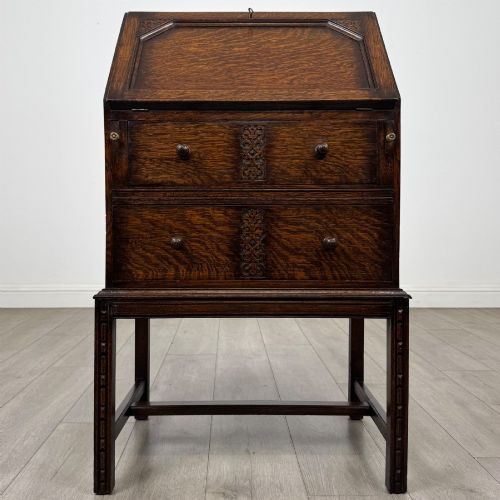
Antique Bureau Cabinets
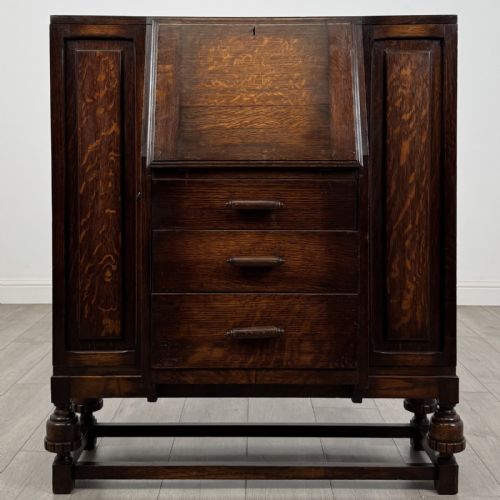
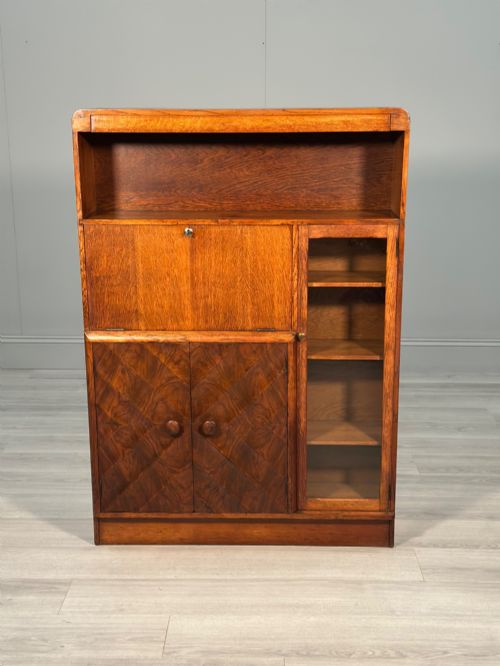
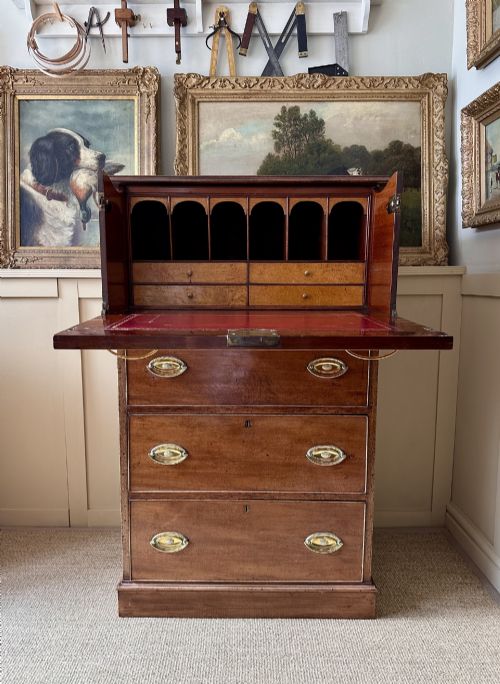
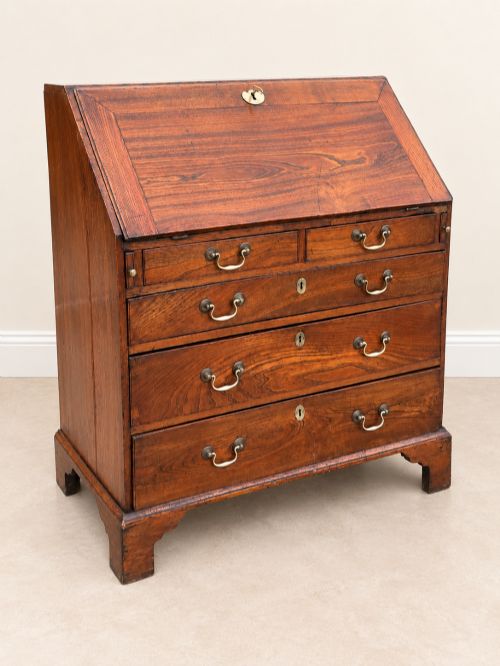
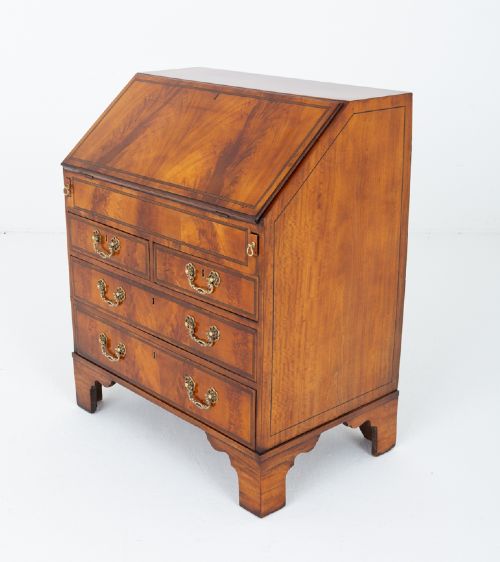
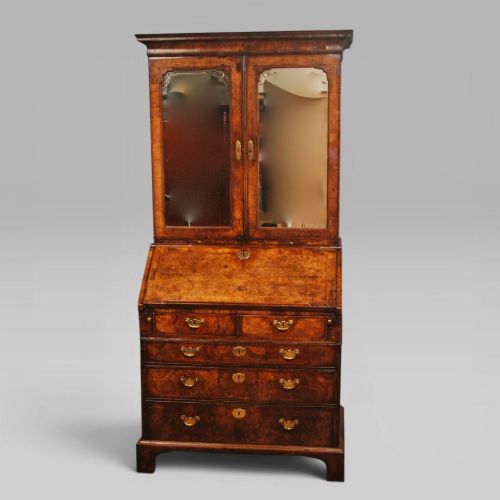
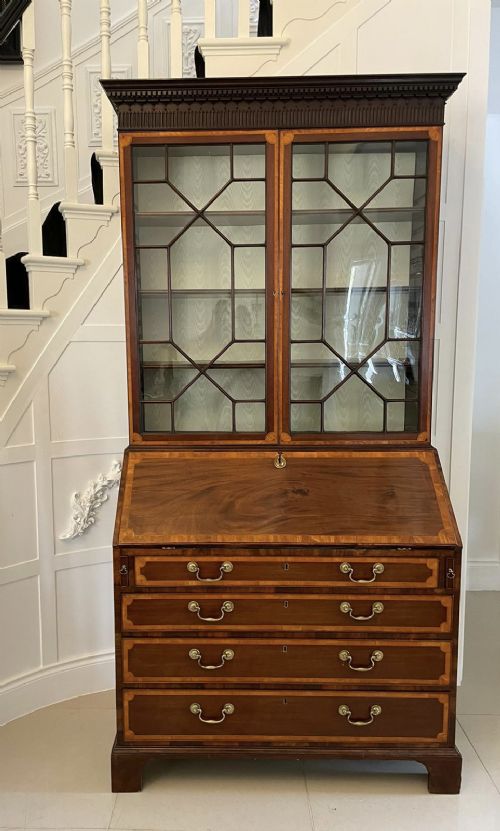
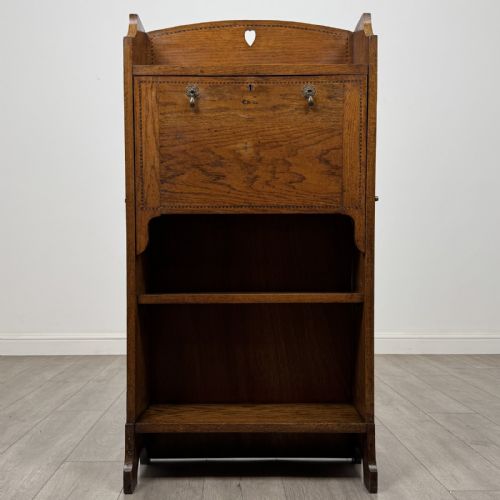
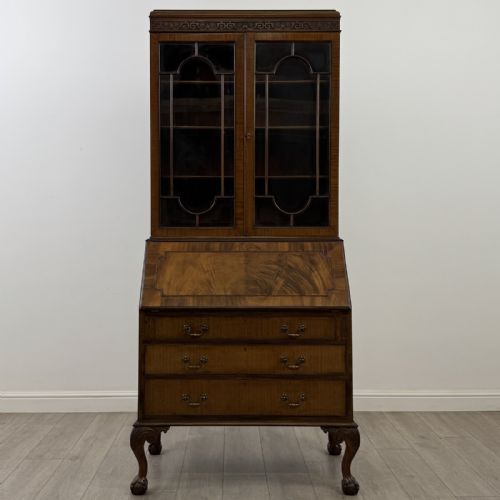
A bureau cabinet is a writing desk with a fitted interior and drawers below, carrying a cabinet, glazed bookcase or mirrored top above, made to store papers behind a surface you can write on.
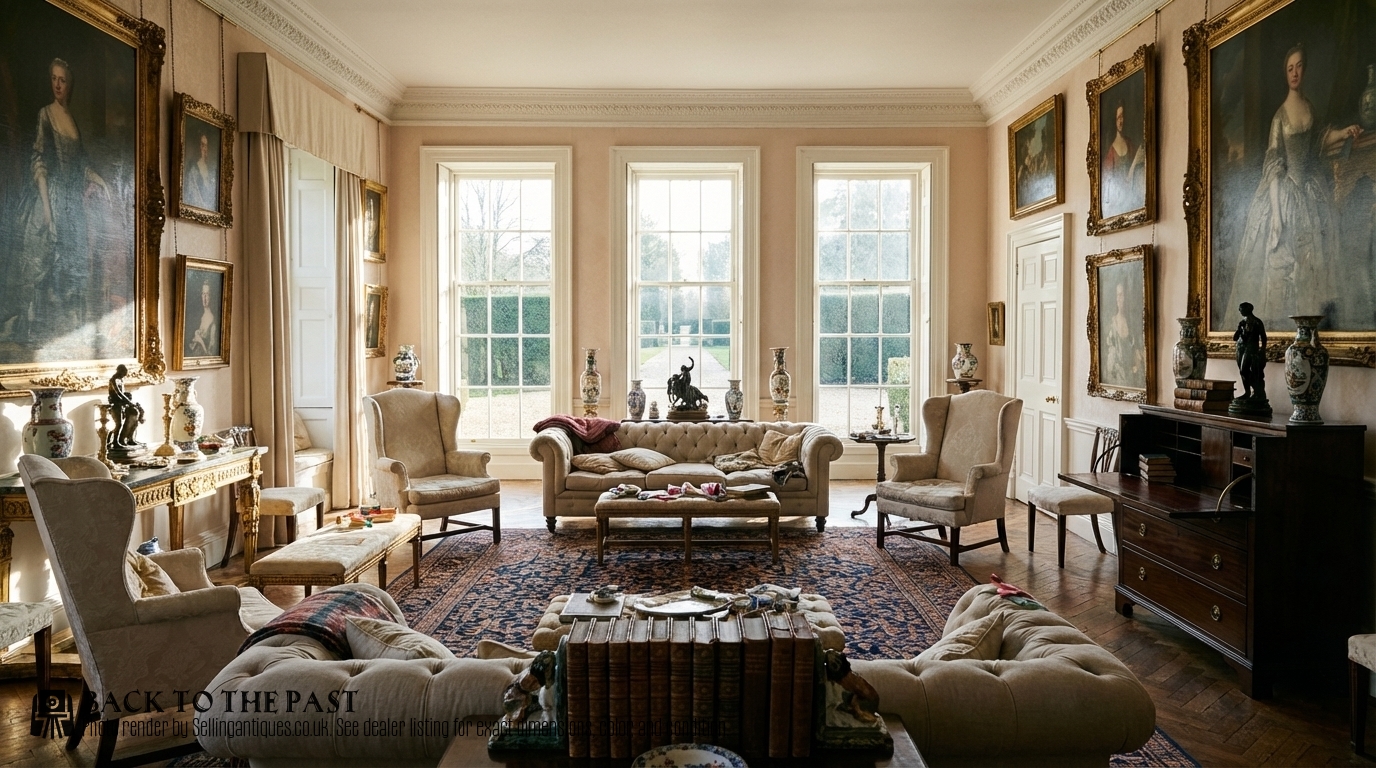
Antique Bureau Cabinets
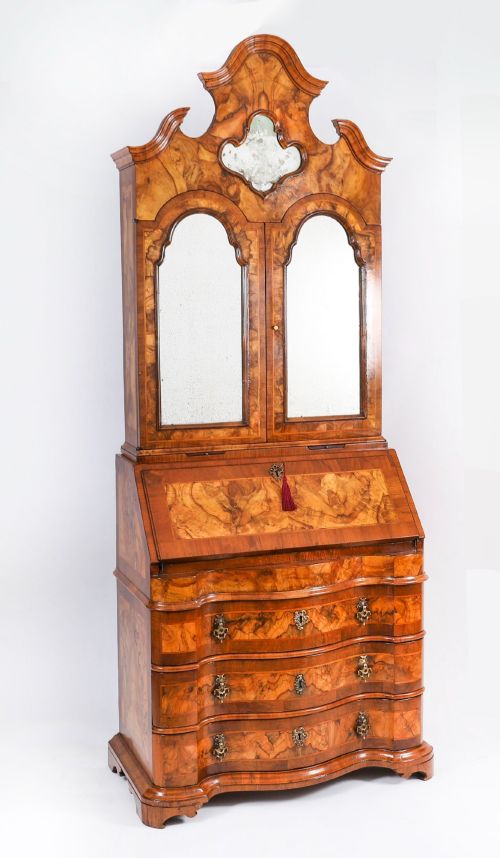
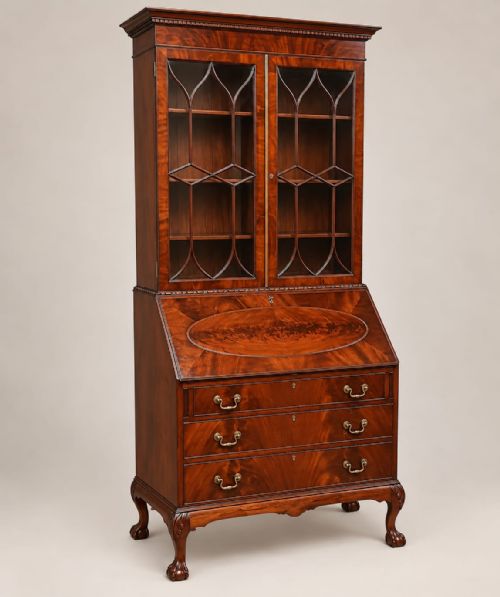
The bureau settled into its familiar English form in the late 17th century: a sloping fall enclosing pigeonholes and small drawers over a chest of drawers. Setting a cabinet or bookcase stage on top produced the bureau cabinet. On Sellingantiques the bookcase-topped version dominates, appearing in 173 of 551 titles.
Timber splits almost evenly between mahogany and walnut, with oak a clear third. The commonest phrasing you'll meet is period plus timber plus form: Georgian mahogany bureau bookcase, George I walnut, Edwardian inlaid mahogany. The 18th century is the centre of gravity, with 104 listings dated to it against 64 to the 19th and 14 to the 17th.
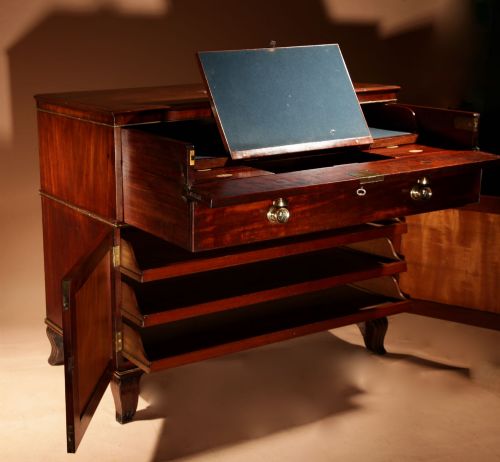
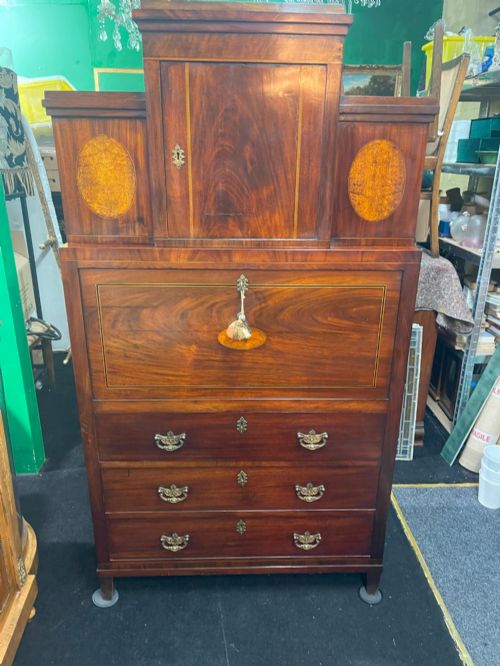
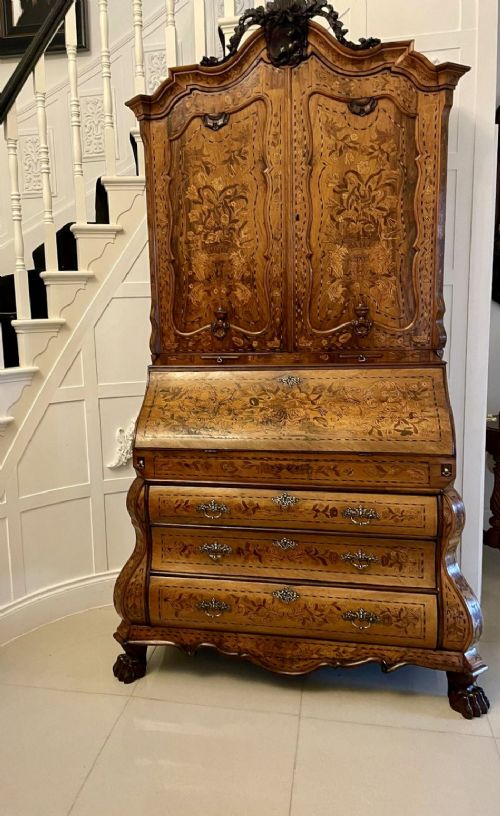
The heading also takes in the flat fall-front secretaire and the secrétaire à abattant, the escritoire, and the small ladies' bonheur du jour, all variations on the same purpose. French and Continental writing cabinets run to roughly one in six, and the tail is wide: Dutch marquetry, Venetian, Biedermeier, Swedish, Danish, Norwegian, South German, Portuguese and Viennese pieces all turn up.
Dating is usually by bucket rather than year. Reign labels are used as much for style as for date, so a Queen Anne piece can carry a date of about 1930, and title and period field sometimes disagree. Reading the year in the title alongside the dealer's period field settles most of it.
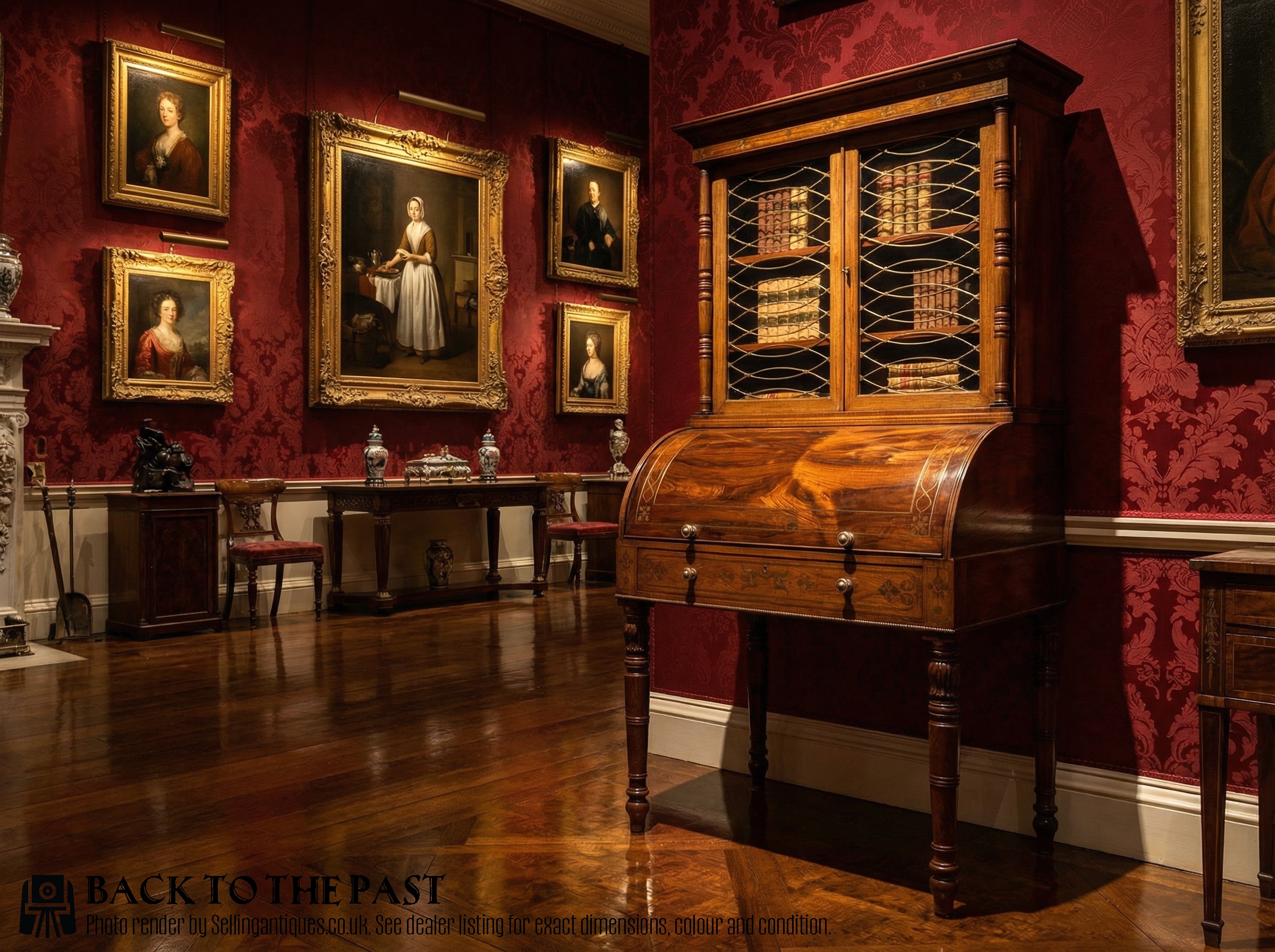
Where The Range Splits
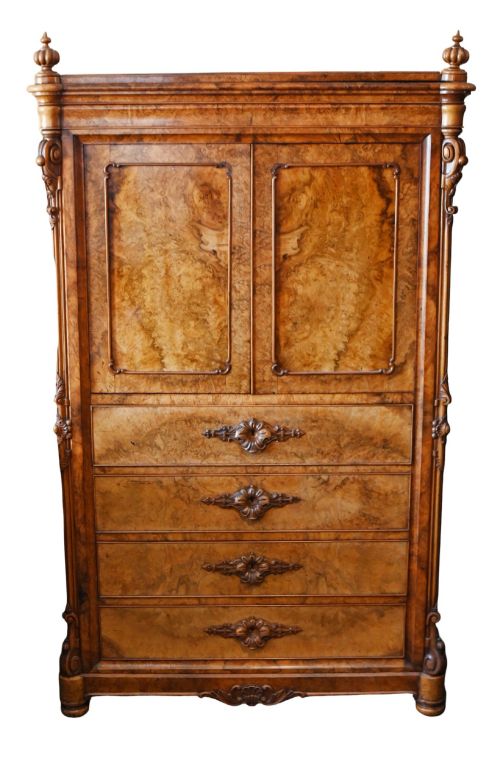
Timber and figure do most of the work. Burr and figured walnut, satinwood and Cuban mahogany sit at the top, and the highest-priced pieces sampled were repeatedly burr or figured walnut bureau bookcases. Plain oak, golden oak and honey oak sit at the other end, along with the Edwardian and 1920s revival pieces in mahogany.
A cabinet or bookcase stage lifts a piece above a plain bureau, and the double dome and three-section examples occupy the upper half of the range outright. Decorative work pushes the same way: marquetry, japanning, ormolu mounts, porcelain plaques and pietra dura all cluster high. Pairs are scarce and every sampled pair sat at the very top.
Age counts, but small size on its own doesn't. Small appears in 29 titles at both ends of the range, from small Edwardian satinwood bureaux at the bottom to a Queen Anne period burr walnut small bureau bookcase near the top. It's the early date and the timber carrying those, not the scale.
Antique Bureau Cabinets Retail Price Guide 2026
Typical UK retail prices for bureau cabinets, calculated from the Sellingantiques database of over a million retail prices indexed since 2003. This retail price guide relies exclusively on Sellingantiques data; no external sources or auction records are used, so the figures do not describe the wider market.
Among the one-offs to pass through: a Viennese enamel bureau cabinet, a metamorphic drinks cabinet in bureau form, and an early oak bureau bookcase adapted for a television.
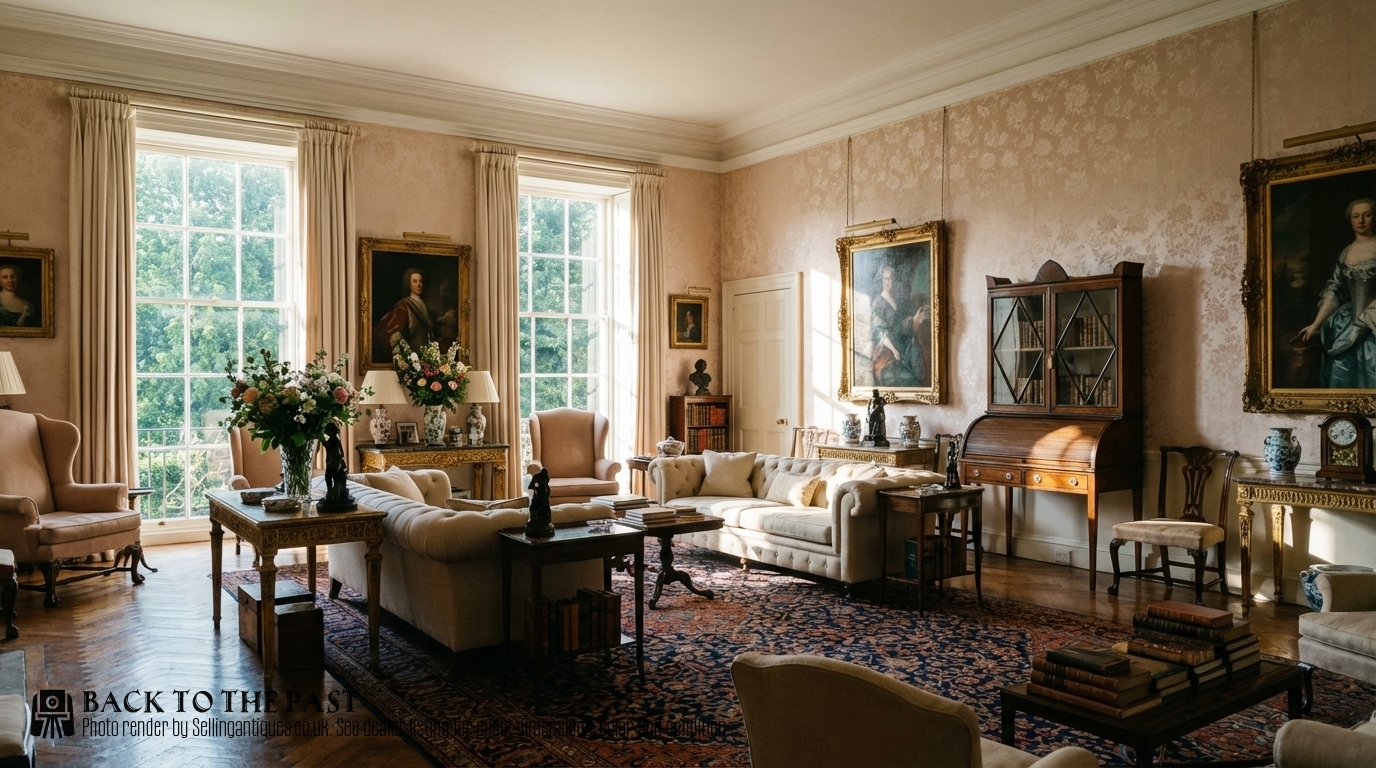
Gillows
The Antique Bureau Cabinets Glossary
- Bureau bookcase
- A bureau with a glazed or panelled bookcase section above. The commonest form under this heading, appearing in 173 titles.
- Secretaire
- A writing compartment behind a flat fall or a dummy drawer front rather than a slope. It shows up in 76 titles, sometimes as a secretaire chest, Wellington or tallboy form.
- Secrétaire à abattant
- A tall Continental cabinet whose upright fall drops to form the writing surface. Seventeen titles use the term.
- Escritoire
- An older term for a fall-front writing cabinet, often on a stand or on a chest. Thirty-seven titles carry it.
- Bonheur du jour
- A small lady's writing table with a raised superstructure of small drawers. Bureau de dame is used interchangeably in some titles, and ormolu, porcelain plaques or satinwood often come with it.
- Double dome
- A twin-arched cornice on the bookcase top, seen on the earliest walnut examples in this category.
Antique Bureau Cabinets: Frequently Asked Questions
What timber are most of these made from?
Mahogany and walnut run almost neck and neck across the titles, 157 against 149, with oak third at 60.
Beyond those three, satinwood, rosewood, kingwood, amboyna, elm, mulberry, birch, tulipwood, sabicu, pine and Brazilian rosewood each appear in single figures.
How old are bureau cabinets on Sellingantiques?
The dealer-entered date field spans 1700 to 1930, and 177 listings carry a clean year. One sampled piece is filed simply as before 1700.
The 18th century is the largest single bucket at 104 listings, with 64 in the 19th and 14 in the 17th. Decade labels such as 1900s, 1800s, 1920s and 1860s account for a good many of the rest.
Why do so few carry a maker's name?
Only one name clears three dealers across the whole archive, at four. The category is sold by period, timber and form rather than by attribution.
Where a name does appear, it comes as a stamp, a label, or an attribution in the dealer's wording.
Are French and Continental examples common?
French pieces account for 51 titles and Dutch for 16, with Dutch marquetry a recurring pairing.
The wider Continental tail is unusually broad for an English-dominated category. Italian, Venetian, Biedermeier, Swedish, Danish, Norwegian, South German, Portuguese and Viennese examples all turn up, as do Irish, Welsh, Anglo-Indian and Chinese Canton pieces.
How does a bonheur du jour differ?
It's the small ladies' form: a writing table with a raised superstructure of little drawers rather than a full bureau slope over a chest.
Thirty-four titles use the term, and ormolu mounts, porcelain plaques and satinwood come with it often. Pairs of them have appeared, and those sat at the very top of the range.
Do miniature and child's sizes come up?
They form a small recurring thread. Apprentice, miniature and child's pieces appear across the archive, described as of small proportions.
Sampled examples include an apprentice miniature William and Mary secretaire cabinet, a barrister's bureau, a child's George III mahogany bureau and a table-top escritoire with a revolving tabernacle.