


A 2026 Guide by Sellingantiques
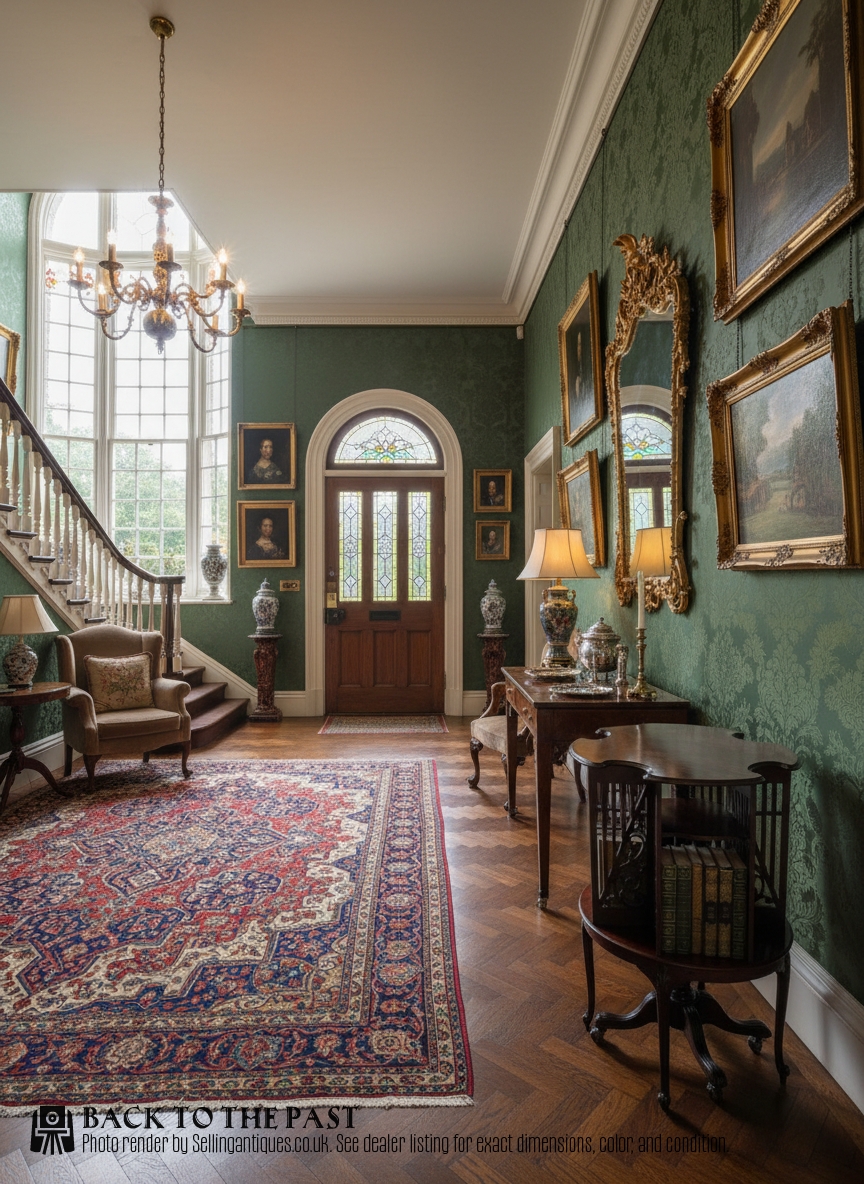
Late Victorian Mahogany Revolving Bookcase, 1890
Priced at £525 from James R Millington Antiques
Growing literacy rates drove the demand for Victorian bookcases across the nineteenth century.
Middle-class homes suddenly needed proper library furniture to house their expanding collections of novels and reference books.
Look at the sheer scale. The glass tax removal meant large glazed doors weren't just for the wealthy anymore.
A clear mark of education. Circulating libraries changed reading habits, yet owning bound volumes remained a status symbol.
Gillows of Lancaster and London supplied high-end Victorian bookcases throughout the nineteenth century, often stamping their name on the top edge of a lower drawer.
Holland & Sons operated from the 1840s onwards. They provided robust mahogany and oak library furniture to government buildings and wealthy private clients.
Unmarked but well-made. Regional cabinet-making thrived during this period, with provincial guild workshops producing solid, well-proportioned examples.
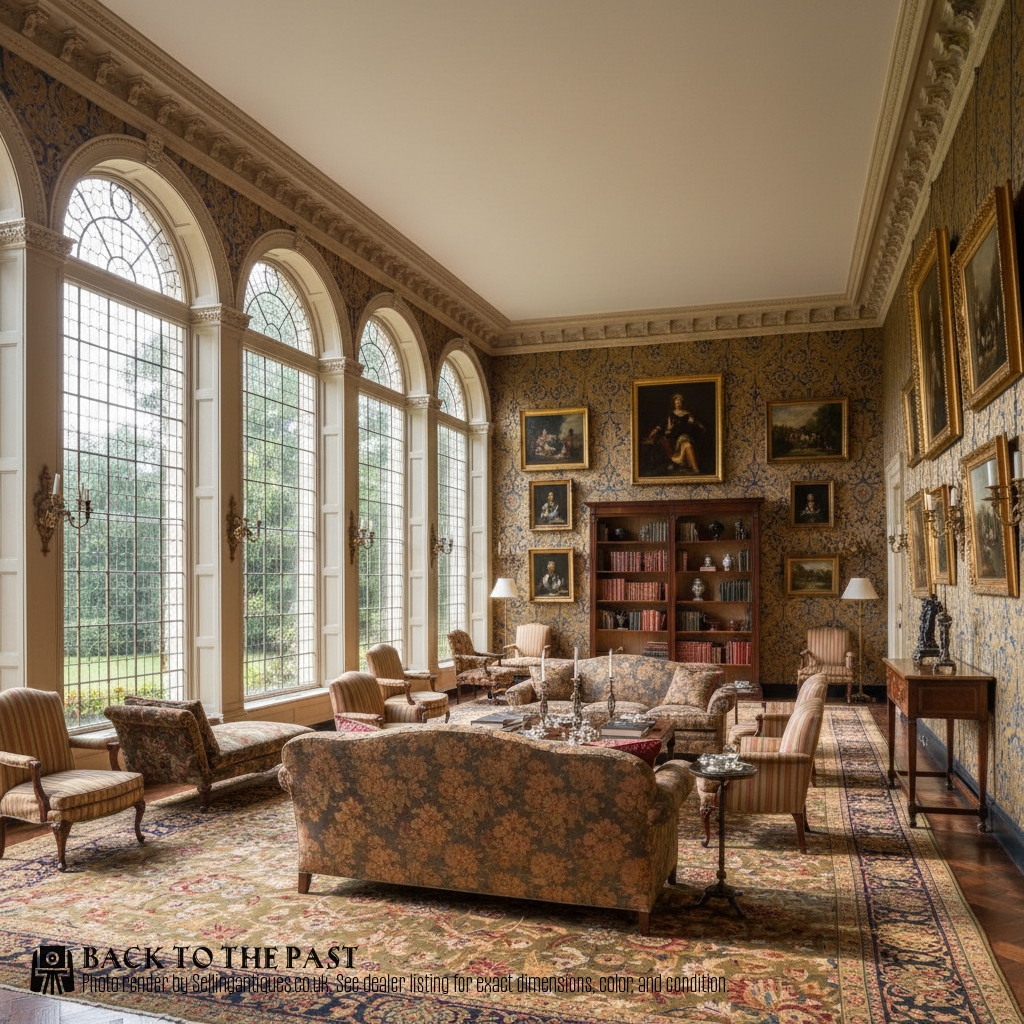
Two-part Tall Late Victorian Mahogany Open Bookcase, 1880
Priced at £1,750 from Georgian Antiques
The 2026 retail price guide for Victorian Bookcases is drawn from a proprietary archive of over 1.1 million retail prices indexed by Sellingantiques since 2003. This guide relies exclusively on their own internal data; no external sources or auction records are used.
Analysing nearly 25 years of UK antique market history alongside current retail values, the data indicates that typical UK retail prices for Victorian Bookcases range between £600 and £3,000. Entry-level prices generally fall under £600 and premium examples upwards of £3,000.
Adjustable shelves are almost universal. Wooden ratchets or brass strips allowed owners to alter the spacing for different book formats.
Base sections usually project forward. This deeper lower half provided stability and space for flat-storing heavy atlases.
Notice the cornice. A flared top moulding crowns the piece, sometimes hiding a secret dust-proofing panel behind its front fascia.
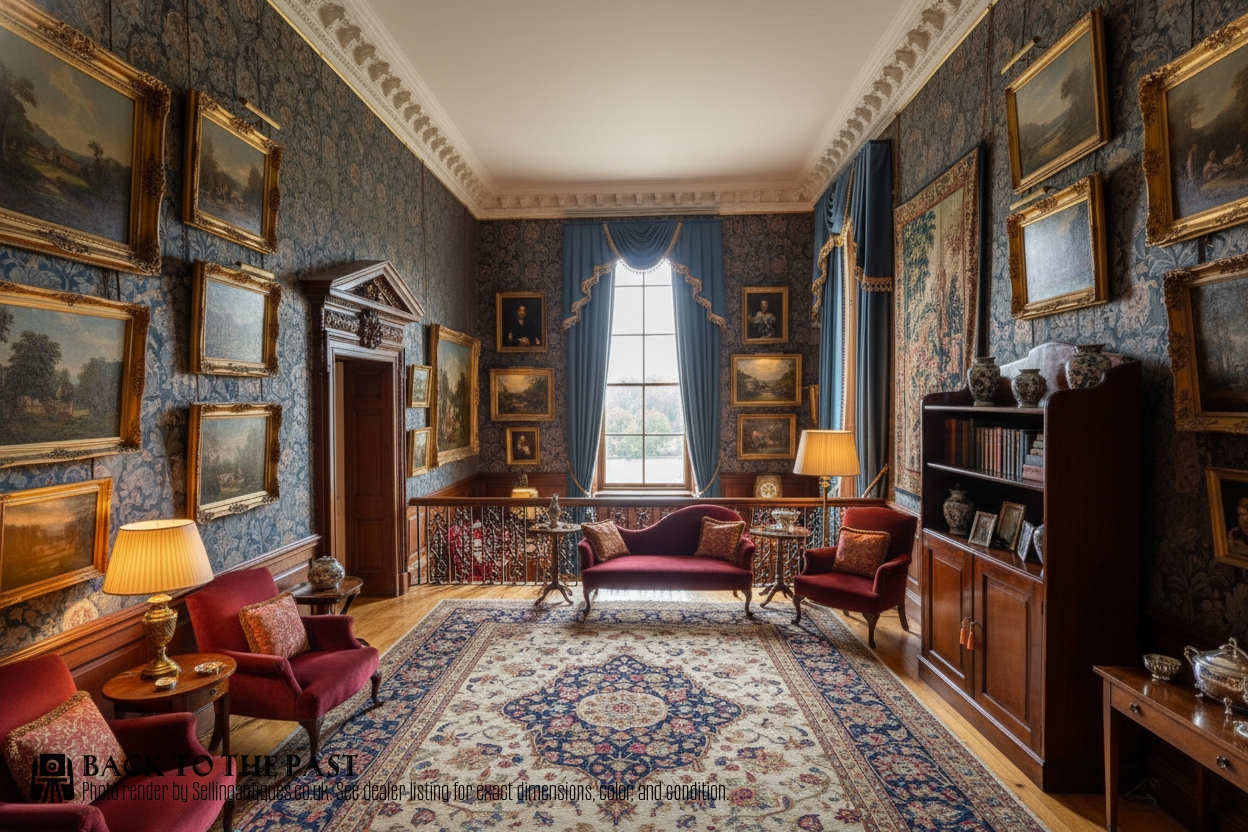
Victorian Open Bookcase in Solid Mahogany, Victorian
Priced at £1,650 from Spinka & Co
Hand-cut dovetails secure the lower drawers. You'll see slight irregularities in the pins and tails that machine-cut joints lack.
Essential for moving them. The glazed upper section just lifts off the base cupboard, so you won't need to struggle with one massive piece.
Frame and panel techniques prevent the solid timber doors from warping. The central wooden panel floats loose within grooves cut into the stiles.
"Dust-excluding features were highly developed. Leather strips tacked to the inner door edges overlap when shut to protect the bindings from coal smoke."
"Hidden map drawers. These slide out from the very top of the lower section, camouflaged as a simple moulding."
"Deep lower shelves can hold surprising weight. Thick timber supports running beneath the boards allow them to bear heavy encyclopaedia sets without bending."
Based on almost 25 years of Sellingantiques UK antique market data, Victorian Bookcases appeared 7910 times (out of 1,100,000 antiques) which gives it a rarity score of 21/100.
This score measures scarcity within the Sellingantiques archive only and is not a survey of the entire antiques market, so these statistics may not be indicative of the general availability of Victorian Bookcases elsewhere.
Most use a system of wooden ratchets. You'll find vertical strips with sawtooth cutouts running down the inside corners of the upper section. Small wooden cleats rest in these gaps to hold the shelf board.
Later nineteenth-century examples often use Tonks fittings. These are recessed metal strips with rectangular slots. Small brass tabs slot into the holes to provide a level resting place.
Almost all of them separate into two main parts. The glazed upper section lifts cleanly off the base cupboard. You'll usually find wooden dowels or simple screws holding the two halves together at the back.
The cornice can sometimes be unscrewed from the very top. This reduces the height of the upper section by a few inches, which helps when turning tight corners.
Always remove the glass doors and the shelves before attempting to lift the top section. The bare frame is surprisingly light once empty.
The base cupboard acts as the structural foundation.
Removing it makes the piece dangerously unstable. The glazed top relies on that wider footprint to stop it tipping forward onto the floor.
Wavy reflections are a common feature of earlier Victorian cylinder glass. The manufacturing process involved blowing a large cylinder of glass, cutting it, and flattening it out on a heated table. This method naturally leaves slight variations in thickness.
Later pieces use heavier plate glass which casts a much flatter reflection. The presence of rippled glass usually indicates a date before the 1870s, though workshops often reused older panes.
Please note: This Victorian Bookcases guide and its associated pricing data are provided for general informational purposes only. It does not constitute formal financial, investment, or appraisal advice and should not be relied upon as the sole basis for any commercial activity, purchasing, or sales decisions. Sellingantiques.co.uk accepts no liability for any actions taken in reliance on this information. Always consult with a qualified professional or independent appraiser.
