
There are no results to show on this page for that combination of filters:
Neoclassical Small Bookcases
A 2026 Guide by Sellingantiques

Oak Open Bookcase of Small Proportions, 1910
Priced at £495 from Vintage Garden UK
Literacy rates rose sharply during the eighteenth century. More books in circulation meant people needed domestic storage away from grand library rooms.
Revolving types appeared in the late Georgian period. These saved floor space in tight townhouses.
Victorian cabinet makers produced thousands of them. Standardised texts and circulating libraries made reading an everyday middle-class habit.
Look for trough shapes designed for tabletops. They held a small selection of volumes right where the reader sat.
Edwardian examples often feature Sheraton revival details. The trade leaned heavily on earlier eighteenth-century designs for inspiration.
Gillows of Lancaster produced fine revolving and open bookcases throughout the nineteenth century. They stamped some pieces on the top drawer edge.
Maple & Co supplied solid domestic furniture. They worked through the late Victorian and Edwardian eras.
Regional workshops built the majority of antique small bookcases without leaving a mark. Trade labels do sometimes survive on the backboards.
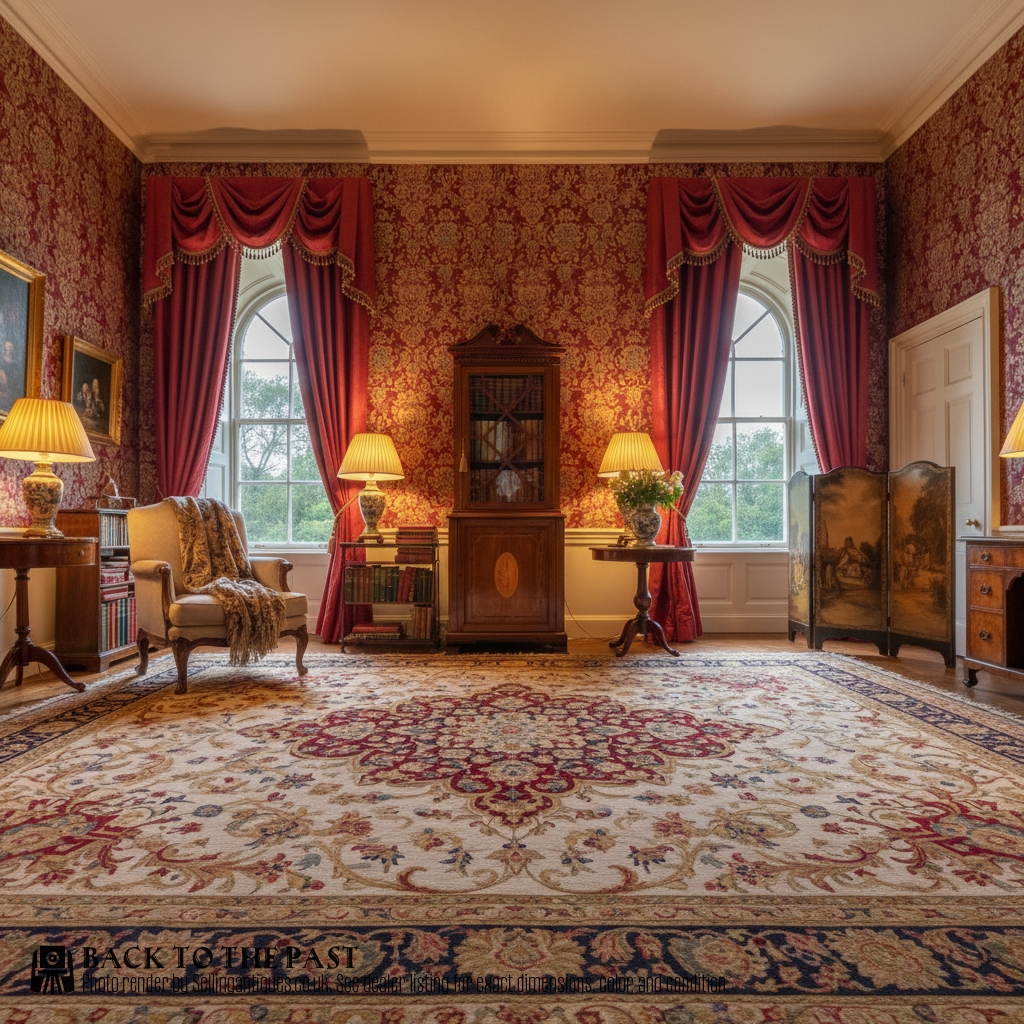
Super Mahogany Bookcase of Small Proportions, 1900
Priced at £1,295 from Fernyhough Antiques Ltd
The 2026 retail price guide for Antique Small Bookcases is drawn from a proprietary archive of over 1.1 million retail prices indexed by Sellingantiques since 2003. This guide relies exclusively on their own internal data; no external sources or auction records are used.
Analysing nearly 25 years of UK antique market history alongside current retail values, the data indicates that typical UK retail prices for Antique Small Bookcases range between £400 and £2,000. Entry-level prices generally fall under £400 and premium examples upwards of £2,000.
Adjustable shelves sit on wooden cleats or brass tonks. You can move them up and down to fit different volume heights.
Open fronts lack glazing. This gives immediate access to the books without opening doors.
Castors often sit under the feet. They let owners roll heavy cases across carpets with ease.
Hand-cut dovetails join the top to the sides on early pieces. Later nineteenth-century factories shifted to machine-cut joints.
Book-matching creates mirrored grain patterns. Cabinet makers achieved this by cutting a single piece of veneer and opening it like a book.
Mortise and tenon joints secure the frame. Good craftsmen pinned them with wooden dowels to stop the glue from failing.
"Slanted shelves feature on some models. They point book titles upwards so seated readers can read the spines easily."
"Hidden castors conceal mobility. Cabinet makers hid the metal wheels behind deep wooden plinths to keep a formal look."
"Desk extensions occasionally fold out from the sides. This turns a simple storage piece into a compact reading station."
Based on almost 25 years of Sellingantiques UK antique market data, Antique Small Bookcases appeared 2128 times (out of 1,100,000 antiques) which gives it a rarity score of 65/100.
This score measures scarcity within the Sellingantiques archive only and is not a survey of the entire antiques market, so these statistics may not be indicative of the general availability of Antique Small Bookcases elsewhere.
Open fronts do let airborne dust settle on the books. Georgian homes suffered terrible coal soot, which is why wealthier owners preferred glazed doors.
You'll need to run a brush over the top edges occasionally. Tightly packed books suffer less dust ingress than loosely stacked ones.
Cabinet makers usually left the backboards unfinished. They built these pieces to stand flat against a wall, using rough pine or deal for the unseen rear.
Revolving bookcases form the main exception. Makers finished them on all four sides because they stood out in the middle of a room.
Those brass strips are Tonks fittings. They consist of slotted metal channels let into the uprights.
You place small metal studs into the slots at your chosen height. The wooden shelf then rests on those studs, letting you adjust the spacing.
The leather strip is a dust flap. It hangs down to cover the gap between the top of the books and the shelf above.
Coal fires created heavy soot in nineteenth-century homes. The leather stopped ash from settling directly on the page edges.
Please note: This Antique Small Bookcases guide and its associated pricing data are provided for general informational purposes only. It does not constitute formal financial, investment, or appraisal advice and should not be relied upon as the sole basis for any commercial activity, purchasing, or sales decisions. Sellingantiques.co.uk accepts no liability for any actions taken in reliance on this information. Always consult with a qualified professional or independent appraiser.
