

A 2026 Guide by Sellingantiques
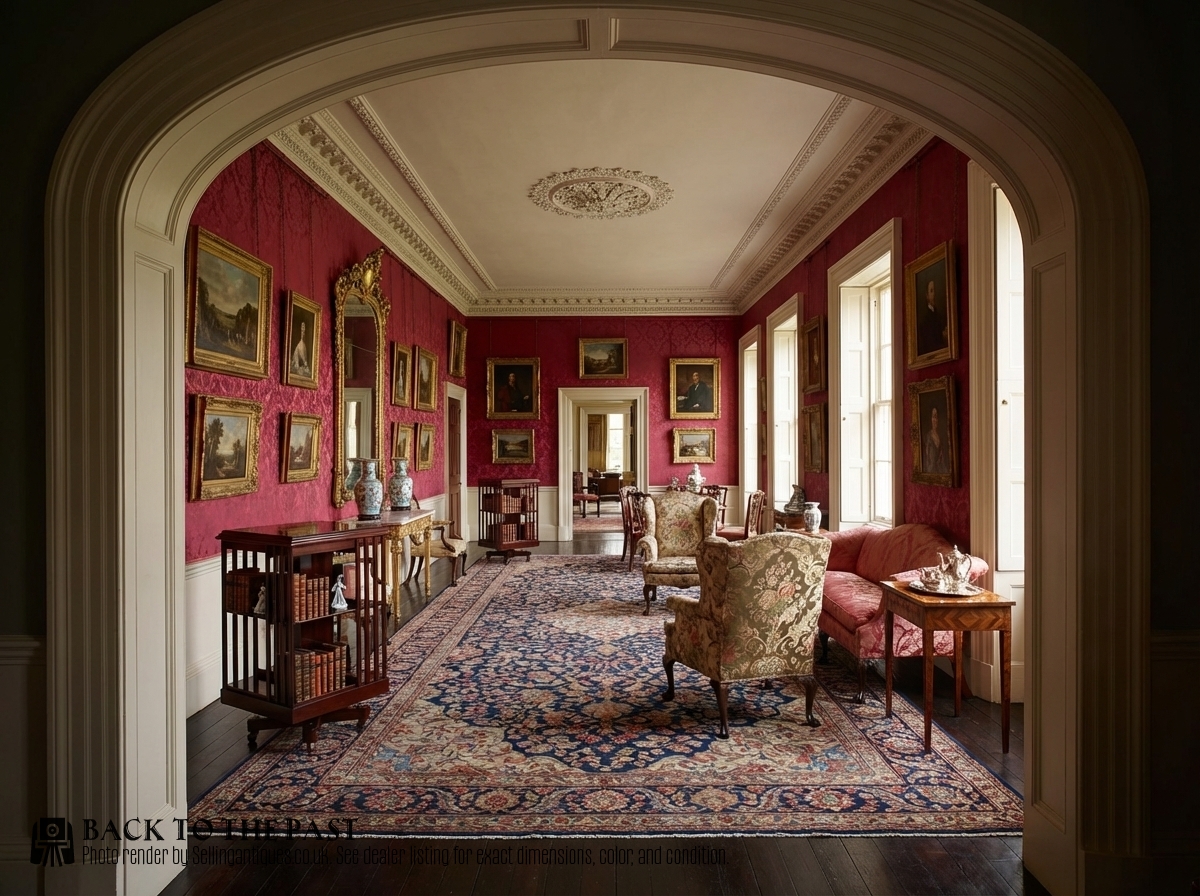
An Edwardian Mahogany and Inlaid Revolving Bookcase, Edwardian
Priced at £995 from John Hubbard Antiques
Late nineteenth-century libraries created the initial demand for this specific furniture form.
Reading habits were changing. People needed quick access to multiple reference volumes without leaving their desk chair.
Look for hardware patents from the 1870s onwards. American inventors filed early designs for the rotating mechanisms before British cabinetmakers adopted the technology.
Production peaked between 1880 and 1910. The style fell out of favour when built-in shelving became standard in later homes.
Danner is the major name. John Danner of Ohio patented a pivot mechanism in 1876 and his company exported widely to Britain.
Maple & Co produced large numbers in London from the late nineteenth century. They frequently used Danner-style hardware under their own timber casework.
Regional British cabinetmakers often bought the iron mechanisms wholesale. They built the wooden frame around them to match a client's existing library furniture.
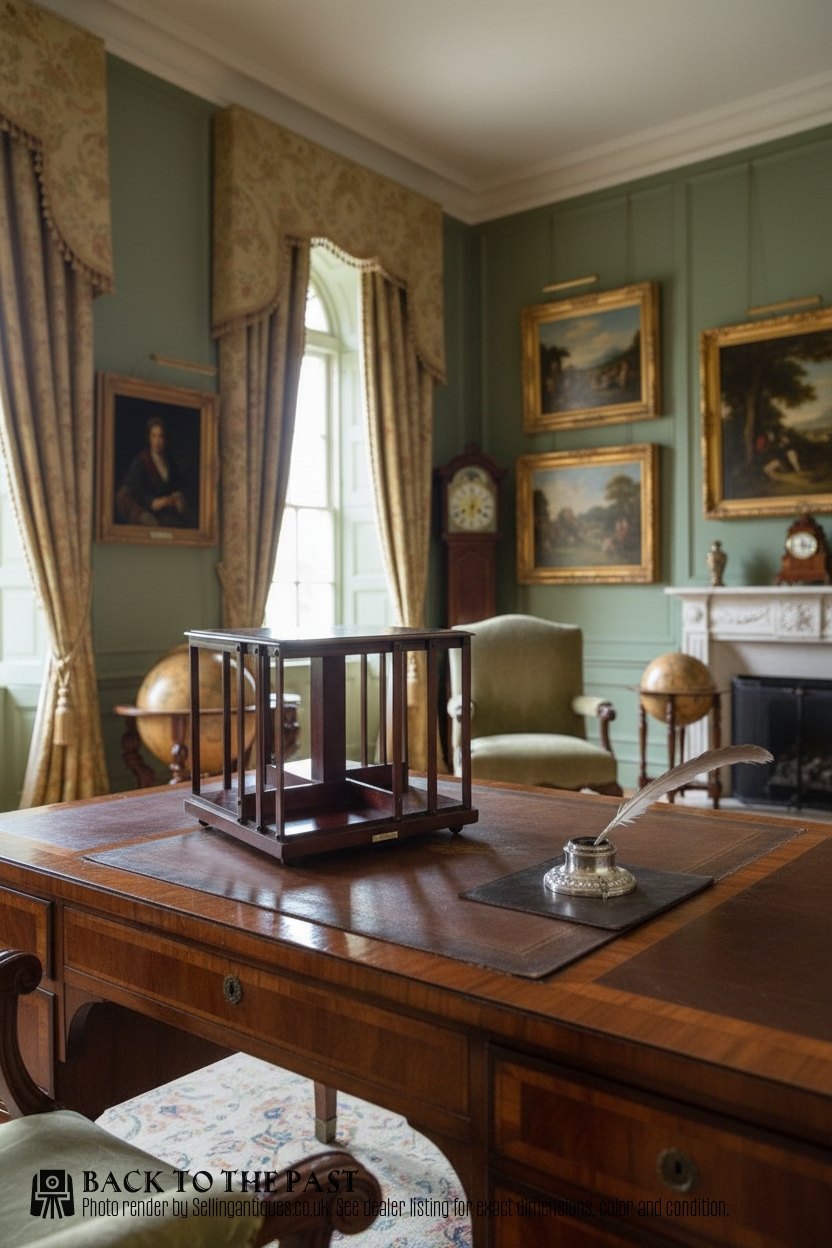
Quality Antique Edwardian Mahogany Inlaid Table Top Revolving Bookcase, 1900
Priced at £685 from London City Antiques
The 2026 retail price guide for Antique Revolving Bookcases is drawn from a proprietary archive of over 1.1 million retail prices indexed by Sellingantiques since 2003. This guide relies exclusively on their own internal data; no external sources or auction records are used.
Analysing nearly 25 years of UK antique market history alongside current retail values, the data indicates that typical UK retail prices for Antique Revolving Bookcases range between £400 and £1,500. Entry-level prices generally fall under £400 and premium examples upwards of £1,500.
Vertical slats define the exterior sides. These form open compartments on each tier, allowing titles to be read from a seated position.
A heavy cruciform base stops the unit tipping. Castors are often fitted underneath to allow movement across library carpets.
Some tops feature reading slopes. Others have folding side flaps supported by brass hinges, giving extra space for open dictionaries.
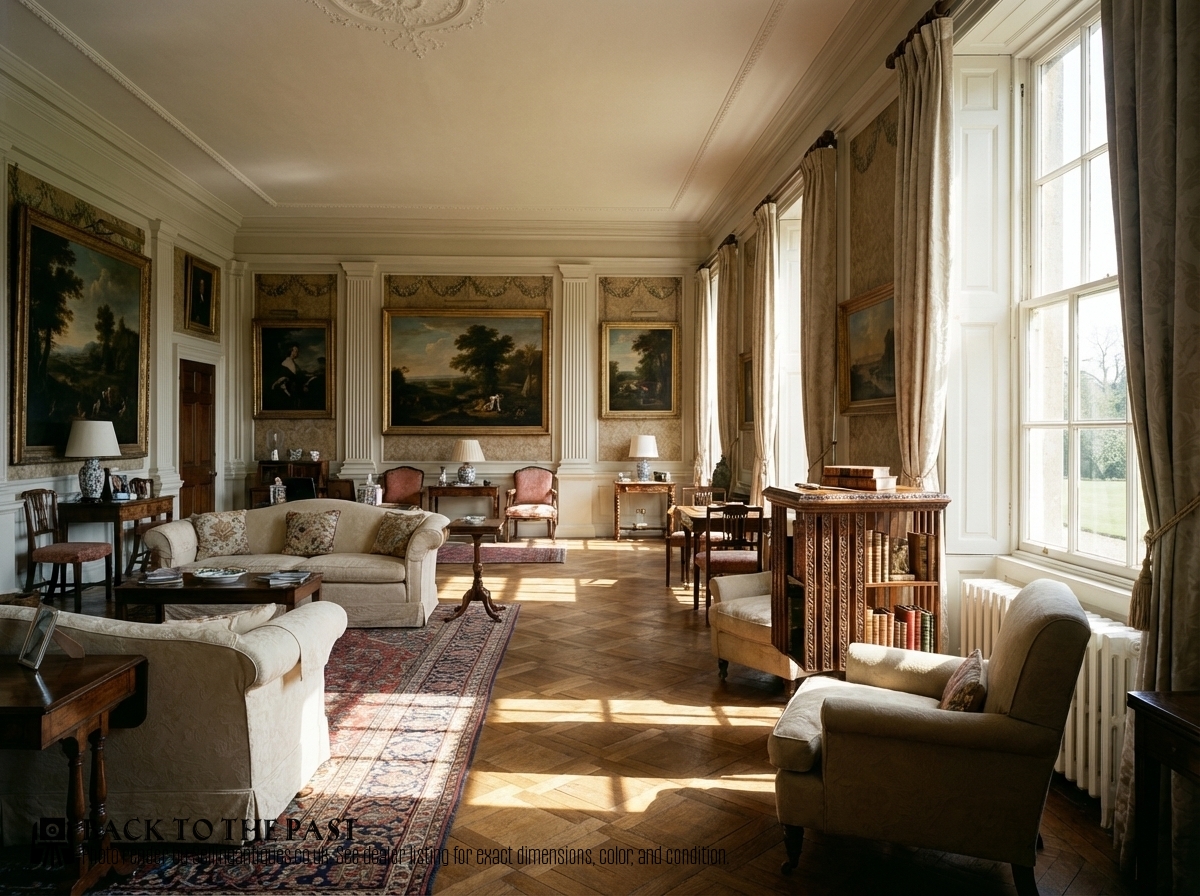
Anglo Indian Revolving Bookcase, 1890
Priced at £1,280 from Ropeworks Antiques
Early construction relied on thick central wooden columns. Later makers reduced the timber thickness by relying entirely on the cast iron hardware for stability.
Notice the slat attachments. Better quality antique revolving bookcases have slats screwed and plugged, while cheaper versions use basic wire nails.
Top surfaces changed over time. Plain flat tops gave way to complex moulded edges with inset leather or crossbanded veneers.
"They adapt well to modern media storage. The standard shelf heights are a good fit for contemporary paperbacks."
"The footprint is surprisingly small. A tall unit holds a full reference library in the same floor space as a single side table."
"Many double as occasional tables. The flat solid top provides a stable surface for lamps or drinks beside a reading chair."
Based on almost 25 years of Sellingantiques UK antique market data, Antique Revolving Bookcases appeared 1762 times (out of 1,100,000 antiques) which gives it a rarity score of 70/100.
This score measures scarcity within the Sellingantiques archive only and is not a survey of the entire antiques market, so these statistics may not be indicative of the general availability of Antique Revolving Bookcases elsewhere.
Standard tiers lack the height for large folios. They were designed for novels and octavo volumes.
You can sometimes find larger models built for atlases. Standard slots measure around ten inches high.
Wobbling usually means the central spindle has worked loose from the wooden base. The bolts holding the cast iron plate to the timber cross-section stretch or strip their threads over time.
A restorer can re-tap the holes or fit larger screws. Sometimes the bearing just needs cleaning and re-greasing to stop the unit binding and causing the carcase to rock.
The top section normally lifts straight off the metal base. Two people can pull upwards to separate the wooden carcase from the iron spindle.
Do not tip a complete unit on its side to move it. The combined weight of the timber and hardware will snap the central column.
Wood shrinks and cracks when exposed to direct heat. The thin slats on the sides are particularly vulnerable to warping if placed too close to a radiator.
Keep the piece in a stable environment away from temperature extremes. If you must place it near a heat source, leave a wide gap for air circulation.
Please note: This Antique Revolving Bookcases guide and its associated pricing data are provided for general informational purposes only. It does not constitute formal financial, investment, or appraisal advice and should not be relied upon as the sole basis for any commercial activity, purchasing, or sales decisions. Sellingantiques.co.uk accepts no liability for any actions taken in reliance on this information. Always consult with a qualified professional or independent appraiser.
