




A 2026 Guide by Sellingantiques
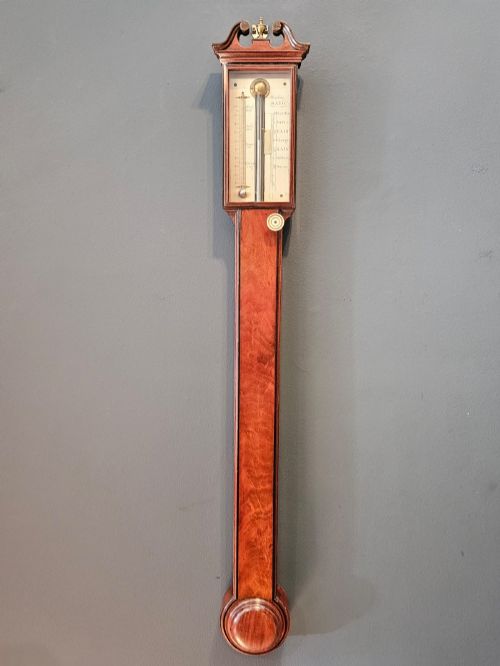
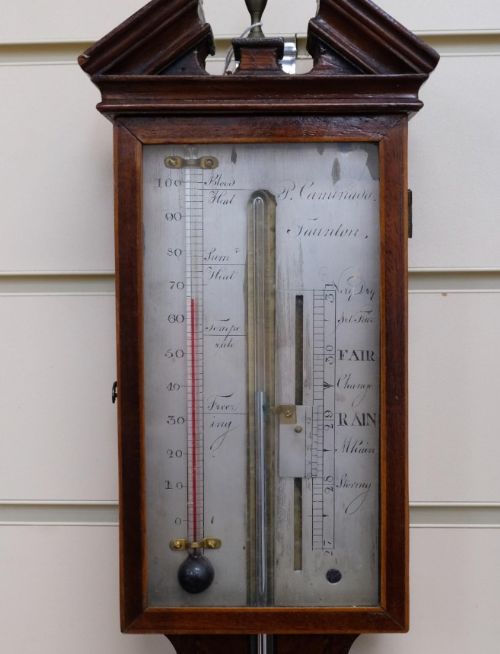
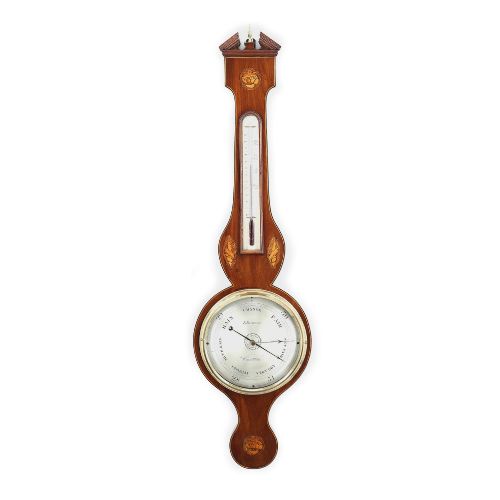
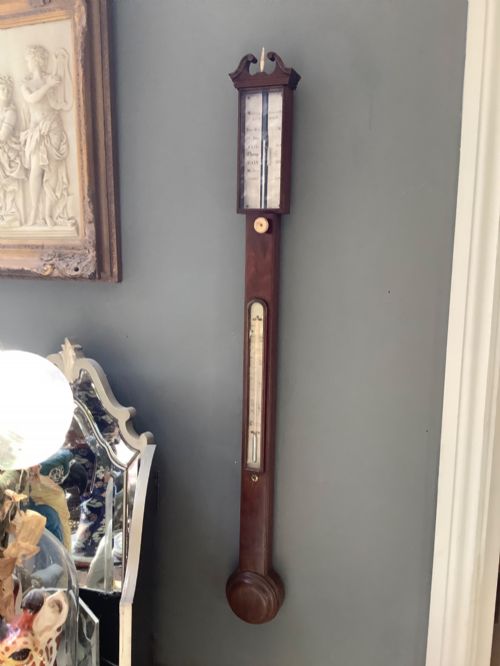
Antique George III Quality Mahogany Shell Inlaid Banjo Barometer, 1800
Priced at £1,185 from London City Antiques
Italian immigrants drove the trade in London during the late eighteenth century.
Georgian barometers became domestic necessities rather than purely academic tools. Wealthy households bought them for hall displays and daily weather planning.
Check the spelling on early engraved dials. You sometimes see regional variations before standardised text took over.
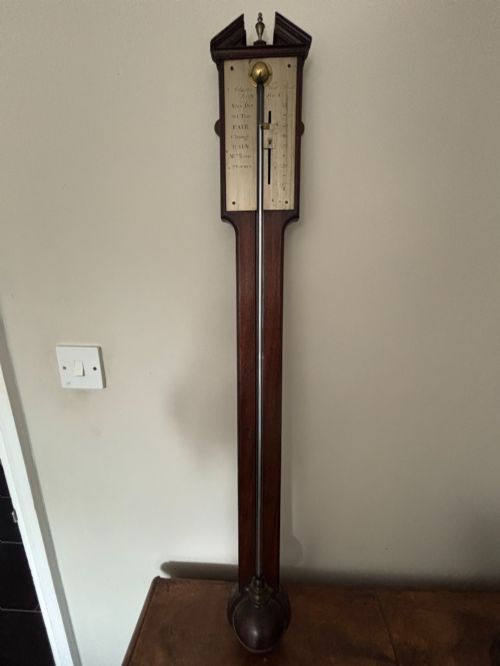
Stick models appeared early in the period. The banjo shape arrived later and dominated the market by the 1790s.
John Russell of Falkirk worked between 1770 and 1817. He received a royal warrant for his mahogany stick barometers.
Charles Faraday operated in London during the late Georgian period, producing standard banjo forms with silvered dials.
Regional clockmakers frequently assembled them without a maker mark. They'd rely on local timber and imported glass.
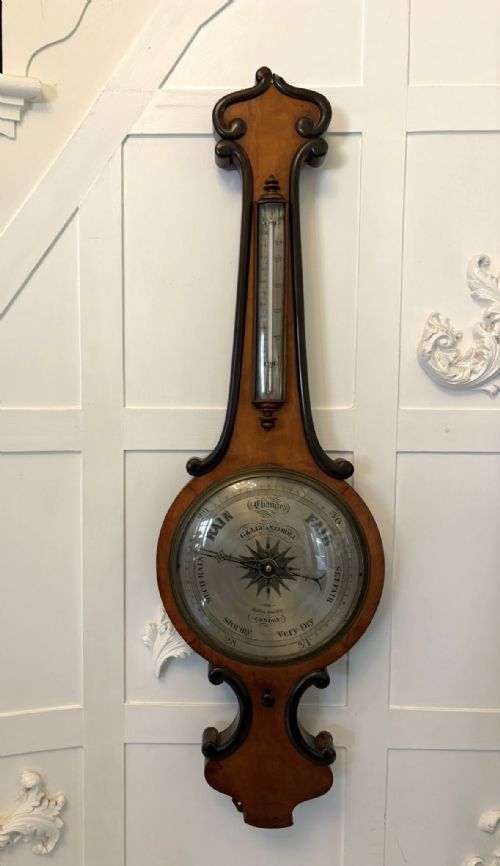
Antique George III Quality Rosewood Banjo Barometer, 19th Century
Priced at £985 from London City Antiques
The 2026 retail price guide for Georgian Barometers is drawn from a proprietary archive of over 1.1 million retail prices indexed by Sellingantiques since 2003. This guide relies exclusively on their own internal data; no external sources or auction records are used.
Analysing nearly 25 years of UK antique market history alongside current retail values, the data indicates that typical UK retail prices for Georgian Barometers range between £600 and £2,700. Entry-level prices generally fall under £600 and premium examples upwards of £2,700.
Broken pediments sit at the top of many banjo models. Some feature a central brass finial.
Note the secondary dials. A hygrometer often sits at the top to measure humidity, with a spirit level at the base.
Mercury fills the concealed glass tube mounted securely behind the main timber case.
Hand-cut mahogany veneers form symmetrical patterns on the flat case front. Cabinet makers matched the grain carefully.
Early dials show hand engraving. You'll see slight variations in the letter depth where the graver bit into the brass.
Blown glass tubes required heating and bending over an open flame to form the bottom curve for the cistern.
"Thermometers on the necks of these pieces often use alcohol tinted red or blue instead of mercury."
"A loose decorative finial tops many cases. Makers carved these small urns from bone or ivory."
"Setting the pressure hand requires a hidden system of silk threads and tiny brass pulleys behind the dial."
Based on almost 25 years of Sellingantiques UK antique market data, Georgian Barometers appeared 302 times (out of 1,100,000 antiques) which gives it a rarity score of 94/100.
This score measures scarcity within the Sellingantiques archive only and is not a survey of the entire antiques market, so these statistics may not be indicative of the general availability of Georgian Barometers elsewhere.
Keep it upright at all times. If you tilt the case flat, air gets into the sealed glass tube and breaks the heavy mercury column. This ruins the vacuum needed for the gauge to function.
Always carry them vertically. You might need to plug the cistern tube with a small cork or a specialised transit screw before taking it on a journey.
The engraved words on the dial are a general guide. Atmospheric pressure changes predict the incoming weather for the next day rather than describing the current rain or sun outside.
Tap the glass gently with your knuckle. If the mercury bounces slightly and settles at a new level, the instrument is still reading the local air pressure. The words simply indicate broad trends.
This requires a specialist. Handling mercury carries serious health risks.
Restorers use vacuum equipment to boil the liquid metal and remove trapped air.
That top dial is a hygrometer. It measures moisture in the room rather than the weight of the atmosphere outside.
Makers traditionally used a piece of dried oat beard attached to the back of the dial. The plant fibre absorbs moisture from the air, expanding and twisting to physically turn the small brass pointer.
Please note: This Georgian Barometers guide and its associated pricing data are provided for general informational purposes only. It does not constitute formal financial, investment, or appraisal advice and should not be relied upon as the sole basis for any commercial activity, purchasing, or sales decisions. Sellingantiques.co.uk accepts no liability for any actions taken in reliance on this information. Always consult with a qualified professional or independent appraiser.
