




A 2026 Guide by Sellingantiques
Developed in the mid-nineteenth century following the invention of the aneroid vacuum mechanism.
Victorian gentlemen relied on these portable antique pocket barometers during mountain climbs.
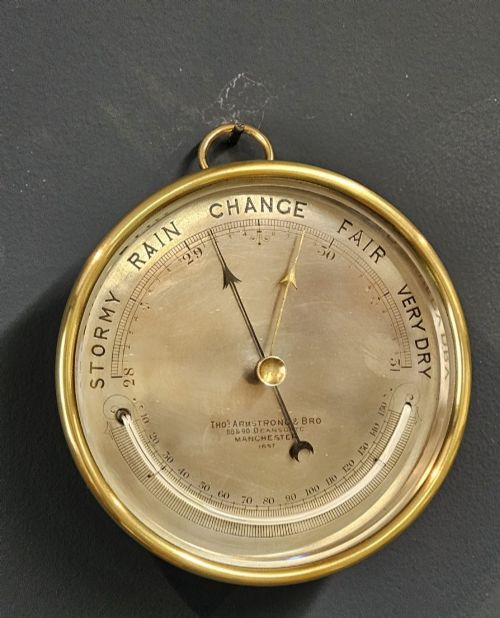
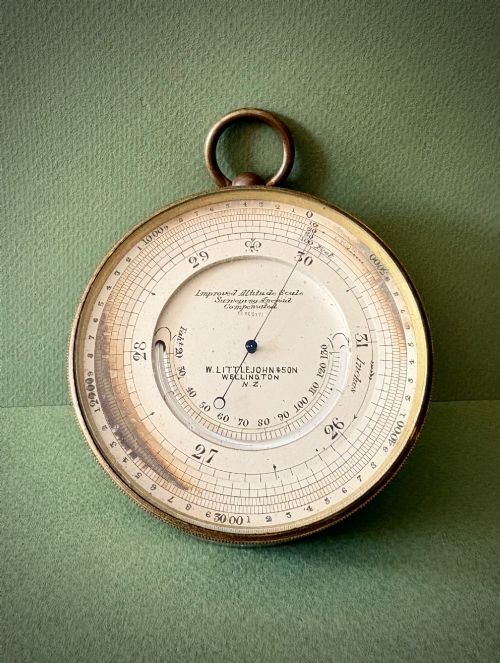
Look at the scaling on the dial to see if it was meant for standard weather reading or serious high-altitude ballooning.
Early versions were quite bulky before evolving into the sleek pocket-watch format we see later.
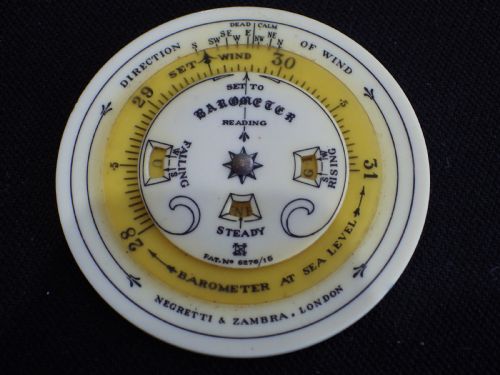
Negretti & Zambra produced a large portion of the antique pocket barometers retailed in late-Victorian London.
French firms like Naudet operating in Paris, supplying unmarked movements to British retailers.
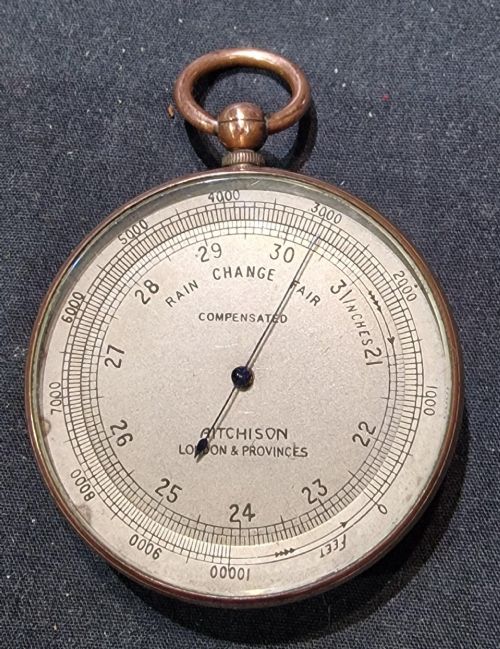
Search the dial for retailer signatures, though Hicks of Hatton Garden often signed their own complex surveying instruments.
The 2026 retail price guide for Antique Pocket Barometers is drawn from a proprietary archive of over 1.1 million retail prices indexed by Sellingantiques since 2003. This guide relies exclusively on their own internal data; no external sources or auction records are used.
Analysing nearly 25 years of UK antique market history alongside current retail values, the data indicates that typical UK retail prices for Antique Pocket Barometers range between £200 and £400. Entry-level prices generally fall under £200 and premium examples upwards of £400.
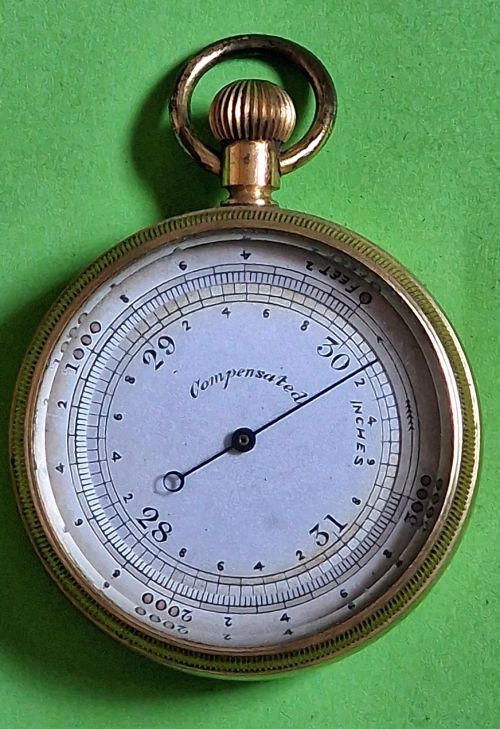
Turn the knurled crown to move the outer altitude scale ring found on many mountaineering examples.
A small compensation screw often sits flush on the back plate, allowing for minor calibration adjustments.
Fine blued steel pointers indicating the current pressure against a detailed engraved register.
Early antique pocket barometers feature thick cast cases and heavily engraved dials that took considerable time to produce.
Notice the shift towards spun brass cases in later decades to reduce weight and manufacturing effort.
Machine-divided dials replacing the earlier hand-engraved scales, improving legibility across the market.
"Sometimes they conceal a tiny compass set into the reverse of the casing for extra utility."
"Matched sets exist, combining a thermometer and barometer inside a single silk-lined travel box."
"Keep an eye out for altimeter rings meant for ballooning. They register higher altitudes than the standard walking models."
Based on almost 25 years of Sellingantiques UK antique market data, Antique Pocket Barometers appeared 185 times (out of 1,100,000 antiques) which gives it a rarity score of 96/100.
This score measures scarcity within the Sellingantiques archive only and is not a survey of the entire antiques market, so these statistics may not be indicative of the general availability of Antique Pocket Barometers elsewhere.
You don't set the main pointer to zero. It responds to the current atmospheric pressure in your location.
If it needs adjusting to match local weather reports, there is often a small compensation screw on the back. Turning this slightly will move the hand to match known local pressure.
The inner dial numbers represent barometric pressure, usually measured in inches of mercury. The outer ring is an altimeter scale used to measure height above sea level.
Hikers would check the pressure at the bottom of a hill, then look at the change on the outer scale as they climbed. The drop in air pressure moves the hand, which correlates to the change in altitude.
It is best left alone. Many originally had a gilded or lacquered finish that polishing will destroy.
If the brass is bare, cleaning it removes the natural patina it took decades to build. Just wipe the glass with a soft cloth and leave the metalwork as it is.
The vacuum capsule inside might have failed. Once that corrugated chamber loses its vacuum, it can no longer expand or contract, leaving the pointer dead.
Alternatively, the delicate internal linkage could be disconnected or jammed with old oil. A specialist clockmaker can often repair the mechanism and resolder the capsule.
Please note: This Antique Pocket Barometers guide and its associated pricing data are provided for general informational purposes only. It does not constitute formal financial, investment, or appraisal advice and should not be relied upon as the sole basis for any commercial activity, purchasing, or sales decisions. Sellingantiques.co.uk accepts no liability for any actions taken in reliance on this information. Always consult with a qualified professional or independent appraiser.
