


A 2026 Guide by Sellingantiques
Before the antique marine barometer, early sea voyages relied on simple weather glasses.
The introduction of the mercury tube changed everything. Navigators needed a steady reading while the ship pitched and rolled.
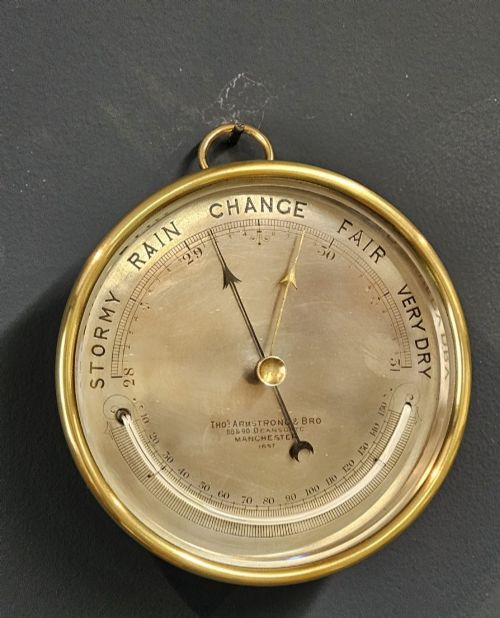
By the late eighteenth century, antique marine barometers became standard issue on naval vessels.
Board of Trade regulations eventually standardised their design. They wanted instruments that could survive extreme temperature changes.
Look for the transition from wood to brass bodies during the mid-nineteenth century.
Patrick Adie produced robust brass models in London during the mid to late nineteenth century. Many went straight to the Admiralty.
Henry Negretti and Joseph Zambra formed their partnership in 1850. They supplied countless marine barometers to the Royal National Lifeboat Institution.
John Newman worked earlier in the century. He developed specific station instruments that influenced later marine designs.
The 2026 retail price guide for Antique Marine Barometers is drawn from a proprietary archive of over 1.1 million retail prices indexed by Sellingantiques since 2003. This guide relies exclusively on their own internal data; no external sources or auction records are used.
Analysing nearly 25 years of UK antique market history alongside current retail values, the data indicates that typical UK retail prices for Antique Marine Barometers range between £200 and £1,000. Entry-level prices generally fall under £200 and premium examples upwards of £1,000.
Gimbal mounts are the defining feature. They allow the instrument to hang vertically regardless of the ship's movement.
A pinched section in the mercury tube acts as a damper. This stops the mercury from oscillating violently with the waves.
Check the base for a weighted brass cistern. It keeps the centre of gravity low.
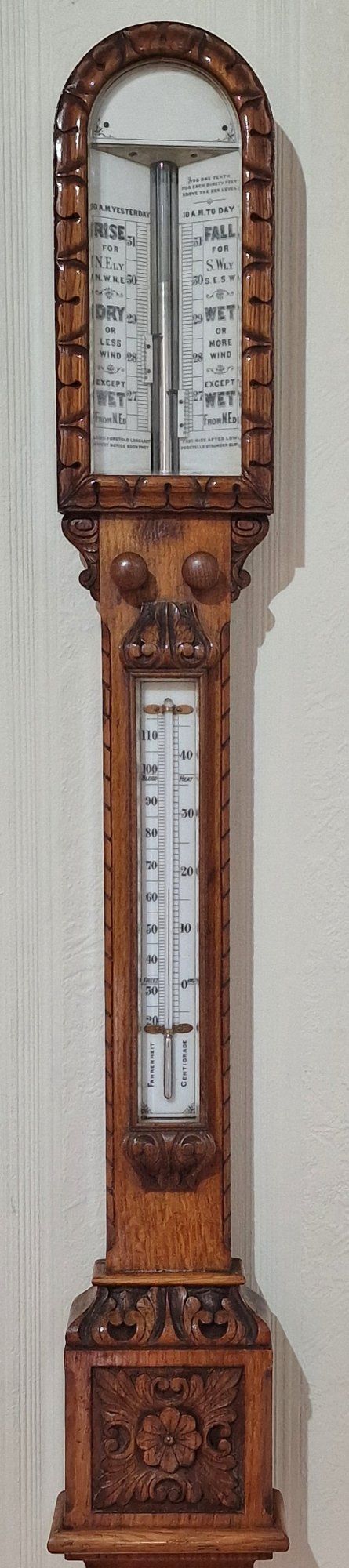
Early wooden cases feature hand-carved details and bone scales. Makers turned the main column on a lathe.
Cast brass bodies arrived with the industrial revolution. Foundries poured molten metal into sand moulds to create uniform parts.
Engravers cut the dial scales by hand before machine dividing engines became common in the trade.
"Many housed a small thermometer on the main trunk to help navigators correct the pressure reading for temperature."
"The brass cistern covers often unscrew to reveal a flexible leather bag inside."
"Some wooden models feature carved rope-twist details mimicking the ship's rigging."
Based on almost 25 years of Sellingantiques UK antique market data, Antique Marine Barometers appeared 426 times (out of 1,100,000 antiques) which gives it a rarity score of 92/100.
This score measures scarcity within the Sellingantiques archive only and is not a survey of the entire antiques market, so these statistics may not be indicative of the general availability of Antique Marine Barometers elsewhere.
The vernier slides alongside the main engraved scale. You adjust it using the small rack and pinion knob until the bottom edge aligns with the top of the mercury column.
Find the line on the short vernier scale that perfectly matches up with a line on the main fixed scale. That gives you the fractional reading.
That is a thermometer. The mercury inside the main tube expands and contracts with changes in room temperature. This fluctuation can throw off the pressure reading.
Navigators used the reading from that thermometer to apply a mathematical correction to the pressure. It ensured the data logged in the ship's logbook remained accurate regardless of the climate outside.
Moving them requires care. The mercury is heavy and can shatter the glass tube if it hits the top.
Most marine versions have a base screw. Turn this to push the fluid up and lock it before transit.
Finding an original bracket to match your exact gimbal ring is difficult. Different makers used slightly different pivot pins and thread sizes.
Having a foundry cast a new one is possible but involves making a wooden pattern first. It often makes more sense to have a machinist turn a simple backplate out of solid brass.
Please note: This Antique Marine Barometers guide and its associated pricing data are provided for general informational purposes only. It does not constitute formal financial, investment, or appraisal advice and should not be relied upon as the sole basis for any commercial activity, purchasing, or sales decisions. Sellingantiques.co.uk accepts no liability for any actions taken in reliance on this information. Always consult with a qualified professional or independent appraiser.
