40,594  PAGES BROWSED TODAY PAGES TODAY 87 ANTIQUES UPLOADED TODAYNEW ARRIVALS
87 ITEMS ADDED TODAY
Sort Order
Items Per Page
Browse Categories
Sort order
Items per page
ID #SA919426
SOLD
Email
Save
Antique William IV Low Breakfront Bookcase Sideboard C.1835 19th Century
Regent Antiques
sold SA919426
Sorry, but this item has been sold.
Regent Antiques

Regent Antiques

Sellingantiques Verified Since Sep 2016
View Dealers Stock Page
  • About Us
    We specialise in english and continental furniture, silver, porcelain and decorative items.
  • Trade Associations
    Regent Antiques is a registered member of LAPADA  CINOA
Id #SA919426
PDF SHARE
SAVE

Antique William IV Low Breakfront Bookcase Sideboard C.1835 19th Century

19th century
Description

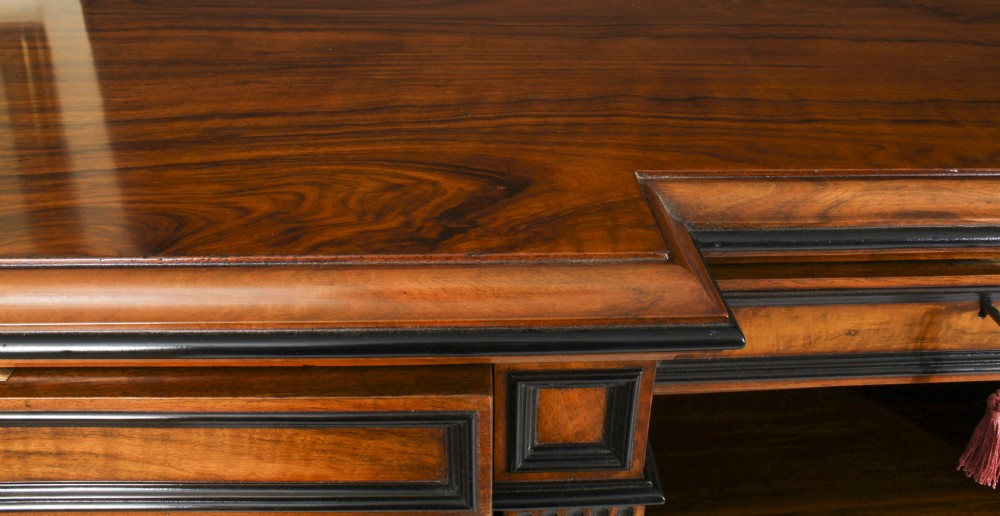
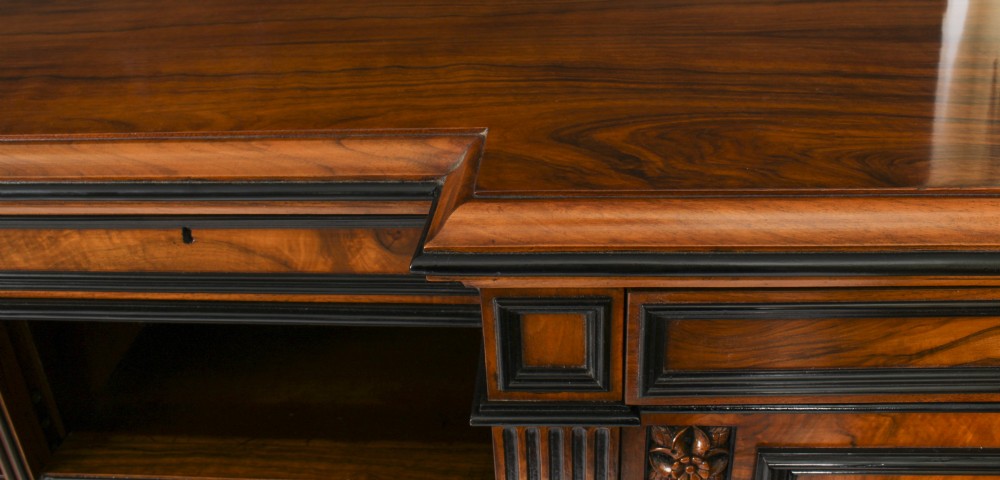
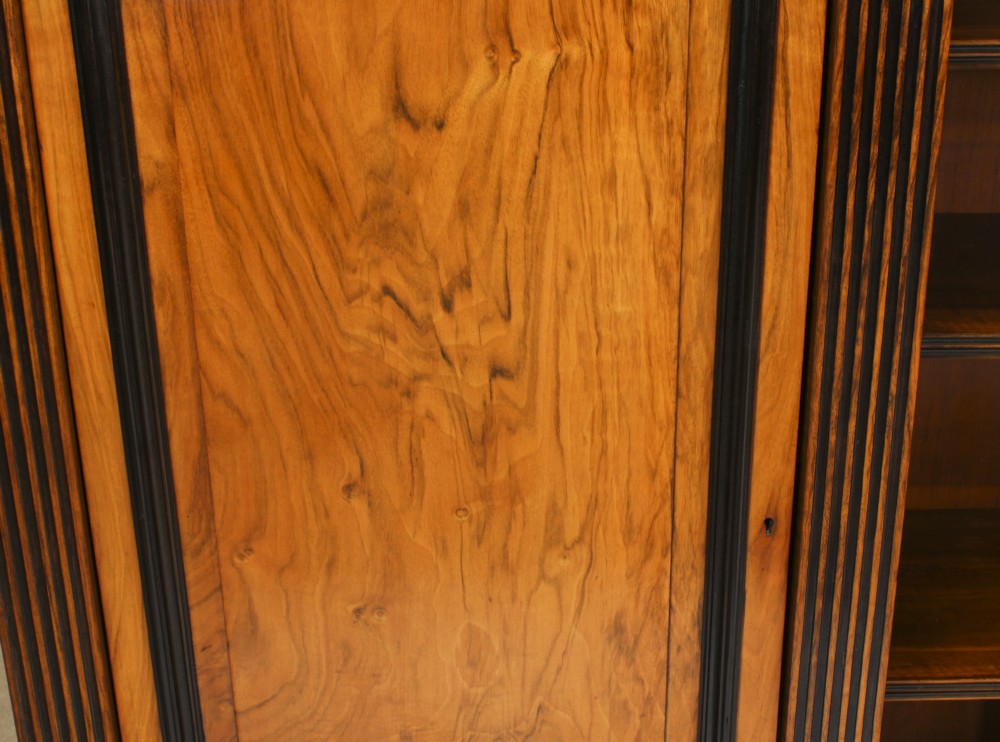
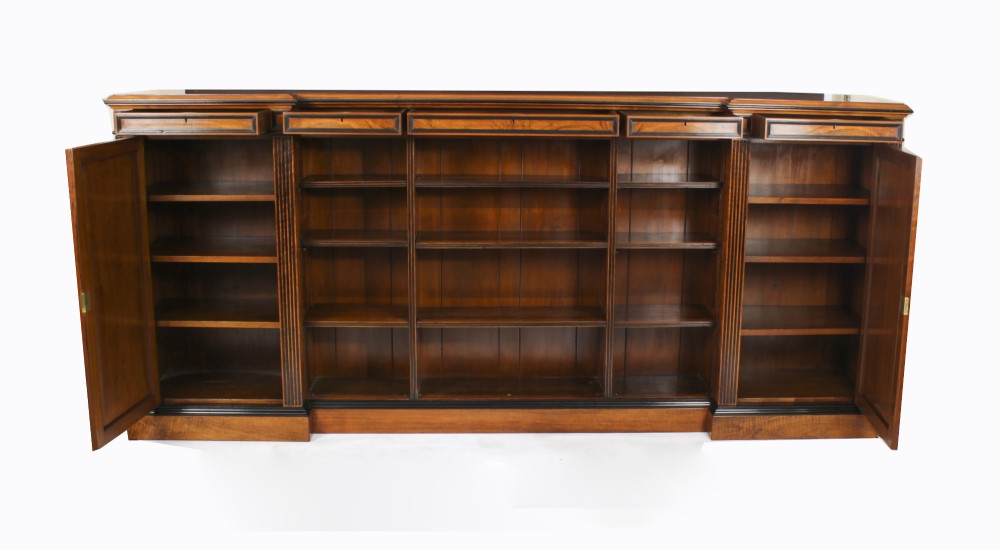
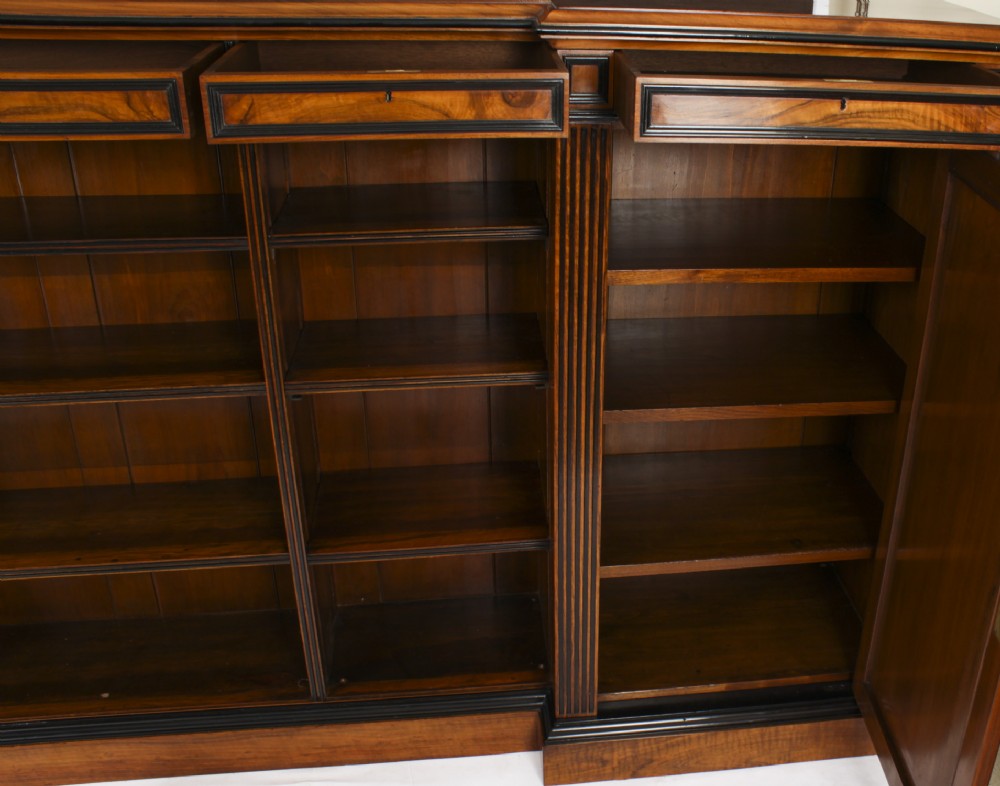
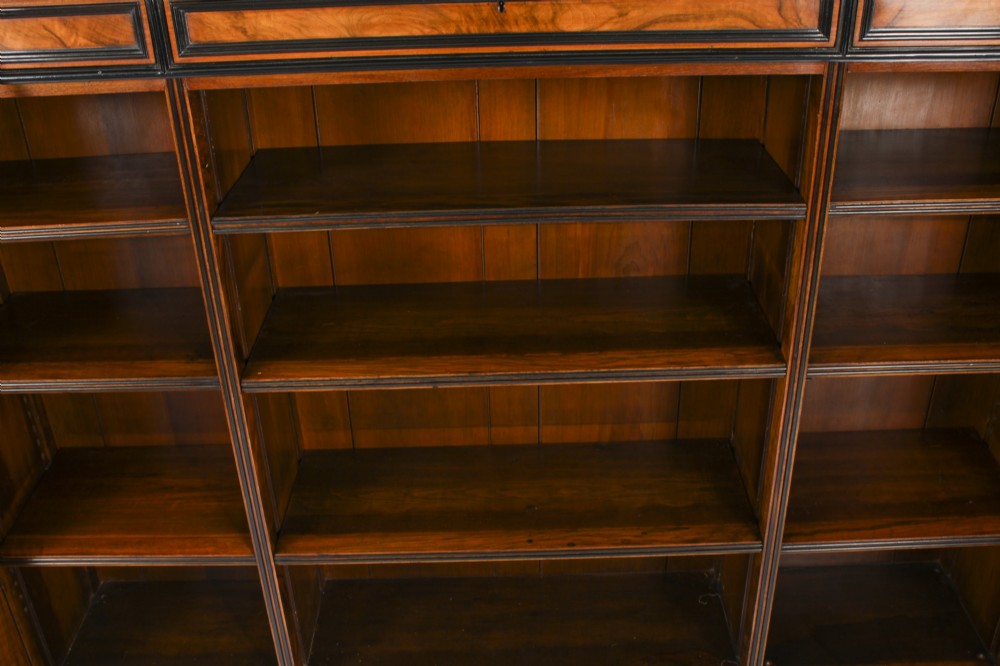
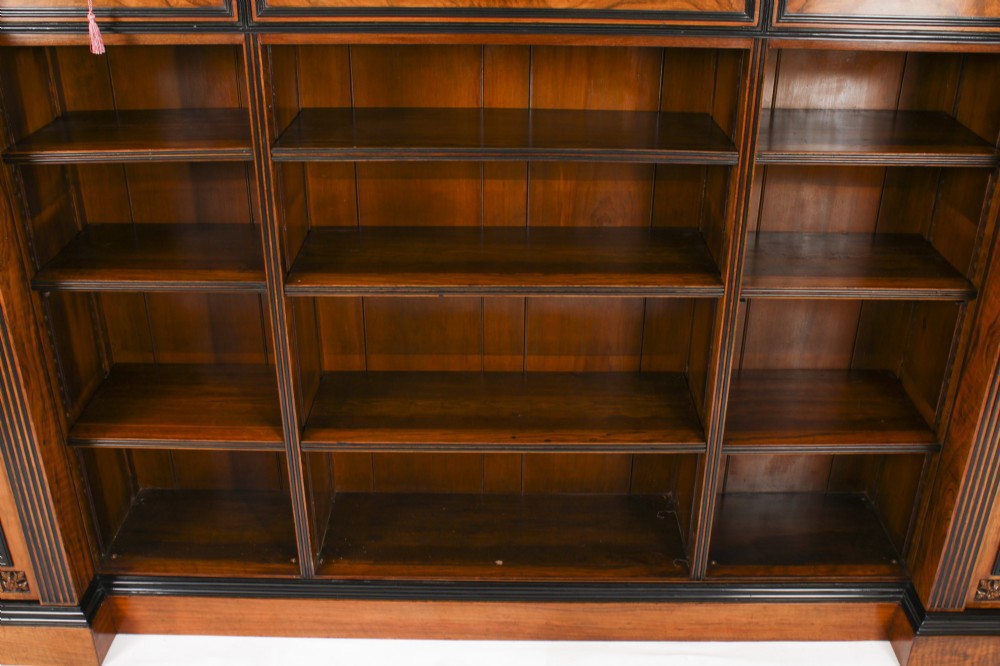
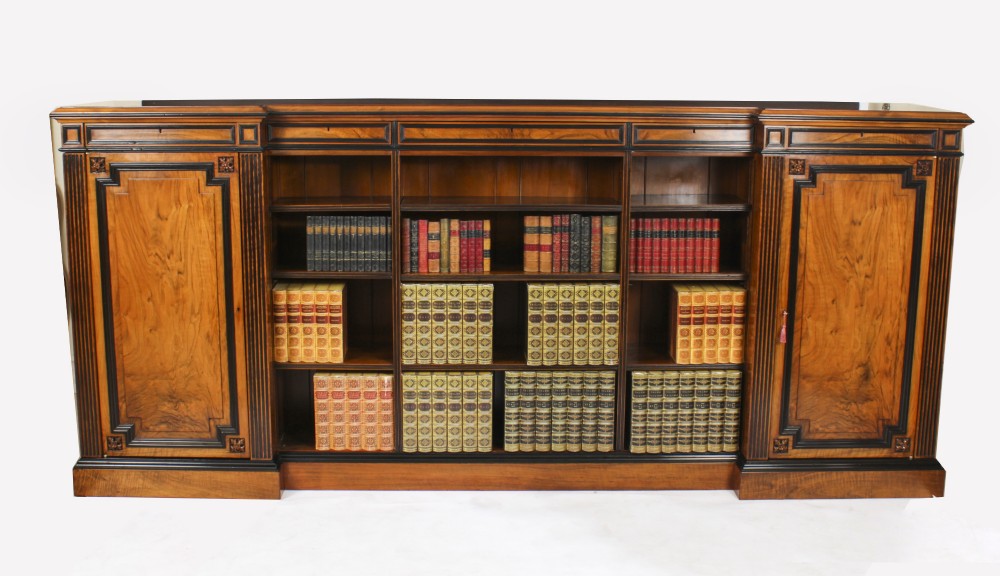
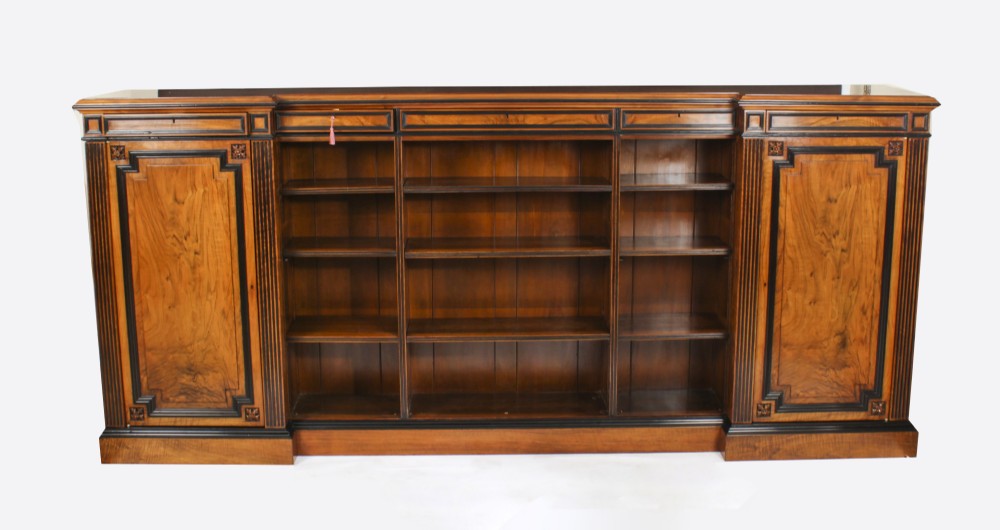
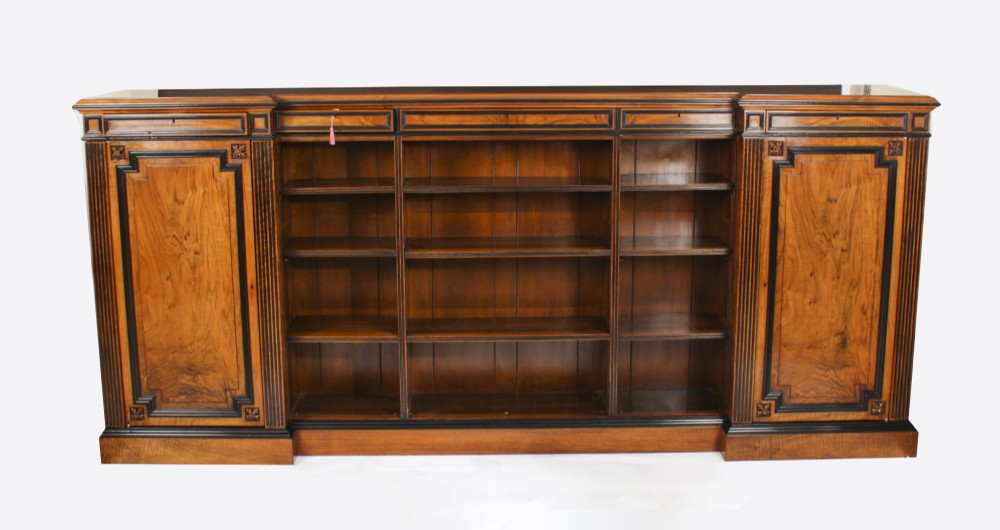
This is a beautiful antique William IV figured walnut and ebonised low breakfront bookcase, circa 1835 in date.

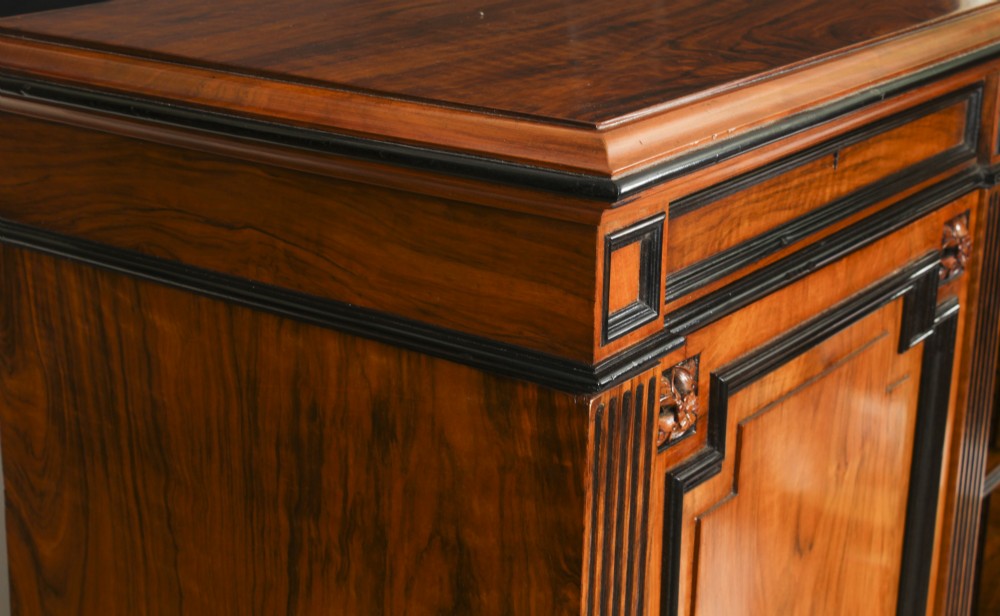
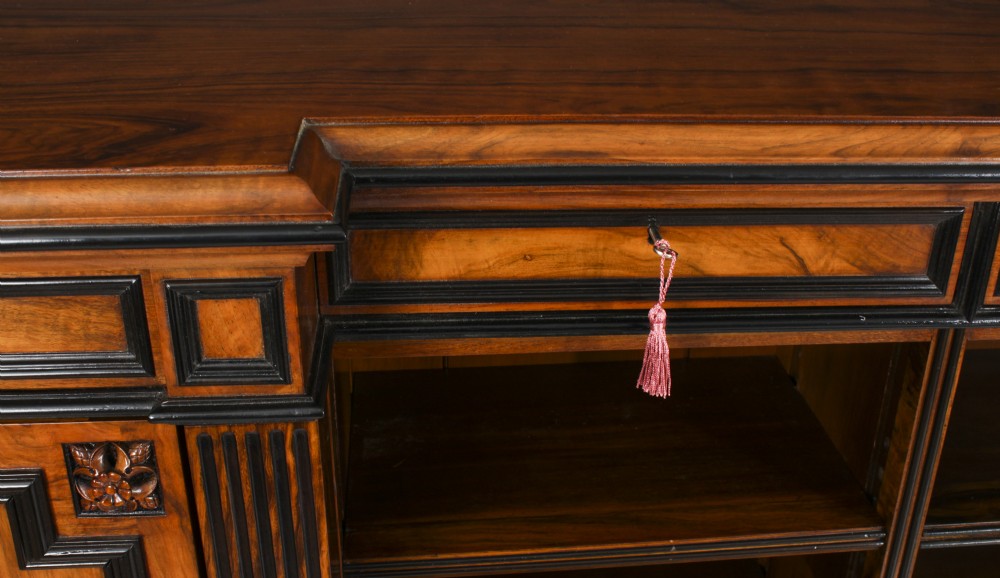
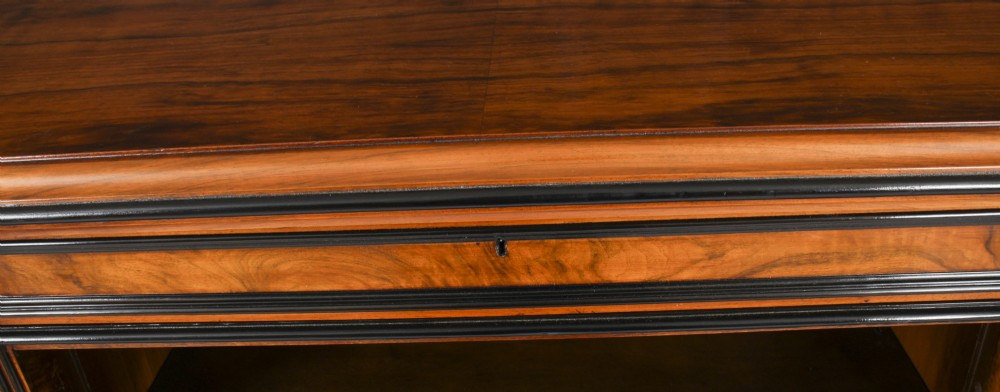
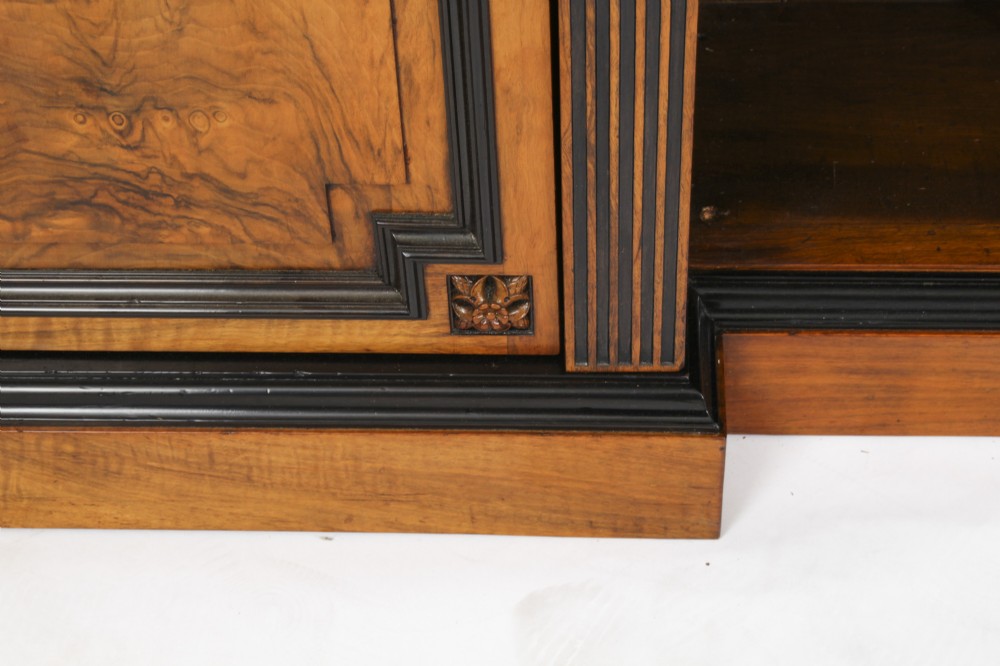
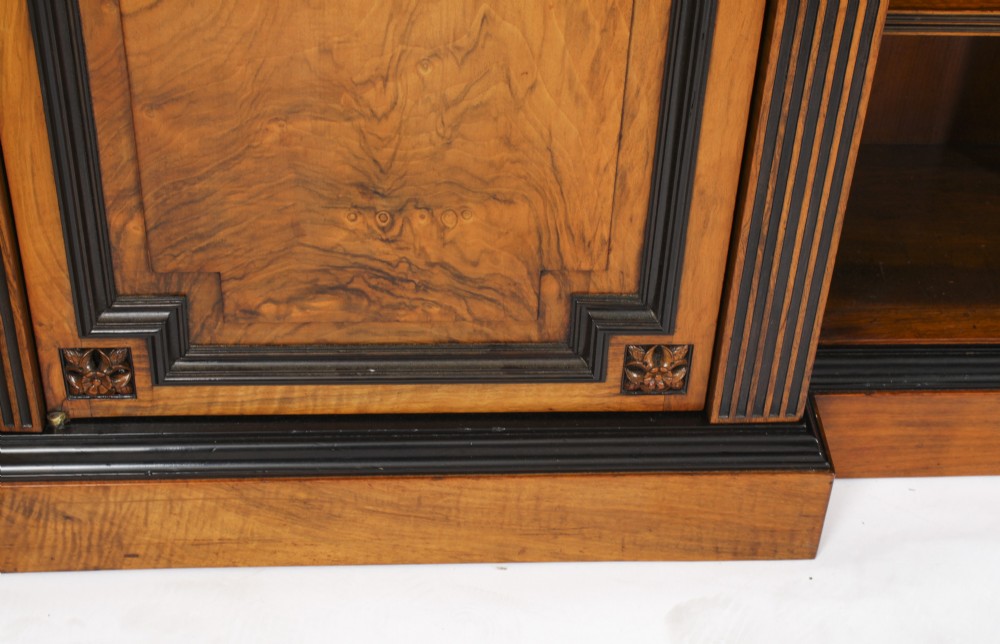
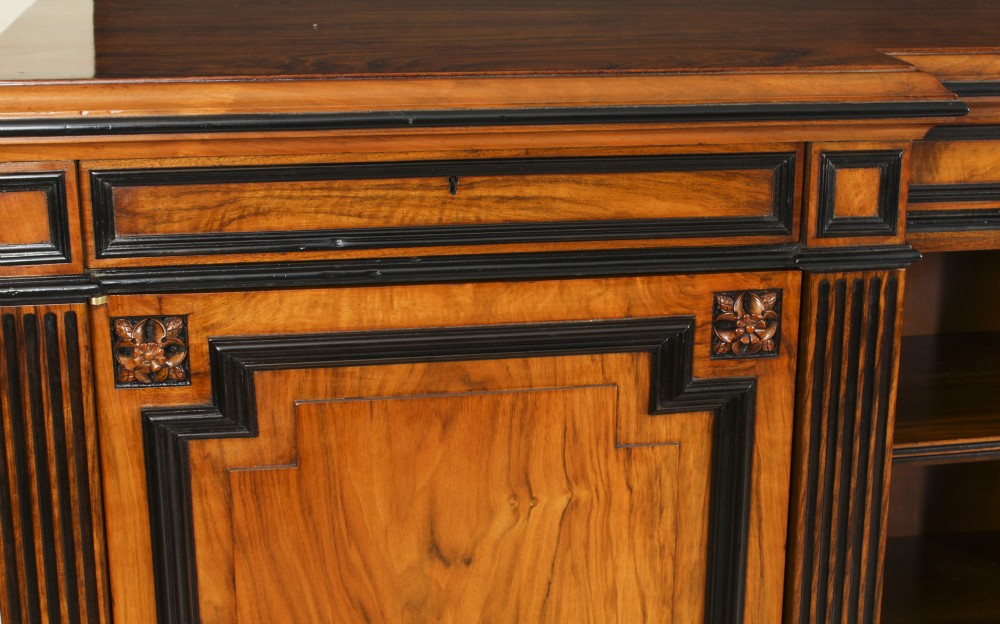
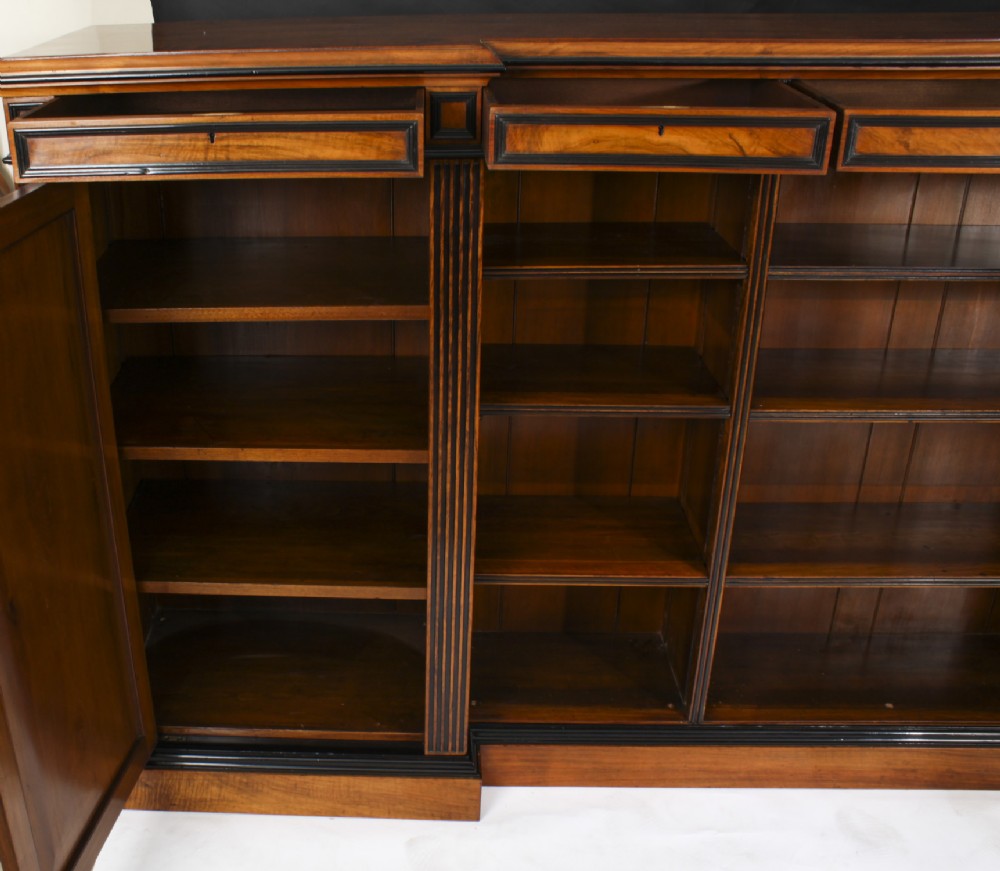
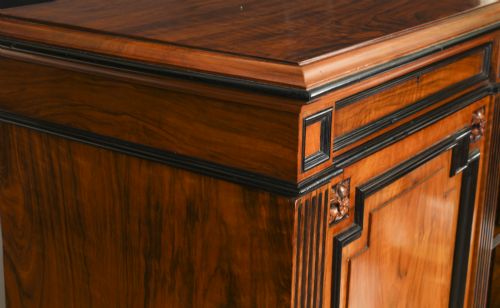
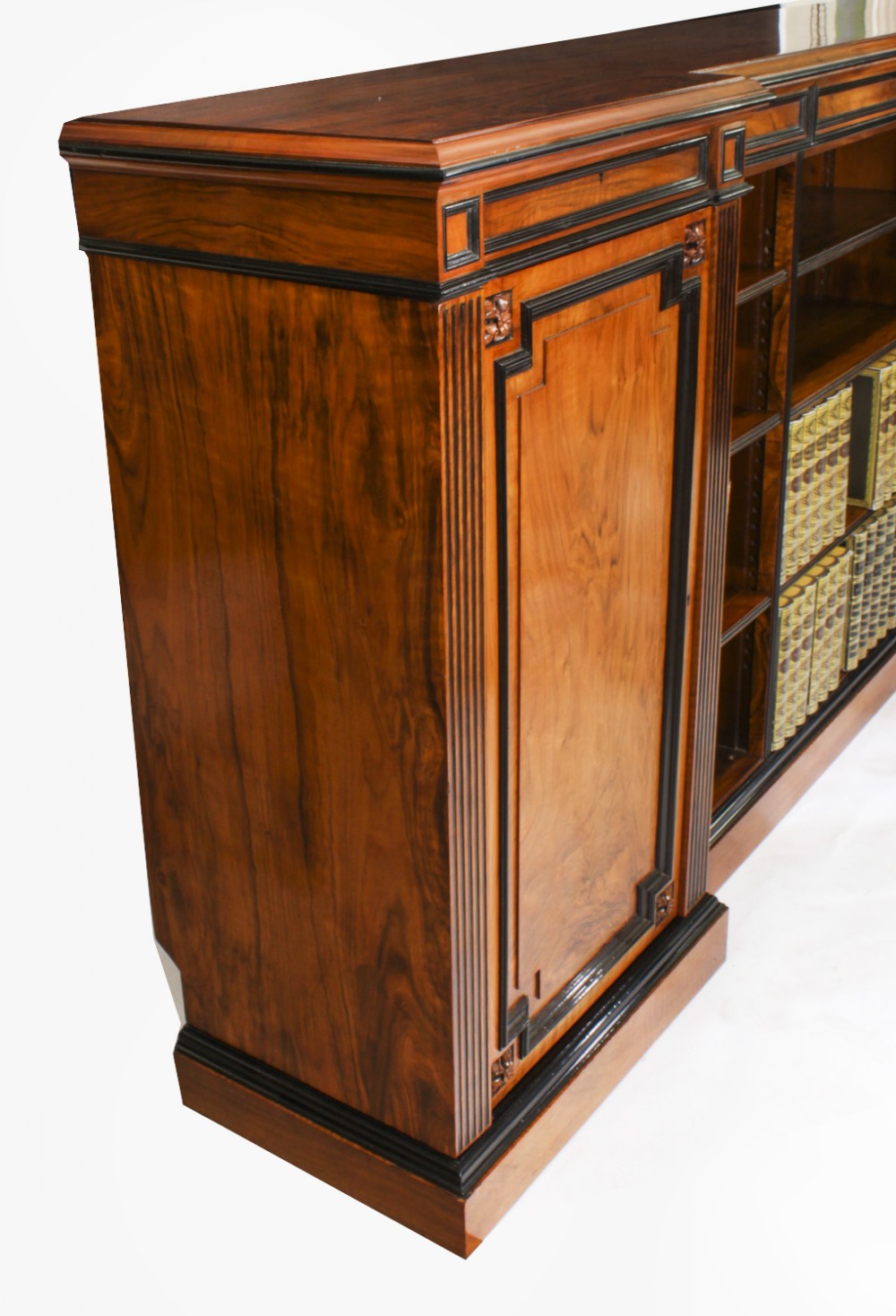
It has a shaped top with five frieze drawers above a central open bookcase with three adjustable shelves all between fluted columns. With a pair of cupboards to each side that feature figured walnut panel doors decorated with ebonised mouldings and carved rosettes at the corners. The cabinet is raised on a decorative plinth base.
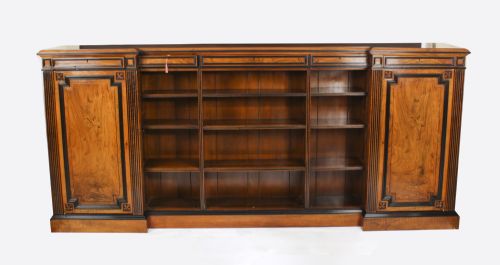
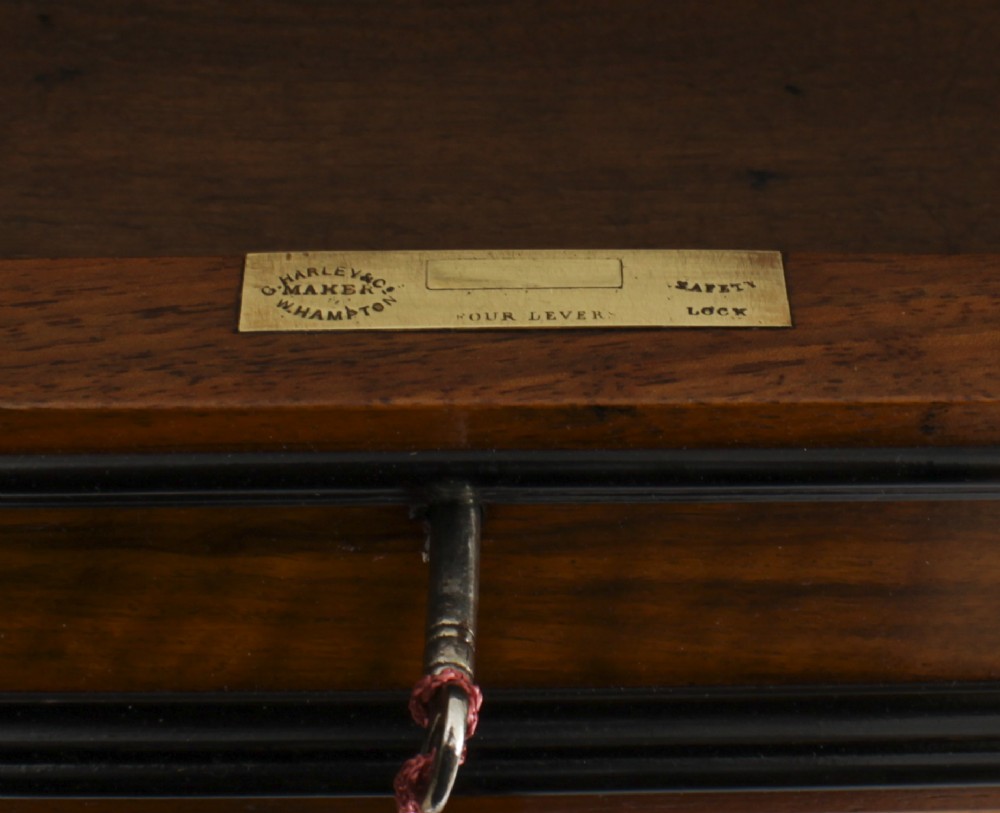
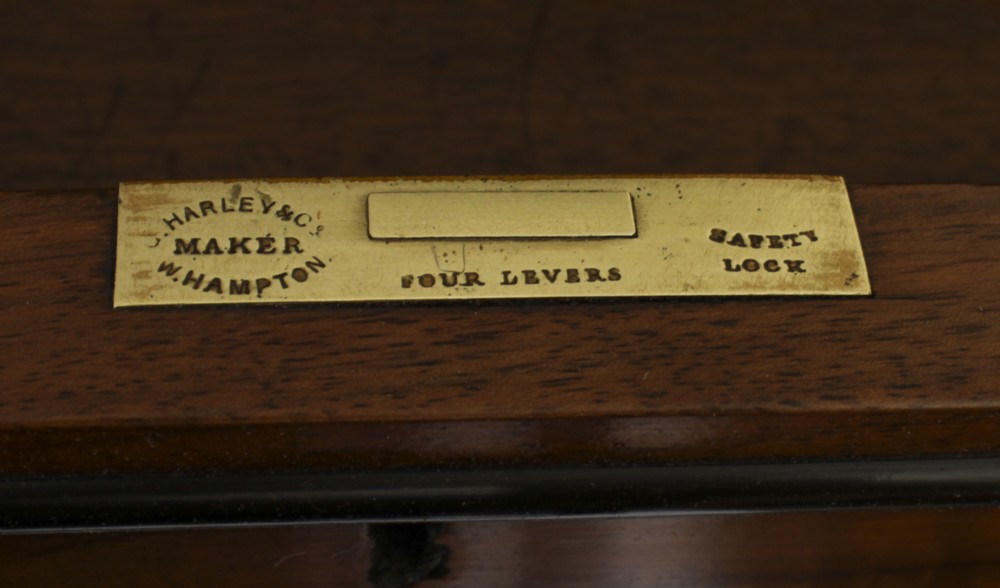
Complete with original working locks, stamped J Harley & Co, and keys.

Condition:

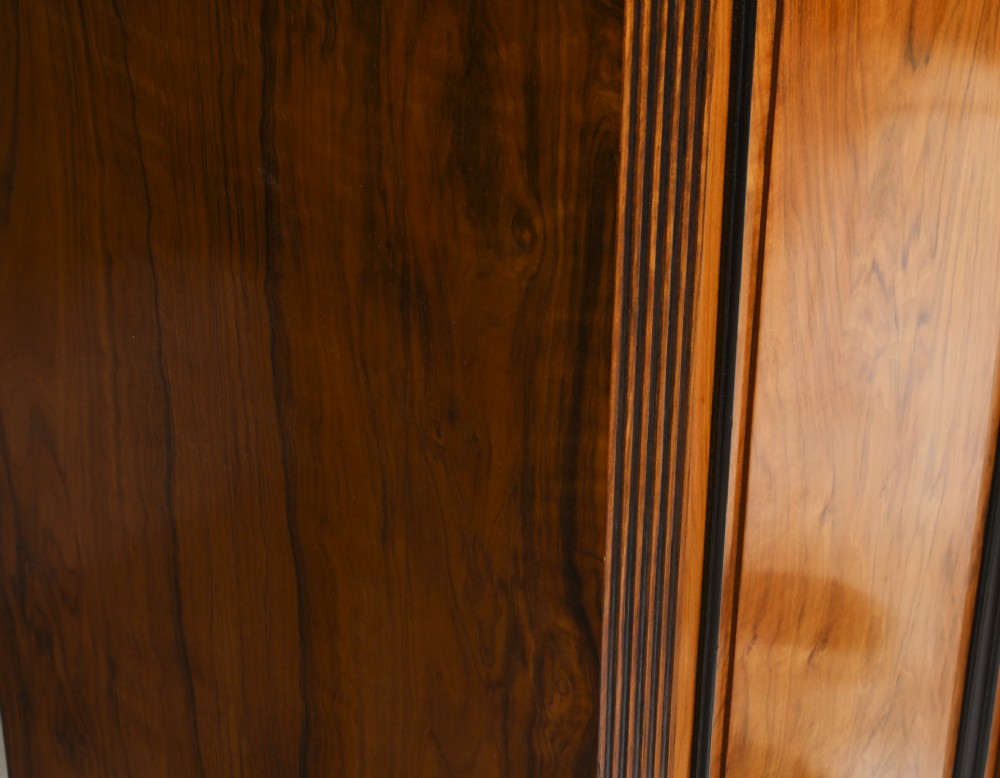
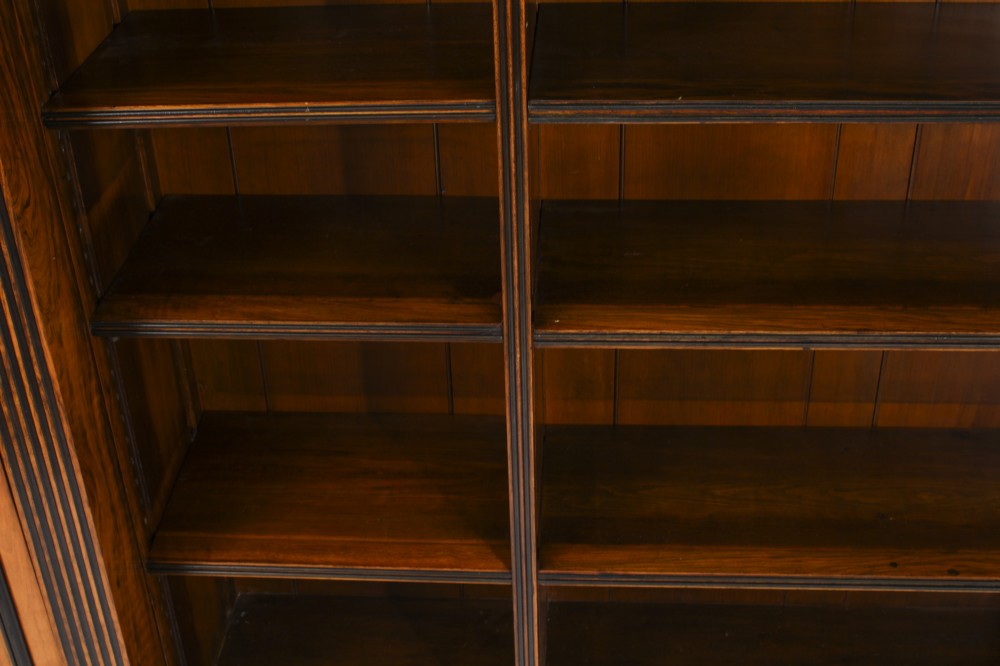
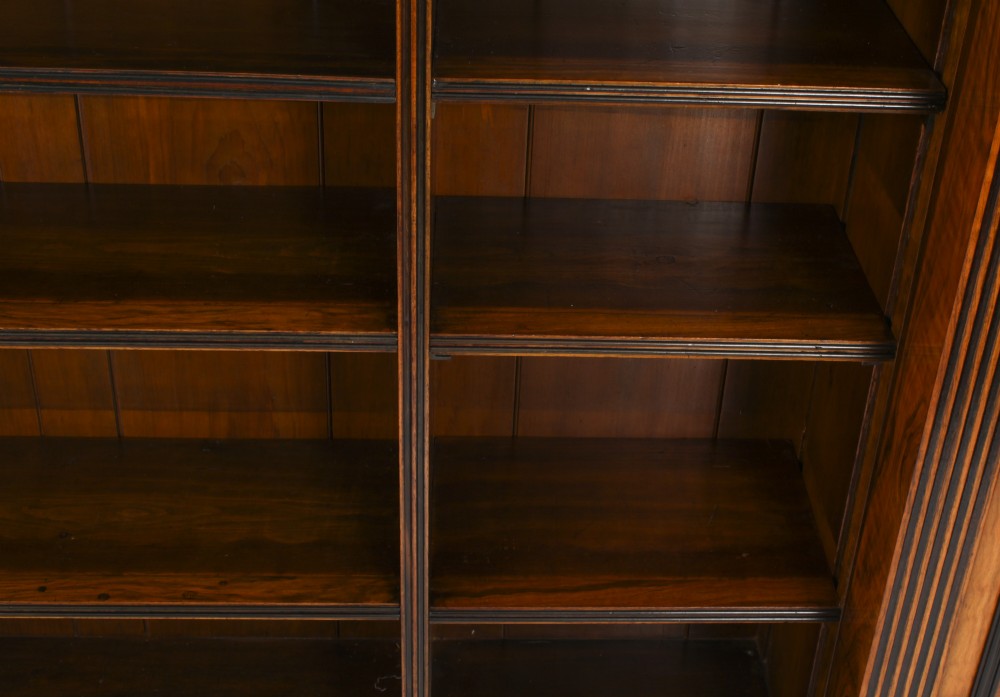
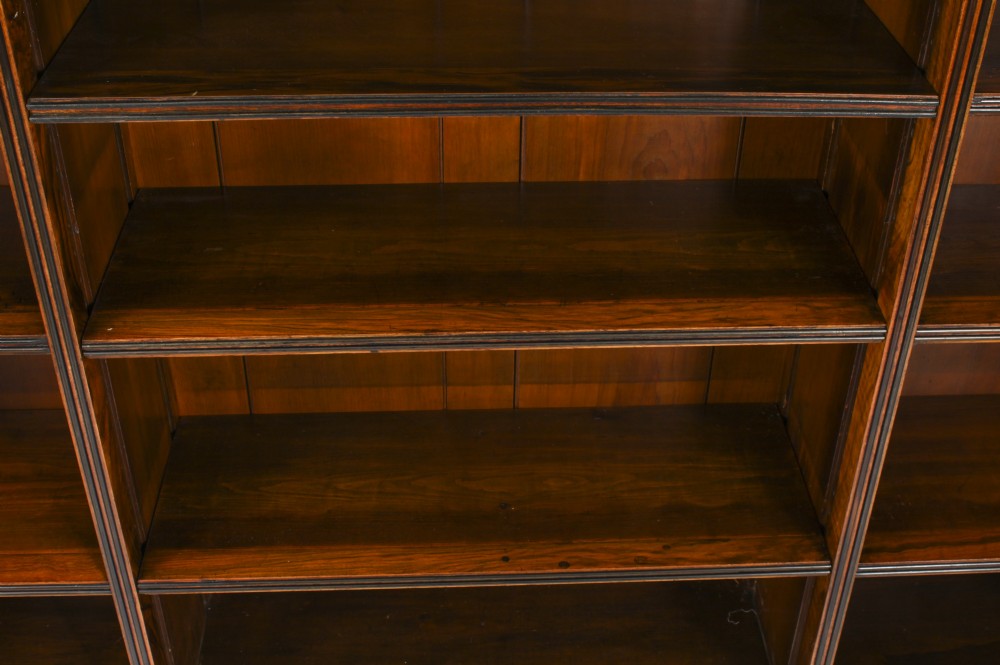
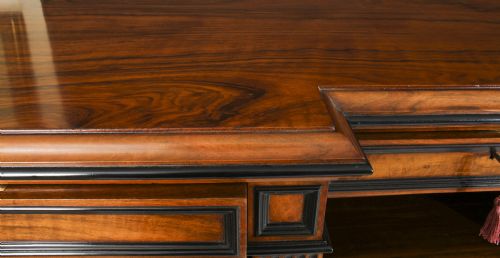
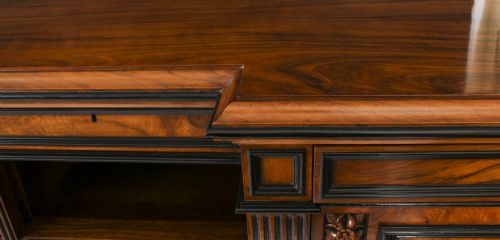
In excellent condition having been beautifully cleaned, polished and waxed in our workshops, please see photos for confirmation.
Dimensions in cm:

Height 124 x Width 278 x Depth 50

Dimensions in inches:

Height 4 feet, 1 inch x Width 9 feet, 1 inch x Depth 1 foot, 8 inches

William IV - the brief reign of William IV (1830 – 1837) marked a period of transition between the Regency period (which had been an age of innovation based on revivalist styles such as ancient Egypt, and the Grecian designs) and the Victorian era.
William IV furniture is similar in style to Regency furniture with many of the designs from the Regency period being copied but often executed in a much heavier manner with chairs, tables and other items being coarser and clumsier in appearance when compared with those made during the Regency period.
Popular pieces produced during this period include tilt top dining tables and pillared extendable tables. Sofa tables and drum tables were also favoured at the time as were sideboards and card tables. Heavy brass fittings were a prominent feature such as lion’s paw feet on tables. Chairs frequently sported sabre legs to the back with stumpy bulbous turned legs to the front. The rope twist carved back was also much in favour.
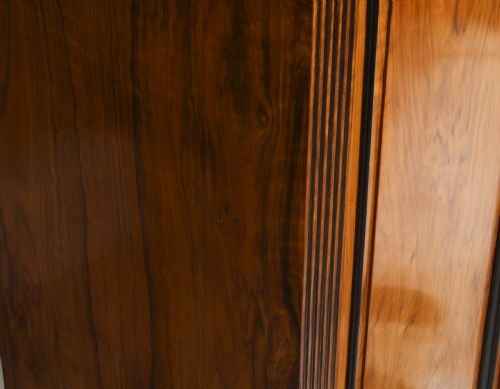
This period also saw the introduction of the more exotic timbers such as rosewood and zebra wood. With the Industrial Revolution getting under way furniture making saw the increased use of mechanisation a trend set to accelerate during the Victorian period.
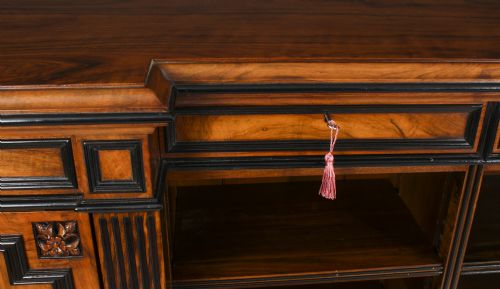
This short, but important transitional period eventually gave way to the romanticism of the Victorians but the furniture it produced was usually of good quality and it remains sought after and desirable today.
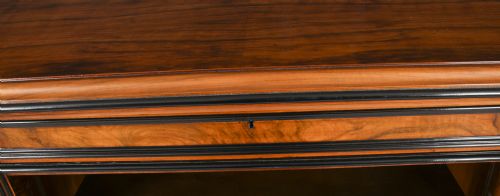
Walnut & Burr Walnut

Walnut is a hard, dense, tight- grained wood that polishes to a very smooth finish. It is a popular and attractive wood whose colour ranges from near white in the sapwood to a dark hew in the heartwood. When dried in a kiln, walnut wood tends to develop a dull brown colour, but when air-dried can become a rich purplish-brown. Because of its colour, hardness and grain, it is a prized furniture and carving wood. Walnut veneer was highly priced and the cost would reflect the ‘fanciness’ of the veneer – the more decorative, then the more expensive and desirable.
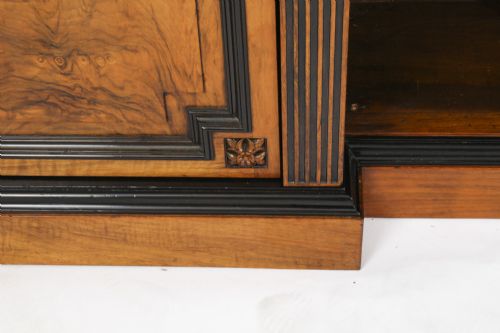
Burr walnut refers to the swirling figure present in nearly all walnut when cut and polished, and especially in the wood taken from the base of the tree where it joins the roots. However the true burr is a rare growth on the tree where hundreds of tiny branches have started to grow. Burr walnut produces some of the most complex and beautiful figuring you can find.
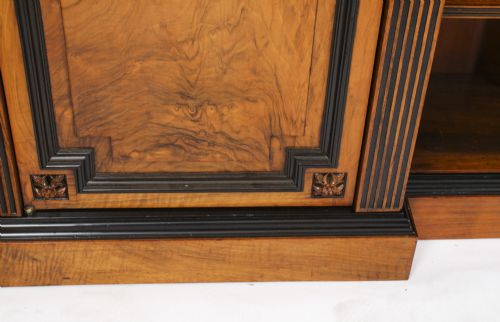
Walnut "burrs" were often used to make fabulous furniture. Veneer sliced from walnut burl is one of the most valuable and highly prized by cabinet makers and prestige car manufacturers and is also a favourite material for shotgun stocks.

Our reference: A2372

Physical Dimensions
Height
124cm (48.82")
Width
278cm (109.45")
Depth
50cm (19.69")
Declaration

Regent Antiques has dated this piece to the 19th Century.

Reference Numbers
Sellingantiques Reference
SA919426
Dealers Internal Reference
A2372
Description
This is a beautiful antique William IV figured walnut and ebonised low breakfront bookcase, circa 1835 in date.
It has a shaped top with five frieze drawers above a central open bookcase with three adjustable shelves all between fluted columns.
Regent Antiques

With a pair of cupboards to each side that feature figured walnut panel doors decorated with ebonised mouldings and carved rosettes at the corners. The cabinet is raised on a decorative plinth base.

fig 1. Antique William IV Low Breakfront Bookcase Sideboard c.1835 19th Century
fig 1. Antique William IV Low Breakfront Bookcase Sideboard C.1835 19th Century

Complete with original working locks, stamped J Harley & Co, and keys.

Condition:

In excellent condition having been beautifully cleaned, polished and waxed in our workshops, please see photos for confirmation.

fig 2. Antique William IV Low Breakfront Bookcase Sideboard c.1835 19th Century
fig 2. Antique William IV Low Breakfront Bookcase Sideboard C.1835 19th Century

Dimensions in cm:

Height 124 x Width 278 x Depth 50

Dimensions in inches:

Height 4 feet, 1 inch x Width 9 feet, 1 inch x Depth 1 foot, 8 inches

William IV - the brief reign of William IV (1830 – 1837) marked a period of transition between the Regency period (which had been an age of innovation based on revivalist styles such as ancient Egypt, and the Grecian designs) and the Victorian era.

fig 3. Antique William IV Low Breakfront Bookcase Sideboard c.1835 19th Century
fig 3. Antique William IV Low Breakfront Bookcase Sideboard C.1835 19th Century

William IV furniture is similar in style to Regency furniture with many of the designs from the Regency period being copied but often executed in a much heavier manner with chairs, tables and other items being coarser and clumsier in appearance when compared with those made during the Regency period.

fig 4. Antique William IV Low Breakfront Bookcase Sideboard c.1835 19th Century
fig 4. Antique William IV Low Breakfront Bookcase Sideboard C.1835 19th Century

Popular pieces produced during this period include tilt top dining tables and pillared extendable tables. Sofa tables and drum tables were also favoured at the time as were sideboards and card tables. Heavy brass fittings were a prominent feature such as lion’s paw feet on tables. Chairs frequently sported sabre legs to the back with stumpy bulbous turned legs to the front. The rope twist carved back was also much in favour.

fig 5. Antique William IV Low Breakfront Bookcase Sideboard c.1835 19th Century
fig 5. Antique William IV Low Breakfront Bookcase Sideboard C.1835 19th Century

This period also saw the introduction of the more exotic timbers such as rosewood and zebra wood. With the Industrial Revolution getting under way furniture making saw the increased use of mechanisation a trend set to accelerate during the Victorian period.

fig 6. Antique William IV Low Breakfront Bookcase Sideboard c.1835 19th Century
fig 6. Antique William IV Low Breakfront Bookcase Sideboard C.1835 19th Century

This short, but important transitional period eventually gave way to the romanticism of the Victorians but the furniture it produced was usually of good quality and it remains sought after and desirable today.

fig 7. Antique William IV Low Breakfront Bookcase Sideboard c.1835 19th Century
fig 7. Antique William IV Low Breakfront Bookcase Sideboard C.1835 19th Century

Walnut & Burr Walnut

Walnut is a hard, dense, tight- grained wood that polishes to a very smooth finish. It is a popular and attractive wood whose colour ranges from near white in the sapwood to a dark hew in the heartwood. When dried in a kiln, walnut wood tends to develop a dull brown colour, but when air-dried can become a rich purplish-brown. Because of its colour, hardness and grain, it is a prized furniture and carving wood. Walnut veneer was highly priced and the cost would reflect the ‘fanciness’ of the veneer – the more decorative, then the more expensive and desirable.

fig 8. Antique William IV Low Breakfront Bookcase Sideboard c.1835 19th Century
fig 8. Antique William IV Low Breakfront Bookcase Sideboard C.1835 19th Century

Burr walnut refers to the swirling figure present in nearly all walnut when cut and polished, and especially in the wood taken from the base of the tree where it joins the roots. However the true burr is a rare growth on the tree where hundreds of tiny branches have started to grow. Burr walnut produces some of the most complex and beautiful figuring you can find.

fig 9. Antique William IV Low Breakfront Bookcase Sideboard c.1835 19th Century
fig 9. Antique William IV Low Breakfront Bookcase Sideboard C.1835 19th Century

Walnut "burrs" were often used to make fabulous furniture. Veneer sliced from walnut burl is one of the most valuable and highly prized by cabinet makers and prestige car manufacturers and is also a favourite material for shotgun stocks.

Our reference: A2372

Height
124cm (48.82")
Width
278cm (109.45")
Depth
50cm (19.69")
Date of Manufacture

Regent Antiques has dated this piece to the 19th Century.

Reference Numbers
Sellingantiques Ref
SA919426
Dealers Internal Ref
A2372
Regent Antiques
Regent Antiques
Sellingantiques verified Since Sep 2016

We specialise in english and continental furniture, silver, porcelain and decorative items.

Dealer Profile

You can view the stock and full dealer information on the Regent Antiques Profile Page

Trade Associations

Regent Antiques is a registered member of LAPADA  CINOA
PDF SHARE
SAVE
Antique William IV Low Breakfront Bookcase Sideboard c.1835 19th Century
1 / 24
Archive I Antique William IV Low Breakfront Bookcase Sideboard c.1835 19th Century

Antique William IV Low Breakfront Bookcase Sideboard C.1835 19th Century
Archive II Antique William IV Low Breakfront Bookcase Sideboard c.1835 19th Century
 View II
Archive III Antique William IV Low Breakfront Bookcase Sideboard c.1835 19th Century
 View III
Archive IV Antique William IV Low Breakfront Bookcase Sideboard c.1835 19th Century
 View IV
Archive V Antique William IV Low Breakfront Bookcase Sideboard c.1835 19th Century
 View V
Archive VI Antique William IV Low Breakfront Bookcase Sideboard c.1835 19th Century
 View VI
Archive VII Antique William IV Low Breakfront Bookcase Sideboard c.1835 19th Century
 View VII
Archive VIII Antique William IV Low Breakfront Bookcase Sideboard c.1835 19th Century
 View VIII
Archive IX Antique William IV Low Breakfront Bookcase Sideboard c.1835 19th Century
 View IX
Archive X Antique William IV Low Breakfront Bookcase Sideboard c.1835 19th Century
 View X
Archive XI Antique William IV Low Breakfront Bookcase Sideboard c.1835 19th Century
 View XI
Archive XII Antique William IV Low Breakfront Bookcase Sideboard c.1835 19th Century
 View XII
Archive XIII Antique William IV Low Breakfront Bookcase Sideboard c.1835 19th Century
 View XIII
Archive XIV Antique William IV Low Breakfront Bookcase Sideboard c.1835 19th Century
 View XIV
Archive XV Antique William IV Low Breakfront Bookcase Sideboard c.1835 19th Century
 View XV
Archive XVI Antique William IV Low Breakfront Bookcase Sideboard c.1835 19th Century
 View XVI
Archive XVII Antique William IV Low Breakfront Bookcase Sideboard c.1835 19th Century
 View XVII
Archive XVIII Antique William IV Low Breakfront Bookcase Sideboard c.1835 19th Century
 View XVIII
Archive XIX Antique William IV Low Breakfront Bookcase Sideboard c.1835 19th Century
 View XIX
Archive XX Antique William IV Low Breakfront Bookcase Sideboard c.1835 19th Century
 View XX
Archive XXI Antique William IV Low Breakfront Bookcase Sideboard c.1835 19th Century
 View XXI
Archive XXII Antique William IV Low Breakfront Bookcase Sideboard c.1835 19th Century
 View XXII
Archive XXIII Antique William IV Low Breakfront Bookcase Sideboard c.1835 19th Century
 View XXIII
Archive XXIV Antique William IV Low Breakfront Bookcase Sideboard c.1835 19th Century
 View XXIV
Enlarged Archival View
Location
Manor Warehouse
318 Green Lanes
London
N4 1BX
United Kingdom
Verified Since Sep 2016
Items For Sale 650
Items Sold 2,630
Regent Antiques
Regent Antiques
Verified Since Sep 2016
View Dealer Info
Location: Manor Warehouse, 318 Green Lanes, London, N4 1BX, United Kingdom
Verified
Sep 2016
For Sale
650
Sold
2,630
Antique William IV Low Breakfront Bookcase Sideboard c.1835 19th Century
Ref: SA919426
Antique William IV Low Breakfront Bookcase Sideboard c.1835 19th Century
Detail View 1
Detail View 2
Detail View 3
Detail View 4
Detail View 5
Detail View 6
Detail View 7
Detail View 8
Detail View 9
Detail View 10
Detail View 11
Detail View 12
Detail View 13
Detail View 14
Detail View 15
Detail View 16
Detail View 17
Detail View 18
Detail View 19
Detail View 20
Detail View 21
Detail View 22
Detail View 23
Archival Detail
Every single antique dealer on our platform is individually approved by our internal team. We verify their professional trade history, ethical standards, and photographic quality to ensure a secure, high-standard buying environment. Upon joining, every dealer agrees to a strict 9-point code of conduct. While issues can occasionally arise, our dealers typically resolve them swiftly and directly with the buyer. In fact, since our founding in 2002, Sellingantiques has only had to step in to help resolve an issue on roughly five occasions—a true testament to the quality of our dealers and their dedication to your happiness.
Our dealers are highly experienced in packing and shipping fragile, high-value antiques. Because you are in direct contact with the dealer, you will be able to easily go through all available shipping and insurance options together to ensure your item arrives safely.
Antiques are the ultimate green purchase. By choosing historical pieces over newly manufactured goods, you completely eliminate the carbon footprint of modern mass production while preserving exceptional, timeless craftsmanship.
items
Add keywords to the filter
Price
£100
£250000
Era
Movements
Material
Origin
Stock Location
Freshness
Online Payments
Categories