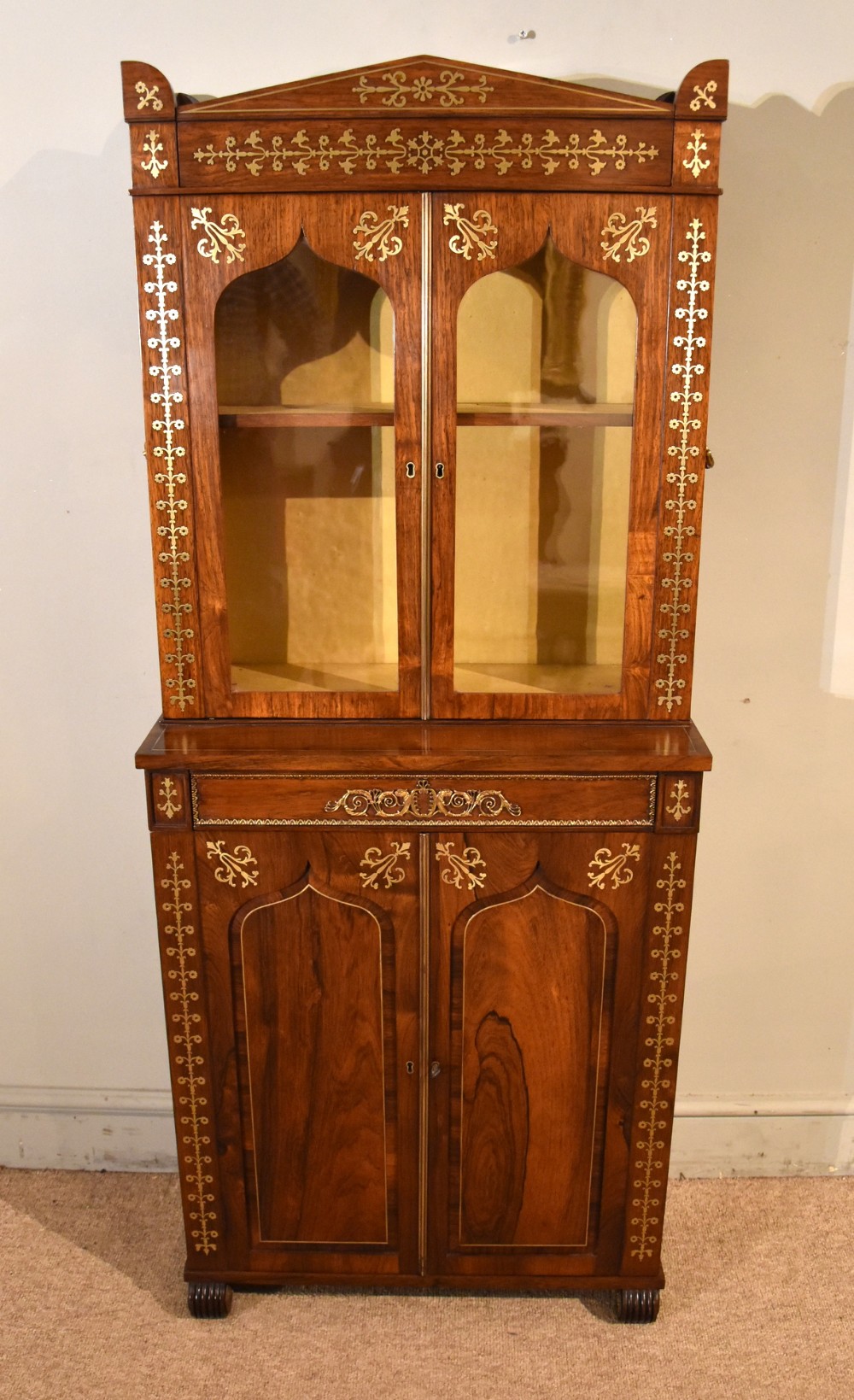
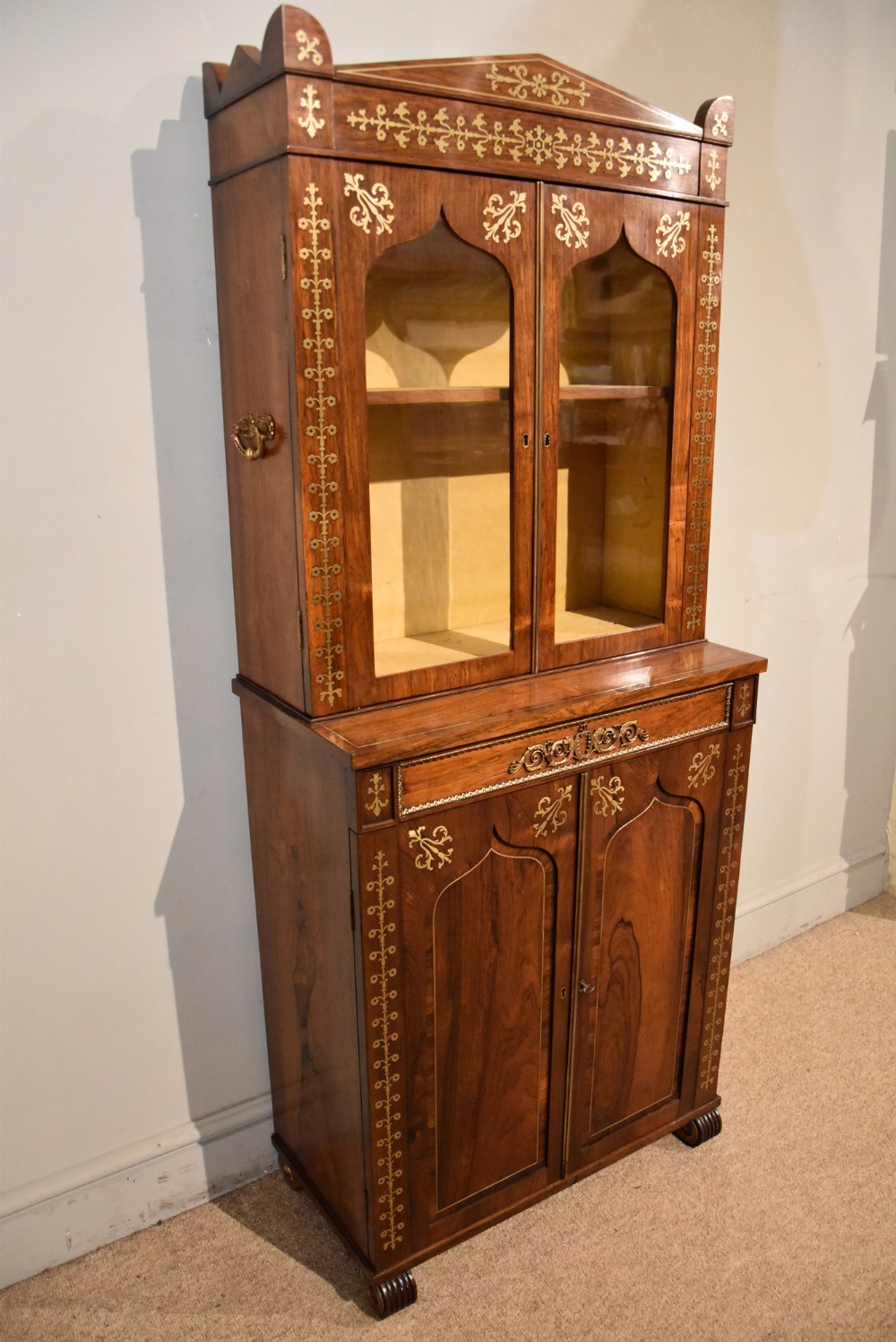
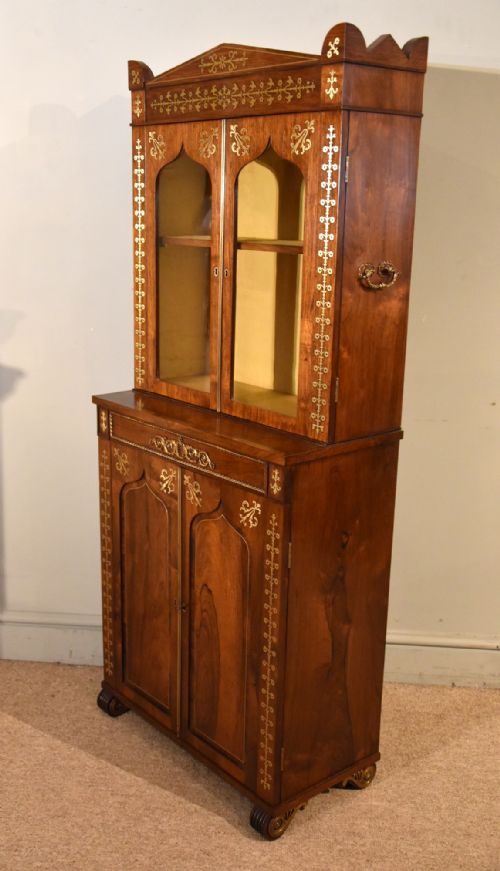
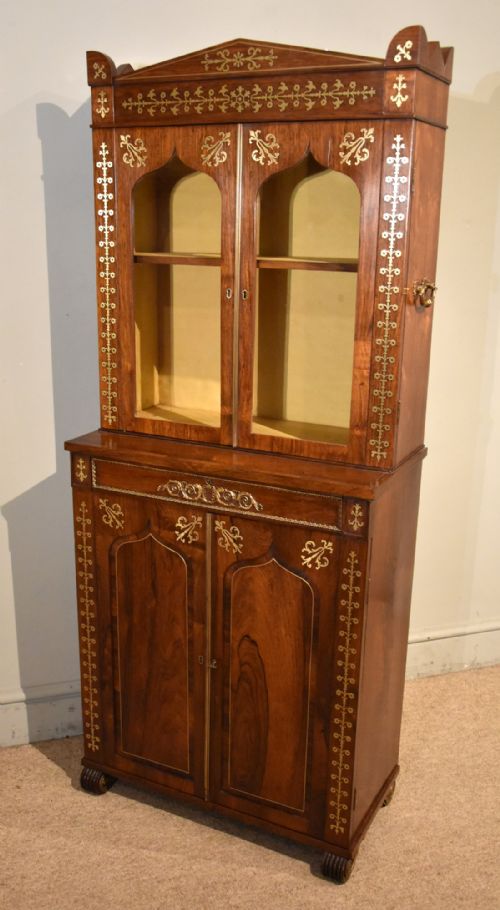
Walton House Antiques has dated this piece to the Regency era.
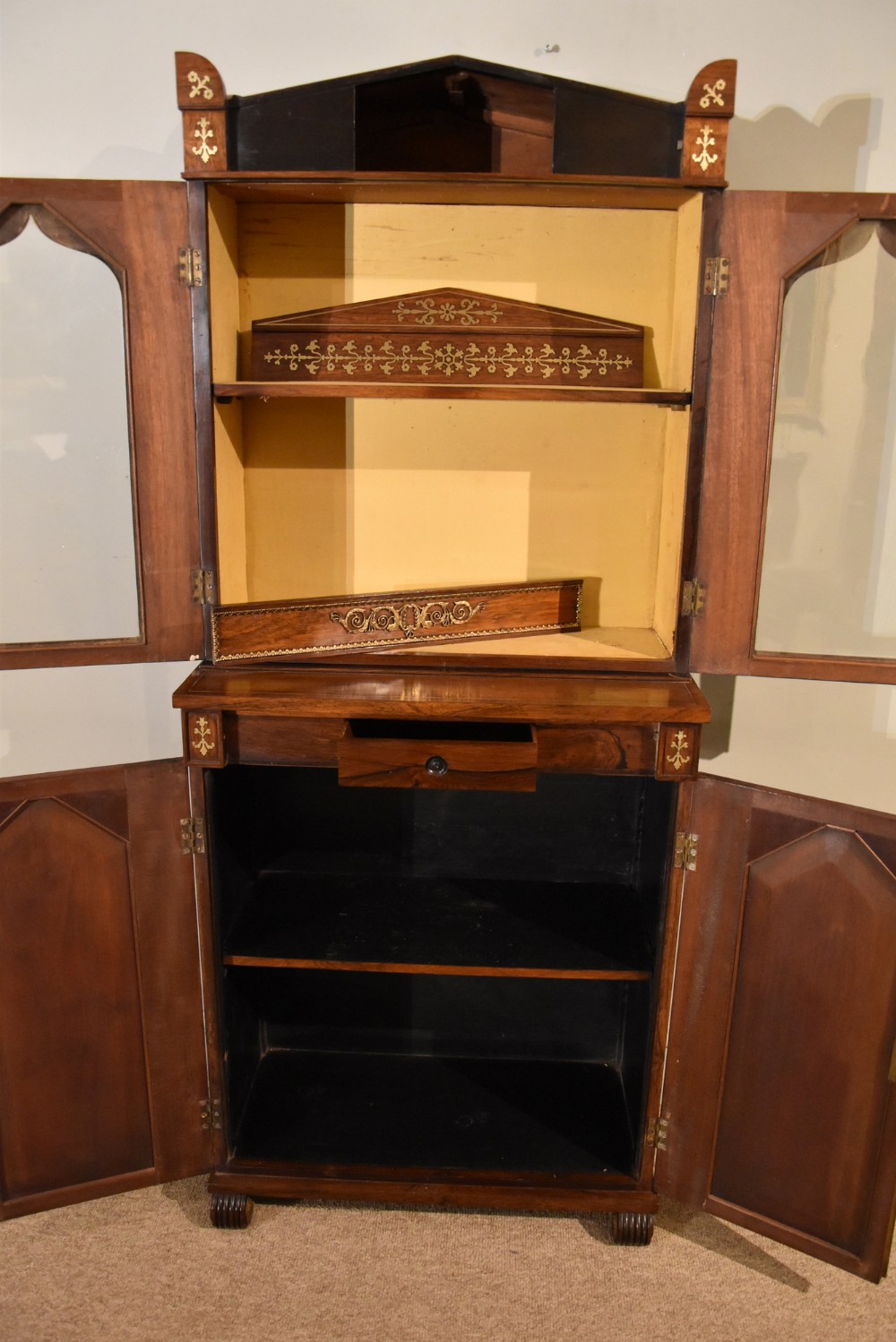
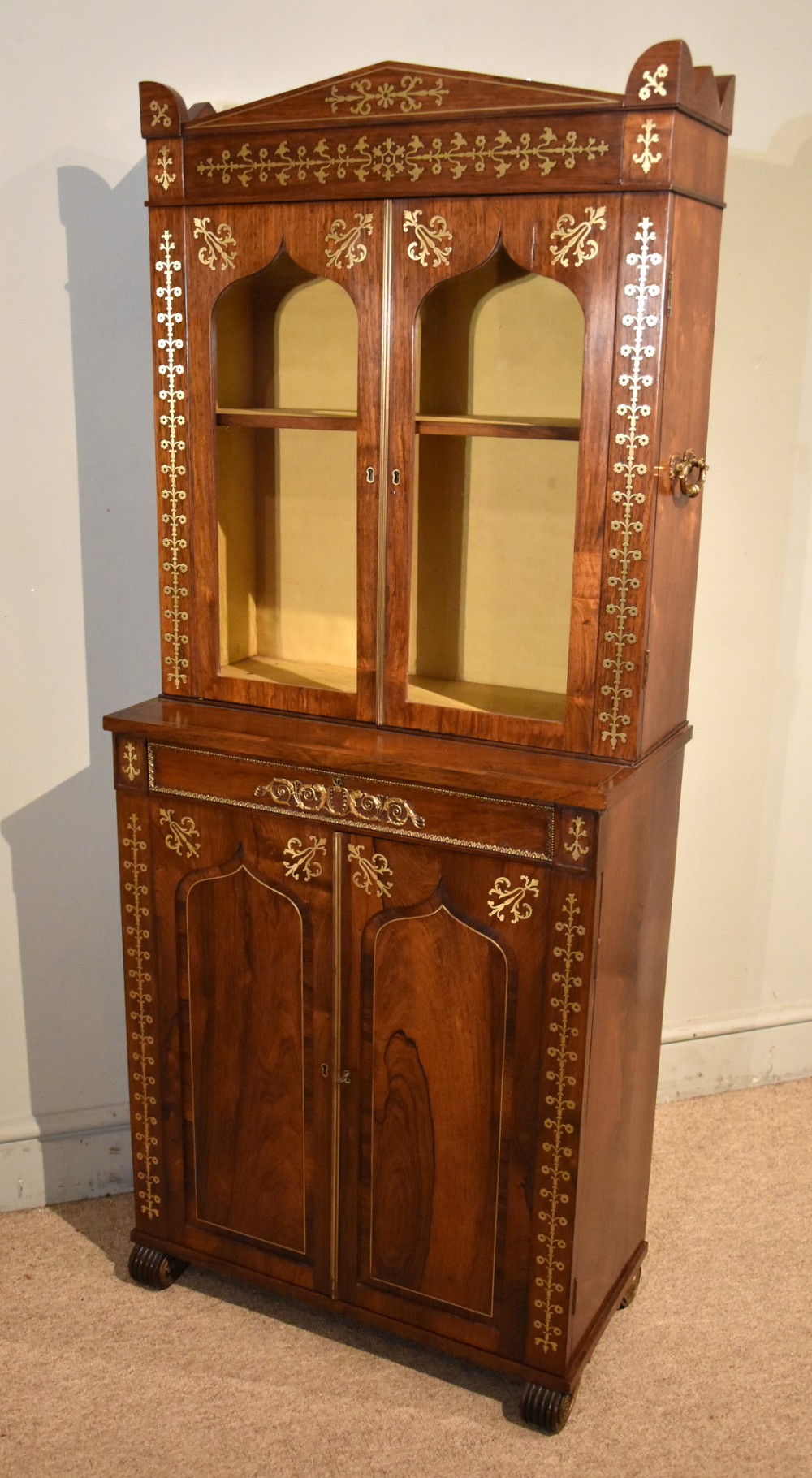
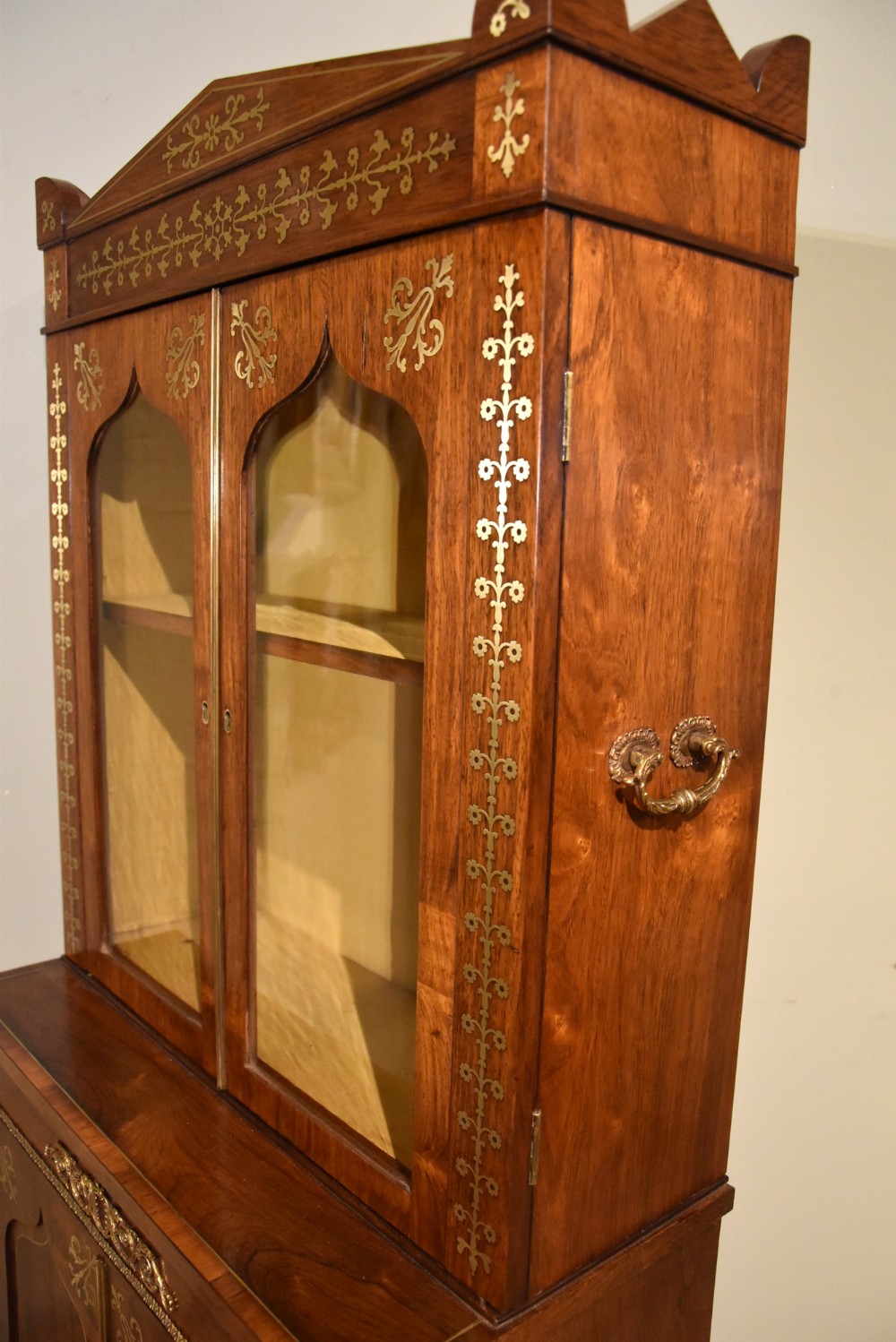
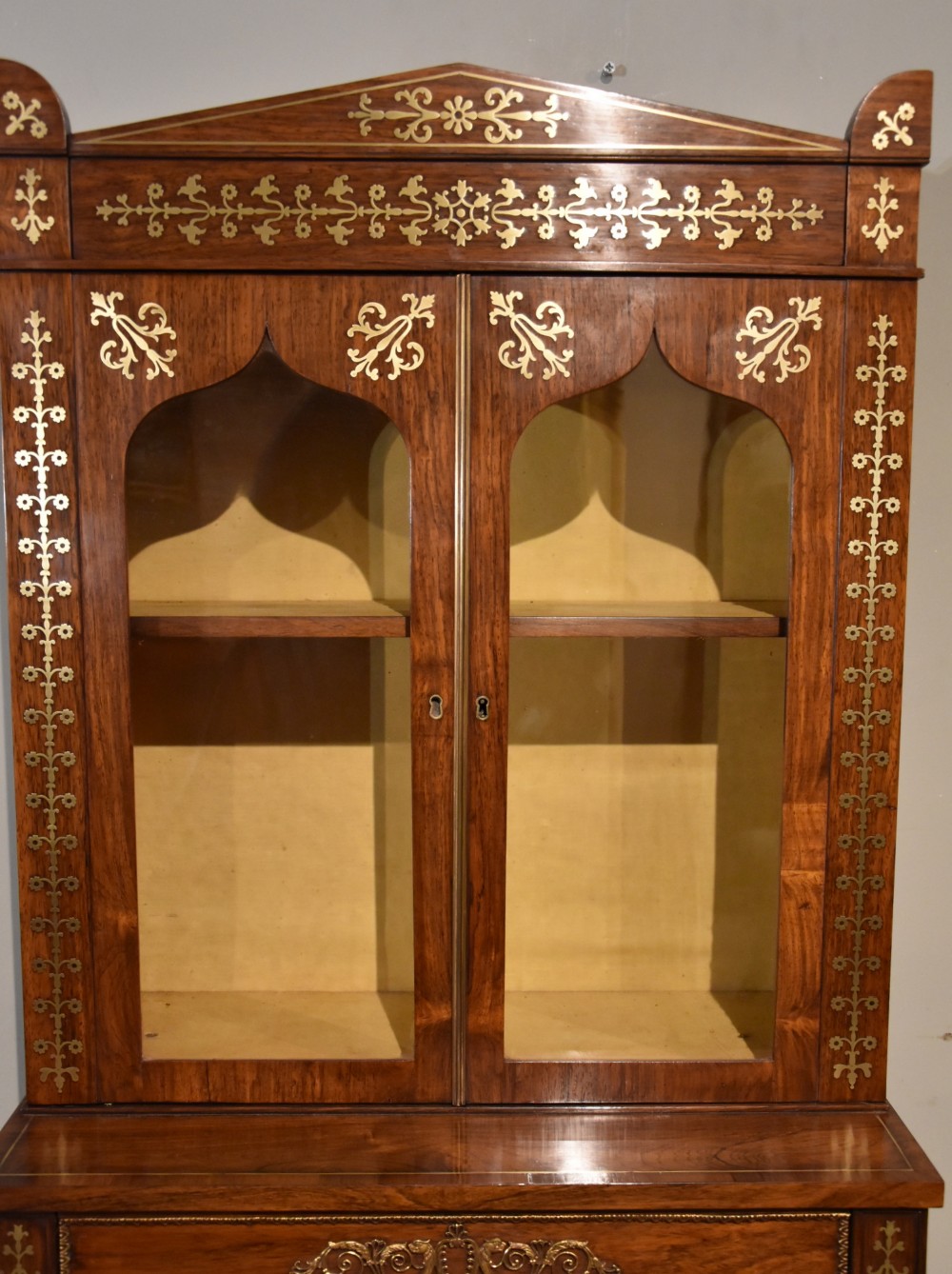
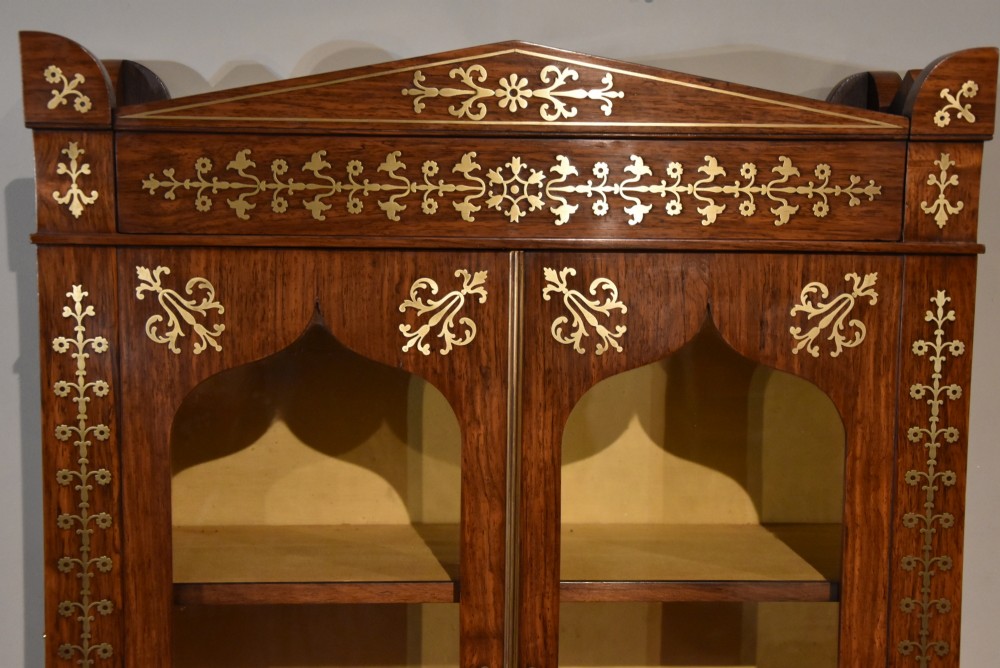
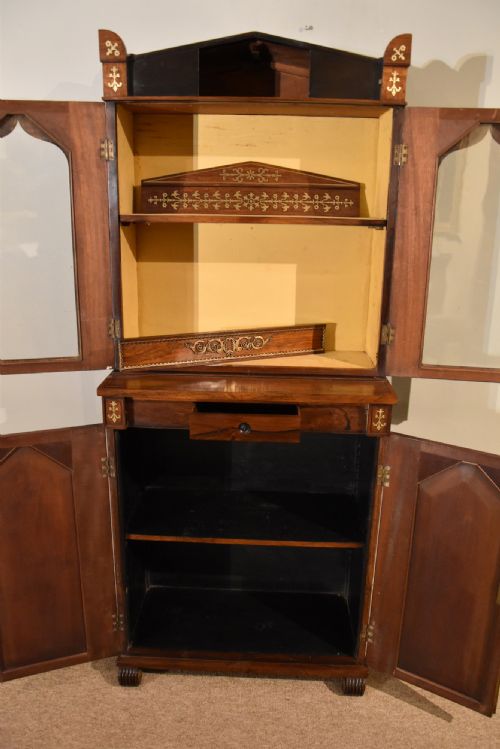
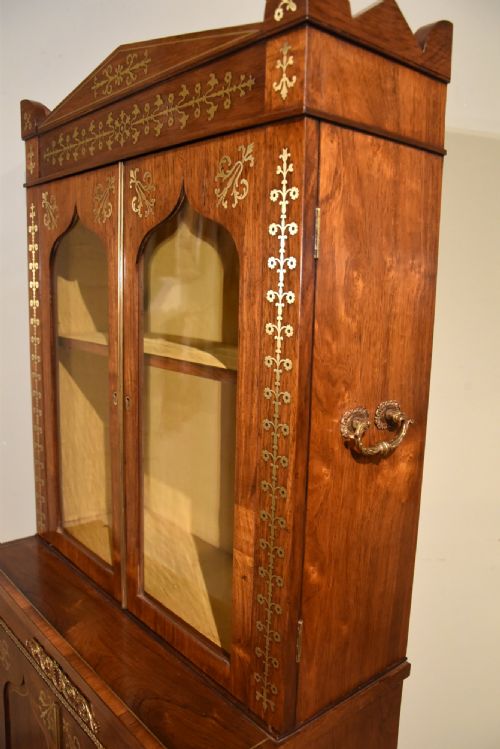
The arched pediment is fitted with a secret cupboard and sits above a pair of ogee arched glass panel doors enclosing a shelf and lined interior.
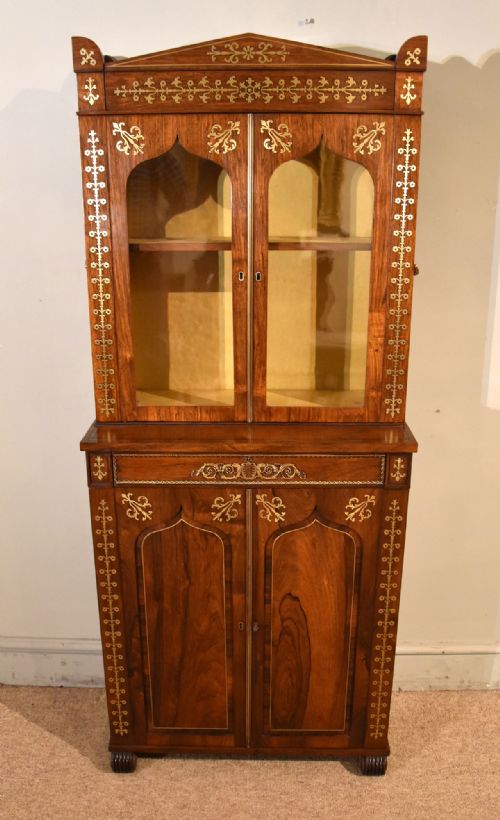
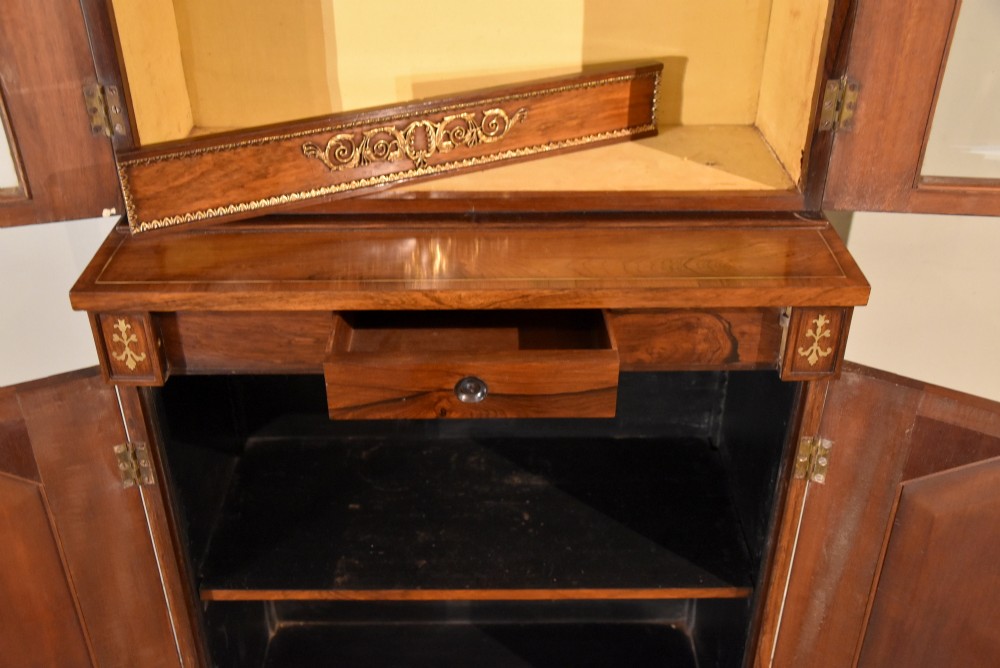
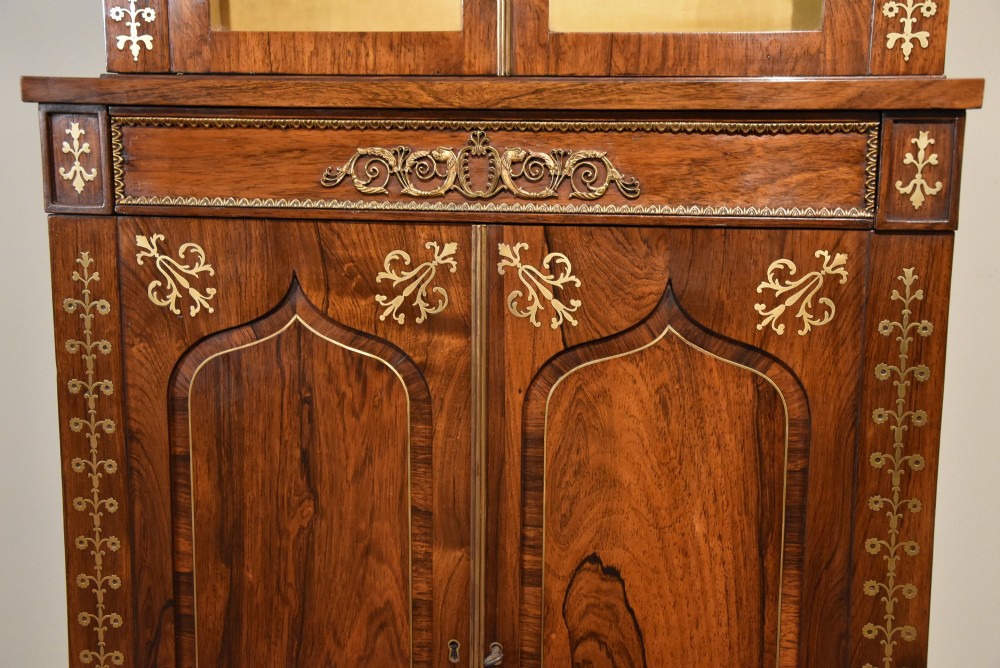
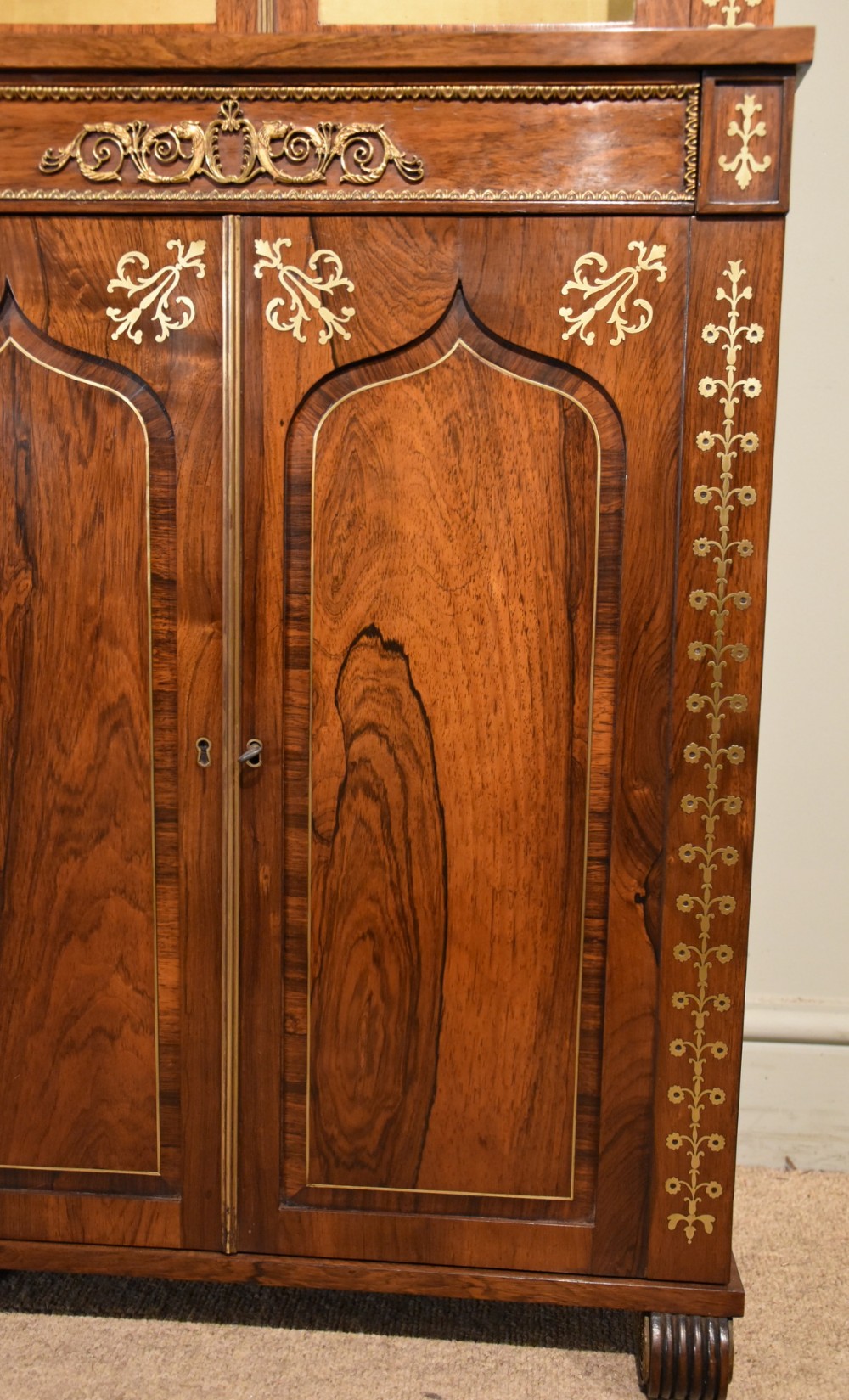
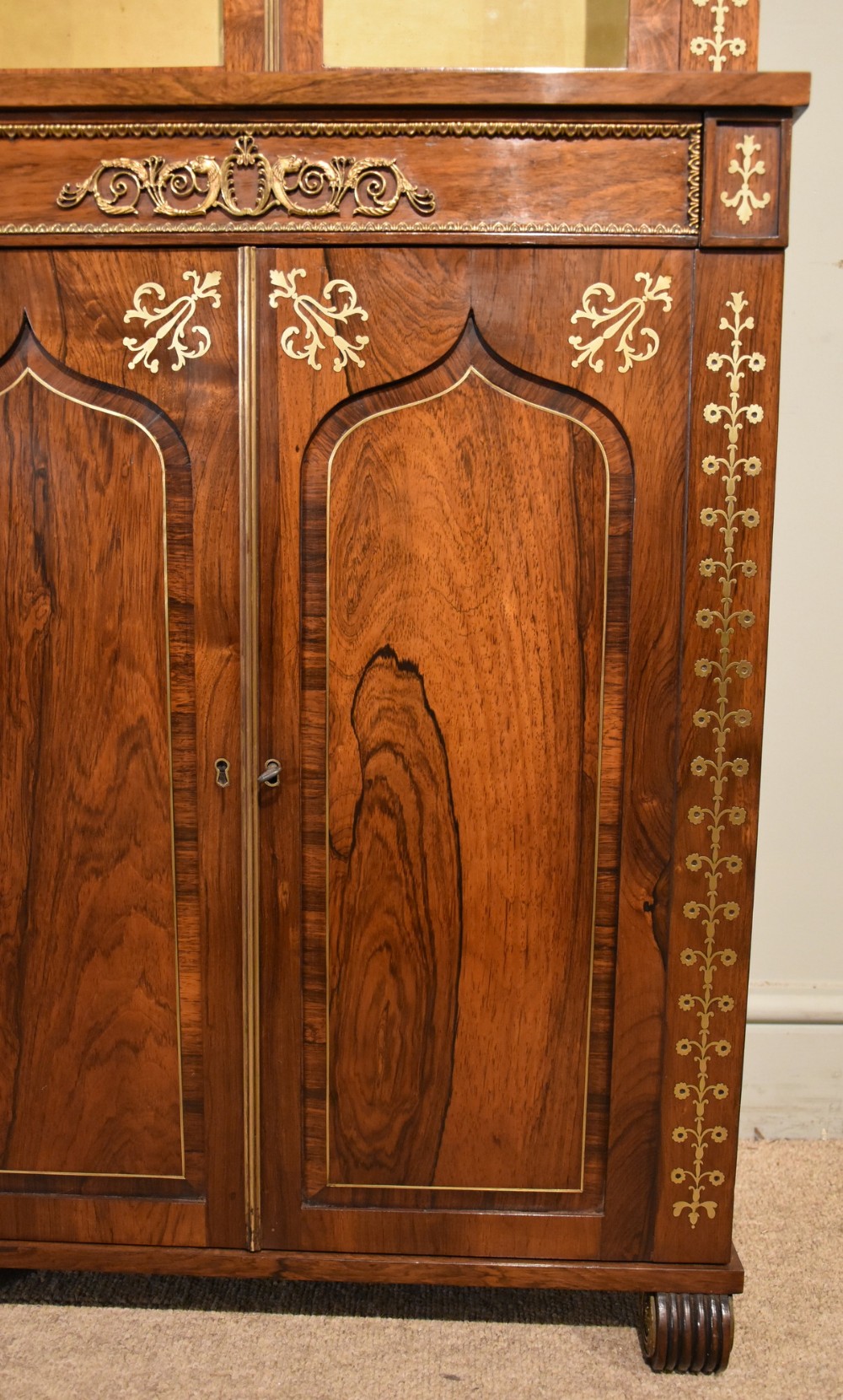
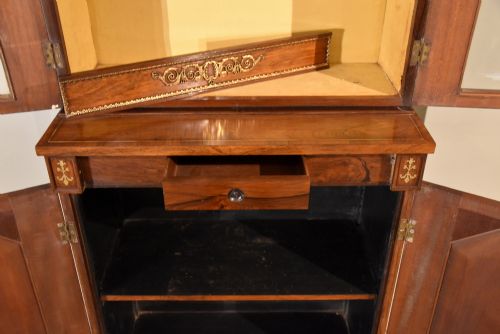
The base is fitted with a gilt metal mounted frieze that conceals a secret drawer and sits above a pair of ogee arched panelled doors enclosing an adjustable shelf.
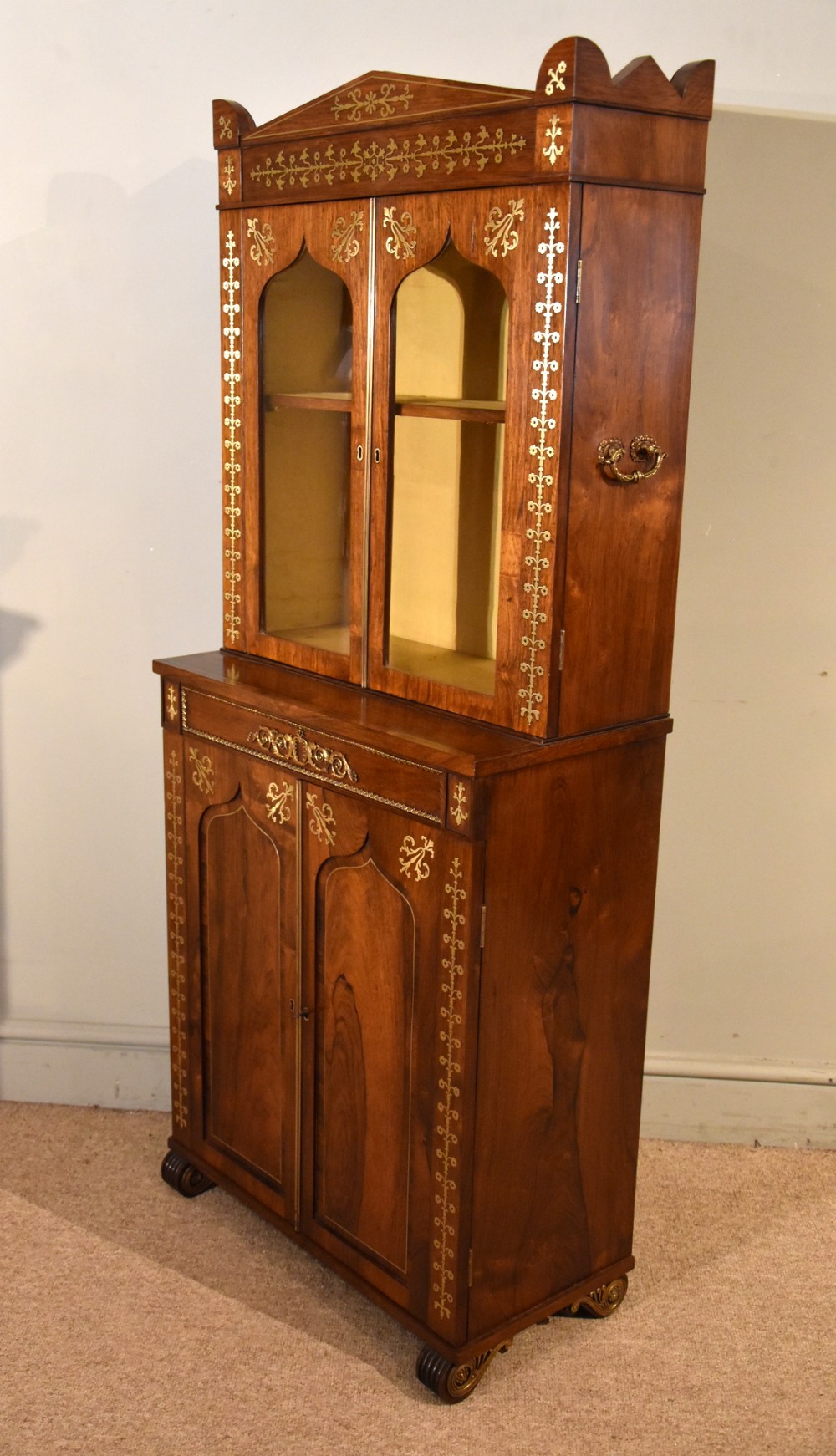
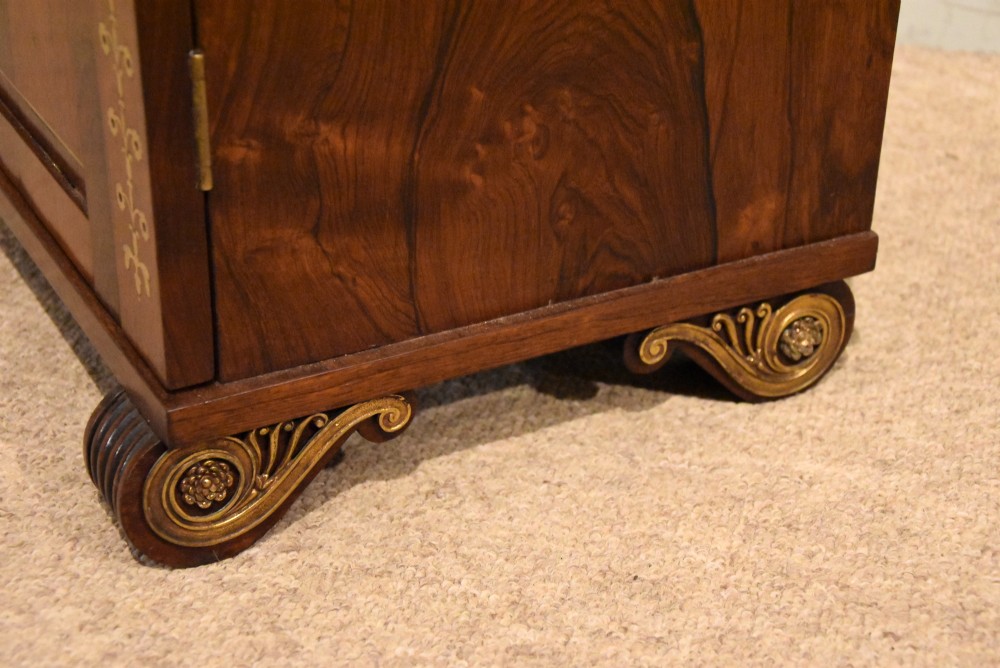
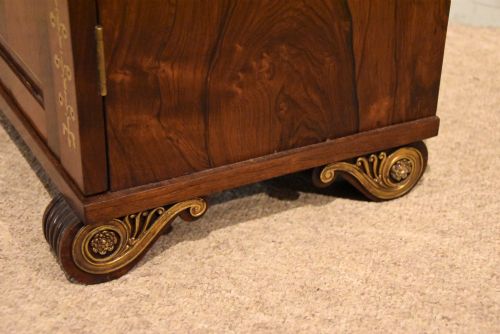
The cabinet is raised on gilt mounted scrolled feet.
Provenance: Heathfield Park, Dr. Gerald Moore
The images attached are archives of the sale and history of Heathfield Park and we believe it was last sold at Sotheby’s in February 1993 and is illustrated in colour in one of the drawing rooms.Literature
George Smith (1756 – 1826) was one of the most influential furniture designers of the English Regency Period (1811-1830).
Smith, who began his pattern-book in 1804, wrote of ‘the great taste and elegance’ of this design.
In 1808 he published his influential and definitive text on Regency interior design entitled 'A Collection of Designs for Household Furniture and Interior Decoration’ and classed himself as 'Upholder Extraordinary to His Royal Excellency the Prince of Wales’…The Prince Regent.
Smith was inspired in his designs from his earlier career as an Egyptologist, producing drawings incorporating motifs of leopards heads and paws, lions, sphinx, anthemia, and griffons amongst others.
Charles Heathcote Tatham (1772-1842) published 'Etchings, Representing the Best Examples of Ancient Ornamental Architecture; Drawn from the Originals in Rome, and Other Parts of Italy During the Years 1794, 1795, and 1796’, in which he illustrated an antique tripod table with similar monopodiae of leopard heads and paws, based on the original in the Vatican.
Thomas Hope (1769-1831) was another influential figure to Smith's designs. A rich young man, being the eldest of three sons from a family of Dutch bankers, Hope had travelled extensively spending several years in the Middle East and Greece. He published his 'ancient furniture' designs in the 'Household Furniture and Interior Decoration 1807’, which was an important and influential book throughout the Regency period. George Smith interpreted Thomas Hope's Egyptian and Grecian themes (although the plates are dated 1804-7) into a more practical design with a greater regard for comfort and utility than for archaeological accuracy, which was widely accepted as the turning point in Regency furniture for the affluent gentry.
Dimensions
Height 152.50cm (60.04 inches)
Width 63.50cm (25 inches)
Depth 33.00cm (12.99 inches)
All of the items that we advertise for sale have been as accurately described as possible and are in excellent condition, unless otherwise stated. Please note that we are also able to arrange a full shipping service for our customers. We look forward to being of service.
Walton House Antiques has dated this piece to the Regency era.
Specialists in 18th and early 19th century antique furniture 19th century oils and 19th french ormolu clocks
You can view the stock and full dealer information on the Walton House Antiques Profile Page
Walton House Antiques is a registered member of LAPADA CINOA
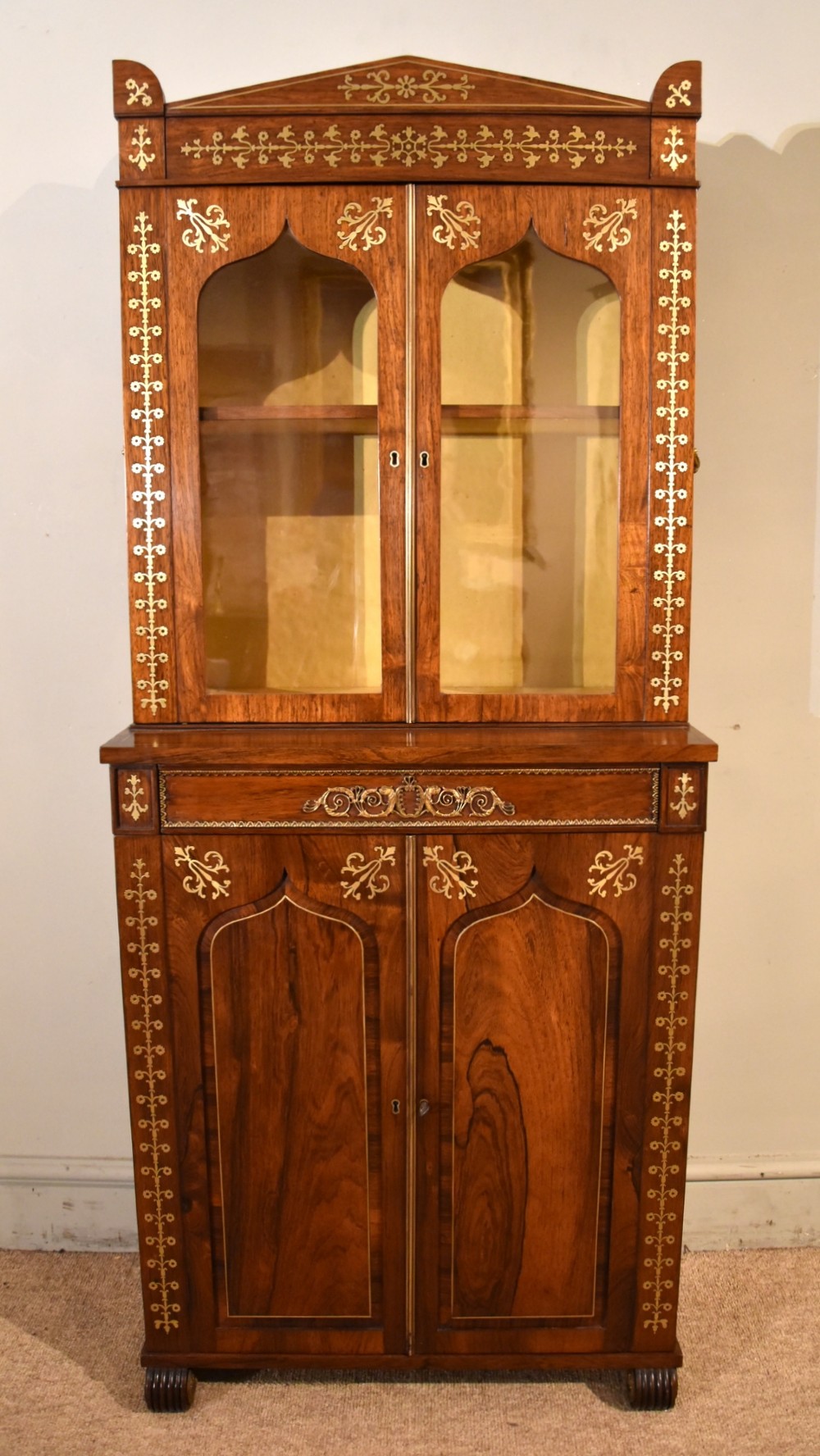
Small Regency Rosewood Brass Inlaid Cabinet Bookcase