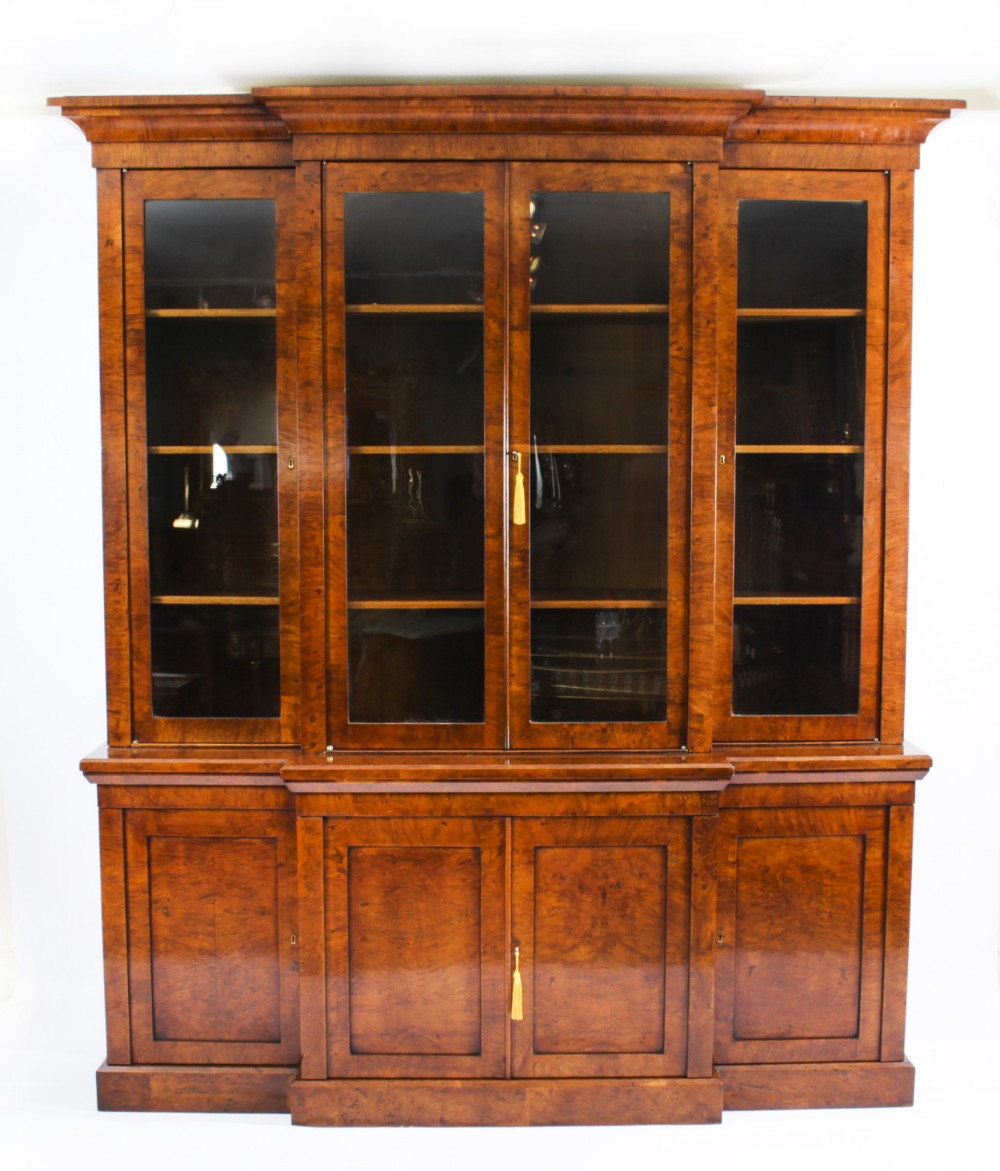
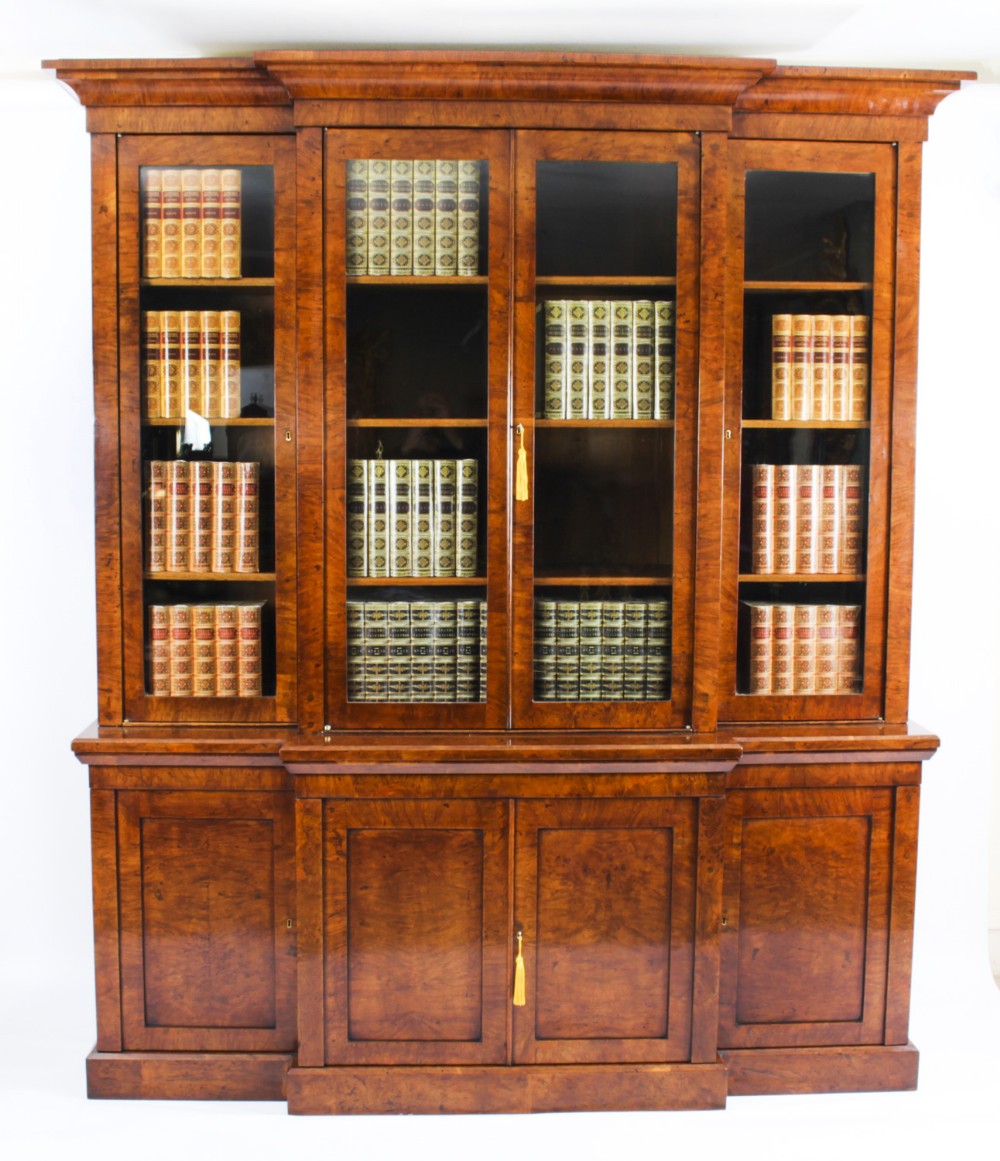
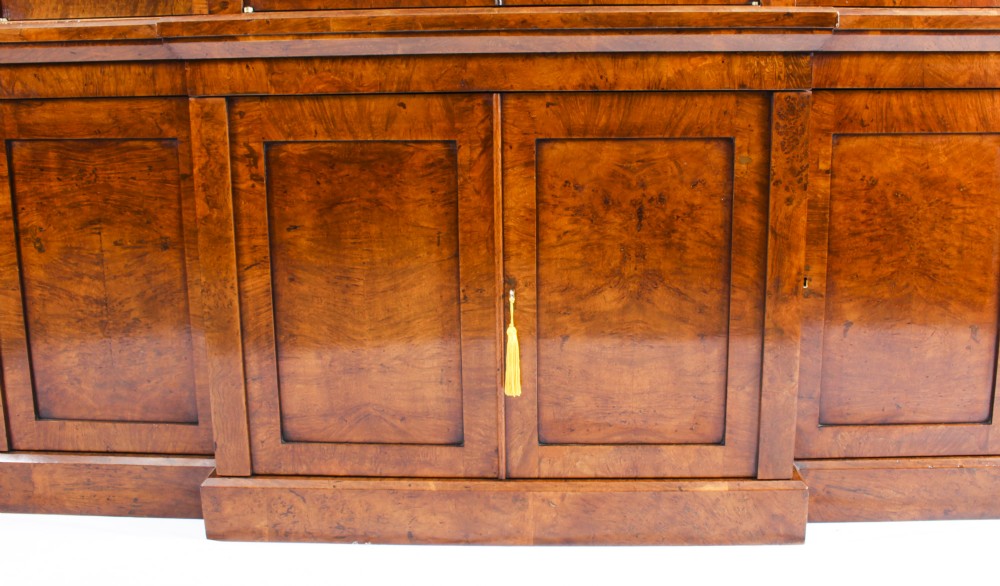
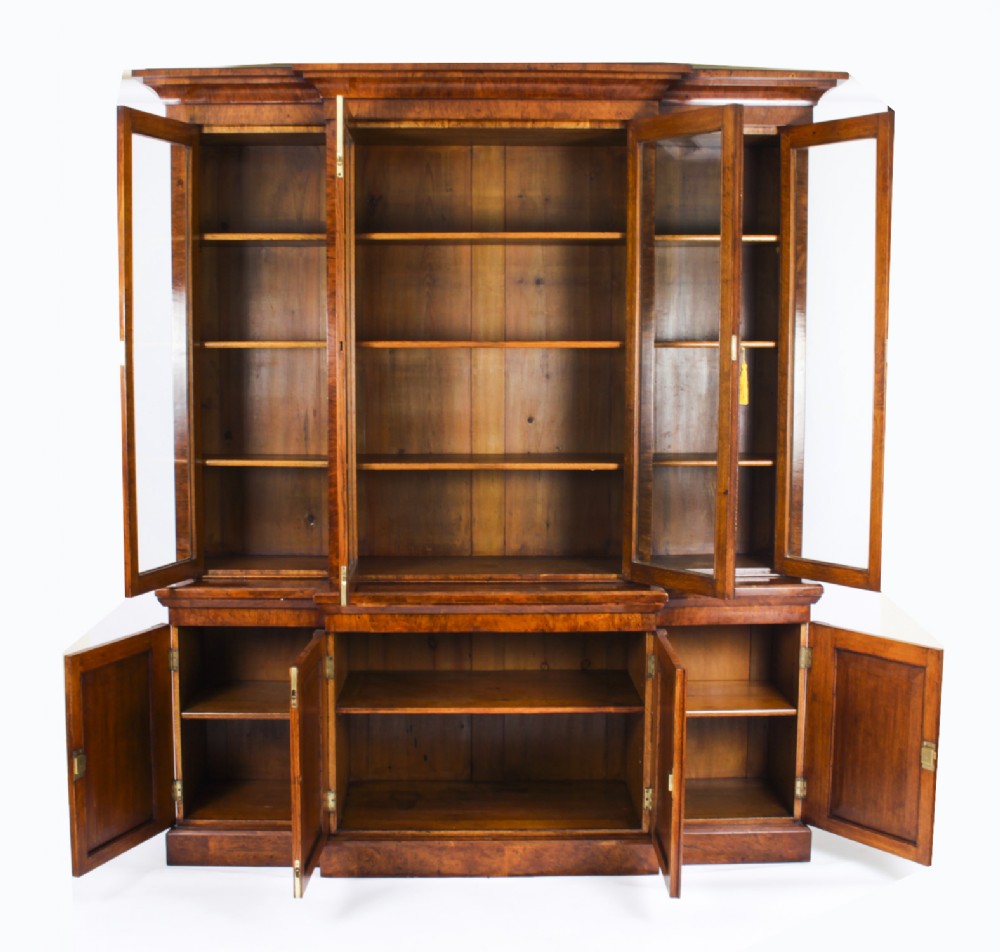
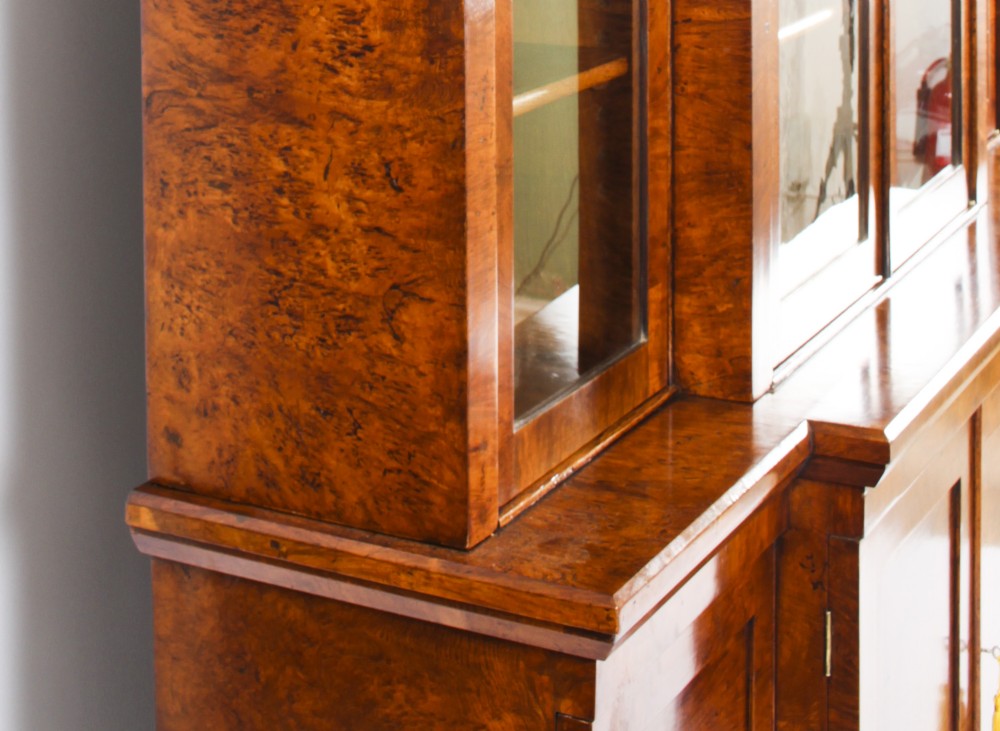
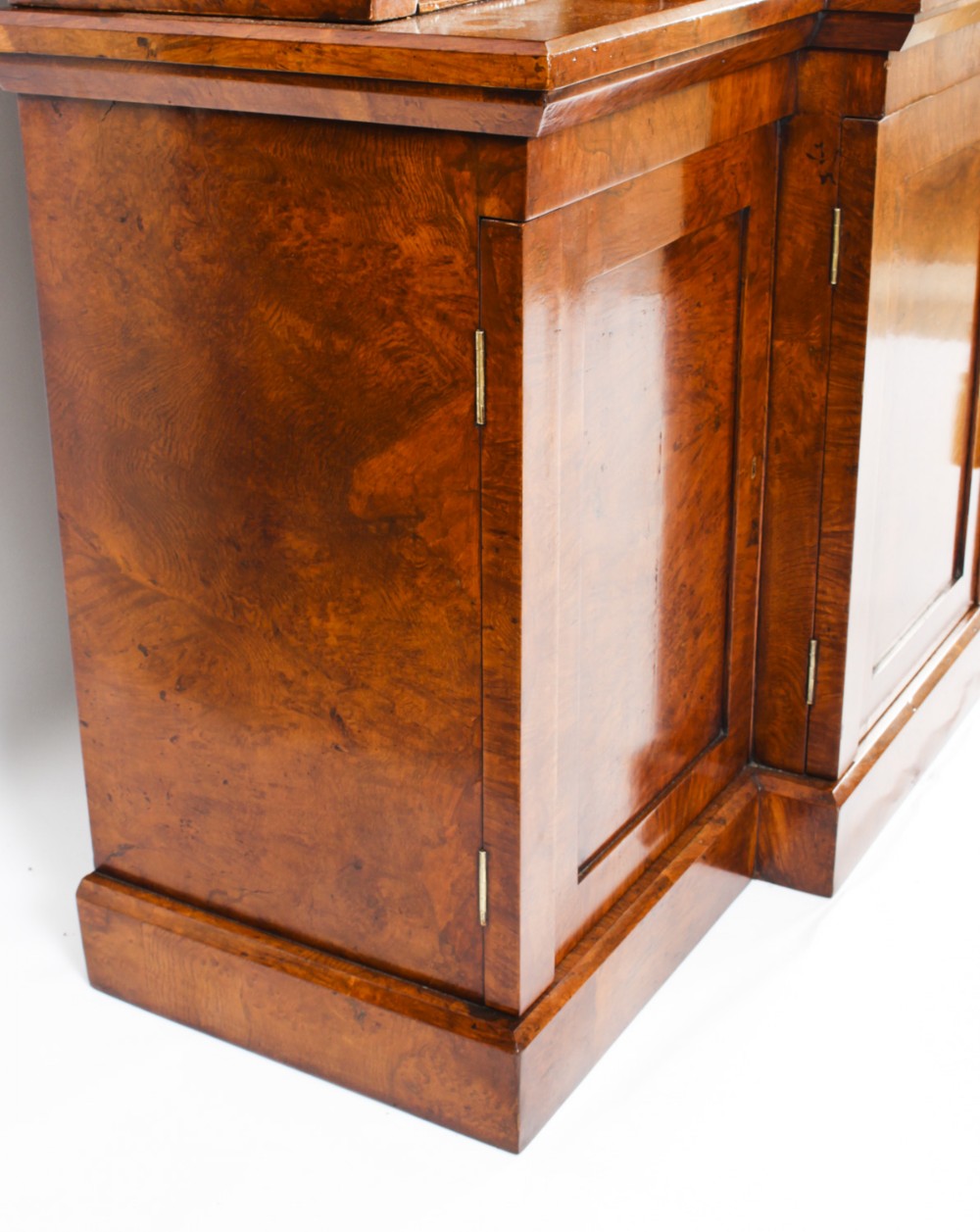
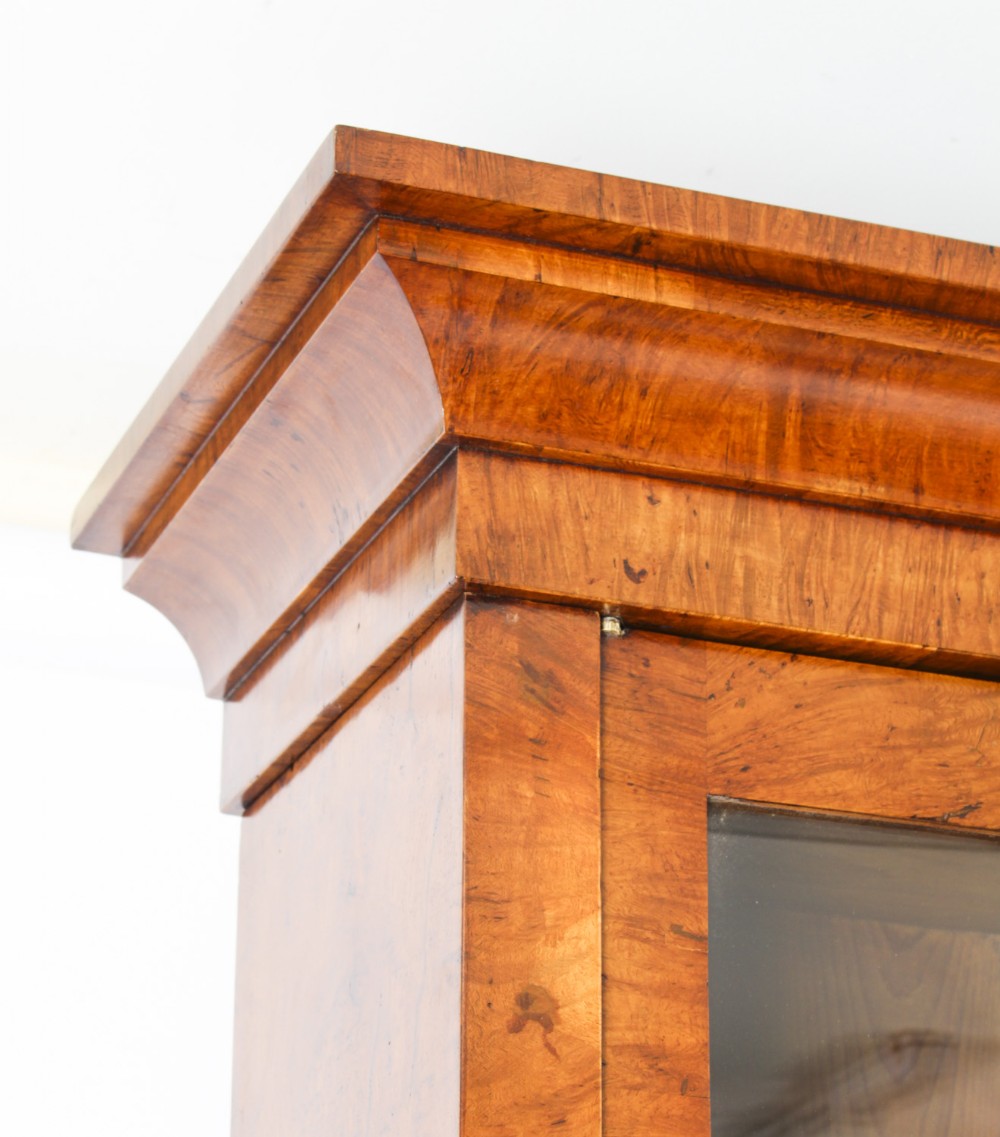
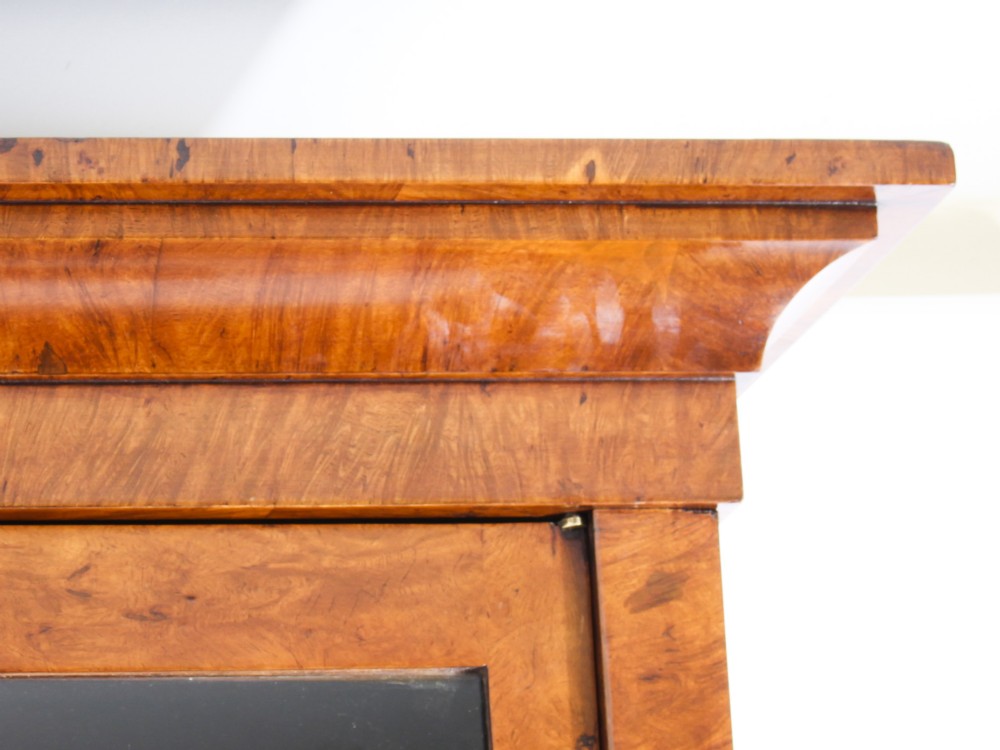
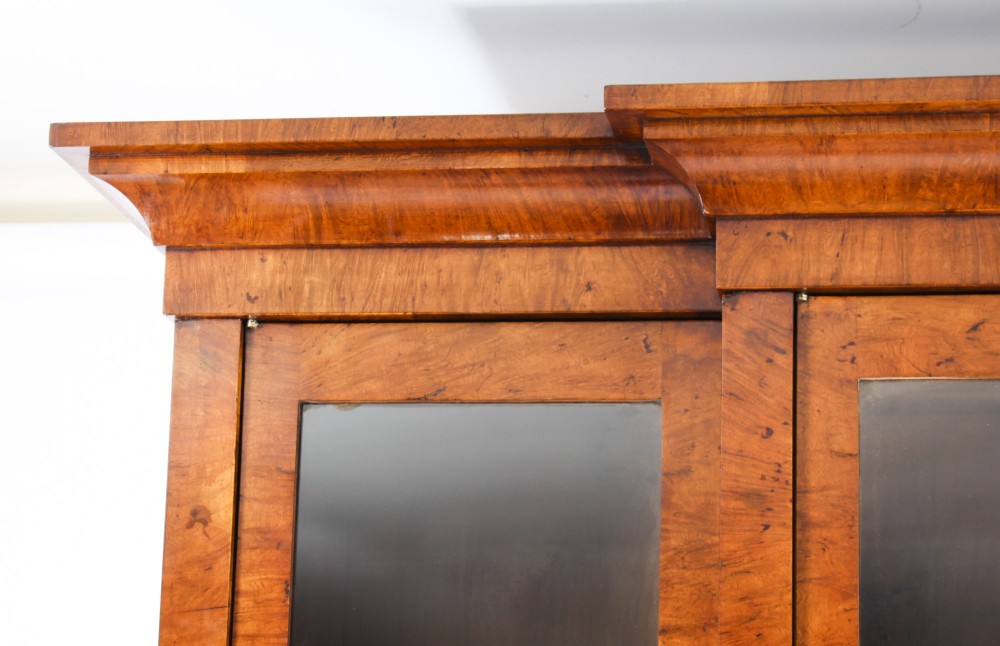
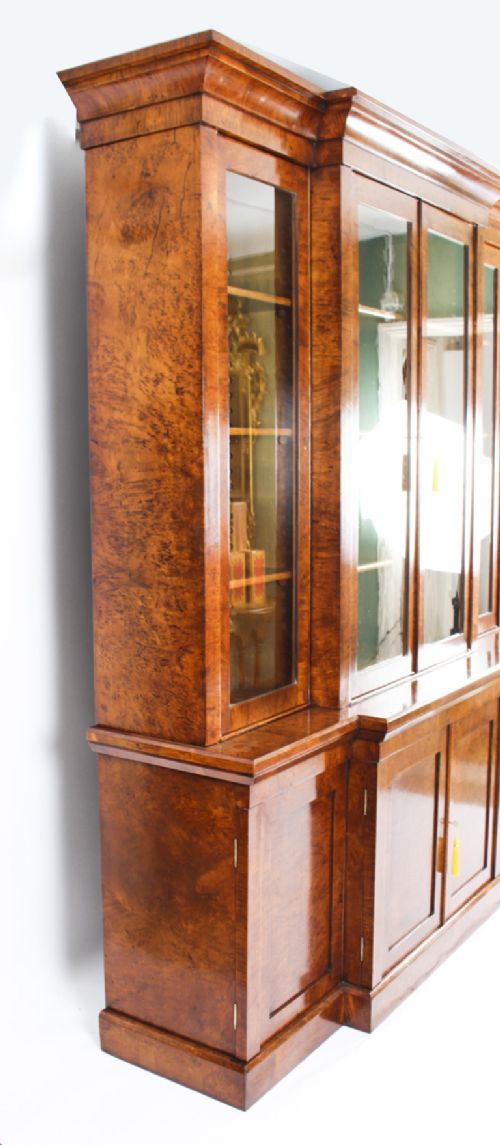
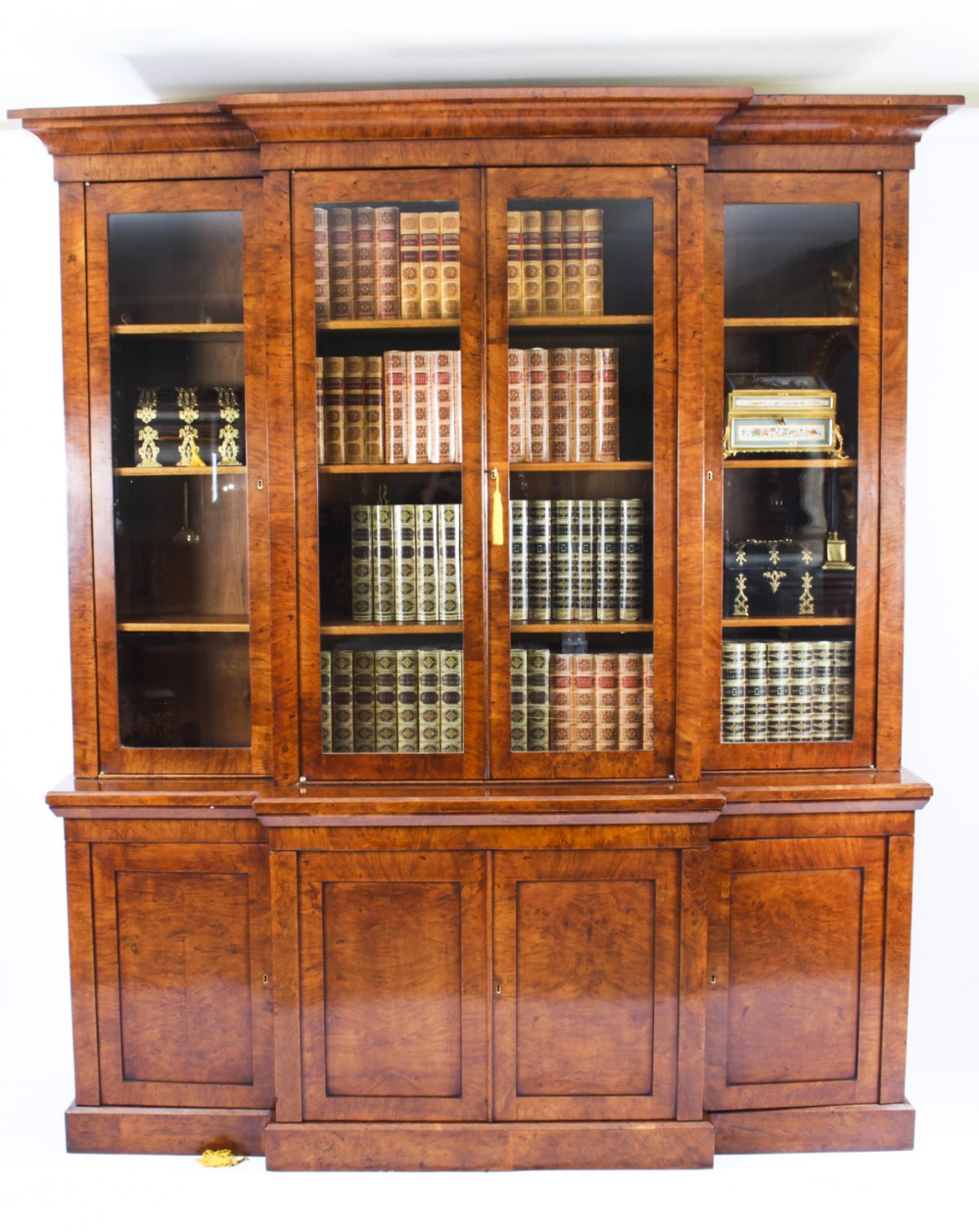
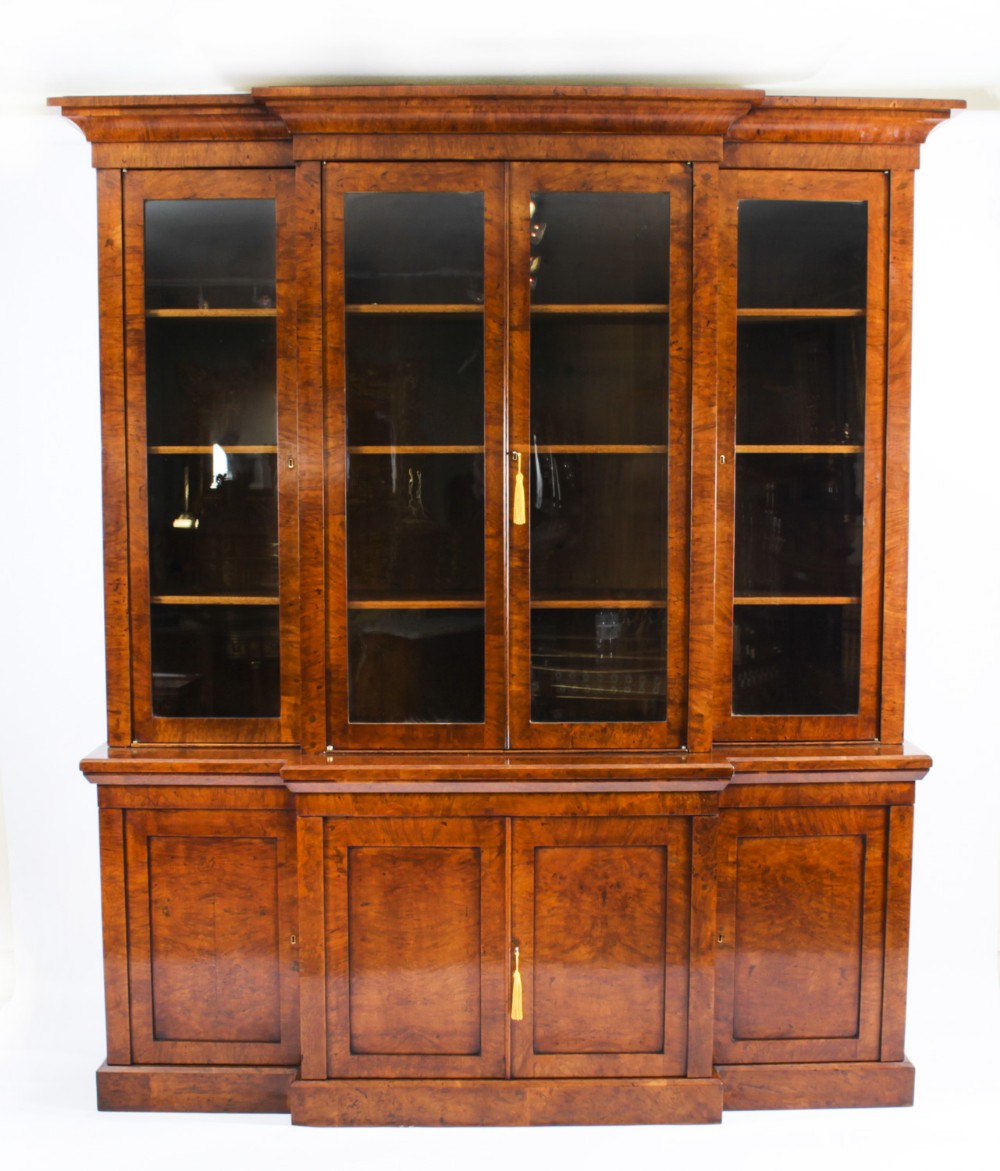
This is a beautiful and rare antique English George IV Pollard Oak four door library breakfront bookcase, circa 1830 in date.
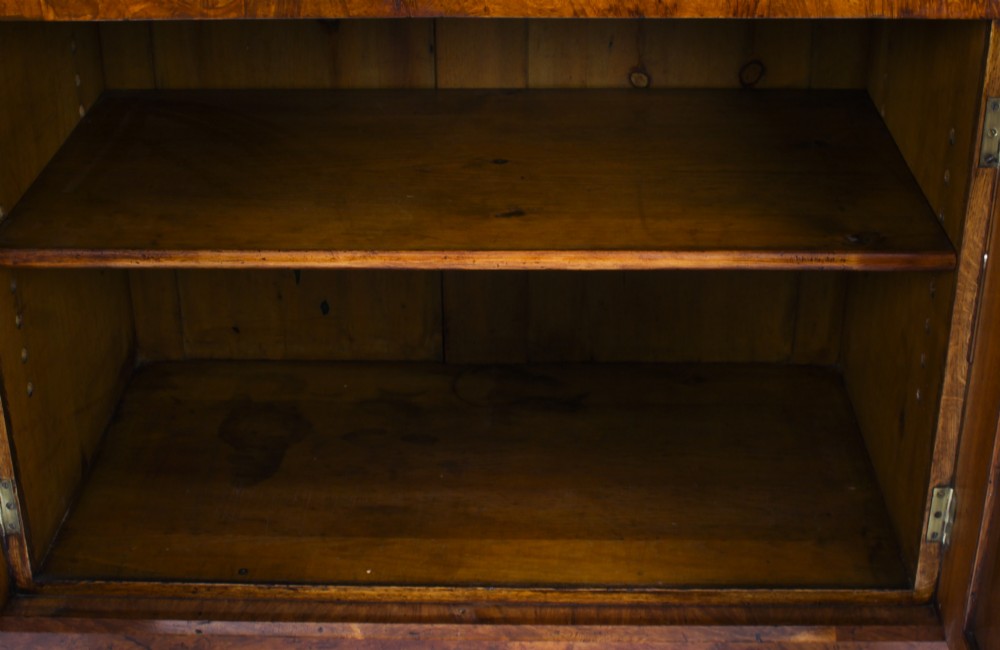
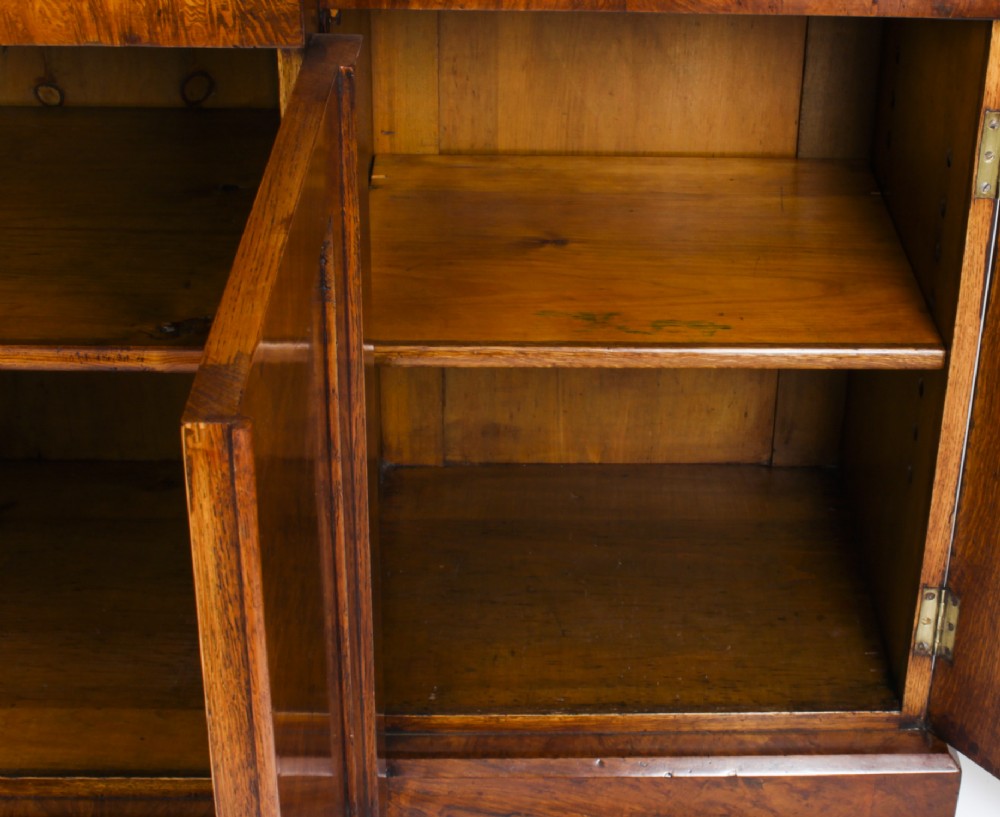
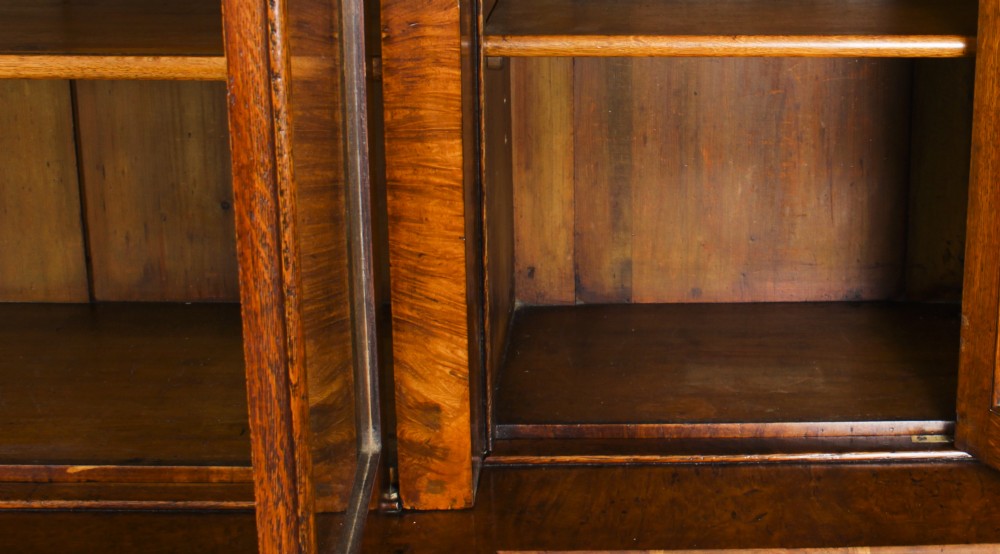
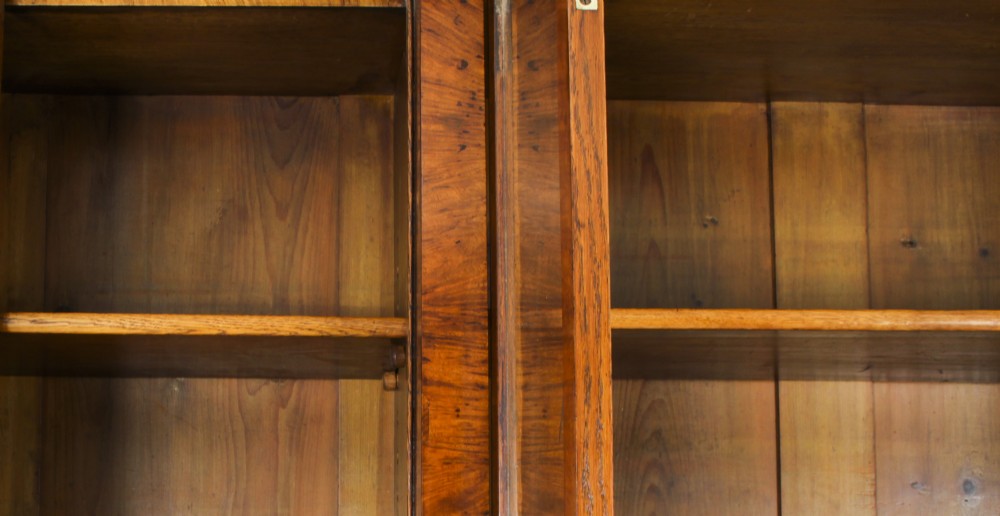
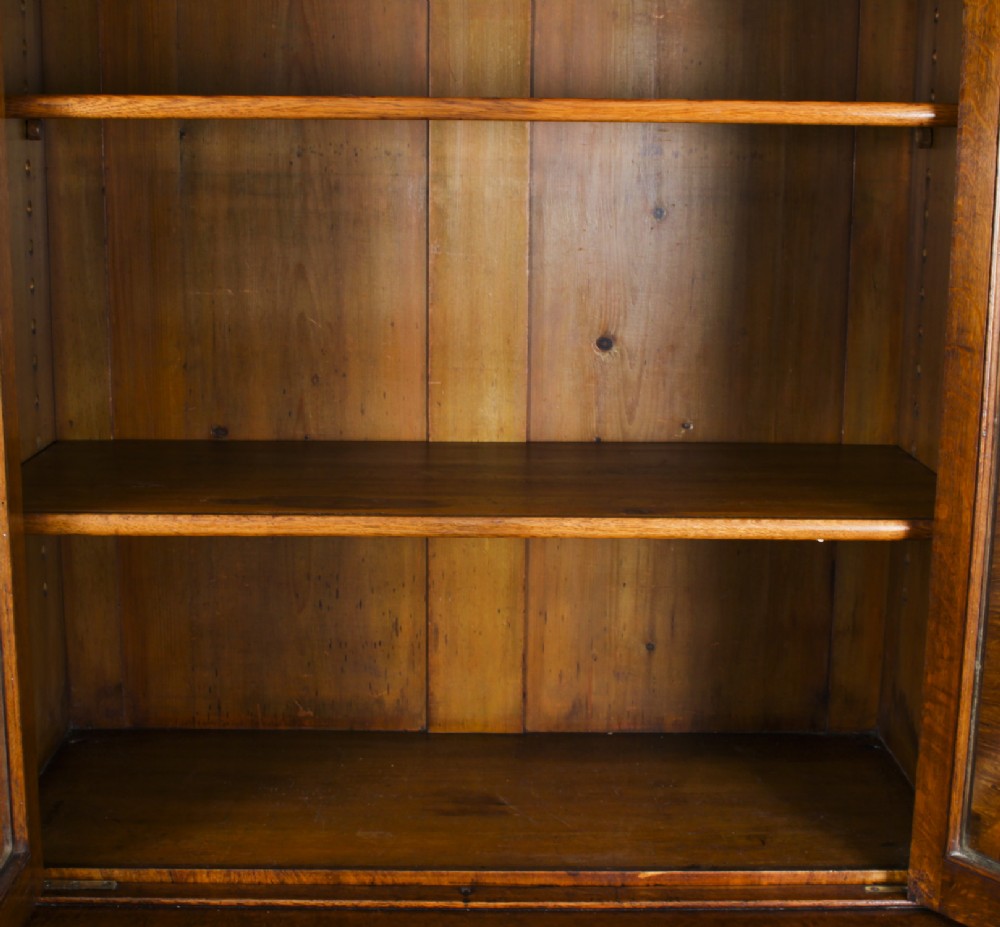
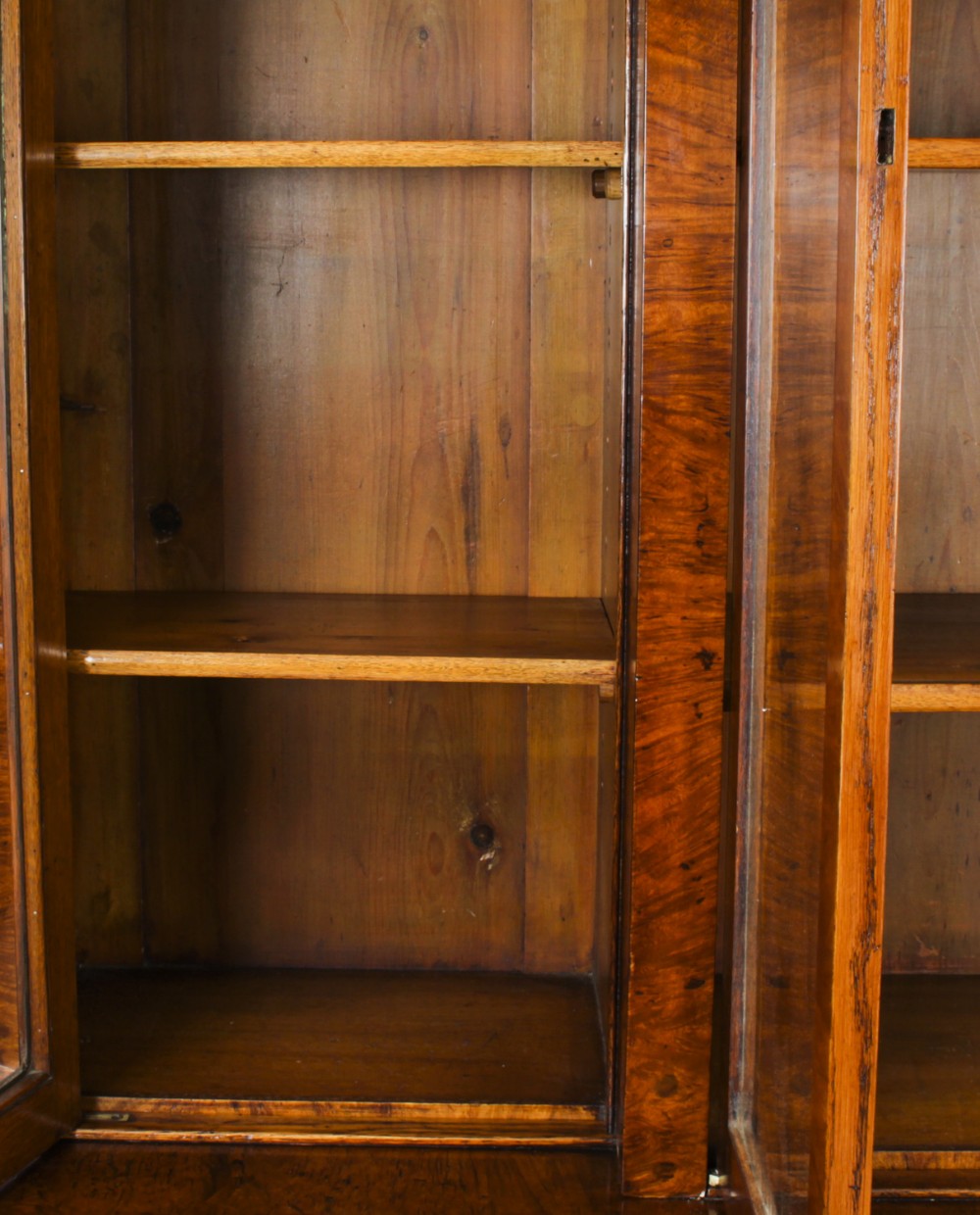
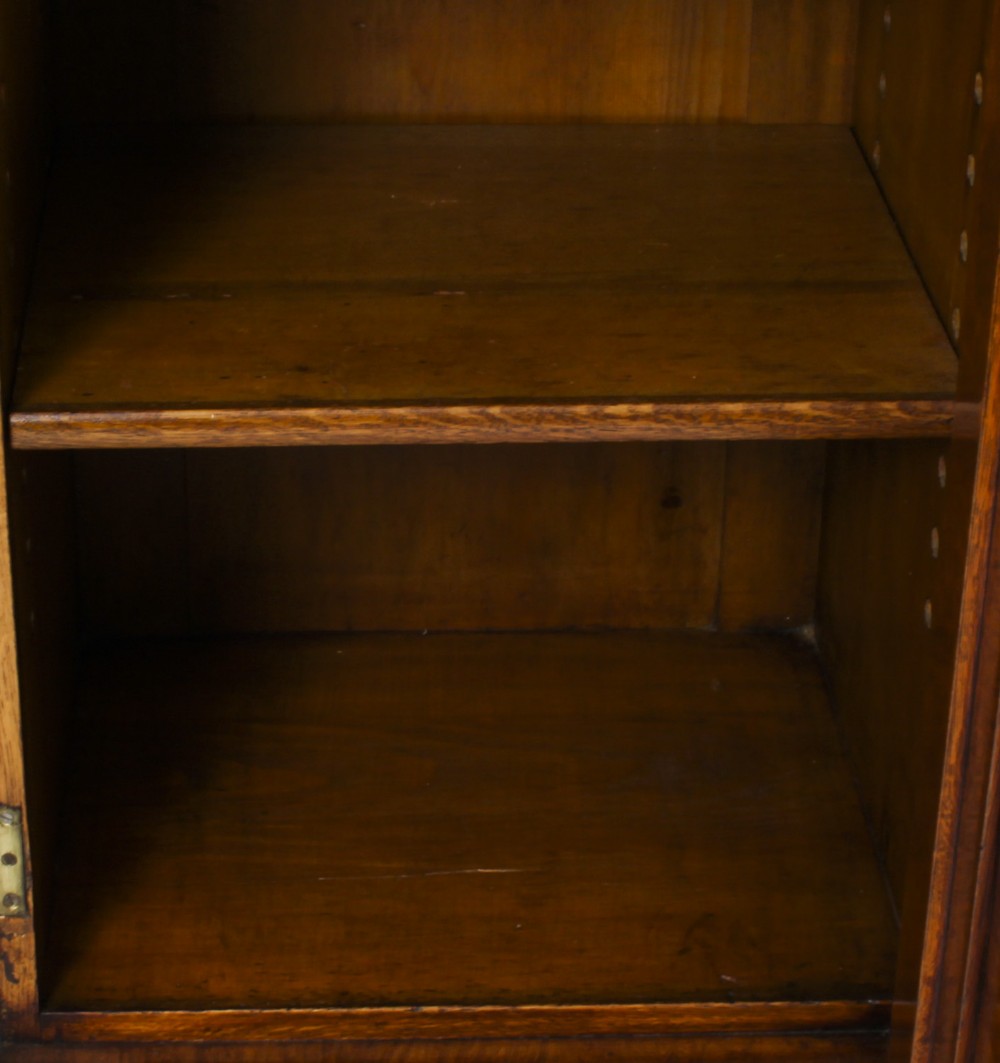
This magnificent bookcase features four glazed doors in the upper section revealing the twelve original oak shelves that can all be adjusted according to the height of your books. The lower section has four panelled doors opening to reveal spacious cupboards with central shelves. The shelves and the bookcase back are all made from solid oak.
There is no mistaking its superb quality and very grand design, which is certain to make it a talking point in your home and stand proud in whichever room you choose to display it.
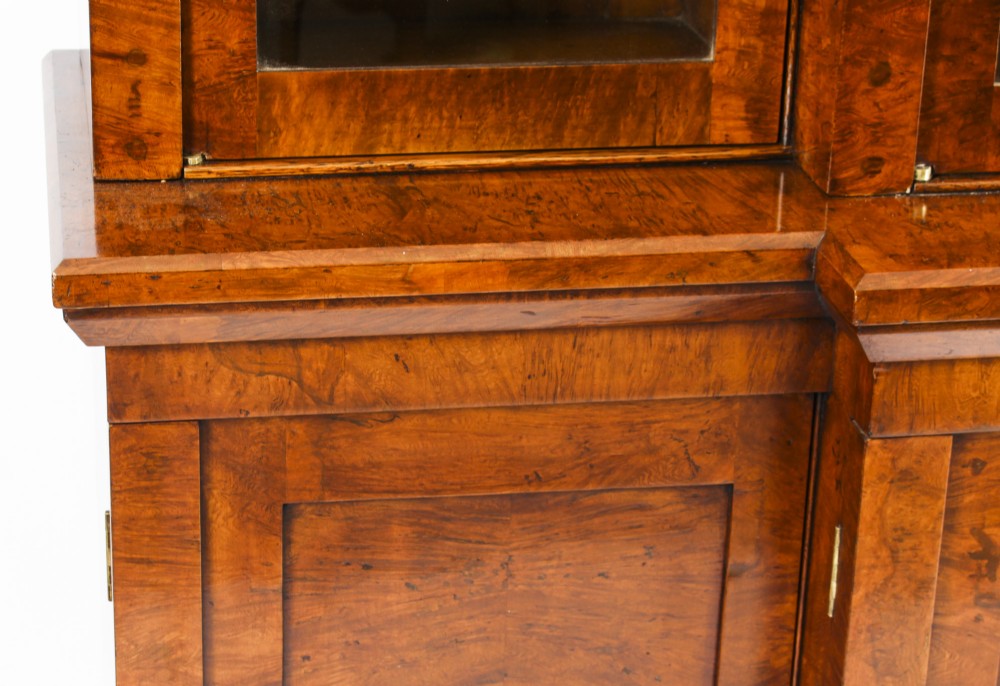
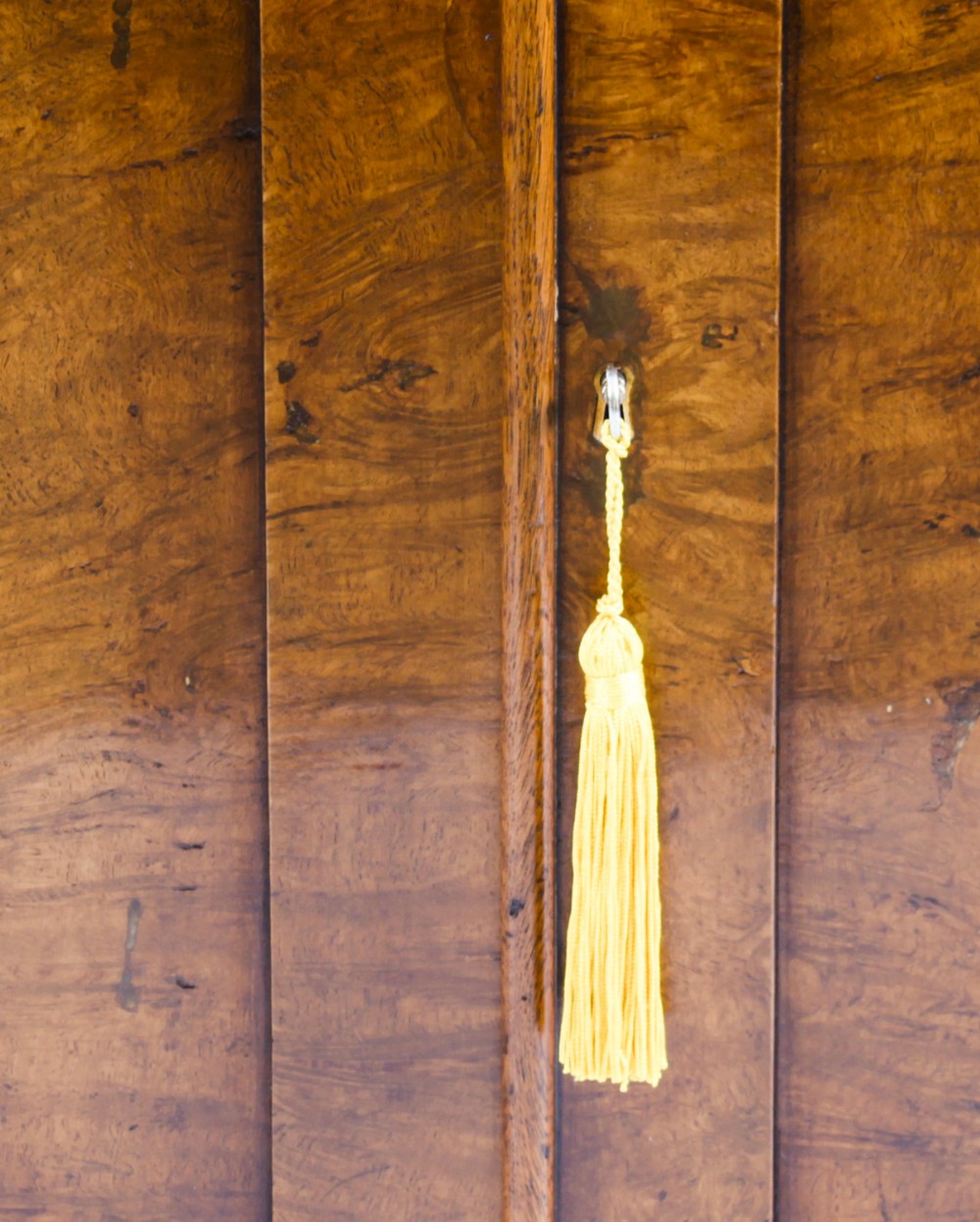
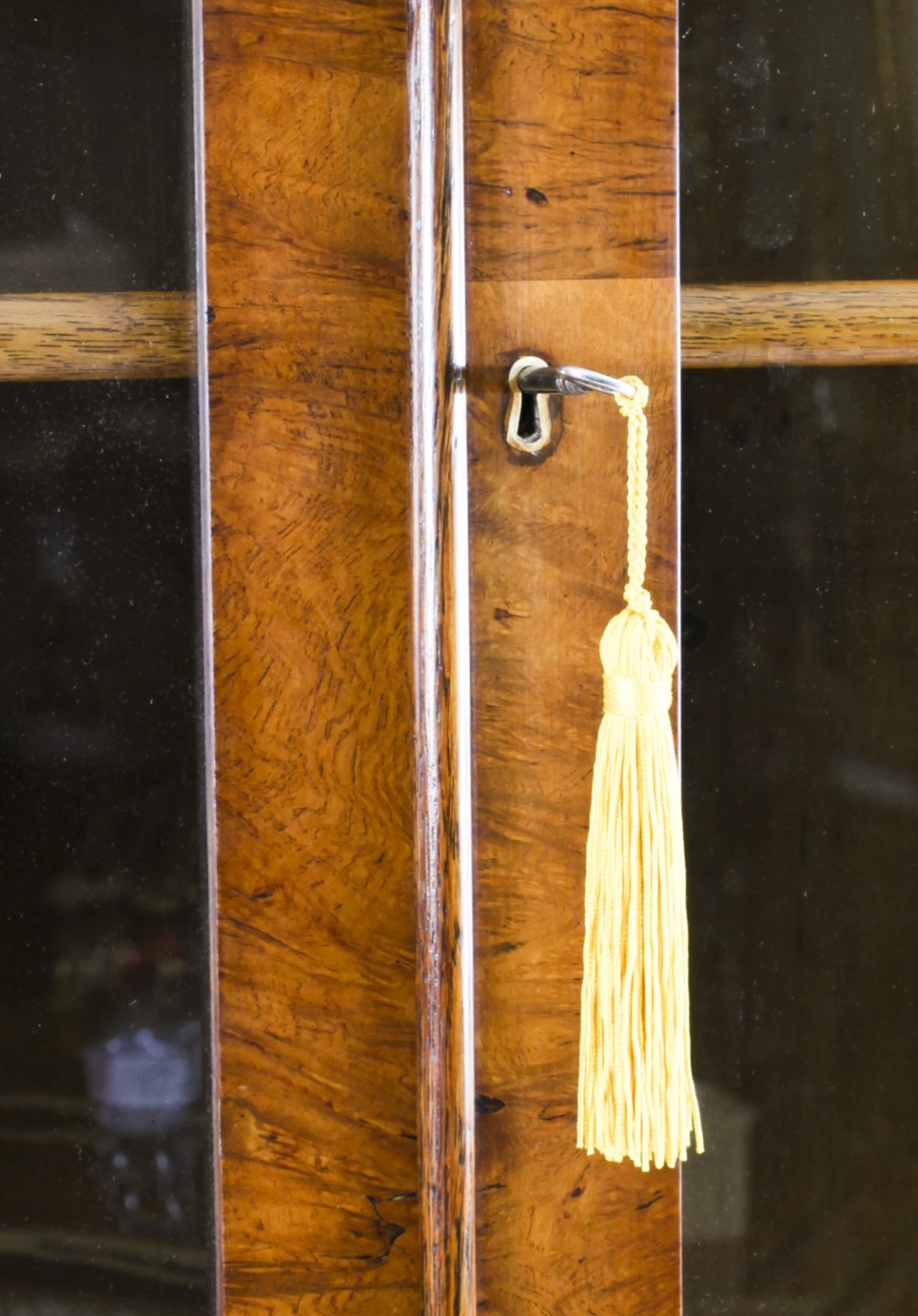
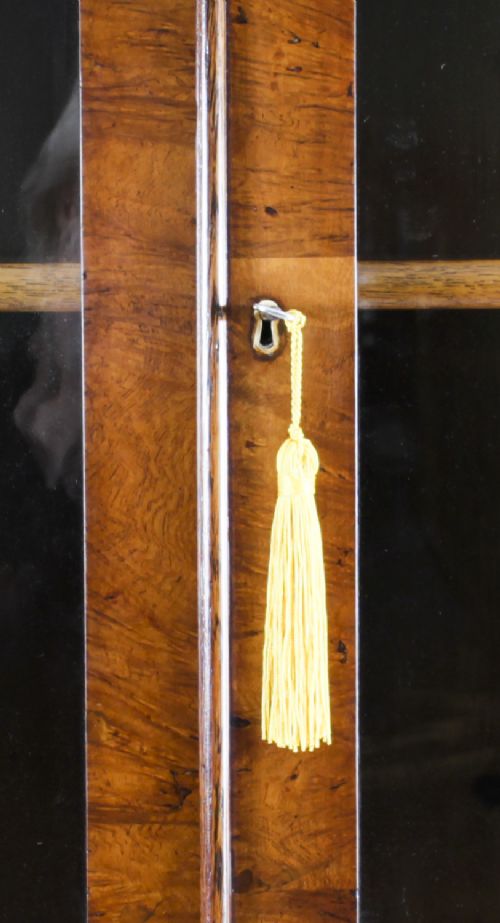
Complete with the original working locks and keys.
Condition:
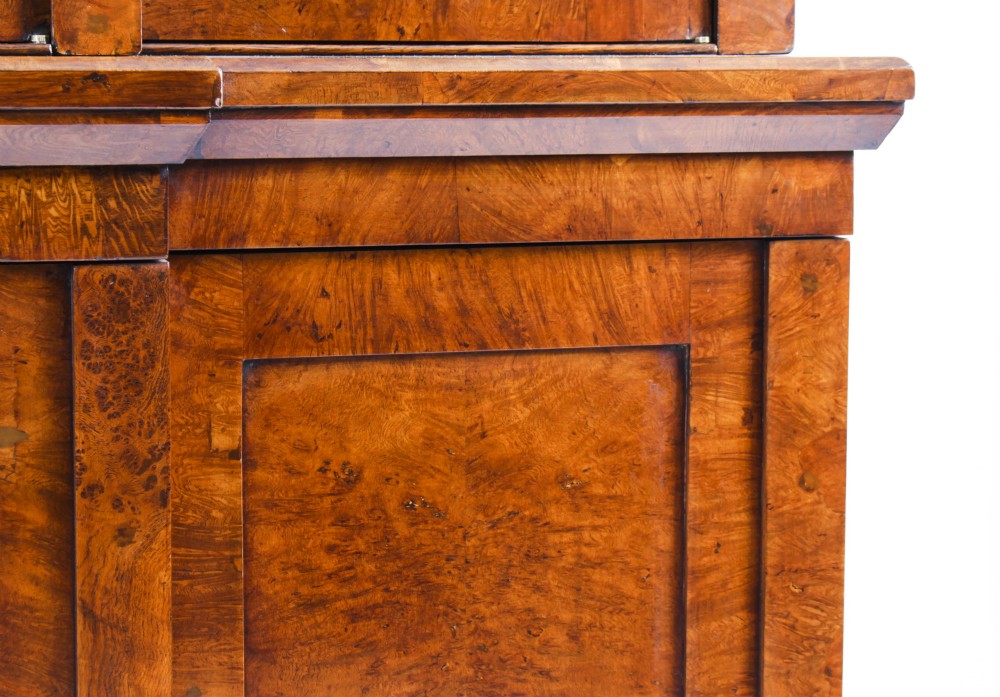
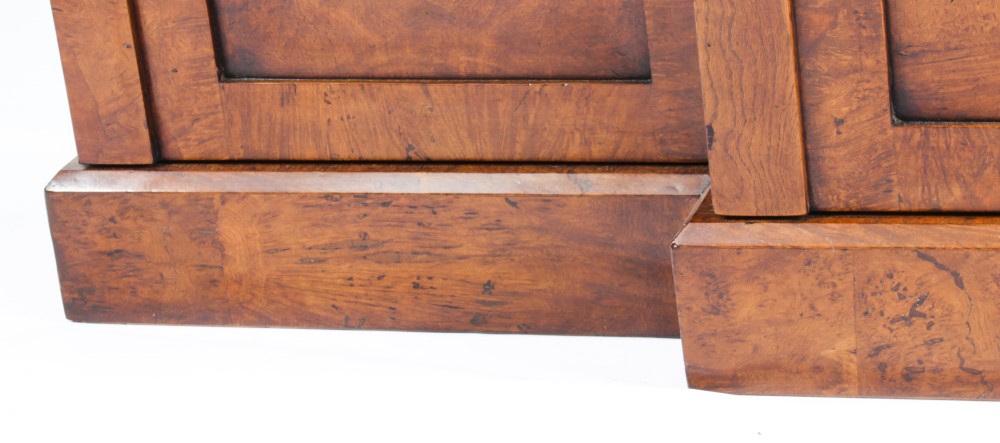
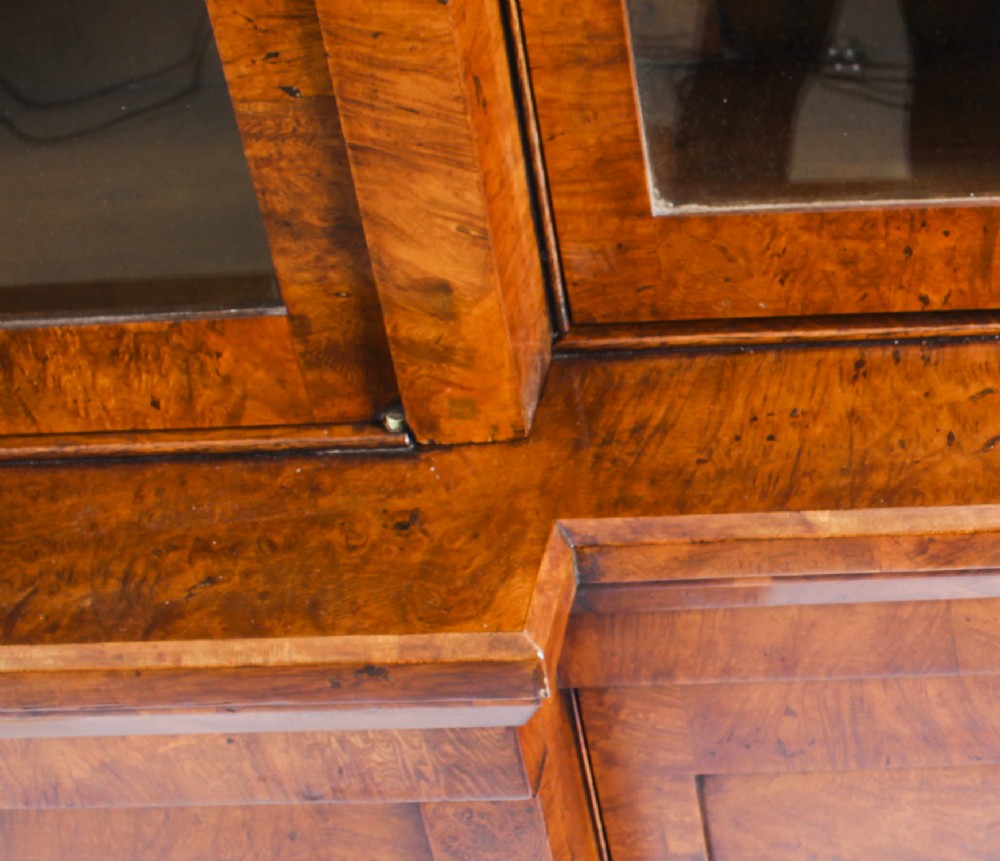
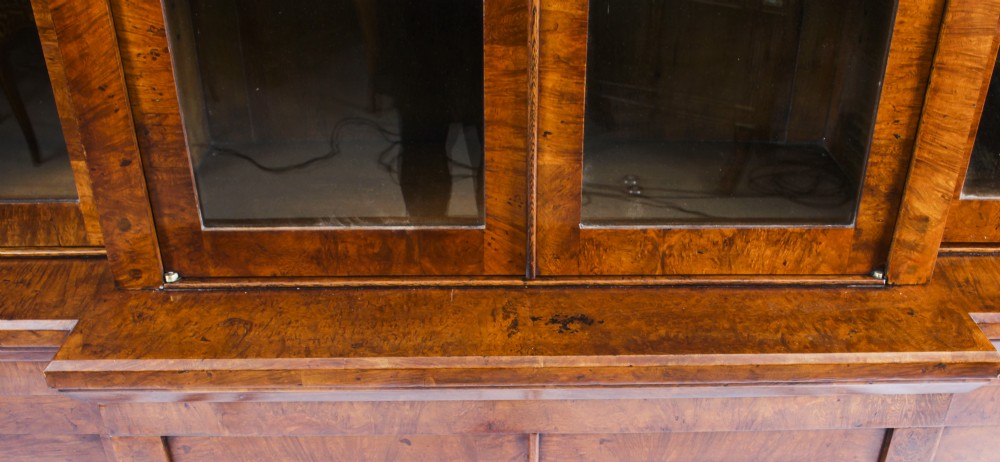
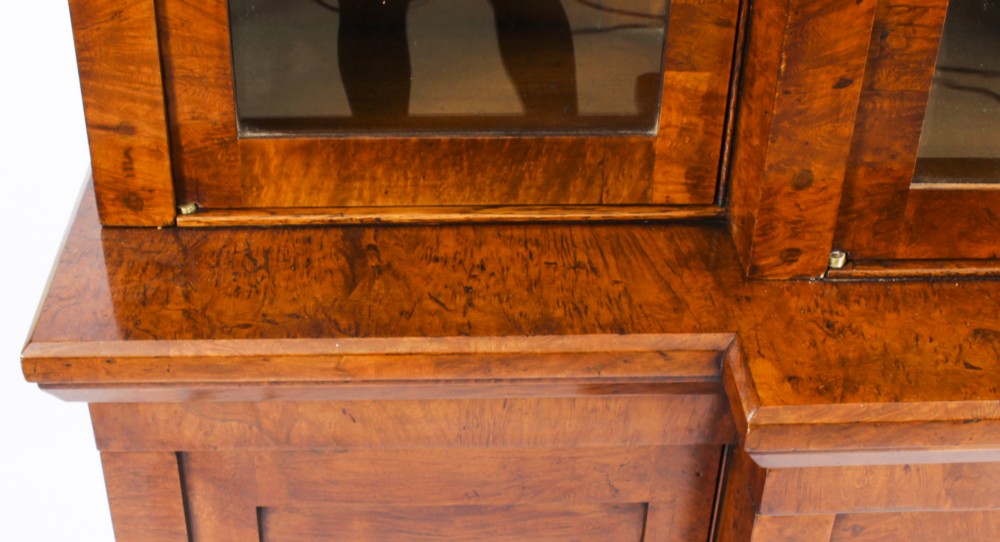
In excellent condition having been beautifully cleaned polished and waxed in our workshops, please see photos for confirmation.
Dimensions in cm:
Height 228 x Width 201 x Depth 57
Dimensions in inches:
Height 7 foot, 6 inches x Width 6 foot, 7 inches x Depth 1 foot, 10 inches
Pollard Oak
Pollarding is a pruning system in which the upper branches of a tree are removed, promoting a dense head of foliage and branches. It has been common in Europe since medieval times and is practised today in urban areas worldwide, primarily to maintain trees at a predetermined height. The bole of the tree, constantly cut back over a period of years, will eventually form a lump, or ‘burr’, which when sawn for veneer, gives a lovely grained, swirling figure.
The effect is similar to that of burr walnut with its distinctive speckled grain. Burrs, or ‘burls’, are growths which appear on the side of tree trunks, resulting from a tree undergoing some form of stress. They may be caused by an injury, virus or fungus.
During the 19th century great strides were made in the mechanisation of cabinet making. Marc Isambard Brunel [ Isambard Kingdom’s father] built the first steam driven saw mill, and invented a circular saw that could be used to cut veneers thinly and evenly for the first time. He also developed the first hydraulic veneer press. The figured wood cut from burrs and pollards is notoriously difficult to cut and lay: the wild grain which makes it so attractive results in a very delicate, brittle veneer. The new machines enabled the Victorian craftsmen to make the most of these beautiful timbers.
Our reference: A2139