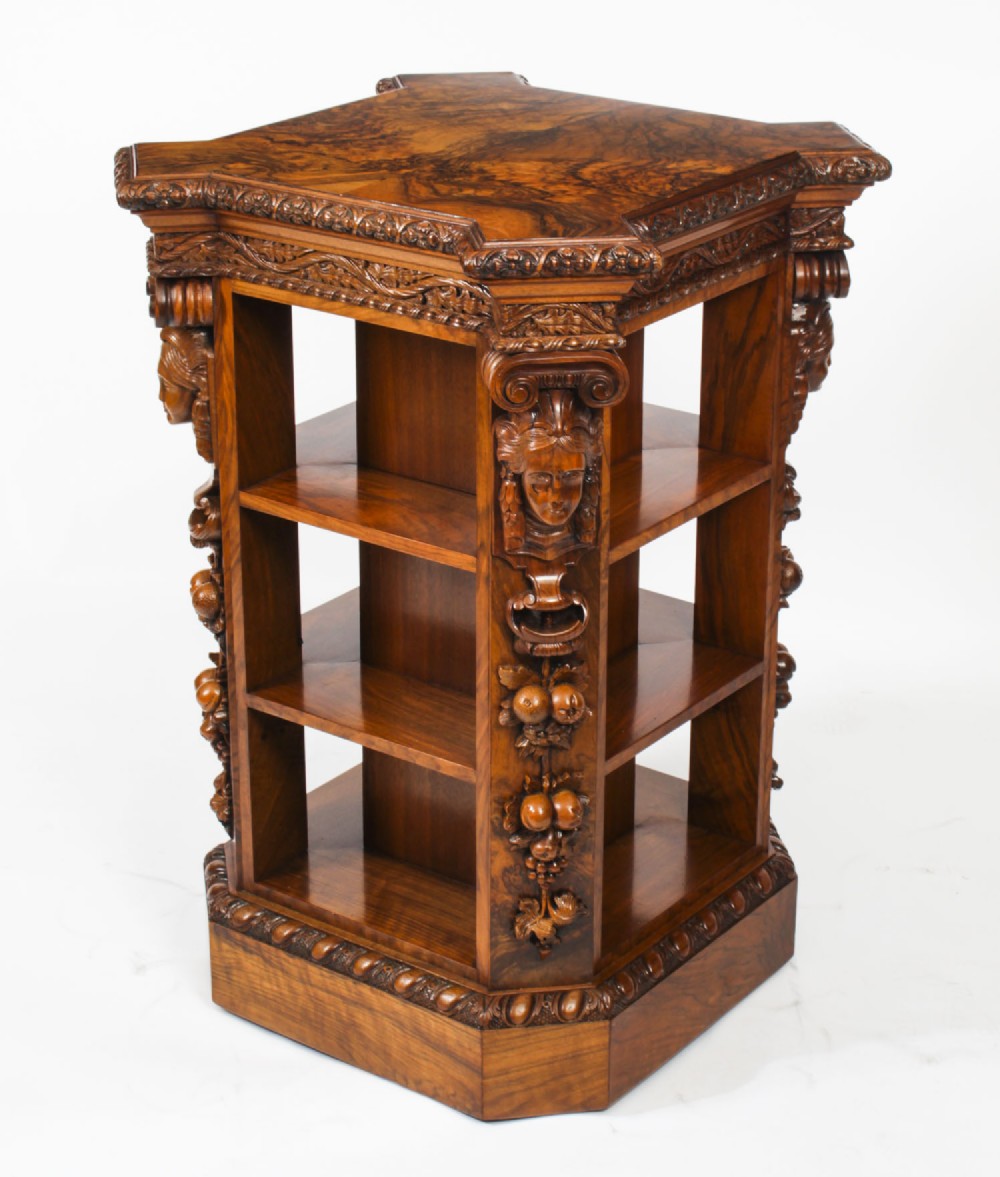
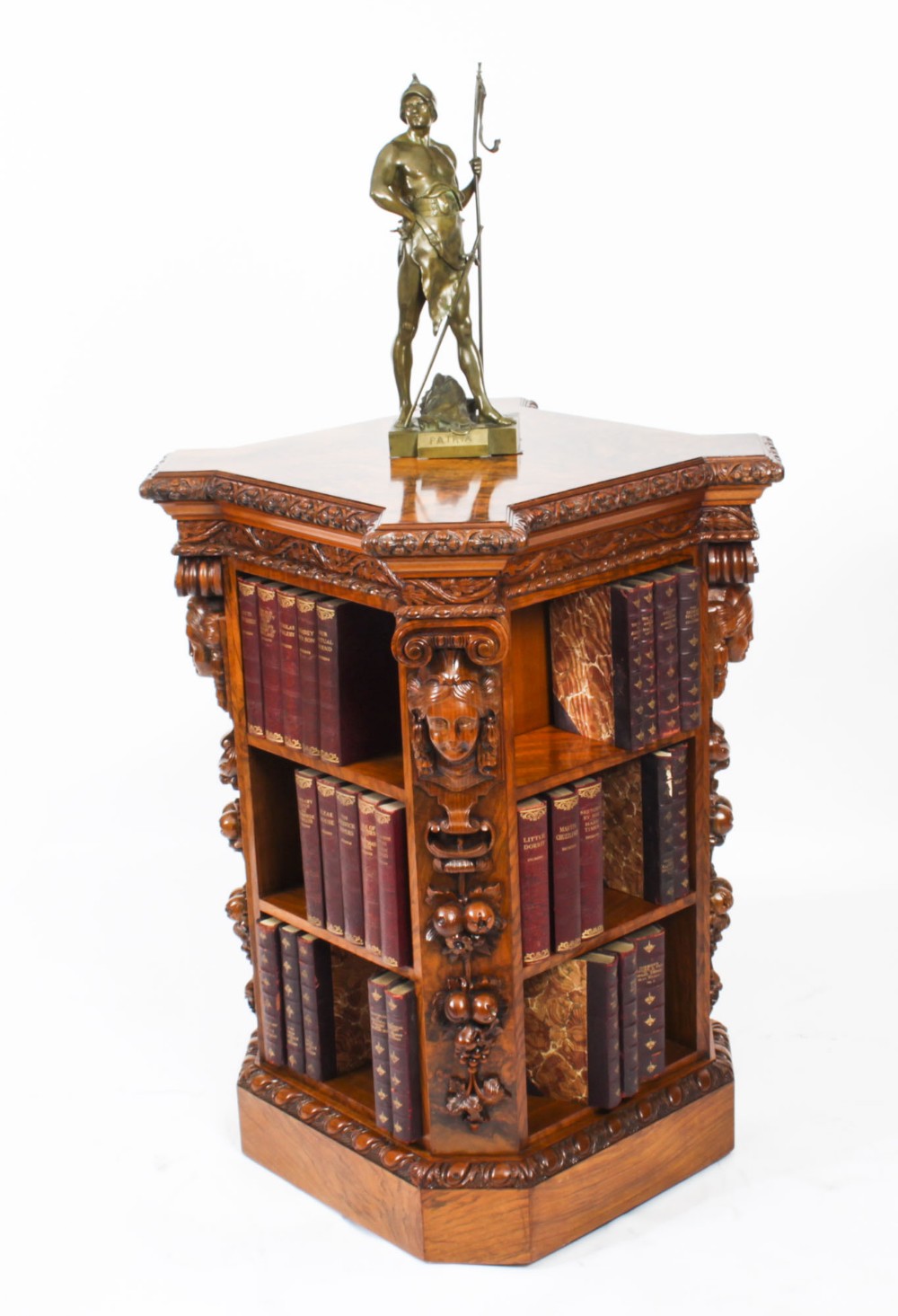
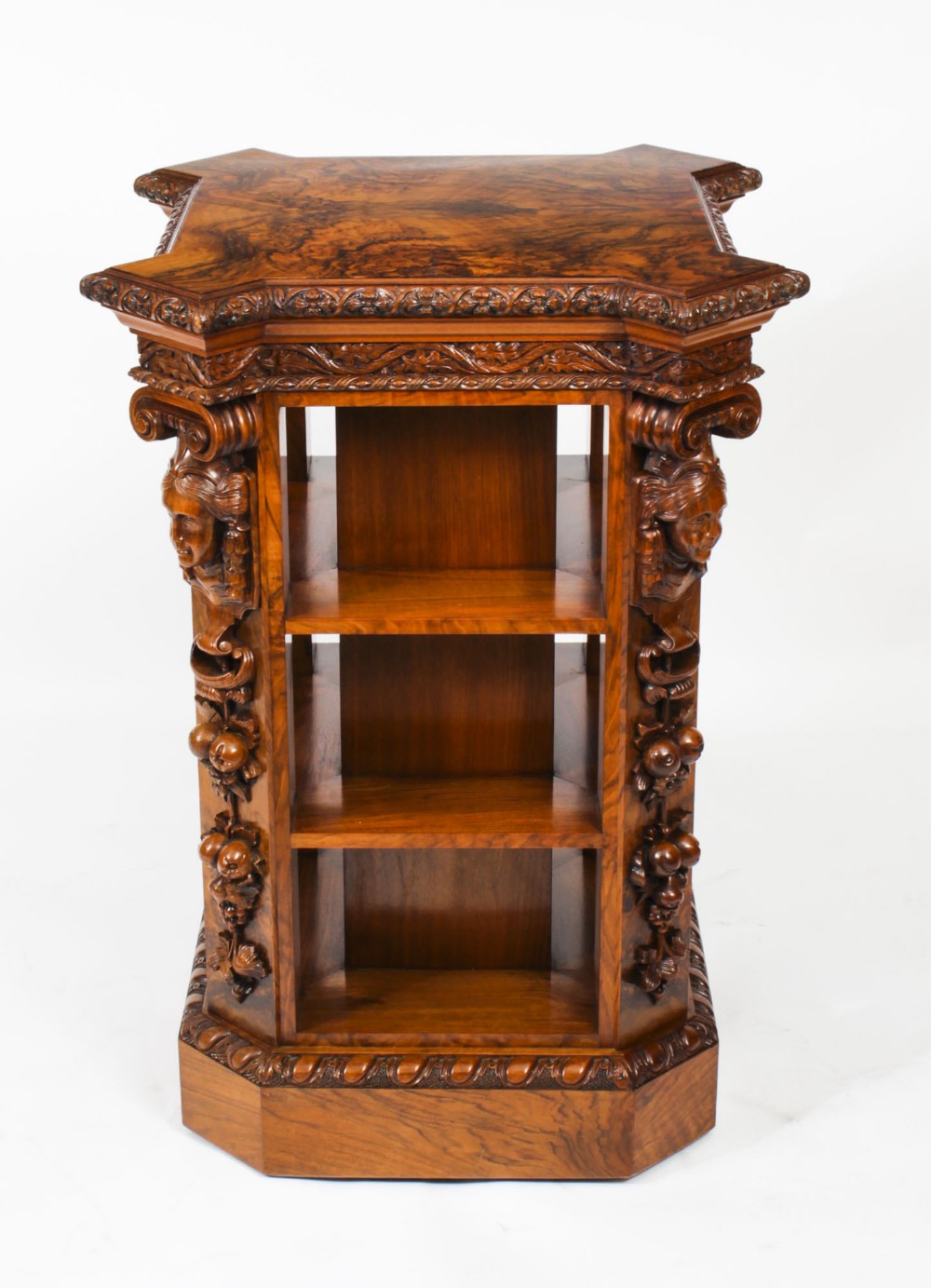
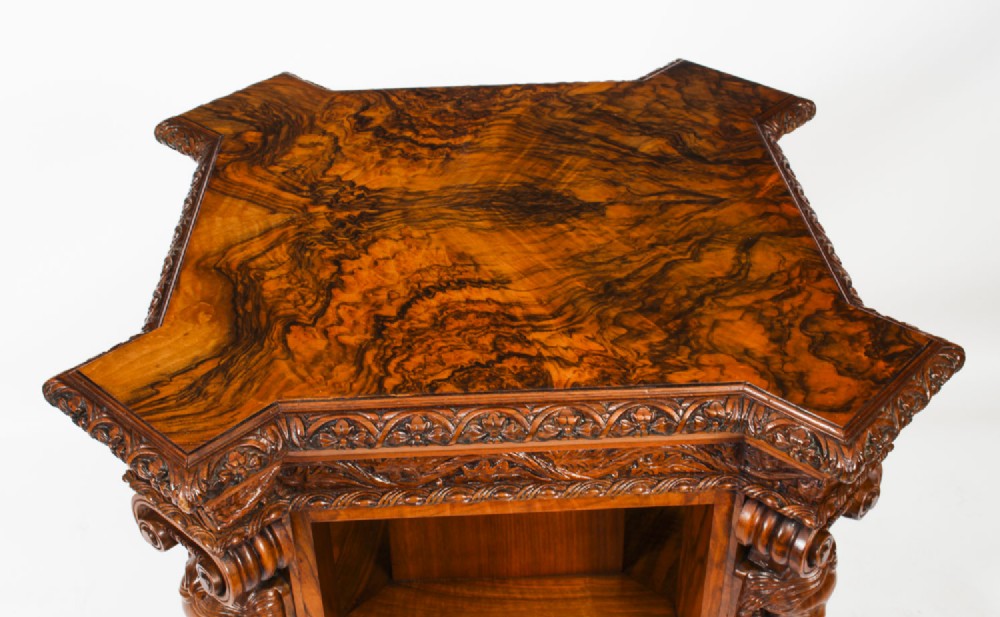
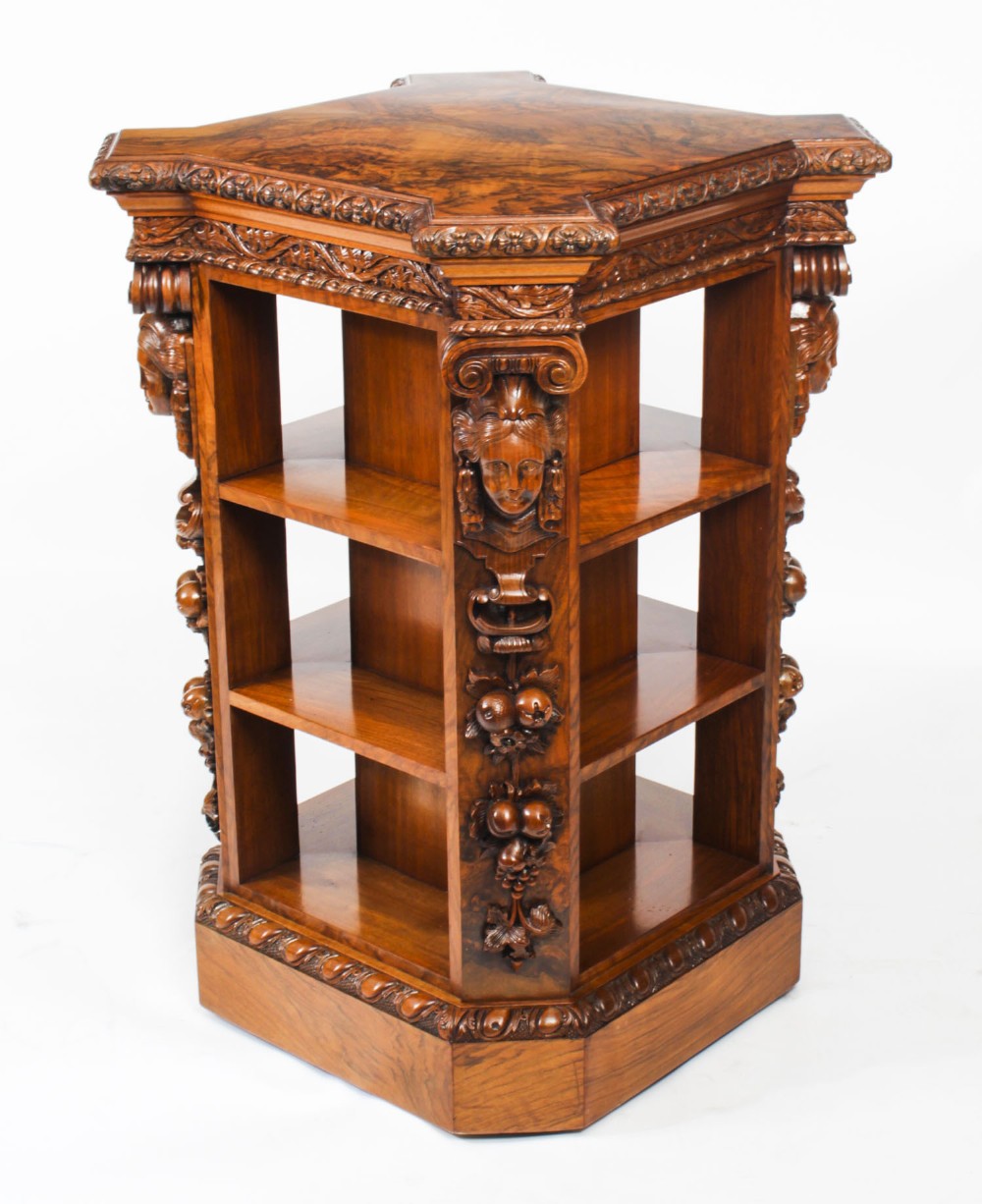
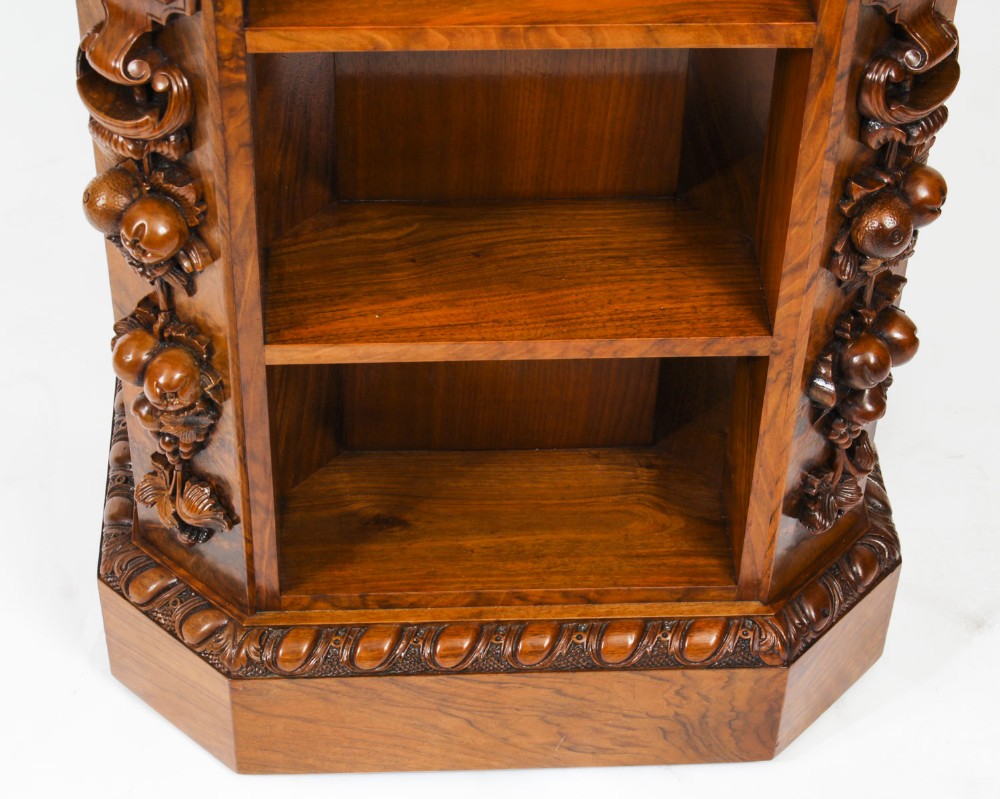
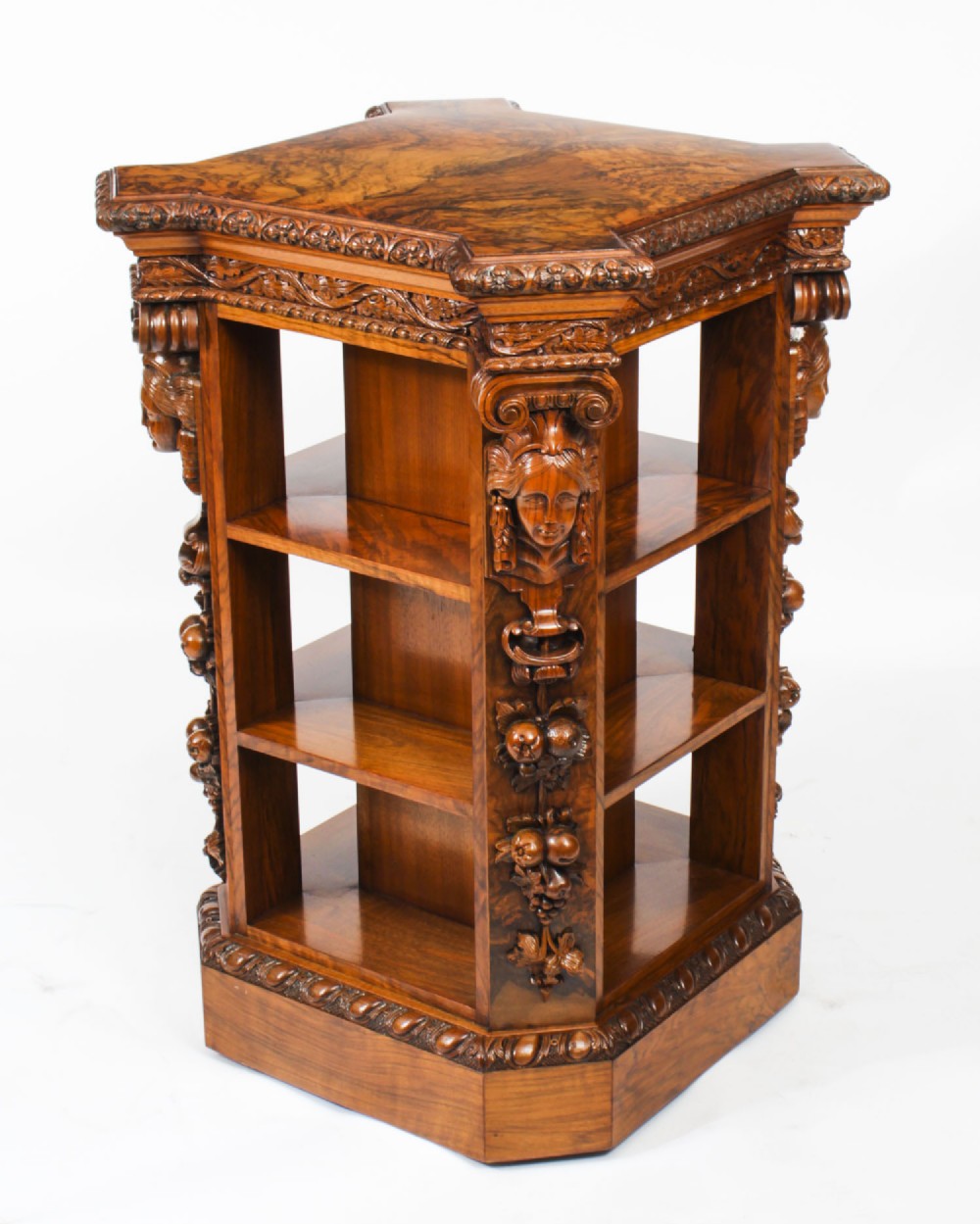
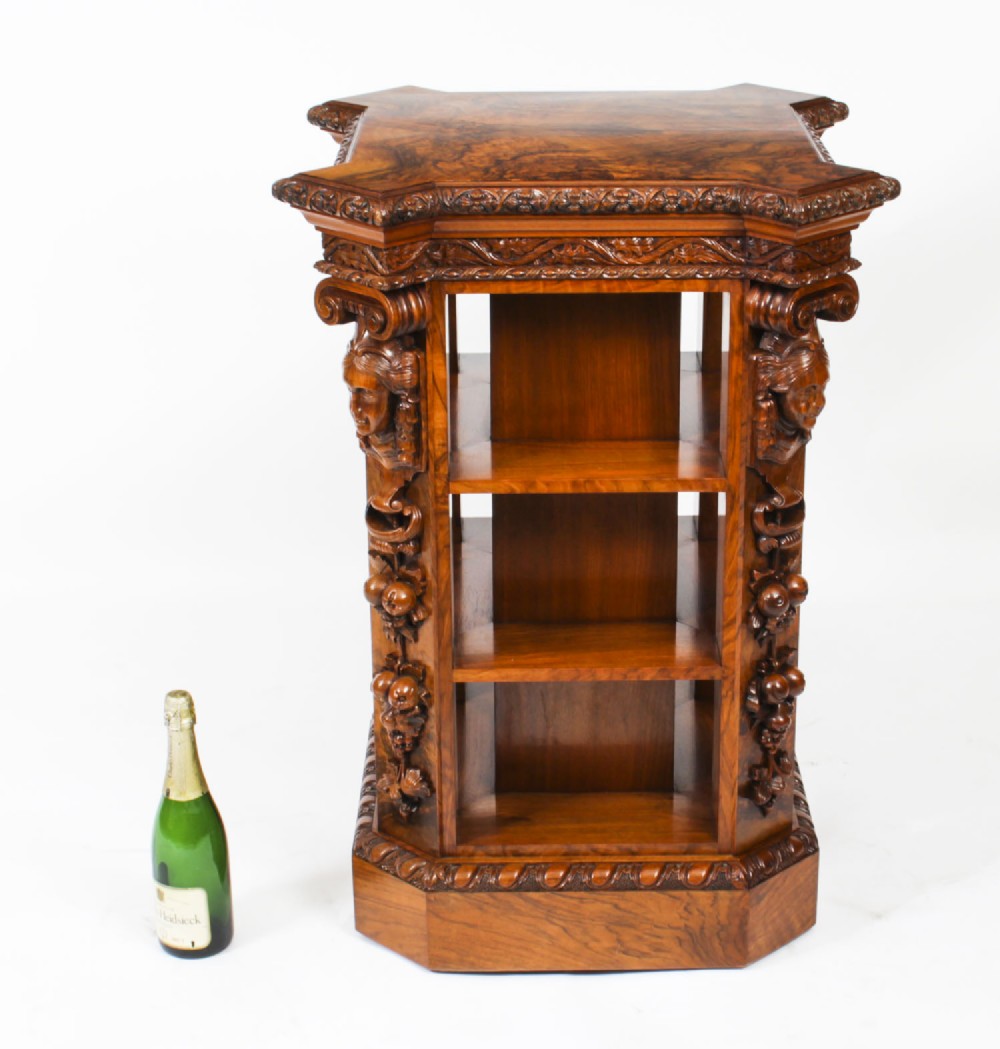
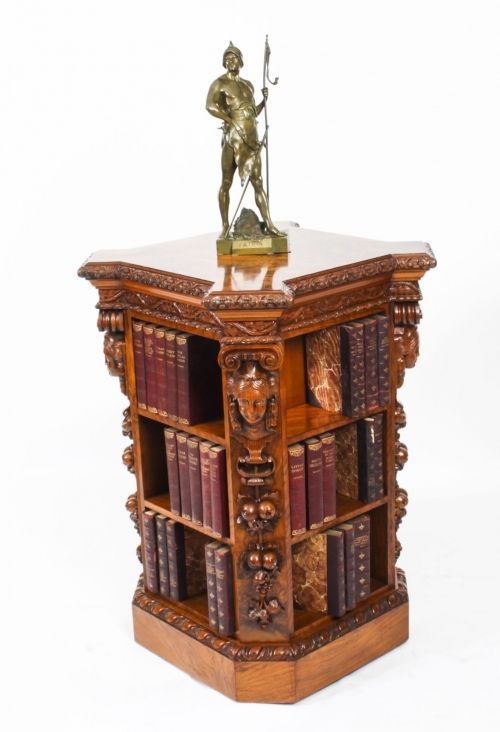
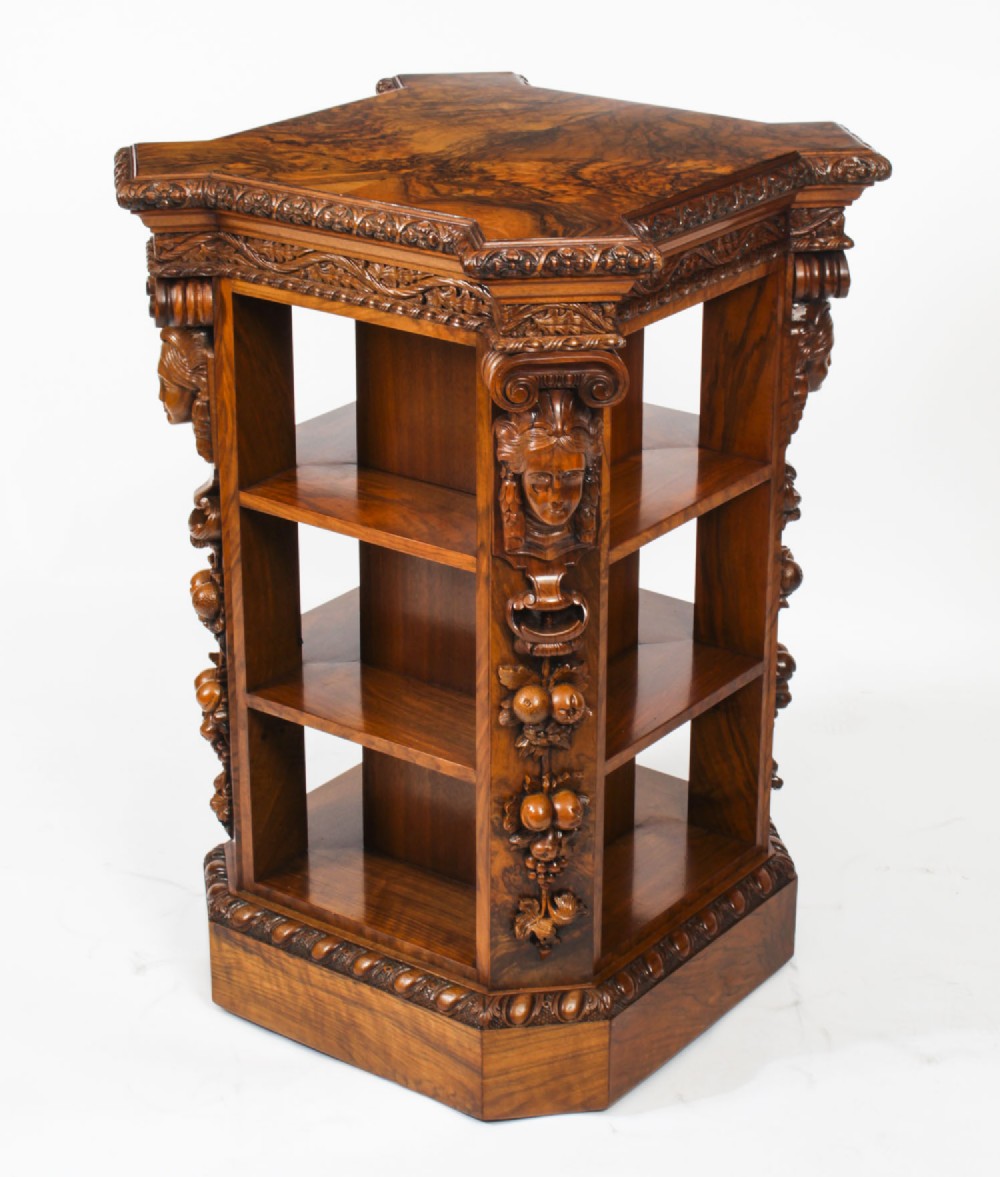
This is an exquisite antique early 19th Century figured walnut freestanding library bookcase, in the manner of Gillows, circa 1820 in date.
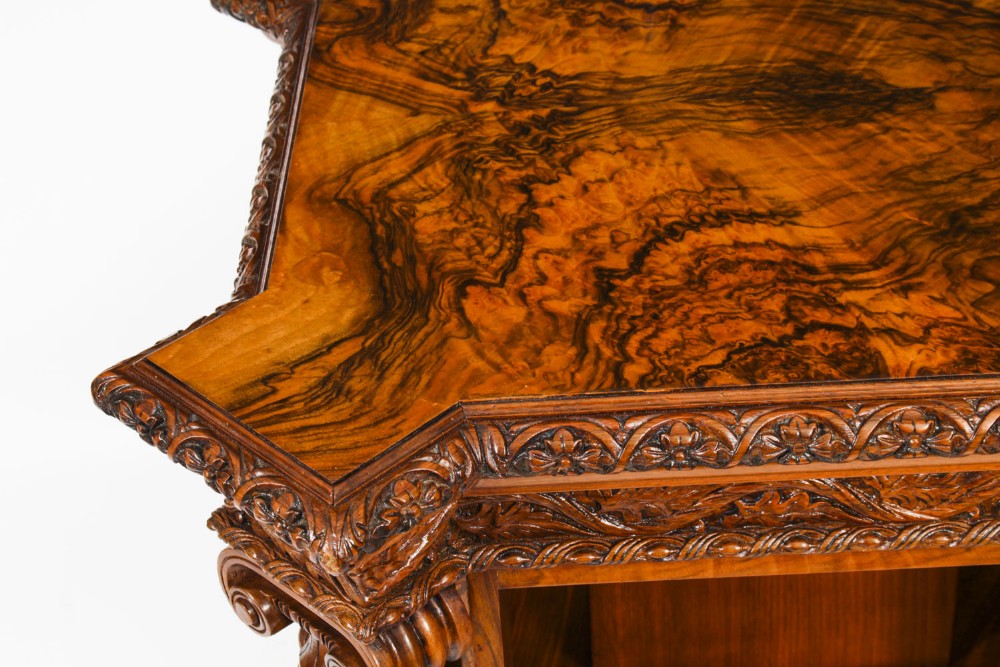
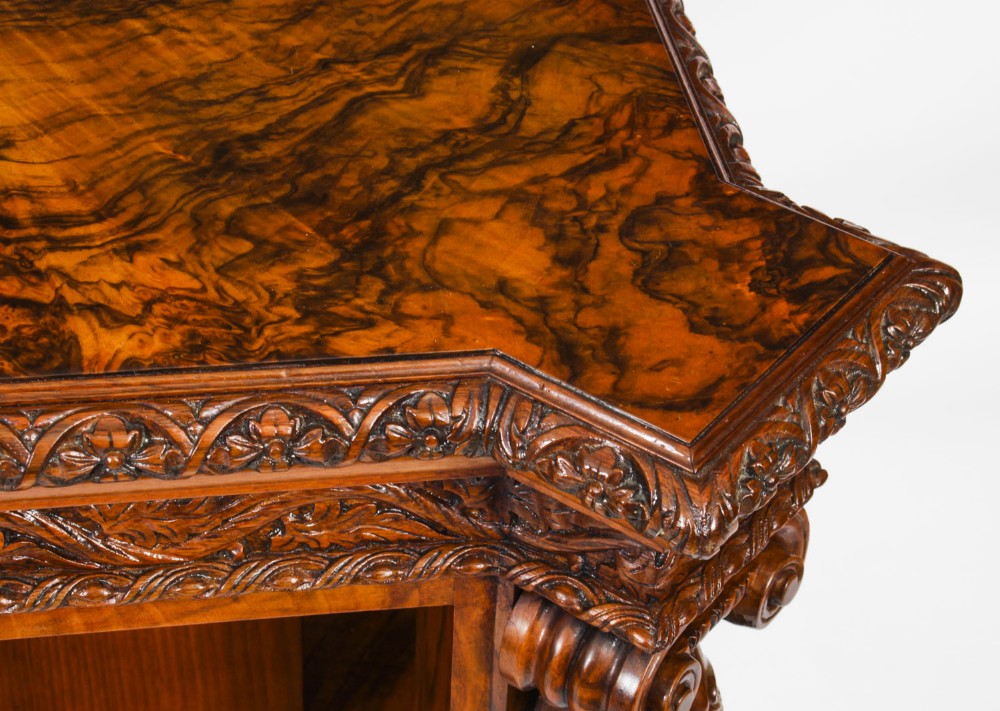
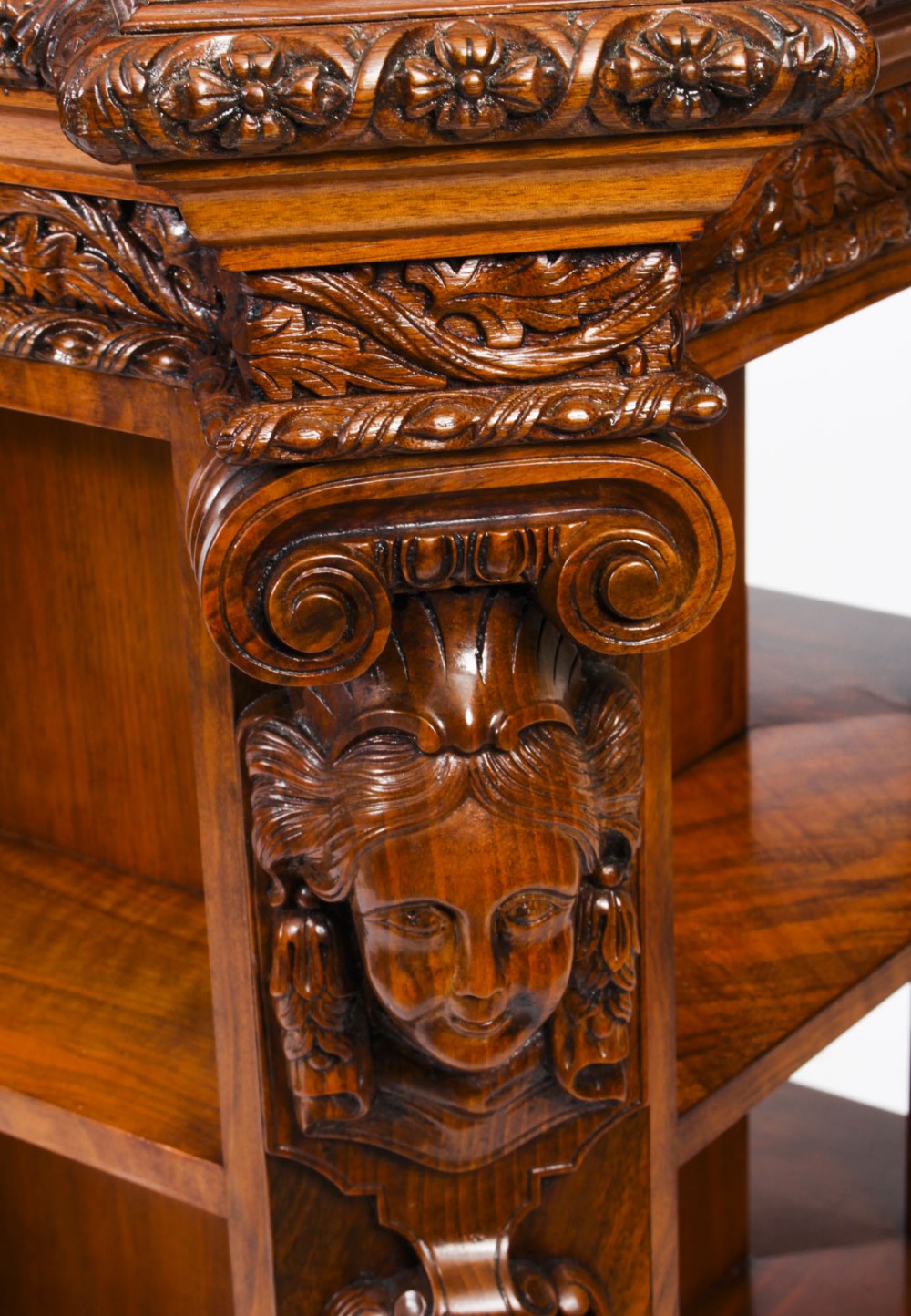
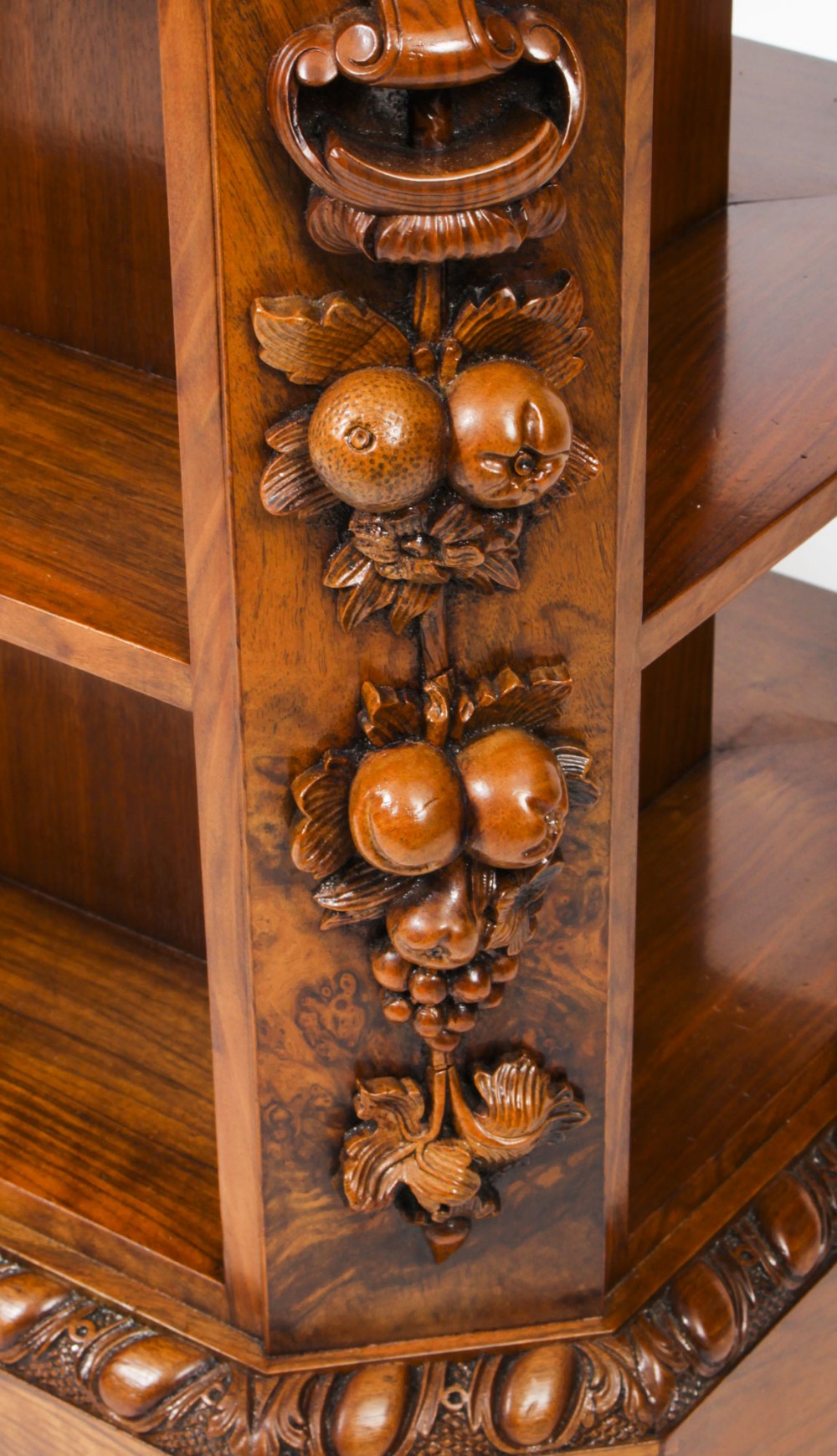
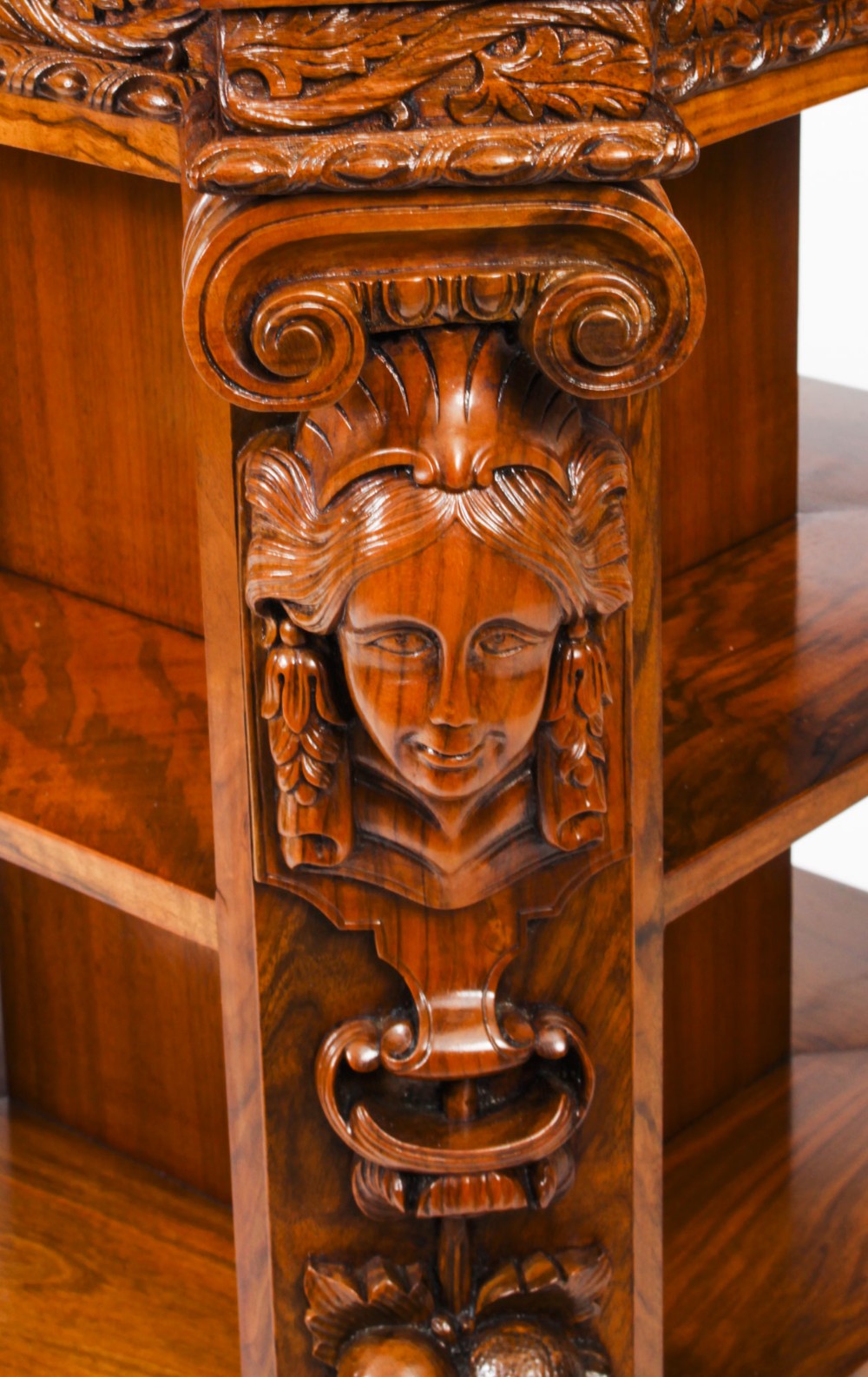
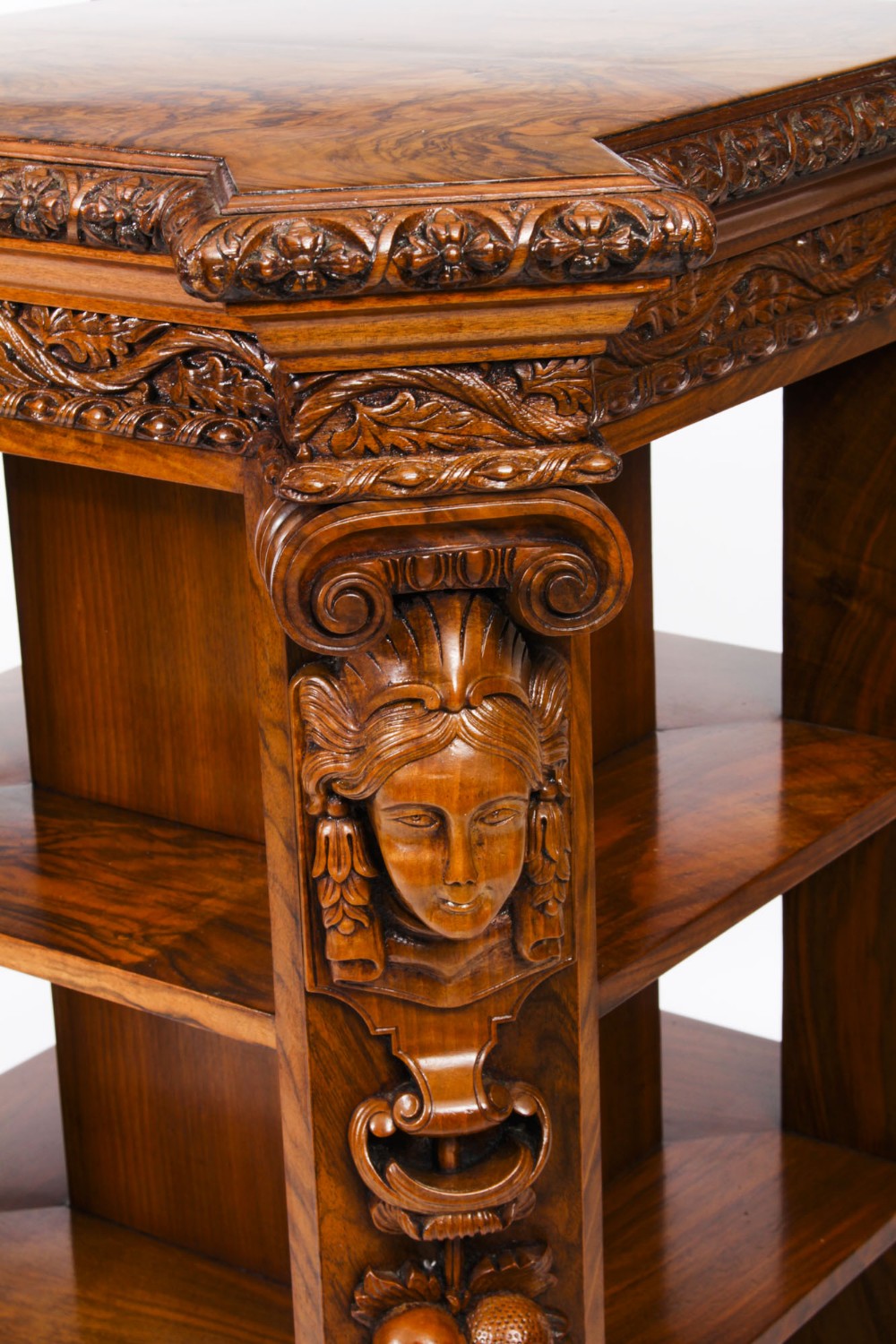
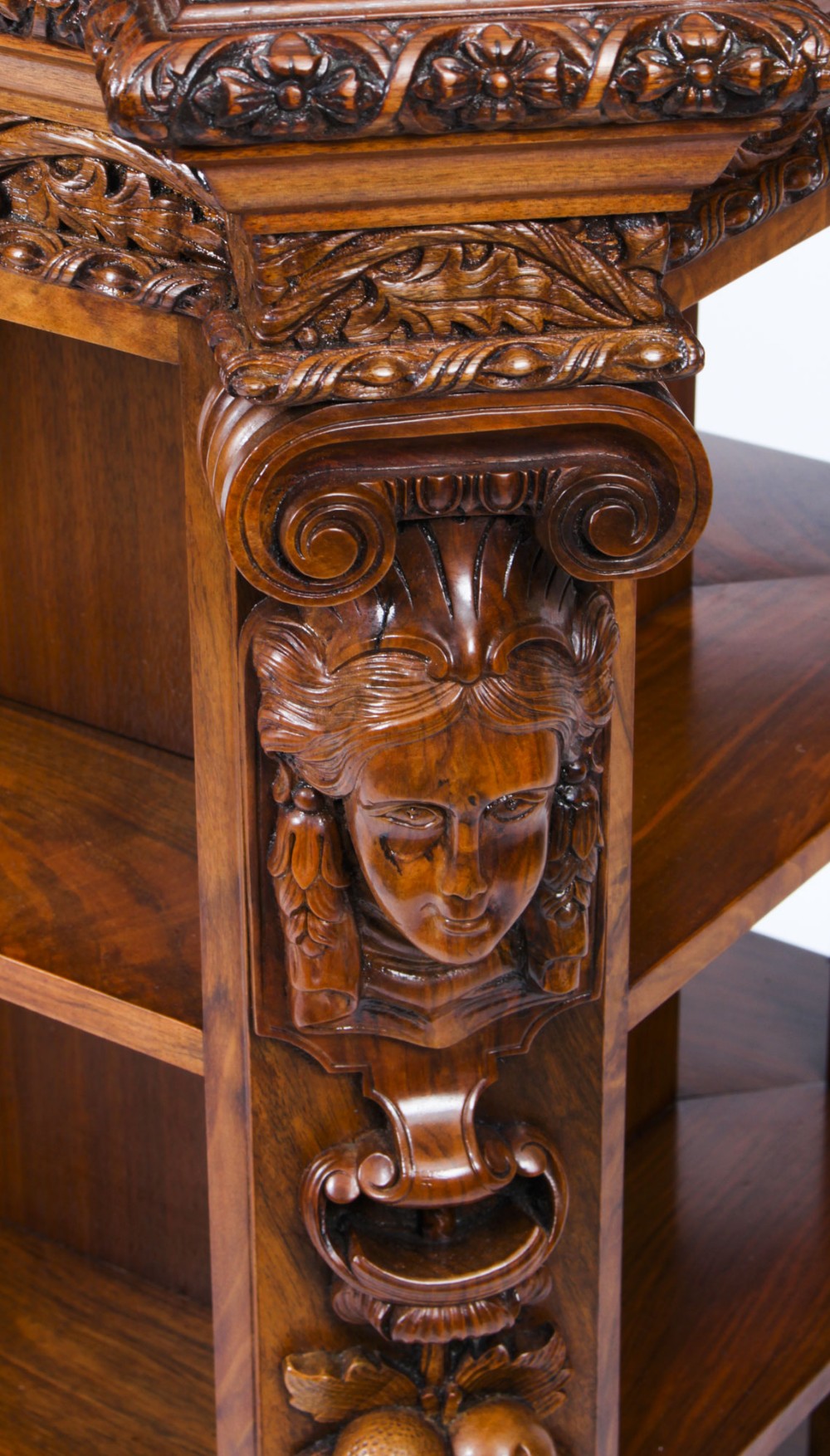
This exquisite carved bookcase is of square shape with a stunning figured walnut top of incredible quality and colour. With fitted outset flower carved moulded corners and featuring carved mask heads with carved fruit and floral columns enclosing three shelves on a plinth base.
The quality and attention to detail throughout is second to none.
Condition:
In excellent condition having been beautifully cleaned, polished and waxed in our workshops, please see photos for confirmation.
Dimensions in cm:
Height 90 x Width 64 x Depth 64
Dimensions in inches:
Height 2 foot, 11 inches x Width 2 feet, 1 inch x Depth 2 feet, 1 inch
Walnut & Burr Walnut
Walnut is a hard, dense, tight- grained wood that polishes to a very smooth finish. It is a popular and attractive wood whose colour ranges from near white in the sapwood to a dark hew in the heartwood. When dried in a kiln, walnut wood tends to develop a dull brown colour, but when air-dried can become a rich purplish-brown. Because of its colour, hardness and grain, it is a prized furniture and carving wood. Walnut veneer was highly priced and the cost would reflect the ‘fanciness’ of the veneer – the more decorative, then the more expensive and desirable.
Burr walnut refers to the swirling figure present in nearly all walnut when cut and polished, and especially in the wood taken from the base of the tree where it joins the roots. However the true burr is a rare growth on the tree where hundreds of tiny branches have started to grow. Burr walnut produces some of the most complex and beautiful figuring you can find.
Walnut "burrs" were often used to make fabulous furniture. Veneer sliced from walnut burl is one of the most valuable and highly prized by cabinet makers and prestige car manufacturers and is also a favourite material for shotgun stocks.
Gillow & Co.
was originally founded in Lancaster in 1730. Gillow’s of Lancaster was a household name in Victorian Britain, and the firm exported furniture throughout the Empire. Key to the company’s success was the dynamic father and son team at its core.
The London branch was opened in 1775. Among Gillow’s most successful pieces during this period were those made in the Neoclassical style from original drawings by Robert Adam. In the period 1813-1820 the Gillow family gradually withdrew from personal involvement with the business.
In 1897 Gillow & Co. merged with a Liverpool firm and they henceforth traded as Waring & Gillow.
Our reference: A1776