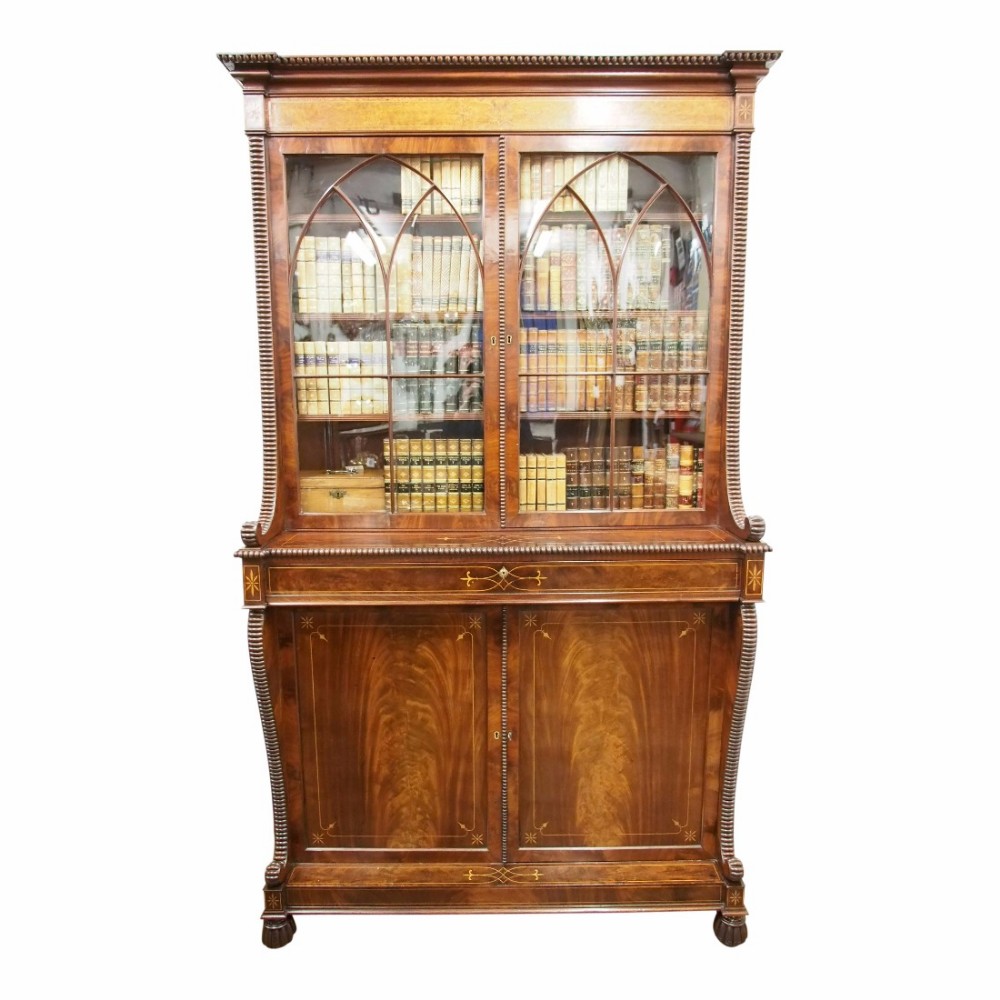
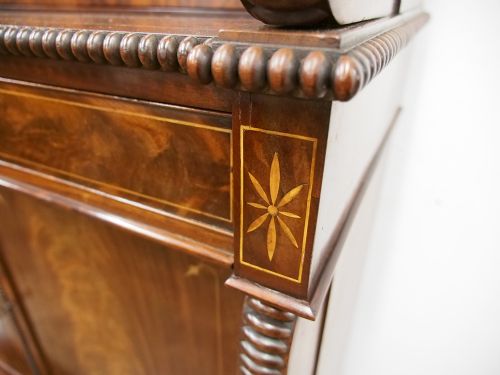
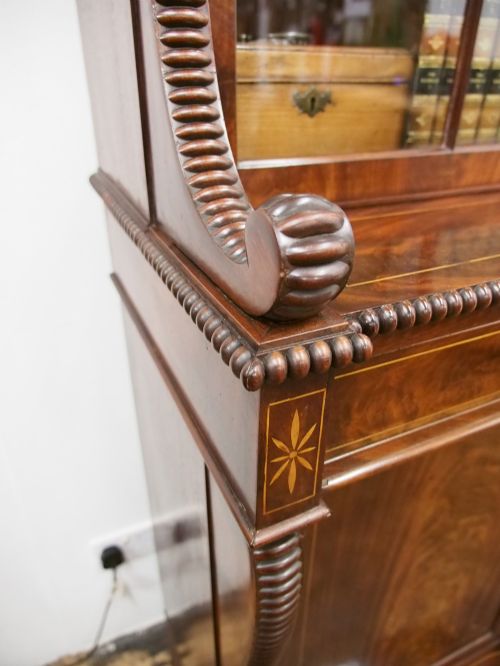
Circa 1820, rare Scottish George IV mahogany inlaid cabinet bookcase. The 2 door cabinet bookcase has an unusual stylish cornice, with carved rondels to the fore-edge. Beneath this a shaped ogee facing and a large panel that is inlaid with amboyna veneers and string inlay forming a pattern in the centre. There are 2 patterns to the front of the end of each section.
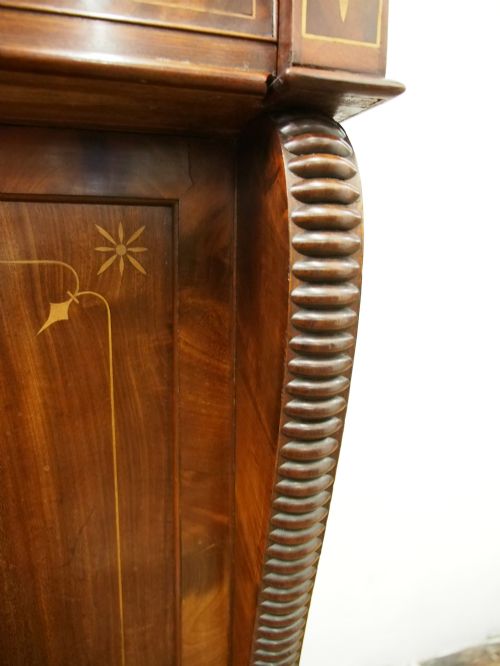
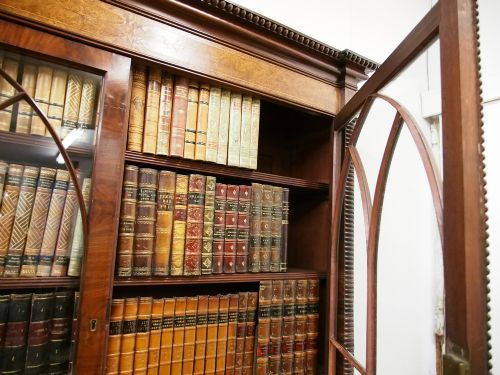
The 2 glazed doors have Gothic arches and a beaded fore edge, with cast brass escutcheons. Inside there are 3 shelves with reeded fore edges. There are 2 unusual pilasters come down the front of the bookcase with small cross sections laid side by side in a similar practice to quilling. This feature continues down the base where the shape of the fore edge is in the opposite direction to that at the top.
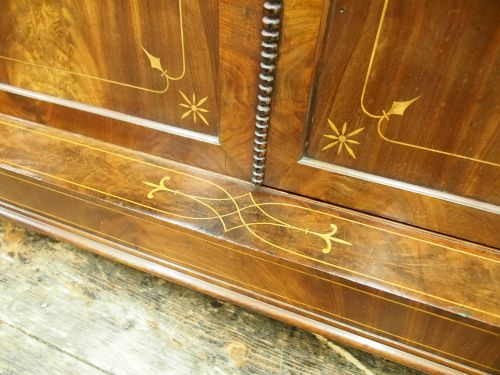
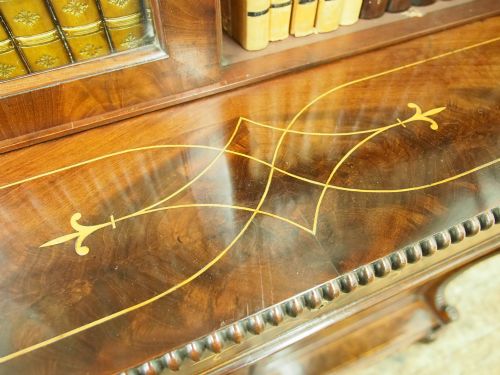
Beneath the 2 glazed doors is a flat section in flame mahogany with a stylish string inlay which is similar to that on the front of the cornice. There is 1 full length drawer again with the same inlay on it and flame mahogany panels. At the bottom there are 2 doors and the doors have flame mahogany panels either side. A beaded fore-edge separates the doors and a string inlay borders each of them. A break front section beneath these doors has a rare satinwood inlay that repeats down the facing of the bookcase. Below this there is an enclosed panel with flame mahogany string inlay and a sunburst panel on each end. The whole bookcase stands on 4 elegant feet. The ones at the front are fluted and tapering and the feet to the back are simple and turned. This stylish piece has been made in a style similar to Scottish makers Mein of Kelso and William Trotter of Edinburgh.