37,072  PAGES BROWSED TODAY PAGES TODAY 277 ANTIQUES UPLOADED TODAYNEW ARRIVALS
277 ITEMS ADDED TODAY
Sort Order
Items Per Page
Browse Categories
Sort order
Relevant Links
Items per page
ID #SA1232880
FOR SALE
£11,000
Email Buy
Save
Pieter Borsseler (C. 1634 - 1687) - Portrait of a Lady Picking Oranges C.1655.
Period Portraits
for sale €12,870     $13,970
£11,000
Period Portraits

Period Portraits

Sellingantiques Verified Since Jan 2017
View Dealers Stock Page
  • About Us
    Specialist dealer in portraits from the 17th century to the 20th century. Our stock includes quality oil paintings, drawings, and mezzotints
Id #SA1232880
PDF SHARE
SAVE

Pieter Borsseler (C. 1634 - 1687) - Portrait of a Lady Picking Oranges C.1655.

17th century
For Sale by Period Portraits
Description

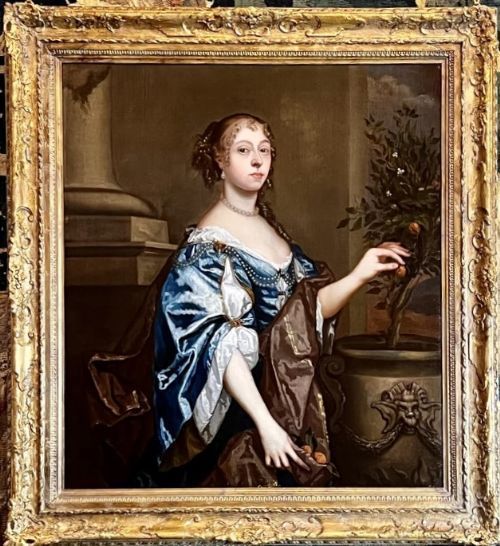
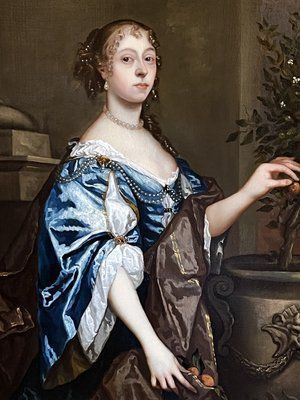
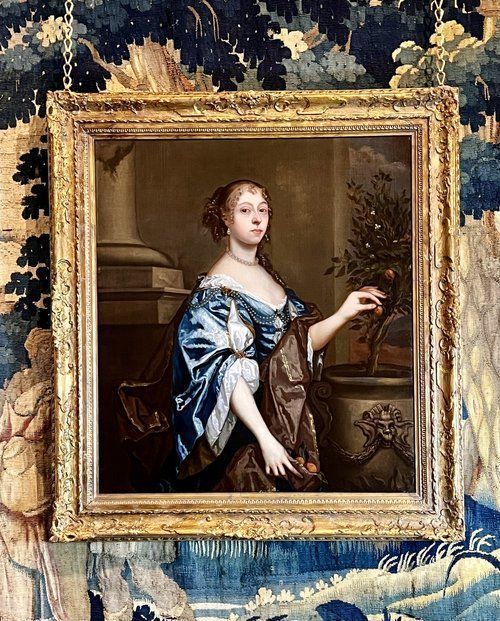
ATTRIBUTED TO PIETER BORSSELER (c. 1634 - 1687) - PORTRAIT OF A LADY PICKING ORANGES c.1655.

Fine, richly coloured and highly detailed portrait of a lady picking oranges c.1655 attributed to Pieter Borseseler (1618-1660)

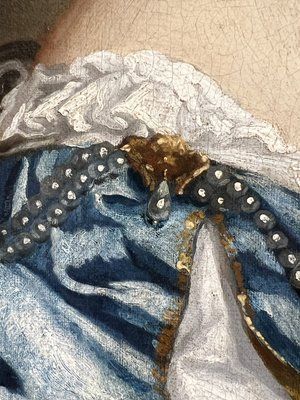
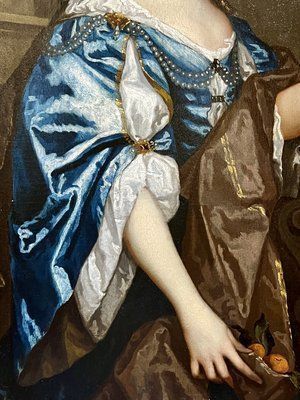
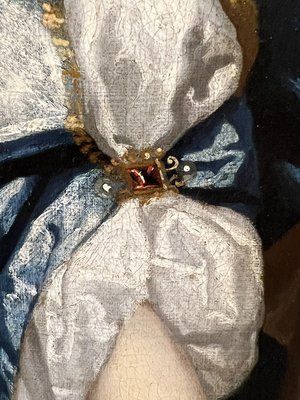
The elegant silk-clad sitter is depicted half length, in a confection of richly coloured drapery which is held together with jewelled fastenings and has strings of pearls strung across it. Her cloak is formed from fabric that has been woven with thin stripes of metal thread or ‘tinsel’ that was designed to catch the light.
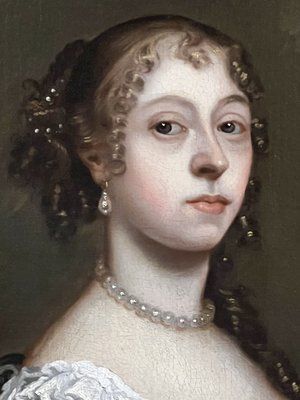
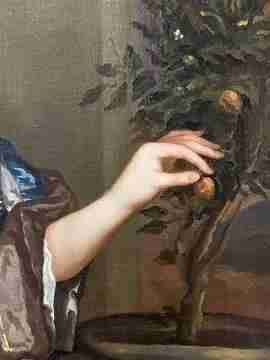
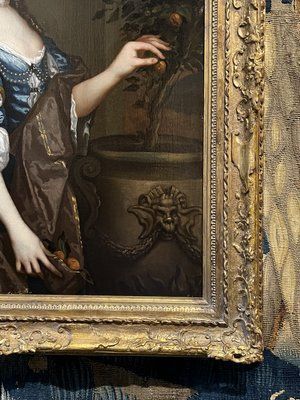
She stands next to an orange tree which sits within and urn decorated with a grotesque mask. Her elegant neck is extended and as she turns to face the viewer she picks an orange. The artist has typically chosen to emphasise the smooth pearly white skin of the sitters gently sloping shoulders and décolletage, which are further offset by her necklace and earrings.
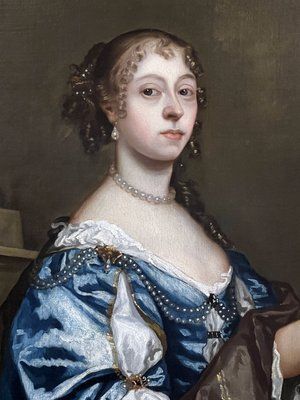
Her hair is worn in curls, some of which frame her face, whilst others cascade naturalistically around her bare shoulders. It is also perhaps worth noting the expressive use of the sitters lower arms as a focus of attention and site of erotic appeal as she gathers the fruit in the hem of her costume.
Seventeenth century audiences would have been well aware of the symbolism of fruit and flowers present in paintings. The presence of both in this painting securely identifies the plant as an orange tree which can be associated with fecudity, as the tree bears both fruit and flowers at the same time, and can produce so many of both.
Orange blossom was firmly associated with brides by the nineteenth century (when Queen Victoria was gifted betrothal jewellery with this iconography by Albert, and also chose to wear a wreath of orange blossom rather than a tiara.
In the seventeenth century oranges were an expensive and luxurious import from Spain and Portugal – and therefore a fitting fruit to display in homage to Queen Catherine of Braganza. As seen in this portrait, orange trees were grown in large pots which were kept outside in Summer and taken inside to over winter in a heated environment.
Pieter Borsseler or Pieter Borselaer (1633/1634 Middelburg - in or after 1687, Middelburg)

Pieter Borseler was a Dutch portrait painter who was prominent in England during the second half of the 17th century.
Borsseler was born in Middelburg. He was a student of Thomas Willeboirts Bosschaert in Antwerp between 1651 and 1654. He eventually returned to Middelburg, but painted between 1665 and 1679 in England. In 1681 he is reported to be in The Hague and from 1684 and 1687 in Middelburg again.[
Borsseler's earliest known dated work is from 1664, but his signature work was his painting of the antiquarian Sir William Dugdale (1665), which established his distinctive sober and melancholic style. Borsseler also painted the portraits of Dugdale's wife and of Orlando Bridgman that are at Dugdale's seat of Merevale Hall. Several paintings of the Hoby family are at Bisham Abbey, Buckinghamshire, most notably his sensitive picture of the elderly Mrs Peregrine Hoby.
Borsseler also painted the writer Samuel Butler, now in the National Portrait Gallery,[and was probably responsible for the posthumous "Chesterfield portrait" of William Shakespeare, which is based on the Chandos portrait. His studio may also have painted the anonymous portrait of a woman now in the National Gallery.
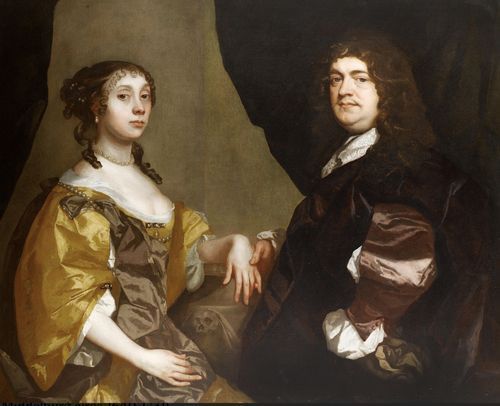
Borsseler's style is closest to fellow Anglo-Dutch artist Gerard Soest, who coincidentally also painted Butler and a posthumous portrait of Shakespeare.

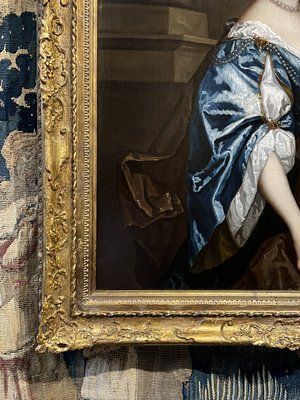
Of rare small size, this fine work is in an excellent state of conservation. It is housed in a later 18th century carved and gilded ‘centre and corner’ frame with a wonderful mellow patina.

Physical Dimensions
Height
89cm (35.04")
Width
79cm (31.10")
Declaration

Period Portraits has dated this 17th Century Portrait Painting to the 17th Century.

Reference Numbers
Sellingantiques Reference
SA1232880
Description
ATTRIBUTED TO PIETER BORSSELER (c. 1634 - 1687) - PORTRAIT OF A LADY PICKING ORANGES c.1655.

Fine, richly coloured and highly detailed portrait of a lady picking oranges c.1655 attributed to Pieter Borseseler (1618-1660)

The elegant silk-clad sitter is depicted half length, in a confection of richly coloured drapery which is held together with jewelled fastenings and has strings of pearls strung across it.
Period Portraits

Her cloak is formed from fabric that has been woven with thin stripes of metal thread or ‘tinsel’ that was designed to catch the light.

fig 1. An antique seventeenth-century oil portrait painting depicting a lady in a blue dress picking oranges, housed within a carved gilt frame.
fig 1. Pieter Borsseler (C. 1634 - 1687) - Portrait of a Lady Picking Oranges C.1655.

She stands next to an orange tree which sits within and urn decorated with a grotesque mask. Her elegant neck is extended and as she turns to face the viewer she picks an orange. The artist has typically chosen to emphasise the smooth pearly white skin of the sitters gently sloping shoulders and décolletage, which are further offset by her necklace and earrings.

fig 2. An antique seventeenth-century oil portrait painting depicting a lady in a blue dress picking oranges, housed within a carved gilt frame.
fig 2. Pieter Borsseler (C. 1634 - 1687) - Portrait of a Lady Picking Oranges C.1655.

Her hair is worn in curls, some of which frame her face, whilst others cascade naturalistically around her bare shoulders. It is also perhaps worth noting the expressive use of the sitters lower arms as a focus of attention and site of erotic appeal as she gathers the fruit in the hem of her costume.

fig 3. An antique seventeenth-century oil portrait painting depicting a lady in a blue dress picking oranges, housed within a carved gilt frame.
fig 3. Pieter Borsseler (C. 1634 - 1687) - Portrait of a Lady Picking Oranges C.1655.

Seventeenth century audiences would have been well aware of the symbolism of fruit and flowers present in paintings. The presence of both in this painting securely identifies the plant as an orange tree which can be associated with fecudity, as the tree bears both fruit and flowers at the same time, and can produce so many of both.

fig 4. An antique seventeenth-century oil portrait painting depicting a lady in a blue dress picking oranges, housed within a carved gilt frame.
fig 4. Pieter Borsseler (C. 1634 - 1687) - Portrait of a Lady Picking Oranges C.1655.

Orange blossom was firmly associated with brides by the nineteenth century (when Queen Victoria was gifted betrothal jewellery with this iconography by Albert, and also chose to wear a wreath of orange blossom rather than a tiara.

fig 5. An antique seventeenth-century oil portrait painting depicting a lady in a blue dress picking oranges, housed within a carved gilt frame.
fig 5. Pieter Borsseler (C. 1634 - 1687) - Portrait of a Lady Picking Oranges C.1655.

In the seventeenth century oranges were an expensive and luxurious import from Spain and Portugal – and therefore a fitting fruit to display in homage to Queen Catherine of Braganza. As seen in this portrait, orange trees were grown in large pots which were kept outside in Summer and taken inside to over winter in a heated environment.

fig 6. An antique seventeenth-century oil portrait painting depicting a lady in a blue dress picking oranges, housed within a carved gilt frame.
fig 6. Pieter Borsseler (C. 1634 - 1687) - Portrait of a Lady Picking Oranges C.1655.

Pieter Borsseler or Pieter Borselaer (1633/1634 Middelburg - in or after 1687, Middelburg)

Pieter Borseler was a Dutch portrait painter who was prominent in England during the second half of the 17th century.

fig 7. An antique seventeenth-century oil portrait painting depicting a lady in a blue dress picking oranges, housed within a carved gilt frame.
fig 7. Pieter Borsseler (C. 1634 - 1687) - Portrait of a Lady Picking Oranges C.1655.

Borsseler was born in Middelburg. He was a student of Thomas Willeboirts Bosschaert in Antwerp between 1651 and 1654. He eventually returned to Middelburg, but painted between 1665 and 1679 in England. In 1681 he is reported to be in The Hague and from 1684 and 1687 in Middelburg again.[

fig 8. An antique seventeenth-century oil portrait painting depicting a lady in a blue dress picking oranges, housed within a carved gilt frame.
fig 8. Pieter Borsseler (C. 1634 - 1687) - Portrait of a Lady Picking Oranges C.1655.

Borsseler's earliest known dated work is from 1664, but his signature work was his painting of the antiquarian Sir William Dugdale (1665), which established his distinctive sober and melancholic style. Borsseler also painted the portraits of Dugdale's wife and of Orlando Bridgman that are at Dugdale's seat of Merevale Hall. Several paintings of the Hoby family are at Bisham Abbey, Buckinghamshire, most notably his sensitive picture of the elderly Mrs Peregrine Hoby.

fig 9. An antique seventeenth-century oil portrait painting depicting a lady in a blue dress picking oranges, housed within a carved gilt frame.
fig 9. Pieter Borsseler (C. 1634 - 1687) - Portrait of a Lady Picking Oranges C.1655.

Borsseler also painted the writer Samuel Butler, now in the National Portrait Gallery,[and was probably responsible for the posthumous "Chesterfield portrait" of William Shakespeare, which is based on the Chandos portrait. His studio may also have painted the anonymous portrait of a woman now in the National Gallery.

fig 10. An antique seventeenth-century oil portrait painting depicting a lady in a blue dress picking oranges, housed within a carved gilt frame.
fig 10. Pieter Borsseler (C. 1634 - 1687) - Portrait of a Lady Picking Oranges C.1655.

Borsseler's style is closest to fellow Anglo-Dutch artist Gerard Soest, who coincidentally also painted Butler and a posthumous portrait of Shakespeare.

Of rare small size, this fine work is in an excellent state of conservation. It is housed in a later 18th century carved and gilded ‘centre and corner’ frame with a wonderful mellow patina.

Height
89cm (35.04")
Width
79cm (31.10")
Date of Manufacture

Period Portraits has dated this 17th Century Portrait Painting to the 17th Century.

Reference Numbers
Sellingantiques Ref
SA1232880
Period Portraits
Period Portraits
Sellingantiques verified Since Jan 2017

Specialist dealer in portraits from the 17th century to the 20th century. Our stock includes quality oil paintings, drawings, and mezzotints

Dealer Profile

You can view the stock and full dealer information on the Period Portraits Profile Page
PDF SHARE
SAVE
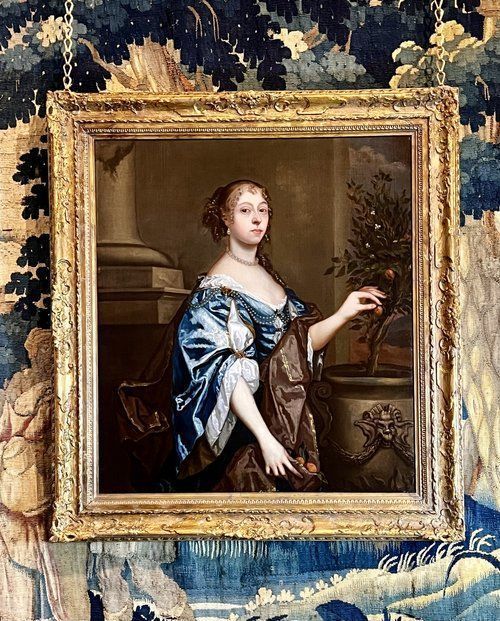
An antique seventeenth-century oil portrait painting depicting a lady in a blue dress picking oranges, housed within a carved gilt frame.
1 / 13
Archive I An antique seventeenth-century oil portrait painting depicting a lady in a blue dress picking oranges, housed within a carved gilt frame.

Pieter Borsseler (C. 1634 - 1687) - Portrait of a Lady Picking Oranges C.1655.
Archive II An antique seventeenth-century oil portrait painting depicting a lady in a blue dress picking oranges, housed within a carved gilt frame. View II
Archive III An antique seventeenth-century oil portrait painting depicting a lady in a blue dress picking oranges, housed within a carved gilt frame. View III
Archive IV An antique seventeenth-century oil portrait painting depicting a lady in a blue dress picking oranges, housed within a carved gilt frame. View IV
Archive V An antique seventeenth-century oil portrait painting depicting a lady in a blue dress picking oranges, housed within a carved gilt frame. View V
Archive VI An antique seventeenth-century oil portrait painting depicting a lady in a blue dress picking oranges, housed within a carved gilt frame. View VI
Archive VII An antique seventeenth-century oil portrait painting depicting a lady in a blue dress picking oranges, housed within a carved gilt frame. View VII
Archive VIII An antique seventeenth-century oil portrait painting depicting a lady in a blue dress picking oranges, housed within a carved gilt frame. View VIII
Archive IX An antique seventeenth-century oil portrait painting depicting a lady in a blue dress picking oranges, housed within a carved gilt frame. View IX
Archive X An antique seventeenth-century oil portrait painting depicting a lady in a blue dress picking oranges, housed within a carved gilt frame. View X
Archive XI An antique seventeenth-century oil portrait painting depicting a lady in a blue dress picking oranges, housed within a carved gilt frame. View XI
Archive XII An antique seventeenth-century oil portrait painting depicting a lady in a blue dress picking oranges, housed within a carved gilt frame. View XII
Archive XIII An antique seventeenth-century oil portrait painting depicting a lady in a blue dress picking oranges, housed within a carved gilt frame. View XIII
FURTHER BROWSING

Visitors also looked at these ⇣

Enlarged Archival View
Telephone 07889 859729
Location
North Yorkshire
United Kingdom
Verified Since Jan 2017
Items For Sale 47
Items Sold 61
Period Portraits
Period Portraits
Verified Since Jan 2017
View Dealer Info
Location: North Yorkshire, United Kingdom
Verified
Jan 2017
For Sale
47
Sold
61
An antique seventeenth-century oil portrait painting depicting a lady in a blue dress picking oranges, housed within a carved gilt frame.
PIETER BORSSELER (c. 1634 - 1687) - PORTRAIT OF A LADY PICKING ORANGES c.1655.
Ref: SA1232880
An antique seventeenth-century oil portrait painting depicting a lady in a blue dress picking oranges, housed within a carved gilt frame.
Detail View 1
Detail View 2
Detail View 3
Detail View 4
Detail View 5
Detail View 6
Detail View 7
Detail View 8
Detail View 9
Detail View 10
Detail View 11
Detail View 12
Archival Detail
Every single antique dealer on our platform is individually approved by our internal team. We verify their professional trade history, ethical standards, and photographic quality to ensure a secure, high-standard buying environment. Upon joining, every dealer agrees to a strict 9-point code of conduct. While issues can occasionally arise, our dealers typically resolve them swiftly and directly with the buyer. In fact, since our founding in 2002, Sellingantiques has only had to step in to help resolve an issue on roughly five occasions—a true testament to the quality of our dealers and their dedication to your happiness.
Our dealers are highly experienced in packing and shipping fragile, high-value antiques. Because you are in direct contact with the dealer, you will be able to easily go through all available shipping and insurance options together to ensure your item arrives safely.
Antiques are the ultimate green purchase. By choosing historical pieces over newly manufactured goods, you completely eliminate the carbon footprint of modern mass production while preserving exceptional, timeless craftsmanship.

Seventeenth-century Dutch Baroque portraiture is recognised for its refined realistic detail, dramatic use of light and shadow, and rich textures in costume. Portraits often incorporated allegorical symbols, such as fruit or botanical elements, to denote virtue, wealth, or status.

Artists during this period primarily applied ground mineral pigments mixed with linseed or walnut oil onto hand-woven linen canvas stretched over wooden frames. The accompanying carved frames were traditionally constructed from wood and finished with water gilding using genuine gold leaf.

Authentic period paintings display natural age-related craquelure across the paint layer, darkening or oxidisation of the canvas on the reverse, and historical joinery techniques on the wooden stretchers. The frames often exhibit authentic wear to the gilt surface and hand-carved wood grain.

A large-scale period portrait serves as a strong focal point when hung above a fireplace mantelpiece, sideboard, or within a formal dining room. Combining classical portraiture with minimalist contemporary furniture creates a balanced, curated interior aesthetic.

Oil paintings should be displayed away from direct sunlight, heat sources, and areas of high humidity to prevent cracking and canvas distortion. Dusting should be performed gently with a soft, dry camel-hair brush, avoiding water, solvents, or commercial cleaners.
items
Add keywords to the filter
Price
£100
£250000
Era
Movements
Material
Origin
Stock Location
Freshness
Online Payments
Categories