26,884  PAGES BROWSED TODAY PAGES TODAY 74  ANTIQUES UPLOADED TODAY NEW ARRIVALS
ID #SA531950
FOR SALE
£12,950
Email Buy
Save
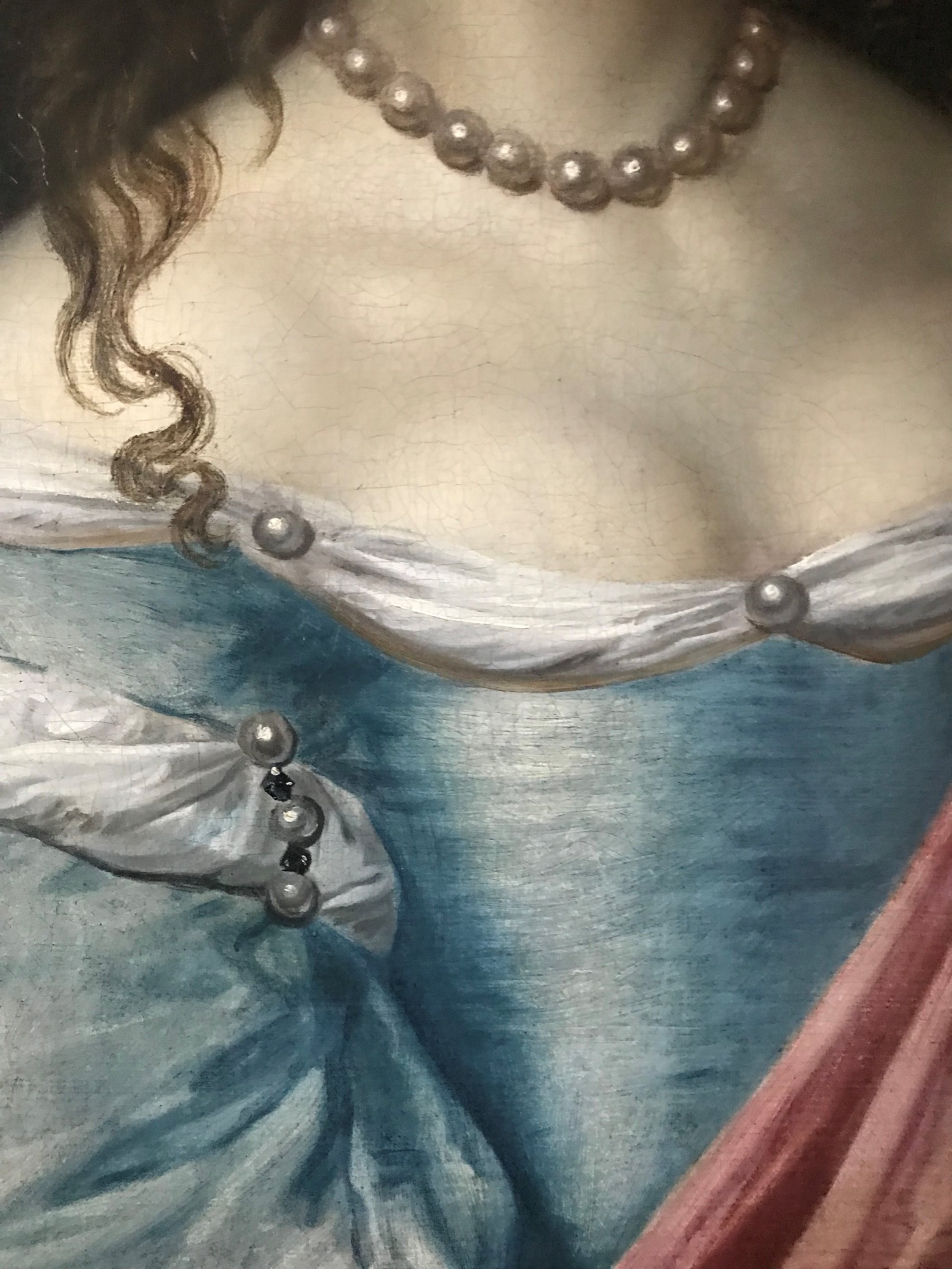
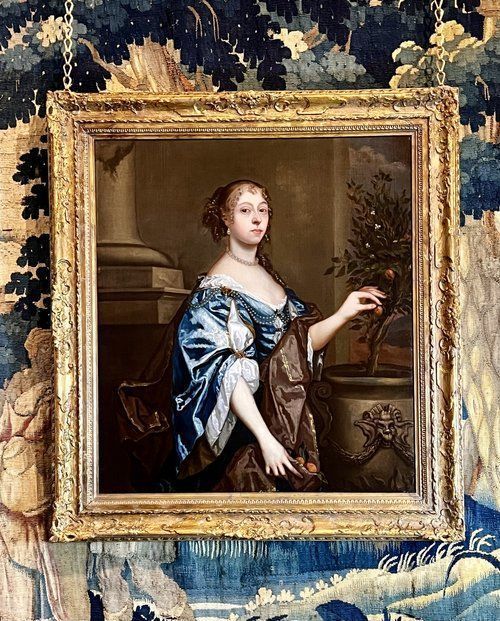
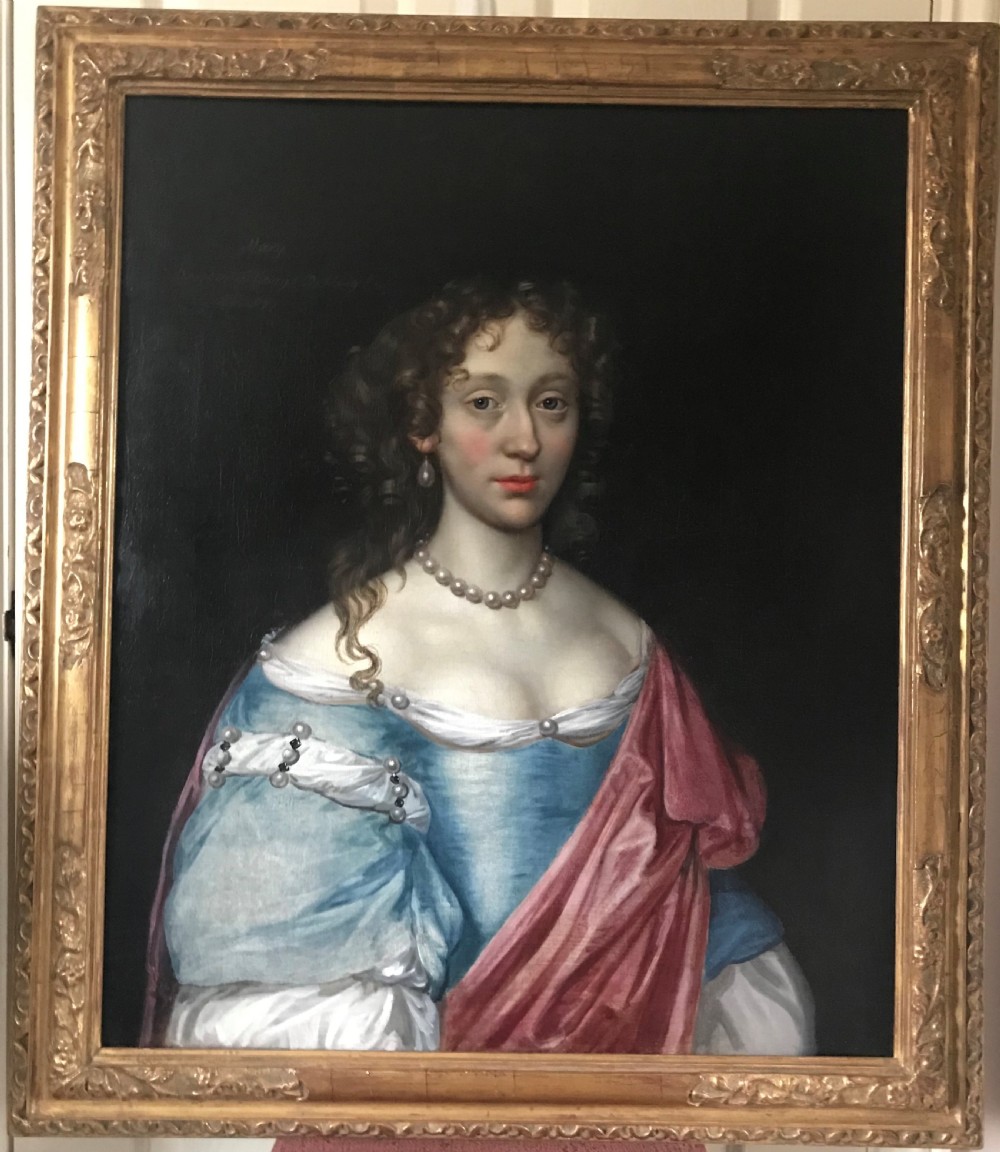
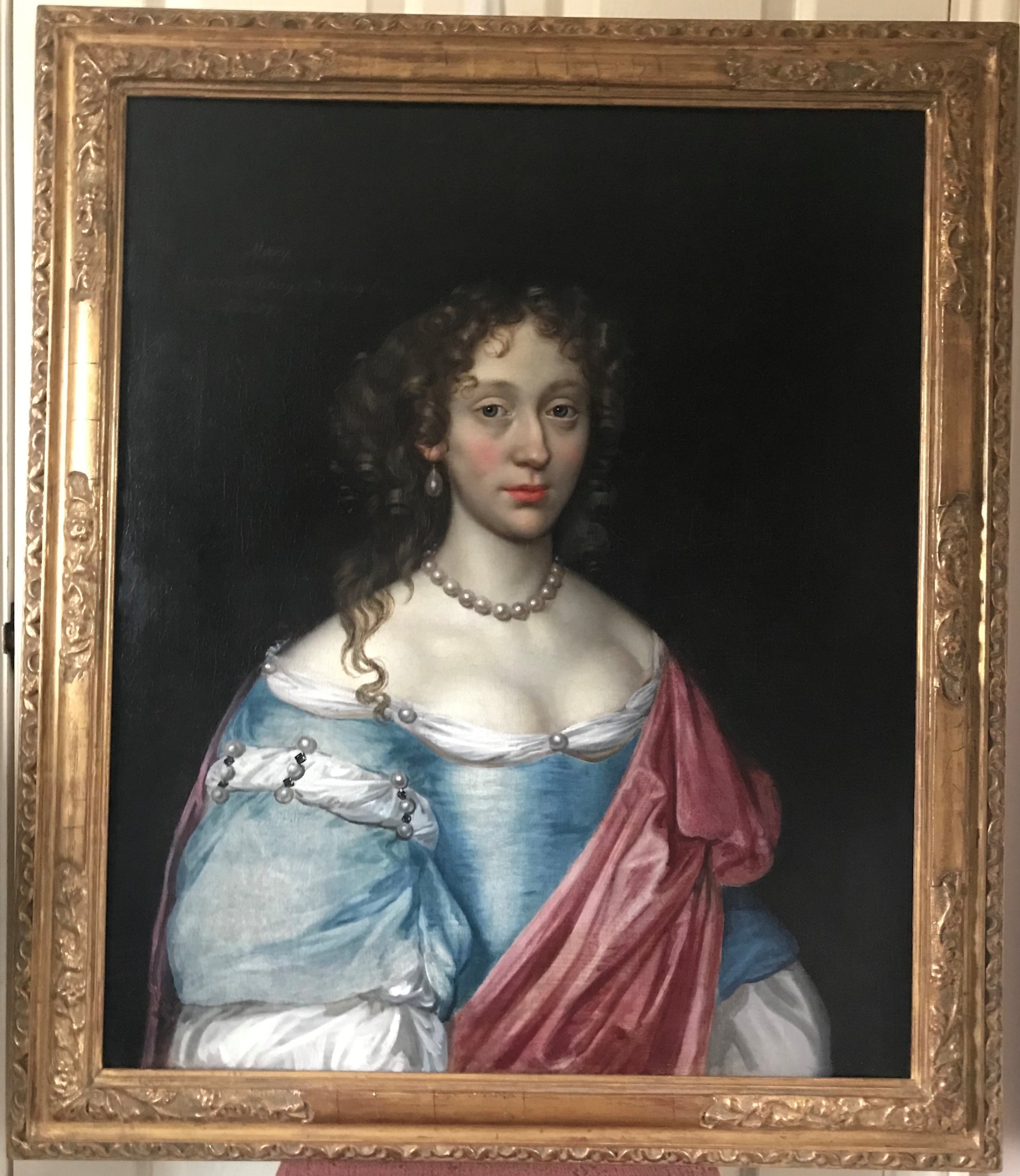
Portrait of Mary Dodding 1677, by John Michael Wright.
Roy Precious - Antiques & Fine Art
for sale €15,152     $16,447
£12,950
Roy Precious - Antiques & Fine Art

Roy Precious - Antiques & Fine Art

Sellingantiques Verified Since Mar 2003
View Dealers Stock Page
  • About Us
    Roy and nadine precious: specialists in portraiture from the 16th to the 20th century. Established in 1972.
Id #SA531950
PDF SHARE
SAVE

Portrait of Mary Dodding 1677, by John Michael Wright.

17th century
Description

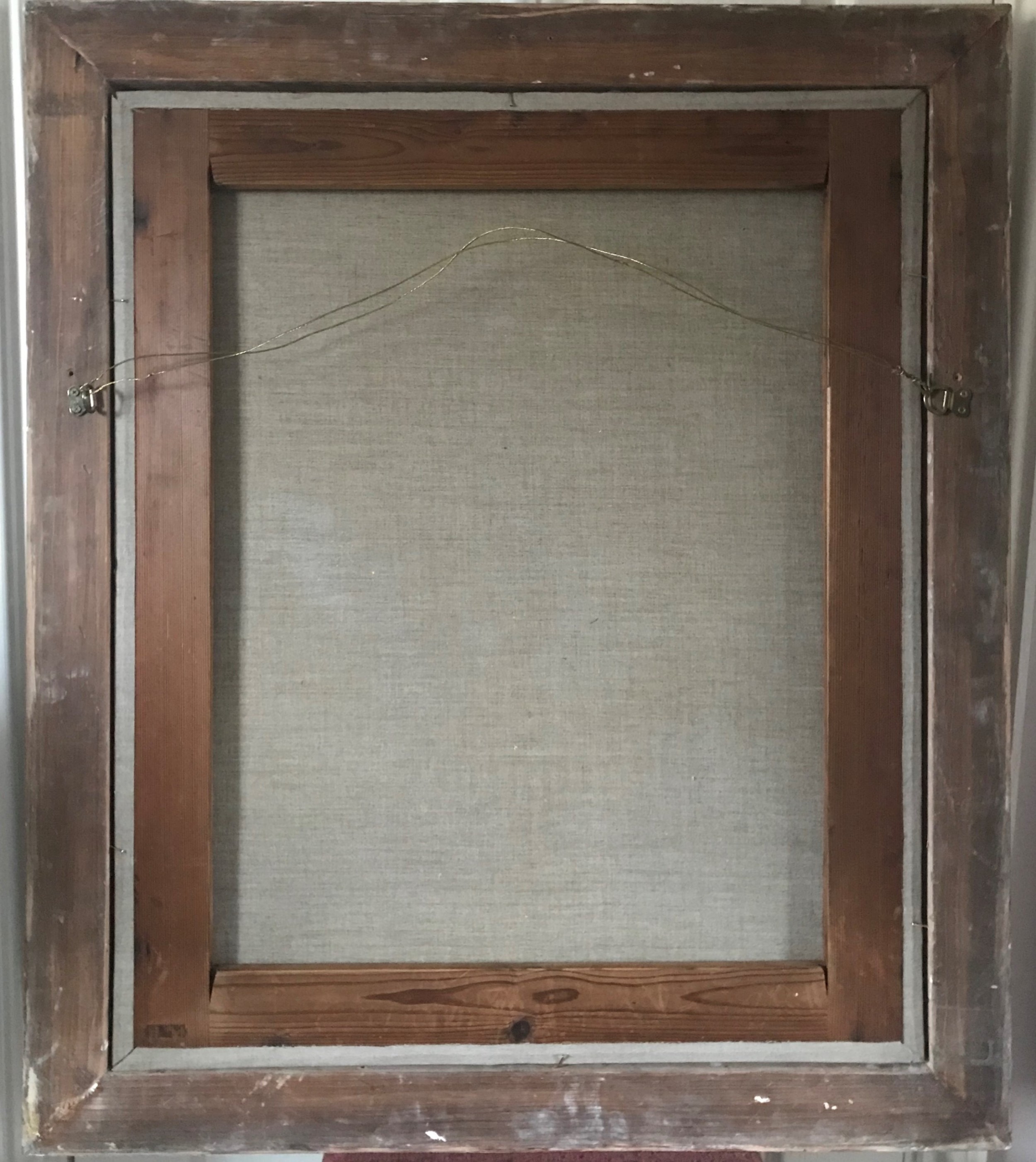
Oil on canvas in a gilt reproduction frame of correct type.

This is a very high quality portrait typical of Wright's fine and sensitive work, with the haunting sense of character that Wright conveys. He would appear to have been far more interested in conveying intelligence than rivals such as Lely, and here, as always, we sense that the sitter is of an alert and enquiring mind.
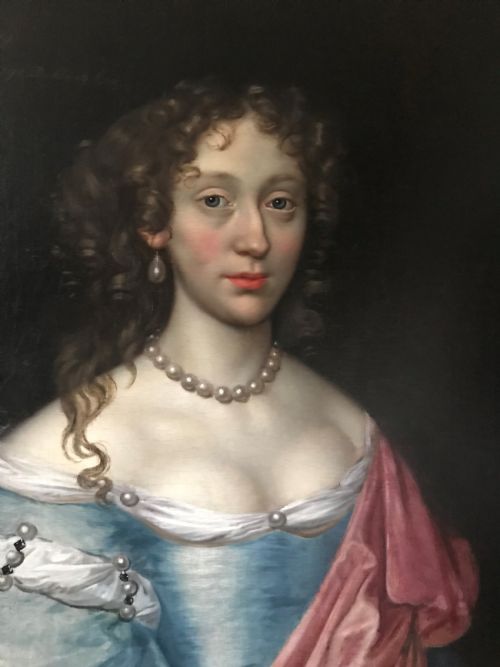
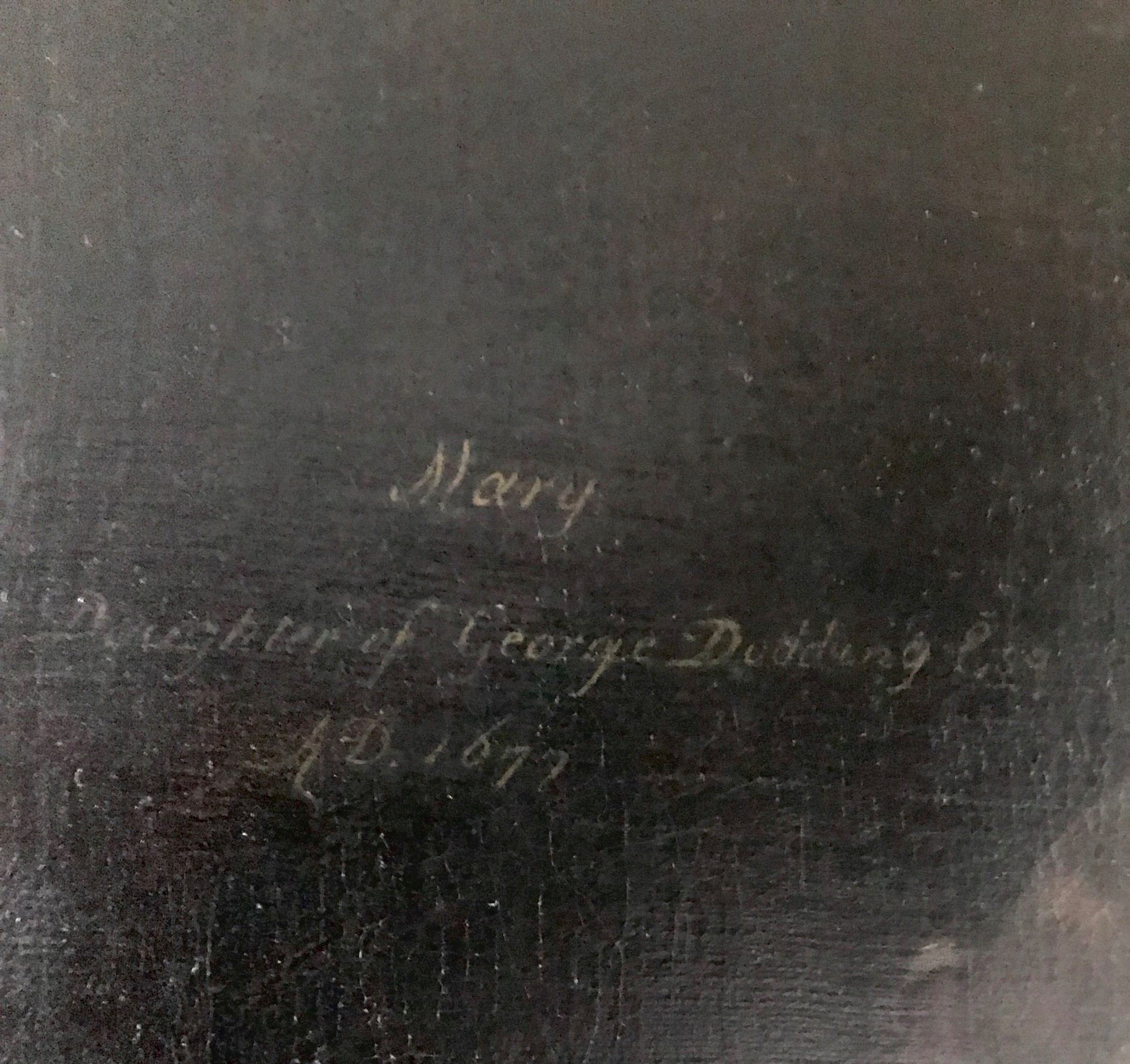
Inscribed upper left "Mary, Daughter of George Dodding Esq. A.D. 1677."

This is almost certainly a portrait painted to mark Mary's marriage to Thomas Preston.

The surname Dodding was first found in Somerset at Doddington, which predates the Norman Conquest dating back to c. 975 when it was first listed as Dundingtune. By the time of the Domesday Book in 1086, the village was known as Dodington.
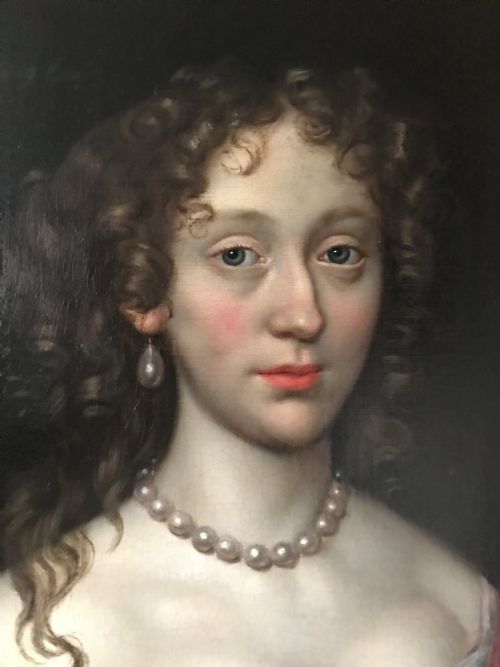
There are other places similarly named in the Domesday Book but this is the only pre-Conquest village making it of Saxon origin. In early days, some of the family were found much further north in Cumberland at Kirk-Oswald where the estates of Kirk-Oswald were granted by Elizabeth I to the Dodding family.
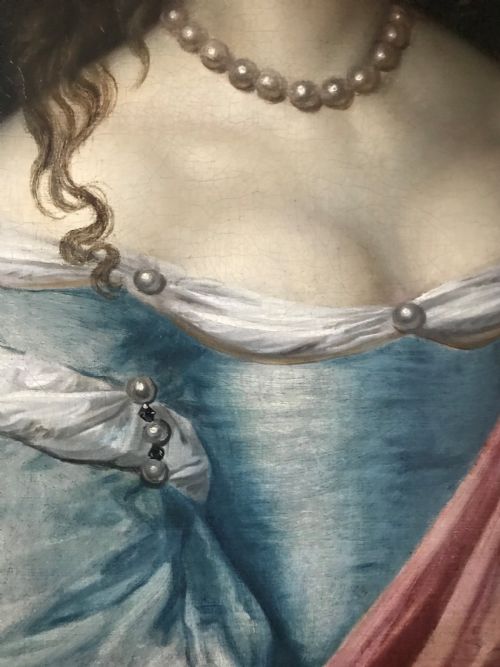
MARY DODDING was the daughter of George Dodding Esq. of Conishead Priory; he was the son of Colonel George Dodding, (who had raised and commanded one of the Lancashire Regiments of Foot for Parliament during the Civil War, mainly recruited around Cartmel and Grange-over-Sands)
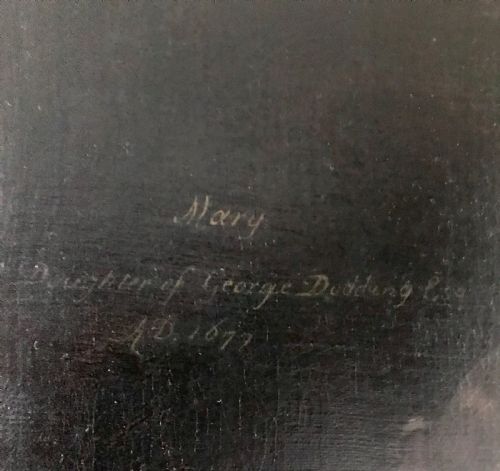
Colonel Dodding was the son of Miles Dodding Esq, of Conishead Priory, Lancashire.

Mary married Thomas Preston M.P. for Lancaster in, it is thought, 1677. Thomas was born in 1646 and died in 1697. He is buried at Cartmel, Cumbria. Mary's birth and death dates are not known, but the marriage was brief as Thomas married again and had two children from that union. There were no offspring from his earlier marriage, so it is very probable that Mary died in childbirth as was very common.
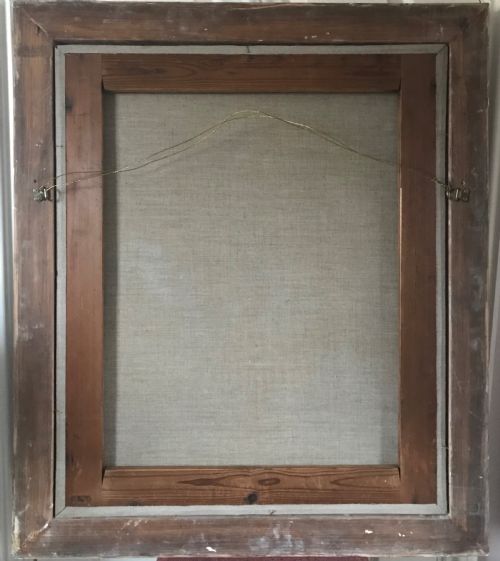
JOHN MICHAEL WRIGHT (May 1617 – July 1694) was a portrait painter in the Baroque style. Described variously as English and Scottish, Wright trained in Edinburgh under the Scots painter George Jamesone, and acquired a considerable reputation as an artist and scholar during a long sojourn in Rome. There he was admitted to the Accademia di San Luca, and was associated with some of the leading artists of his generation. He was engaged by Archduke Leopold Wilhelm of Austria, the governor of the Spanish Netherlands, to acquire artworks in Oliver Cromwell's England in 1655. He took up permanent residence in England from 1656, and served as Court Painter before and after the English Restoration. He was a favourite of the restored Stuart court, a client of both Charles II and James II, and was a witness to many of the political manoeuvres of the era.

Wright is currently rated as one of the leading indigenous British painters of his generation, largely for the distinctive realism in his portraiture. Perhaps due to the unusually cosmopolitan nature of his experience, he was favoured by patrons at the highest level of society in an age in which foreign artists were usually preferred. Wright's paintings of royalty, aristocracy and gentry are included amongst the collections of many leading galleries today.

SIZE: 35.25 x 30.25 inc. frame.

PROVENANCE: latterly in a private collection in Sidmouth, Devon.

Physical Dimensions
Height
89cm (35.04")
Width
77cm (30.31")
Depth
4cm (1.57")
Declaration

Roy Precious - Antiques & Fine Art has dated this 17th Century Portrait Painting to the 17th Century.

Reference Numbers
Sellingantiques Reference
SA531950
Dealers Internal Reference
9058
Description
Oil on canvas in a gilt reproduction frame of correct type.
This is a very high quality portrait typical of Wright's fine and sensitive work, with the haunting sense of character that Wright conveys.
Roy Precious - Antiques & Fine Art

He would appear to have been far more interested in conveying intelligence than rivals such as Lely, and here, as always, we sense that the sitter is of an alert and enquiring mind.

fig 1. An antique seventeenth-century oil portrait of a noblewoman in a blue dress and pearl jewellery set within an ornate carved giltwood frame.
fig 1. Portrait of Mary Dodding 1677, by John Michael Wright.

Inscribed upper left "Mary, Daughter of George Dodding Esq. A.D. 1677."

This is almost certainly a portrait painted to mark Mary's marriage to Thomas Preston.

The surname Dodding was first found in Somerset at Doddington, which predates the Norman Conquest dating back to c. 975 when it was first listed as Dundingtune. By the time of the Domesday Book in 1086, the village was known as Dodington.

fig 2. An antique seventeenth-century oil portrait of a noblewoman in a blue dress and pearl jewellery set within an ornate carved giltwood frame.
fig 2. Portrait of Mary Dodding 1677, by John Michael Wright.

There are other places similarly named in the Domesday Book but this is the only pre-Conquest village making it of Saxon origin. In early days, some of the family were found much further north in Cumberland at Kirk-Oswald where the estates of Kirk-Oswald were granted by Elizabeth I to the Dodding family.

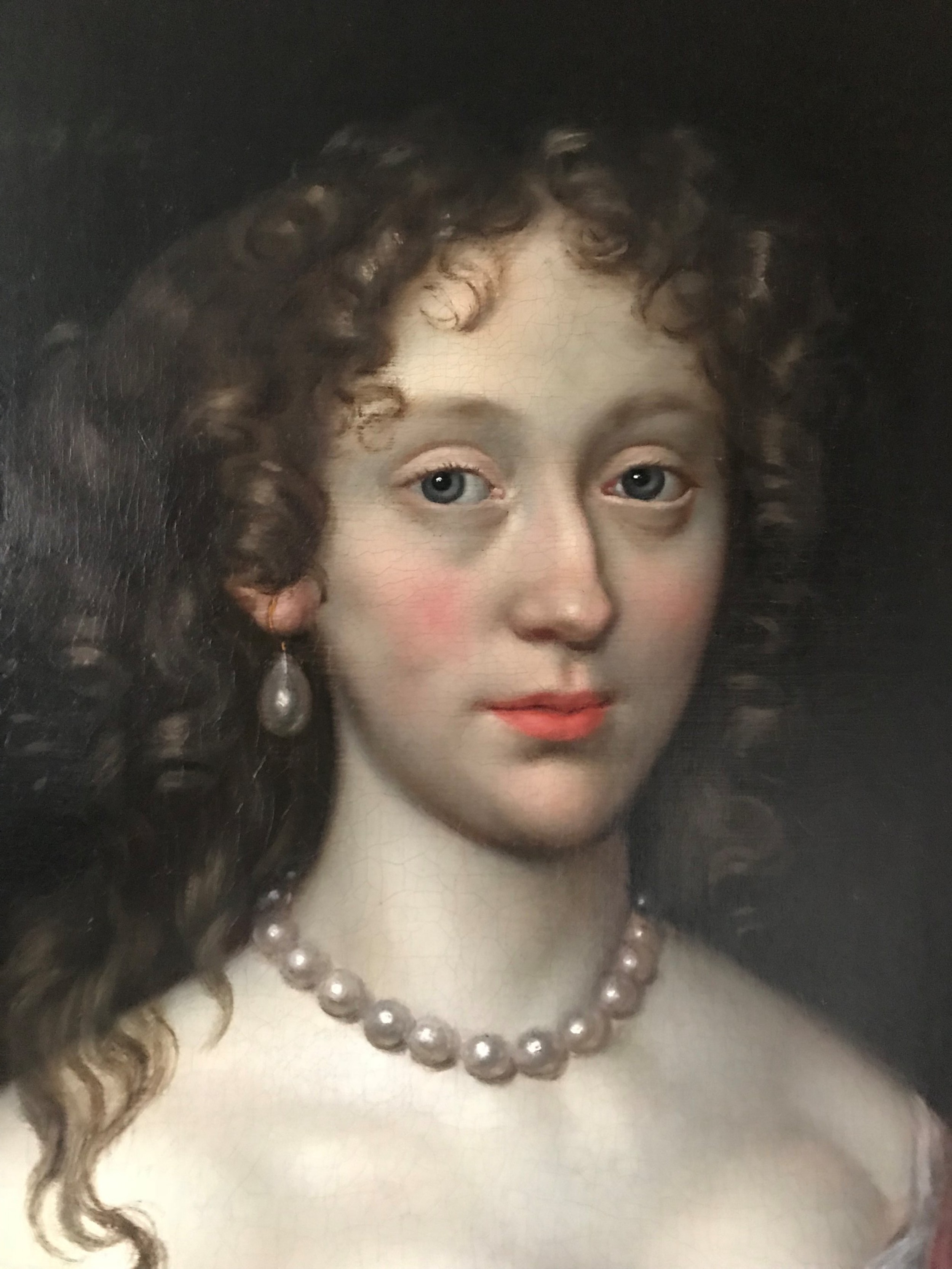
fig 3. An antique seventeenth-century oil portrait of a noblewoman in a blue dress and pearl jewellery set within an ornate carved giltwood frame.
fig 3. Portrait of Mary Dodding 1677, by John Michael Wright.

MARY DODDING was the daughter of George Dodding Esq. of Conishead Priory; he was the son of Colonel George Dodding, (who had raised and commanded one of the Lancashire Regiments of Foot for Parliament during the Civil War, mainly recruited around Cartmel and Grange-over-Sands)

fig 4. An antique seventeenth-century oil portrait of a noblewoman in a blue dress and pearl jewellery set within an ornate carved giltwood frame.
fig 4. Portrait of Mary Dodding 1677, by John Michael Wright.

Colonel Dodding was the son of Miles Dodding Esq, of Conishead Priory, Lancashire.

Mary married Thomas Preston M.P. for Lancaster in, it is thought, 1677. Thomas was born in 1646 and died in 1697. He is buried at Cartmel, Cumbria. Mary's birth and death dates are not known, but the marriage was brief as Thomas married again and had two children from that union. There were no offspring from his earlier marriage, so it is very probable that Mary died in childbirth as was very common.

fig 5. An antique seventeenth-century oil portrait of a noblewoman in a blue dress and pearl jewellery set within an ornate carved giltwood frame.
fig 5. Portrait of Mary Dodding 1677, by John Michael Wright.

JOHN MICHAEL WRIGHT (May 1617 – July 1694) was a portrait painter in the Baroque style. Described variously as English and Scottish, Wright trained in Edinburgh under the Scots painter George Jamesone, and acquired a considerable reputation as an artist and scholar during a long sojourn in Rome. There he was admitted to the Accademia di San Luca, and was associated with some of the leading artists of his generation. He was engaged by Archduke Leopold Wilhelm of Austria, the governor of the Spanish Netherlands, to acquire artworks in Oliver Cromwell's England in 1655. He took up permanent residence in England from 1656, and served as Court Painter before and after the English Restoration. He was a favourite of the restored Stuart court, a client of both Charles II and James II, and was a witness to many of the political manoeuvres of the era.

Wright is currently rated as one of the leading indigenous British painters of his generation, largely for the distinctive realism in his portraiture. Perhaps due to the unusually cosmopolitan nature of his experience, he was favoured by patrons at the highest level of society in an age in which foreign artists were usually preferred. Wright's paintings of royalty, aristocracy and gentry are included amongst the collections of many leading galleries today.

SIZE: 35.25 x 30.25 inc. frame.

PROVENANCE: latterly in a private collection in Sidmouth, Devon.

Height
89cm (35.04")
Width
77cm (30.31")
Depth
4cm (1.57")
Date of Manufacture

Roy Precious - Antiques & Fine Art has dated this 17th Century Portrait Painting to the 17th Century.

Reference Numbers
Sellingantiques Ref
SA531950
Dealers Internal Ref
9058
Roy Precious - Antiques & Fine Art
Sellingantiques verified Since Mar 2003

Roy and nadine precious: specialists in portraiture from the 16th to the 20th century. Established in 1972.

Dealer Profile

You can view the stock and full dealer information on the Roy Precious - Antiques & Fine Art Profile Page
PDF SHARE
SAVE
An antique seventeenth-century oil portrait of a noblewoman in a blue dress and pearl jewellery set within an ornate carved giltwood frame.
1 / 6
Archive I An antique seventeenth-century oil portrait of a noblewoman in a blue dress and pearl jewellery set within an ornate carved giltwood frame.

Portrait of Mary Dodding 1677, by John Michael Wright.
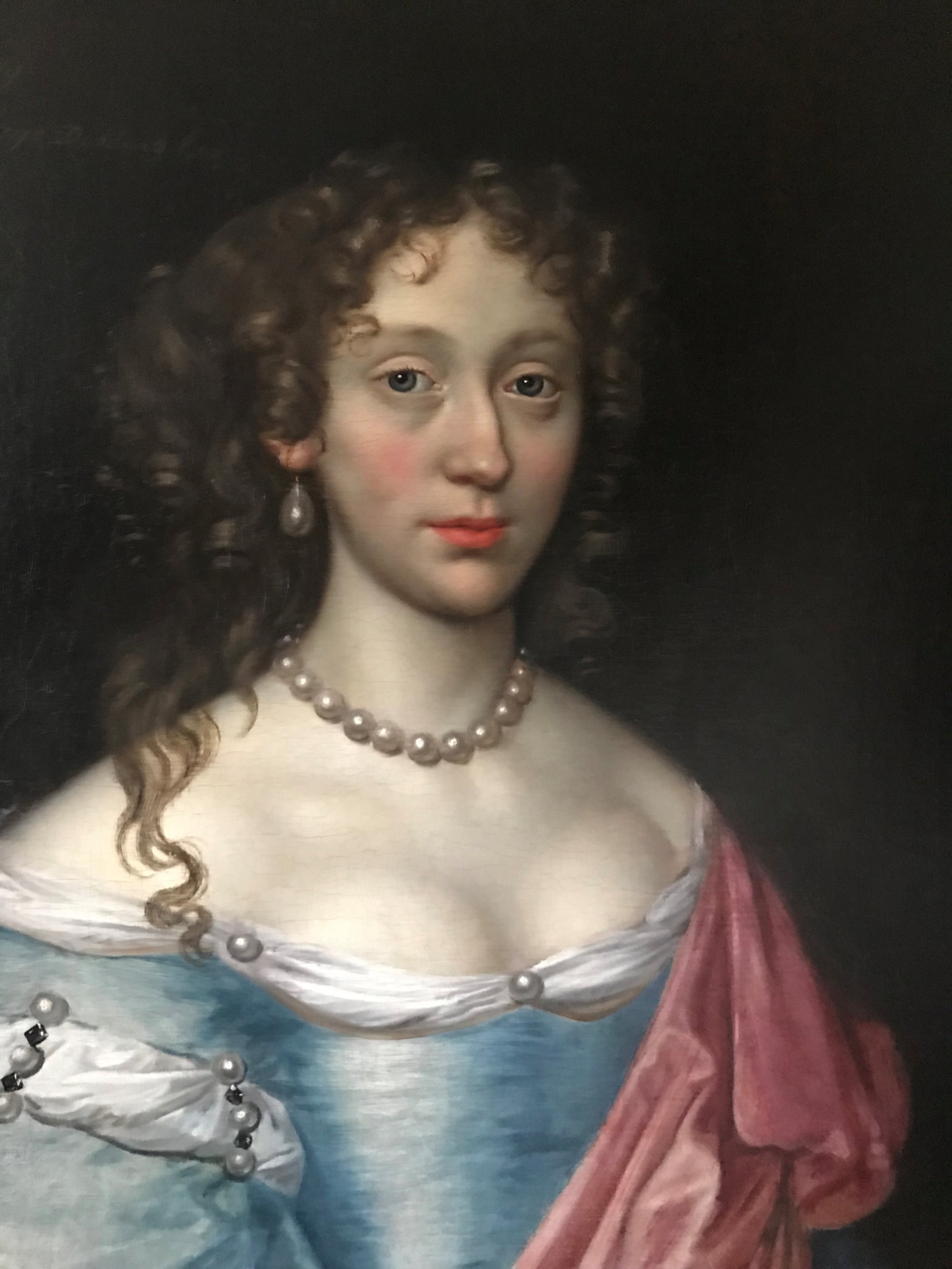
Archive II An antique seventeenth-century oil portrait of a noblewoman in a blue dress and pearl jewellery set within an ornate carved giltwood frame. View II
Archive III An antique seventeenth-century oil portrait of a noblewoman in a blue dress and pearl jewellery set within an ornate carved giltwood frame. View III
Archive IV An antique seventeenth-century oil portrait of a noblewoman in a blue dress and pearl jewellery set within an ornate carved giltwood frame. View IV
Archive V An antique seventeenth-century oil portrait of a noblewoman in a blue dress and pearl jewellery set within an ornate carved giltwood frame. View V
Archive VI An antique seventeenth-century oil portrait of a noblewoman in a blue dress and pearl jewellery set within an ornate carved giltwood frame. View VI
FURTHER BROWSING

Visitors also looked at these ⇣

Enlarged Archival View
Location
Wiltshire
United Kingdom
Dealer Profile Page sellingantiques.co.uk/rp
Verified Since Mar 2003
Items For Sale 95
Items Sold 679
Roy Precious - Antiques & Fine Art
Verified Since Mar 2003
View Dealer Info
Location: Wiltshire, United Kingdom
Verified
Mar 2003
For Sale
95
Sold
679
An antique seventeenth-century oil portrait of a noblewoman in a blue dress and pearl jewellery set within an ornate carved giltwood frame.
Portrait of Mary Dodding 1677, by John Michael Wright.
Ref: SA531950
An antique seventeenth-century oil portrait of a noblewoman in a blue dress and pearl jewellery set within an ornate carved giltwood frame.
Detail View 1
Detail View 2
Detail View 3
Detail View 4
Detail View 5
Archival Detail
Every single antique dealer on our platform is individually approved by our internal team. We verify their professional trade history, ethical standards, and photographic quality to ensure a secure, high-standard buying environment. Upon joining, every dealer agrees to a strict 9-point code of conduct. While issues can occasionally arise, our dealers typically resolve them swiftly and directly with the buyer. In fact, since our founding in 2002, Sellingantiques has only had to step in to help resolve an issue on roughly five occasions—a true testament to the quality of our dealers and their dedication to your happiness.
Our dealers are highly experienced in packing and shipping fragile, high-value antiques. Because you are in direct contact with the dealer, you will be able to easily go through all available shipping and insurance options together to ensure your item arrives safely.
Antiques are the ultimate green purchase. By choosing historical pieces over newly manufactured goods, you completely eliminate the carbon footprint of modern mass production while preserving exceptional, timeless craftsmanship.

British Baroque portraiture from the Restoration period typically features sitters depicted in grand, formal poses with stylised drapery, pearl embellishments, and dramatic chiaroscuro lighting.

Artists of this era painted primarily using hand-ground oil pigments on stretched linen canvas, framed in carved timber frames finished with gold leaf gilding.

Authentic period portraits show characteristic craquelure patterns across the oil surface, historical timber stretcher bars, hand-forged tacks, and period-appropriate mineral pigments.

An antique portrait adds visual weight and architectural narrative to spaces when hung above a sideboard, placed over a chimney breast, or integrated into a curated gallery wall.

Keep the painting away from direct sunlight, dampness, and heat sources, dusting the gilt frame gently with a soft dry brush rather than liquid cleaners.
items
Add keywords to the filter
Price
£100
£250000
Era
Movements
Material
Origin
Stock Location
Freshness
Online Payments
Categories