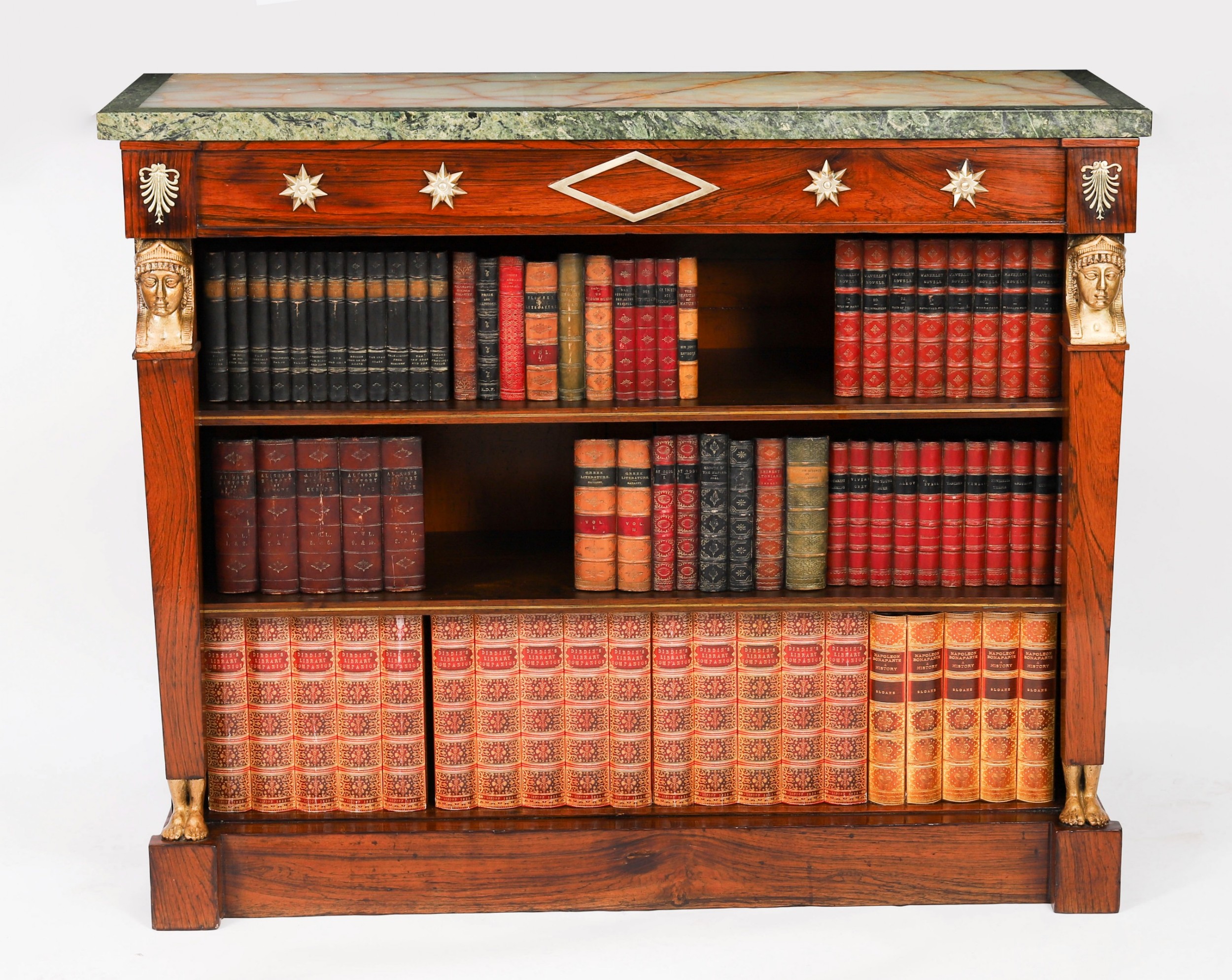
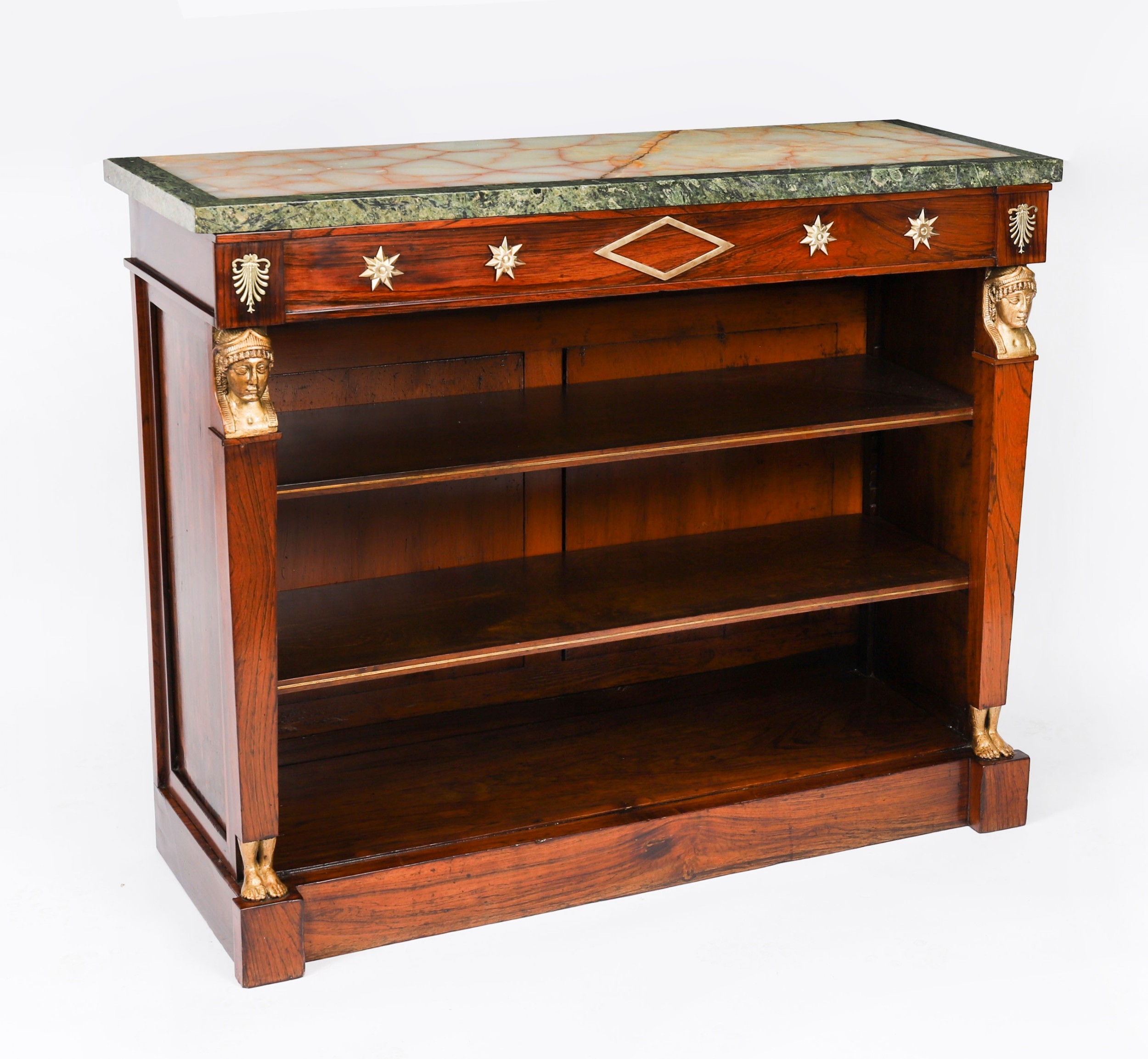
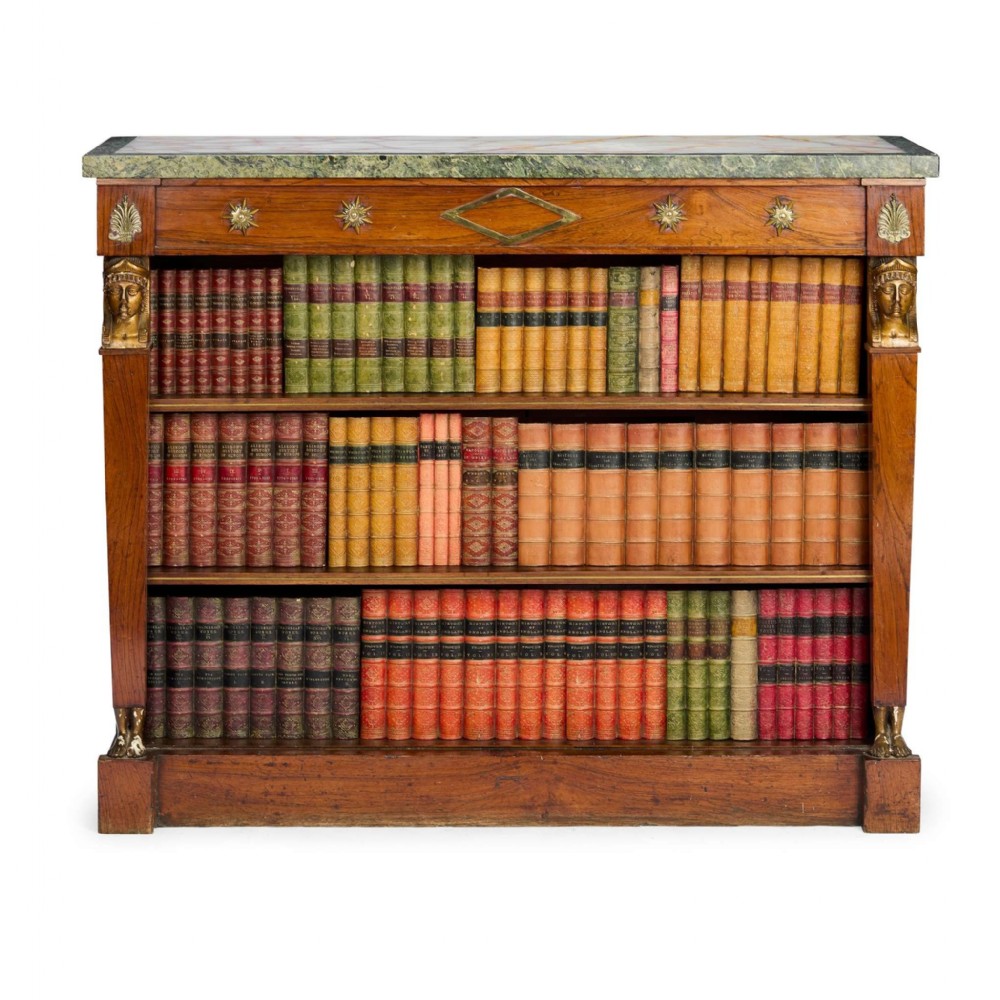
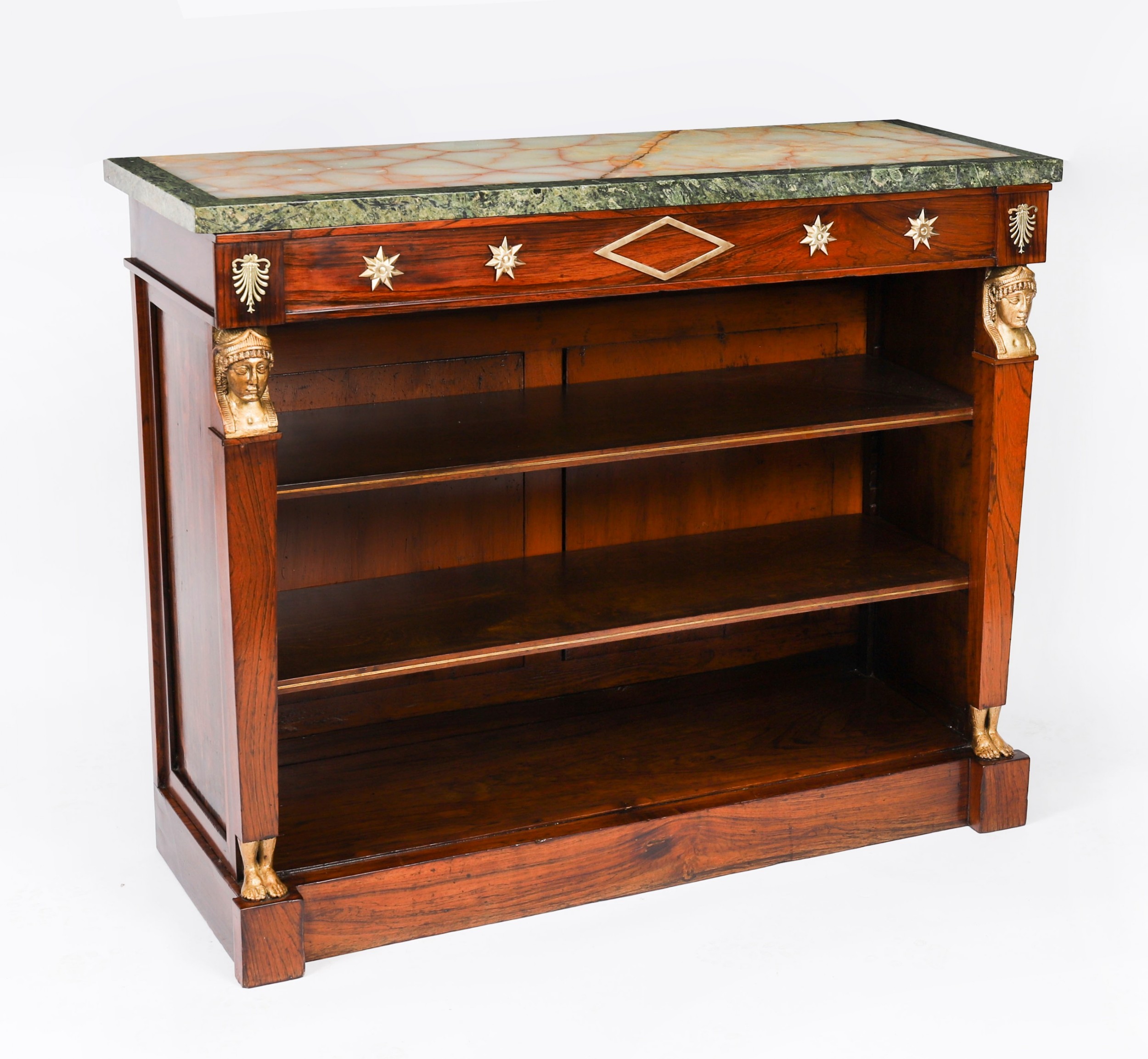
Regent Antiques has dated this piece to the 19th Century.
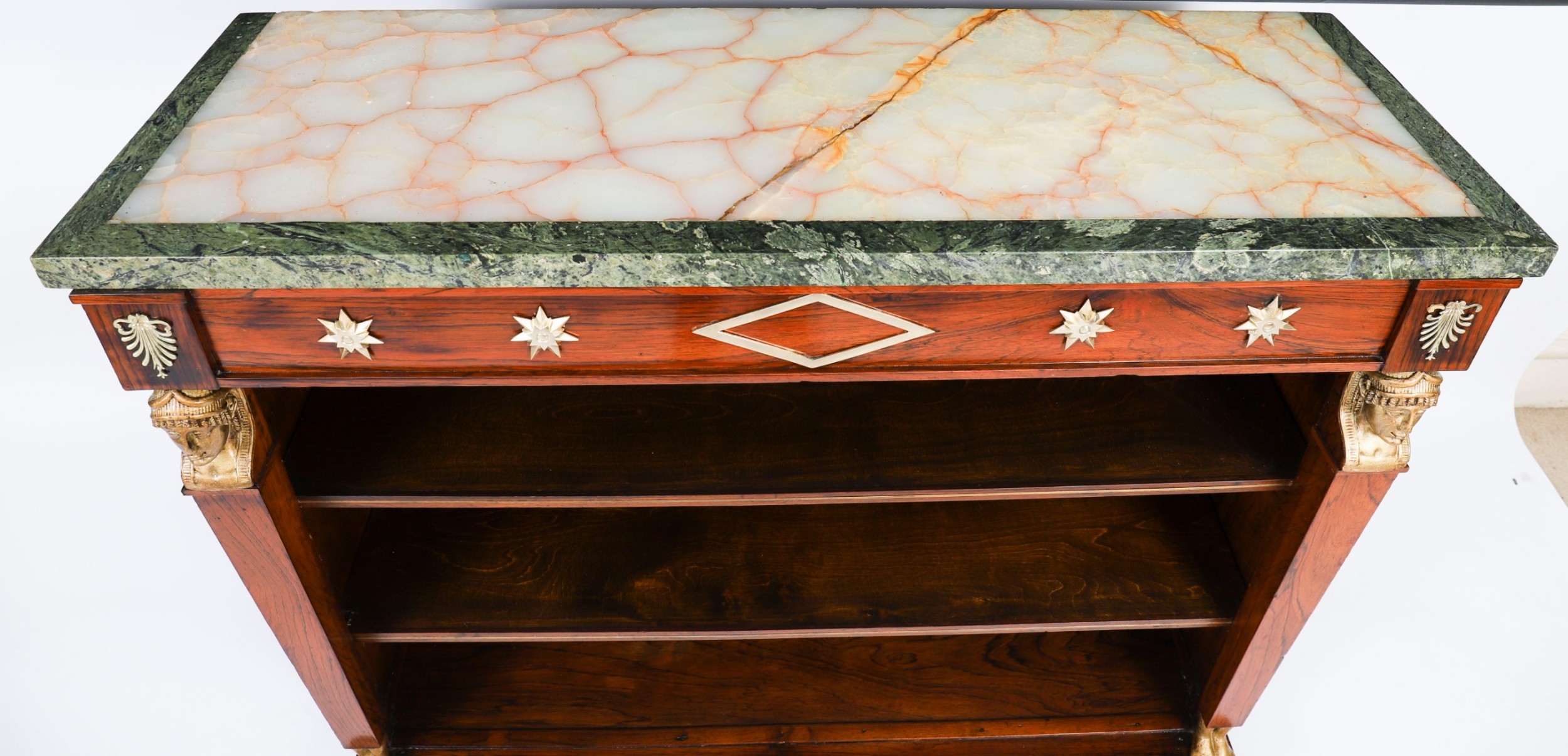
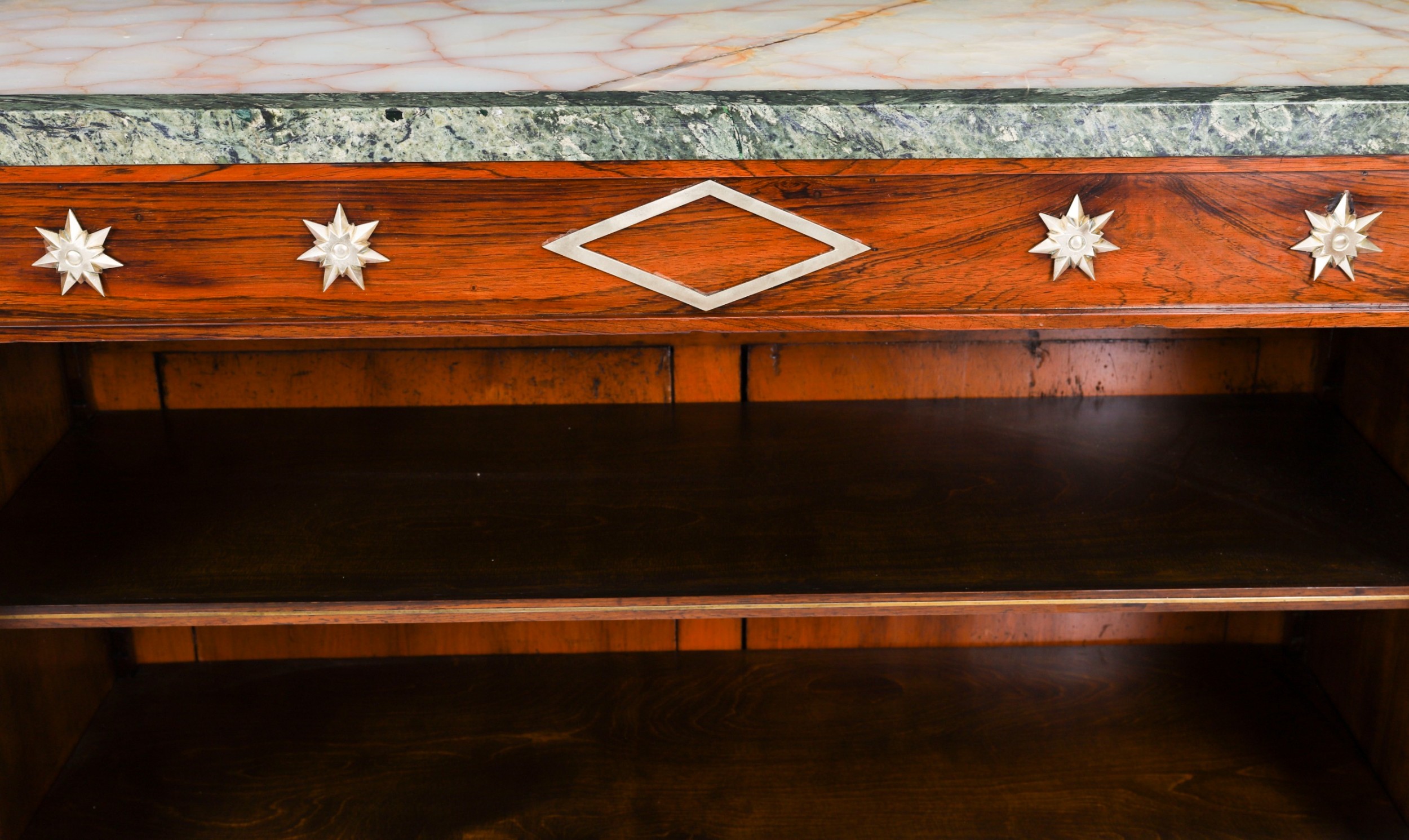
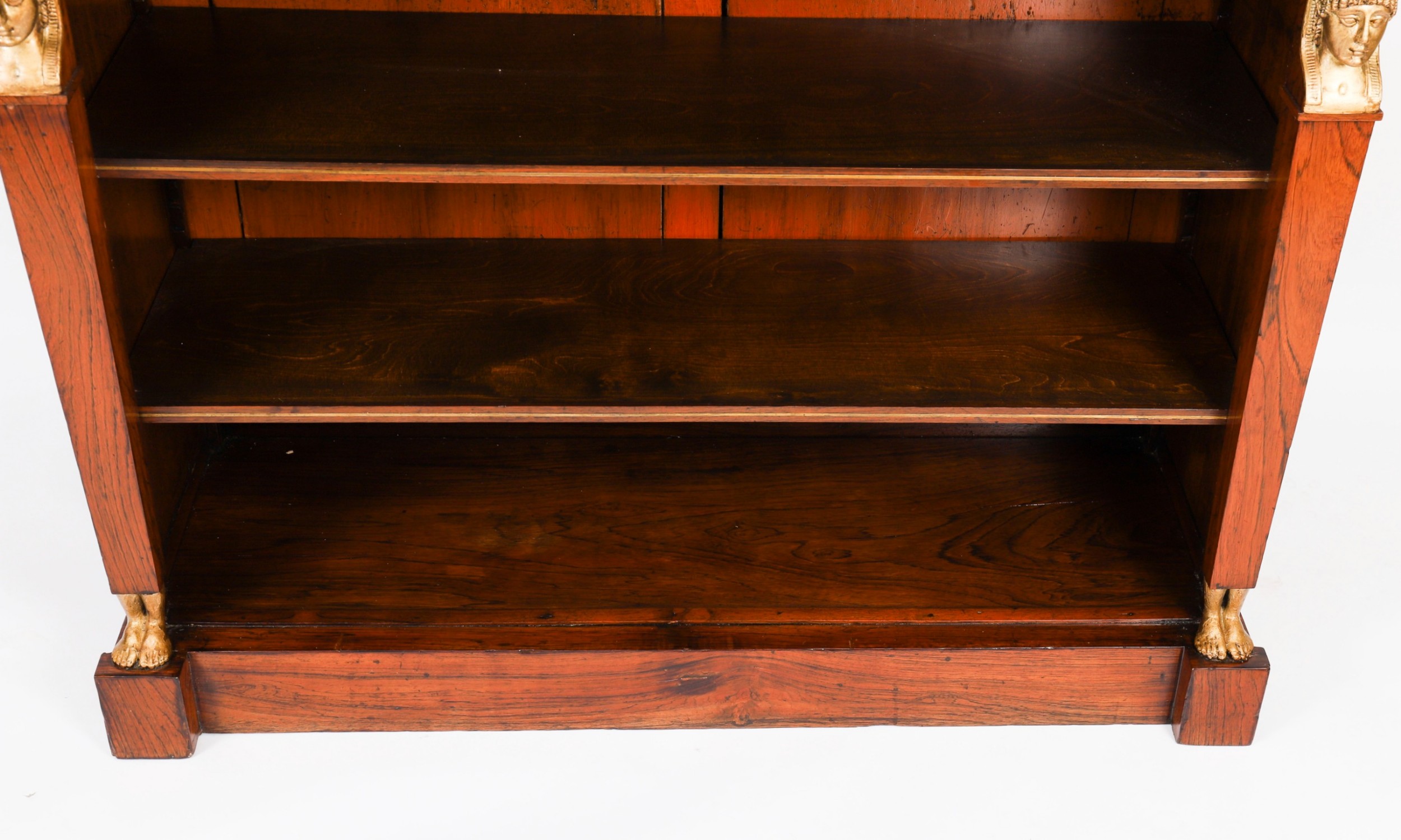
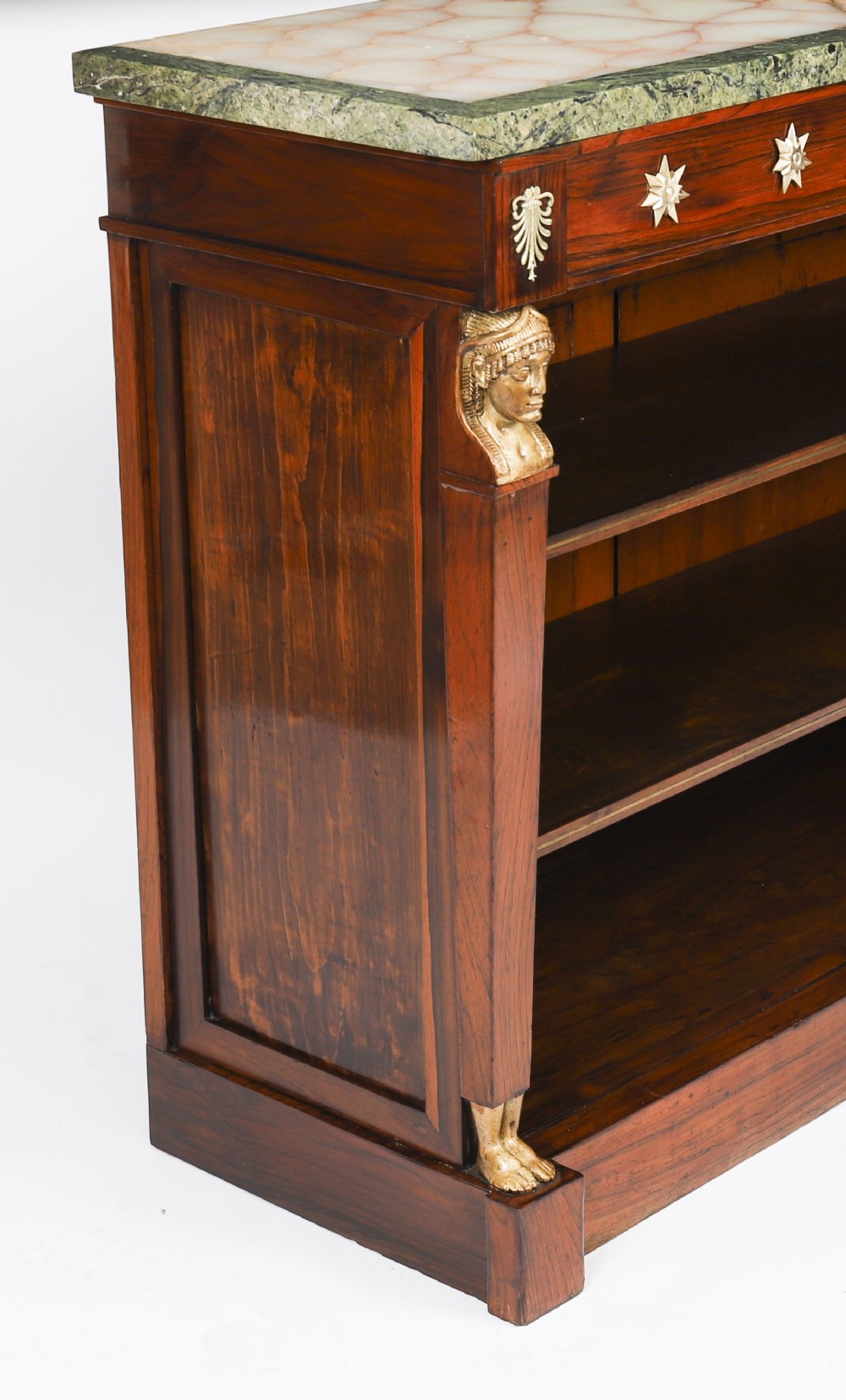
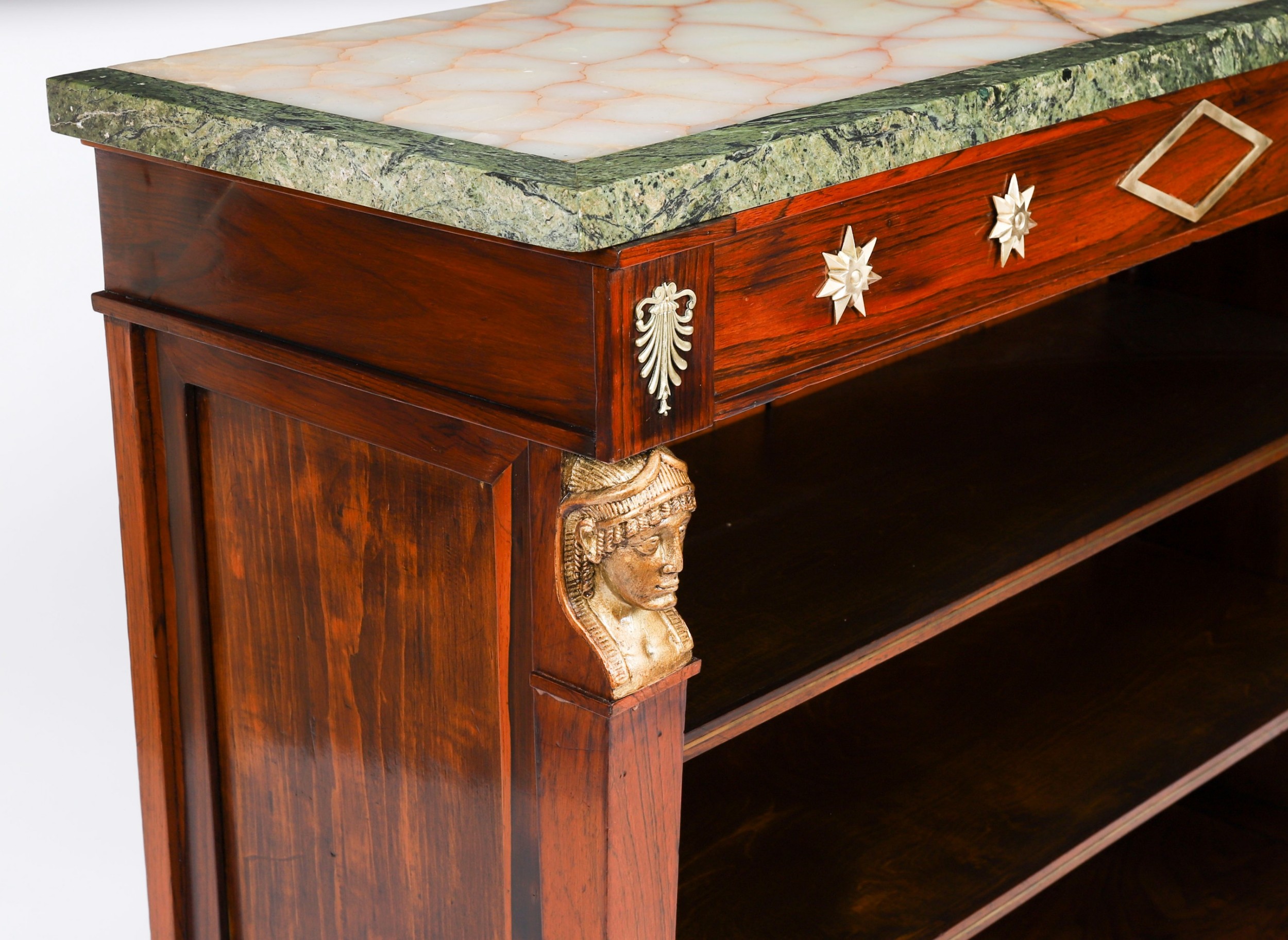
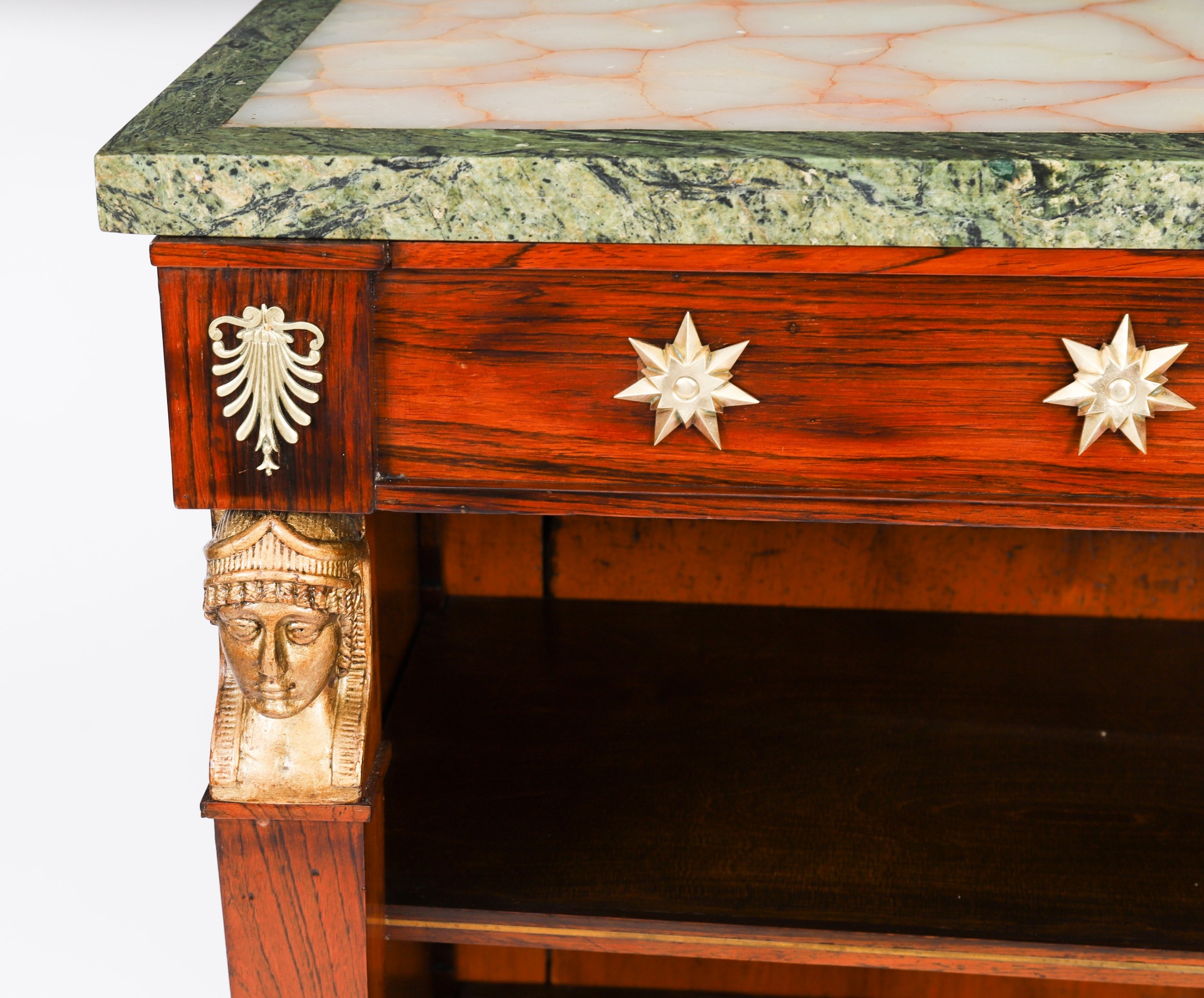
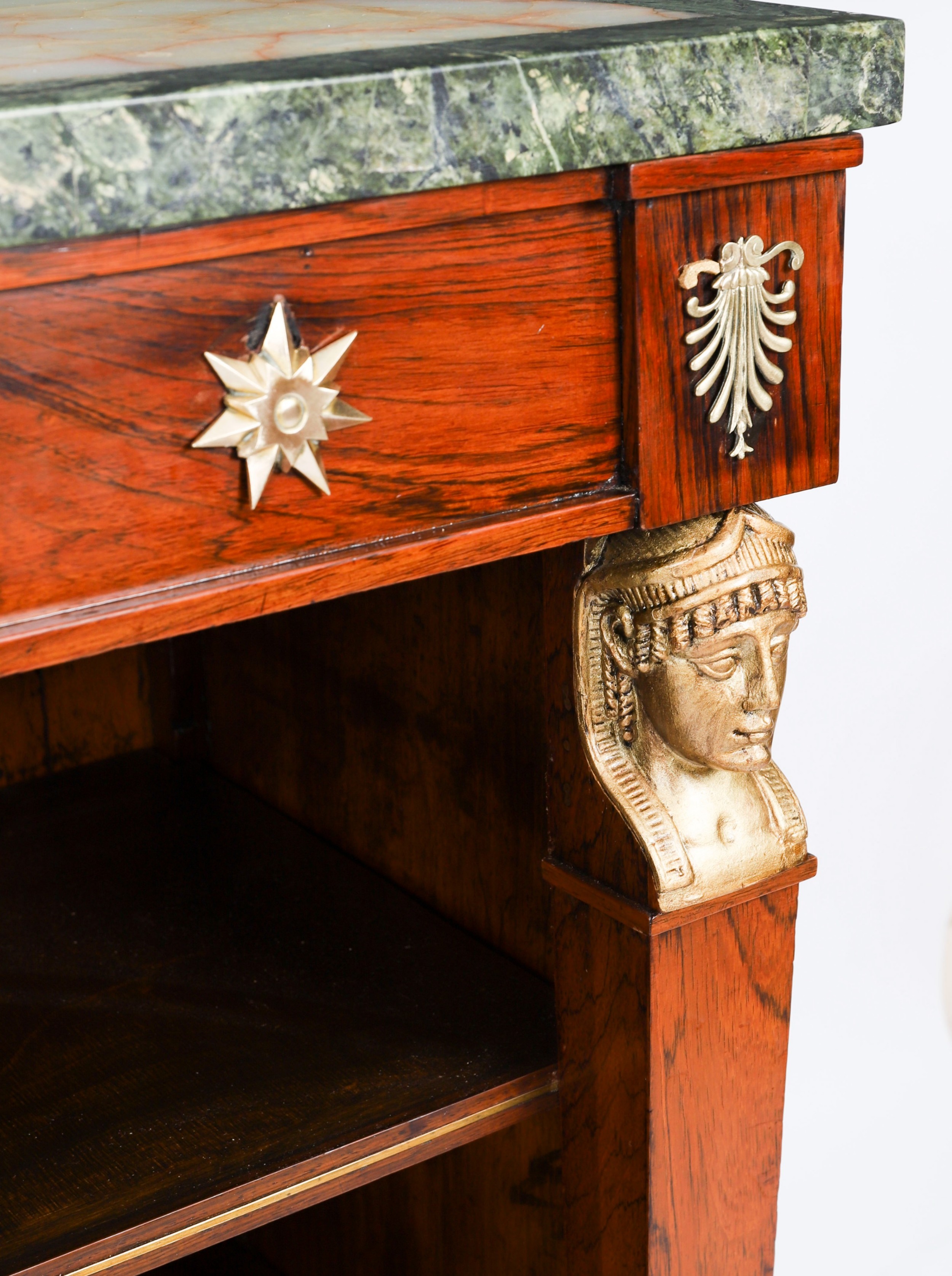
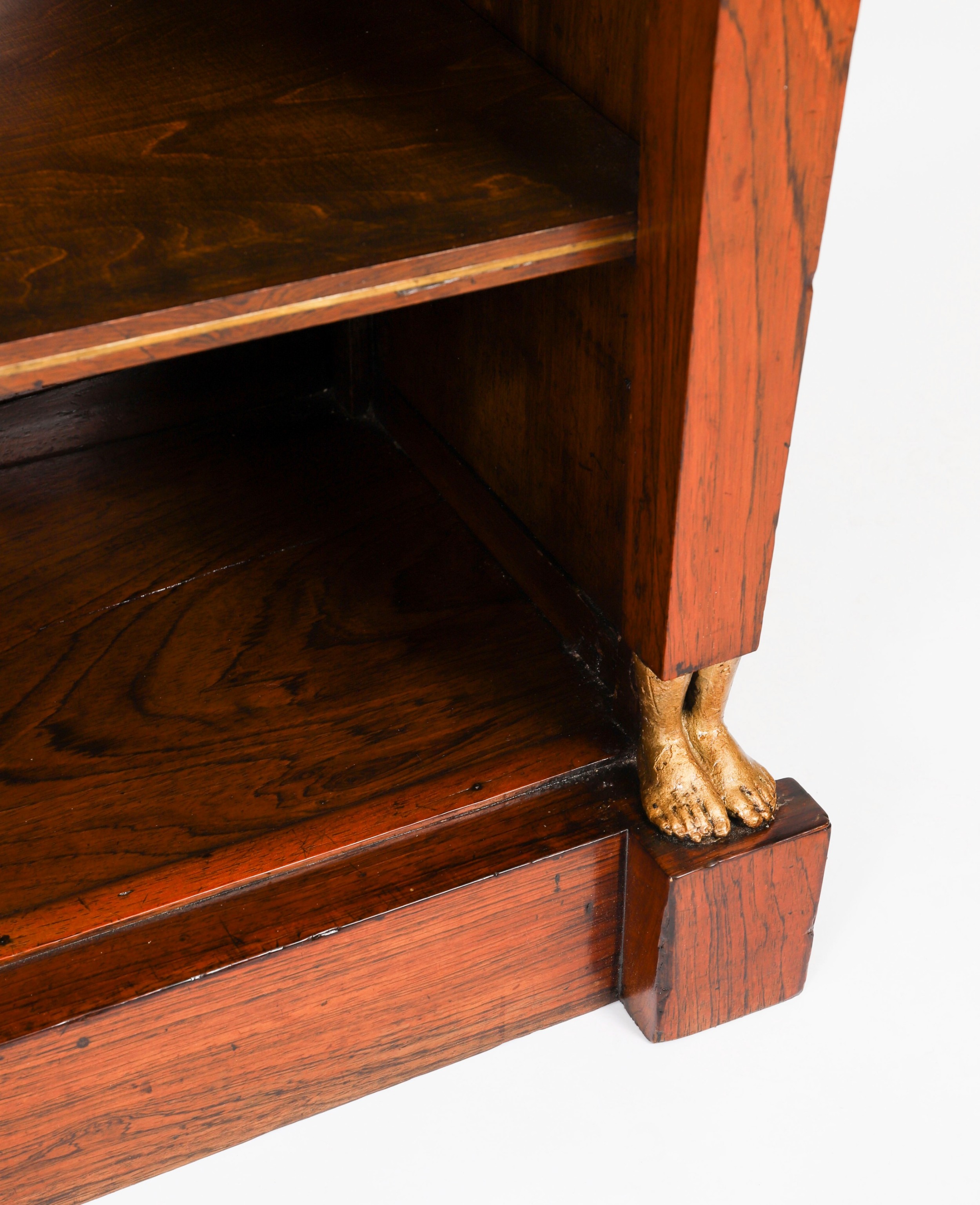
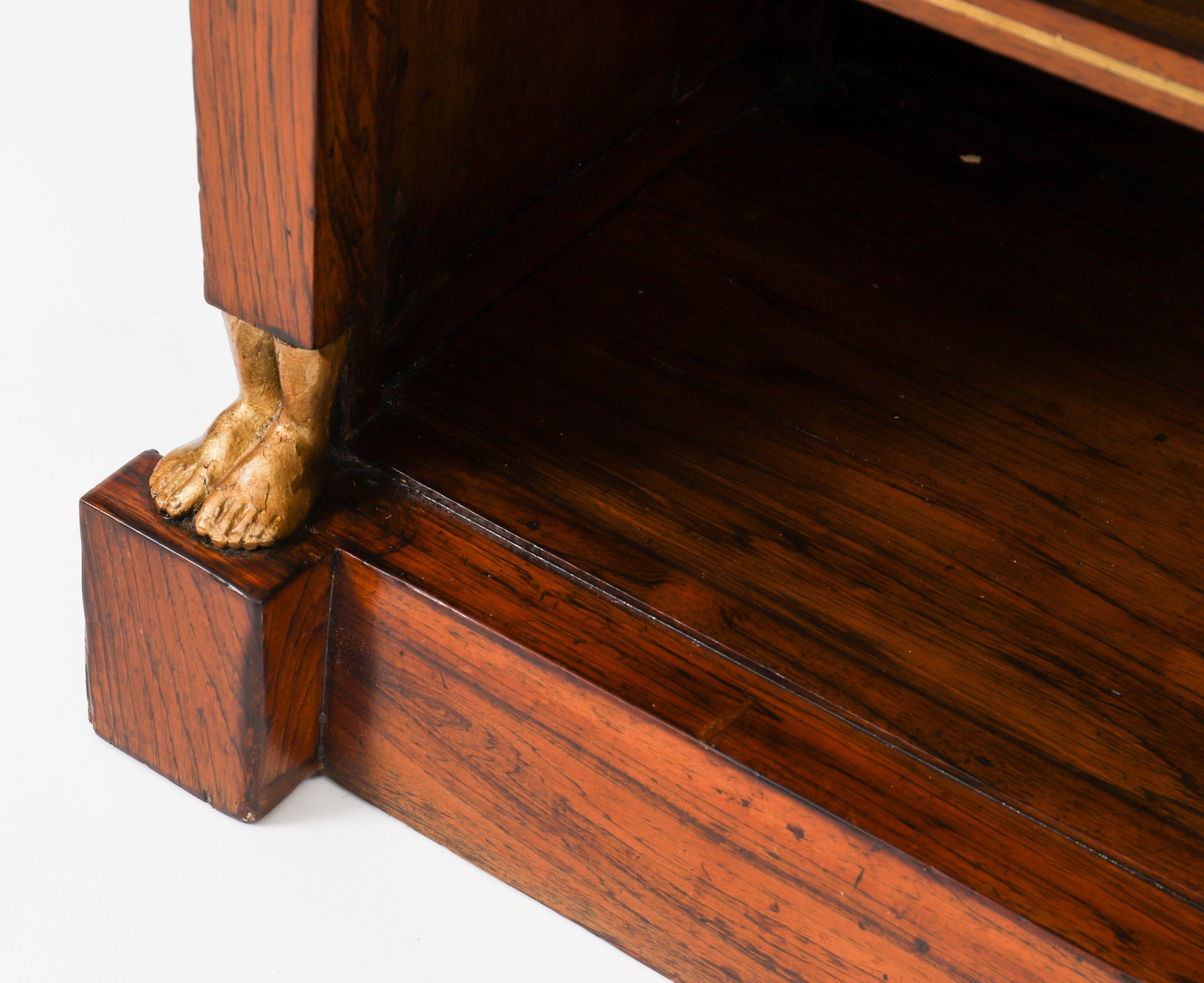
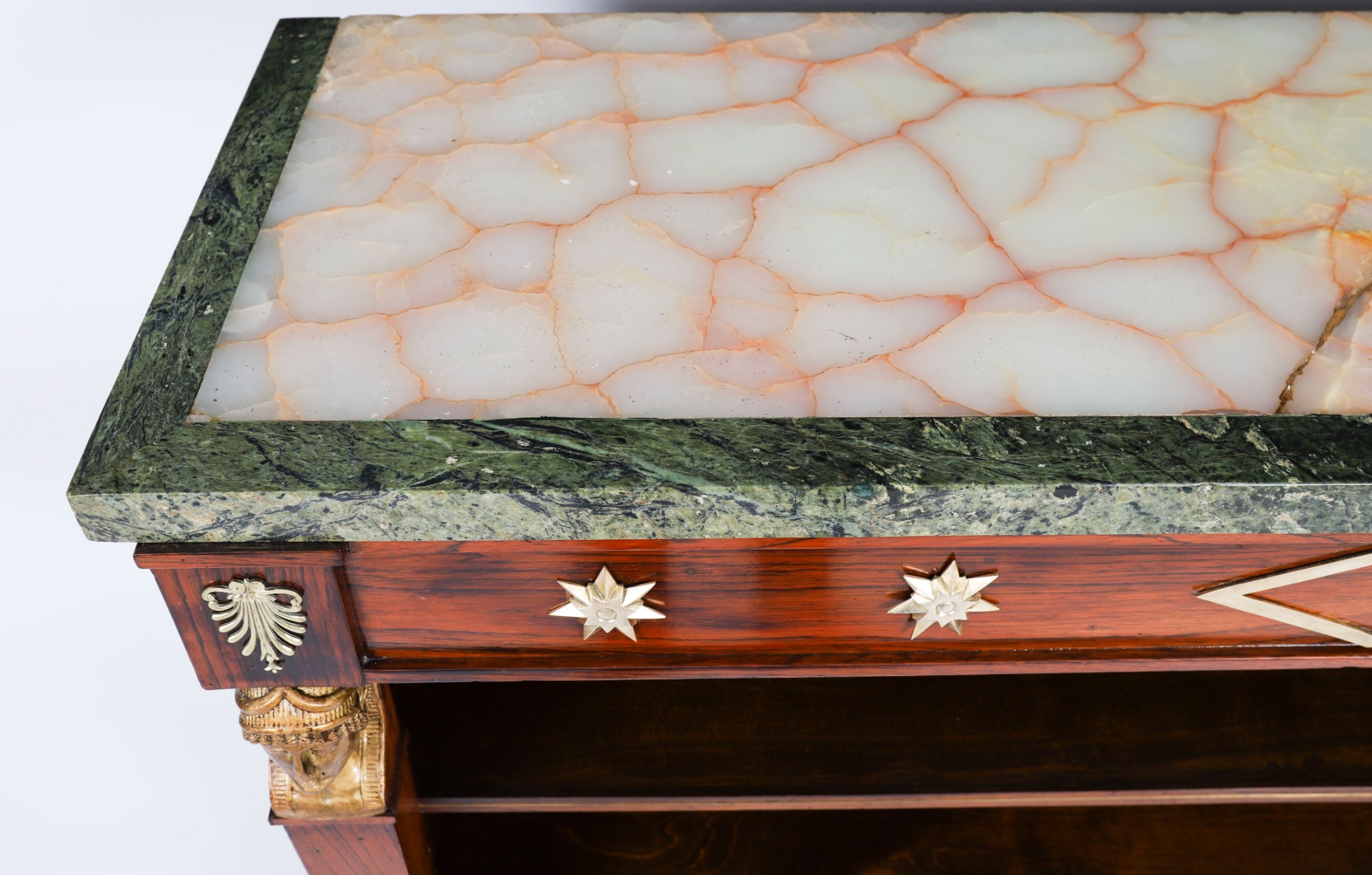
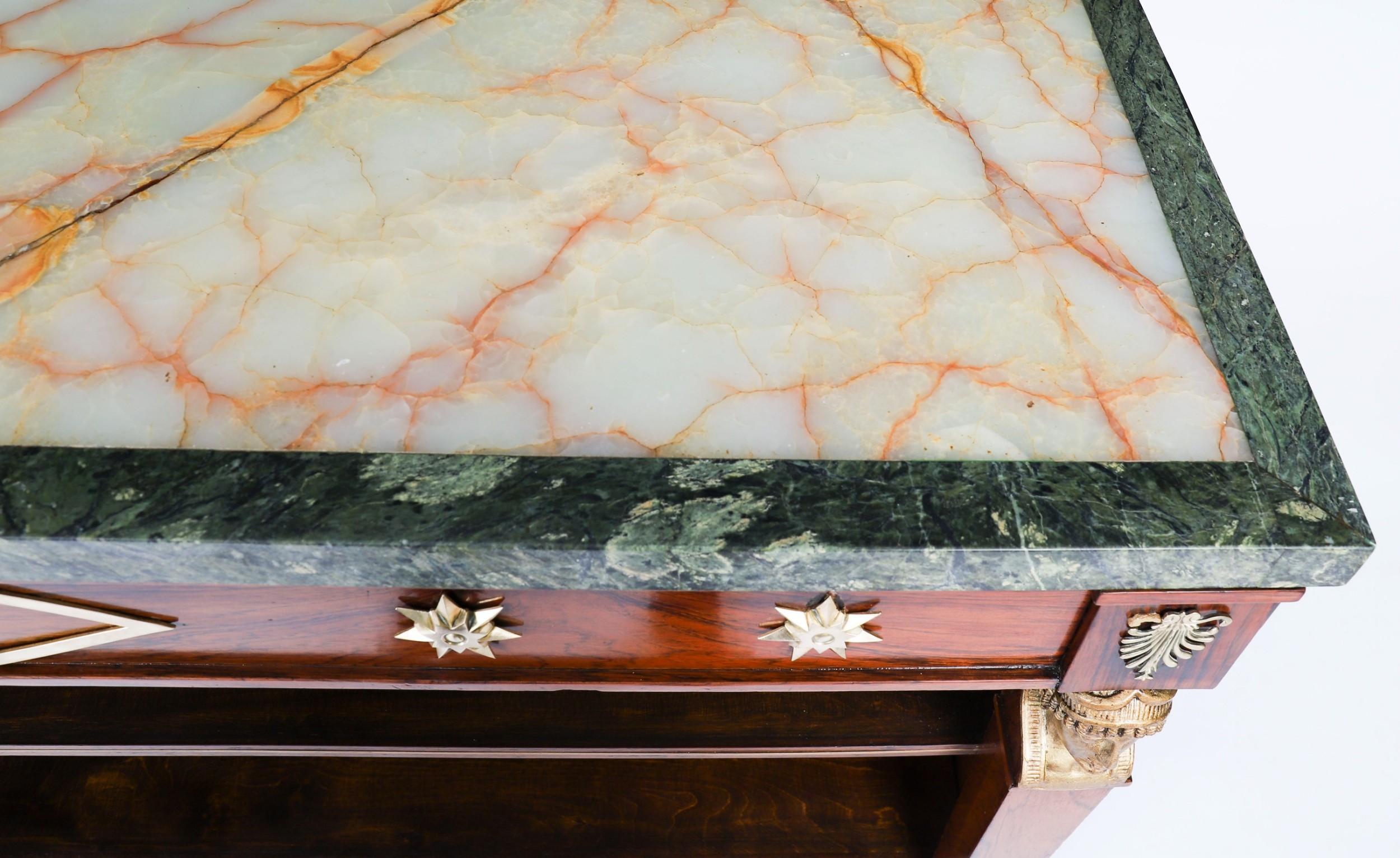
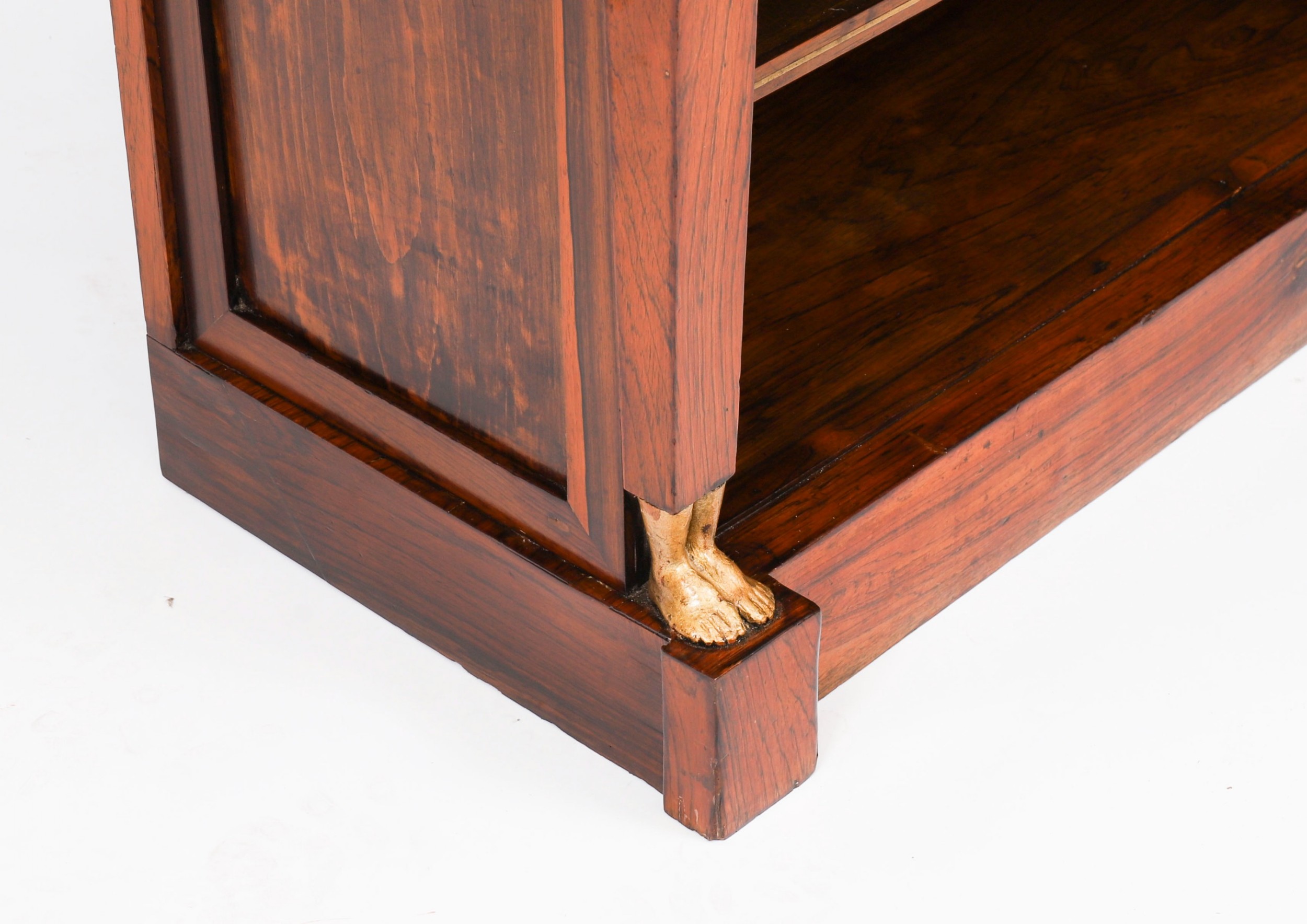
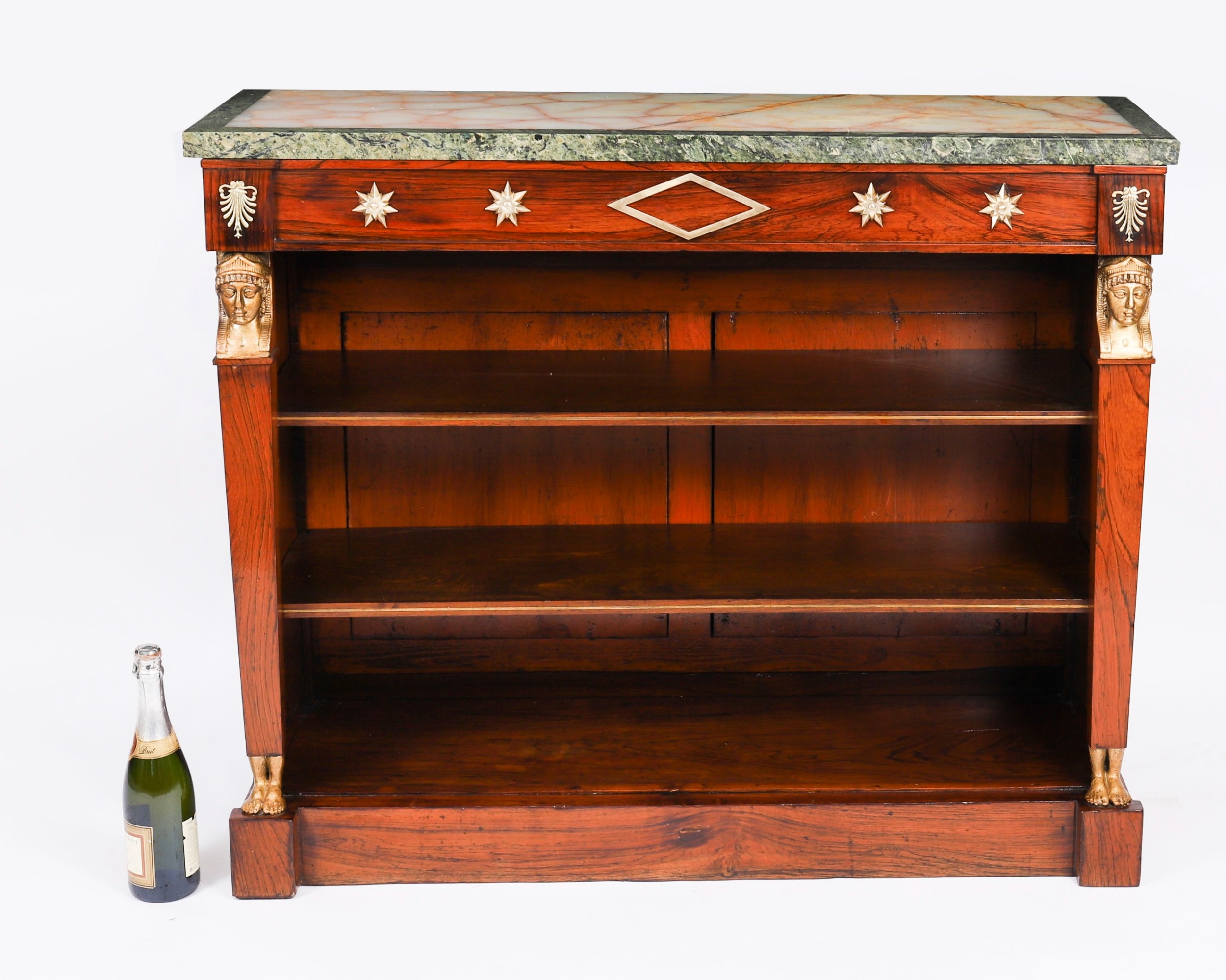
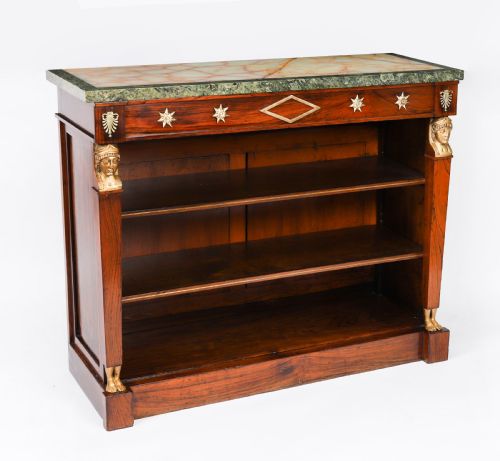
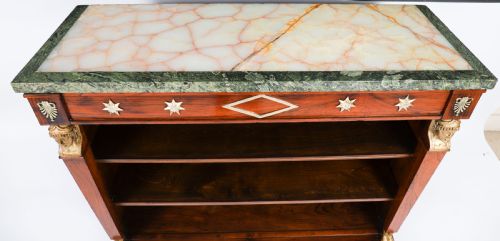
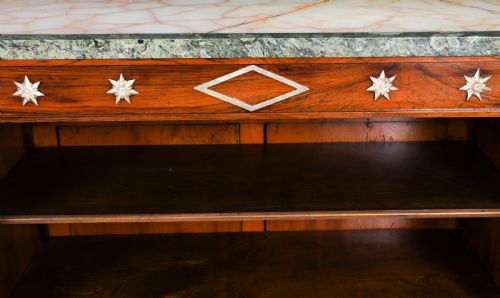
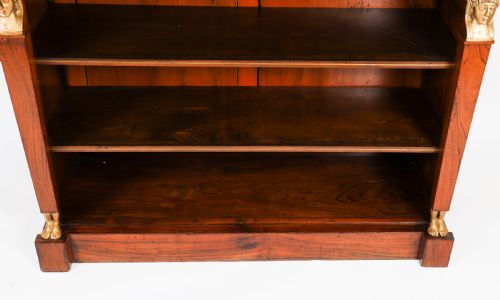
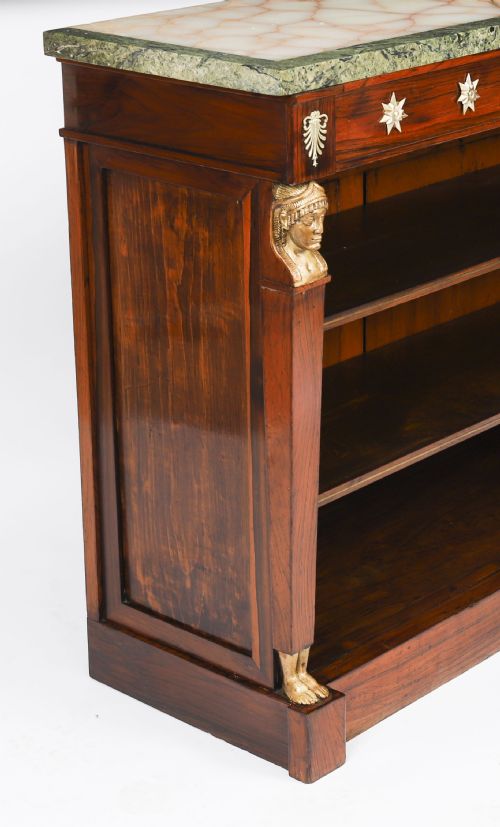
It features an onyx top with Verde Antico marble three-quarter banding above a frieze with decorative Empire ormolu mounts, including stars and palmettes, over two adjustable shelves flanked by male figural pilasters with gilt gesso mounts, on a plinth base
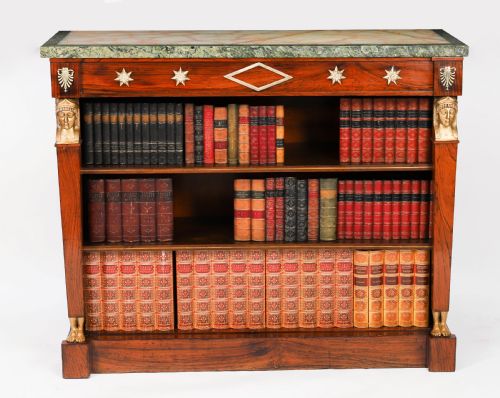
Add a touch of supreme grandeur to a special room in your home with this stunning bookcase.
Condition:
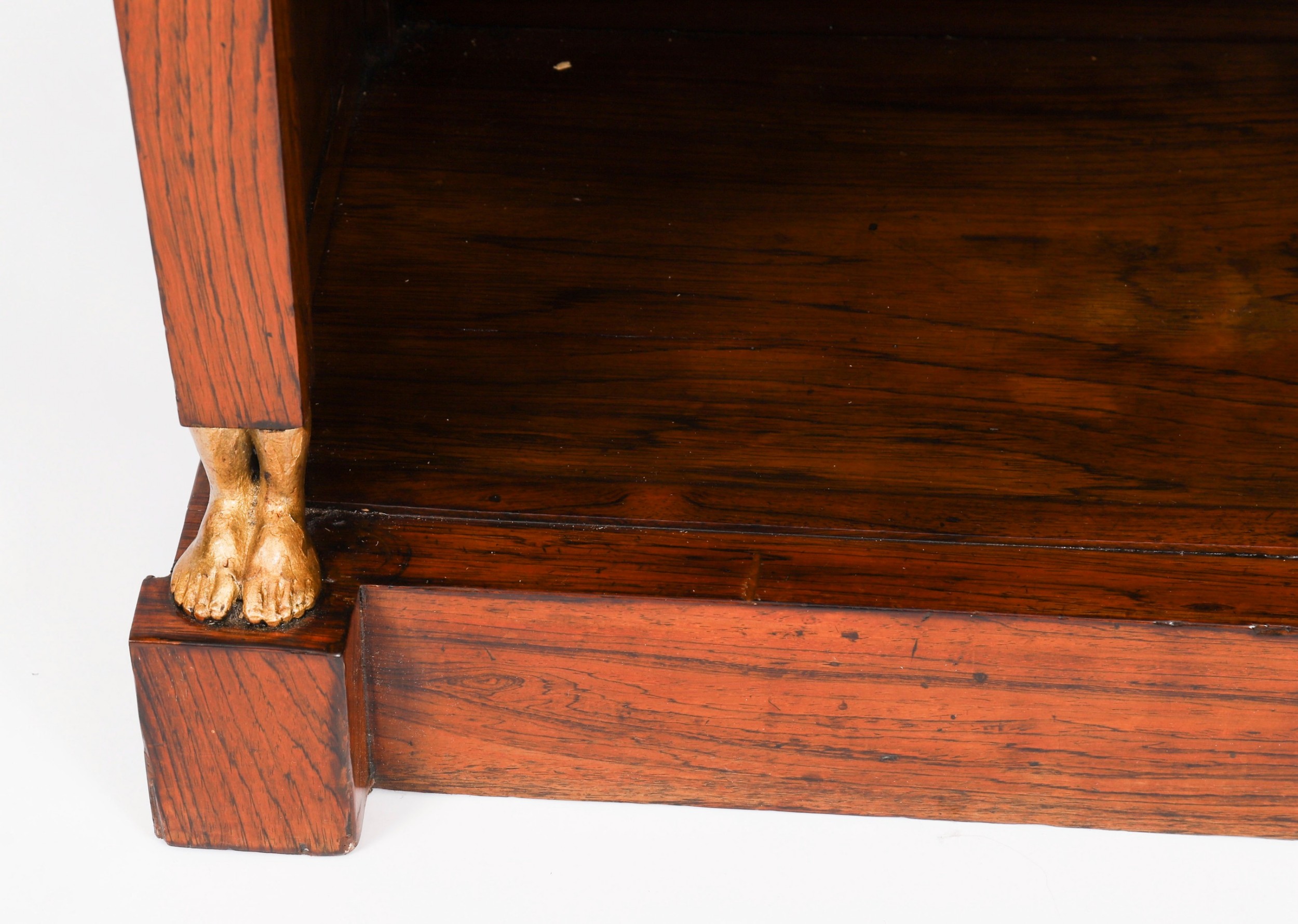
In excellent condition, please see photos for confirmation.
Dimensions in cm:
Height 94 cm x Width 115 cm x Depth 41 cm
Dimensions in inches:
Height 3 feet, 1 inch x Width 3 foot, 9 inches x Depth 1 foot, 4 inches
Gonçalo Alves is a hardwood (from the Portuguese name, Gonçalo Alves).
While the sapwood is very light in color, the heartwood is a sombre brown, with dark streaks that give it a unique look. The wood’s color deepens with exposure and age and even the plainer-looking wood has a natural luster.
Two species are usually listed as sources for gonçalo alves: Astronium fraxinifolium and Astronium graveolens, although other species in the genus may yield similar wood; the amount of striping that is present may vary.
In the high tropical forests of Central and South America, well-drained soils furnish nutrients for a variety of dense, durable hardwoods sought for maritime use, heavy construction, and furniture. The Spanish began harvesting in Latin American forests in the early 1500s to provide timber for boatbuilding and repair. By the early 1900s, however, steel ships had replaced wooden ones, and the interest in tropical forests by both Europeans and Americans shifted to appearance-grade woods for furniture.
Although history fails to provide us with a shopping list of species from either harvest period, it's probable that the wood we know today as goncalo alves has always been sought. That's because Goncalo Alves, considered one of the most beautiful of tropical woods, has a tough reputation, too. Strong and durable, it's used for construction in its homeland and secondarily for fine furniture. Woodworkers elsewhere treasure the wood for decorative items and veneer accents.
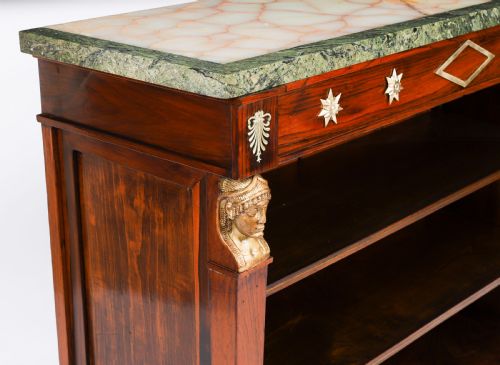
Empire style
is an early-19th-century design movement in architecture, furniture, other decorative arts, and the visual arts, followed in Europe and America until around 1830.
The style originated in and takes its name from the rule of Napoleon I in the First French Empire, where it was intended to idealize Napoleon's leadership and the French state. The style corresponds to the Biedermeier style in the German-speaking lands, the Federal style in the United States, and to the Regency style in Britain. The previous style was called the Louis XVI style in France.
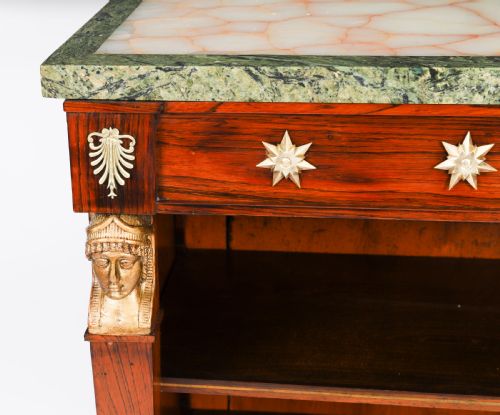
The Empire style was based on aspects of the Roman Empire. It is the second phase of neoclassicism, which is also called "Directoire", after a government system.
Furniture typically had symbols and ornaments borrowed from the glorious ancient Greek and Roman empires.
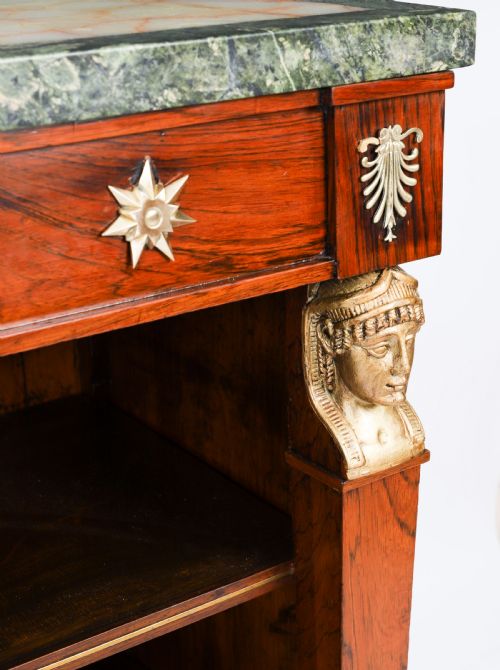
The furniture was made from heavy woods such as ebony, imported from the colonies, with dark finishes, often with decorative bronze mounts. Marble tops were popular as were Egyptian motifs like sphinxes, griffins, urns and eagles and the Napoleonic symbols, the eagle, the bee, the initials "I" and a large "N."
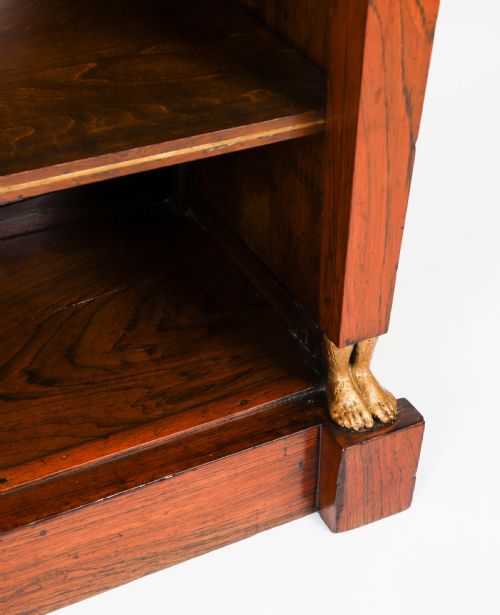
Gilded bronze (ormolu) details displayed a high level of craftsmanship.
Serpentine Marble / Verde Antico
Serpentine is a major rock-forming mineral and is found as a constituent in many metamorphic and weathered igneous rocks. Serpentine’s structure is composed of layers of silicate tetrahedra linked into sheets; this structure is what gives it its high flexural strength rating.
Regent Antiques has dated this piece to the 19th Century.
We specialise in english and continental furniture, silver, porcelain and decorative items.
You can view the stock and full dealer information on the Regent Antiques Profile Page
Regent Antiques is a registered member of LAPADA CINOA
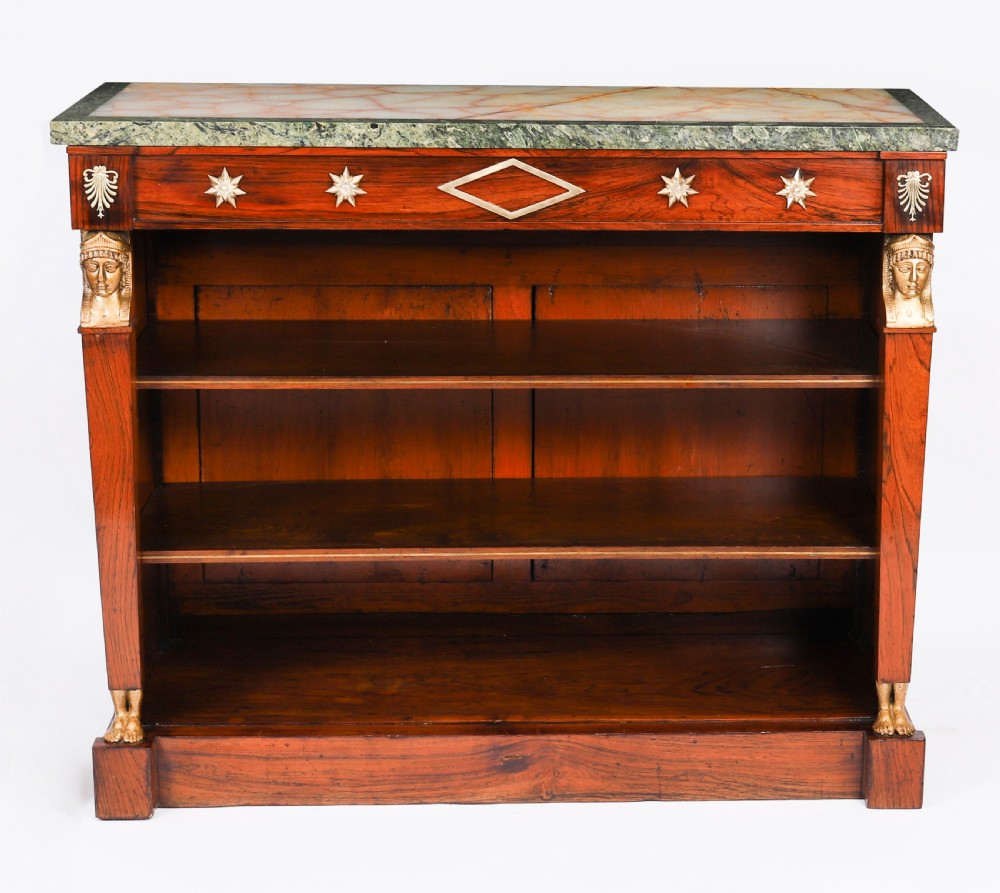
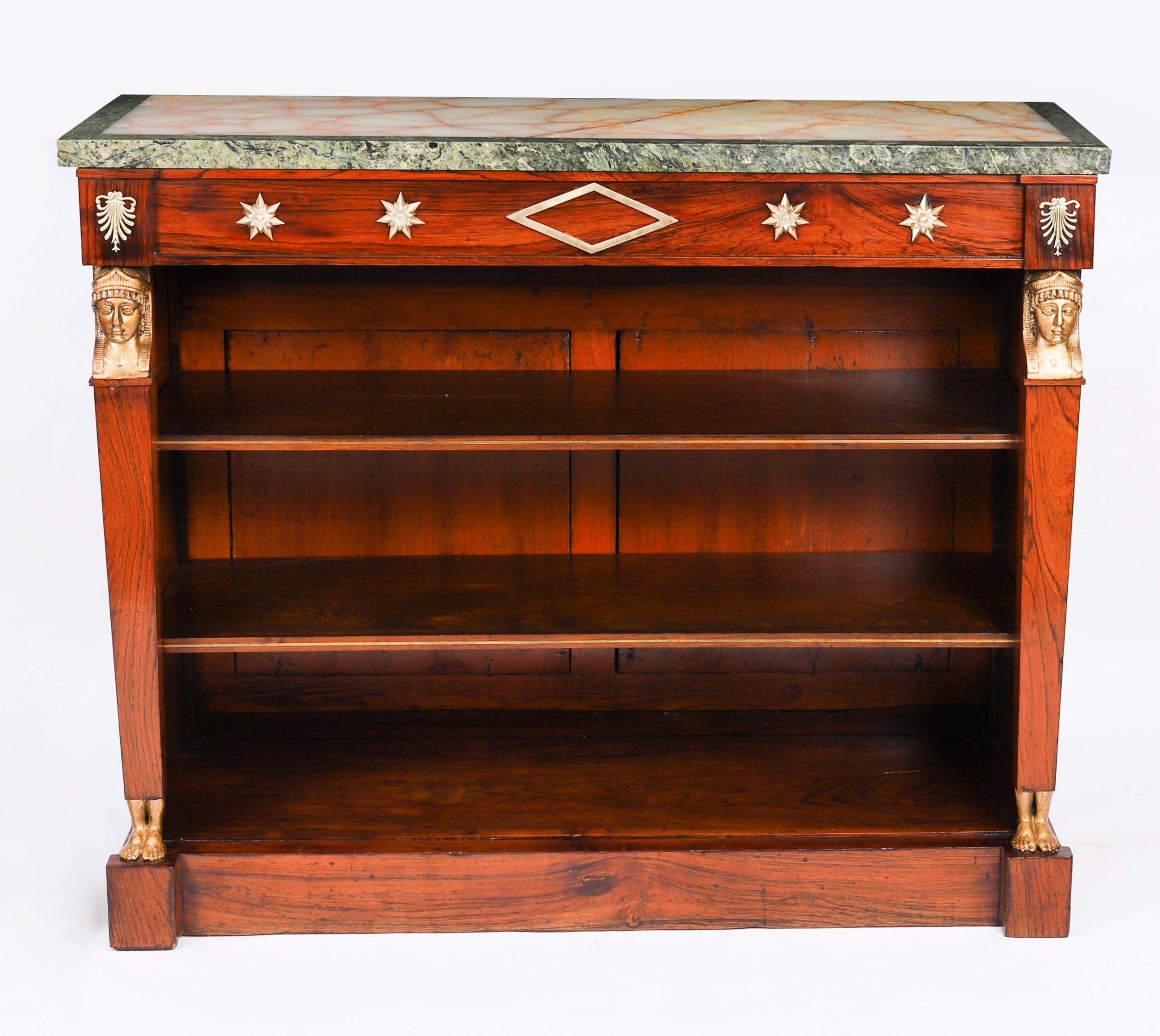
Antique French Empire Marble Top Open Bookcase Mid 19th Century