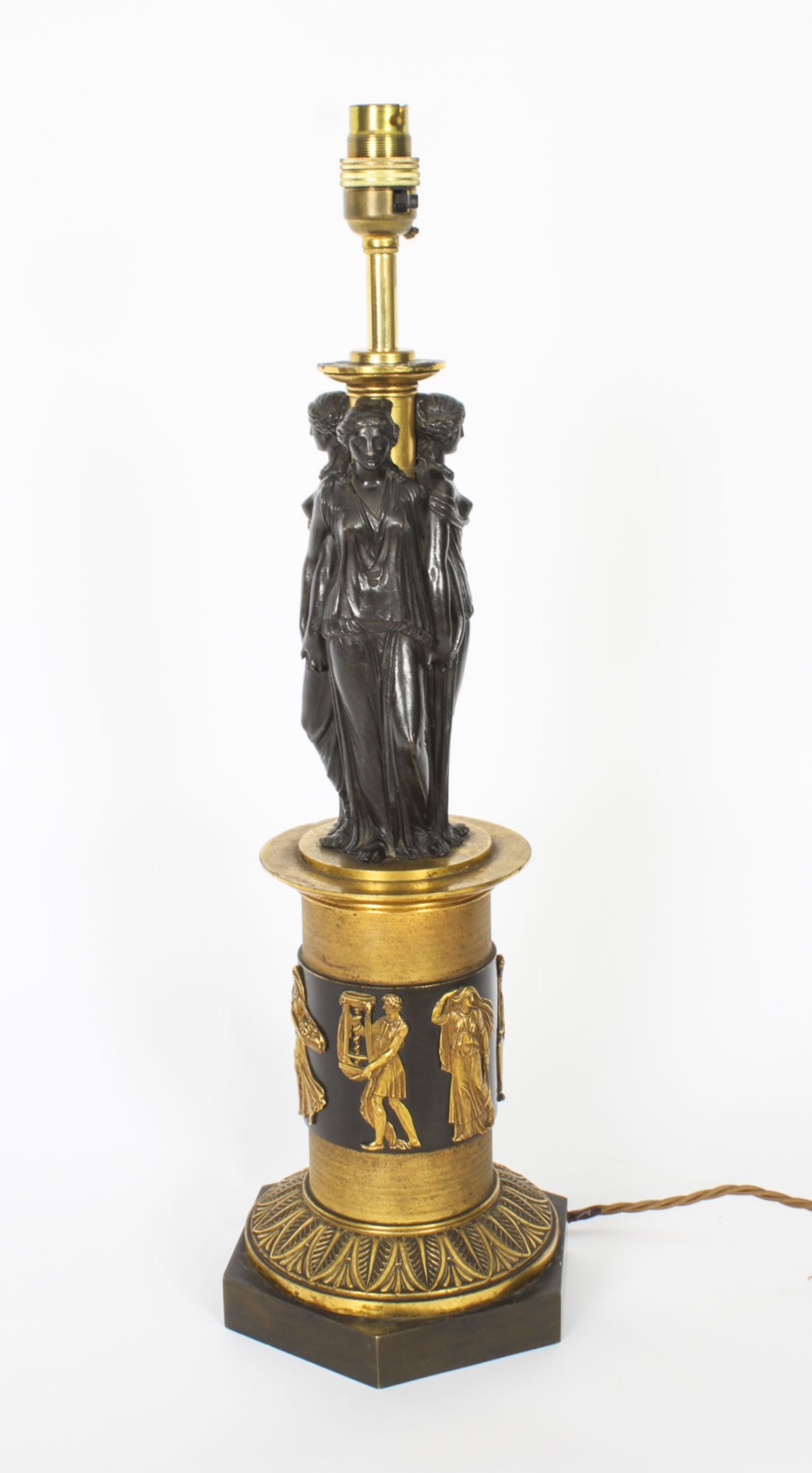
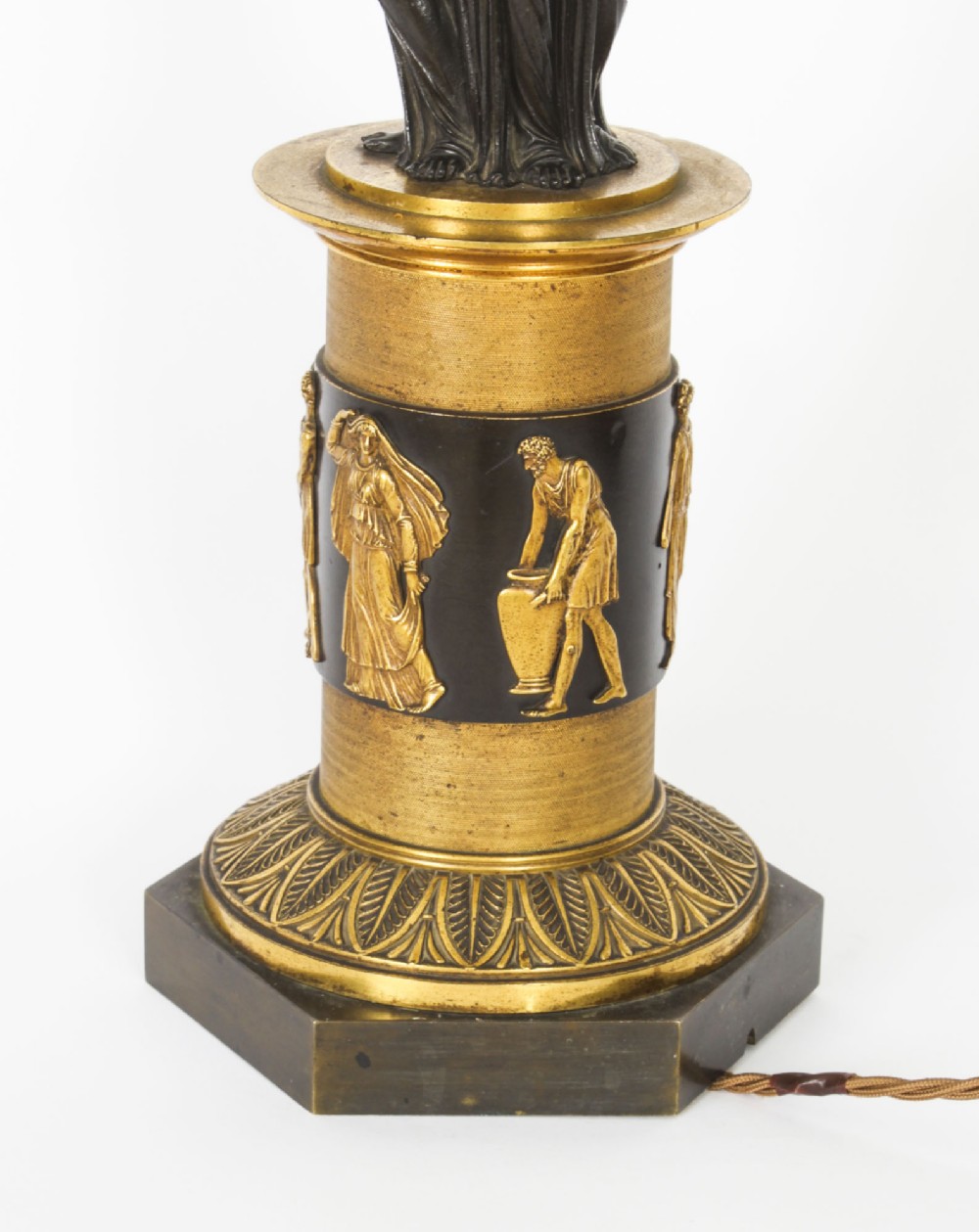
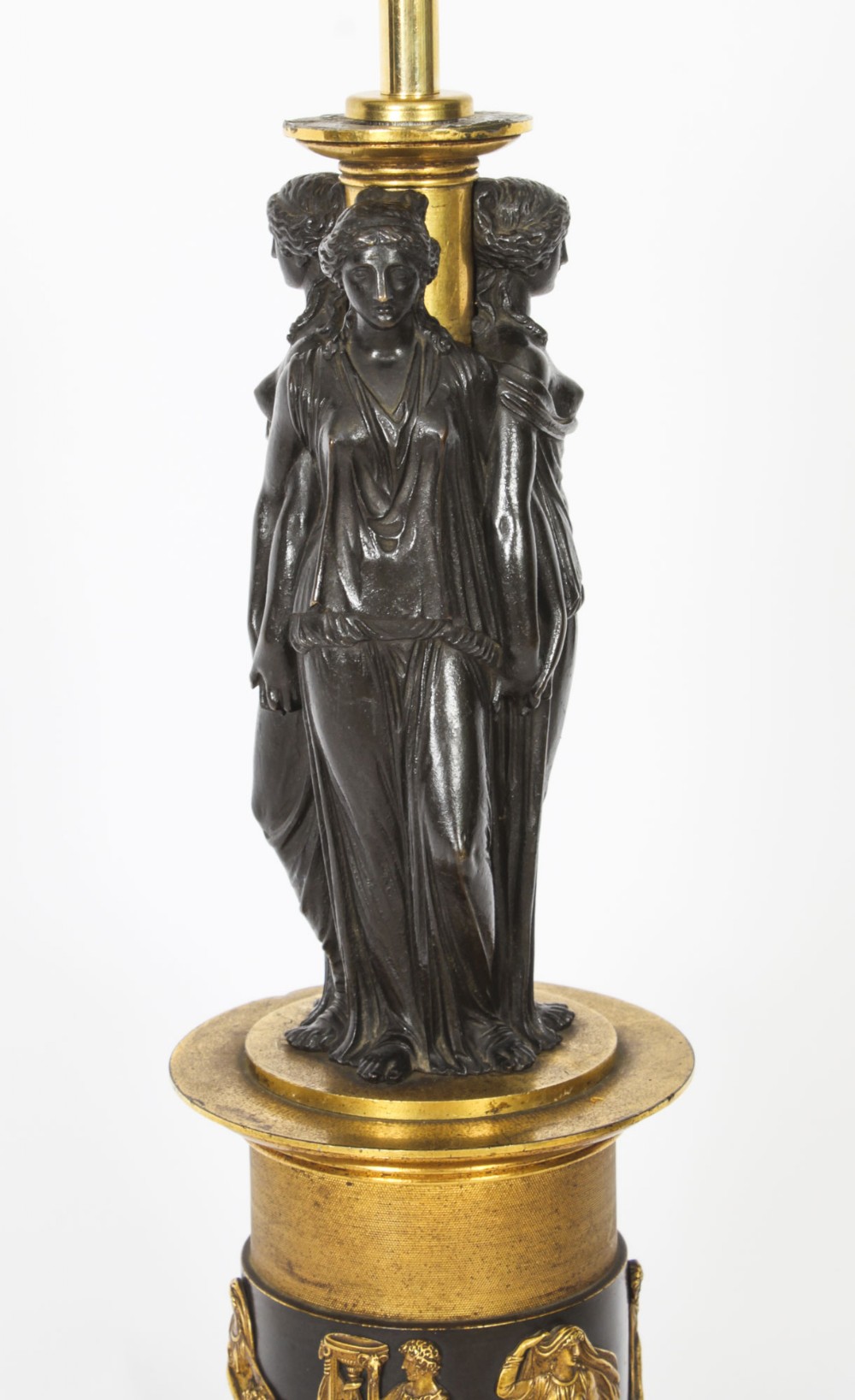
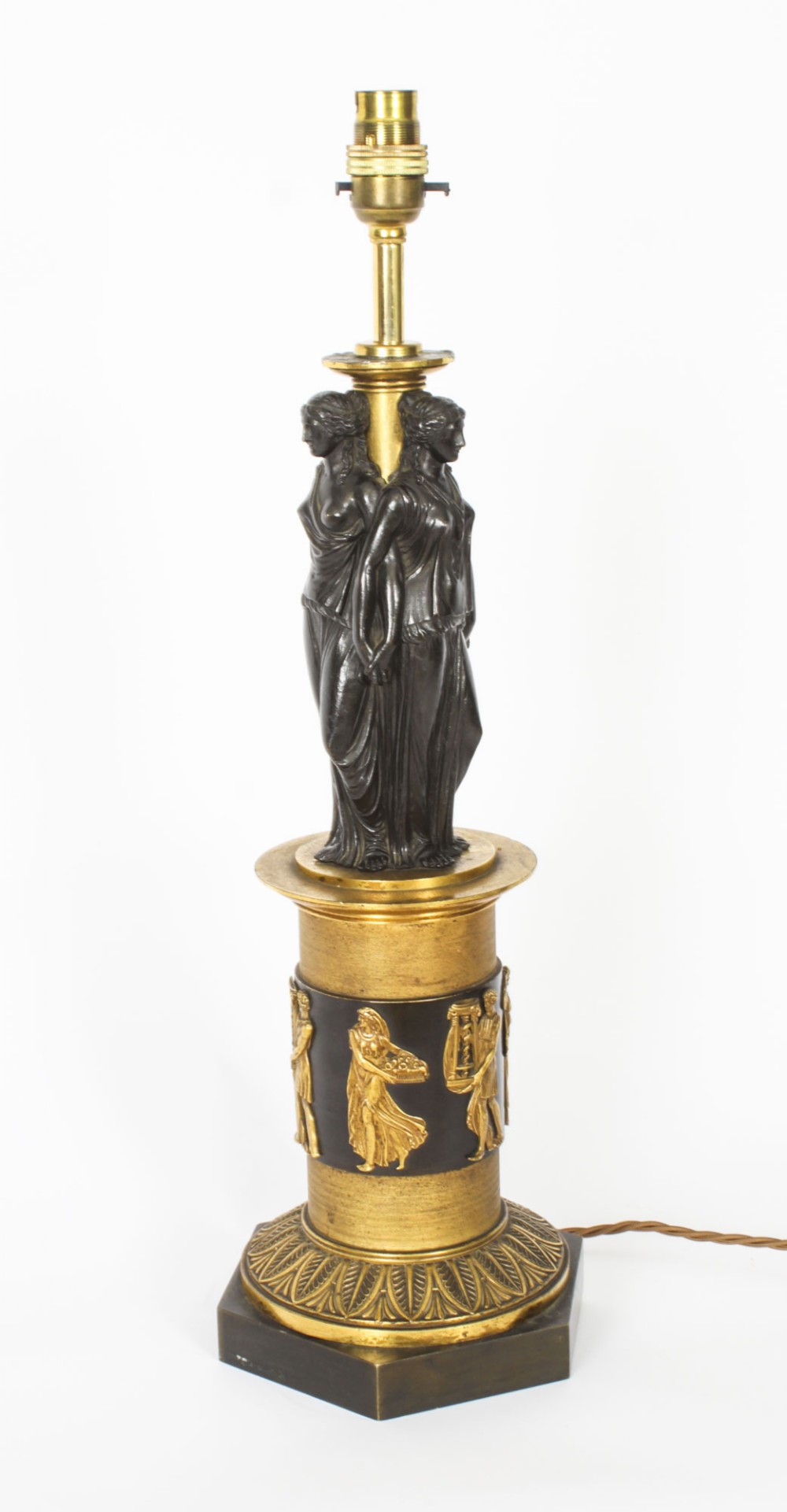
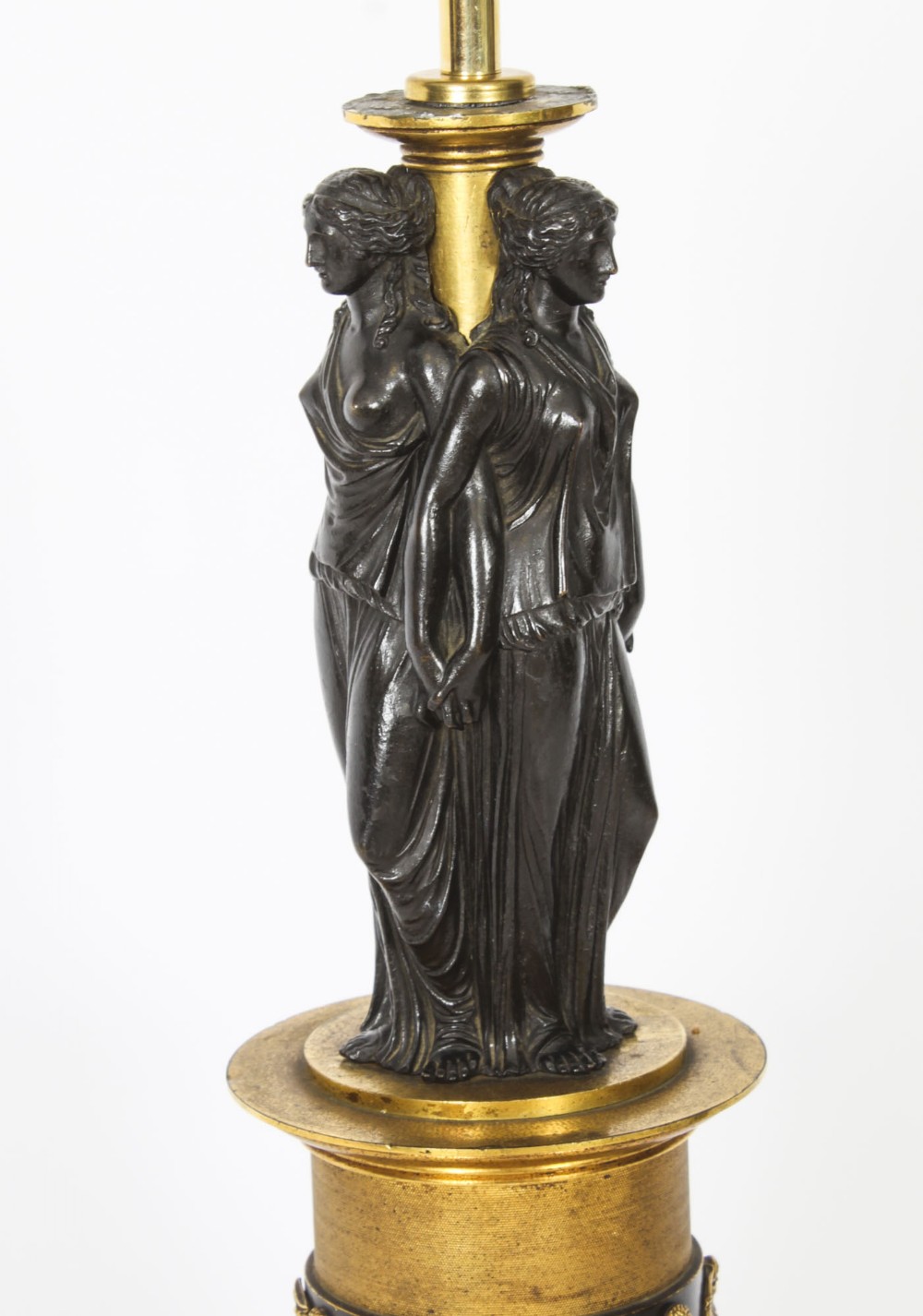
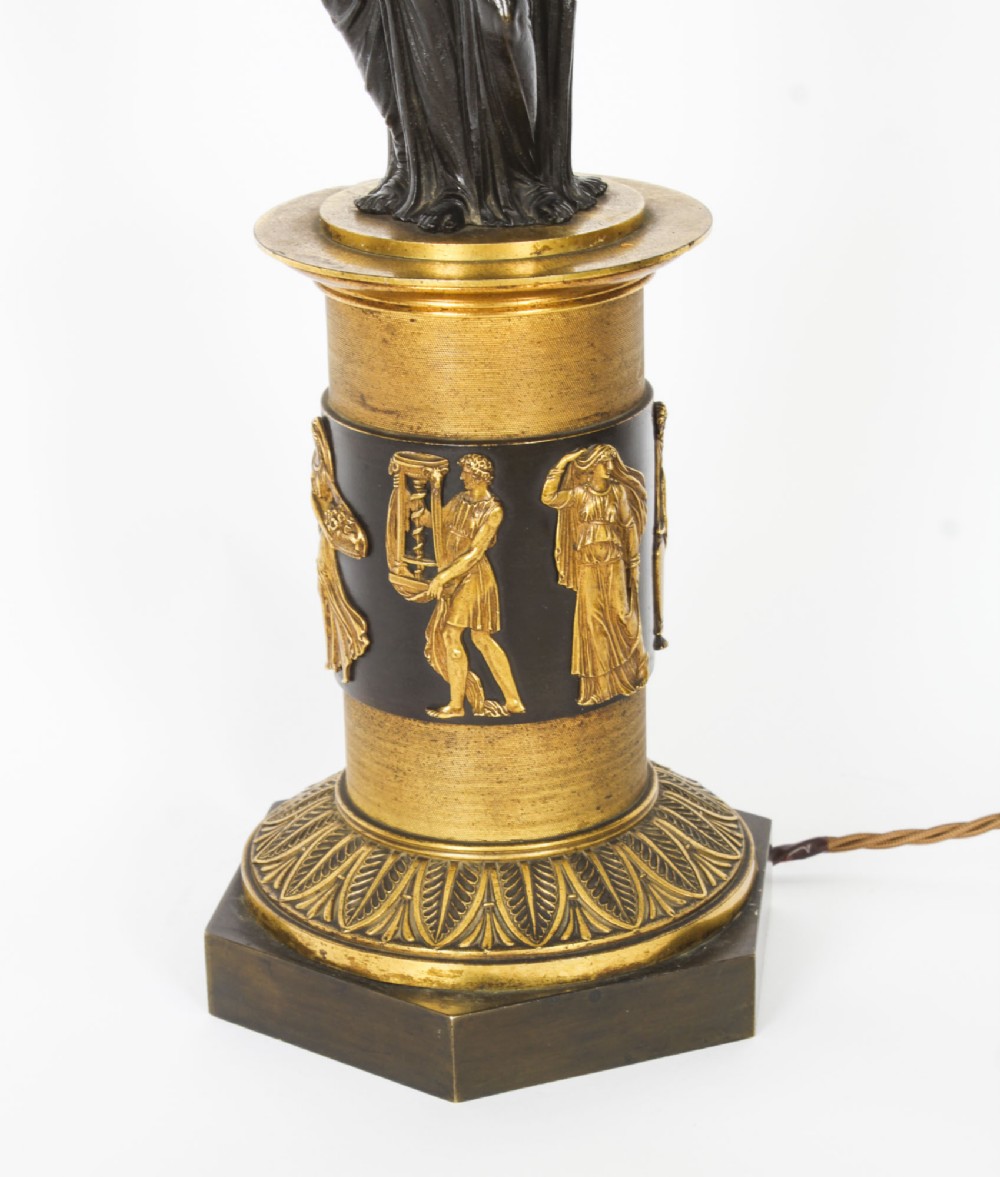
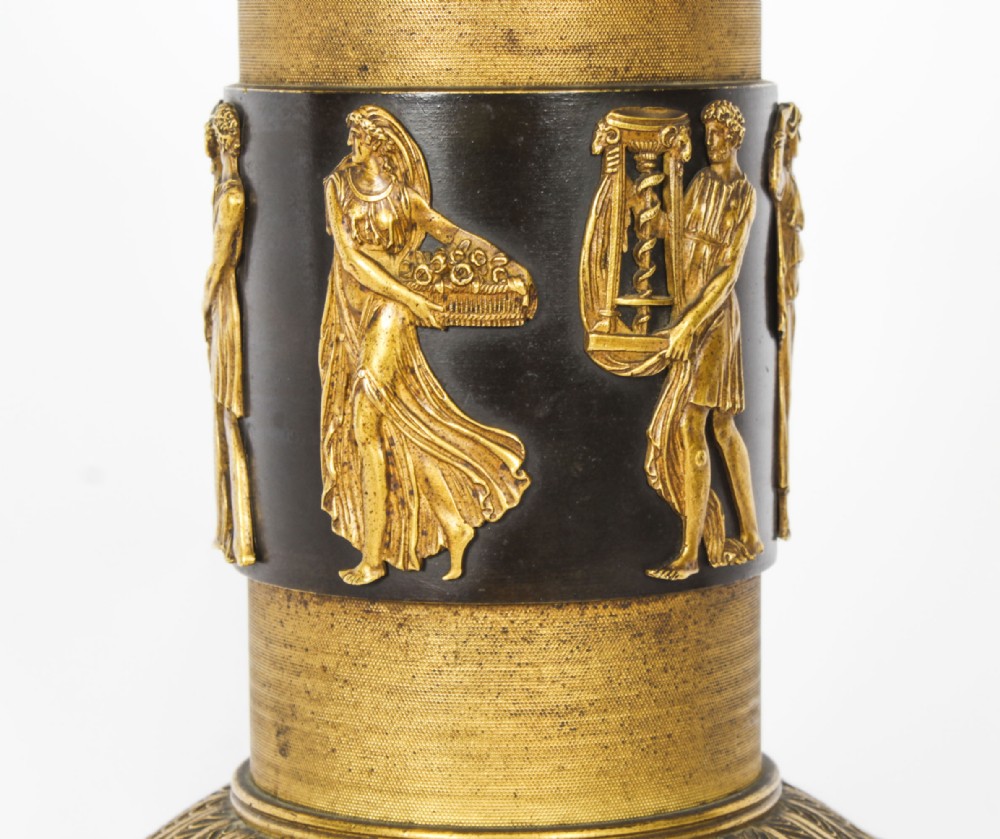
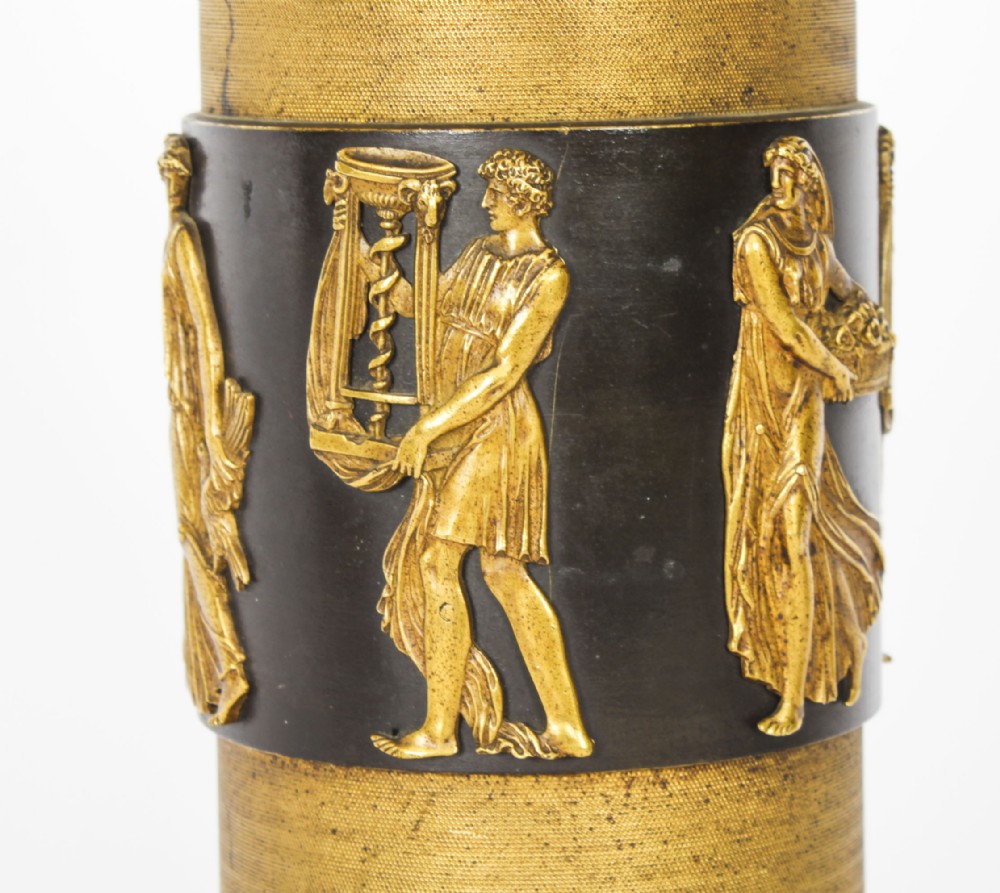
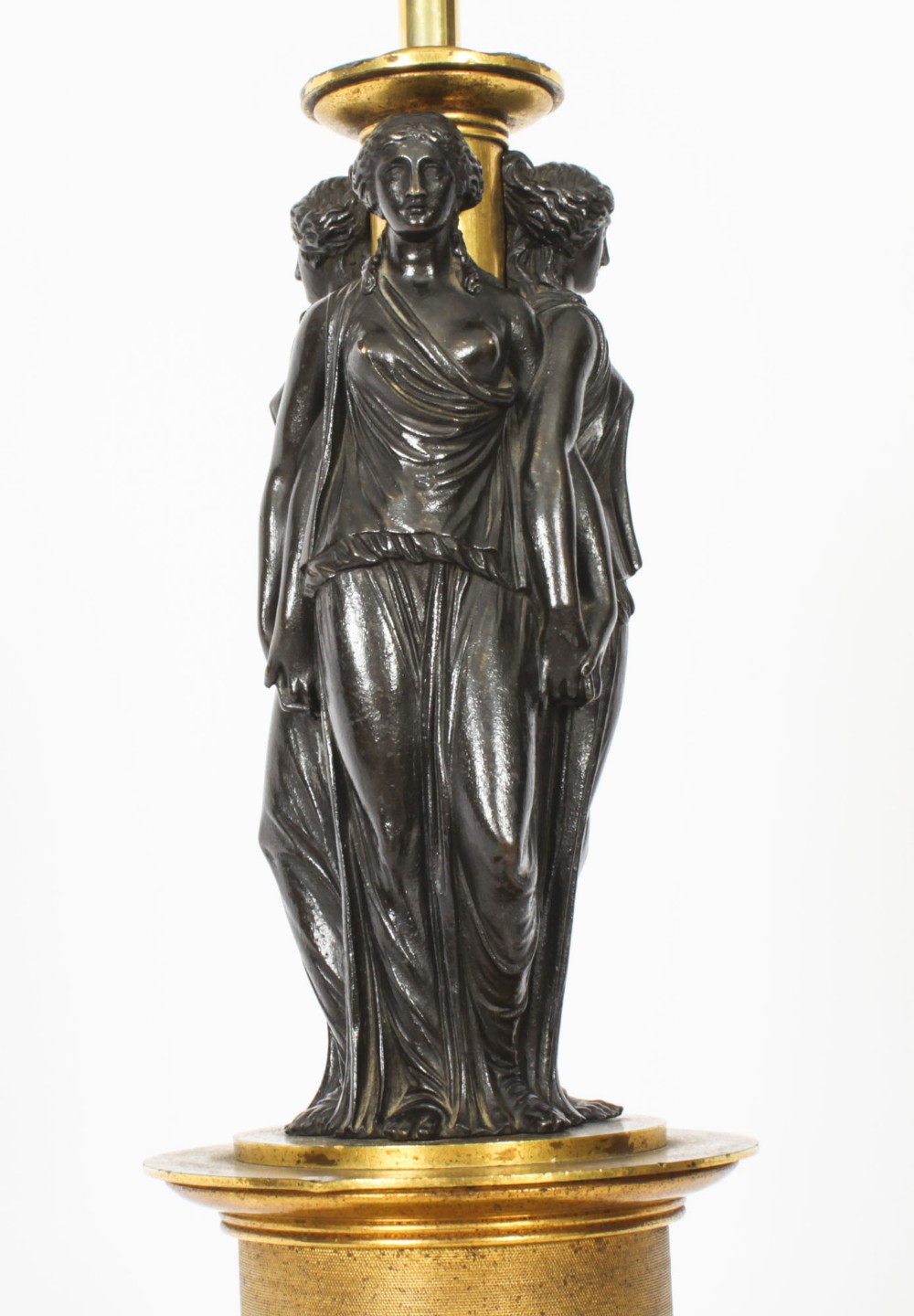
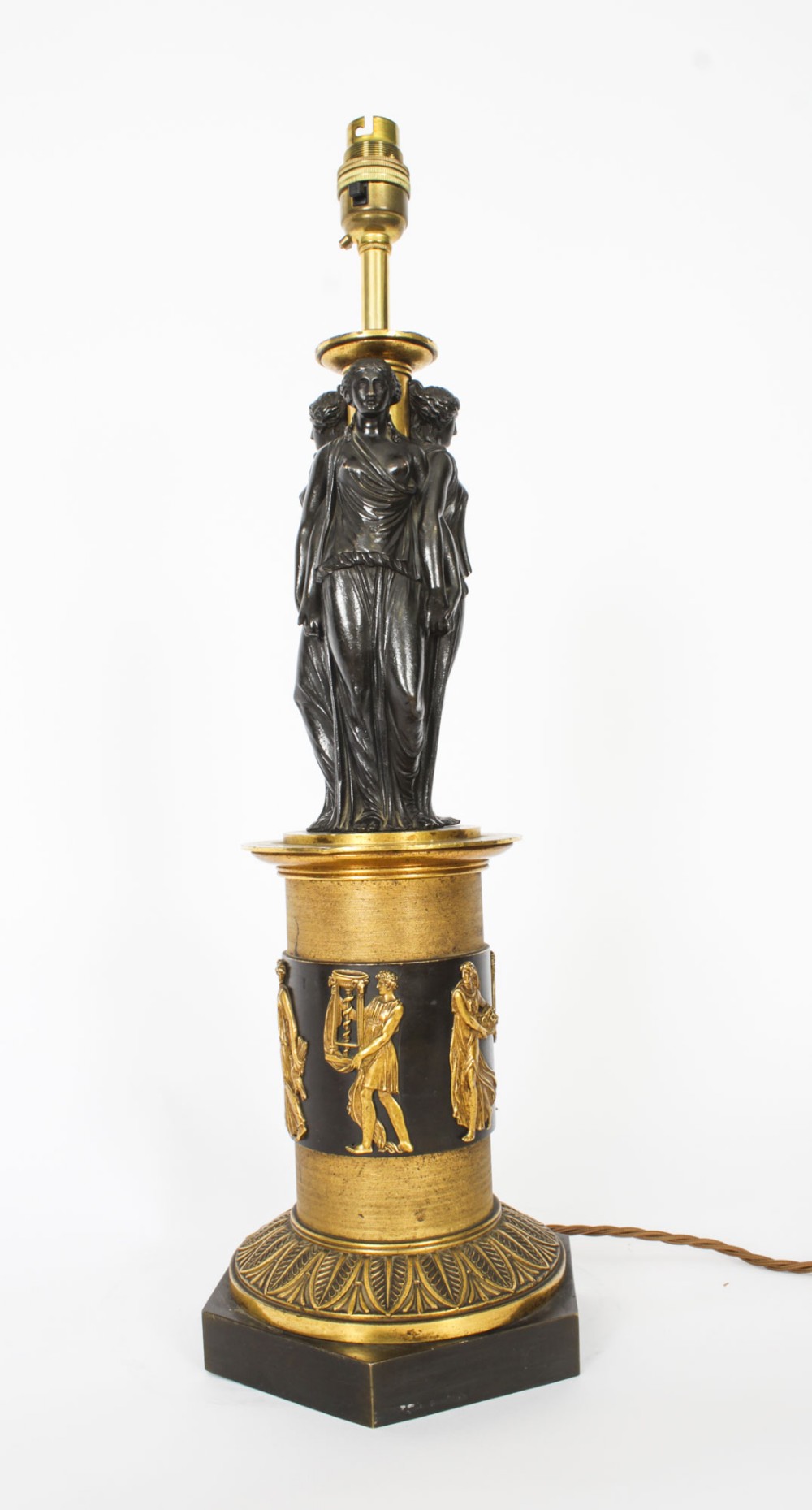
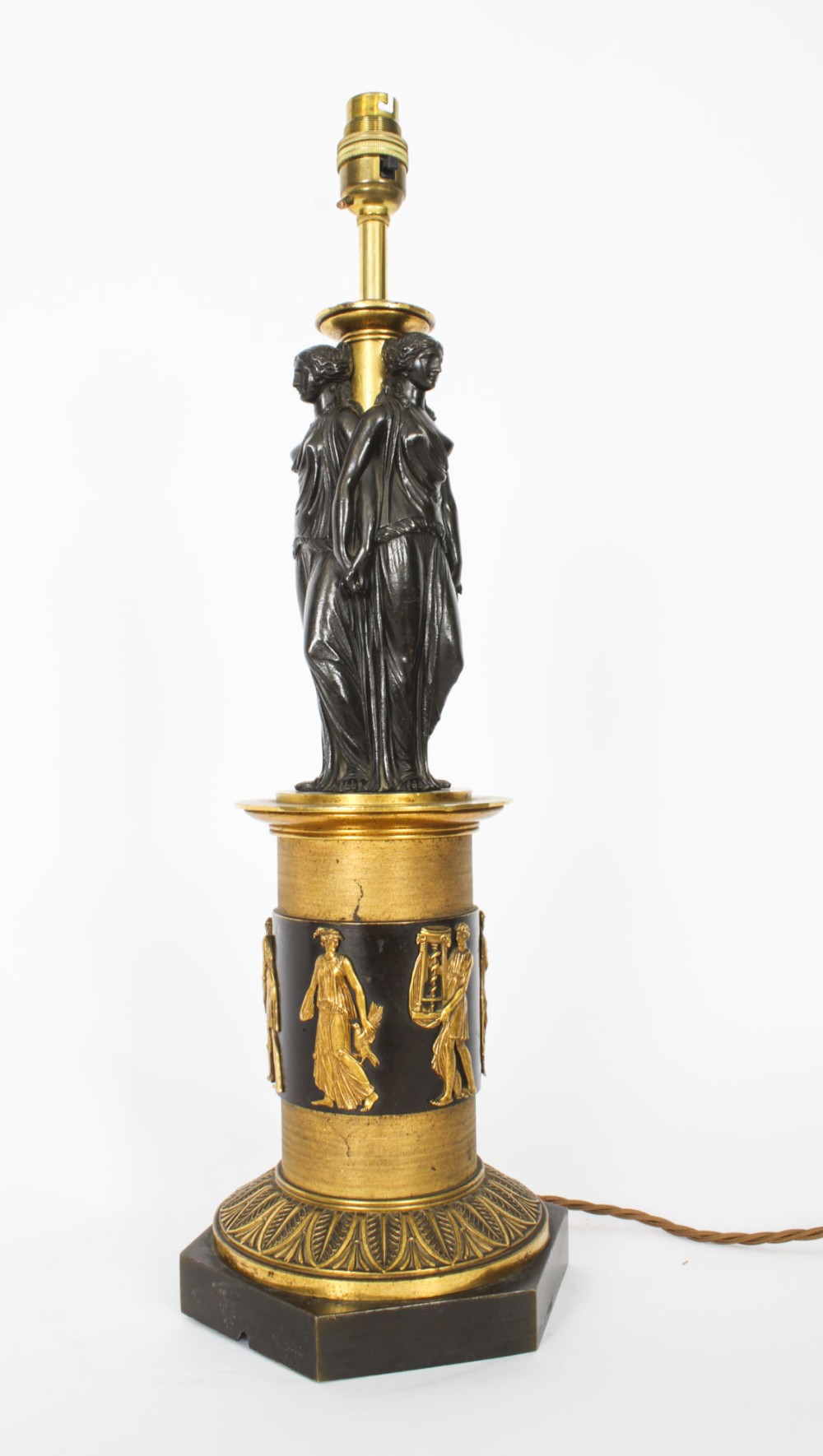
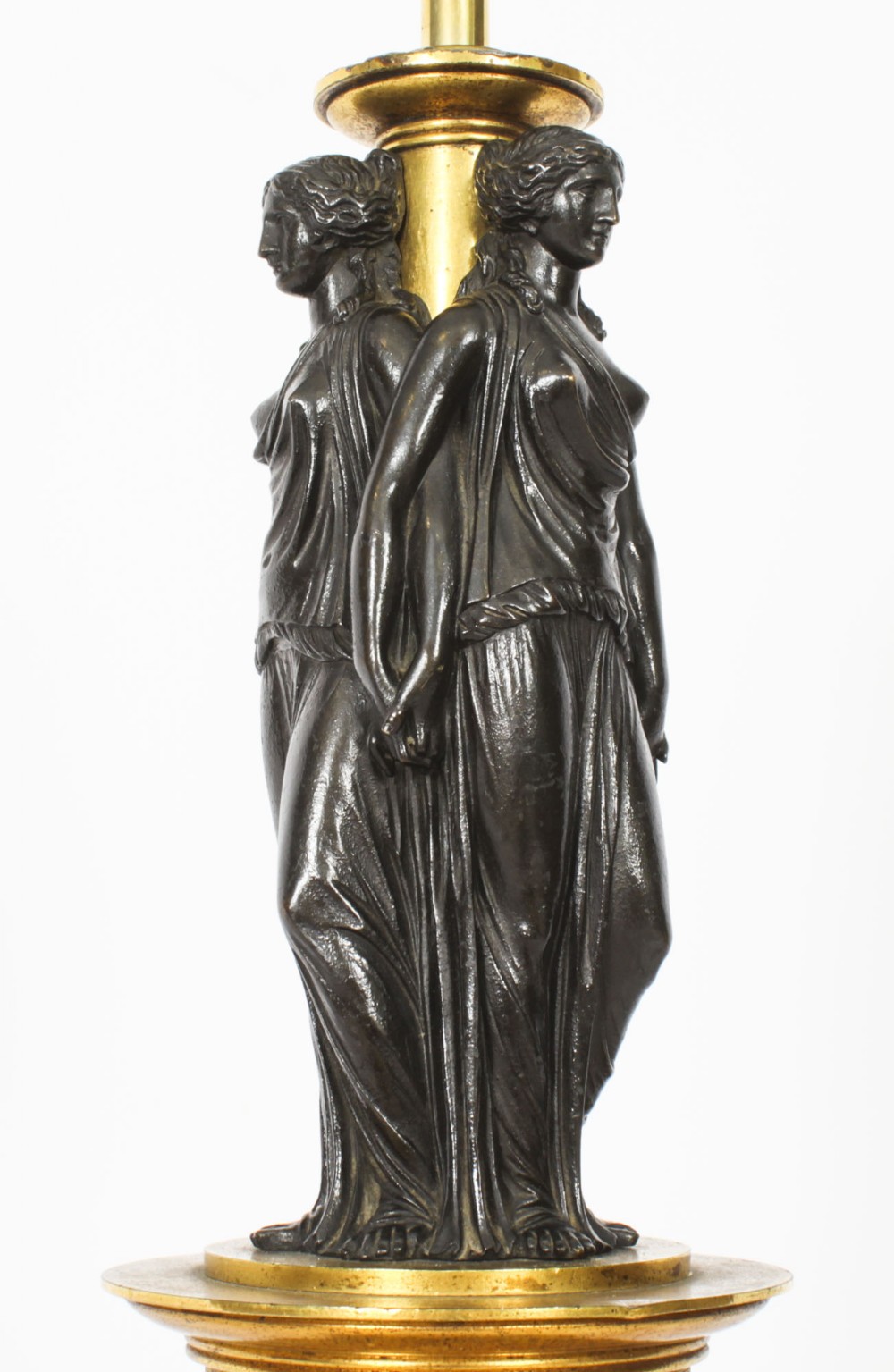
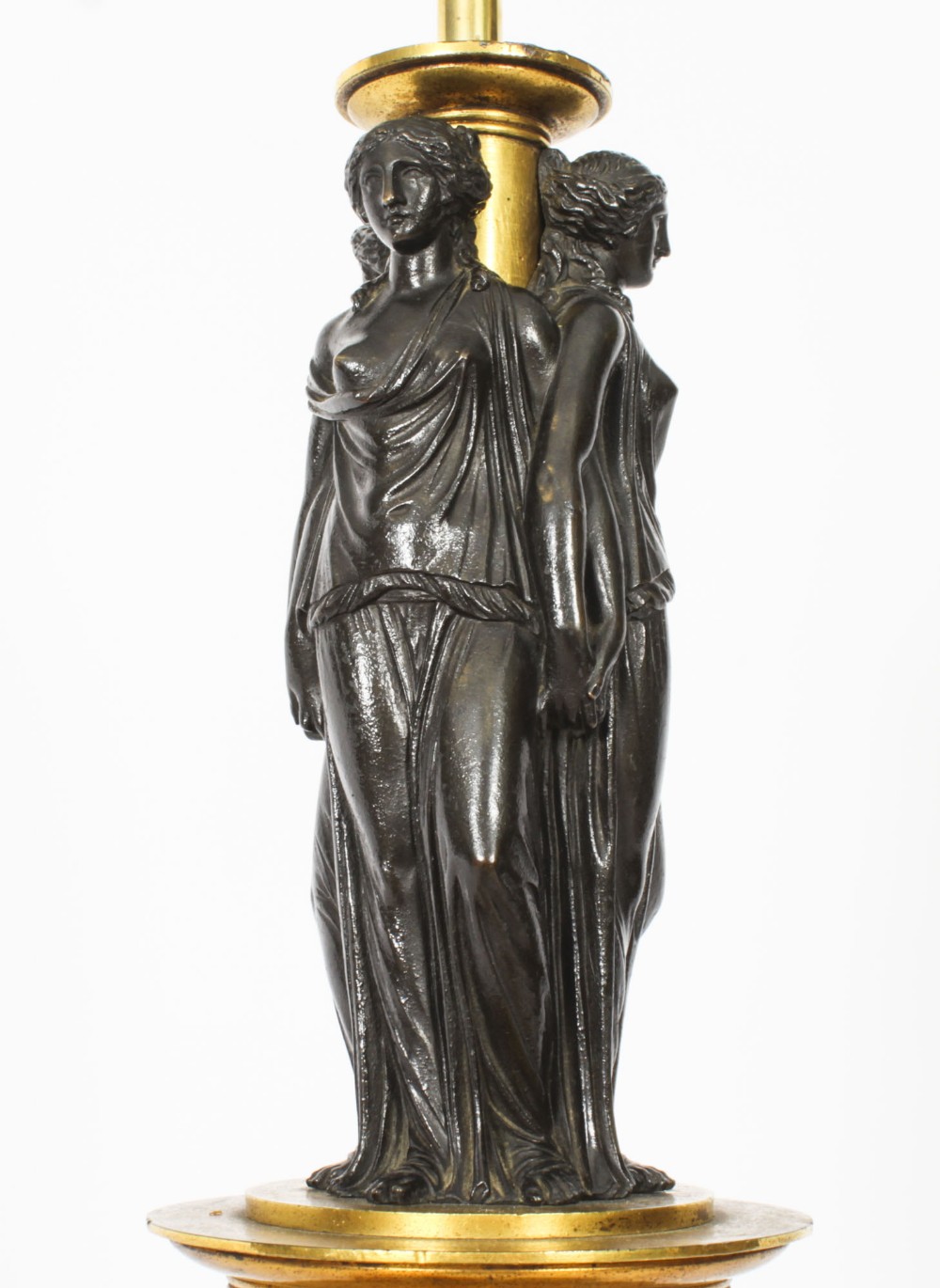
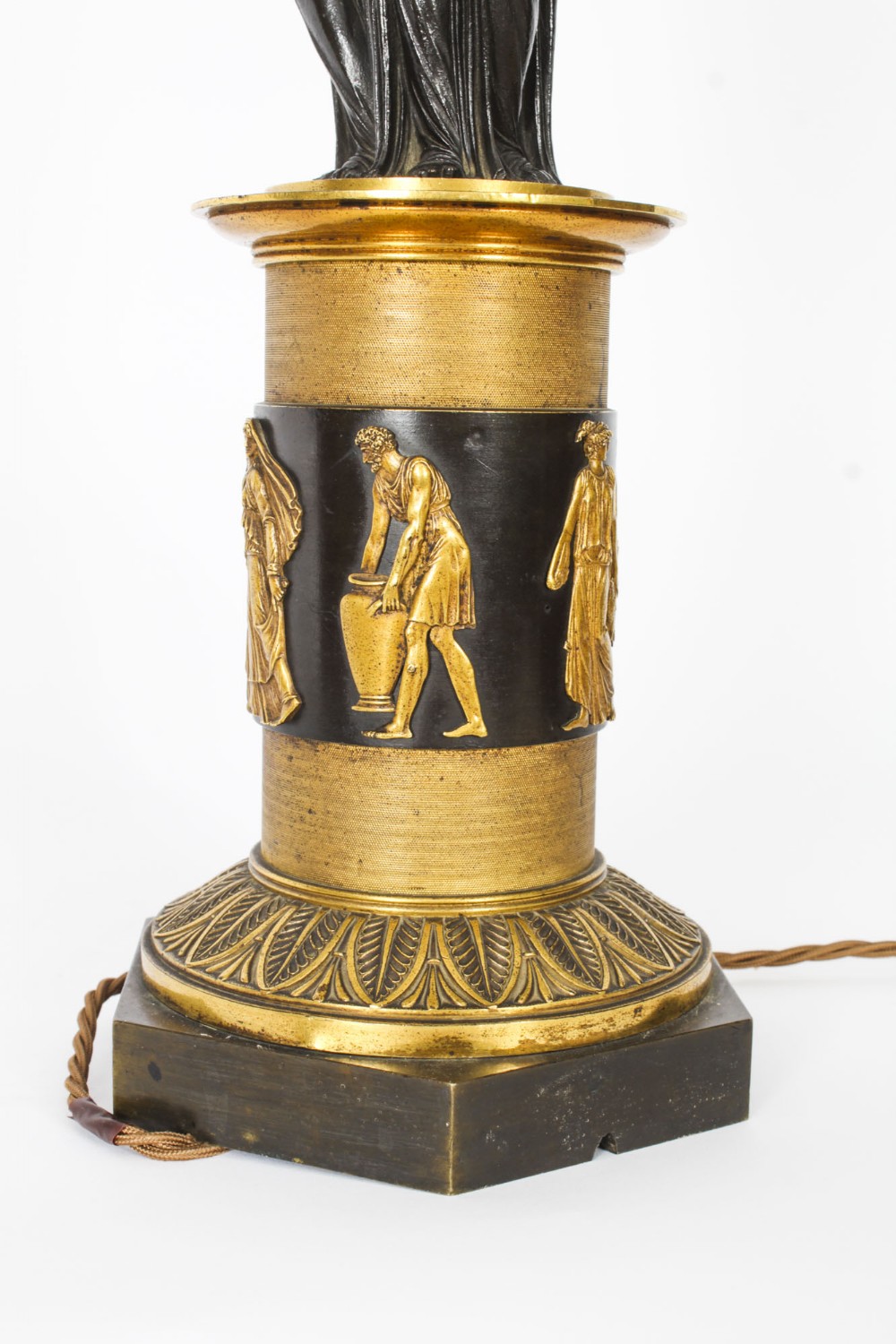
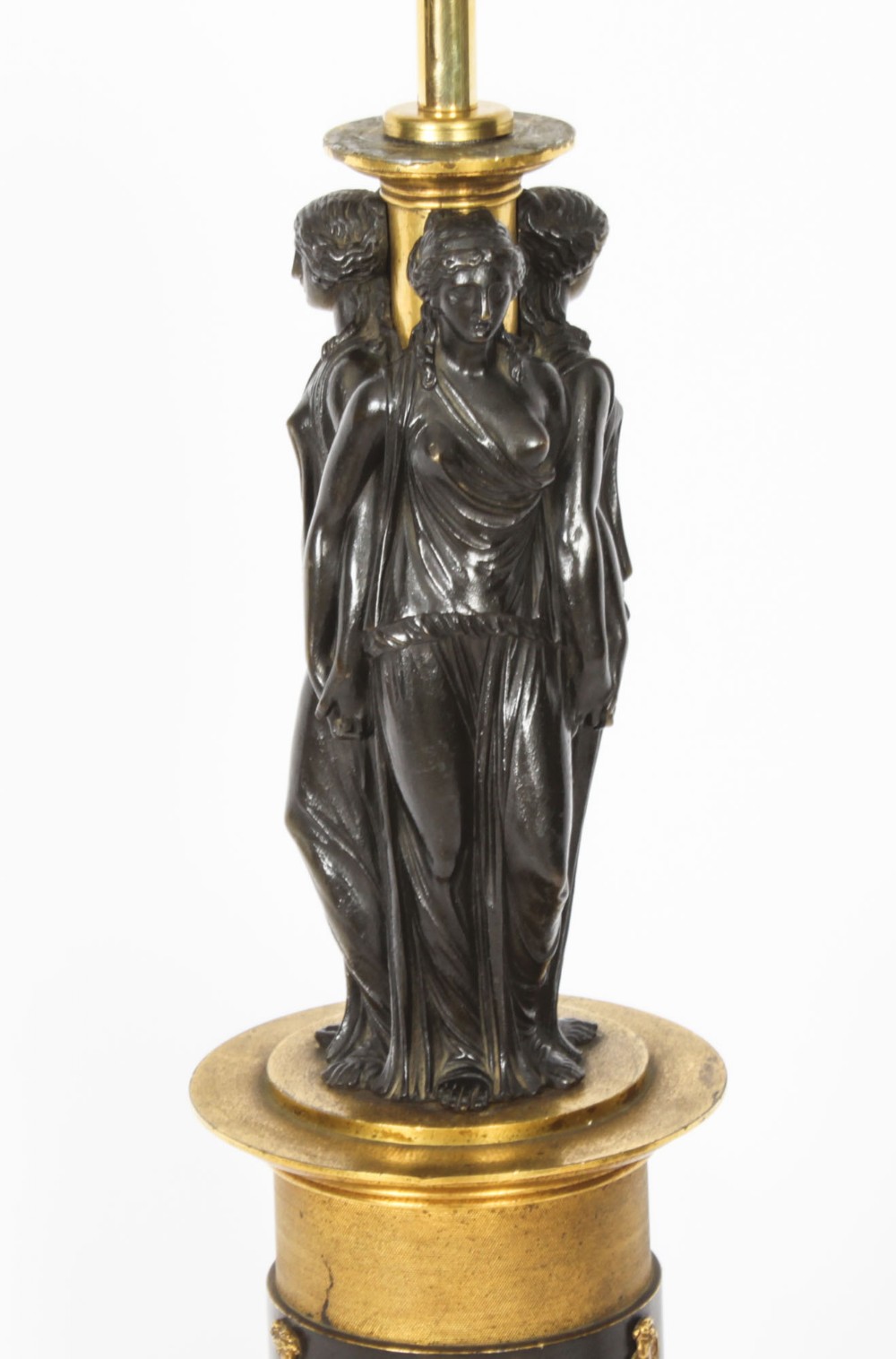
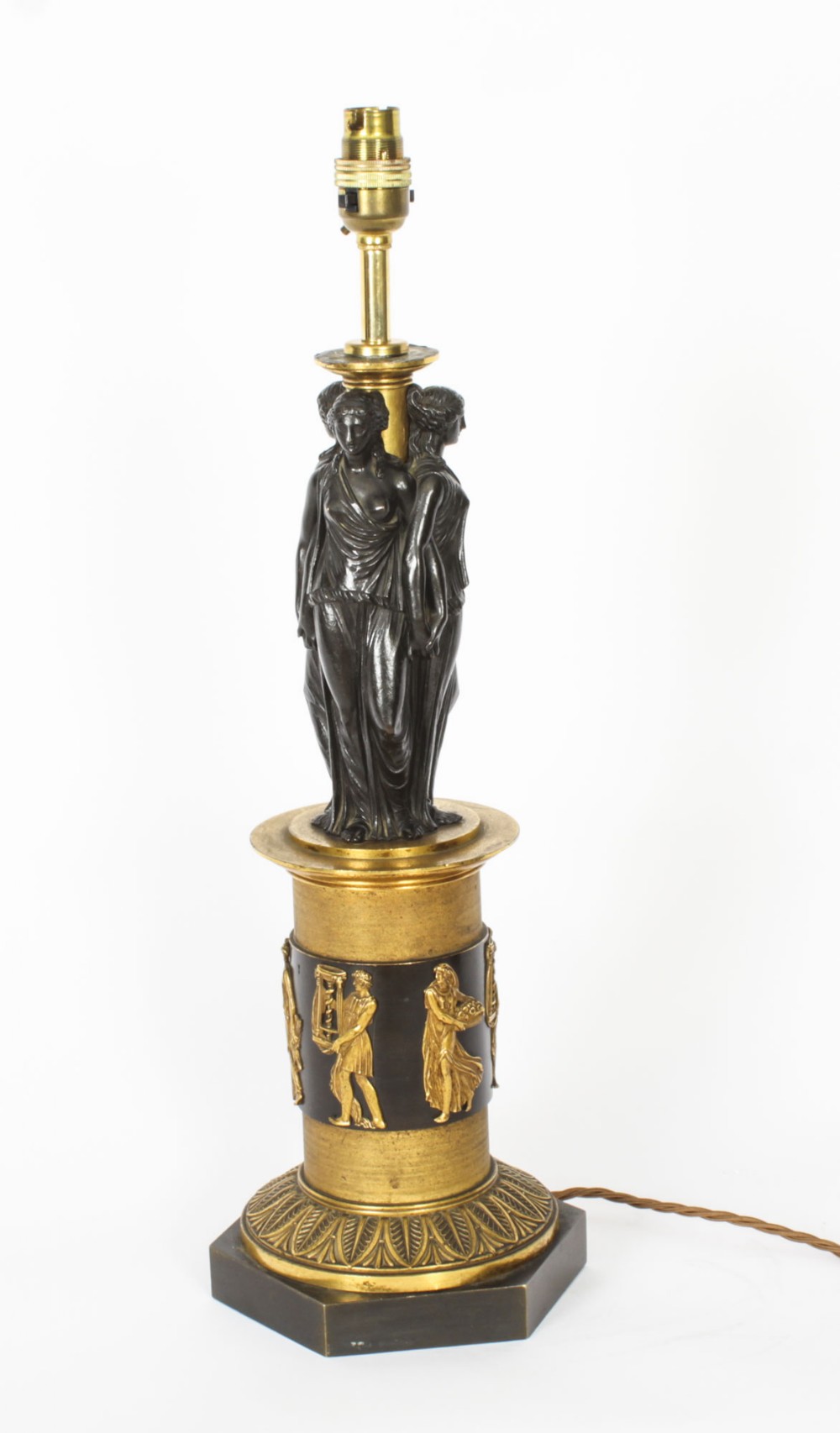
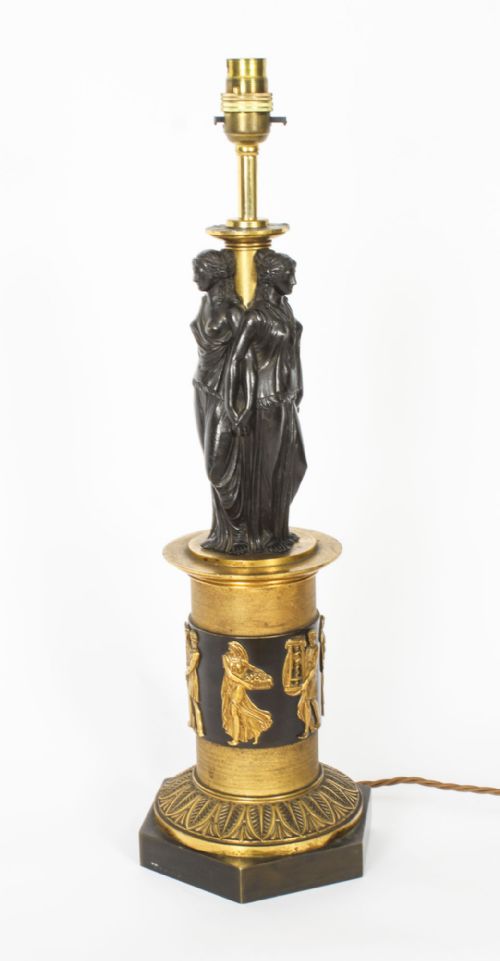
Regent Antiques has dated this piece to the 1880s.
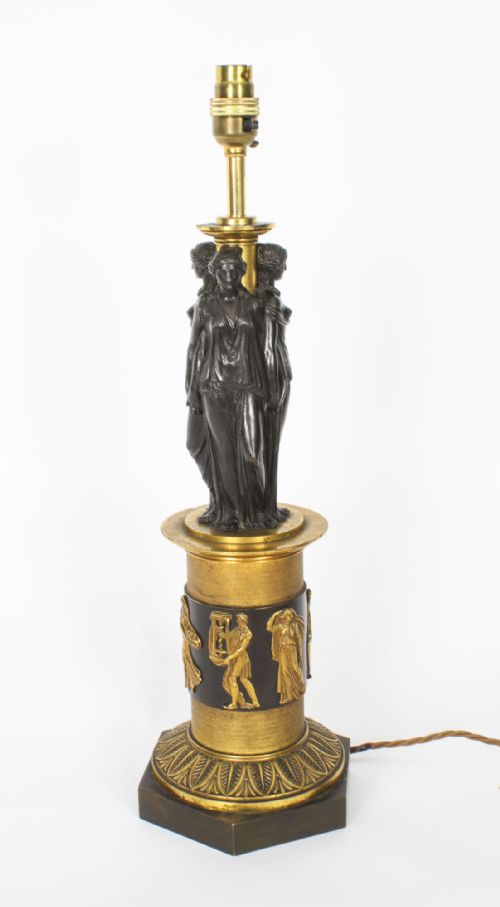
This high quality hot cast solid bronze was produced using the traditional "lost wax" process, otherwise known as the "cire perdue" method.
Condition:
In really excellent condition, please see photos for confirmation.
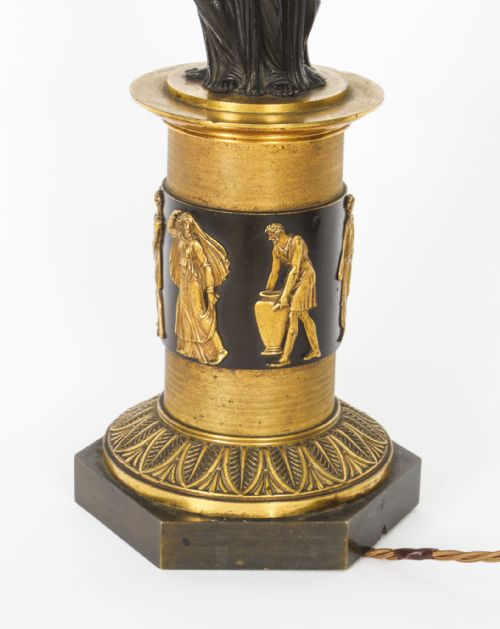
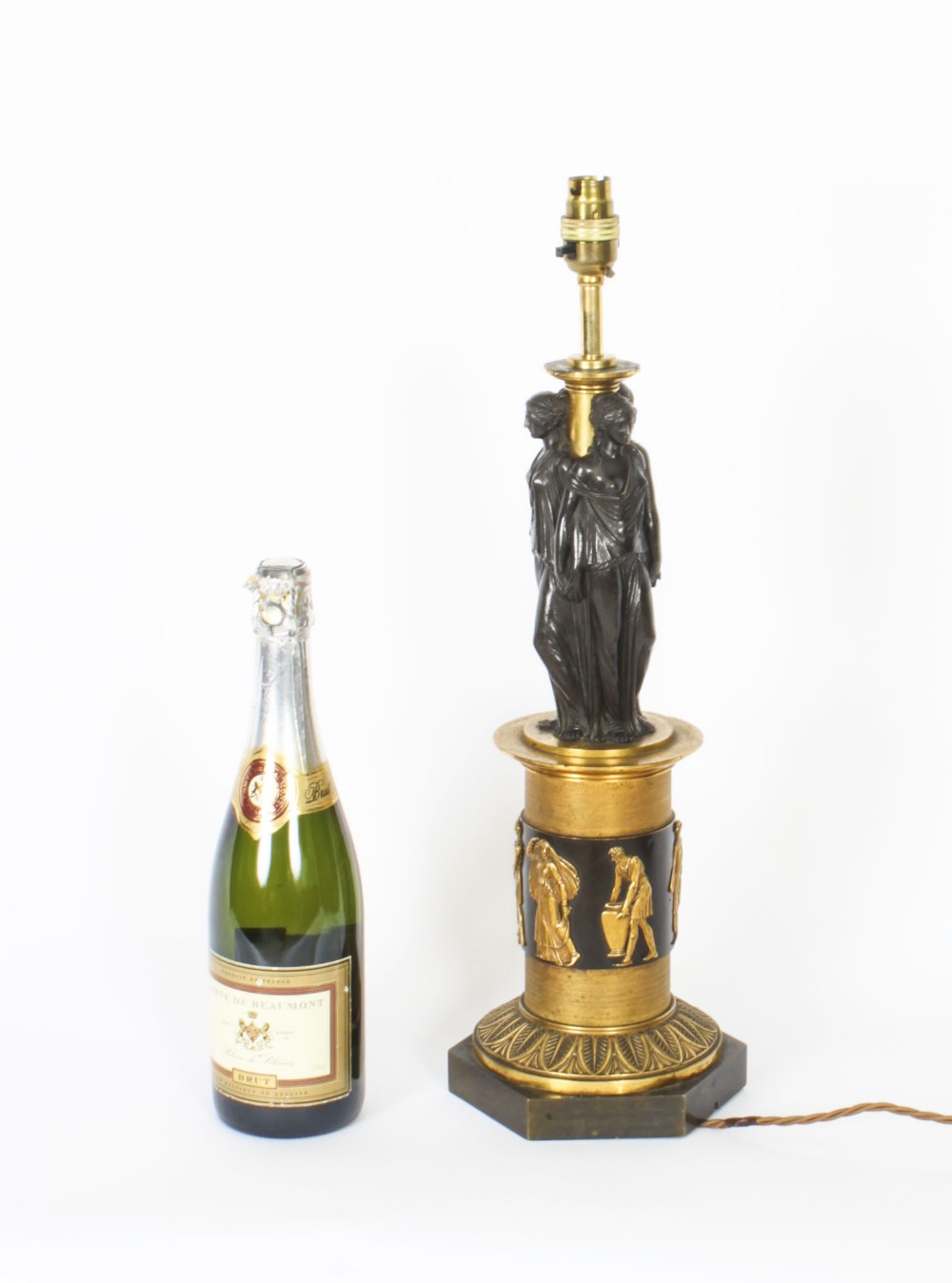
Dimensions in cm:
Height 53 cm x Width 18 cm x Depth 18 cm
Weight 5.4 kg
Dimensions in inches:
Height 1 foot, 9 inches x Width 7 inches x Depth 7 inches
Weight 11.9 lbs
Antonio Canova’s statue The Three Graces is a Neoclassical sculpture, in marble, of the mythological three charities, daughters of Zeus – identified on some engravings of the statue as, from left to right, Euphrosyne, Aglaea and Thalia - who were said to represent youth/beauty (Thalia), mirth (Euphrosyne), and elegance (Aglaea). The Graces presided over banquets and gatherings, to delight the guests of the gods. As such they have served as subjects for historical artists including Sandro Botticelli and Bertel Thorvaldsen.
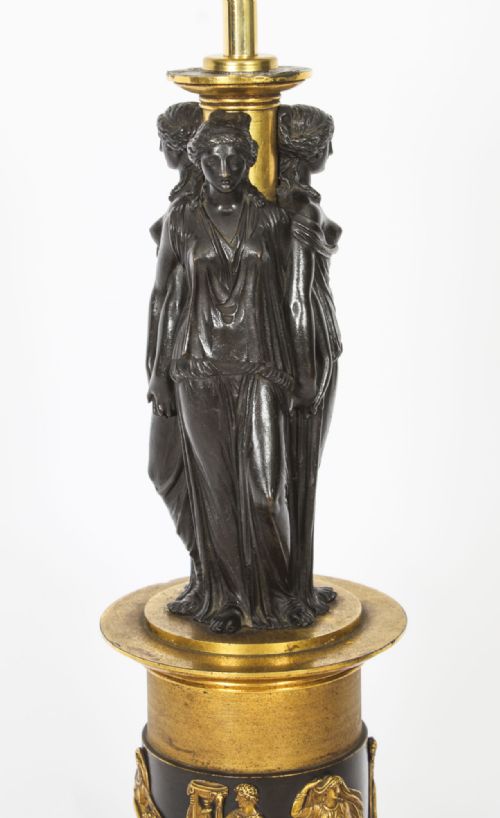
A version of the sculpture is in the Hermitage Museum, another is owned jointly and exhibited in turn by the Victoria and Albert Museum and the National Galleries of Scotland.
Lost Wax Method
sometimes called by the French name of cire perdue or the Latin, cera perduta is the process by which a bronze or brass is cast from an artists sculpture.
In industrial uses, the modern process is called investment casting. An ancient practice, the process today varies from foundry to foundry, but the steps which are usually used in casting small bronze sculptures in a modern bronze foundry are generally quite standardised.
Our reference: A4045
Regent Antiques has dated this piece to the 1880s.
We specialise in english and continental furniture, silver, porcelain and decorative items.
You can view the stock and full dealer information on the Regent Antiques Profile Page
Regent Antiques is a registered member of LAPADA CINOA
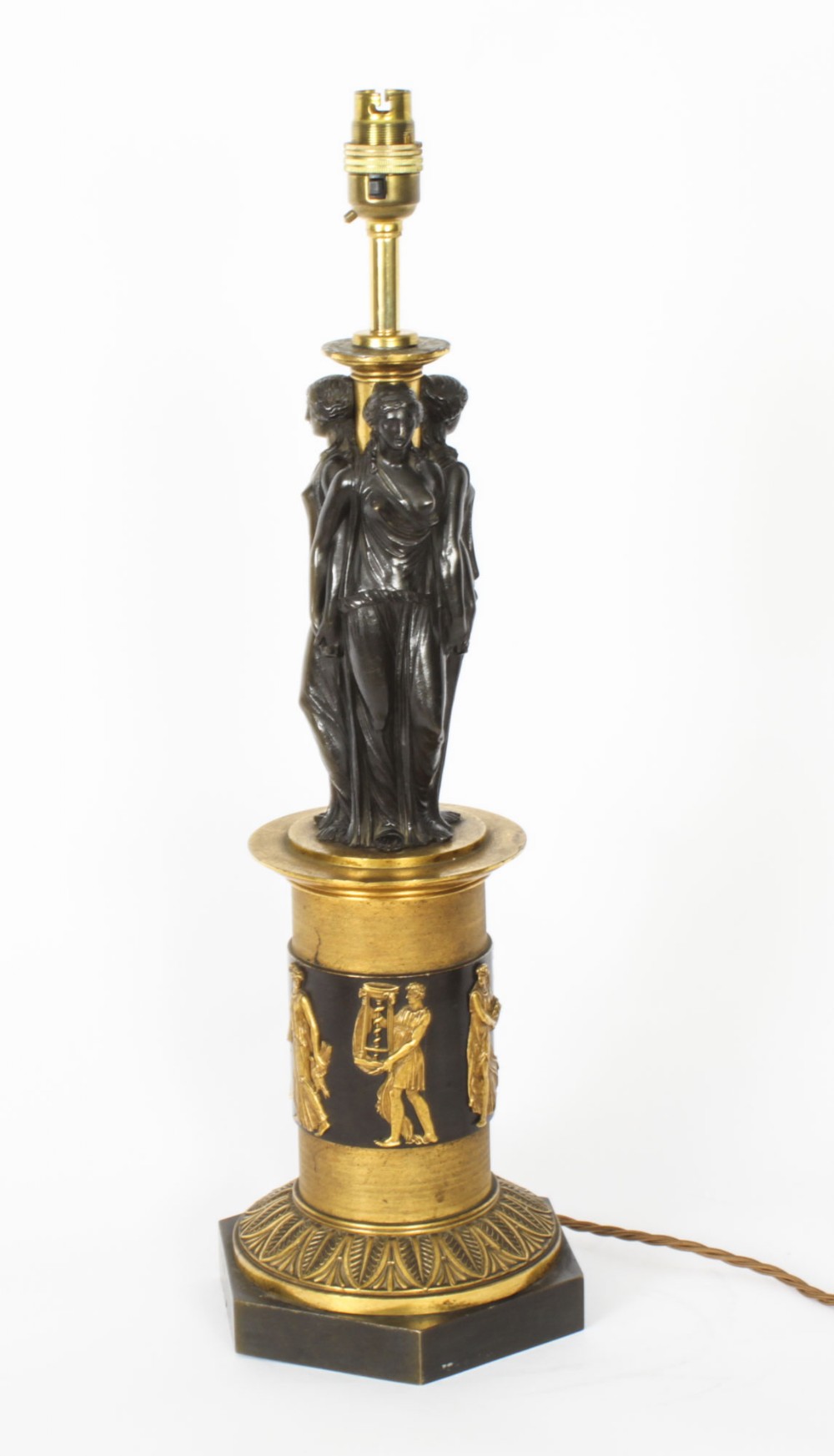
Antique Three Graces After Canova Bronze Scupture Table Lamp 19th C