W.R. Harvey & Co. (Antiques) Ltd has dated this piece to the 19th Century.
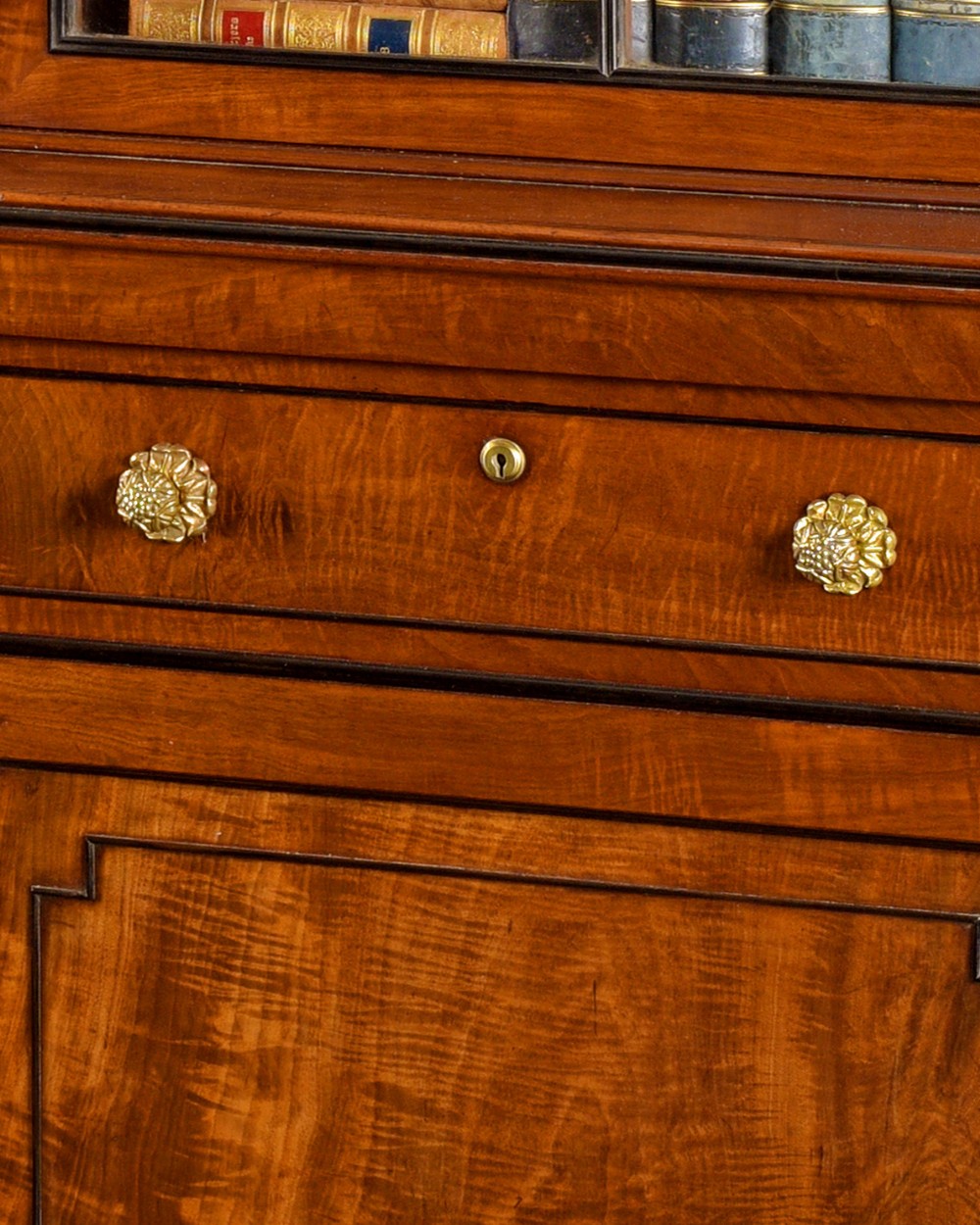
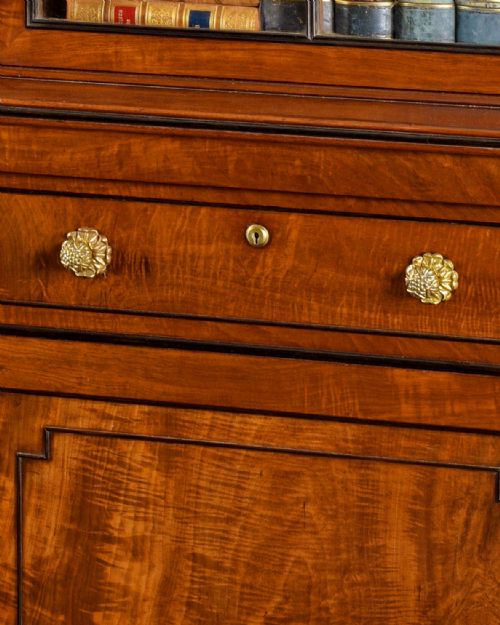
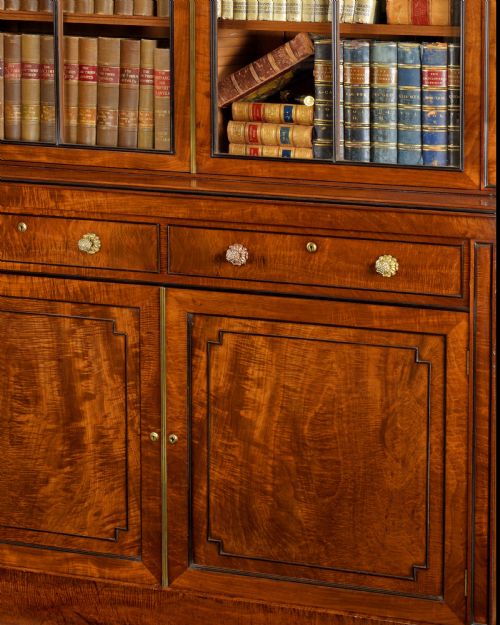
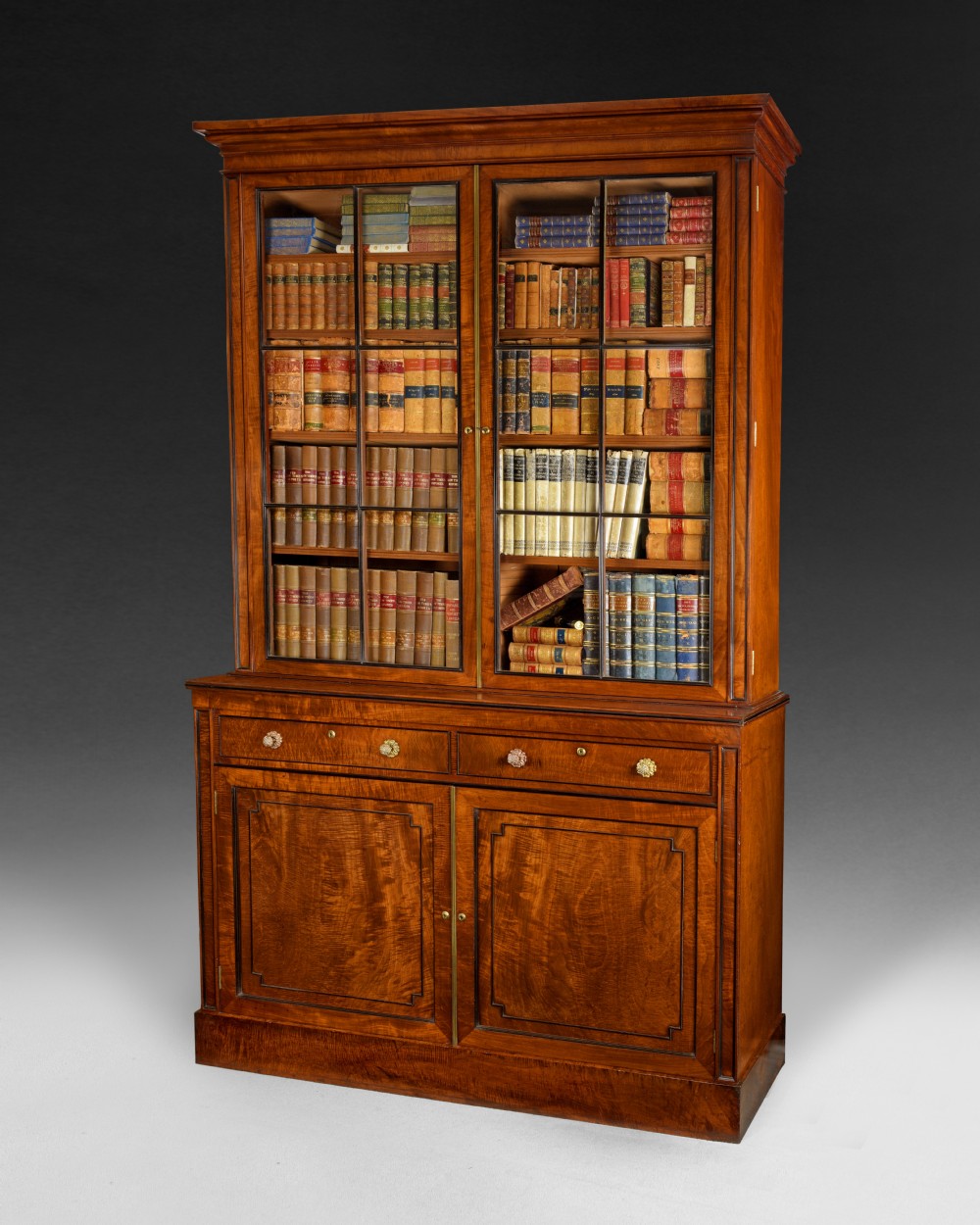
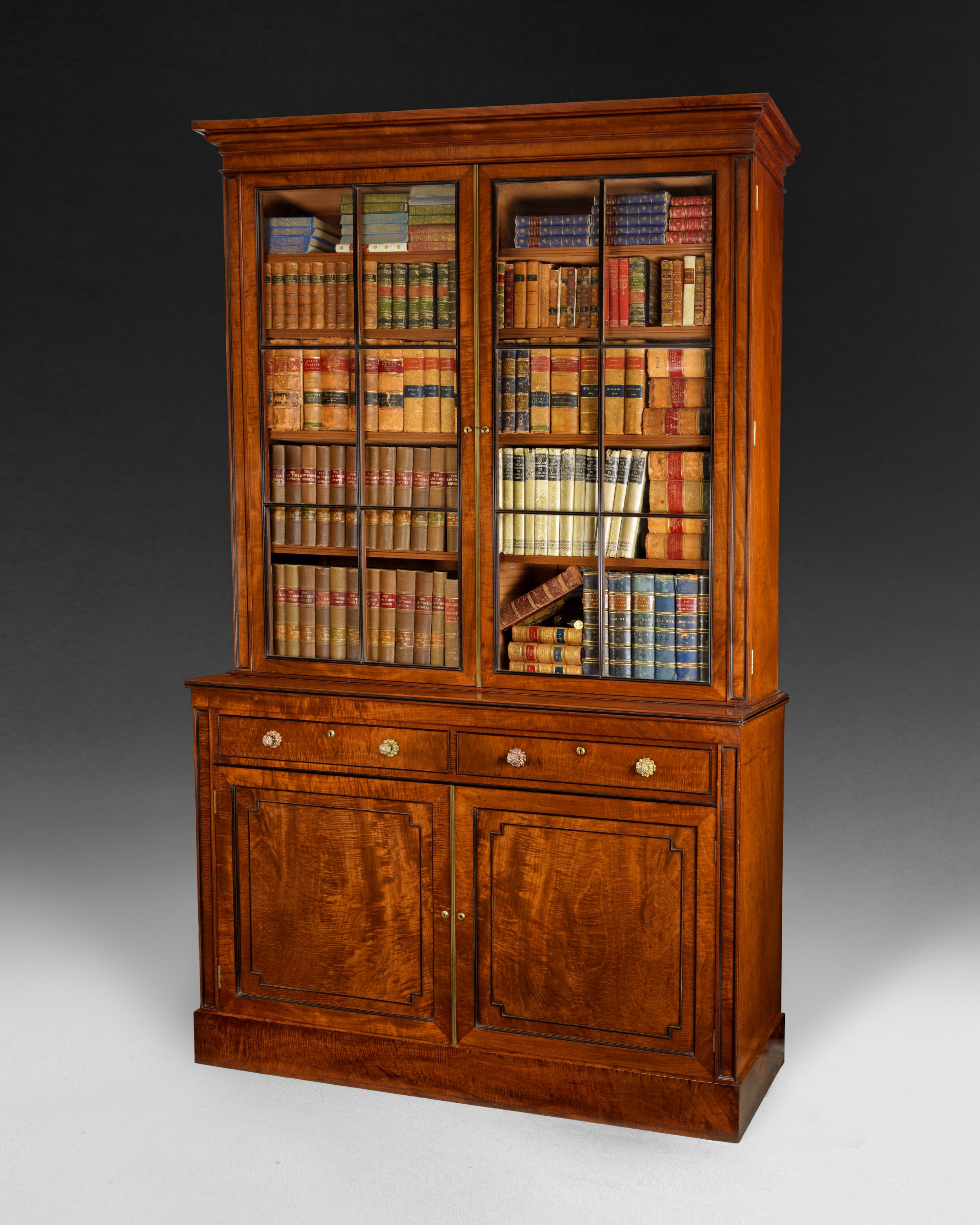
A superb quality early 19th century mahogany bookcase with a moulded, shaped cornice above a crossbanded frieze and two doors with rectangular panes and moulded ebony glazing bars flanked by conforming pilasters, the base with 2 drawers retaining the original floral moulded gilt metal handles above two panelled doors with ebony mouldings flanked by conforming pilasters and the whole raised on a plinth base.
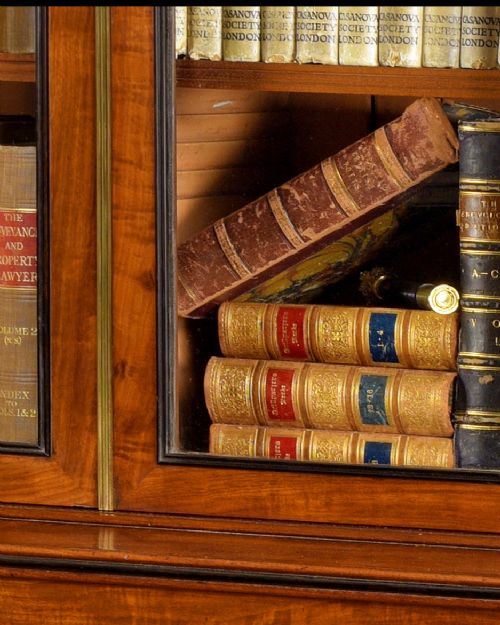
The shelves to the top part are adjustable on both sides and the shelves to the base are fixed. The brass astragals between the doors are also original.
This bookcase is from the Regency period and made of extraordinarily selected timbers.
This piece has been attributed to Marsh and Tatham in London, in particular because of the combination of finely figured mahogany and dark, black ebony, which was a favourite of these illustrious makers who supplied large quantities of furniture to The Prince Regent for his homes in Brighton and Carlton House in London.
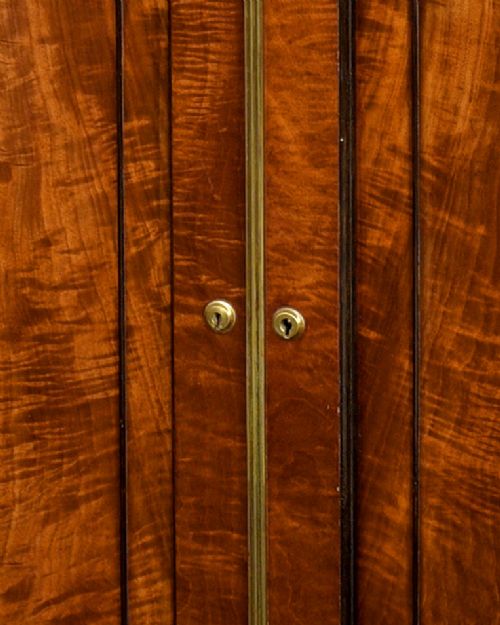
The bookcase displays a combination of strongly figured “Fiddleback” mahogany, so called because it was often reserved by the timber merchants for musical instrument makers who used it for the backs of violins, with its darker bars running across the main figure; this was a rare and expensive piece exemplifying the understanding that the better the figure on a piece of wood, the higher the price was. This contrasts sharply with the dense, dark ebony cockbeading going around the drawers and the mouldings on the cupboard doors, pilasters and glazing bars – with the joints on the ebony glazing bars perfectly mitred to fit.
Circa 1820
Price: £12,500-00p
Height: 93 ¼”, 237 cms, Width: 54”,137 cms, Depth: 16 ¼”, 41 cms.
Marsh and Tatham: Despite several changes of name over time, (Elward & Marsh; Marsh & Baily; Marsh & Tatham; Elward, Marsh & Tatham; Tatham & Bailey; Tatham, Bailey & Saunders etc.), William Marsh and George Elward remained one of the most important and influential cabinet making companies of the late 18th and early 19th centuries. They produced fashionable items in the Anglo-French taste in the 1790s for Southill through to japanned furniture for the Brighton Pavilion in 1801 and Grecian inspired library furniture for Carlton House in 1806.
In keeping with numerous pieces by Marsh and Tatham in Buckingham Palace, Windsor Castle and the Victoria and Albert Museum, the knobs on the drawers are not plain brass but detailed and gilt, once again pointing to these makers. Considering how the adjustable shelves slide in and out, and the additional work this involved, this must have been made for a special client who was both wealthy and had an important home. One may hypothesise that it could well have been one from a suite of bookcases made to house a library of artefacts collected on The Grand Tour.
Provenance: Available upon request.
Literature:
Buckingham Palace (1991). Carlton House: The Past Glories of George IV’s Palace. London, UK: The Queen’s Gallery Buckingham Palace.
Furniture History Society (1986). Dictionary of English Furniture Makers 1660-1840. Great Britain: W. S. Maney and Son Ltd.
Heal, A. and Symonds, R.W. (1953). The London Furniture Makers, from the Restoration to the Victorian Era, 1660-1840. London, Great Britain: Constable and Company, Ltd.
Gilbert, C. (1996). Pictorial Dictionary of Marked London Furniture, 1700-1840. Leeds, UK: W. S. Maney and Son Limited.
W.R. Harvey & Co. (Antiques) Ltd has dated this piece to the 19th Century.
Specialists in 17th-18th and early 19th century fine english furniture, art, clocks and other objets d'art
You can view the stock and full dealer information on the W.R. Harvey & Co. (Antiques) Ltd Profile Page
W.R. Harvey & Co. (Antiques) Ltd is a registered member of LAPADA
Regency Mahogany and Ebony Library Bookcase