


Yellow Wool Rug
A yellow wool rug brings warmth and historic depth to a room through traditional dyes and enduring tribal craftsmanship.
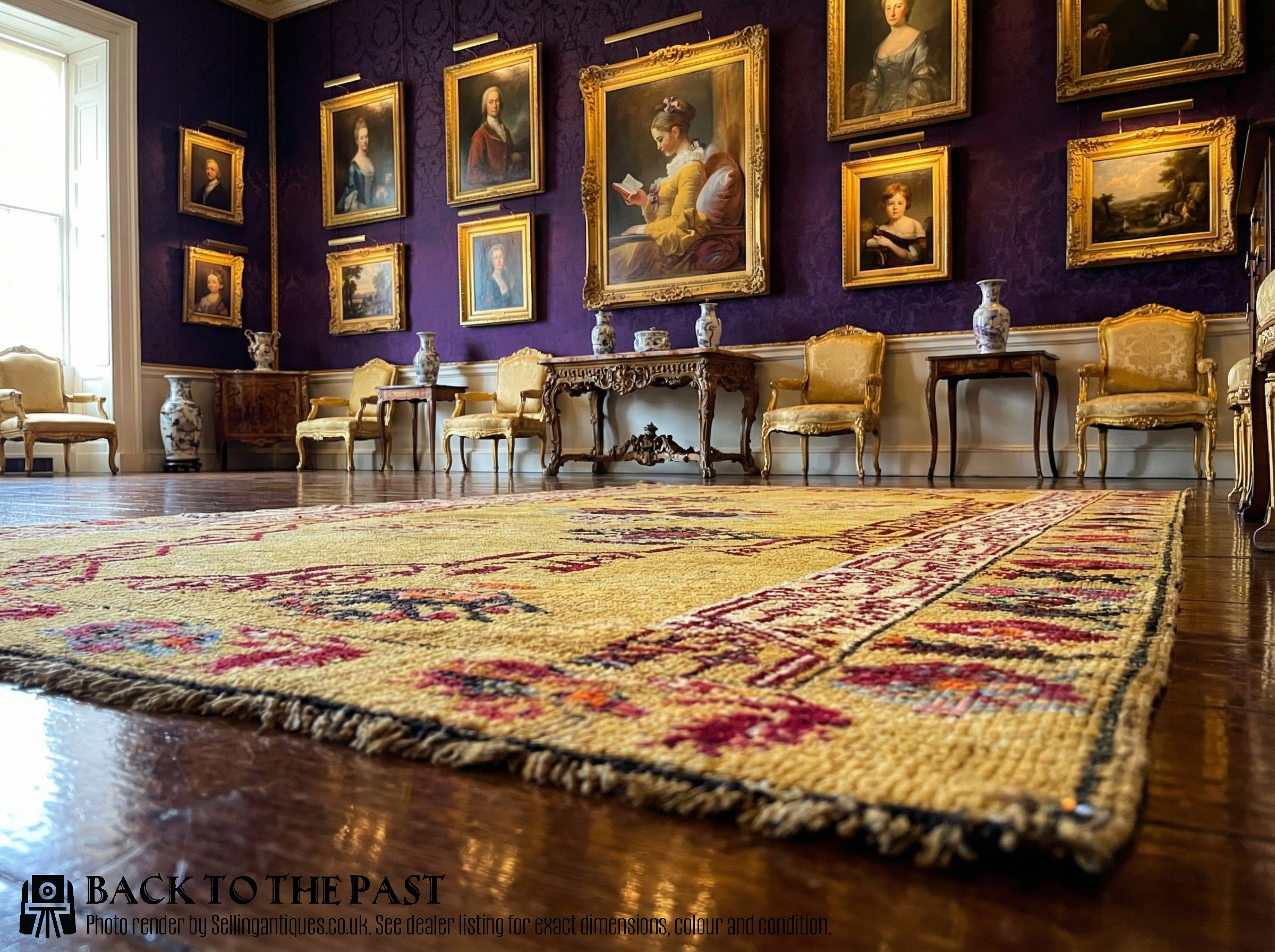
Yellow Wool Rug
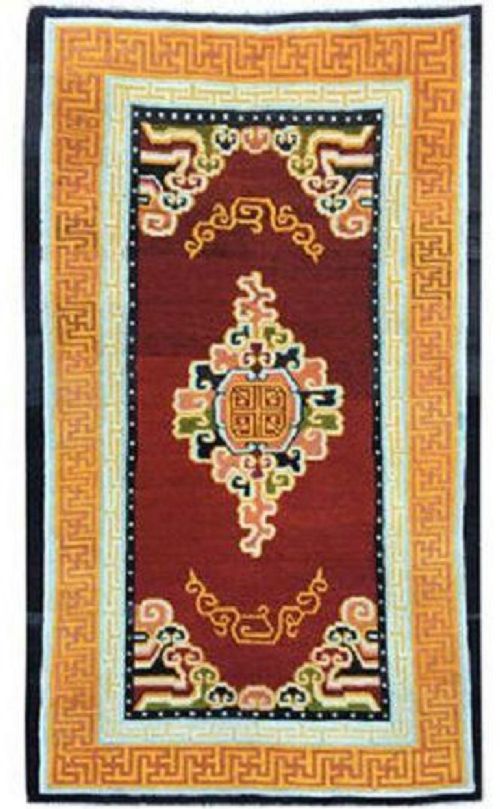
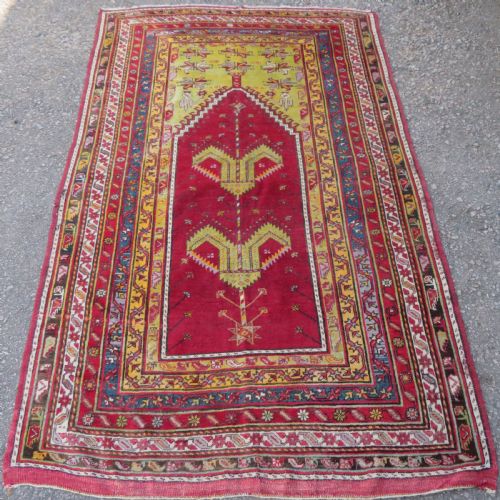
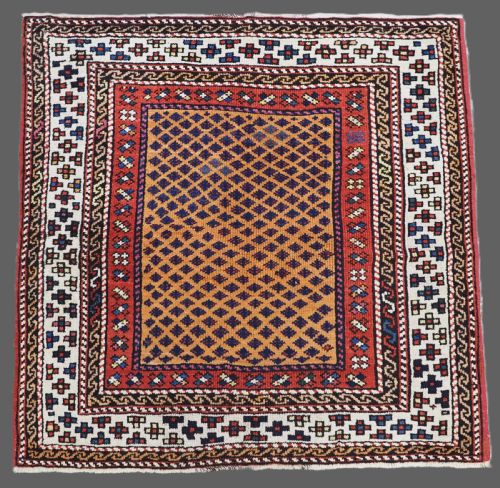
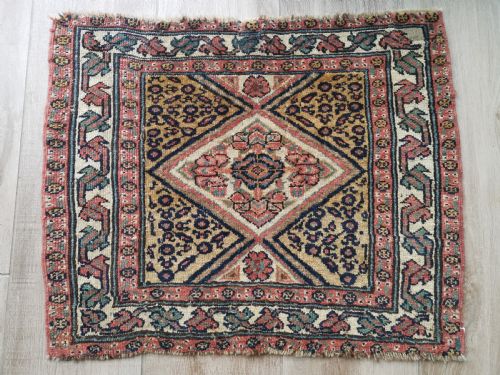
A yellow wool rug encompasses woven floor coverings and decorative textiles featuring a prominent yellow ground, drawing from Persian, Turkish, Caucasian, Chinese, and Central Asian traditions. These pieces range from compact scatter formats like prayer rugs and seating mats to large room-size carpets created across the nineteenth and early twentieth centuries.
The selections available here frequently display regional motifs such as floral lattices, shrub designs, and geometric repeats upon golden or yellow fields. Common regional origins include Oushak, Kirsehir, Bidjar, Ningxia, and various tribal groups across Anatolia and the Caucasus.
Buyers encounter everything from finely knotted Persian and Turkish pile carpets to flatwoven kilims and Bessarabian examples produced between the mid-nineteenth century and the 1930s. Each piece reflects the specific weaving vocabulary and local palette of its origin.
How they were made
The pieces listed record the use of wool, cotton, and hand-spun wool fibres, often worked alongside natural dyes to create rich, varied grounds. Weavers constructed these textiles using traditional knotting techniques for pile rugs or flatweaving methods for kilims and runners.
Materials were gathered locally, with wool providing the durable foundation for pile and structure while cotton frequently appeared in foundational warps and wefts. Artisans relied on traditional dye sources to achieve the characteristic yellow tones seen across these carpets and rugs.
Yellow Wool Rug Retail Price Guide 2026
Typical asking prices for yellow wool rug among the pieces listed under this phrase on Sellingantiques today, from the lower quarter to the upper quarter. They describe what is for sale here now, not the wider market.
Some nineteenth-century weavers managed to smuggle small portrait motifs into the corners of otherwise strict geometric carpets.
What varies in quality
Quality in these textiles rests upon the fineness of the weave, the integrity of the structural foundation, and the handling of the wool. Superior examples demonstrate tight knot density or precise flatweaving alongside well-preserved structural integrity.
The depth and stability of the natural dyes also distinguish the tier of a piece, as master dyers achieved complex, luminous yellow grounds that age gracefully. Balance of design and proportion within regional styles further separates standard domestic items from exceptional workshop or tribal commissions.
The Yellow Wool Rug Glossary
- Pile
- The upright yarn loops or tufts that form the usable surface of a carpet. This soft upper layer absorbs wear and displays the primary design.
- Warp
- The stationary lengthwise threads stretched on a loom before weaving begins. These parallel strands carry the tension of the textile.
- Weft
- The horizontal threads passed across and interlaced through the warp threads. They bind the knots securely in place row by row.
- Kilim
- A flatwoven textile produced without a raised pile surface. These pieces rely on interlocking weft techniques to create sharp geometric patterns.
- Prayer rug
- A small format rug featuring a directional niche or arch design that indicates orientation during use. These portable textiles served devotional purposes.
Yellow Wool Rug: Frequently Asked Questions
How do I style a yellow wool rug?
A yellow wool rug works well as a focal point in neutral spaces, where its warm ground can anchor surrounding furniture. Pairing it with complementary wood tones or contrasting cool accents enhances the depth of the dye.
Larger carpets suit main living areas or dining rooms, while smaller prayer rugs or mats fit entryways and reading corners. Let the traditional patterns dictate the formality of the surrounding interior.
How do I identify the regional style?
Regional attribution depends on observing specific drawing styles, border arrangements, and structural materials. Anatolian and Caucasian pieces often display bold geometric or floral lattices, while Persian and Chinese works feature refined floral or pictorial elements.
Examining the knotting style and the fibre preparation provides further clues to whether a piece originated in a village, a nomadic camp, or a formal workshop.
Are these rugs made with natural dyes?
Many older pieces utilise natural dyestuffs derived from plants and minerals to achieve their characteristic palette. These traditional dyes interact with wool fibres to produce subtle tonal variations across the surface.
Over time, exposure to light and air allows these organic colours to mellow gently, developing a characteristic patina that distinguishes nineteenth and early twentieth-century examples.
What is the difference between pile and flatweave?
Pile rugs feature a dense surface of knotted wool yarn that provides a soft, cushioned texture underfoot. The maker ties individual strands around the warp threads before shearing the surface level.
Flatweaves, such as kilims, contain no raised pile and are constructed by tightly interweaving the coloured weft threads directly through the warp. This creates a lighter, reversible textile with a smooth surface.