




Antique Chinese Rug
An antique chinese rug brings centuries of woven heritage into a room, offering tactile depth and a distinct decorative anchor.
Antique Chinese Rug
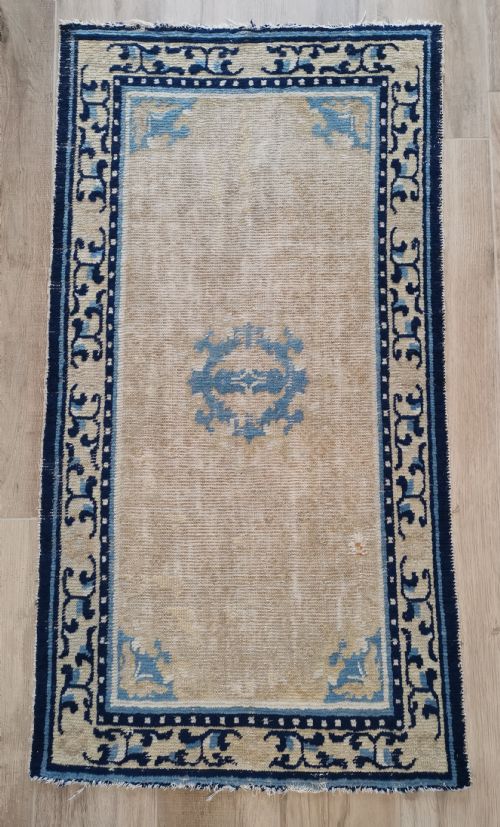
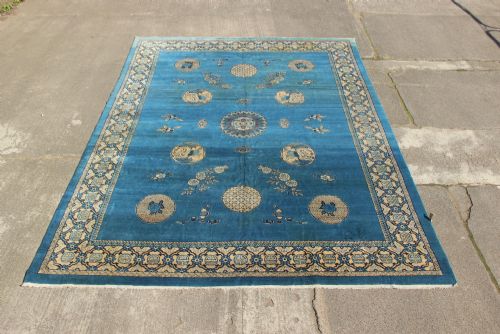
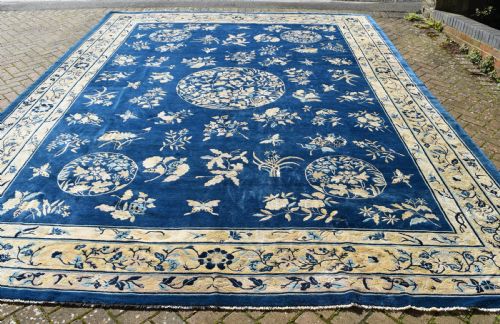
An antique chinese rug encompasses room-size carpets, pillar rugs designed to wrap architectural columns, small seating mats, and long runner formats. These pieces emerge from historical centres such as Ningxia, Peking, Pao Tao, and Khotan, spanning the nineteenth and early twentieth centuries. The selection frequently includes Qing Dynasty traditions alongside later geometric or pictorial Art Deco expressions.
Buyers encountering this group will most commonly meet smaller Ningxia mats or room-size Peking carpets dating from around nineteen hundred to nineteen twenty. Pillar rugs and fragments from East Turkestan also appear, displaying distinct regional motifs like dragons, phoenixes, and shou characters. Each format serves a specific architectural role, from small floor coverings to expansive chamber carpets.
Assessing quality in woven pieces
Quality rests in the precision of the knotting and the density of the pile, which dictate how crisply the design resolves across the surface. Finer examples maintain structural uniformity across large fields, while robust country house pieces show a more relaxed handling of traditional motifs.
The sophistication of the palette and the clarity of regional symbols, such as flower sprigs or butterflies, separate standard production from superior examples. Preservation of the original cotton foundation and pile height further distinguishes the hierarchy among surviving specimens.
Antique Chinese Rug Retail Price Guide 2026
Typical asking prices for chinese rug among the pieces listed under this phrase on Sellingantiques today, from the lower quarter to the upper quarter. They describe what is for sale here now, not the wider market.
Listings span periods from eighteen hundred to nineteen twenty, uniting wool and cotton pieces from Ningxia, Peking, and Khotan.
The Antique Chinese Rug Glossary
- Ningxia
- A northern region renowned for classical carpets and seating mats featuring restrained pictorial compositions and soft wool. These pieces often display traditional symbols tied to scholarly or religious iconography.
- Peking
- A metropolitan style associated with room-size carpets typically produced around nineteen hundred. They frequently employ open fields of yellow or blue surrounded by restrained floral borders.
- Pillar rug
- A specialised vertical format designed to wrap around wooden structural columns in traditional buildings. They often feature dragons or phoenixes ascending the length.
- Khotan
- An origin located in East Turkestan producing carpets with distinct regional geometry and vegetal motifs. These pieces often incorporate a blend of Chinese and Central Asian design elements.
- Pao Tao
- A production centre known for robust carpets displaying strong dragon and symbolic imagery. The weaving tends to be thick and durable, suited to heavy use.
Antique Chinese Rug: Frequently Asked Questions
How do I clean an antique chinese rug?
Surface dust can be removed gently with low-suction vacuuming without a rotating brush. Professional textile conservators should handle deeper washing to protect the wool pile and cotton foundation.
Water exposure must be kept minimal to prevent dye migration across softer colour fields. Specialist care ensures the historical integrity of the weave remains undisturbed.
Where were pillar rugs originally placed?
Pillar rugs wrapped around structural timber columns in traditional temples, halls, or domestic courtyards. Their narrow dimensions and specific lengths fitted circular architectural supports.
Today, these formats function well as wall hangings or narrow floor runners. Their pictorial designs remain clearly visible when displayed flat against a vertical surface.
What indicates a Qing Dynasty date?
Earlier pieces from the nineteenth century display specific natural dye palettes, looser wool spins, and traditional symbol placement. Design elements often adhere strictly to imperial or classical iconography.
Later nineteenth-century and transition pieces show shifts toward more stylised floral motifs. Comparing knot density and wool texture helps establish the chronological placement.
Can these carpets handle daily foot traffic?
Room-size Peking and Art Deco carpets possess sturdy wool pile suited to moderate household use. Placing a breathable rug underlay underneath reduces friction and prevents sliding on hard floors.
Fragile fragments or delicate seating mats require lighter placement out of heavy thoroughfares. Judicious positioning preserves the remaining pile and cotton foundations.