
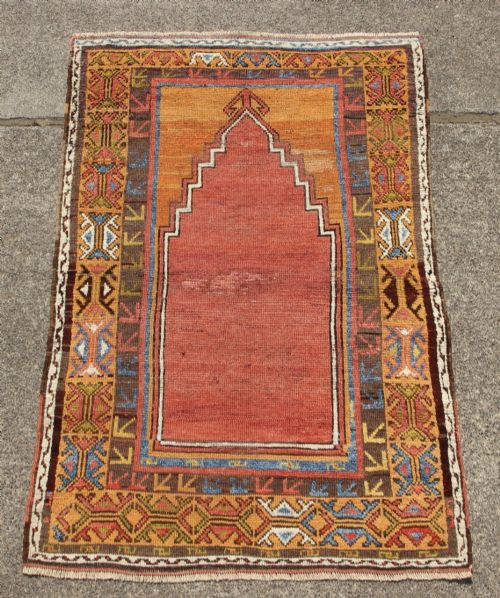


Mid 19th Century Carpet
A mid 19th century carpet brings floor textiles of hand-spun wool and natural dyes into a room, offering genuine regional craftsmanship.
Mid 19th Century Carpet
A mid 19th century carpet encompasses floor coverings and small rugs woven across Anatolia, Central Asia, and China. When you examine this selection, you encounter prayer rugs, village weaving, and tribal pieces created during the 1850s, 1860s, and 1870s.
The most common formats on this page are regional prayer rugs from Turkish centres alongside tribal torbas, chuvals, and main carpets from Turkmen and Persian makers. Each piece reflects the specific decorative vocabulary of its geographic origin, from Anatolian village designs to nomadic Turkmen motifs.
How they were made
Weavers constructed these textiles using hand-spun wool foundation yarns and pile, frequently utilising cotton for structural elements in specific regional types. The reliance on natural dyes ensured a stable palette that matures with age.
The density of the weave varies according to the origin, with nomadic tribal pieces and village workshops employing knotted pile techniques suited to domestic use or ceremonial display.
Listings feature pieces spanning the 1850s to the 1870s, incorporating wool, cotton, and natural dyes across Anatolian, Persian, and Central Asian styles.
What varies in quality
The distinction between a standard example and a superior textile rests on the clarity of the natural dye palette and the precision of the weave. Finer knotting and well-defined tribal motifs elevate a piece.
Condition also plays a part in the standing of a carpet, where surviving pile depth and intact borders distinguish well-preserved examples from heavily worn fragments.
The Mid 19th Century Carpet Glossary
- Torba
- A small Turkmen storage bag face woven in tent or house interiors. These items display intricate tribal güls and fine weaves.
- Prayer Rug
- A devotional rug featuring a mihrab or niche design indicating the direction of prayer. Turkish village workshops produced many distinct regional variations.
- Chuval
- A large Turkmen storage bag face used for household organisation inside a yurt. They share design elements with full-sized main carpets.
- Natural Dyes
- Colourants derived from plants, insects, and minerals before the introduction of synthetic alternatives. They yield rich hues that age with distinct character.
- Gul
- An octagonal or medallion-like motif recurrent in Turkmen and Central Asian weaving. Each tribal group utilised particular variations to signify heritage.
Mid 19th Century Carpet: Frequently Asked Questions
How are mid 19th century carpets cleaned?
These textiles require gentle surface care and professional specialist washing rather than immersion or standard domestic cleaning methods.
Harsh agitation damages the hand-spun wool pile and alters the natural dyes used in the original construction.
Can I use these carpets on the floor?
Many examples serve well as floor coverings in low-traffic areas, while delicate fragments or smaller torba faces suit wall display.
Placing a proper underlay beneath a rug prevents slipping and reduces friction on the historic wool foundation.
What is a prayer rug?
A prayer rug is a small format textile featuring an architectural arch or mihrab shape designed to be pointed towards Mecca during daily devotions.
Anatolian villages such as Konya, Ladik, and Mudjur produced distinct versions of these portable ritual objects.
How do I identify a Turkmen carpet?
Turkmen and Central Asian pieces typically display repeating octagonal gull motifs set against deep red or madder grounds.
Tribes such as the Tekke and Ersari utilised specific geometric arrangements and fine weaves that separate them from Persian or Anatolian counterparts.