


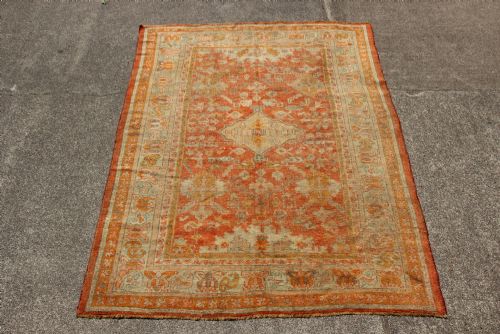

Turkish Wool Carpet
These heavy pile coverings bring warmth to a room through traditional hand-knotted patterns rooted in Anatolian weaving centres.
Turkish Wool Carpet
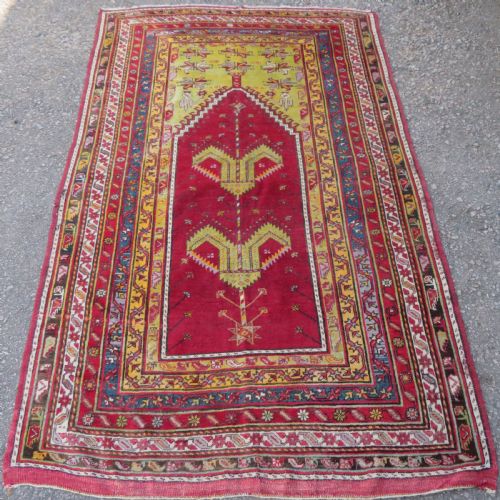
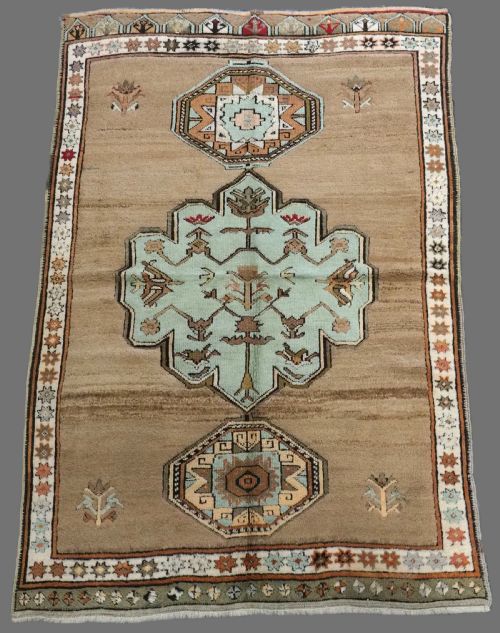
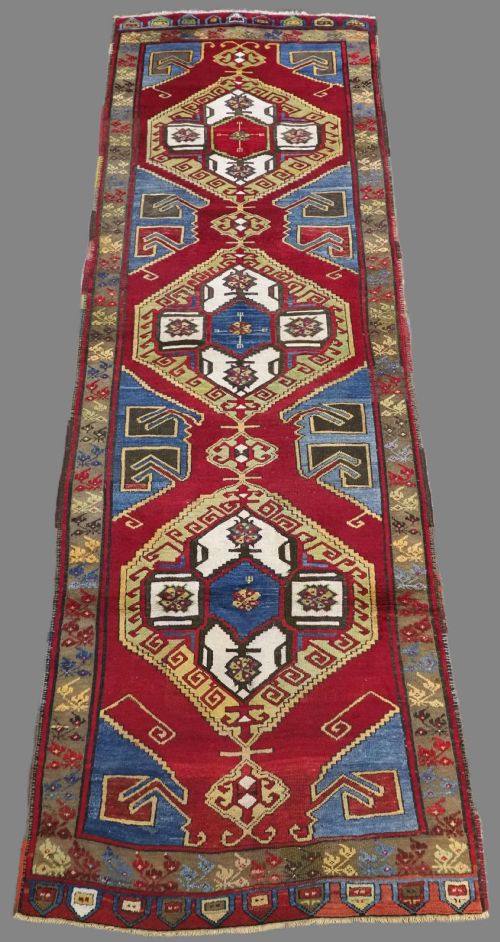
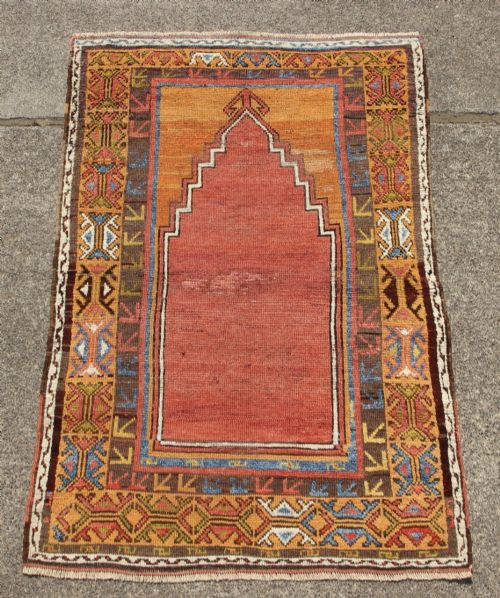
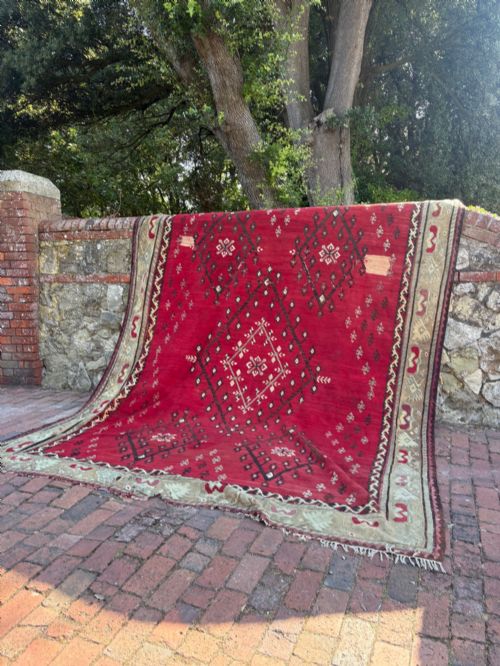
A turkish wool carpet is a floor covering produced in Anatolia across the nineteenth and early twentieth centuries, encompassing large room-sized carpets, runners, and smaller prayer rugs. Most pieces on this page originate from traditional weaving regions such as Oushak, Konya, Bergama, and Ghiordes.
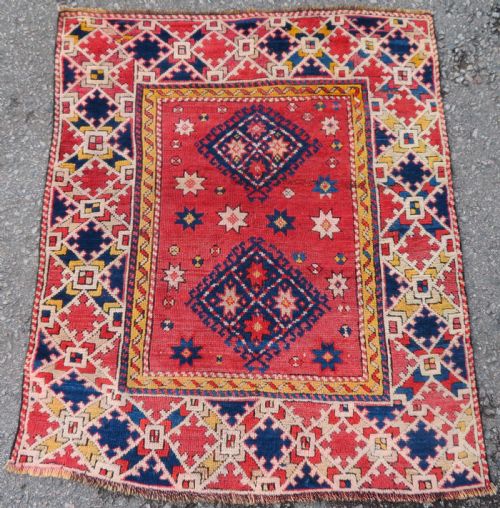
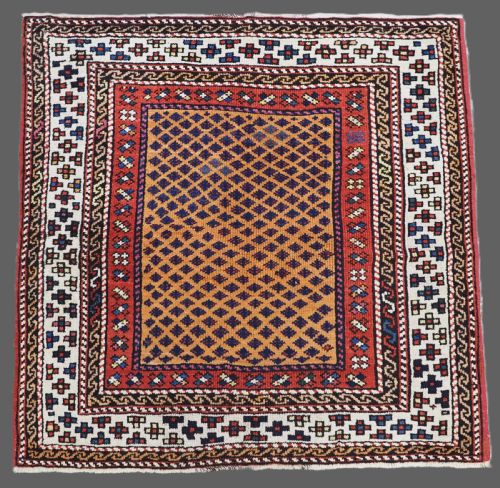
The selection ranges from grand decorative carpets measuring over four metres to narrow runners and square mats. Village and tribal pieces sit alongside larger workshop productions, reflecting diverse regional styles from the Ottoman era onward.
Materials and Construction
Weavers utilised natural wool, hand-spun wool, and occasionally camel wool for the pile, set against cotton foundations for structural stability. These organic materials were dyed using traditional methods to achieve the soft, faded tones seen across the surviving pieces.
Construction methods include hand-knotted pile and flatweave techniques such as kilim construction. The density of the knotting varies according to whether a rug was produced in a commercial workshop or a local village household.
Listings span from the eighteenth century through the 1930s, featuring wool, cotton, and camel wool across various regional formats.
Assessing Quality and Character
Quality rests in the balance of design, the depth and handling of the natural wool pile, and the harmony of the faded colour palette. Finer workshop carpets display precise floral or geometric layouts, whereas village examples lean on tribal motifs with bolder expression.
Condition plays a direct role in character, as centuries of use often result in timeworn repairs and patinated surfaces. Pieces retaining strong structural integrity alongside soft, aged colours command greater appreciation among collectors.
The Turkish Wool Carpet Glossary
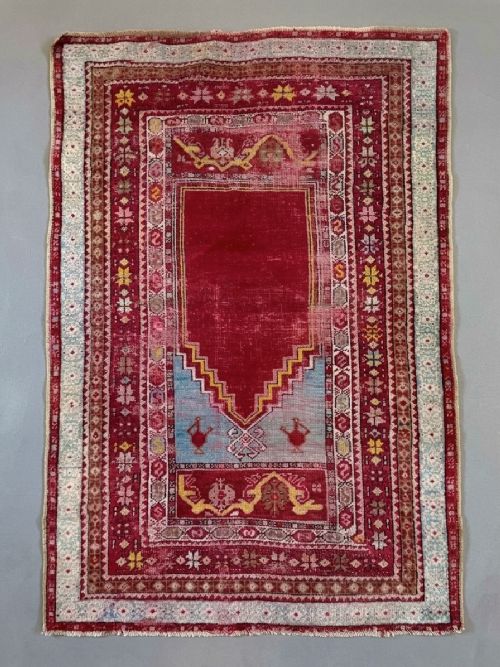
- Prayer Rug
- A smaller format rug featuring a distinct mihrab or arch design at one end, historically used for individual daily prayers. These pieces often display centralized geometric or floral motifs.
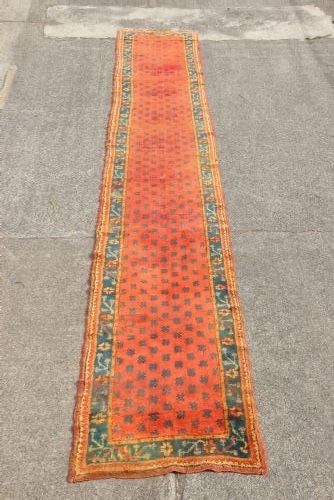
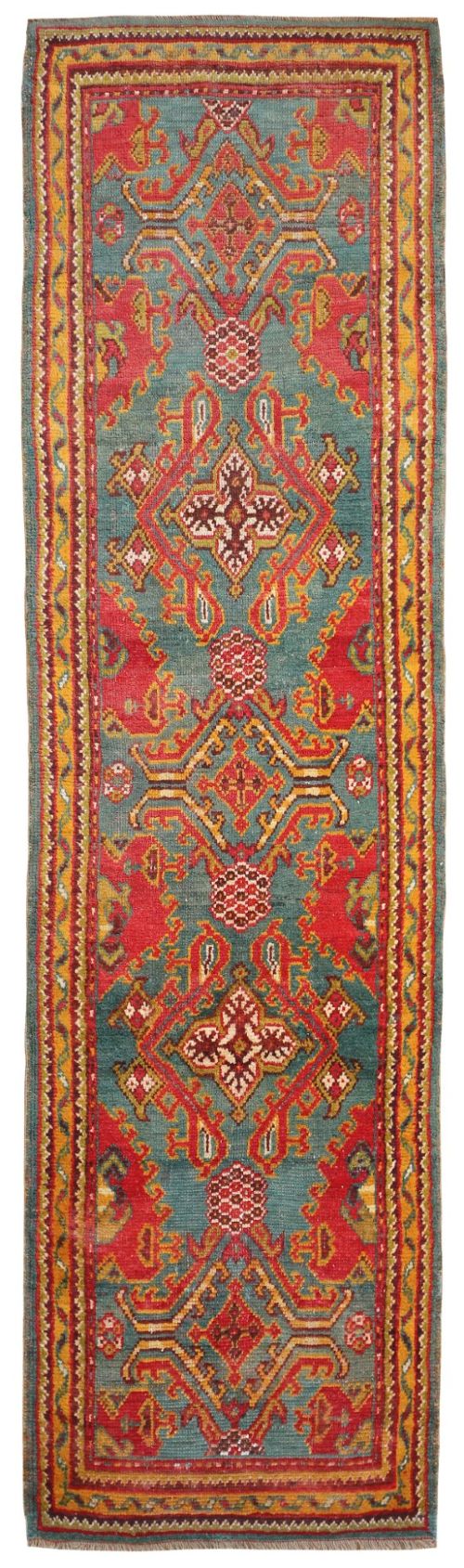
- Runner
- A long, narrow carpet format designed specifically for hallways, corridors, or alongside beds. They appear frequently in nineteenth and early twentieth-century Anatolian production.
- Kilim
- A flatweave textile produced without a knotted pile, created by tightly interweaving warp and weft threads. They offer a lighter alternative to traditional piled carpets.
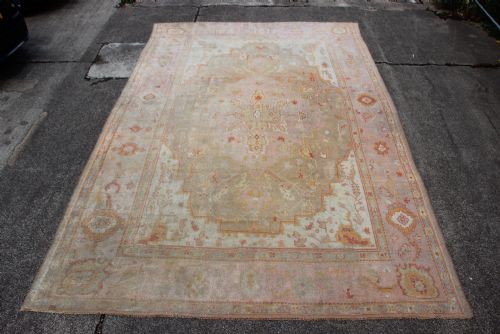
- Oushak
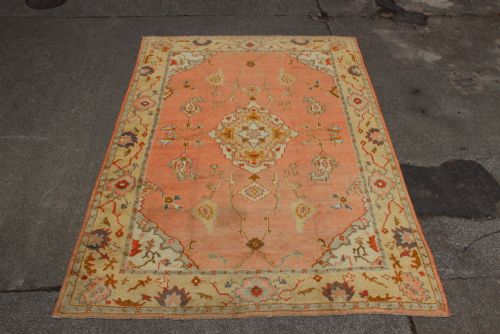
- A significant weaving centre in western Anatolia known for producing large-scale decorative carpets with expansive fields and subdued, faded coloration. These pieces were often exported to European markets.
- Mihrab
- The arched architectural niche depicted on prayer rugs, pointing toward Mecca during worship. It forms the focal point of the rug's upper field.
Turkish Wool Carpet: Frequently Asked Questions
Where were these carpets made?
These textiles originate from various regions across Anatolia, including specific weaving towns and village communities like Oushak, Konya, Bergama, and Kirsehir. Each district developed distinct regional patterns and colour palettes.
Production spanned from the nineteenth century into the early decades of the twentieth century, reflecting traditional local weaving methods passed through generations.
How do I care for an antique wool carpet?
Regular gentle vacuuming without a rotating brush helps prevent dust accumulation in the wool pile. Professional cleaning suited to antique textiles preserves the natural fibres and dyes.
Placing a breathable rug underlay beneath the carpet prevents slipping and reduces friction against hard flooring during daily use.
What is the difference between a carpet and a runner?
Carpets generally offer broad, square or rectangular proportions intended to anchor central floor spaces in principal rooms. Runners are explicitly long and narrow, proportioned for hallways and narrow passages.
Both formats utilise similar hand-knotted wool construction and traditional Anatolian dyeing techniques.
How can I tell a village rug from an oushak?
Village rugs typically feature geometric tribal motifs, smaller dimensions, and bolder, direct compositions woven in local households. Oushak carpets are usually larger and display expansive, softer floral designs produced in commercial workshops.
Both categories utilise traditional wool and cotton materials from the same broader Anatolian cultural sphere.