



Red Wool Prayer Mat
When you search for a red wool prayer mat, you enter a tradition of woven textiles defined by the mihrab arch and the nomad's loom.
Red Wool Prayer Mat
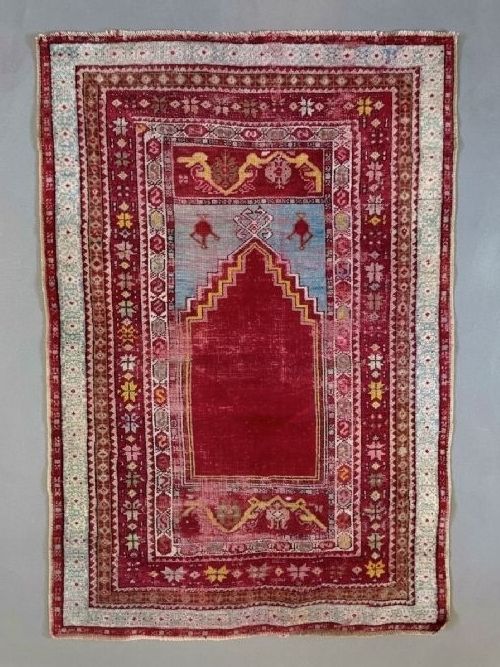
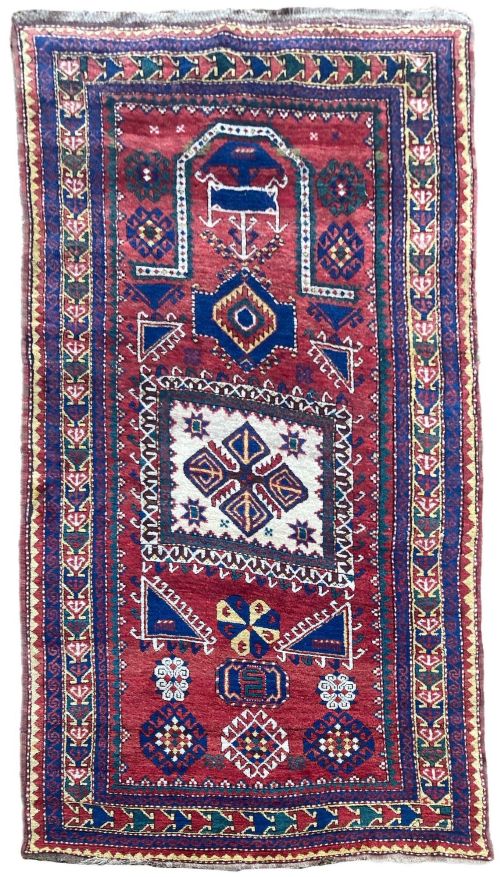
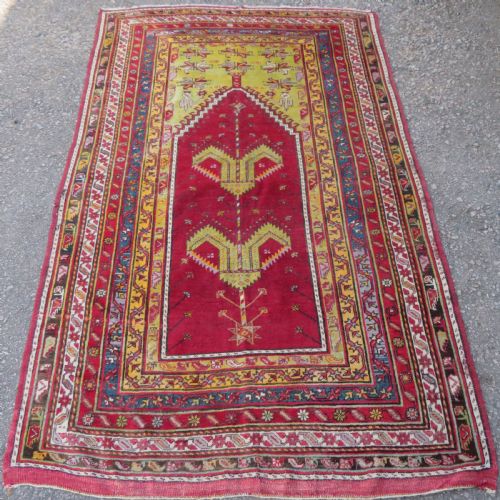
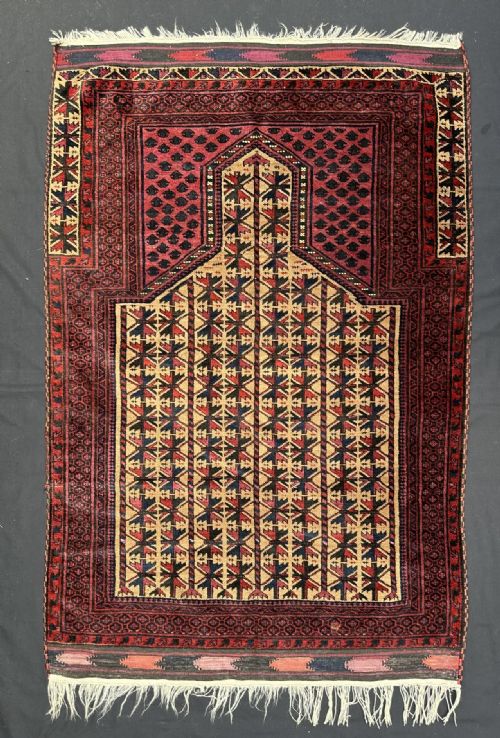
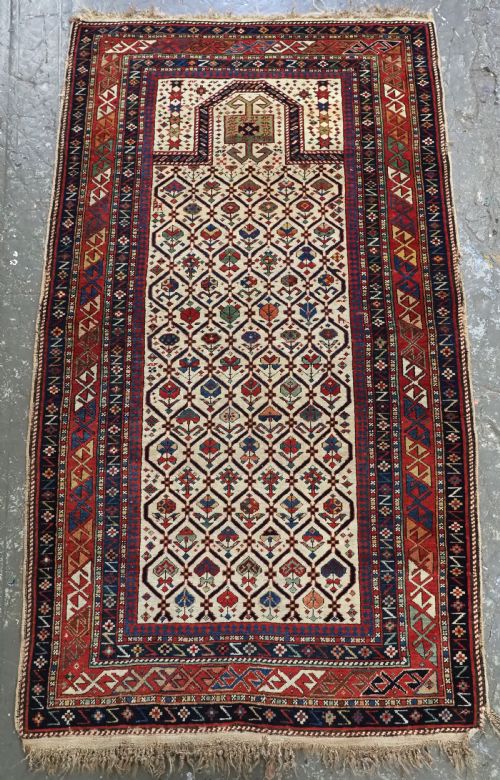
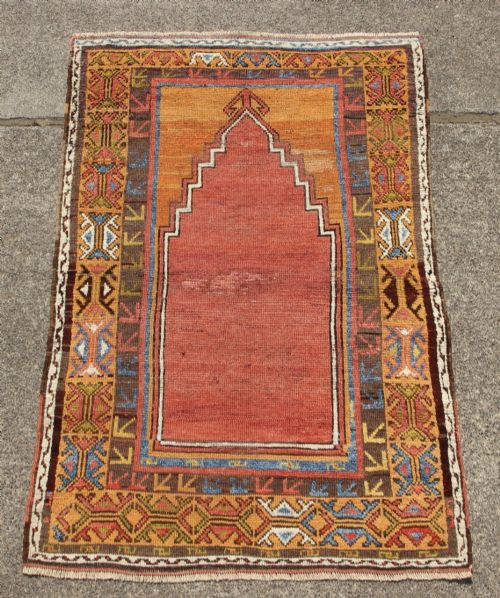
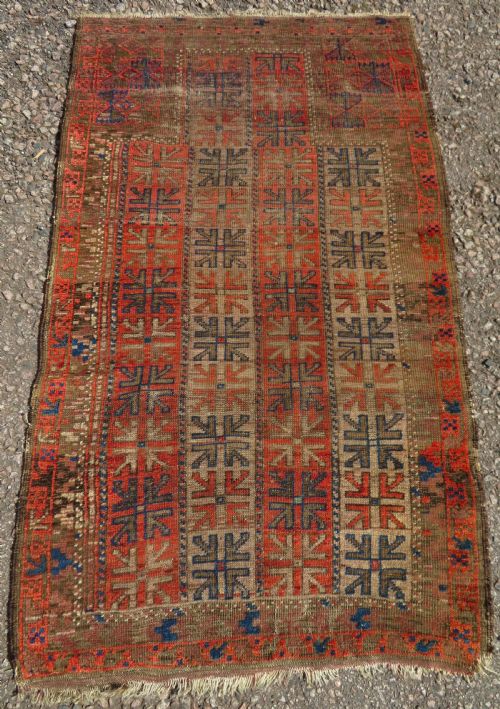
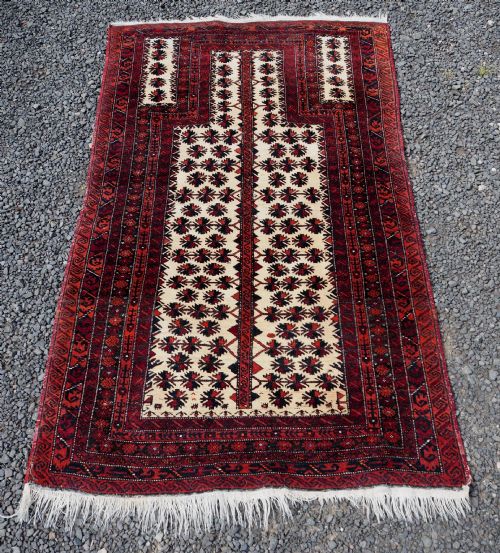
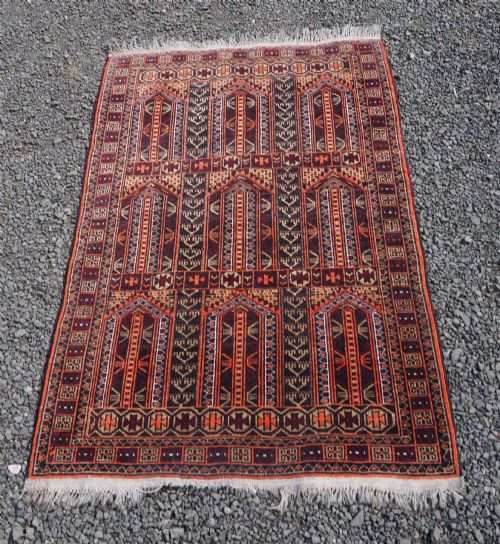
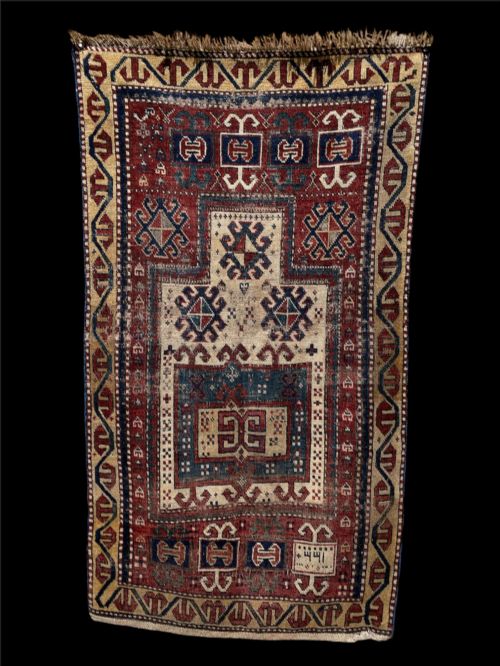
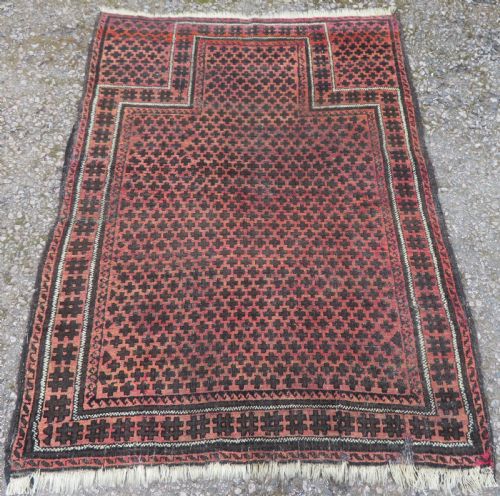
A red wool prayer mat serves a devotional purpose, structured around a central arched niche known as the mihrab that directs the practitioner toward Mecca. These textiles originate from weaving traditions across Anatolia, the Caucasus, Persia, and Afghan tribal regions, spanning periods from the nineteenth century into the early twentieth century.
The most common examples on this page are village and tribal floor coverings, specifically Baluch, Caucasian, and Anatolian formats. They range from small area rugs to specific formats featuring single, double, or triple mihrab designs.
Makers utilised regional wool and traditional iconography, including floral lattices, ram's horn motifs, and mosque lamps, resulting in varied village and tribal interpretations of the canonical prayer rug layout.
How they were made
The foundation and pile rely on wool, hand-spun wool, cotton, and occasional goat hair, knotted onto warp and weft threads before finishing with flatwoven kilim ends. Weavers sourced natural dyes to achieve the distinct red ground colours characteristic of these regional carpets.
Nomadic and village workshops produced these pieces on upright or horizontal looms, applying dense hand-knotting techniques that yielded durable pile surfaces suited to daily use.
Red Wool Prayer Mat Retail Price Guide 2026
Typical asking prices for red wool prayer mat among the pieces listed under this phrase on Sellingantiques today, from the lower quarter to the upper quarter. They describe what is for sale here now, not the wider market.
Wandering weavers tucked tiny star motifs and ram's horns into the corners of the niche, just in case the flock needed extra luck.
What varies in quality
Quality rests upon the fineness of the knotting and the precision of the design execution within the mihrab and borders. Tighter knots and balanced proportions separate exemplary village weavings from simpler commercial output.
The depth and variation of natural dyes influence visual longevity, where rich, saturated reds demonstrate superior dye baths compared to flat or uniform tones.
The Red Wool Prayer Mat Glossary
- Mihrab
- The arched niche on a prayer rug that symbolises the direction of prayer. Its shape often identifies the specific weaving origin.
- Natural dye
- Colour extracted from plant, insect, or mineral sources rather than synthetic chemicals. These dyes yield rich patinas that mature with age.
- Warp
- The vertical threads stretched lengthwise on a loom that form the structural foundation of the rug. The knots are tied around these parallel strands.
- Weft
- The horizontal threads passed alternately over and under the warp threads to lock the knots in place. They determine the structural rigidity of the weave.
Red Wool Prayer Mat: Frequently Asked Questions
What is a mihrab design?
The mihrab is the distinctive pointed arch depicted at one end of the textile. It acts as the directional marker for the person kneeling in prayer.
Different tribal groups developed specific outlines for this arch, ranging from single stepped forms to triple niches.
How do I care for wool rugs?
Wool textiles require regular gentle vacuuming without a beater bar to protect the pile and foundation fibres. Keeping them out of direct sunlight preserves the natural dyes.
Professional specialist cleaning is recommended when dirt accumulates within the knotting.
Where were these rugs made?
These pieces originate from village workshops and nomadic encampments across Anatolia, the Caucasus, and Afghan borderlands. Each region developed distinct wool preparation and dyeing methods.
Local tribes passed specific weaving patterns down through generations.
What are kilim ends?
Kilim ends are the flatwoven sections of the rug located past the knotted pile at the top and bottom edges. They protect the foundation from unravelling.
Long surviving kilim ends indicate a piece retains its original finished length.