
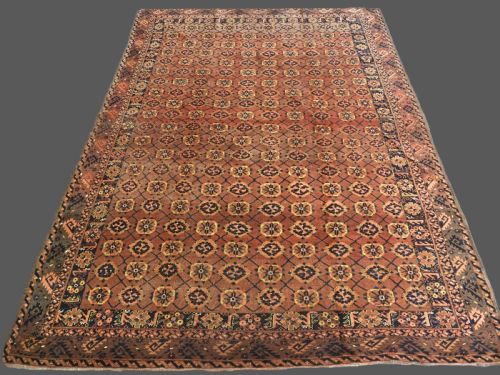
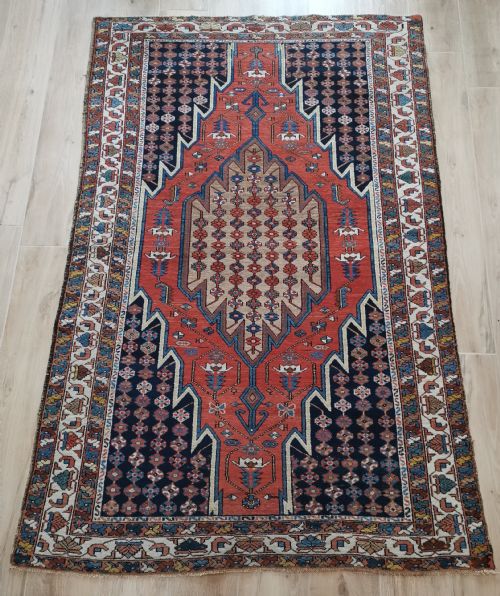
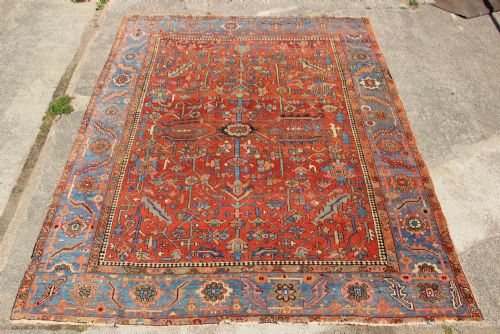
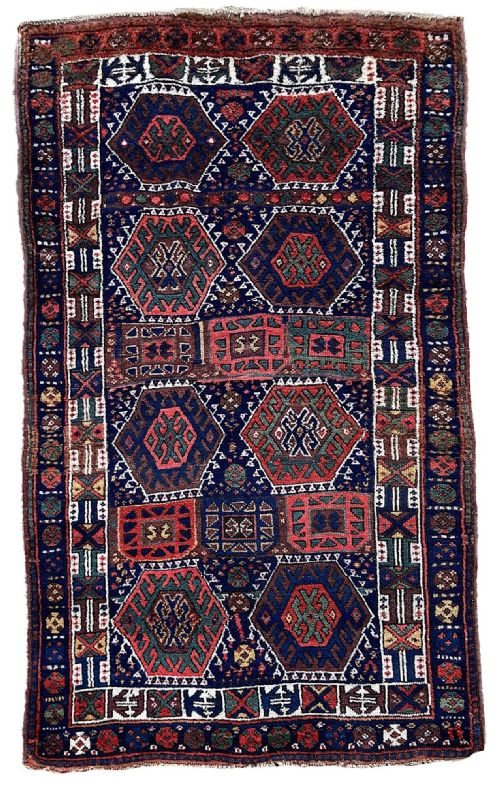


Terracotta Village Area Rug
These terracotta village area rugs bring rich tribal warmth and geometric depth into a room, offering genuine historical character for an interior.
Terracotta Village Area Rug
A terracotta village area rug is typically a hand-knotted floor covering originating from tribal or village communities across Persia, the Caucasus, Anatolia and Afghanistan. These pieces date predominantly from the nineteenth and early twentieth centuries, reflecting traditional regional weaving practices rather than urban workshop standards.
Buyers encountering this group will find diverse village formats, including small prayer rugs, runner dimensions and larger room carpets. Regional identities emerge strongly through distinctive tribal motifs, geometric medallions and characteristic earthy colour palettes.
The materials generally reflect pastoral resources, combining sturdy foundations with resilient pile. Examples range from compact Kurdish and Malayer village formats to larger Bakshaish and Heriz carpets.
Materials and construction
Weavers relied primarily on hand-spun wool for the pile, yielding a textured surface that absorbs dye with rich variation. Cotton was frequently utilised for warps andwefts, providing structural stability to the foundation.
Natural dyes infused these wool fibres with deep terracotta, indigo, madder and cream tones that soften gracefully over time. The knotting technique varied by region, resulting in durable structures designed for practical daily use.
Listings feature village rugs spanning the nineteenth and early twentieth centuries, originating from Persian, Caucasian, Anatolian and Afghan weaving traditions.
Factors that distinguish individual pieces
Quality rests significantly on the clarity of the design and the handling of the palette, where balanced proportions and harmonious natural dyes elevate a weaving. Finer knot density and precise execution of geometric motifs distinguish superior village examples.
The integrity of the original wool pile and the condition of the outer edges and foundations heavily influence the overall character. Surviving examples with intact borders and expressive tribal iconography retain greater visual impact.
The Terracotta Village Area Rug Glossary
- Warp
- The vertical foundation threads stretched tightly on the loom before knotting begins. These lengthwise threads support the entire structure of the rug.
- Weft
- The horizontal threads passed alternately over and under the warp threads between rows of knots. They bind the structure firmly together.
- Medallion
- A central ornamental design motif placed in the middle of the field. These circular, diamond or hooked shapes anchor the compositional layout.
- Prayer rug
- A small format featuring a distinct niche or mihrab design at one end. Historically utilised to indicate the direction of prayer.
- Natural dye
- Colourants derived from plants, roots, and insects rather than synthetic chemicals. These substances produce complex, muted tones that age with considerable depth.
Terracotta Village Area Rug: Frequently Asked Questions
Where were these village rugs made?
These rugs were produced by tribal and village weavers across regions including Persia, the Caucasus, Anatolia and Afghanistan. Communities in areas such as Malayer, Karadja, Heriz and Shirvan developed distinct local weaving traditions.
Production took place within domestic settings rather than large urban manufactories, allowing individual weavers to incorporate traditional tribal designs and local symbolism into each piece.
How do I style a village rug at home?
A village rug works well on wooden floorboards, stone tiles or neutral carpets where its geometric patterns and earthy tones can act as a focal point. Their robust construction makes them suitable for high-traffic zones like hallways, living rooms and studies.
Pairing these textiles with simple furnishings allows the varied natural wool textures and traditional motifs to stand out without visual competition.
How can I tell the period of a rug?
Dating relies on observing structural characteristics, wool quality, dye palettes and stylistic markers associated with specific decades between the mid-nineteenth and early twentieth centuries. Earlier pieces often display more variable hand-spinning and subtle natural colour shifts.
Comparing knot structure and design layouts against documented regional examples helps narrow down the probable era of production.
What maintenance do antique rugs require?
Regular gentle vacuuming without a rotating brush bar prevents dust accumulation within the wool pile. Professional cleaning suited to antique textiles should be used when deeper maintenance is necessary.
Keeping rugs away from prolonged direct sunlight helps preserve the integrity of natural dyes over time.