
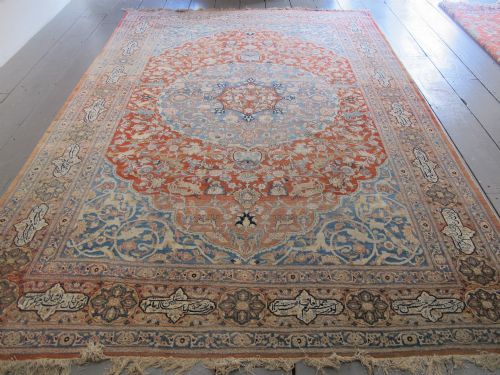


Blue Border Oriental Rug
A blue border oriental rug anchors a room with saturated indigo frames and centuries of woven regional narrative.
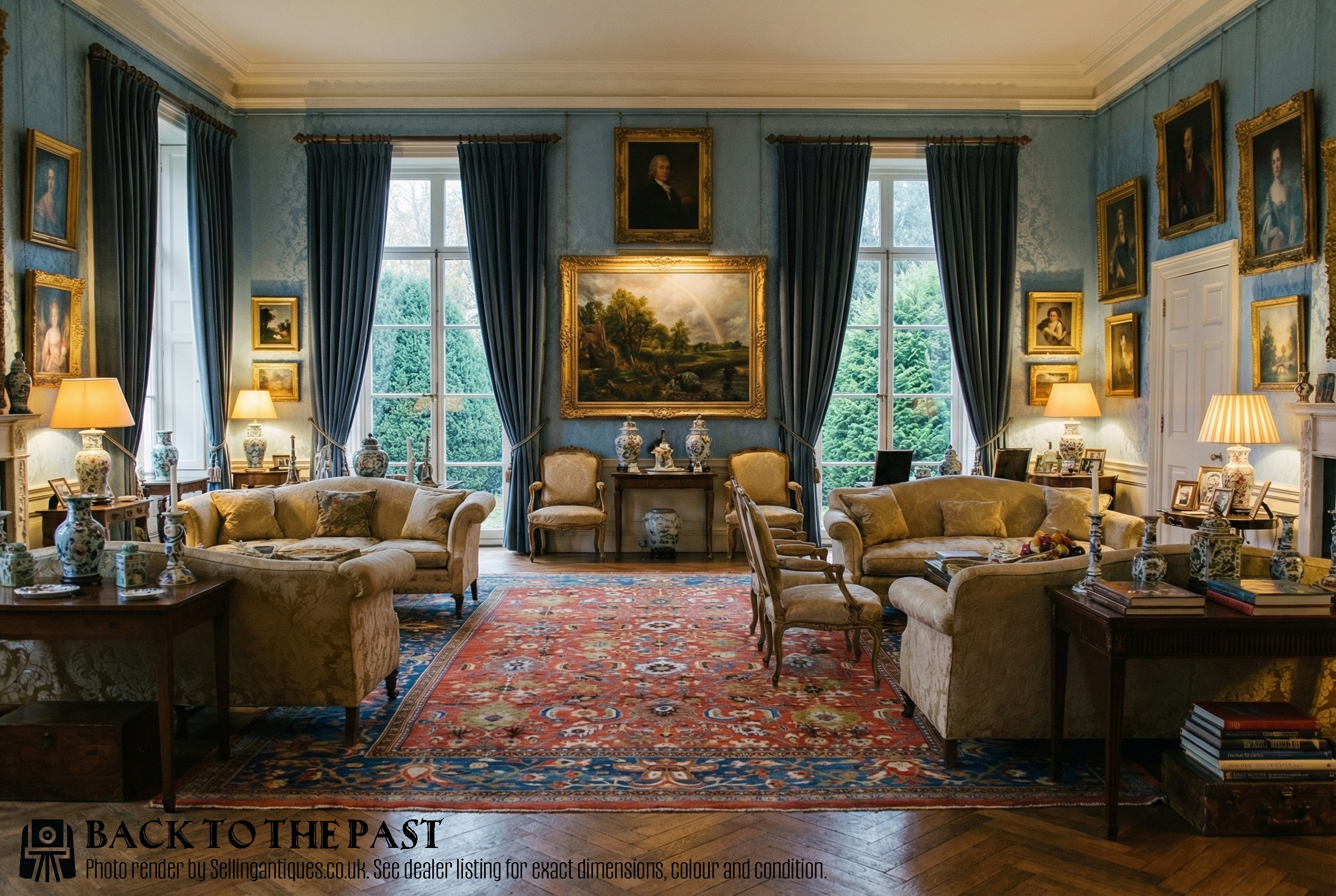
Blue Border Oriental Rug
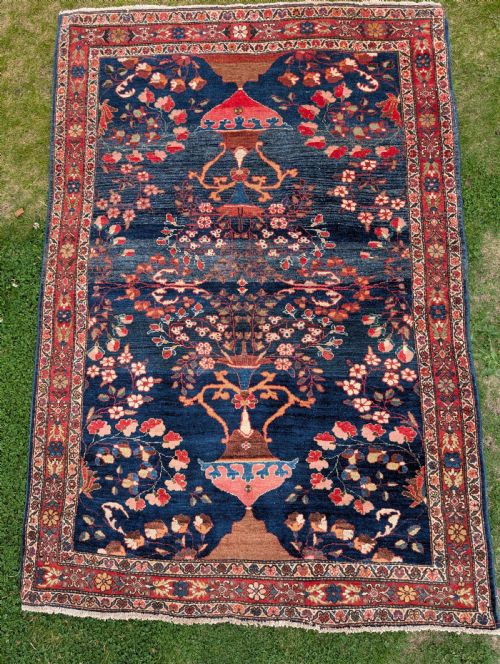
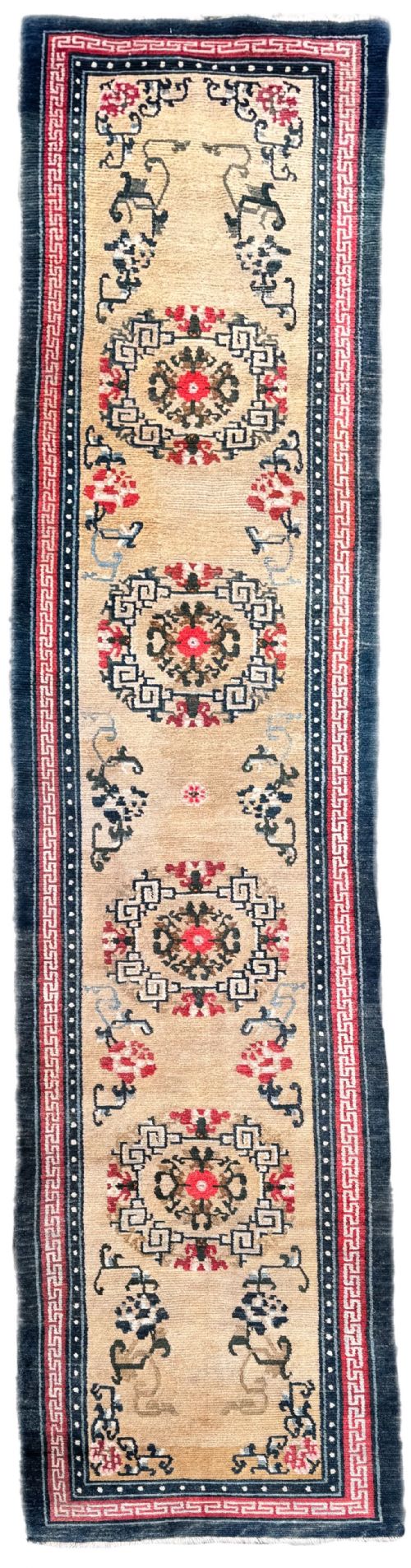
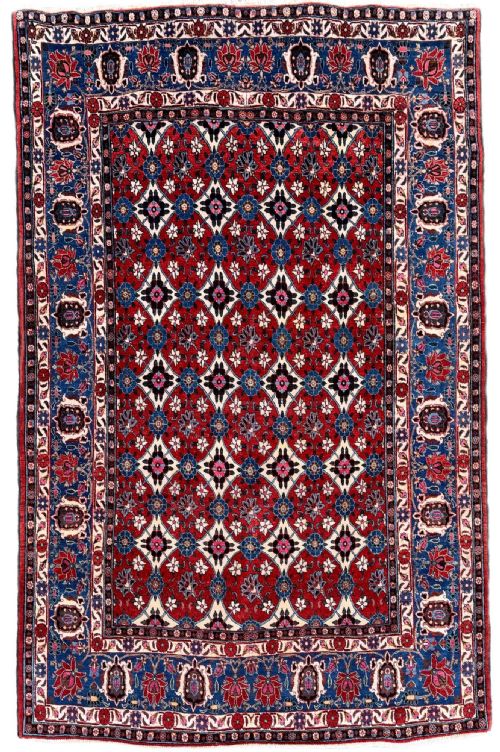
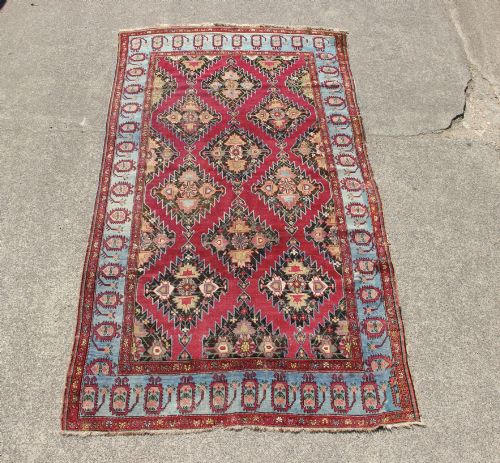
A blue border oriental rug brings together hand-knotted textiles originating primarily from Persian, Caucasian, Tibetan, and Chinese workshops dating from the mid-nineteenth century to the early twentieth century. When buyers search for a blue border oriental rug, they encounter formats ranging from square area rugs and long gallery runners to room-sized carpets and even saddle covers. The predominant versions seen on this page span classic Persian village and city weaves such as Heriz, Tabriz, and Sultanabad, alongside nomadic tribal pieces.
The defining characteristic across these examples is the framing indigo or sapphire border that encloses medallion, floral, or geometric fields. Dating mostly from the period between eighteen fifty and nineteen thirty, these floor coverings reflect traditional regional knotting techniques and natural dyework. Buyers select them to introduce architectural structure and deep colour into both contemporary and historic interiors.
Materials and construction
These carpets and rugs rely heavily on hand-spun wool and cotton foundations, with occasional variations utilising silk or angora wool for enhanced texture and pile definition. Weavers knotted these fibres tightly onto cotton or wool warp and weft threads, creating durable structures designed to withstand decades of heavy use.
Natural dyestuffs yielded the characteristic deep blue borders and contrasting field colours, fixed securely within the pile through traditional mordanting processes. Edges were typically overcast by hand, while fringe ends were secured using simple braided or knotted finishes inherent to village and workshop production methods.
Among the woven menagerie hiding within tribal borders, watchful peacocks occasionally peer out from behind the geometric foliage.
Assessing quality in antique woven carpets
The refinement of a piece rests upon knot density, the precision of the geometric or floral drawing within the blue border, and the complexity of the dyework. Finer city workshops achieved crisp, intricate outlines in their medallions, whereas village and tribal pieces display a charming irregularity in their motifs.
Material choice also dictates standard; pieces incorporating lustrous angora wool or fine silk highlights sit at a different tier of handling compared to standard stout village wool. Preservation of the original outer borders and pile depth ultimately separates utilitarian survivals from exceptional collector pieces.
Haji Jalili·Ziegler And Co
The Blue Border Oriental Rug Glossary
- Warp
- The vertical foundation threads stretched tightly on the loom before knotting begins. The exposed ends of these threads often form the fringe at either end of the rug.
- Weft
- The horizontal threads passed back and forth between the warp threads after each row of knots to lock the pile securely in place.
- Pile
- The dense, soft surface of a rug formed by the clipped ends of hand-tied knots. Height and density vary depending on whether the rug originates from a nomadic tribe or a city workshop.
- Border
- The outer decorative band framing the central field of the carpet. In these pieces, this framing element is rendered in shades of blue.
- Knot
- The individual loops of wool, silk, or cotton tied around warp threads by the weaver. The type of knot used often points to the specific region of manufacture.
Blue Border Oriental Rug: Frequently Asked Questions
How do I clean an antique rug?
Professional dusting and specialist hand-washing form the only safe maintenance routine for these delicate wool and cotton textiles. Regular gentle vacuuming without a beater bar prevents dust accumulation in the pile.
Avoid household detergents or amateur chemical treatments, as nineteenth-century natural dyes can react poorly to moisture and harsh cleaning agents. Specialist textile conservators should handle any stubborn staining or structural repairs.
Can I use these rugs in high traffic areas?
Many of these sturdy wool village carpets were originally built for heavy daily use and handle moderate hallway or living room traffic quite well. Using a quality underlay prevents slipping and cushions the foundation threads against hard flooring.
More delicate pieces featuring fine silk or softer angora wool merit placement in lower-traffic sitting rooms or bedrooms to preserve their remaining pile.
How do I tell regional styles apart?
Heriz carpets typically display bold geometric medallions and heavy corner spandrels enclosed by striking blue borders. Tabriz and Kashan weaves showcase finer, curved floral tendrils with symmetrical medallion layouts.
Tribal pieces from Kurdish or Caucasian groups lean towards starker, highly stylised animal and star motifs within narrower, sharper border structures.
What does a blue border signify?
The blue border provides a strong visual frame that grounds the busier central field of floral or geometric motifs. Indigo dye sources provided weavers with deep, stable blues that contrasted sharply against madder reds and camel backgrounds.
Beyond aesthetics, the choice of a sapphire or navy border often helps attribute a carpet to specific nineteenth-century Persian workshop traditions or Caucasian weaving groups.