

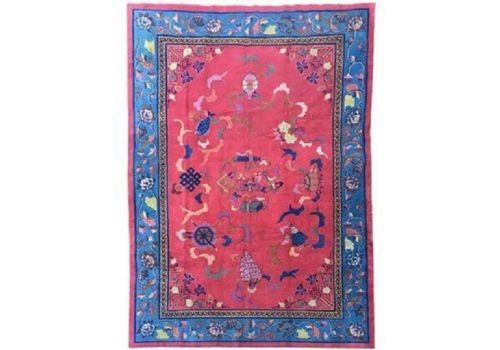
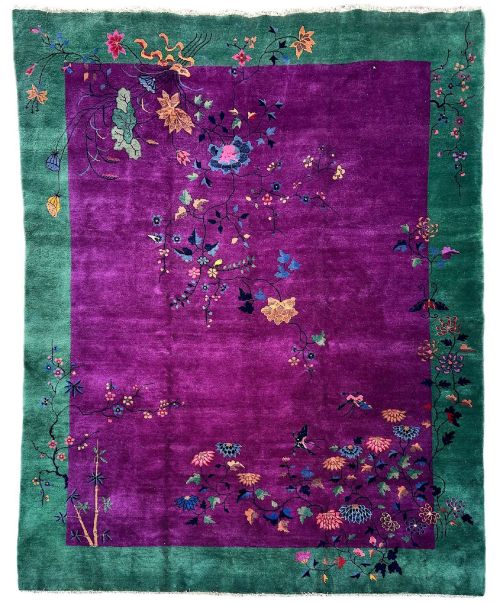
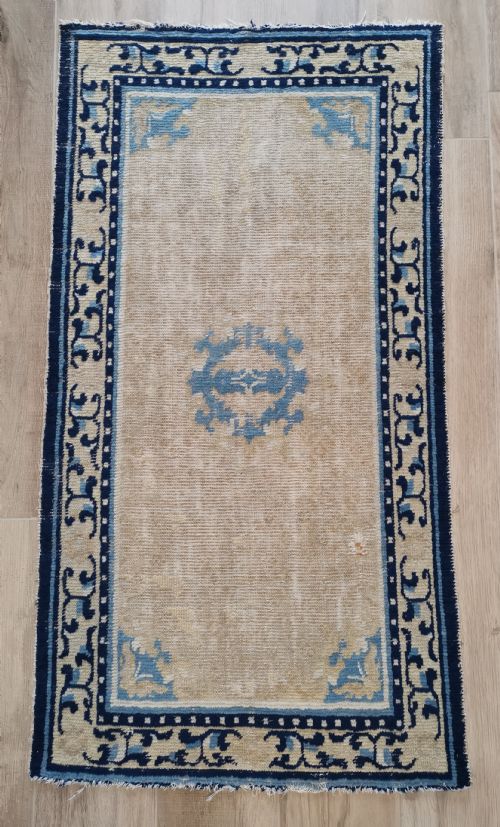
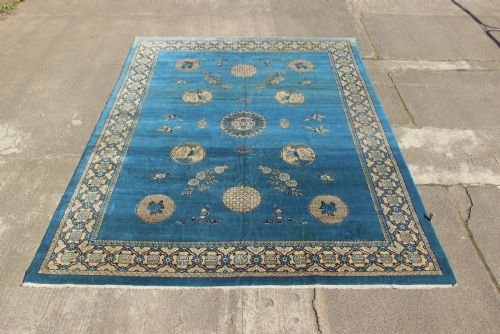


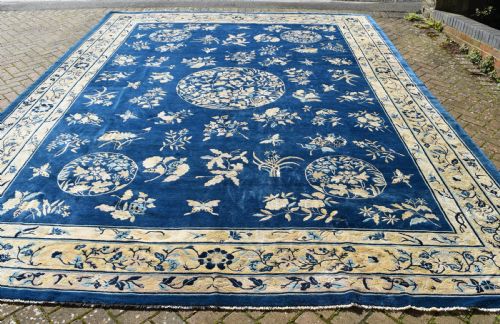


Chinese Wool Area Rug
These chinese wool area rug pieces bring geometric abstraction and botanical motifs to a floor, offering durable wool construction from the early twentieth century.
Chinese Wool Area Rug
A chinese wool area rug encompasses roomsize carpets, smaller formats, and seating mats originating from periods spanning from eighteen-fifty to nineteen-twenty. Buyers exploring this category encounter distinct regional types such as Ningxia, Peking, Pao Tao, and Khotan pieces alongside striking Art Deco designs.
The selections on this page lean heavily toward early twentieth-century examples dated around nineteen-twenty, featuring styles that bridge traditional Qing Dynasty aesthetics and modernist Art Deco geometric compositions. These textiles serve as substantial floor coverings that anchor domestic spaces with muted or saturated palettes.
Materials and construction
These floor coverings utilise natural wool pile knotted onto sturdy cotton foundations. Artisans selected wool for its resilience under foot traffic while employing cotton warp and weft threads to maintain structural stability across large roomsize formats and smaller mats.
Chinese Wool Area Rug Retail Price Guide 2026
Typical asking prices for chinese wool area rug among the pieces listed under this phrase on Sellingantiques today, from the lower quarter to the upper quarter. They describe what is for sale here now, not the wider market.
Current listings feature items spanning the years eighteen-fifty to nineteen-twenty, constructed entirely from wool and cotton in styles ranging from Qing Dynasty to Art Deco.
What separates the finest examples
The upper tier of these textiles displays meticulous knot density and crisp delineation in botanical or abstract motifs. Greater refinement in wool selection and dye saturation distinguishes roomsize carpets executed with precision from simpler domestic mats.
The Chinese Wool Area Rug Glossary
- Ningxia rug
- A traditional woven floor covering originating from the Ningxia region, known for classic Chinese iconography and subdued colouring. These pieces often feature religious or botanical symbols integrated into the field design.
- Peking carpet
- A woven textile produced in or around Beijing, typically characterised by open fields and sparse, elegant decorative elements. They frequently incorporate floral sprays or medallions against solid grounds.
- Pao Tao carpet
- A heavy pile rug hailing from Baotou in Inner Mongolia, recognised by robust geometric layouts and traditional symbolic motifs. These items use sturdy wool suited for functional floor use.
- Khotan carpet
- A woven textile originating from East Turkestan, blending Chinese and Central Asian design vocabularies. Such rugs often display pomegranate motifs or lattice patterns in rich wool.
- Art Deco carpet
- A modern style of woven flooring emerging in the early twentieth century, marked by stylised floral forms and asymmetrical geometric arrangements. These items reflect international modernist influences applied to traditional craft.
Chinese Wool Area Rug: Frequently Asked Questions
Where were these rugs made?
Production centres include specific regions such as Ningxia, Beijing, Baotou, and Khotan in East Turkestan. Each area developed distinct design vocabularies and structural characteristics.
Local weaving traditions influenced the choice of motifs, ranging from classical Chinese symbols to Central Asian lattice patterns.
How do I date a piece?
Dating relies on stylistic markers, such as the transition from Qing Dynasty iconography to modernist Art Deco geometries around nineteen-twenty. Material analysis of the wool and cotton foundation also helps place pieces accurately in time.
Earlier examples from eighteen-fifty display different structural nuances compared to later twentieth-century roomsize carpets.
What sizes are available?
Formats range from compact seating mats measuring around one metre square to large roomsize carpets exceeding four metres in length. Smaller formats function well as accent pieces in intimate spaces.
Substantial roomsize examples anchor larger seating areas with generous wool pile coverage.
How do I care for wool pile?
Regular gentle vacuuming without a beather bar removes loose dirt from the wool pile safely. Professional cleaning tailored to antique textiles preserves the integrity of the cotton foundation.
Placing rugs away from direct, harsh sunlight prevents the natural dyes from fading prematurely.