
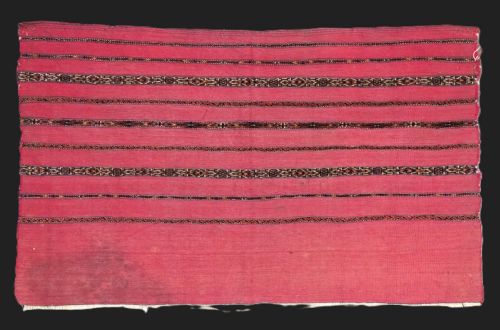


Woven Chuval Face
When you examine a woven chuval face, you are looking at the nomadic textile art of Central Asian tribal weavers designed for practical household storage.
Woven Chuval Face
A woven chuval face represents the front panel of a traditional Turkmen or Central Asian tribal storage bag used inside nomadic dwellings. These pieces typically display structured repeating guls, or primary medallion motifs, arranged in strict geometric grids across the field.
Most examples encountered on this page belong to the Tekke Turkmen tradition, alongside pieces attributed to Ersari, Yomut, Saryk, and Salor weavers. Collectors frequently find formats dating from the mid-nineteenth century up to the early twentieth century, reflecting the peak of traditional tribal weaving.
While originally serving as functional household containers for bedding and clothing, surviving fragments and complete faces now function primarily as decorative wall hangings or collector textiles.
Materials and construction
These textiles rely principally on wool foundations and piles, often combined with natural dyes to achieve deep crimson, madder, and ivory tones. Certain nineteenth-century pieces incorporate supplementary materials such as white cotton and crimson silk to highlight specific design elements.
Weavers constructed these bag faces with dense knotting techniques that produced a firm, durable handle capable of withstanding nomadic use. Edge finishes frequently retain remnants of hanging loops or protective elem borders executed in flatweave or brocade structures.
Listings span several nineteenth-century decades, including examples dated to eighteen-eighty, eighteen-ninety, and nineteen-hundred.
Factors of quality
Knot density and structural fineness separate standard utility pieces from exceptional examples, with finer weaves allowing for sharper definition in geometric guls and borders. The complexity of the medallion arrangement, such as scarce aina motifs or turreted Salor designs, also elevates a piece within the tradition.
The integrity of the natural dye palette and the crispness of colour contrast largely determine visual success. Pieces retaining original hanging loops or complete elem panels preserve more of their authentic tribal context for collectors.
The Woven Chuval Face Glossary
- Chuval
- A large nomadic storage bag used by Turkmen tribes for household possessions. The face represents the decorative front portion preserved after the plain back vanished.
- Gul
- A primary medallion motif repeated in rows across Turkmen carpets and bag faces. Different tribal groups developed distinct octagonal or gabled variations.
- Torba
- A smaller nomadic storage bag format compared to the chuval. These pieces were hung inside the yurt for smaller personal items.
- Mafrash
- A rectangular storage bag or bedding chest panel associated with Turkmen and related tribal weaving. They often feature multiple vertical design panels.
Woven Chuval Face: Frequently Asked Questions
How were these bags used?
Nomadic families utilised these large bags inside their dwellings to store wool, clothing, and bedding off the damp ground. They were stacked along the lattice walls of the yurt when not in transit.
Their vibrant designs also displayed the wealth, identity, and tribal affiliation of the weaving family within the community.
How do I hang a textile face?
Many collectors mount these flat textile pieces onto a stretched linen backing or slide a concealed wooden batten through existing loops or upper edges. This distributes the weight evenly across the structure without damaging the wool fibres.
Displaying them away from direct sunlight protects the natural dyes from fading over years of exhibition.
How do I identify different tribes?
Tribal attribution relies on the specific structure of the guls, the secondary ornament motifs, and the dominant colour palette. Tekke pieces often feature precise octagonal guls, while Yomut and Ersari weavers utilised alternative geometric variations.
Structural details like border arrangements and side-cord finishes also provide clear clues to the originating region along the Amu Darya or surrounding steppes.